
Thale cress (Arabidopsis thaliana, )

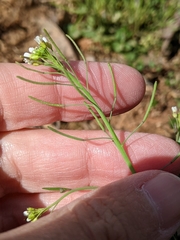
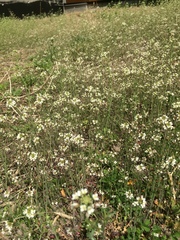
Thale cress (Arabidopsis thaliana), also called mouse-ear cress, is a small annual in the Brassicaceae, native to Eurasia and Africa. An easily overlooked roadside weed, it has become the world’s most studied laboratory plant, with a compact genome and short life cycle. In 2000 it became the first plant whose genome was completely sequenced.
Read moreThale cress and Mouse-ear cress


© photo
(c) Valentina, some rights reserved (CC BY-NC), uploaded by Valentina · cc-by-nc
Alison Northup · cc0
Étienne Lacroix-Carignan · cc0
Taken Mar 9, 2015 by Tela Botanica − Paul FABRE (cc-by-sa)
Taken Mar 23, 2021 by Elsa-Toon (cc-by-sa)
Taken Apr 1, 2015 by Tela Botanica − Yves PENIT (cc-by-sa)
Taken Mar 30, 2020 by Jiří Vilím (cc-by-sa)
© copyright of the Board of Trustees of the Royal Botanic Gardens, Kew.




Global distribution
Arabidopsis thaliana is native to temperate Eurasia and tropical African mountains. Native in Europe, including France, it was introduced to North America around the 17th century and has naturalized widely there. These introduced regions are distinct from the native range.
- Native7
- Introduced3
- Metropolitan France
- Germany
- United Kingdom
- Spain
- China
- Japan
- Morocco
- United States
- Canada
- Australia
Hexagons: regions where the plant occurs. Green dots: native range.1
Identity
Thale cress (Arabidopsis thaliana (L.) Heynh., 1842), also called mouse-ear cress, is a small annual in the Brassicaceae. Its epithet thaliana honors Johannes Thal, the 16th-century German physician and botanist who described it in the Harz Mountains. 1 7
An easily overlooked roadside weed in the wild, it holds an exceptional place in science as a principal model organism for plant genetics and development. A short life cycle, small genome and plentiful seed production have made it the plant equivalent of the fruit fly. 2 5
Recognition
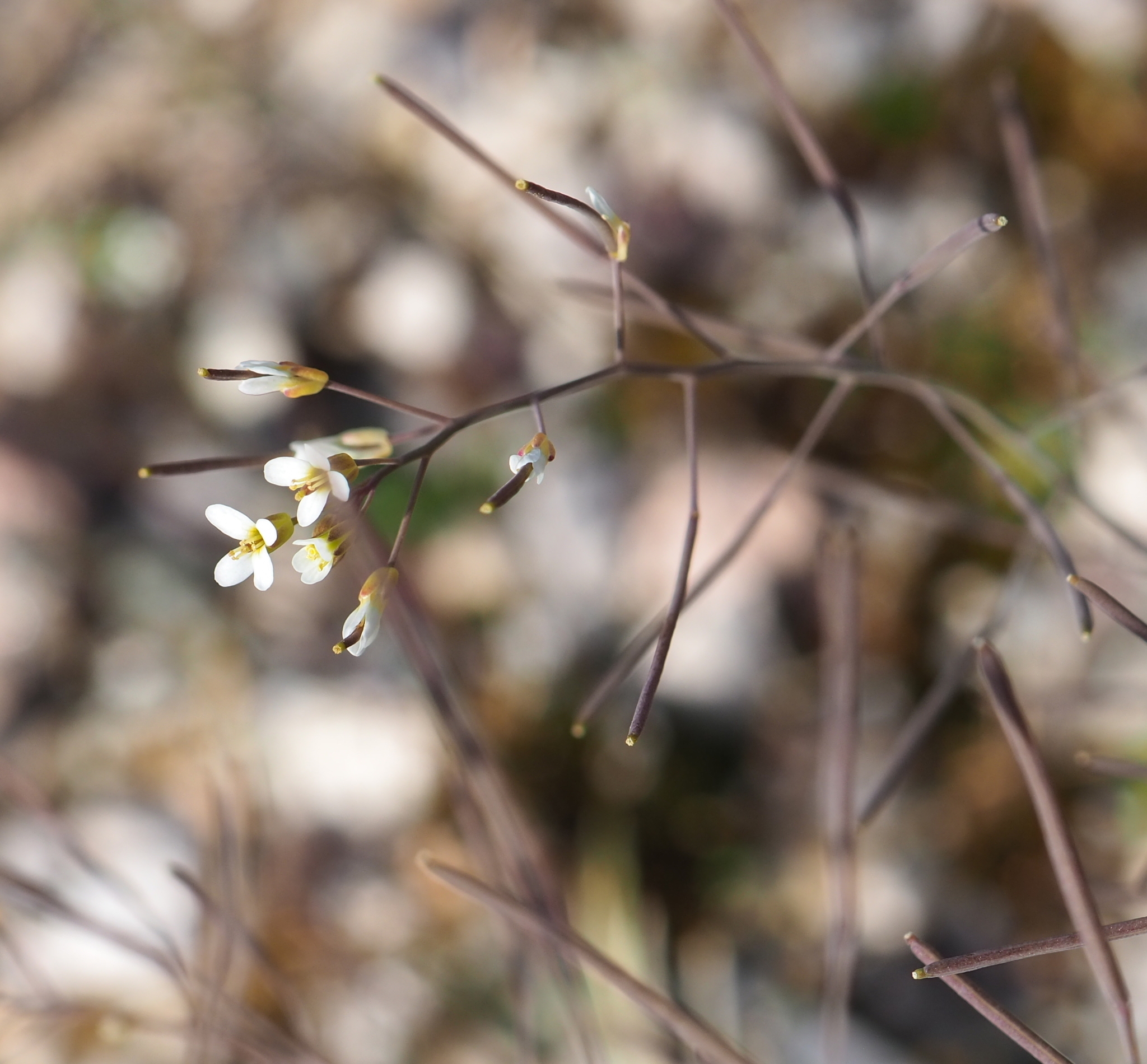
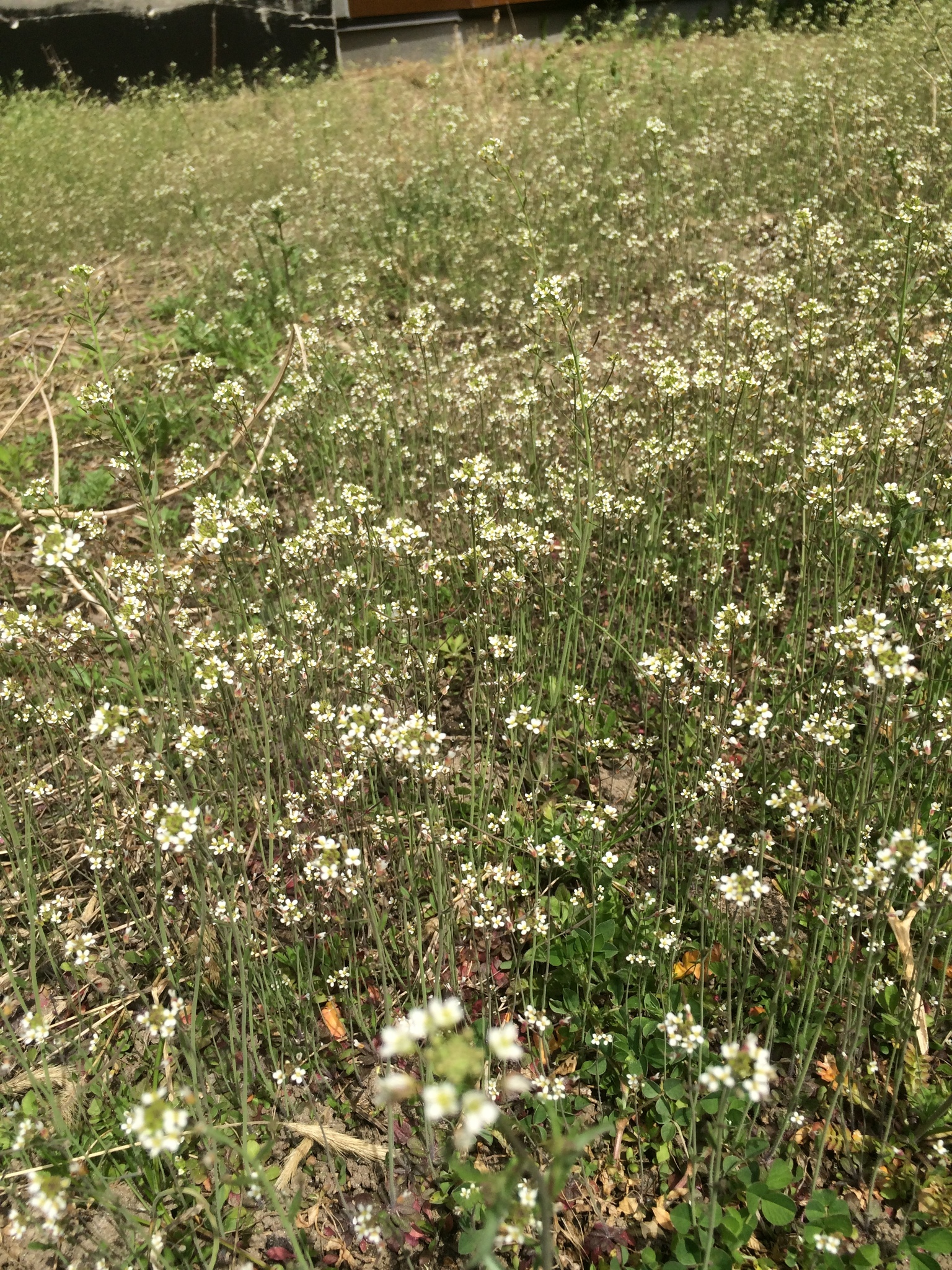
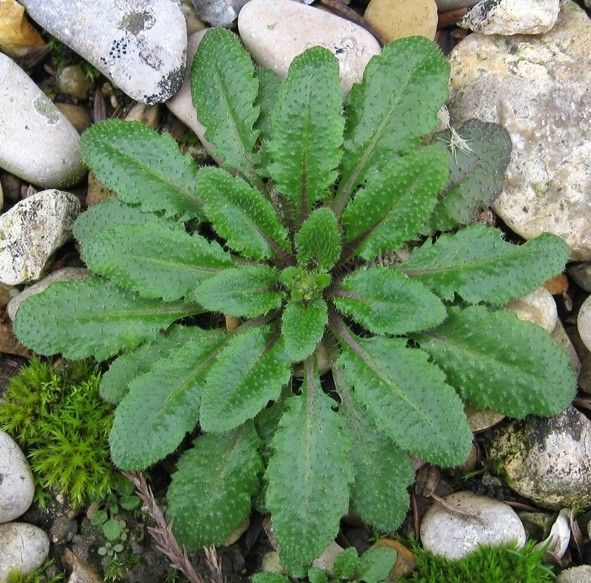
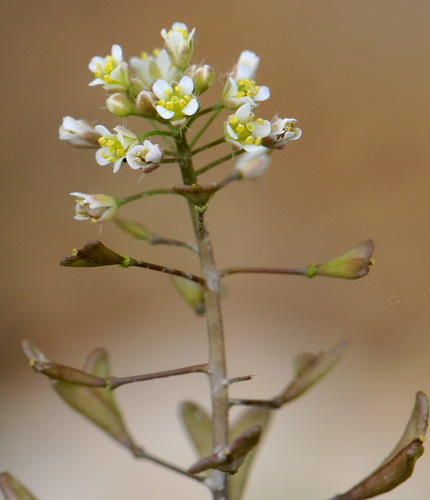
Thale cress is a slender plant 20–25 cm (8–10 in) tall. A basal rosette of oval, slightly hairy leaves, 1.5–5 cm (0.6–2 in) long, gives rise to a thin, upright, branched flowering stem. 3 7
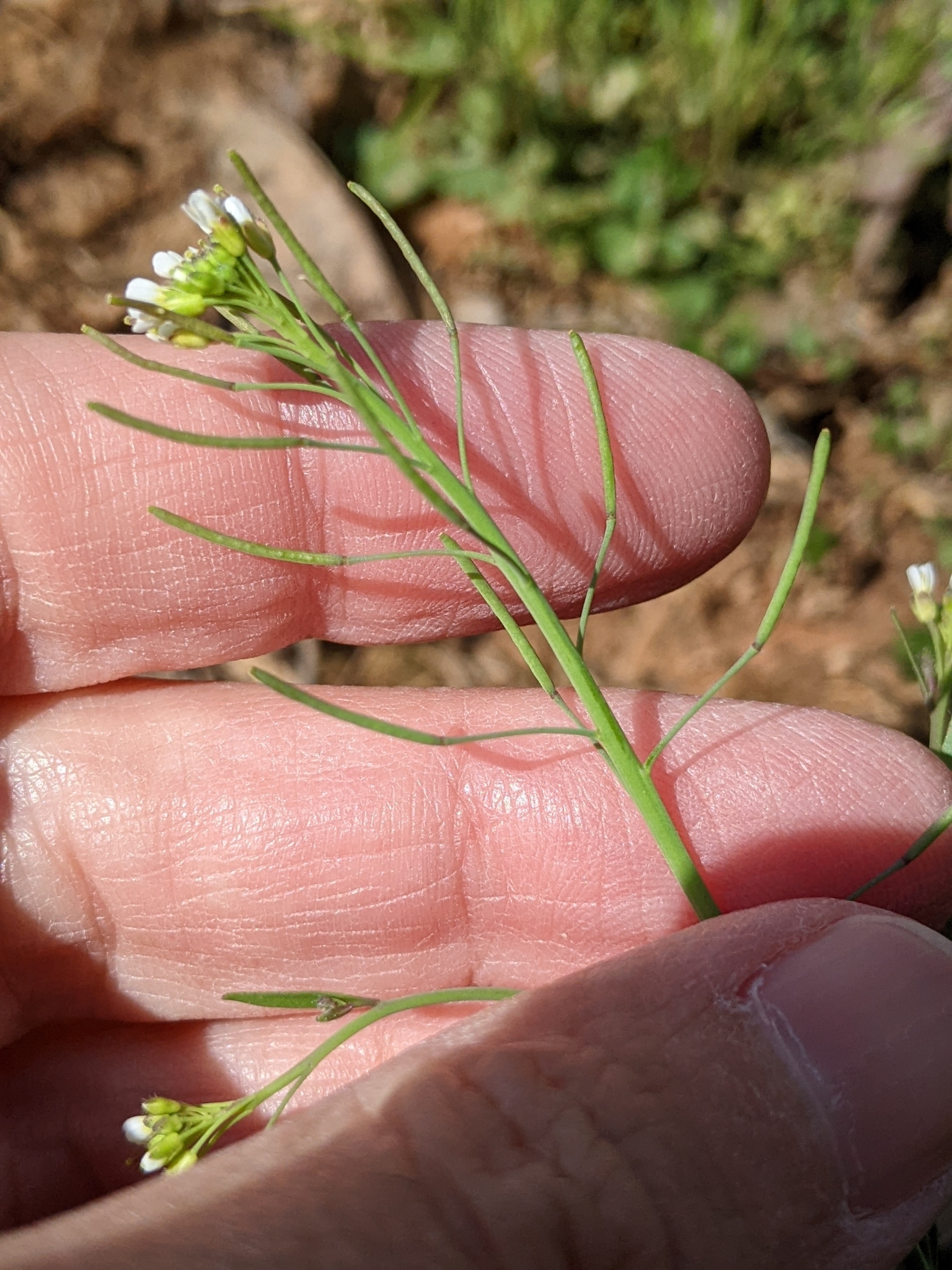
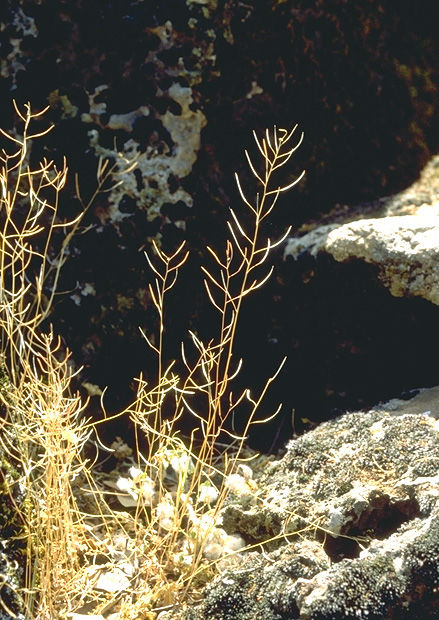
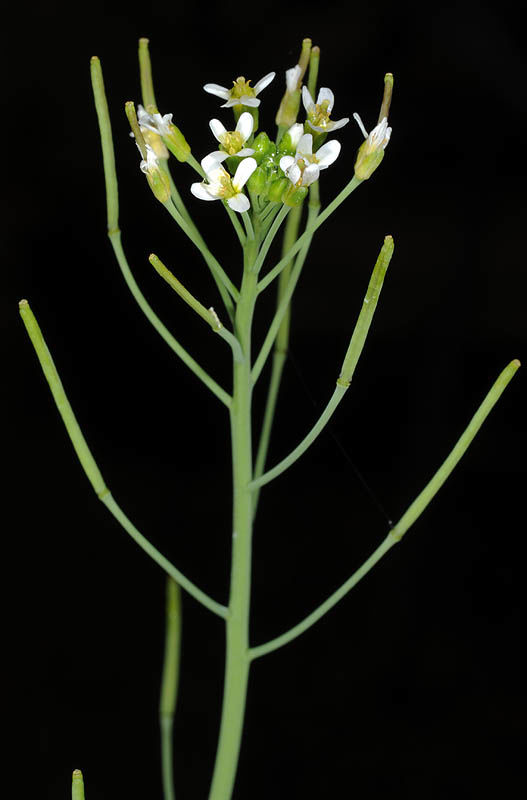
The tiny white flowers are about 3 mm (0.12 in) across, with four petals arranged in a cross, characteristic of the Brassicaceae. They quickly give way to narrow, elongated fruits called siliques, 5–20 mm (0.2–0.8 in) long, held upright along the stem. 2 3
Each silique holds 20–30 tiny seeds. Abundant seed production and rapid growth allow it to colonize bare soil quickly before disappearing. It belongs to open habitats, waste ground and disturbed sites in full light. 3 7
Useful taxonomy
Carl Linnaeus first described the species as Arabis thaliana L. in 1753. Gustav Heynhold transferred it to Arabidopsis in 1842. Older names still occur in the literature, including:
- Arabis thaliana L.
- Sisymbrium thalianum (L.) J.Gay
- Stenophragma thalianum (L.) Čelak.
- Conringia thaliana (L.) Rchb.
- Crucifera thaliana (L.) E.H.L.Krause
The accepted name Arabidopsis thaliana remains the stable reference for this member of the mustard and cabbage family. Ecotype names such as Columbia and Landsberg erecta identify laboratory lines rather than separate species or botanical varieties. 1 6
Habitat and distribution
Arabidopsis thaliana is native to temperate Eurasia and tropical African mountains. In Europe, including France, it grows on waste ground, path margins and sandy, rocky or calcareous soils in bright conditions. 1 3
It is a pioneer in the literal sense, establishing on bare, disturbed soil and completing its life cycle before stronger competitors displace it. Though considered a weed, it is not particularly aggressive and is not classed among noxious weeds. 7 3
Introduced to North America around the 17th century, it has naturalized from the United States into Canada and now occurs in other temperate regions. These introduced areas are distinct from its native Eurasian range. 4 2
Life cycle and reproduction
This annual can complete its exceptionally short life cycle, from seed to seed, in about six weeks. Germination requires light, so seeds germinate on the surface. A rosette develops, with flowering beginning at around three weeks. 7 3
It is overwhelmingly self-fertilizing, with an estimated outcrossing rate below 0.3%. Self-pollination produces genetically stable lines, a major advantage in research because offspring faithfully reproduce the parent plant's genetic makeup. 7 2
Winter forms germinate in the local fall, overwinter as rosettes and flower in spring. Other forms complete their entire cycle during the favorable growing season. This flexibility allows several generations a year in the laboratory. Propagation is exclusively by seed: sow on the surface, sometimes after brief cold stratification to synchronize emergence. Plants then self-sow if the siliques are allowed to open. 3 6
Uses and risks
The chief use of thale cress is scientific. In 2000, the Arabidopsis Genome Initiative made it the first plant with a completely sequenced genome, published in Nature. With five chromosomes, a genome of about 157 million base pairs and nearly 27,600 protein-coding genes, it remains a principal model organism in plant biology. 5 2
Its value combines small size, a six-week cycle, self-pollination and hundreds of seeds per plant. These traits allow rapid crossing, mutation and observation, illustrated by striking experiments in which seeds germinated in lunar regolith. It has no customary ornamental or food use. 7 6
Thale cress is described as a non-toxic wild member of the mustard family. It contains small quantities of glucosinolates, common in the cabbage family, with no notable toxin, and is not among plants reported dangerous to cats, dogs or horses. Without an established culinary use, it remains a research plant rather than a vegetable crop. 3 4
Varieties, lookalikes and related plants
Names used in laboratories do not represent separate species. Columbia (Col-0) is the reference ecotype used for the sequenced genome. Landsberg erecta, Wassilewskija and Cape Verde Islands are other lines selected for their genetic characteristics. These selections derive from natural populations and are not distinct taxa. 6
In the wild, lookalikes are mainly other small annual members of the mustard family:
- Shepherd's purse (Capsella bursa-pastoris), with triangular fruits;
- Hairy bittercress (Cardamine hirsuta), with leaves divided into leaflets;
- Common whitlowgrass (Erophila verna), which is smaller and flowers earlier.
A hairy-leaved rosette, cross-shaped white flowers 3 mm (0.12 in) across and slender, upright siliques are the most reliable features for recognizing Arabidopsis thaliana among small plants of disturbed ground. 3 1
Main sources
- Plants of the World Online / Kew, Arabidopsis thaliana (L.) Heynh.
- Encyclopaedia Britannica, Brassicales (Arabidopsis thaliana, model plant)
- Plants For A Future, Arabidopsis thaliana
- USDA PLANTS Database, Arabidopsis thaliana (L.) Heynh.
- Arabidopsis Genome Initiative, Nature 408 (2000), génome séquencé
- NCBI Taxonomy, Arabidopsis thaliana (taxid 3702)
- Wikipédia, Arabette des dames (Arabidopsis thaliana)
Frequently asked questions
Is thale cress toxic?
No. Arabidopsis thaliana is a small, non-toxic wild mustard with no notable toxin. It has no customary food use, but no known risk is reported for cats, dogs or horses.
Why is Arabidopsis thaliana studied so much?
Its very short life cycle, small genome and abundant seeds make it an ideal model organism. In 2000 it became the first plant with a completely sequenced genome.
How long is its life cycle?
About six weeks from seed to seed. Flowers appear around three weeks, followed by siliques, allowing several generations a year in the laboratory.
How do you germinate thale cress seed?
Sow on the surface without covering the seeds, since they need light to germinate. A brief cold treatment before sowing improves and synchronizes emergence.
How large is Arabidopsis thaliana?
Plants grow 20–25 cm (8–10 in) tall, with a basal rosette and a thin, branched flower stem. The white flowers are scarcely more than 3 mm (0.12 in) across.
How many seeds does it produce?
Each narrow silique holds 20–30 tiny seeds, and one plant bears many siliques. This prolific seed production helps explain its success as both a weed and a research plant.
How does it differ from hairy bittercress?
Both are small annual mustards with white flowers. Arabidopsis thaliana has a rosette of hairy leaves and thin, upright siliques, while hairy bittercress has leaves divided into leaflets.
Similar plants

If you are unsure about a plant’s toxicity, ask a botanist or veterinarian for advice.