
Bilimbi (Averrhoa bilimbi, )
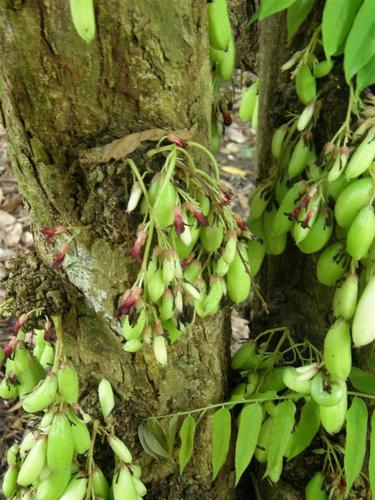
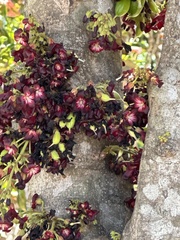

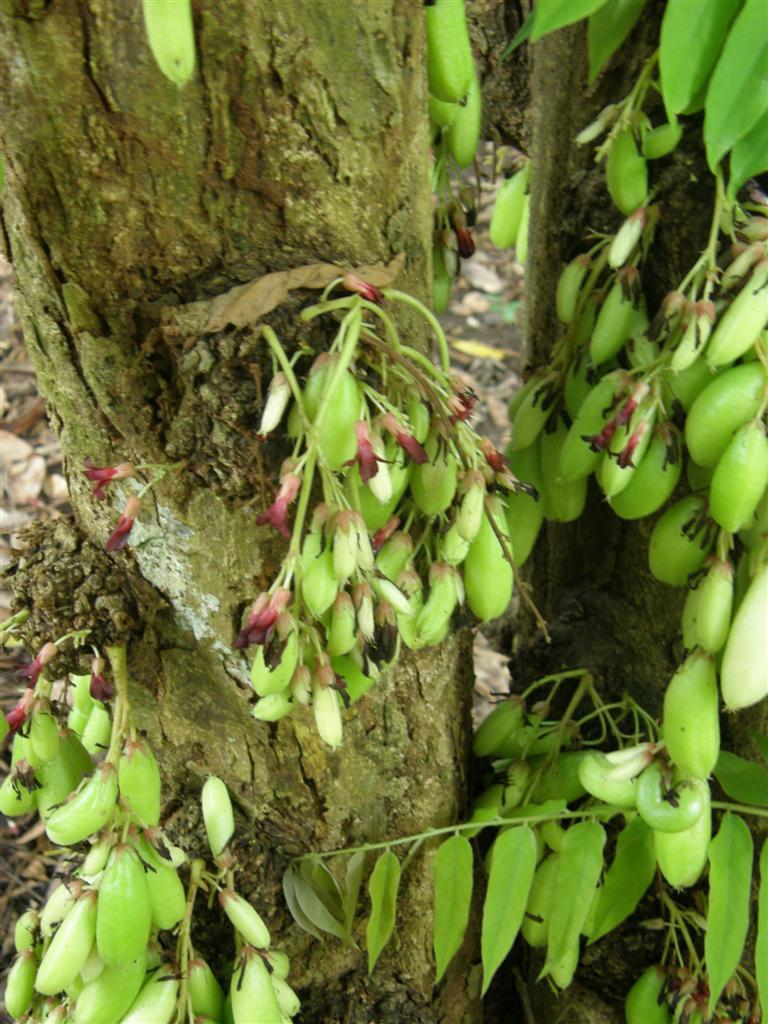
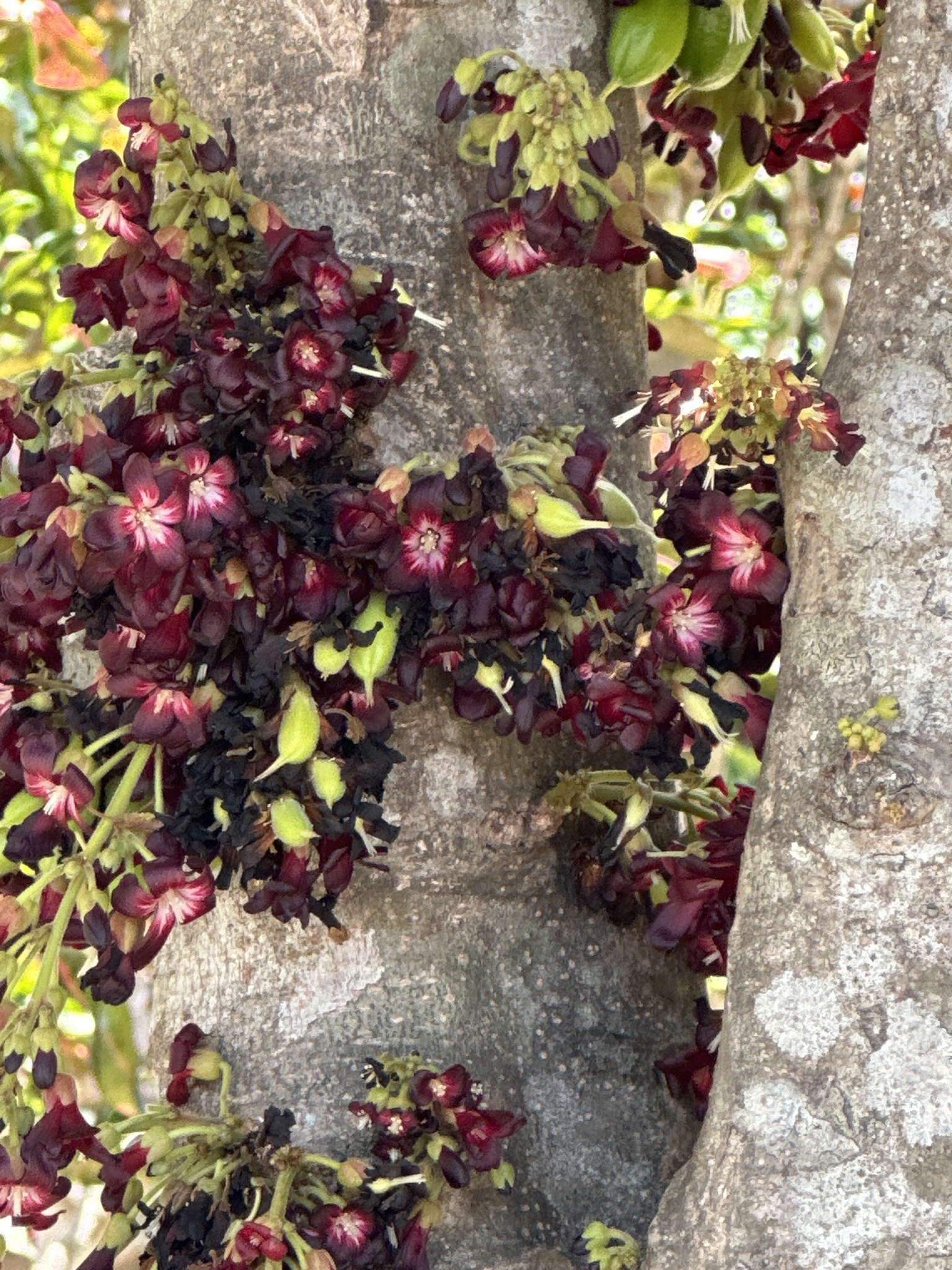
Bilimbi (Averrhoa bilimbi) is a small fruit tree in the Oxalidaceae, originating in Indonesia’s Moluccas and Sulawesi and now grown across Southeast Asia, tropical South Asia and the Americas. Flowers and cylindrical fruit grow directly from the trunk and large branches, a habit called cauliflory that distinguishes it from its close relative starfruit. The extremely sour fruit is chiefly used in savory cooking and concentrated preparations.
Read moreBilimbi, Cucumber tree and Belimbing wuluh


© photo
Klaus Wehrlin · cc-by-nc
libby hepburn · cc-by-nc
Wikimedia Commons · CC BY-SA or Public Domain
Taken Mar 3, 2013 by Daniel Barthelemy (cc-by-sa)
© copyright of the Board of Trustees of the Royal Botanic Gardens, Kew.




Global distribution
Averrhoa bilimbi probably originated in the Moluccas and Sulawesi, Indonesia; POWO gives a broader range in central and eastern Malesia. Centuries of cultivation spread it throughout Southeast Asia, tropical South Asia, the Americas and the Indian Ocean. It remains chiefly a garden fruit tree rather than a large commercial crop.
- Native1
- Introduced2
- Indonesia
- India
- Florida (United States)
Hexagons: regions where the plant occurs. Green dots: native range.1
Identity
Bilimbi (Averrhoa bilimbi L., 1753), also called cucumber tree, is a small fruit tree in the Oxalidaceae. French names such as arbre à cornichons and cornichon d’Inde likewise compare its fruit to a cucumber. 2 5
The genus honors the same scholar as that of its closest cultivated relative, starfruit: Averroes (1126–1198), the Andalusian physician, philosopher and translator of Aristotle. Unlike starfruit, bilimbi never forms a star in cross section. Its cylindrical fruit readily distinguishes the two species at market. 3
Recognition
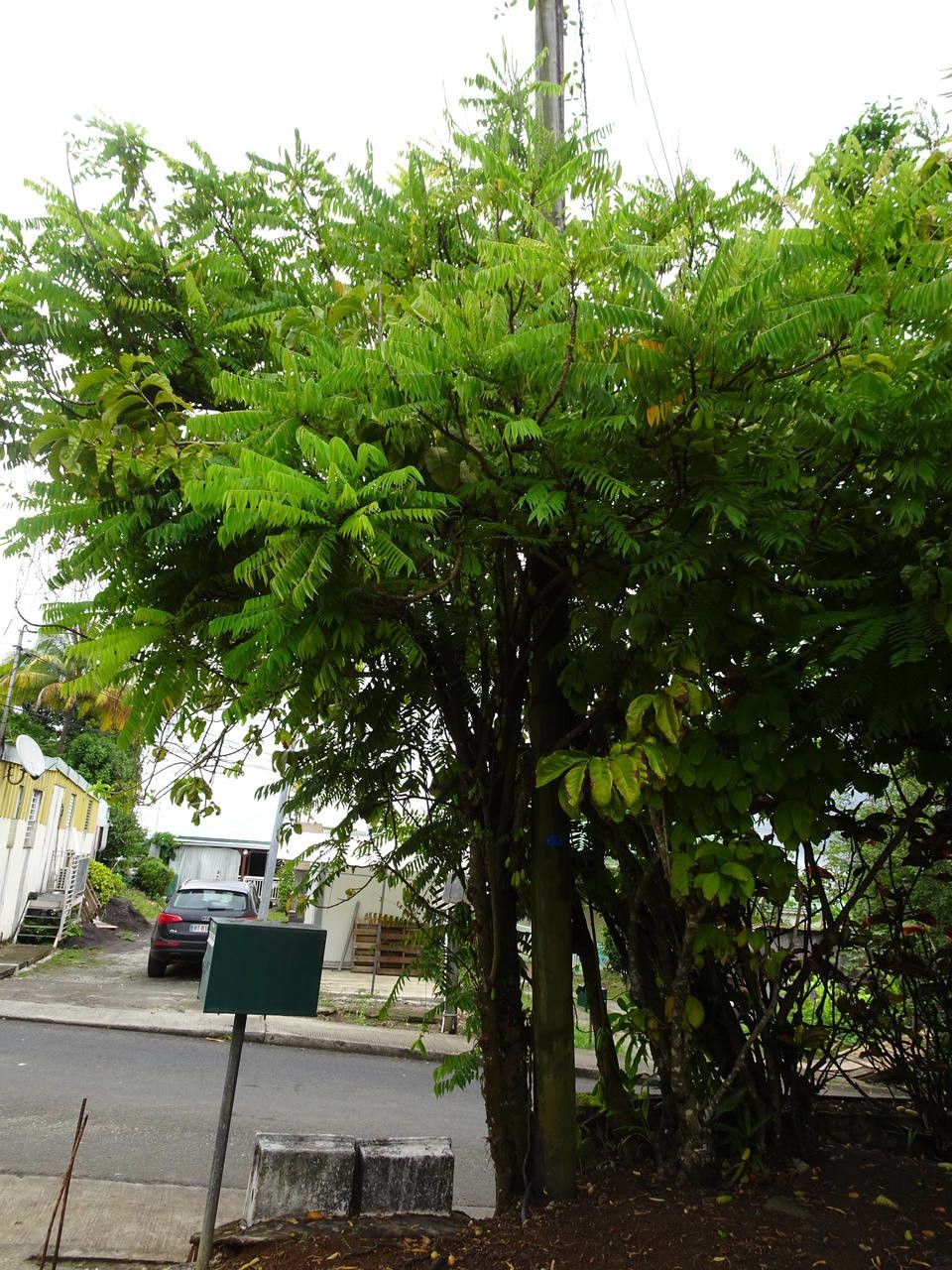
Averrhoa bilimbi often has a short trunk that quickly divides into several upright branches. It commonly reaches 5–10 m (16–33 ft), with occasional reports of 15 m (49 ft) in particularly favorable climates. 3
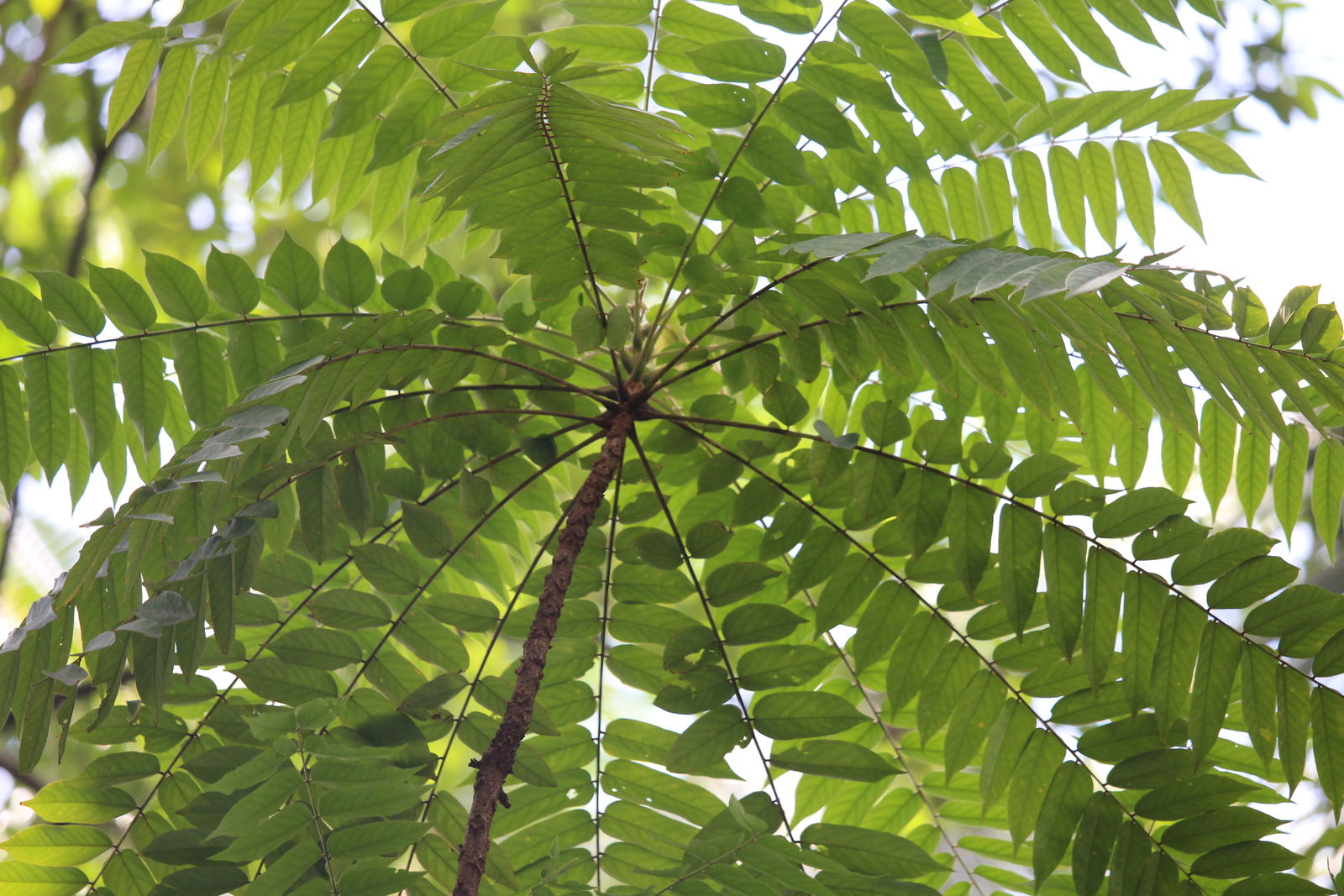
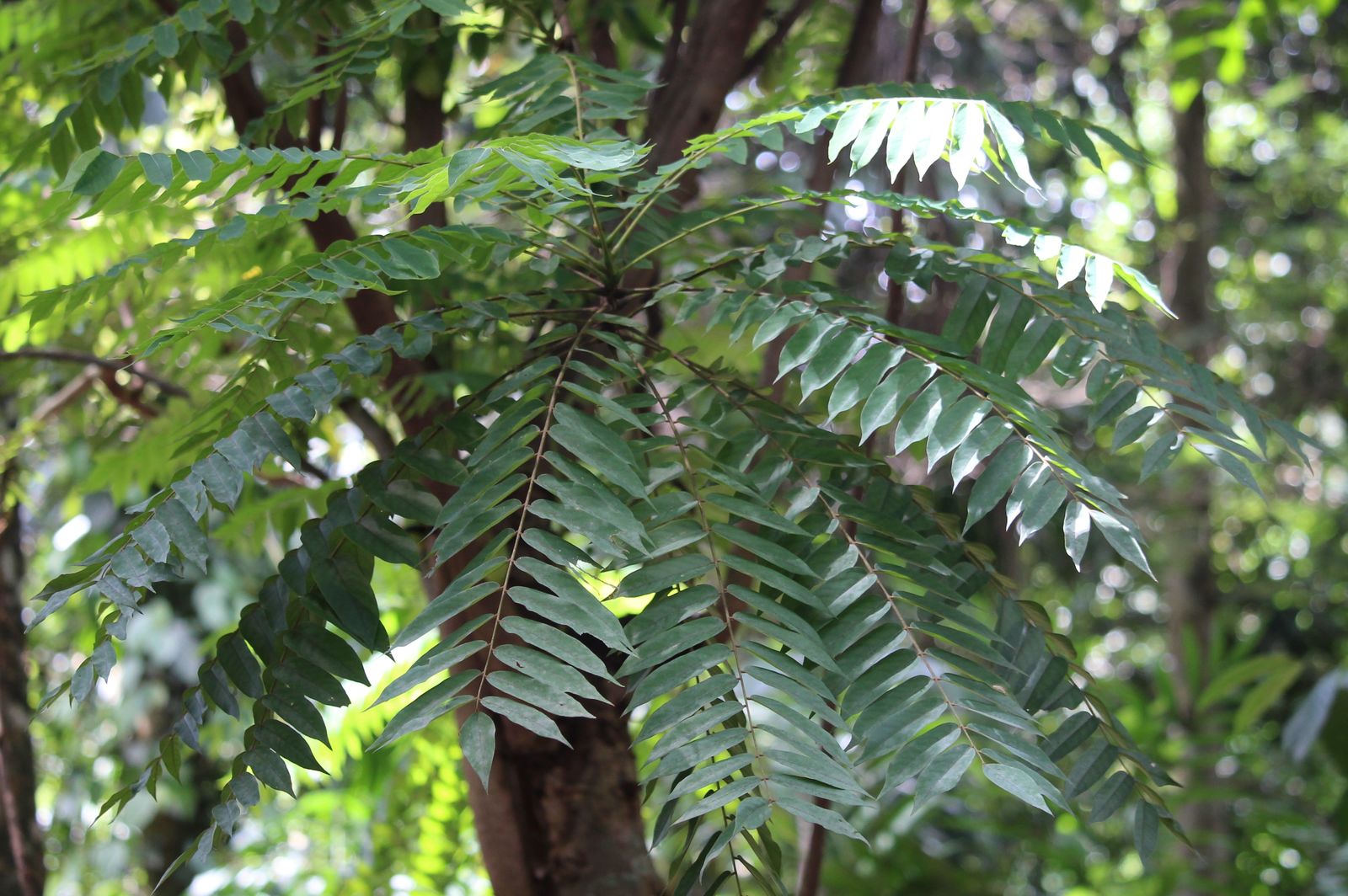
The pinnate leaves measure 30–60 cm (12–24 in) long, with numerous oval to oblong leaflets, and cluster at branch tips. The most useful field character is cauliflory: hanging clusters of small, scented flowers grow directly from the trunk and large branches rather than from leaf axils as in starfruit. 3
The elongated, ellipsoid fruit is 4–10 cm (1.6–4 in) long, with thin, waxy skin turning from light green to yellowish green at maturity. The flesh is crisp, but its juice is so sour that the fruit is rarely eaten or drunk on its own. 3
Useful taxonomy
Bilimbi and starfruit, Averrhoa carambola, are the two recognized woody species of Averrhoa, within the Oxalidaceae, a family chiefly composed of small herbs such as Oxalis. 5
Linnaeus described Averrhoa bilimbi in 1753, in the same volume of Species Plantarum as starfruit. The stated origin, “Ind. or.; China,” covered the East Indies and China, a broad geographical indication subsequently refined by botanists. 2
POWO accepts Averrhoa bilimbi, without a widely recognized botanical variety apart from a rarely cited Papuan form. The complete binomial is therefore a more stable reference for buying or identifying a tree than vernacular names shared with starfruit in several languages. 1 4
Habitat and distribution
Bilimbi probably originated in the Indonesian archipelago around the Moluccas and Sulawesi. POWO gives a broader range extending into central and eastern Malesia. 1
Centuries of cultivation spread it through Southeast Asia and tropical South Asia, including India, Sri Lanka and the Maldives, then to the Americas and Indian Ocean. It remains chiefly a garden fruit tree rather than a large commercial crop. 3
It needs rich, well-drained soil, with rain distributed through the year but a short dry season of two to three months. Without this dry interval, it is absent from the wettest parts of its range despite otherwise suitable temperatures. 3
Life cycle and reproduction
Bilimbi is cauliflorous. Each hanging panicle contains numerous small, scented flowers, yellowish green to reddish purple, attached directly to the trunk and branches. 3
This position facilitates pollination by insects moving along the bark rather than through the foliage. The resulting fruit hangs in compact clusters against the wood instead of at branch tips, as in most fruit trees. 3
Propagation is almost exclusively by seed. Unlike starfruit, often grafted to bring fruiting forward, bilimbi has no established commercial cultivar and reproduces faithfully from one generation to the next by this method alone. 3
Uses and risks
Bilimbi fruit is nearly always prepared before eating. Too sour to bite into alone, it is used in pickles, chutneys, curries and refreshing drinks in different parts of Southeast and South Asia. 8
Its acidity reflects a high oxalate content, dangerous when consumed in concentrated form. A series of ten patients hospitalized in Kerala after drinking concentrated bilimbi juice documented acute kidney injury from oxalate nephropathy; seven needed hemodialysis. 6
A later Malaysian case confirmed oxalate-nephropathy risk in someone with previously normal kidney function. Drawing on earlier cases, the authors also discuss a possible role for caramboxin in neurological symptoms associated with bilimbi consumption. 7
No established toxicity data are available for domestic animals. The documented risk concerns substantial human consumption, particularly traditional uses for cholesterol or hypertension. This lack of animal data does not establish safety. 8
Varieties, look-alikes and related plants
Averrhoa bilimbi has no widely distributed commercial cultivar. It reproduces faithfully from seed, with observed variation chiefly associated with growing conditions and fruit maturity rather than horticultural selection. 3
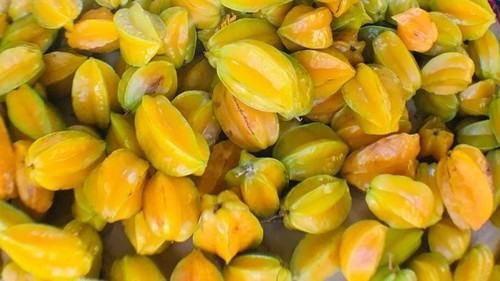
The main distinction for buyers is from its close relative Averrhoa carambola. Starfruit bears flowers in leaf axils and markedly ribbed fruit that forms a star in cross section; bilimbi flowers and fruits directly on the trunk, without forming a star. 3
Other small, elongated green fruits from Southeast Asia may look similar at market. The most useful distinctions remain fruit position on the tree, in clusters against the bark, and extreme acidity rarely matched by fruit eaten raw.
Main sources
- Plants of the World Online / Kew, Averrhoa bilimbi L.
- International Plant Names Index, Averrhoa bilimbi L.
- NParks Singapore FloraFaunaWeb, Averrhoa bilimbi
- USDA GRIN Global Taxonomy, Averrhoa bilimbi L.
- Integrated Taxonomic Information System, Averrhoa bilimbi L.
- Bakul et al., 2013, acute oxalate nephropathy due to Averrhoa bilimbi fruit juice ingestion
- BMJ Case Reports, 2021, acute kidney injury due to bilimbi fruit ingestion
- Ethnomedicinal uses, phytochemistry and pharmacology review of Averrhoa bilimbi
Frequently asked questions
Is bilimbi toxic?
Toxicity has not been established in domestic animals. In humans, concentrated bilimbi juice has caused documented acute kidney injury, particularly after repeated consumption for medicinal purposes. Lack of animal evidence does not establish safety.
Can you eat bilimbi raw?
The fruit is rarely eaten raw on its own because the juice is extremely sour. It is chiefly made into pickles, chutneys, curries or drinks in parts of Southeast and South Asia.
How does bilimbi differ from starfruit?
Bilimbi flowers and fruits directly on the trunk and large branches, and never forms a star in cross section. Starfruit flowers in leaf axils and has prominently ribbed fruit that forms a star when sliced.
Why do bilimbi flowers grow on the trunk?
This habit, cauliflory, facilitates pollination by insects moving along the bark. Fruit then forms in compact clusters against the wood rather than at branch tips.
Are there bilimbi cultivars?
There is no widely distributed commercial cultivar. Plants reproduce faithfully from seed, with differences chiefly reflecting growing conditions and fruit maturity.
Where does bilimbi grow outside Asia?
After centuries of cultivation in Southeast and tropical South Asia, it spread to the Americas and Indian Ocean, including Réunion and the Caribbean. It remains chiefly a garden fruit tree rather than a commercial crop.
Does bilimbi tolerate cold?
No. It is even more cold-sensitive than starfruit, surviving long-term outdoors only in tropical or warm subtropical climates. In temperate conditions, a protected container is the only practical option.
Similar plants
If you are unsure about a plant’s toxicity, ask a botanist or veterinarian for advice.