
European barberry (Berberis vulgaris, )
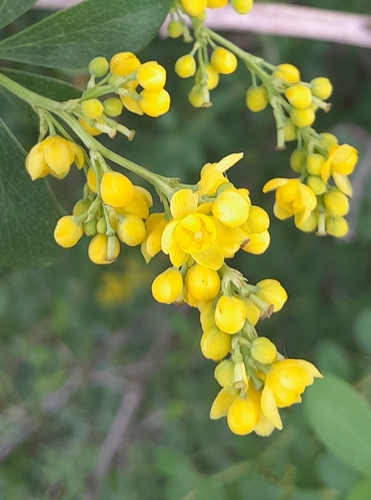
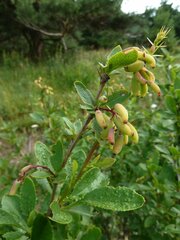
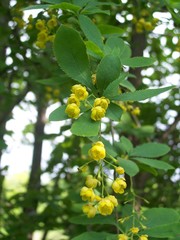
European barberry (Berberis vulgaris) is a thorny, deciduous shrub in the Berberidaceae, native to Europe and western Asia. Three-branched spines, yellow-orange flower clusters and red berries make it distinctive, but its role as a wheat rust host prompted extensive eradication in the twentieth century.
Read moreEuropean barberry, Common barberry, Barberry and Jaundice berry


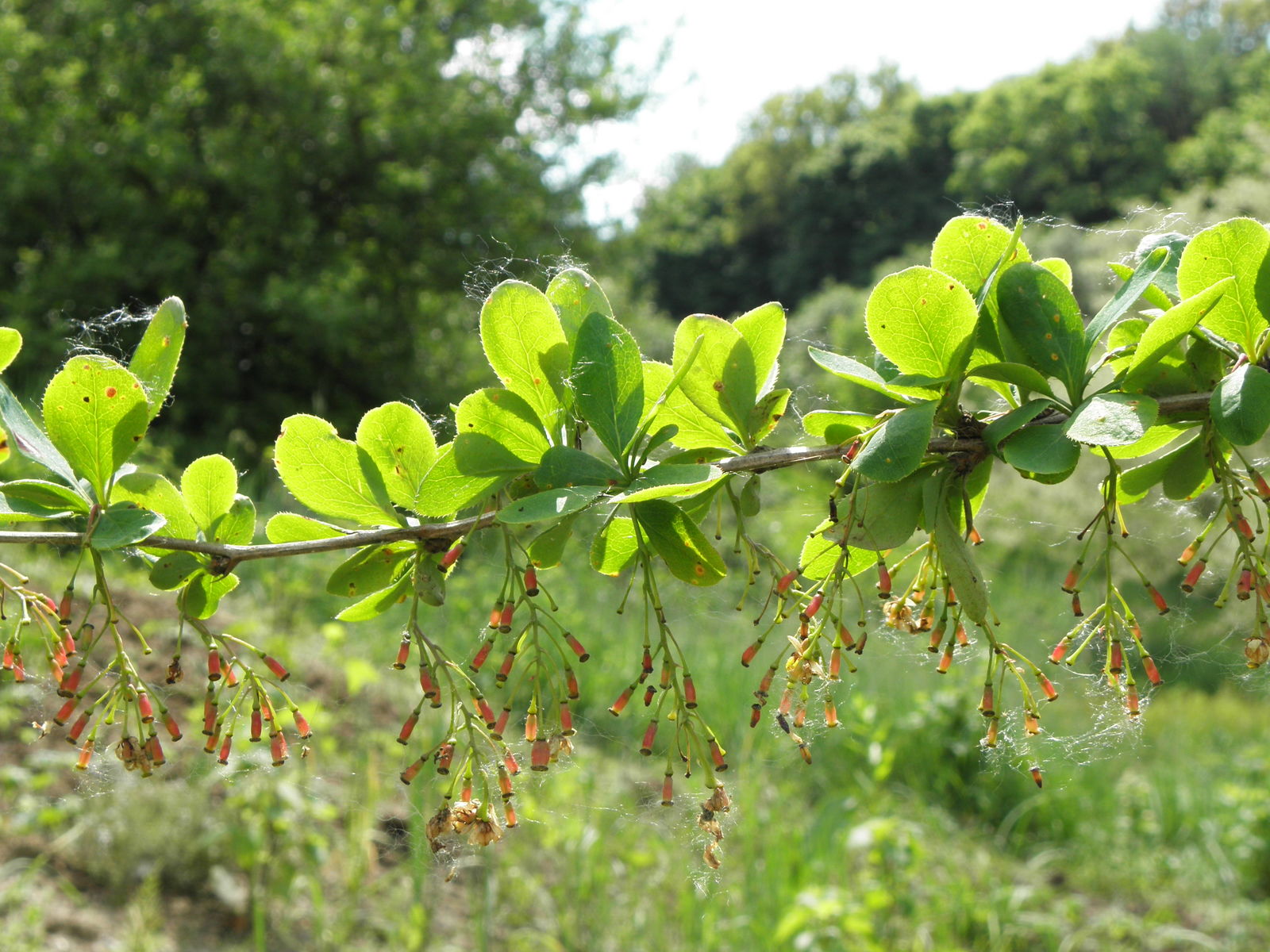
© photo
Stevia · cc0
Patrick Le Mao · cc0
Dave Behm · cc0
Taken Sep 15, 2022 by Jacques Zuber (cc-by-sa)
Taken Nov 3, 2021 by Eduard (cc-by-sa)
Taken May 2, 2022 by Jim Knopf (cc-by-sa)
Taken Dec 8, 2017 by Cruz Fer (cc-by-sa)
© copyright of the Board of Trustees of the Royal Botanic Gardens, Kew.




Global distribution
The native range of Berberis vulgaris extends from Europe to western and northern Iran, with an associated presence in North Africa. In France it grows on limestone slopes and in hedgerows, but wheat rust eradication campaigns have made it locally rare. Introduced and widely cultivated in North America, it is monitored as an invasive shrub in several states.
- Native4
- Introduced1
- Invasive1
- France
- Germany
- United Kingdom
- Iran
- Canada
- United States
Hexagons: regions where the plant occurs. Green dots: native range.1
Identity
European barberry (Berberis vulgaris L., 1753), also called Common barberry or simply Barberry, is a thorny, deciduous shrub in the Berberidaceae. The genus name derives from Arabic barbaris through medieval Latin. Its French name, épine-vinette, combines a reference to thorns with the sour, almost vinegary flavor of the ripe fruit. 8 1
Described by Linnaeus in 1753, European barberry is the most widespread member of a genus with several hundred species, ranging from the Northern Hemisphere to the Andes. Berberine colors its wood and inner bark bright yellow. The English name Jaundice berry recalls traditional use for liver complaints. 2 5
Recognition
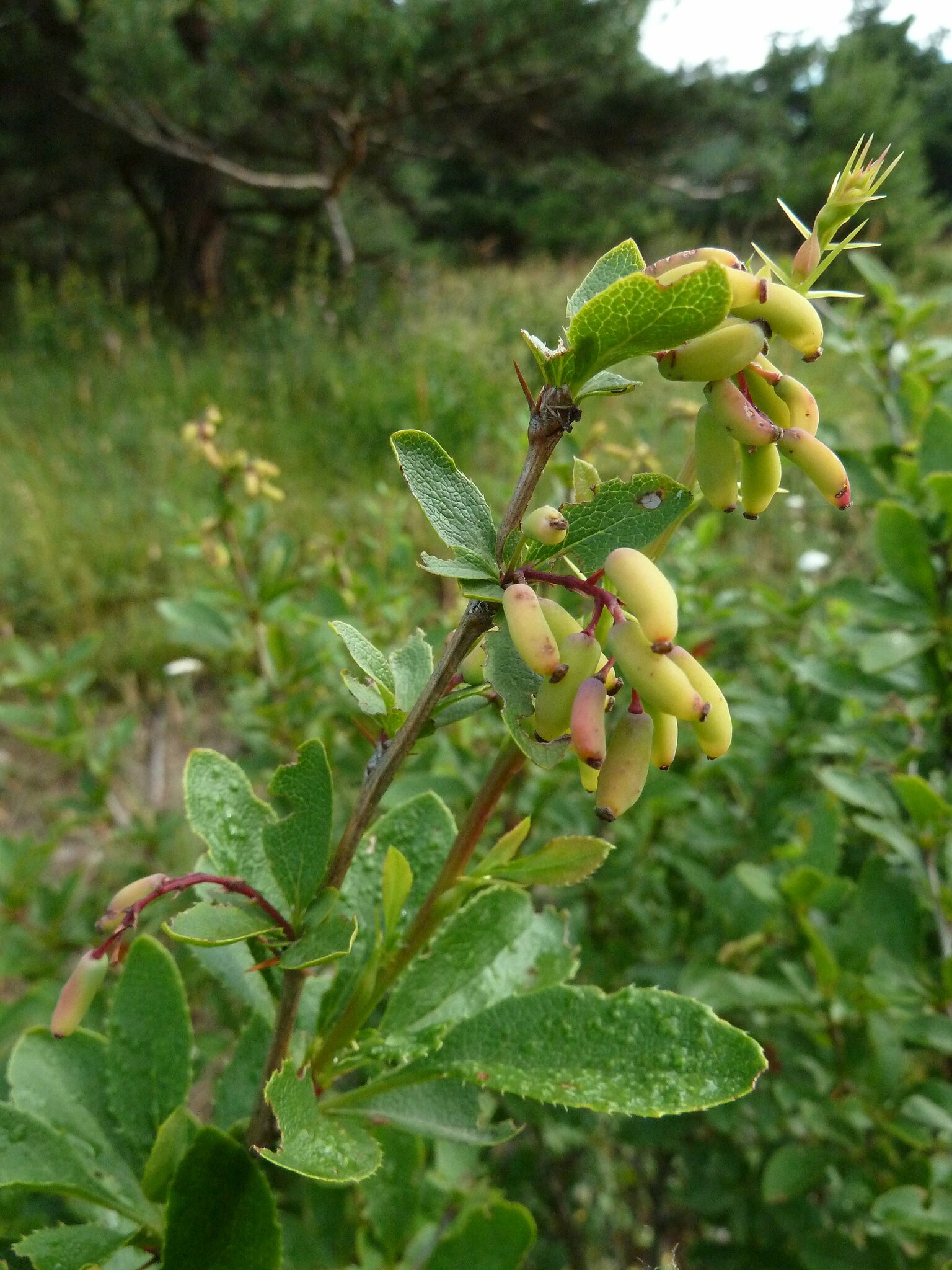
Mature plants form dense shrubs 2–4 m (6.5–13 ft) tall and 1.5–3 m (5–10 ft) wide, with grooved, gray-brown branches. The most reliable clue is the spine: it divides into three points at each node. Japanese barberry, Berberis thunbergii, has single spines, making this a useful immediate distinction. 3 9
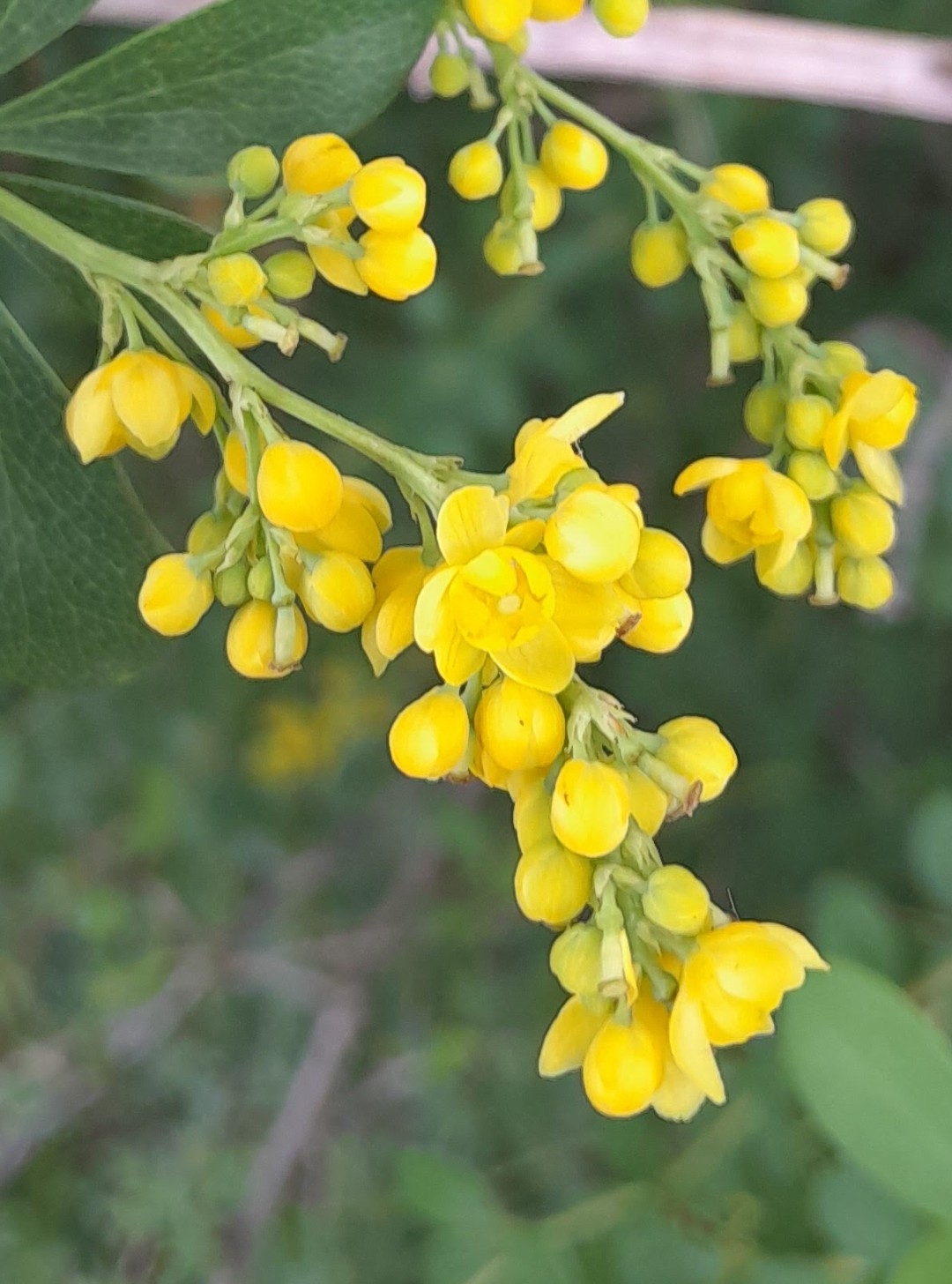
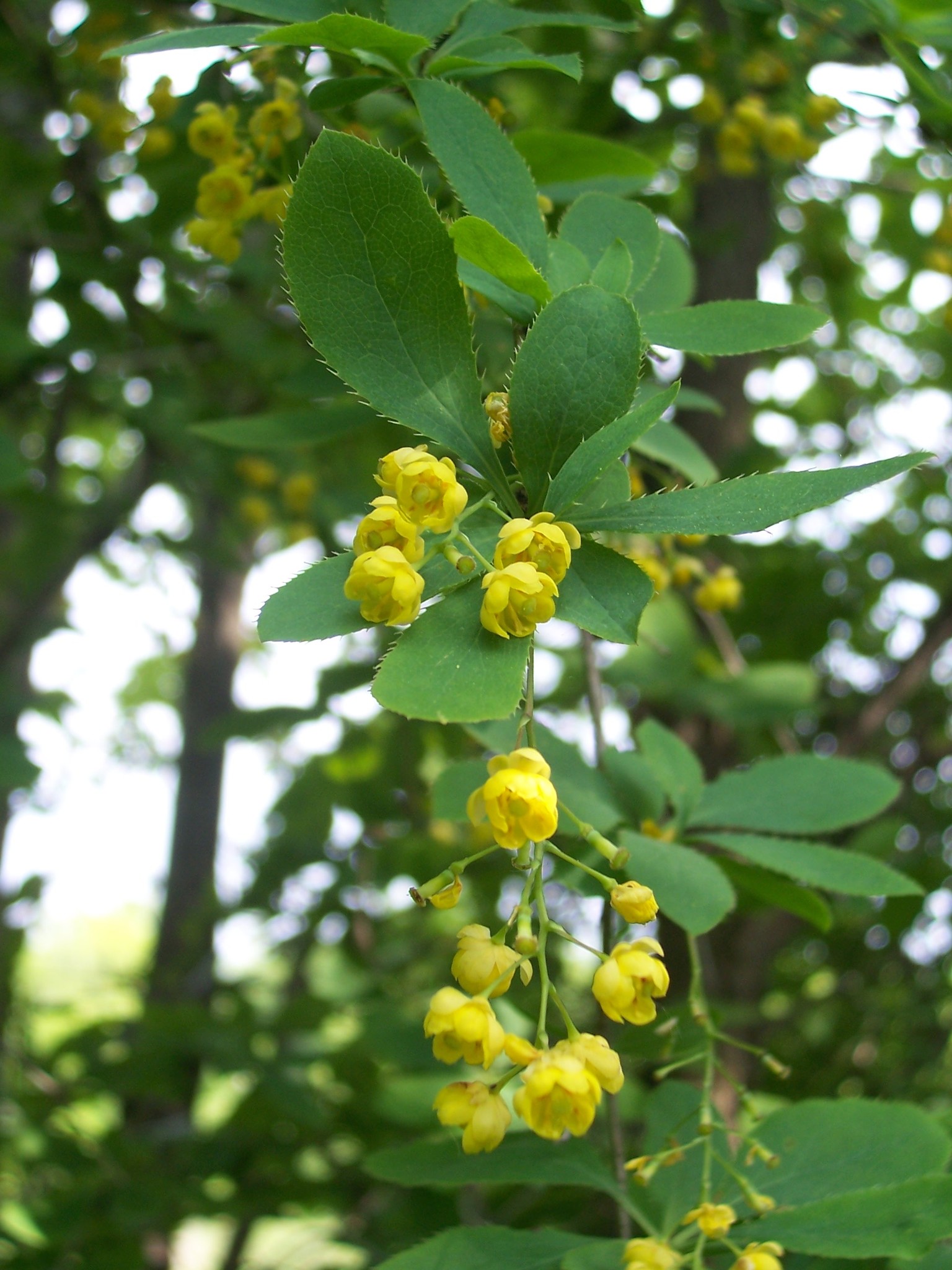
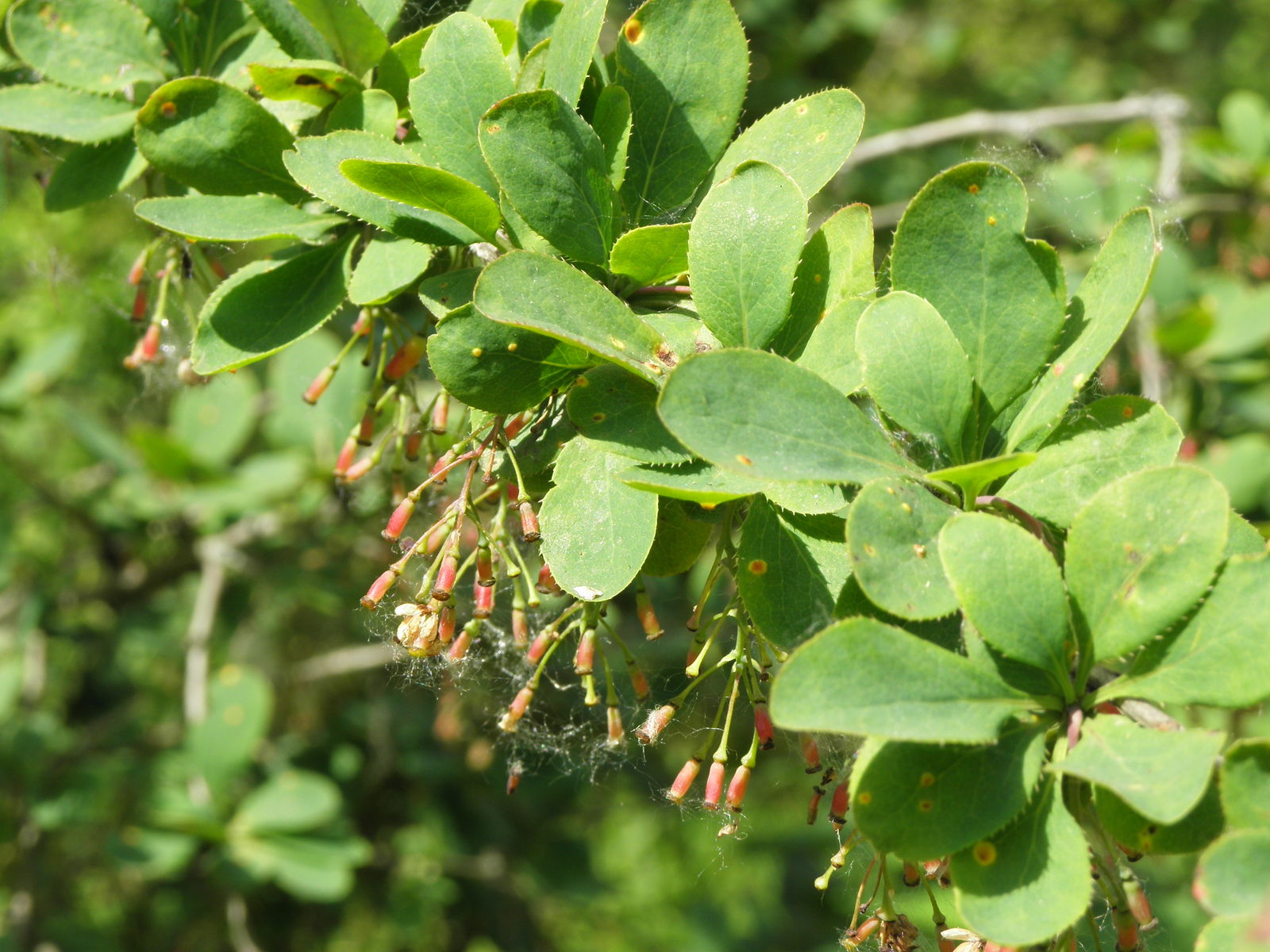
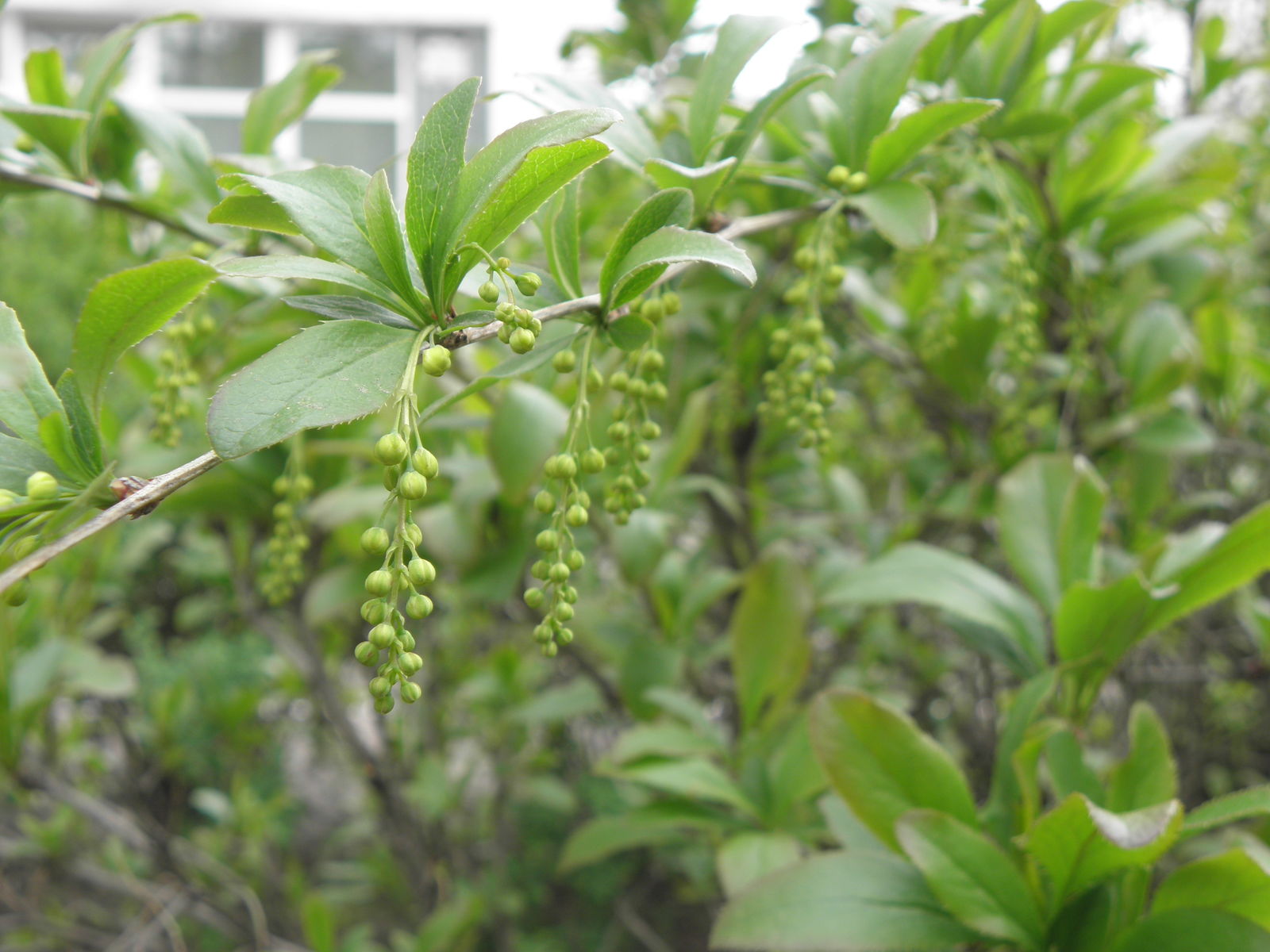
Thin, obovate leaves 2–6 cm (0.8–2.4 in) long have roughly ten to thirty fine teeth around the margins and grow in small clusters in the axil of each spine. In late spring, yellow-orange flowers appear in hanging racemes 2–6 cm (0.8–2.4 in) long, each carrying 10–20 flowers. The six touch-sensitive stamens snap toward the pistil when an insect touches them, coating it with pollen. 2 10
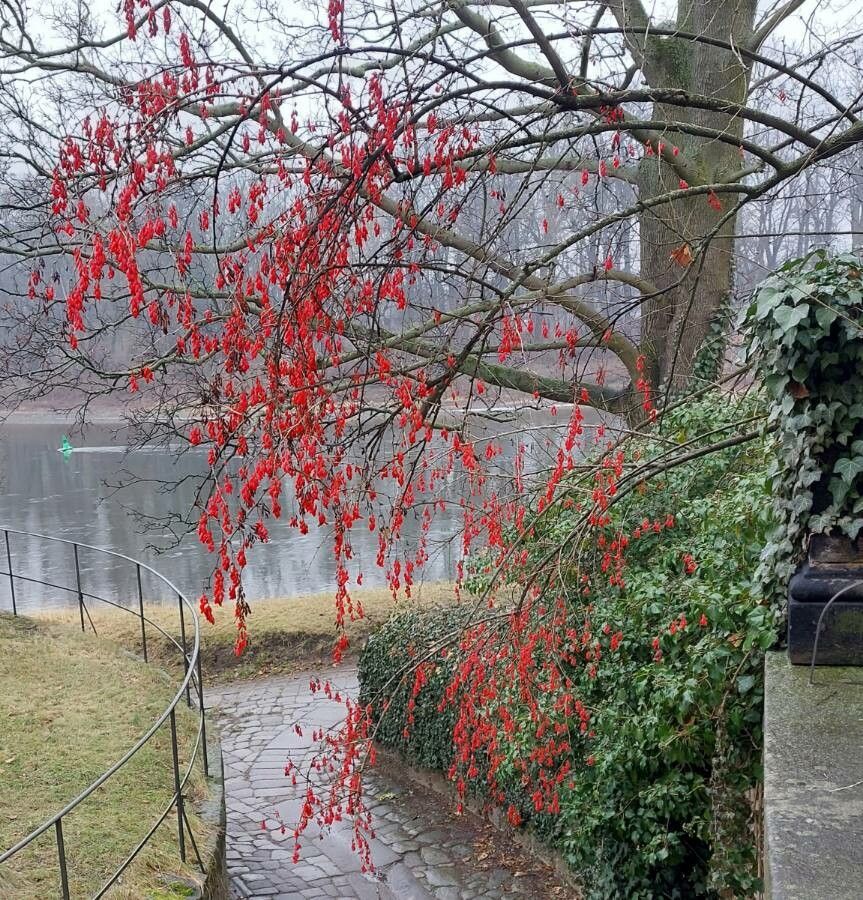
Oblong berries about 1 cm (0.4 in) long turn bright red in autumn. Their hanging clusters remain well after the leaves fall, providing an identification clue in winter. 2
Useful taxonomy
For this shrub, POWO/WCVP accepts Berberis vulgaris L. and recognizes Berberis vulgaris subsp. vulgaris, which occupies much of the native European and Caucasian range. 1
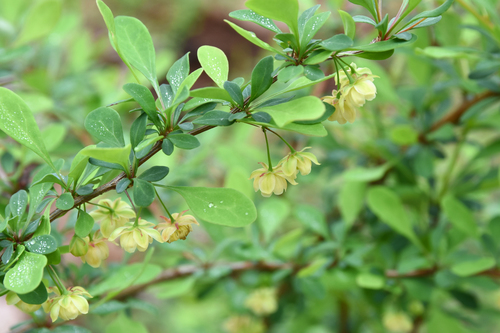
Among the many barberries, the most frequent comparison is with Japanese barberry (Berberis thunbergii DC.), widely grown for ornamental hedges. Its single spines and smooth leaf margins contrast with European barberry’s three-branched spines and finely toothed leaves. Flowers also distinguish them: one to four together in Japanese barberry, versus ten to twenty in hanging racemes in European barberry. 9
Habitat and range
Europe through western and northern Iran forms the native range, with an associated presence in North Africa and temperate Asia. In France, European barberry grows on limestone slopes, in rural hedgerows and in sunny scrub. 1 7
The European IUCN assessment places this species in Least Concern. Its range remains broad and the overall population is stable, despite local declines. 13
Wheat farming has strongly shaped European barberry’s history beyond its native range. The shrub hosts the sexual stage of wheat stem rust (Puccinia graminis). Extensive eradication in North America and then western Europe through much of the twentieth century accounts for its scarcity in some former grain-growing regions. 12 6
Life cycle and reproduction
Late spring brings hanging yellow-orange flower clusters visited by insects. Linnaeus described the touch-sensitive stamens in 1755, in Flora Suecica. Each stamen snaps toward the pistil within a fraction of a second when a pollinator touches it, placing pollen on the visitor rather than allowing it to disperse unused. 11 10
Fruit develops through summer and ripens in early to mid-autumn, changing from green to bright red. The berries are too acidic for many birds early in autumn and often remain into winter. As acidity falls, they become a late food resource for wildlife. 2
To propagate European barberry, use cold-stratified seed, semi-ripe cuttings in summer, harder wood cuttings in autumn, or division of suckers produced naturally around the base. 5
Uses and risks
Ripe berries are rich in vitamin C but strongly acidic, so they are traditionally cooked into jam, jelly or syrup rather than eaten raw. This use was familiar in Europe before eradication campaigns reduced the shrub’s abundance. Seedless 'Asperma' was long selected for preserves because it avoided the need to strain out seeds. 2
Bark and roots have low but real toxicity. Their main alkaloid, berberine, can cause nausea, vomiting and diarrhea when large amounts are ingested. Traditional medicinal use of the wood is discouraged during pregnancy for the same reason. 5 6
Dense spines make European barberry useful as a defensive rural hedge, while its autumn fruit also suits specimen planting. According to the RHS, dark-purple 'Atropurpurea' is now planted more often than 'Asperma' or 'Variegata'. 4
Varieties, look-alikes and related plants
Three familiar cultivated forms are 'Atropurpurea', with dark-purple leaves; 'Asperma', with seedless berries valued for jam; and 'Variegata', with yellow leaf margins. These selections do not change the species’ hardiness or basic growing requirements. 4 2
Nursery labels can blur the distinction between European and Japanese barberry, but Berberis thunbergii has single spines and smooth leaf margins. In French hedgerows, common hawthorn (Crataegus monogyna) and blackthorn (Prunus spinosa) share limestone habitats and a thorny outline. Their dull-red and blue-black fruits, respectively, distinguish them from European barberry. 9
Main sources
- Plants of the World Online / Kew, Berberis vulgaris L.
- Trees and Shrubs Online, Berberis vulgaris
- Royal Horticultural Society, Berberis vulgaris (common barberry)
- Royal Horticultural Society, Berberis vulgaris 'Atropurpurea'
- Plants For A Future, Berberis vulgaris — Internet Archive, 2026-05-18
- North Carolina Extension Gardener Plant Toolbox, Berberis vulgaris
- INPN (MNHN), Berberis vulgaris - European barberry
- Conservation Nature, barberry (Berberis)
- Native Plant Trust Go Botany, Berberis vulgaris
- eLife, Touch-sensitive stamens enhance pollen dispersal by scaring away visitors
- PMC, Reproductive Biology and Pollination Ecology of Berberis lycium
- PubMed, The Barberry Eradication Program in Minnesota for Stem Rust Control
- World Land Trust, Common Barberry conservation status
Frequently asked questions
Is European barberry poisonous?
Bark, roots and sap contain berberine, an alkaloid with low but real human toxicity. Large amounts may cause digestive upset. The ripe fruit is eaten cooked.
Why has European barberry disappeared from some rural areas?
The shrub hosts the sexual stage of wheat rust. Eradication campaigns in North America and western Europe during the twentieth century made it locally rare in former grain-growing areas.
How can I distinguish European barberry from Japanese barberry?
Berberis vulgaris has three-branched spines, finely toothed leaves and clusters of ten to twenty flowers. Berberis thunbergii has single spines, smooth leaf margins and flowers borne singly or in groups of one to four.
Can you eat European barberry fruit?
The ripe berries are rich in vitamin C but very acidic raw. They are cooked, candied or made into jelly. Seedless Asperma was long grown specifically for this use.
Why do the stamens move when an insect touches the flower?
Each flower has six touch-sensitive stamens that snap inward toward the pistil when a pollinator touches them, placing pollen on its body. Linnaeus described this mechanism in 1755.
What does the French name épine-vinette mean?
It combines the thorny branches with vinette, a reference to the sour, almost vinegary taste of ripe berries.
What is Asperma barberry?
Asperma refers to plants with seedless fruit, selected to avoid straining seeds out when making jams and preserves.
Similar plants
If you are unsure about a plant’s toxicity, ask a botanist or veterinarian for advice.