
Indian chrysanthemum (Chrysanthemum indicum, )


Indian chrysanthemum (Chrysanthemum indicum L.) is a rhizomatous perennial in the Asteraceae, native across a broad arc from the Himalayas to East Asia. An accepted botanical species distinct from large florist chrysanthemums, it is important in their horticultural history and often appears under the older name Dendranthema indicum.
Read moreIndian chrysanthemum, Japanese chrysanthemum, Winter aster, Yeju and Dendranthema indicum
Place in full sun, with intense direct light all day long.


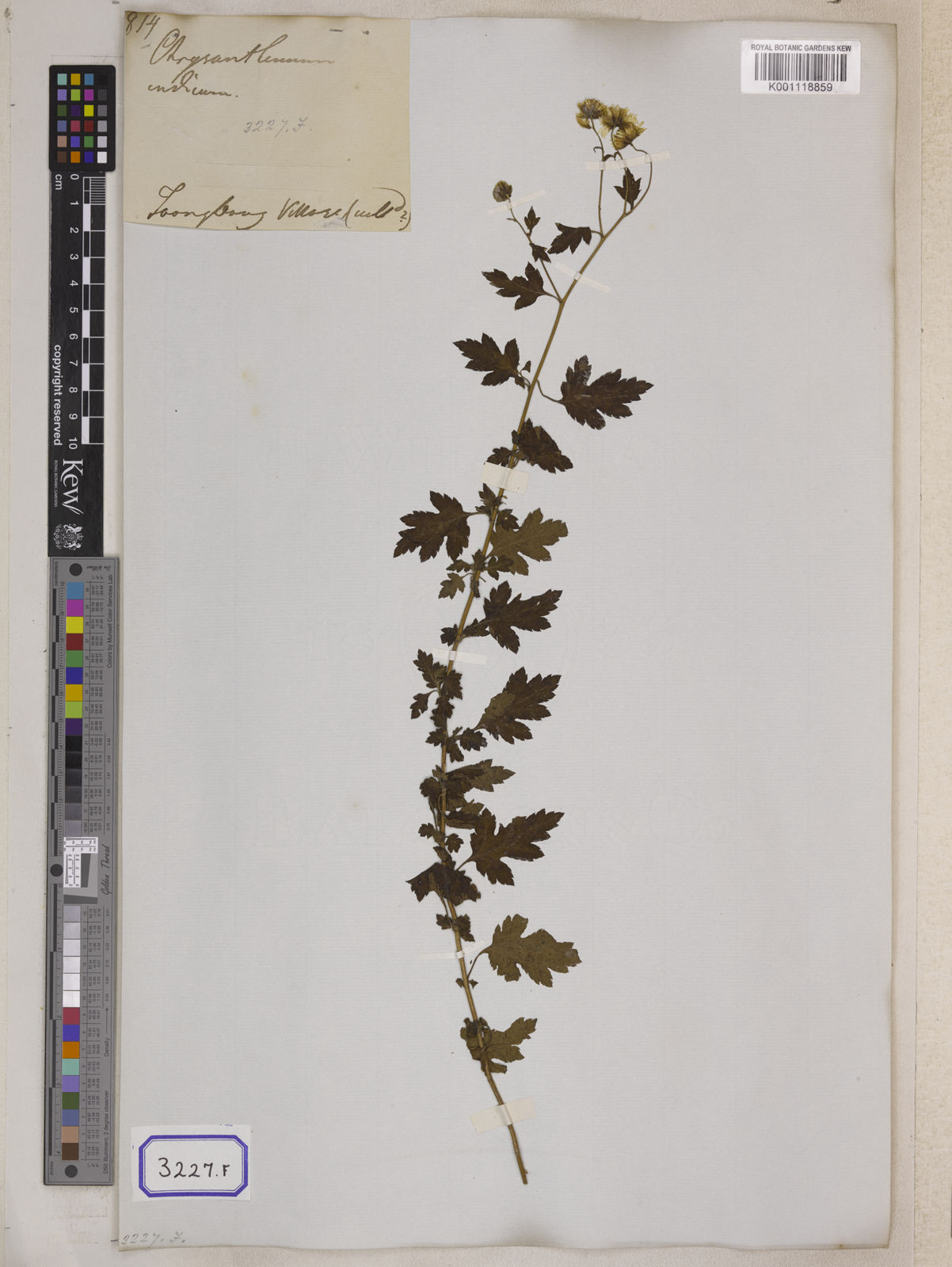
© photo
Wikimedia Commons · CC BY-SA or Public Domain
Wikipedia · CC BY-SA
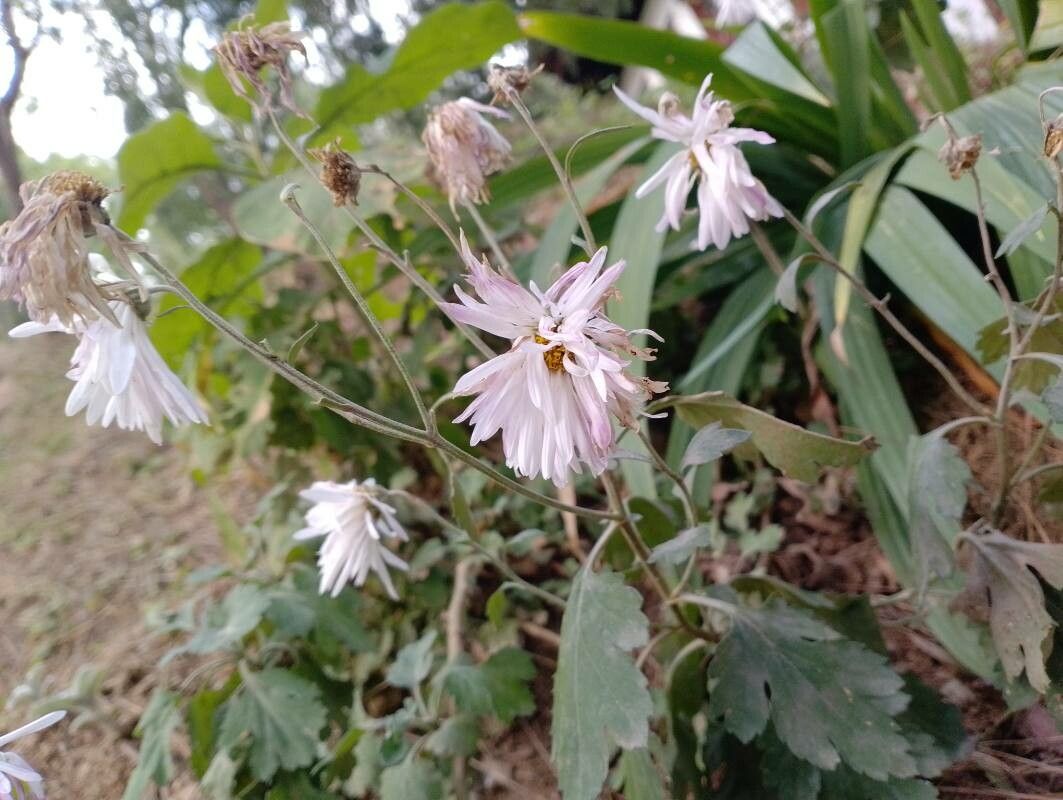
Taken Oct 8, 2022 by Jim Knopf (cc-by-sa)
Taken Oct 27, 2020 by clare rimell (cc-by-sa)
Taken Oct 28, 2022 by Jim Knopf (cc-by-sa)
© copyright of the Board of Trustees of the Royal Botanic Gardens, Kew.




Global distribution
POWO accepts Chrysanthemum indicum L. and places its native range from the Himalayas to China, northern Indochina, Korea and Japan. That source lists France as introduced, without a sourced invasive-species warning.
- Native10
- Introduced1
- North-central China
- South-central China
- Southeast China
- Eastern Himalayas
- Japan
- Korea
- Laos
- Nepal
- Taiwan
- Vietnam
- Metropolitan France
Hexagons: regions where the plant occurs. Green dots: native range.1
Identity
Indian chrysanthemum (Chrysanthemum indicum L.) is an accepted botanical species in the genus Chrysanthemum, family Asteraceae. POWO/Kew records its original publication in Species Plantarum in 1753 and classifies it as a perennial of temperate biomes. Its common name does not summarize its actual origin: the modern native range mainly covers the Himalayas and East Asia. 1
C. indicum provides a reference for wild or semi-wild plants rather than simply describing a florist pot plant. Florist chrysanthemums often belong to the Chrysanthemum × morifolium or C. × grandiflorum complex. Nevertheless, C. indicum remains important in their history: several studies identify it as a major ancestral or parental species of cultivated chrysanthemum. 5 6
For horticultural purposes, RHS describes Indian chrysanthemum as a perennial with aromatic foliage and single yellow flowers in late summer and fall. This garden description is useful, but traditional medicinal and food uses require separate consideration, stricter identification and an appropriate safety framework. 2
Recognition
Rhizomes of varying length produce an herbaceous clump 25 cm–1 m (10 in–3.3 ft) tall. Stems can be upright, spreading or somewhat ascending. The middle leaves are green to olive green, stalked, oval to elliptical and often lobed or pinnatifid, appearing more deeply divided than those of many garden daisies. 3
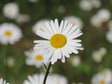
Yellow flower heads may be numerous or more widely spaced, forming loose terminal cymes. As in other Asteraceae, each apparent flower is actually a head of small florets: yellow ray florets around the edge and yellow tubular florets in the center. WFO/Flora of China also describes short achenes without a visible pappus. 3
RHS emphasizes the deeply divided aromatic leaves, with a scent compared to lemon and chamomile. This helps distinguish C. indicum from some yellow asters or cultivated daisies, although the scientific name remains necessary when comparing wild chrysanthemums, hybrids and florist cultivars. 2
Taxonomy and names
The naming difficulty centers on Chrysanthemum / Dendranthema. The sources used recognize Chrysanthemum indicum L. as the correct species name and treat Dendranthema indicum (L.) Des Moul. as a synonym. RHS also includes Dendranthema indicum among the synonyms on its horticultural page. 1 2
NCBI records the same taxonomic correspondence and notes that Chrysanthemum has been conserved over Dendranthema. It serves here as a useful cross-check rather than the main nomenclatural authority, explaining why both names still circulate in catalogs, older databases and some horticultural writing. 7
The reverse confusion also needs care: C. indicum does not automatically mean C. × grandiflorum or C. × morifolium. Phylogenetic studies reveal a complex genus involving hybridization, polyploidy and geographical groups. C. indicum is therefore an accepted species and an important parent of the cultivated group, without being equivalent to all florist chrysanthemums. 6 5
Habitat and range
From the eastern Himalayas, the native range recorded by POWO extends to China, northern Indochina, Korea and Japan. Its detailed list includes north-central, south-central and southeast China, Inner Mongolia, Japan, Korea, Laos, Nepal, Taiwan and Vietnam. France appears among introduced territories rather than centers of origin. 1
Temperate biomes provide its natural setting. In gardens, RHS treats it as a full-sun perennial for fertile, moist but well-drained soil. It can grow in beds, pots, borders, informal gardens or pollinator plantings, provided the flowers remain accessible and the plant has not been treated. 1 2
No invasive alien species status is assigned here for metropolitan France. This neither makes the plant native there nor rules out local escapes; it means only that the selected references do not justify an invasive-species warning for France. The supported description is introduced or cultivated in France, without an invasive claim. 1
Life cycle, flowering and propagation
An herbaceous perennial with a rhizomatous crown, Indian chrysanthemum flowers and fruits from June to November in WFO/Flora of China, while RHS records single yellow flowers from August to October in British cultivation. These Northern Hemisphere records indicate mainly summer-to-fall flowering, varying with climate, stock and growing practice. 3 2
Propagation uses seed, spring division or basal cuttings. RHS recommends taking basal cuttings from overwintered stock and dividing established clumps in spring. Seed is useful for a species but can produce variable individuals, particularly in a genus where genetic studies document diversity, hybridization and polyploidy. 2 5
After flowering, the aboveground growth can be cut back. In mild climates the crown can remain outside under mulch; in cold regions or containers, frost-free protection is more cautious. This is cultivation advice rather than a botanical identification rule: a plant sold under an Indicum horticultural group may not strictly match wild C. indicum. 2
Garden cultivation
Successful cultivation chiefly requires full sun, fertile soil, regular moisture and effective drainage. RHS accepts loam, sand or clay as long as water does not stagnate, with acid, neutral or alkaline pH. In containers the root ball is critical: it dries quickly in summer but rots if kept cold and saturated in winter. 2
Watch for the pests and diseases familiar on other chrysanthemums: aphids, capsid bugs, earwigs, nematodes, leaf miners, red spider mites, powdery mildew, botrytis and chrysanthemum white rust. A compact, well-aired plant, fed moderately and watered at its base, has fewer problems than a crowded clump with persistently wet foliage. 2
RHS rates its hardiness H4, with caution below approximately −5 °C (23 °F) depending on drainage, exposure and container conditions. Plants in beds can be cut back in late fall and mulched. Container-grown crowns are better sheltered, since cold combined with prolonged wetness is often more dangerous than dry cold alone. 2
Uses and safety
Garden uses are straightforward: a sun-loving perennial with late yellow flowers for pots, borders, pollinator plantings and cutting. RHS also mentions leaves used for herbal tea and fragrant flower heads prepared as a condiment in some Asian cuisines. These records are not consumption advice: the plant must be identified, untreated, intended for food use and supported by a dedicated food source. 2
Medicinal traditions require wording without therapeutic promises. BMC Genomics notes the long-standing use of dried C. indicum inflorescences in China and increased demand for this plant material. This belongs to ethnobotany and pharmacognosy; it establishes neither self-medication guidance nor dosage or clinical efficacy for readers. 5
For animal exposure, the ASPCA classifies Chrysanthemum spp. as toxic to dogs, cats and horses. Listed substances include sesquiterpene lactones, pyrethrins and other irritants; reported signs include vomiting, diarrhea, excessive salivation, incoordination and dermatitis. A cautious veterinary warning is therefore retained for C. indicum. 4
Main sources
- Plants of the World Online / Kew, Chrysanthemum indicum L.
- Royal Horticultural Society, Chrysanthemum indicum
- World Flora Online, Chrysanthemum indicum L., Flora of China description
- ASPCA, Chrysanthemum toxicity entry
- Han et al. 2018, BMC Genomics, Chrysanthemum indicum SSR markers
- Liu et al. 2012, PLOS ONE, Phylogeny of Chrysanthemum
- NCBI Taxonomy Browser, Chrysanthemum indicum
Frequently asked questions
Are Chrysanthemum indicum and Dendranthema indicum the same plant?
Yes. POWO and RHS use Chrysanthemum indicum as the correct name and treat Dendranthema indicum as a historical synonym.
Is it the florist's chrysanthemum?
No. C. indicum is a botanical species. It is important in the history of cultivated chrysanthemums, but a florist plant often belongs to the C. × morifolium or C. × grandiflorum complex.
Can it be used for tea or cooking?
Horticultural and scientific sources mention food or traditional uses, but home consumption is not recommended here. Identity, the part used, treatments and food-grade quality must be established separately.
Is it toxic to animals?
Yes. As a precaution, the wording follows the ASPCA classification for Chrysanthemum spp. as toxic to dogs, cats and horses, with digestive problems, excessive salivation, incoordination or dermatitis possible.
Why is it called Indian chrysanthemum if it mainly comes from East Asia?
The name is historical. POWO places the native range from the Himalayas to China, northern Indochina, Korea and Japan, rather than giving it a solely Indian origin.
Similar plants
If you are unsure about a plant’s toxicity, ask a botanist or veterinarian for advice.