
Wild carrot (Daucus carota, )
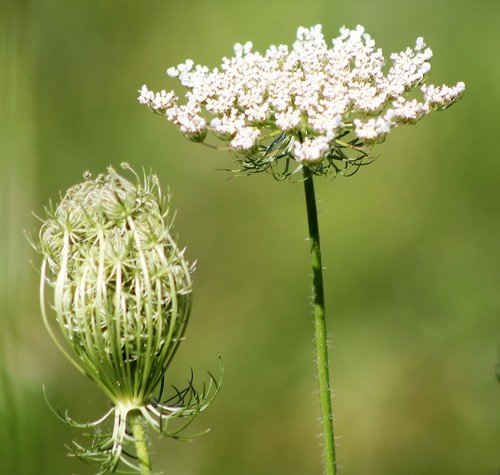
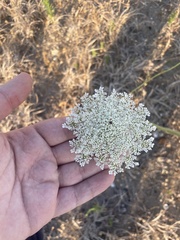
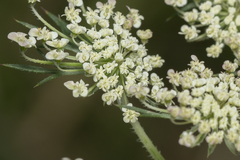
Wild carrot (Daucus carota), also called Queen Anne’s lace, is a biennial in the Apiaceae found in meadows, waste ground and roadsides across temperate parts of the Old World. A flat, lacy white umbel often has a purple central flower above a pale taproot. Foraging is risky because it resembles deadly members of the same family.
Read moreWild carrot and Queen Anne’s lace

© photo
(c) Nancy Lasiter, some rights reserved (CC BY-NC), uploaded by Nancy Lasiter · cc-by-nc
iNaturalist User · cc0
Eleftherios Katsillis · cc-by
(c) Eleftherios Katsillis, some rights reserved (CC BY) · cc-by
(c) Gavin Slater, some rights reserved (CC BY) · cc-by
Global distribution
Daucus carota is native to temperate parts of the Old World, from Macaronesia and North Africa through Europe to southern China. Gathered, cultivated and transported for millennia, it has naturalized widely elsewhere, notably in North America and Australia, colonizing waste ground and roadsides. These introduced populations are distinct from its original range.
- Native4
- Introduced4
- Metropolitan France
- Europe
- North Africa
- Southern China
- United States
- Canada
- Australia
- New Zealand
Hexagons: regions where the plant occurs. Green dots: native range.1
Identity
Wild carrot (Daucus carota L., 1753), also called Queen Anne’s lace, is a biennial in the Apiaceae, genus Daucus. It is the wild ancestor of the garden carrot, but its taproot remains pale, thin and fibrous, without the colored flesh of the cultivated plant. 1 4
Common in dry meadows, waste ground and roadsides in temperate regions, it is recognizable by a broad white umbel, often marked by a purple flower at its center. It is easy to observe, but identification must distinguish it from dangerous relatives in the same family. 3 8
Recognition
During its first year, Daucus carota forms a rosette of finely divided leaves, two to three times pinnate, with a clear carrot scent when crushed. In its second year it produces an upright, branched stem 30–120 cm (12–47 in) tall, grooved and covered with stiff hairs. 3 6
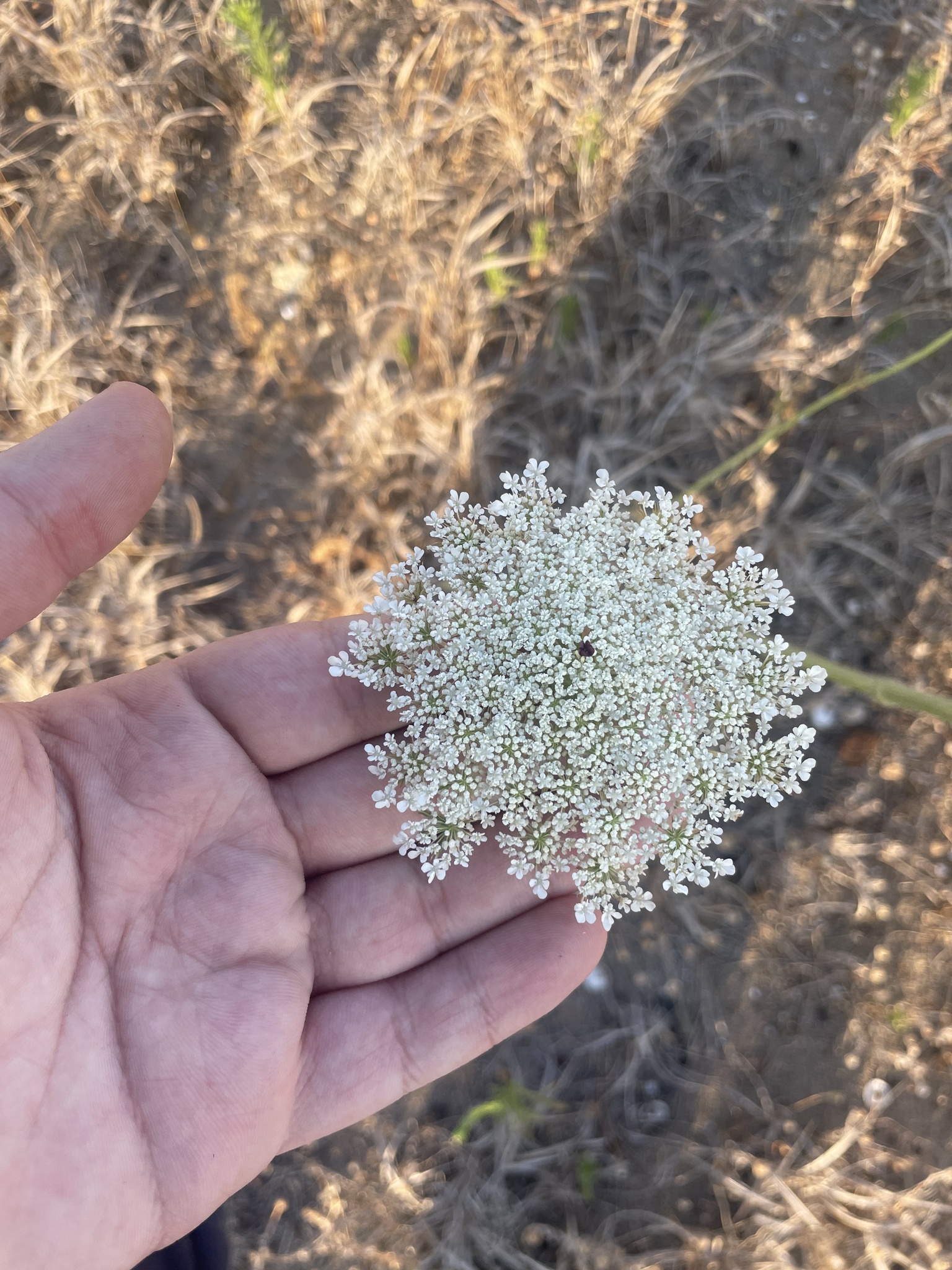
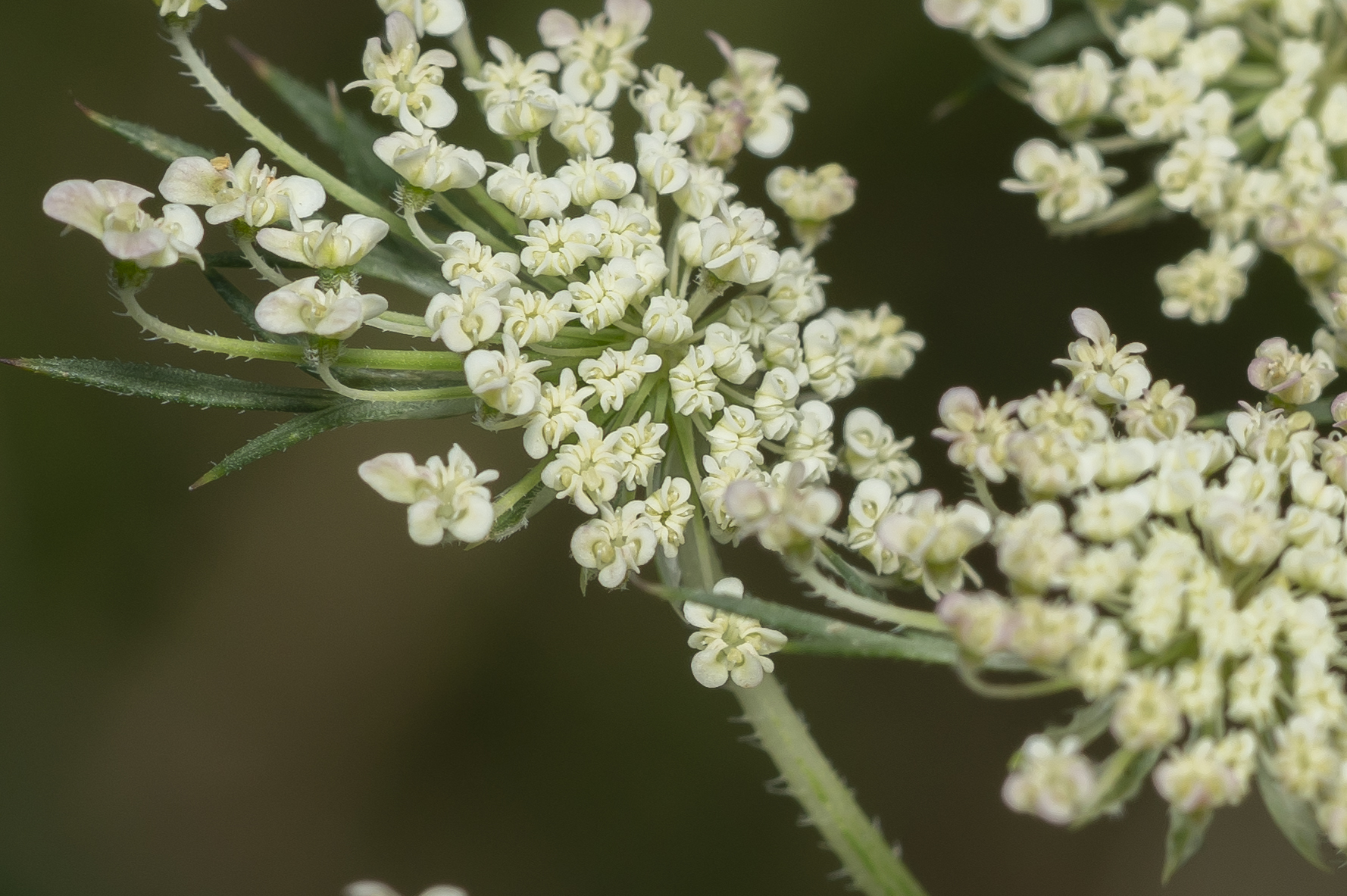
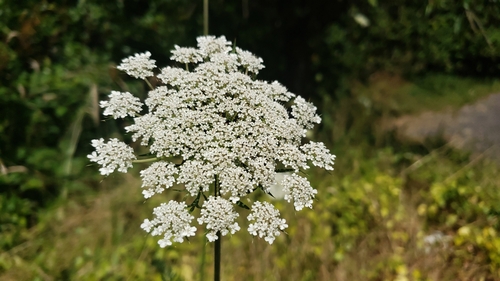
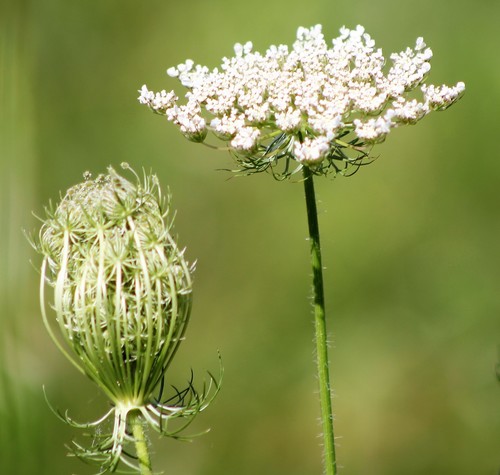
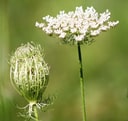
The inflorescence is particularly distinctive: a broad compound umbel of tiny white flowers, flat and intricately patterned like lace, frequently bearing a single purple to blackish central flower. Beneath it, bracts divided into narrow strips form a characteristic collar, a useful feature when comparing it with hemlocks. 8 4
After flowering, the umbel folds inward into a concave cup resembling a bird’s nest, another common name for the plant. Dry, brown fruits covered in small spines catch on fur and clothing, dispersing the seeds. 5 3
Useful taxonomy
Carl Linnaeus described the species as Daucus carota L. in 1753. Considerable variation within the wild carrot complex has produced numerous subspecies and many historical names. Important examples include:
- Daucus carota subsp. carota (wild type)
- Daucus carota subsp. sativus (Hoffm.) Schübl. & G.Martens
- Daucus carota subsp. gummifer (Syme) Hook.f.
- Caucalis carota (L.) Crantz
- Daucus carota var. carnosus (Roth) Roth
The accepted scientific name, Daucus carota, remains the useful reference point, together with the distinction between the typical wild subspecies and domesticated sativus, the garden carrot. 1 7
Habitat and range
The native range lies in temperate parts of the Old World, from Macaronesia and North Africa through Europe to southern China. Wild carrot is a pioneer of open habitats: nutrient-poor meadows, banks, waste ground and roadsides with poor, well-drained soil. 1 8
Like many meadow Apiaceae, it favors full sun and ground that does not become waterlogged. It tolerates summer drought and rather calcareous soils. This preference for dry, open places helps explain its abundance beside roads and on disturbed ground. 3 6
Transport and cultivation over millennia have carried wild carrot far beyond that range. It has widely naturalized in North America, Australia and New Zealand, where it is sometimes treated as a colonizing weed. These introductions remain distinct from the original Old World range. 7 6
Life cycle and reproduction
Daucus carota has a typical biennial cycle. In the first year it forms a leaf rosette and stores reserves in its taproot. In the second, winter cold triggers bolting, followed by flowering, seed production and death. This vernalization requirement explains why a spring sowing does not flower in the same year. 3 5
Many kinds of insects visit the open umbels. The purple central flower has intrigued botanists: one hypothesis is that it resembles a resting insect and draws other pollinators toward the inflorescence. Fertilization produces small dry fruits with hooked spines. 4 8
In a naturalistic garden, propagation is solely by seed, sown directly into bare, sunny ground in spring because the taproot tolerates transplanting poorly. Plants then self-seed freely and abundantly. Cutting off umbels before the seeds mature may be necessary to contain them. 5 6
Uses and risks
Its main value today is ecological and ornamental. This flowering-meadow plant feeds bees, hoverflies and butterflies and is the direct ancestor of the garden carrot, domesticated subspecies sativus. The wild form’s thin, fibrous root has no routine culinary use. 4 5
Two risks deserve serious attention. Foliage and sap contain furanocoumarins that can cause photosensitive dermatitis: repeated contact followed by sunlight exposure leads to redness and blisters. Wear gloves when handling the stems. 5 6
The more serious danger is misidentification while foraging. Wild carrot closely resembles deadly Apiaceae, particularly poison hemlock (Conium maculatum) and fool’s parsley (Aethusa cynapium). Wild carrot’s hairy stem, carrot scent and divided bracts contrast with poison hemlock’s smooth, purple-spotted stem and mouse-like odor. Never eat a wild umbellifer if identification is uncertain. 9 3
Varieties, look-alikes and related plants
The recognized forms are subspecies within a variable complex rather than separate species. Typical carota is the familiar wild carrot; sativus is the garden carrot; gummifer is a fleshy coastal form; and maximus is a robust Mediterranean form. The species name Daucus carota remains the stable reference. 1 7
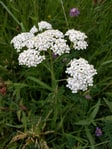
Other white-umbelled Apiaceae account for the most dangerous confusion:
- Conium maculatum, poison hemlock, highly poisonous, with a smooth, purple-spotted stem;
- Aethusa cynapium, fool’s parsley, also poisonous;
- Anthriscus sylvestris, cow parsley, earlier flowering and harmless.
A stem covered in stiff hairs, a distinct carrot scent when crushed and divided bracts beneath the umbel remain the most dependable characters for confirming Daucus carota. 9 8
Main sources
- Plants of the World Online / Kew, Daucus carota L.
- Royal Horticultural Society, Daucus carota - wild carrot
- Missouri Botanical Garden, Daucus carota
- Encyclopaedia Britannica, carrot
- Plants For A Future, Daucus carota
- NC State Extension, Daucus carota
- USDA PLANTS Database, Daucus carota L.
- Tela Botanica, Daucus carota L.
- King County, poison hemlock identification (Conium maculatum)
Frequently asked questions
Is wild carrot dangerous?
Repeated sap contact can cause photosensitive dermatitis in sunlight. The greatest danger when foraging is confusion with deadly Apiaceae such as poison hemlock. Never eat a wild carrot unless its identification is absolutely certain.
How can I distinguish wild carrot from poison hemlock?
Wild carrot has stiff hairs on its stem, a carrot scent when crushed and divided bracts beneath the umbel. Poison hemlock (Conium maculatum) has a smooth, hairless, purple-spotted stem and an unpleasant mouse-like smell.
Is wild carrot the same plant as a garden carrot?
The garden carrot is the domesticated subspecies Daucus carota subsp. sativus, selected for its fleshy, colored root. Wild carrot is the ancestral form, with a thin, pale root that is not a practical food crop.
Why is there a black flower in the center of the umbel?
The purple to blackish central flower is characteristic of the species. It is thought to imitate a resting insect and attract other pollinators to the white umbel.
Is wild carrot invasive?
In France it is a common native of meadows and waste ground and is not classified as invasive. Outside its native range, notably in North America, it is regarded as a colonizing weed.
Can you eat wild carrot root?
Its root is thin, fibrous and tough, unlike a store-bought carrot. More importantly, confusion with poisonous Apiaceae makes gathering roots for food strongly inadvisable without expertise.
When does wild carrot flower?
It flowers in summer, chiefly June to September in temperate Northern Hemisphere climates, in its second year. During the first year it forms only a rosette at ground level.
Varieties and subspecies
Similar plants
If you are unsure about a plant’s toxicity, ask a botanist or veterinarian for advice.