
Carrot (Daucus carota subsp. sativus, )


Carrot (Daucus carota subsp. sativus) is a biennial vegetable in the Apiaceae, grown as an annual for its fleshy, usually orange, edible taproot rich in carotene. It is the domesticated form of wild carrot, distinguished by its thick, tender root. After potato, it is the world’s principal cultivated root vegetable.
Read moreCarrot, Cultivated carrot and Garden carrot


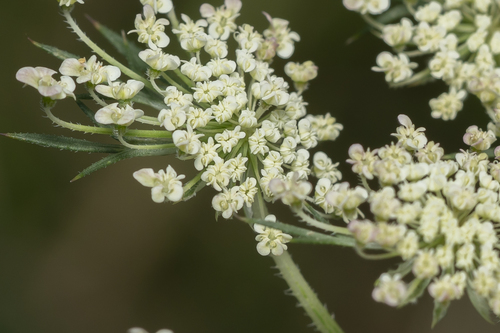
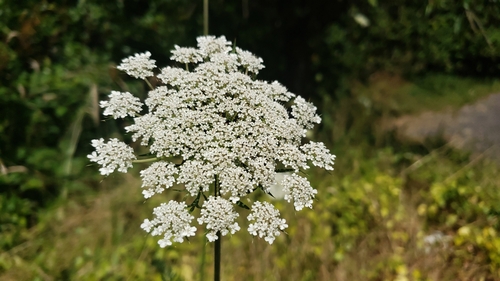
© photo
Wikimedia Commons · CC BY-SA or Public Domain
(c) Eleftherios Katsillis, some rights reserved (CC BY) · cc-by
(c) Gavin Slater, some rights reserved (CC BY) · cc-by
Global distribution
Daucus carota subsp. sativus is the domesticated form of wild carrot, originating in Central Asia and the Afghan region before cultivation spread throughout temperate regions worldwide. This account describes the cultivated crop, distinct from the wild subspecies.
- Native3
- Afghanistan
- Central Asia
- Iran
Hexagons: regions where the plant occurs. Green dots: native range.1
Identity
Carrot (Daucus carota subsp. sativus (Hoffm.) Schübl. & G.Martens) is a vegetable in the Apiaceae, genus Daucus. This domesticated form of wild carrot is grown for its fleshy taproot, usually orange, edible and rich in carotene. After potato, it is the world’s principal cultivated root vegetable. 1 4
A biennial by nature, carrot is almost always grown as an annual vegetable: the root is harvested in its first year, before flowering. The names cultivated carrot and garden carrot distinguish it from the wild subspecies that grows spontaneously on waste ground. 2 3
Recognition
Its root is the most conspicuous distinguishing feature: a thick, tender taproot, usually orange, but yellow, white or purple in some varieties. Wild carrot instead has a slender, whitish, fibrous root. A rosette of leaves finely divided into narrow segments grows above it. 3 5
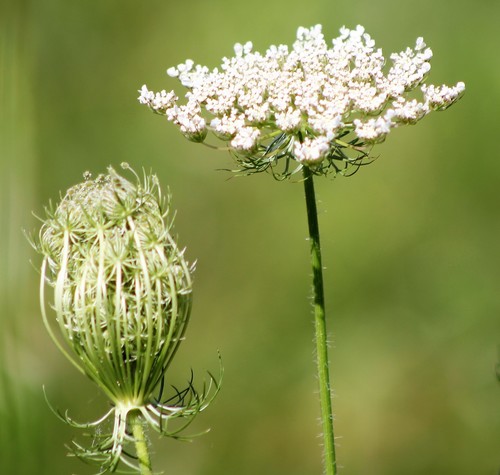
Crushing a leaf or cutting the root releases a characteristic carrot scent. In its second year the plant produces a branched stem bearing flat compound umbels of white flowers, the familiar Apiaceae inflorescence. 4 6
After flowering, each flower develops into a small, bristly dry fruit that separates into two achenes at maturity. Gardeners see this stage only if plants are kept for seed, since the roots are normally harvested well before bolting. 5 6
Useful taxonomy
Linnaeus described the species Daucus carota. The cultivated subspecies bears the name Daucus carota subsp. sativus (Hoffm.) Schübl. & G.Martens, published in 1834. Its subspecies rank matters: the garden carrot is a domesticated form of wild carrot, rather than a separate species. Useful names include:
- Daucus carota var. sativus Hoffm.
- Daucus sativus (Hoffm.) Röhl. ex Pass.
- Daucus carota subsp. carota (the wild subspecies)
The accepted name, Daucus carota subsp. sativus, remains the botanical reference. Vegetable varieties such as Nantaise and Touchon are cultivated selections, not separate botanical species. 1 5
Habitat and range
Daucus carota subsp. sativus is a cultigen, the domesticated carrot. Its historical center of domestication lies in Central Asia and the Afghan region; its cultivated root forms result from selection from wild carrot. 1 4
Cultivation spread from this center through the Middle East and Mediterranean, then across temperate regions worldwide. Carrots are now grown in both small vegetable beds and large market-garden fields, on deep, loose, well-drained soil in full sun. 3 6
This account concerns deliberately sown crop plants. The wild subspecies colonizes waste ground, banks and paths spontaneously and has a much thinner root; that wild distribution must be distinguished from the distribution of the cultivated crop. 5 1
Life cycle and reproduction
As in other Apiaceae, flowers are carried in an umbel: numerous small white, hermaphroditic flowers arranged in a flat canopy and pollinated by insects such as bees and hoverflies. Flowering occurs in early summer, generally in the second year, when the plant runs to seed. 4 5
In vegetable growing, roots are harvested during the first year, long before flowering. Deep, moist, loose soil and full sunlight support taproot development. Stones or fresh manure cause roots to fork and become misshapen. 6 2
Propagation is solely by seed, sown shallowly in its final position from spring through summer where seasonal conditions allow. Germination is slow and irregular, taking two to three weeks, and requires consistently moist soil. Thin seedlings to give each root room to develop. Sowing to harvest takes 70–120 days, depending on the type, from early carrots pulled young to large storage varieties lifted in autumn. 3 2
Uses and risks
Culinary use predominates. Roots are eaten raw, grated or cooked in countless dishes, from soups to stews. Their sweet flavor and abundance of carotenes, orange pigments partly converted by the body into vitamin A, account for their popularity. Young leafy tops can also be used in cooking. 4 5
The cultivated root is non-toxic. ASPCA lists carrot among plants non-toxic to cats and dogs, and it is safe for people. It is one of the few vegetables that can be offered raw to domestic animals without risk. 7 8
The only caution concerns wild foraging, rather than the vegetable garden. Several white-umbelled Apiaceae resemble wild carrot, including highly poisonous hemlock. Never gather a wild root for food solely because it looks similar. A carrot deliberately sown in a vegetable bed presents no identification problem. 6 4
Varieties, look-alikes and related plants
Vegetable varieties are selected crops, not separate species. Nantaise and Touchon have tender cylindrical roots for everyday use; De Colmar à cœur rouge is a large storage carrot. Jaune du Doubs and Purple Haze recall the range of colors preceding the dominance of orange. Check the type, earliness and storage qualities before buying seed.
Useful comparisons include other Apiaceae:
- Daucus carota subsp. carota, wild carrot, with a slender, fibrous root;
- Petroselinum crispum, parsley, with similar foliage but no fleshy colored root;
- Conium maculatum, poison hemlock, a poisonous white-umbelled plant never to confuse with food when foraging.
A thick, colored taproot, foliage divided into narrow segments and a carrot scent remain the most dependable characters for recognizing the cultivated carrot, Daucus carota subsp. sativus. 3 1
Main sources
- Plants of the World Online / Kew, Daucus carota subsp. sativus (Hoffm.) Schübl. & G.Martens
- Royal Horticultural Society, carrots - grow your own
- Missouri Botanical Garden, Daucus carota var. sativus - carrot
- Encyclopaedia Britannica, carrot plant
- Plants For A Future, Daucus carota sativus
- North Carolina State Extension, Daucus carota
- ASPCA, carrot (Daucus carota) non-toxic plant entry
- Merck Veterinary Manual, poisonous plants overview
Frequently asked questions
Is carrot poisonous?
No. The cultivated carrot root is edible and non-toxic to people and domestic animals. ASPCA also lists carrot among plants non-toxic to cats and dogs. The only caution concerns confusion with poisonous Apiaceae when gathering plants in the wild.
Why are carrots orange?
Orange color comes from carotenes stored in the root. Selection fixed this color from purple, yellow or white carrots; the domestication of the crop and the later selection of orange types are distinct stages of its history.
How does it differ from wild carrot?
The cultivated carrot is the domesticated form of wild carrot. It differs in its thick, tender, colored root; the wild root remains slender, whitish and fibrous.
Why do my carrots fork?
Forked roots almost always result from stony, compacted soil or fresh manure. Deep, loose, stone-free ground produces straight, even roots.
How can I protect carrots from carrot fly?
Carrot fly lays eggs near the plants and its larvae tunnel into the roots. Insect netting and planting with onions or leeks greatly limit damage.
When should carrots be harvested?
Harvest is 70–120 days after sowing, depending on the type. Pull roots as needed, and keep storage varieties dry before severe frosts.
Can carrot be confused with a dangerous plant?
Not in a vegetable bed where it was deliberately sown. During wild foraging, however, several white-umbelled Apiaceae, including poisonous hemlock, resemble wild carrot.
Similar plants

If you are unsure about a plant’s toxicity, ask a botanist or veterinarian for advice.