
Durian (Durio zibethinus, )
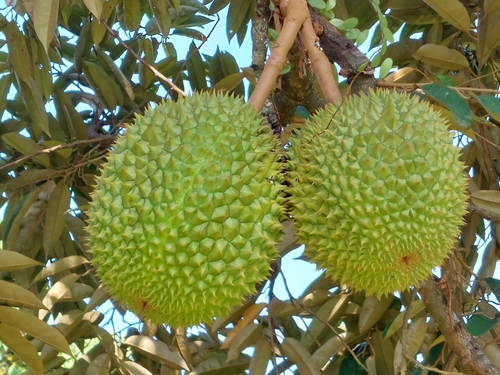

Durian (Durio zibethinus L., 1774) is a tropical fruit tree in the genus Durio, family Malvaceae, native to Borneo and Sumatra. Known as the king of fruits in Southeast Asia, it bears large, spiny fruit with a powerful smell that contrasts with its creamy edible aril.
Read moreDurian, Durion, King of fruits, Duren and Thurian
Allow a few hours of direct sun per day, preferably morning or evening.
Full sun when adult; partial shade when young


© photo
(c) Lynette, some rights reserved (CC BY-NC), uploaded by Lynette · cc-by-nc
Samuel Lee · cc-by
Wikimedia Commons · CC BY-SA or Public Domain
Taken Apr 20, 2018 by Daniel Barthelemy (cc-by-nc)
Taken Apr 17, 2019 by OTS - O. Vargas (cc-by-nc-sa)
© copyright of the Board of Trustees of the Royal Botanic Gardens, Kew.




Global distribution
According to POWO, the native range of Durio zibethinus is confined to Borneo and Sumatra. Cultivation subsequently spread it through mainland and island Southeast Asia, southern India, Sri Lanka, the Philippines and New Guinea. These cultivated regions do not coincide with its strict native range.
- Native2
- Introduced3
- Borneo
- Sumatra
- Philippines
- Sri Lanka
- Southern India
Hexagons: regions where the plant occurs. Green dots: native range.1
Identity
Durian (Durio zibethinus L., 1774), also called durion or the king of fruits, is a tropical tree in Durio, family Malvaceae. Its oval fruit is covered in pyramidal spines, weighs up to 8 kg (18 lb) and releases a sulfurous smell strong enough for many Southeast Asian hotels and transport operators to prohibit it. This immediately separates it from jackfruit, a look-alike with a smoother rind and milder smell. POWO accepts Durio zibethinus, described by Carl Linnaeus in 1774 in the genus he had just established. Duren and thurian are other regional names. 1 4
The epithet zibethinus refers to the civet, an Asian carnivore whose musky smell was compared with ripe durian. The common name derives from Malay duri, thorn, with the suffix -an: something bearing thorns, referring to the spiny fruit rind rather than the tree itself. 5
Recognition
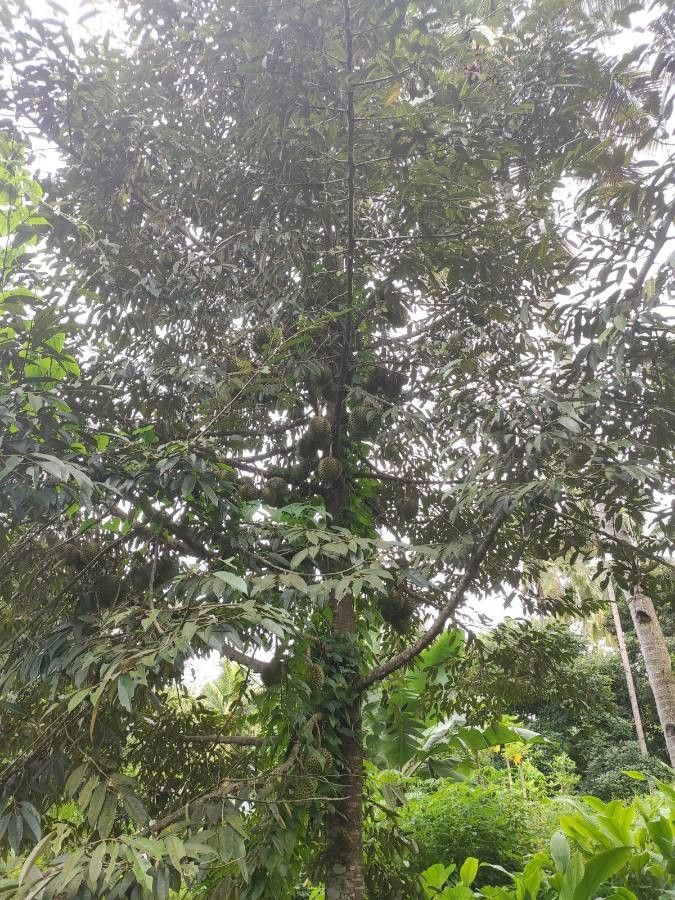
Morton describes an evergreen tree commonly 25–40 m (82–131 ft) tall in the wild, compared with 10–15 m (33–49 ft) for grafted orchard trees. Its trunk can exceed 1.2 m (3.9 ft) in diameter, with buttress roots supporting a dense, irregular crown. 2 8
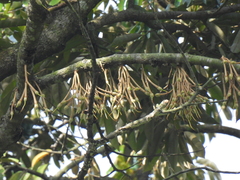
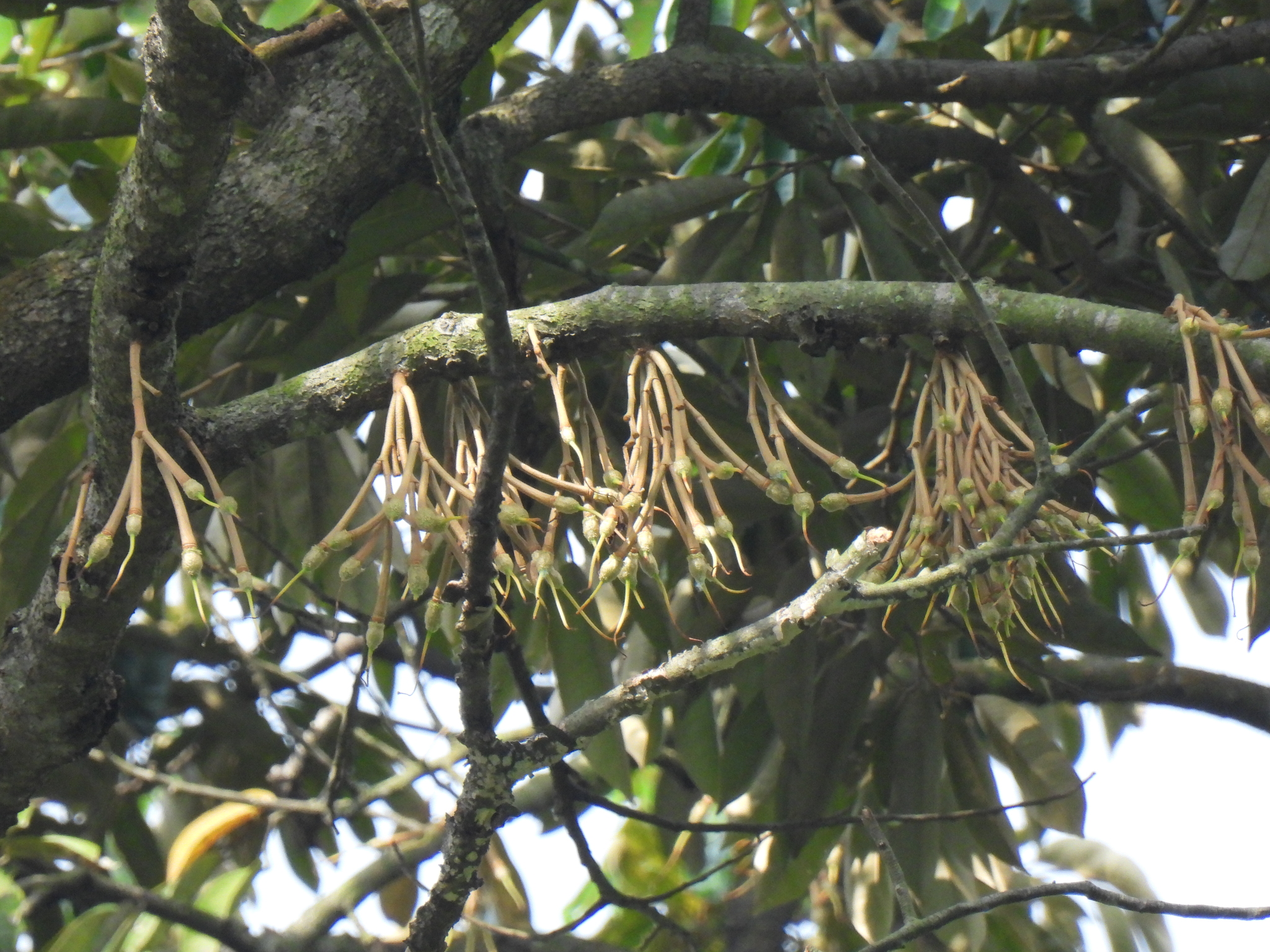
Alternate, evergreen leaves are oblong to elliptical, glossy dark green above and silvery beneath fine reddish-brown scales. Flowering is cauliflorous: whitish to golden-brown flowers hang in clusters directly from the trunk and large branches, an unusual arrangement compared with the shoot-tip flowers of most fruit trees. They open in late afternoon and shed pollen in the evening, matching visits by nectar-feeding bats rather than bees. 2
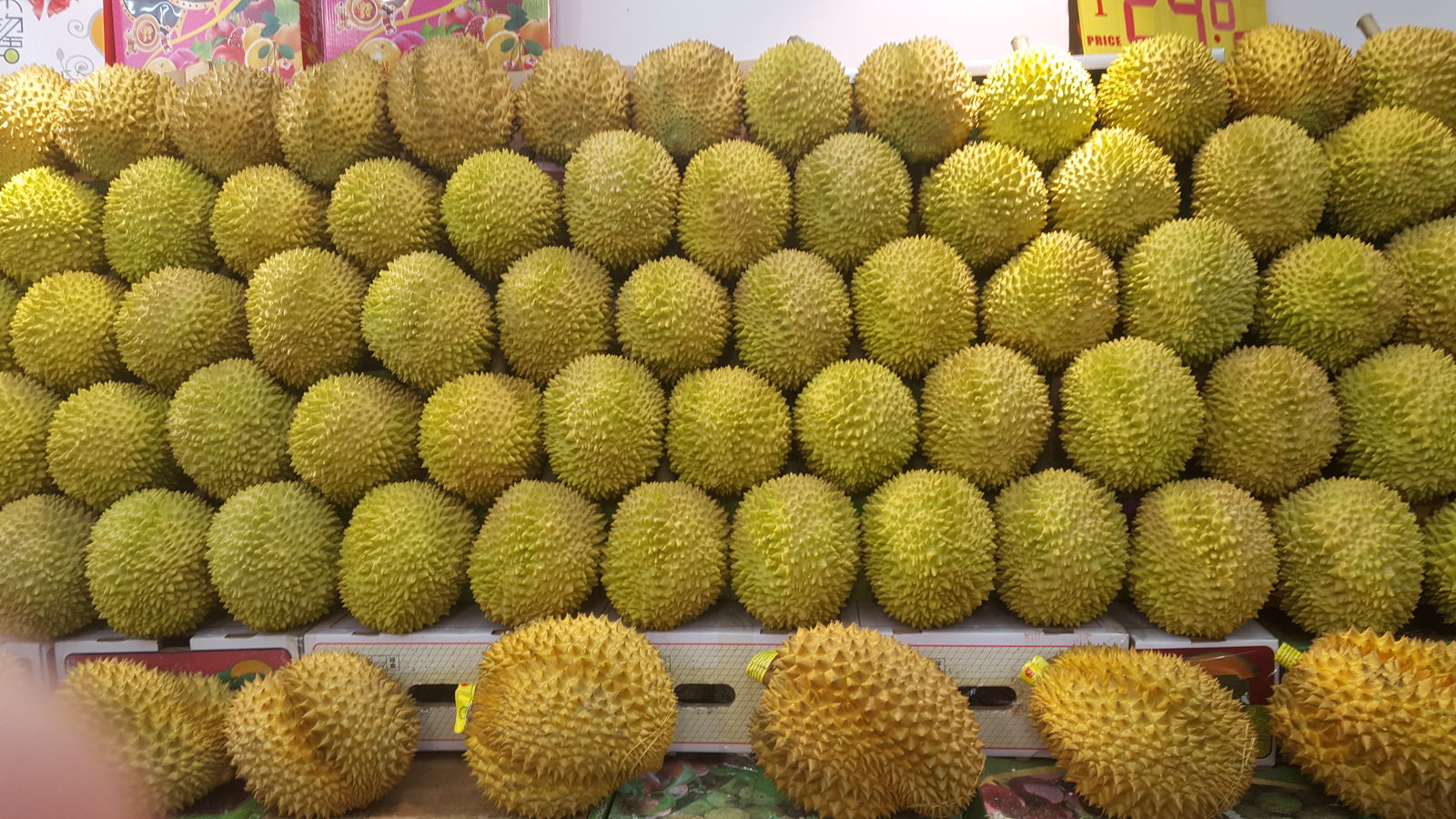
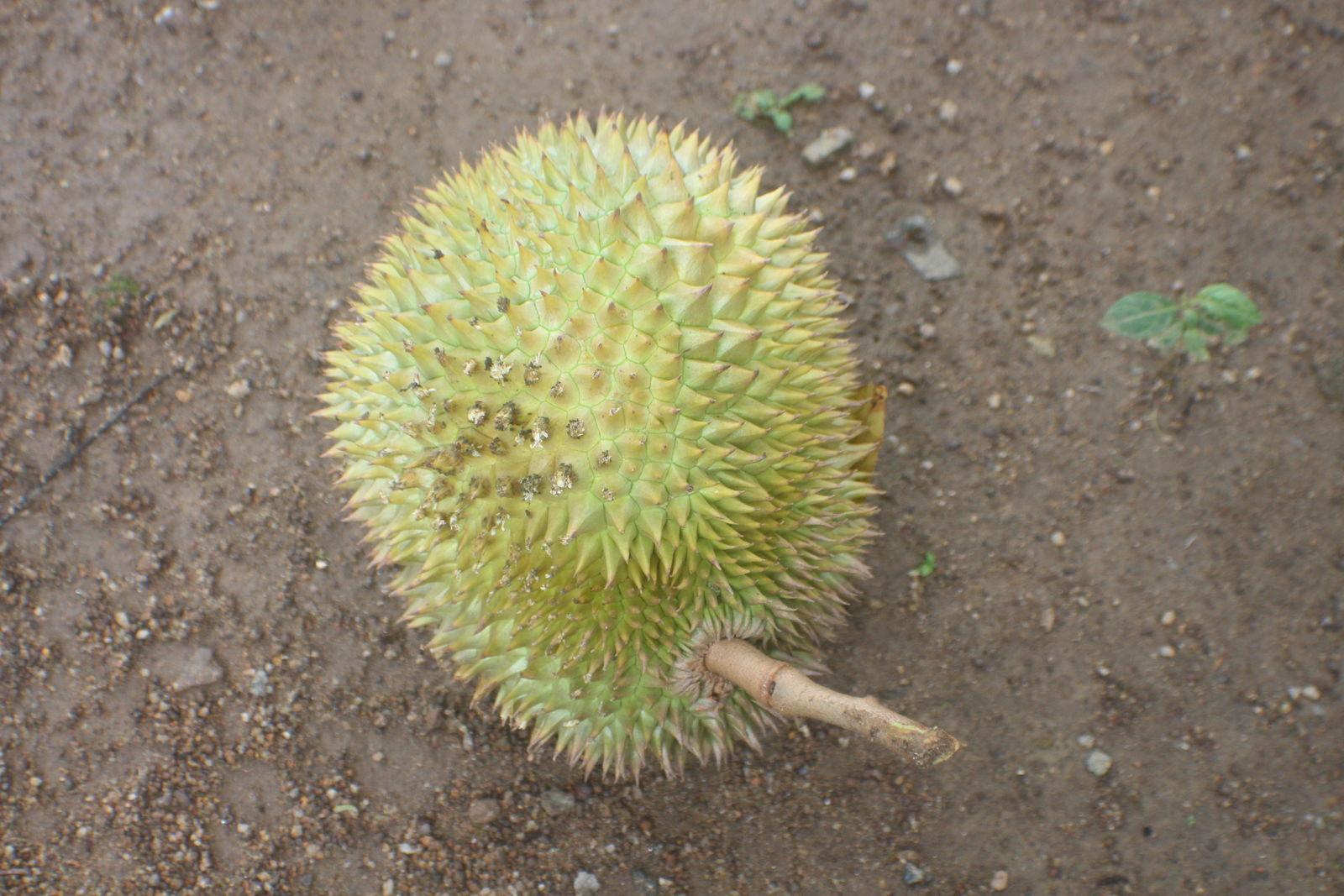
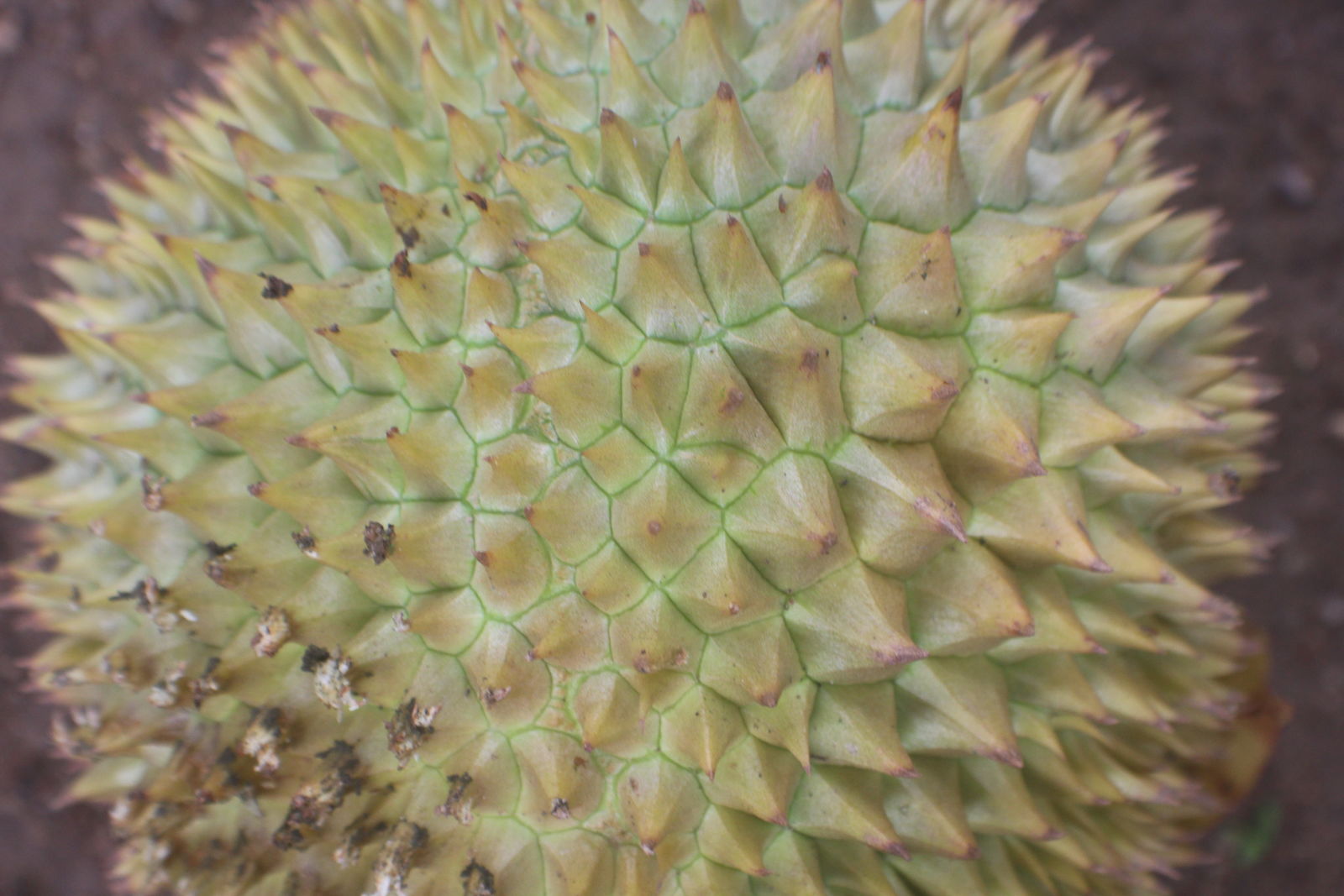
The oval to rounded fruit measures 15–30 cm (6–12 in) long and weighs up to 3–8 kg (7–18 lb). Its thick, partly woody rind is yellowish green when ripe and carries strong pyramidal spines. Inside, five chambers hold creamy to golden-yellow arils surrounding one to seven large, glossy brown seeds. 2 5
Useful taxonomy
The genus Durio includes about thirty species in island Southeast Asia. Durio zibethinus is by far the only one traded on a large scale, whereas Durio graveolens and Durio kutejensis are consumed strictly locally on Borneo. Formerly placed in Bombacaceae, the genus now belongs to Helicteroideae within the Malvaceae as expanded by modern phylogenetic classification. 4 1
The scientific name has no troublesome synonym in circulation, but cultivar nomenclature complicates trade. Each selection has both a common name, such as Musang King or Monthong, and an official Malaysian or Thai code, D197 or D159. The official code gives a more reliable way to identify a selection across countries than its commercial name. 5
Habitat and range
POWO places the native range of Durio zibethinus on Borneo and Sumatra. Its cultivated range now extends across mainland and island Southeast Asia, from southern India and Sri Lanka to the Philippines and New Guinea. Domestication is ancient: Morton traces commercial exchanges between Burma and a neighboring royal court several centuries ago. 1 2
The species grows in humid lowland and upland tropical forest to about 800 m (2,620 ft), under consistently warm conditions. Mean temperatures below 22 °C (72 °F) prevent growth, and cold below 12 °C (54 °F) seriously damages the tree, excluding outdoor planting beyond the tropics. 8 3
IUCN lists Durio zibethinus as Data Deficient. The identity and distribution of genuinely wild populations remain poorly established in the field, in contrast with well-documented cultivated orchards. 6
Life cycle and reproduction
Cauliflorous flowers depend heavily on nectar-feeding bats, particularly Eonycteris spelea. The species has a high level of self-incompatibility, so effective cross-pollination directly determines fruit set, limited to 20–25% of flowers even under favorable conditions. 2
Fruit takes about three to four months to mature after flowering, then falls naturally when fully ripe. Fruit harvested before full maturity has less sweet flesh. 2
The durian genome, published in 2017, revealed unusual amplification of genes associated with volatile sulfur-compound synthesis. The expression of one key sulfur-related gene in ripe fruit is more than 2,000 times higher than in other parts of the plant. This genetic signature directly explains the sulfurous smell, an adaptation that may attract bats and large seed-dispersing mammals. 7
Uses and risks
The aril is eaten fresh, in frozen desserts, fermented paste or sweet sauces according to regional traditions. Seeds are boiled, roasted or fried, never eaten raw. PFAF and Morton record disputed traditional medicinal uses, including a supposed aphrodisiac effect, without firm scientific validation. 3 2
Britannica explicitly describes raw seeds as dangerous to eat. Biochemical studies also show that sulfur compounds in the fruit inhibit aldehyde dehydrogenase, the enzyme that breaks down acetaldehyde derived from alcohol, explaining the traditional warning against eating durian while drinking alcohol. 8 9
The smell of ripe fruit, compared with rotten onion and strong cheese, has led many hotels, public transport operators and airports in Southeast Asia to prohibit durian. These site restrictions are unrelated to any toxicity of the flesh itself. 7
Varieties, look-alikes and related plants
Trade distinguishes hundreds of named cultivars. Monthong (D159), with thick flesh and a milder smell, dominates Thai exports. More recent Musang King (D197) has become a premium Malaysian choice for its golden flesh and pronounced bitterness. Chanee (D123) and Kan Yao (D158) are older commercial favorites. 5
Cultivars differ chiefly in flesh color and thickness, smell intensity and spine shape, never in species: all these selections belong to Durio zibethinus. Do not confuse the fruit with jackfruit, whose granular rind lacks sharp spines and whose smell is much milder. 5
Mangosteen is often presented as durian’s cooling counterpart in Southeast Asian culinary tradition. Despite this enduring cultural pairing as the king and queen of fruits, the two plants are botanically unrelated. 5
Main sources
- Plants of the World Online / Kew, Durio zibethinus L.
- Julia Morton, Fruits of Warm Climates, Durian
- Plants For A Future, Durio zibethinus database entry
- GBIF, Durio zibethinus species page
- Wikipédia (FR), Durio zibethinus (durian)
- IUCN Red List, Durio zibethinus assessment
- Nature News, How the durian got its sulfuric stench
- Encyclopaedia Britannica, Durian
- ScienceDirect, Inhibition of aldehyde dehydrogenase by durian fruit extract
Frequently asked questions
Is durian toxic?
The ripe flesh has no known toxicity, but raw seeds are considered dangerous and must never be eaten without cooking first.
Why is eating durian with alcohol discouraged?
Sulfur compounds in the fruit inhibit aldehyde dehydrogenase, the enzyme that breaks down acetaldehyde produced from alcohol. This explains the traditional warning against the combination.
How long does a durian tree take to fruit?
A grafted tree begins bearing from about four years, compared with five to fifteen years for an ungrafted seedling, depending on climate and care.
Why does durian smell so strong?
The durian genome, sequenced in 2017, shows very high expression of genes associated with volatile sulfur compounds in ripe fruit, a signature directly explaining its characteristic smell.
Where does durian grow naturally?
Its native range is confined to Borneo and Sumatra. Cultivation then spread it throughout mainland and island Southeast Asia, southern India and the Philippines.
How do Musang King and Monthong differ?
Malaysian cultivar Musang King has golden flesh and marked bitterness. Monthong, the leading Thai export cultivar, has thicker flesh and a milder smell.
Can durian grow outdoors in temperate climates?
Not in the ground. The tree needs constant tropical warmth above 22 °C (72 °F) and cannot tolerate temperatures below 12 °C (54 °F), ruling out lasting outdoor cultivation beyond the tropics.
Similar plants
If you are unsure about a plant’s toxicity, ask a botanist or veterinarian for advice.