
Squirting cucumber (Ecballium elaterium, )
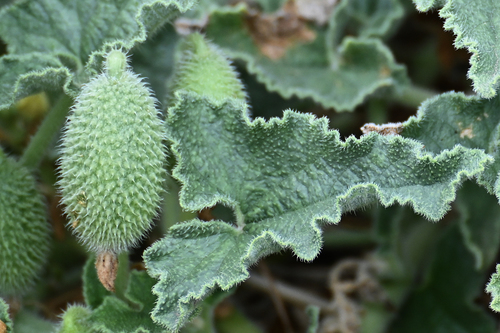
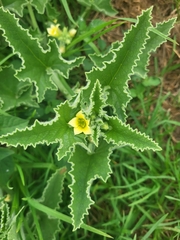
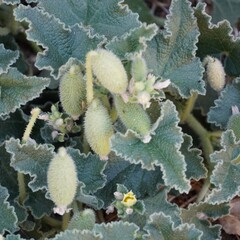
Squirting cucumber (Ecballium elaterium (L.) A.Rich., 1824) is the only species in Ecballium, a creeping, bristly genus of Cucurbitaceae native from the Mediterranean region to Iran. Unlike its vegetable relatives it has no tendrils. Its bristly ripe fruit detaches at the slightest touch and explosively sends seeds several meters away.
Read moreSquirting cucumber and Exploding cucumber
Allow a few hours of direct sun per day, preferably morning or evening.



© photo
(c) josefwirth, some rights reserved (CC BY-NC), uploaded by josefwirth · cc-by-nc
Jacek Pietruszewski · cc-by
iNaturalist User · cc-by
Taken Nov 4, 2021 by Jacques Zuber (cc-by-sa)
Taken Feb 9, 2022 by -Minute man- (cc-by-sa)
Taken Nov 10, 2021 by sandrine may (cc-by-sa)
Taken Feb 9, 2018 by 1 (cc-by-sa)
© copyright of the Board of Trustees of the Royal Botanic Gardens, Kew.




Global distribution
The native range of Ecballium elaterium extends from the Canary Islands through the Mediterranean Basin and North Africa to Iran. Introduced beyond this range as a curiosity or accidentally with livestock imports, it has naturalized in several Mediterranean-climate regions, where it is sometimes regulated as a weed.
- Native5
- Introduced1
- Invasive1
- Metropolitan France
- Spain, Italy, Greece
- Canary Islands
- North Africa
- Iran and western Asia
- United States (California)
- Australia
Hexagons: regions where the plant occurs. Green dots: native range.↗
Identity
Squirting cucumber (Ecballium elaterium (L.) A.Rich., 1824), also called exploding cucumber, is the sole species of Ecballium in the Cucurbitaceae. Carl Linnaeus described it in 1753 as Momordica elaterium. Achille Richard transferred it to Ecballium in 1824, the name still accepted today. 1 5
The genus name comes from Greek ekballein, to throw out, directly describing the ripe fruit’s explosive release of seeds at the slightest touch. The epithet elaterium first named the dried fruit juice, a purgative used in medicine since antiquity, before becoming part of the plant’s scientific name. 6
Recognition
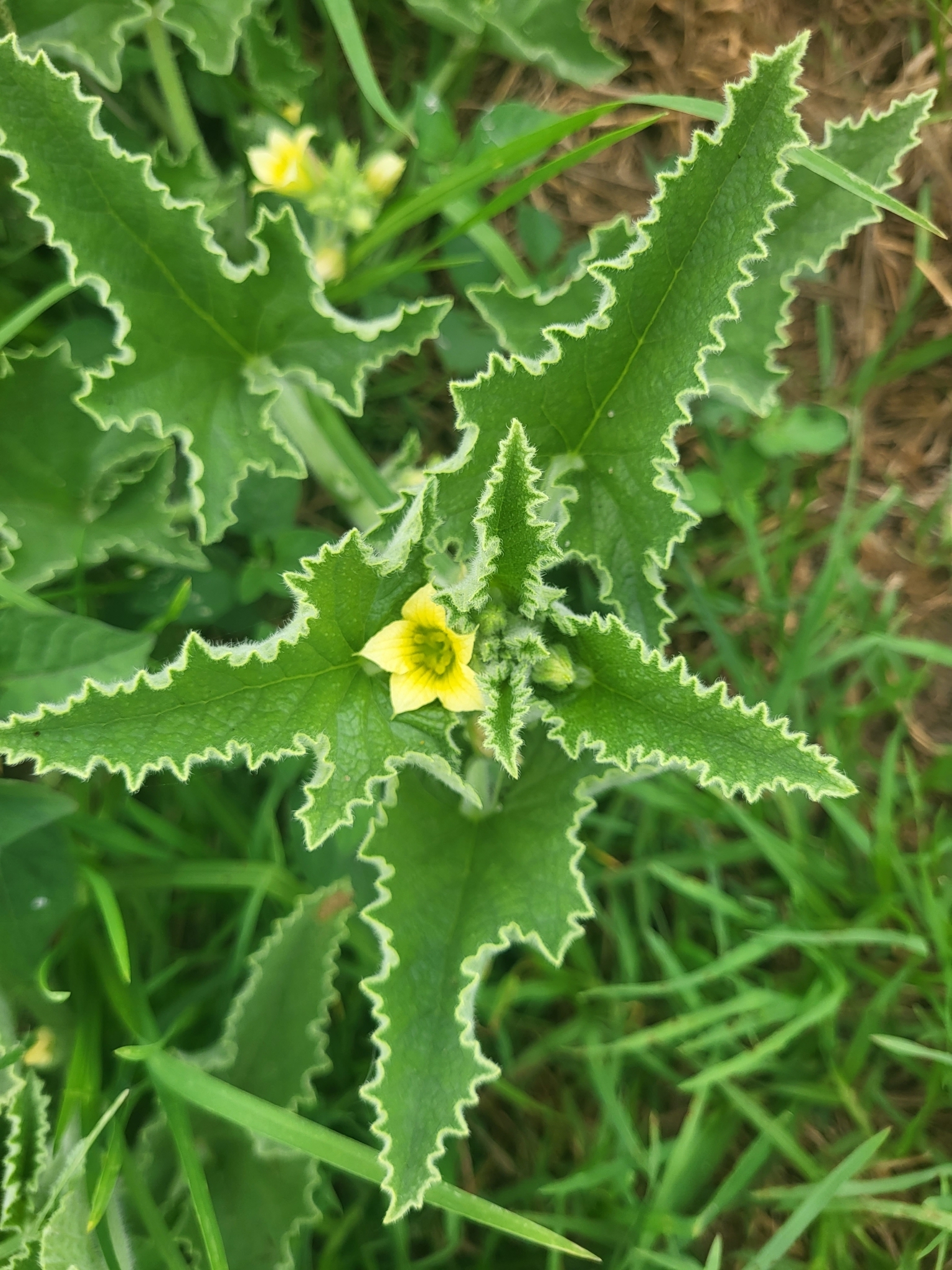
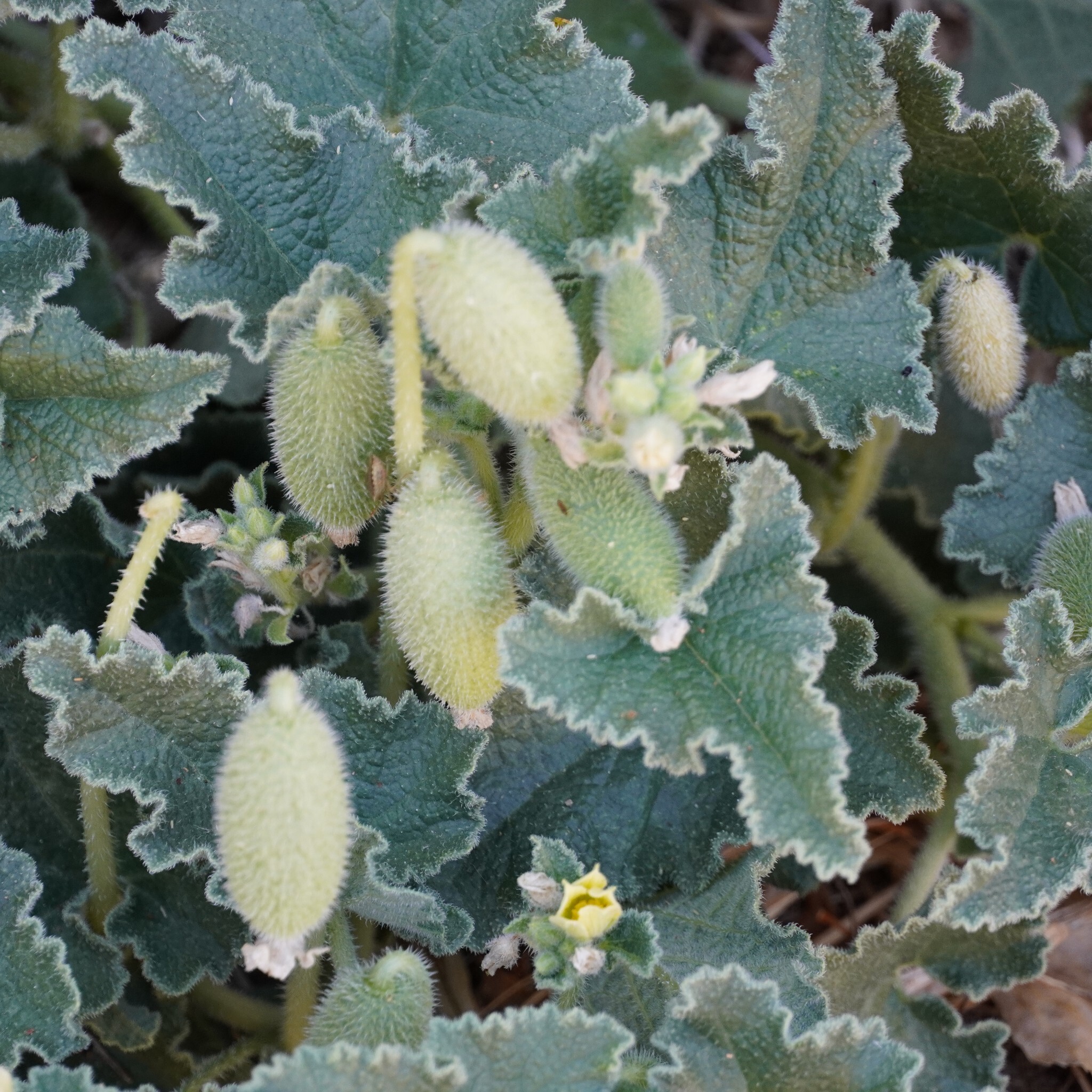
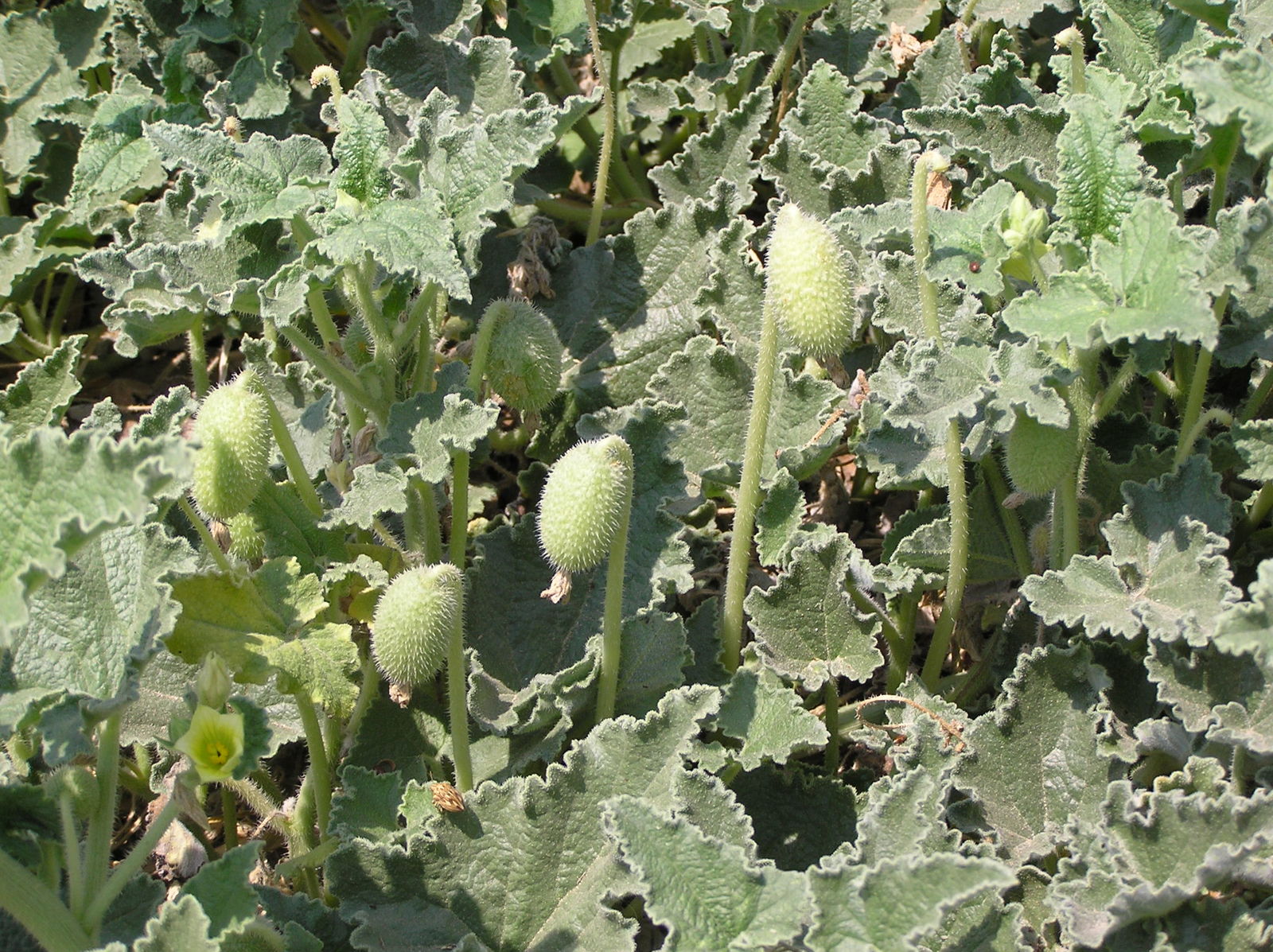
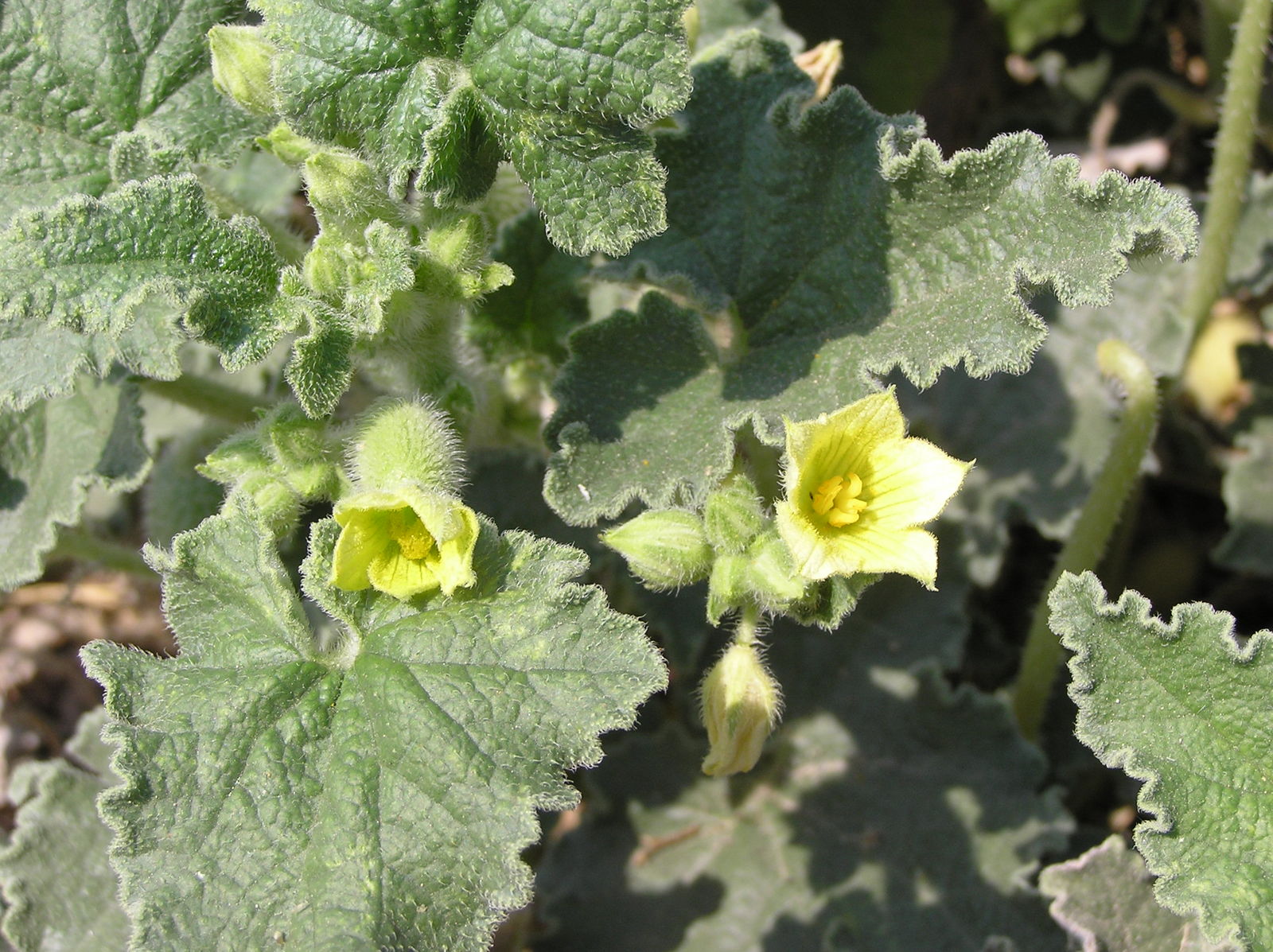
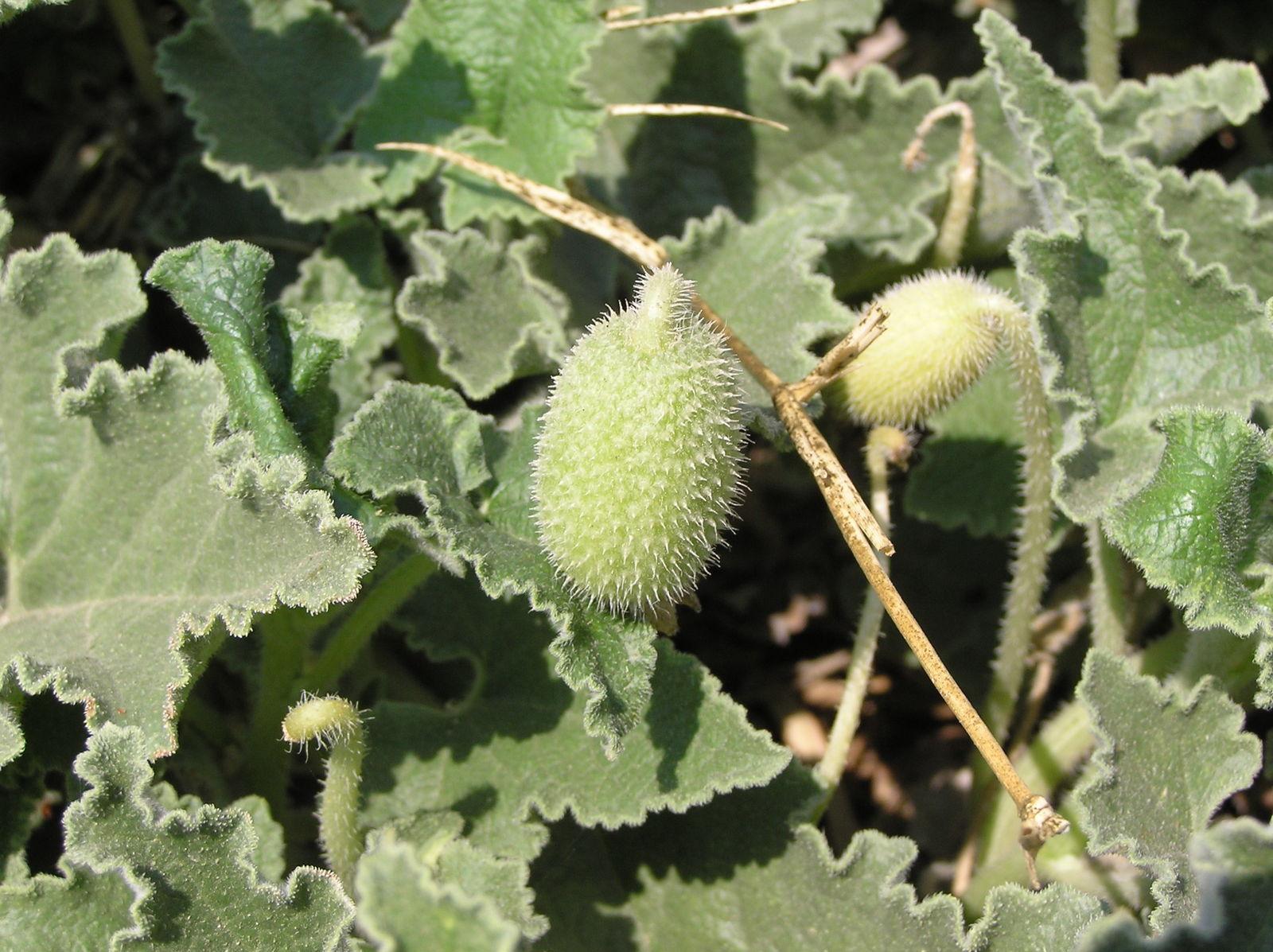
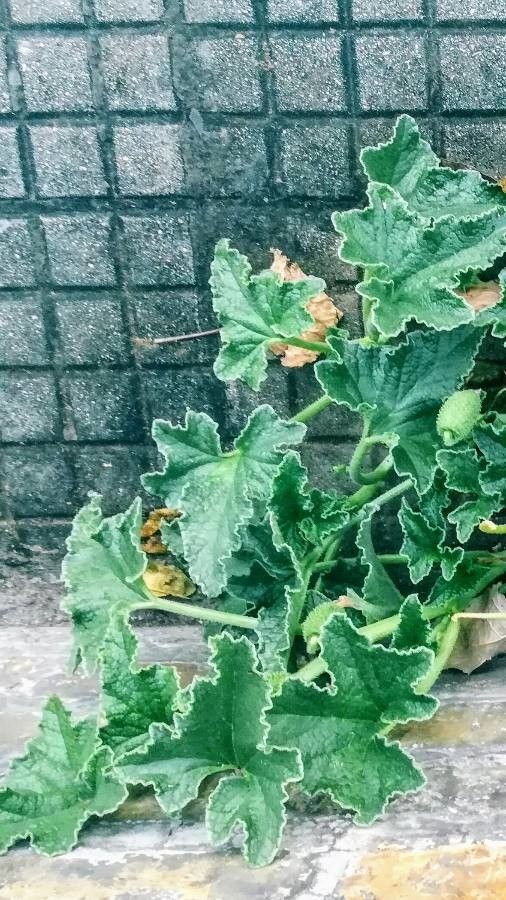
Ecballium elaterium has creeping stems covered in rough bristles, 50 cm to 1.5 m (20 in to 4.9 ft) long, spreading over the ground without climbing. A particularly useful distinguishing character is the complete absence of tendrils at every growth stage, unlike most Cucurbitaceae. 3 2
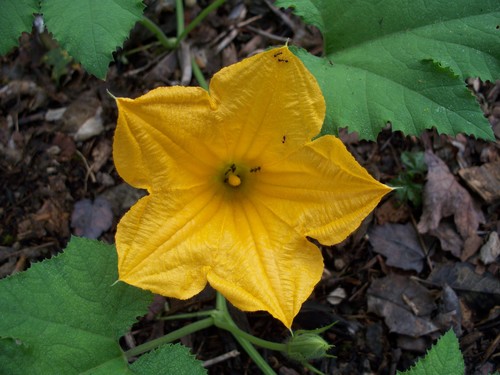
Thick, heart-shaped leaves are grayish green, with a rough surface covered in short hairs. The typical subspecies is monoecious: pale yellow male flowers grow in small clusters, while solitary female flowers form bells 18–20 mm (0.7–0.8 in) across on the same plant. 2
The oval, short-bristled fruit is 4–5.5 cm (1.6–2.2 in) long and about 2.5 cm (1 in) wide. Once ripe, the slightest pressure detaches it from its stalk, violently ejecting seed-laden juice in a highly distinctive dispersal mechanism. 2 8
Useful taxonomy
The accepted name remains Ecballium elaterium (L.) A.Rich., the sole accepted species of the monotypic genus Ecballium. Two subspecies are recognized: Ecballium elaterium subsp. elaterium, monoecious and widespread from the Canaries to Iran; and Ecballium elaterium subsp. dioicum (Batt.) Costich, dioecious, with separate male and female plants, restricted to southern Iberia and northwestern Africa. 5 1
Several nineteenth-century synonyms persist in regional floras, including Ecballium officinale T.Nees, Ecballium officinarum Rich. ex M.Roem. and Ecballium purgans Schrad., all referred to the same accepted name. 1
The species belongs to Cucurbitales alongside cultivated cucumbers, melons and squashes. The cited review reports about 3.84% cucurbitacins by weight in the fruit, compared with usually 0.1–0.3% in other edible Cucurbitaceae. 6
Habitat and range
Its native range extends from the Canary Islands to Iran, through the Mediterranean Basin and North Africa. It colonizes waste ground, rubble, dry banks and roadsides, almost always in full sun on poor soil. Bare, sunny ground supports rapid germination and leaves space free of established competitors. 4 3
Introduced as a garden curiosity or accidentally with livestock imports, it naturalized in Australia in the early twentieth century, where it remains subject to regulatory control, as well as in California and other Mediterranean-climate regions. 4
Life cycle and reproduction
In the northern Mediterranean, flowers open in summer. The typical subspecies has separate male and female flowers on the same plant. Fruit ripens from late summer into fall, when the ejection mechanism becomes fully active. 2
In the days before ejection, the fruit loses volume while its supporting stem swells. Stem radius increases by about 20% and length by about 45%, without any gain in combined mass. Internal fluid therefore moves from fruit to stem, a mechanism first documented in this species. 8
After the fruit stalk breaks, juice is ejected in roughly thirty milliseconds, at about 16–20 m/s (36–45 mph) under a pressure difference near 1.7 bar (25 psi). Seeds land as far as 10 m (33 ft) from the parent, about 250 fruit lengths away. 8
Uses and risks
The dried fruit juice, historically called elaterium, served for more than two thousand years as a powerful purgative for edema associated with kidney or heart disease. This use remains recorded in Tunisian, Algerian and Turkish traditional medicine. It is dangerous outside strict medical supervision: overdoses have caused severe gastroenteritis and even deaths. 6
The whole plant is toxic because of cucurbitacins, bitter triterpenes concentrated chiefly in the fruit. Juice entering the eye causes conjunctivitis, periorbital swelling and corneal erosions within minutes, as documented in a seventy-year-old farmer treated with irrigation and topical corticosteroids who recovered in four days. Accidental ingestion can cause vomiting, rapid pulse and, in extreme cases, convulsions. 7 6
Varieties, look-alikes and related plants
Ecballium elaterium has no recognized horticultural cultivar. It is a wild plant never selected for ornament or food. 3
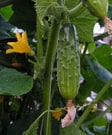
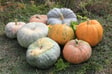
The main look-alikes to distinguish are young vegetable Cucurbitaceae such as Cucumis sativus and Cucurbita pepo: these quickly develop tendrils, absent from Ecballium elaterium at every age. Momordica charantia, whose genus once held this species’ basionym, has elongated, warty fruit that never explodes. Citrullus colocynthis, colocynth, shares cucurbitacin toxicity but has round fruit that never opens under pressure. 1
Ripe-fruit behavior remains decisive: a fruit that detaches and squirts at the slightest touch identifies squirting cucumber. No other Mediterranean plant shares this trait.
Main sources
- International Plant Names Index (Kew), Ecballium elaterium (L.) A.Rich.
- Missouri Botanical Garden Plant Finder, Ecballium elaterium
- Plants For A Future, Ecballium elaterium
- USDA PLANTS Database, Ecballium elaterium (L.) A. Rich.
- USDA GRIN Taxonomy, genus Ecballium
- PMC, Squirting Cucumber - chemical and pharmacological profile update
- PMC, Keratoconjunctivitis and Periorbital Edema due to Ecballium elaterium
- PMC, Uncovering the mechanical secrets of the squirting cucumber
Frequently asked questions
Is squirting cucumber toxic?
Yes. The whole plant contains cucurbitacins, particularly concentrated in the fruit. Ingestion causes severe digestive disturbances; juice in the eyes causes clinically documented conjunctivitis and swelling.
Can squirting cucumber be mistaken for a true cucumber?
Rarely once adult. It never has tendrils, unlike young cucumber or zucchini plants, which soon develop them to climb.
How does explosive seed ejection work?
Internal pressure breaks the fruit stalk, and seed-laden juice shoots out at about 16–20 m/s (36–45 mph) in roughly thirty milliseconds, traveling as far as 10 m (33 ft).
Where does squirting cucumber come from?
Its native range runs from the Canary Islands through the Mediterranean Basin to Iran. It has naturalized elsewhere, notably in Australia since the early twentieth century.
Does squirting cucumber have medicinal uses?
Historically, yes. Its dried juice, called elaterium, was used for more than two thousand years as a powerful purgative. Overdoses caused severe poisoning, and use remains dangerous outside medical supervision.
Is squirting cucumber invasive?
In Australia, where it was introduced in the early twentieth century, it is subject to regulatory control. In its native Mediterranean range it remains a common weed of waste ground and rubble.
What should someone do if juice gets into their eyes?
Rinse thoroughly with clean water and seek medical attention promptly. A documented clinical case required irrigation and topical corticosteroid treatment before complete resolution in four days.
Similar plants
If you are unsure about a plant’s toxicity, ask a botanist or veterinarian for advice.