
Spotted spurge (Euphorbia maculata, )


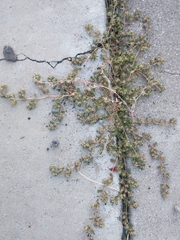
Spotted spurge (Euphorbia maculata) is a creeping annual weed in the Euphorbiaceae family, native to southeastern Canada, the United States and the Caribbean. Introduced across much of the temperate and subtropical world, it occupies bare, compacted ground, including sidewalk cracks, gravel, gardens and vineyards. A characteristic purple leaf spot distinguishes it from other prostrate spurges, notably Euphorbia prostrata.
Read moreSpotted spurge, prostrate spurge and spotted sandmat


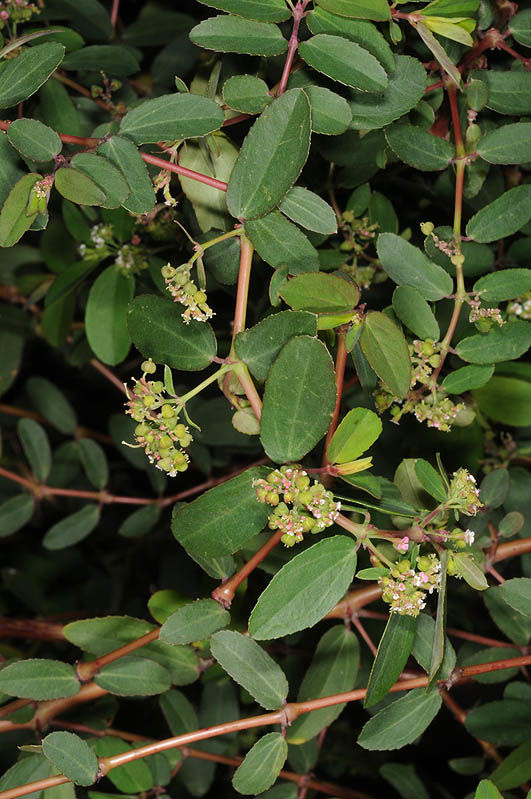
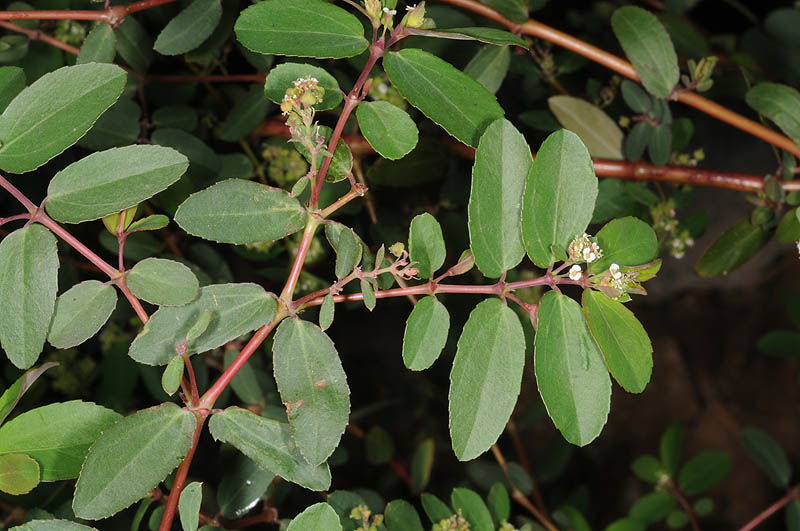
© photo
Sam Droege · cc0
(c) Thomas Gyselinck, some rights reserved (CC BY), uploaded by Thomas Gyselinck · cc-by
Daniel · cc0
Taken Sep 15, 2017 by Photoflora - Benoit BOCK (©)
Taken Jul 4, 2011 by Tela Botanica − David MERCIER (cc-by-sa)
Taken Aug 1, 2012 by Tela Botanica − Emmanuel STRATMAINS (cc-by-sa)
Taken Jul 29, 2021 by Pietro Brignoli (cc-by-sa)
Taken Sep 11, 2021 by Frédérique Berato (cc-by-sa)
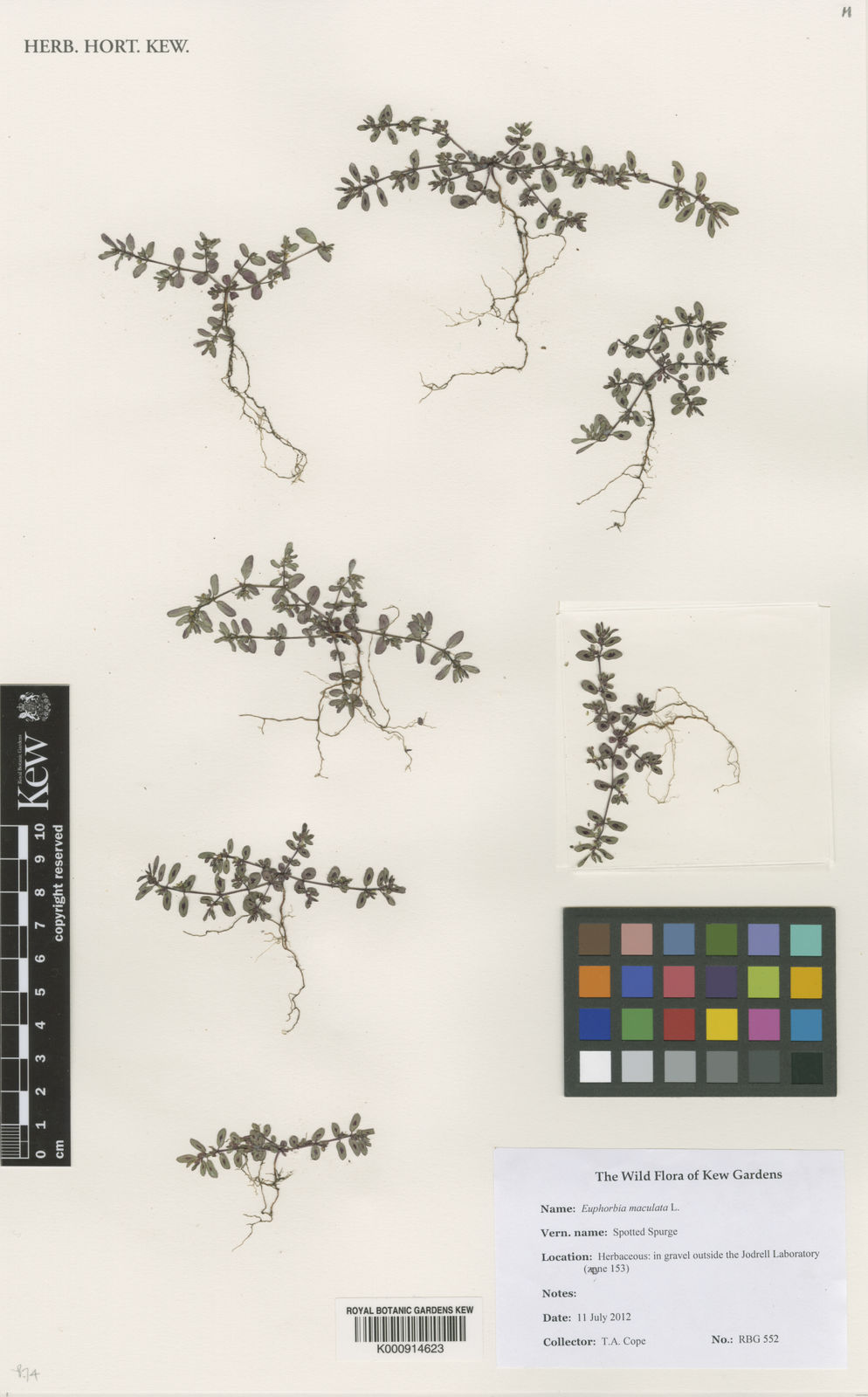
© copyright of the Board of Trustees of the Royal Botanic Gardens, Kew.


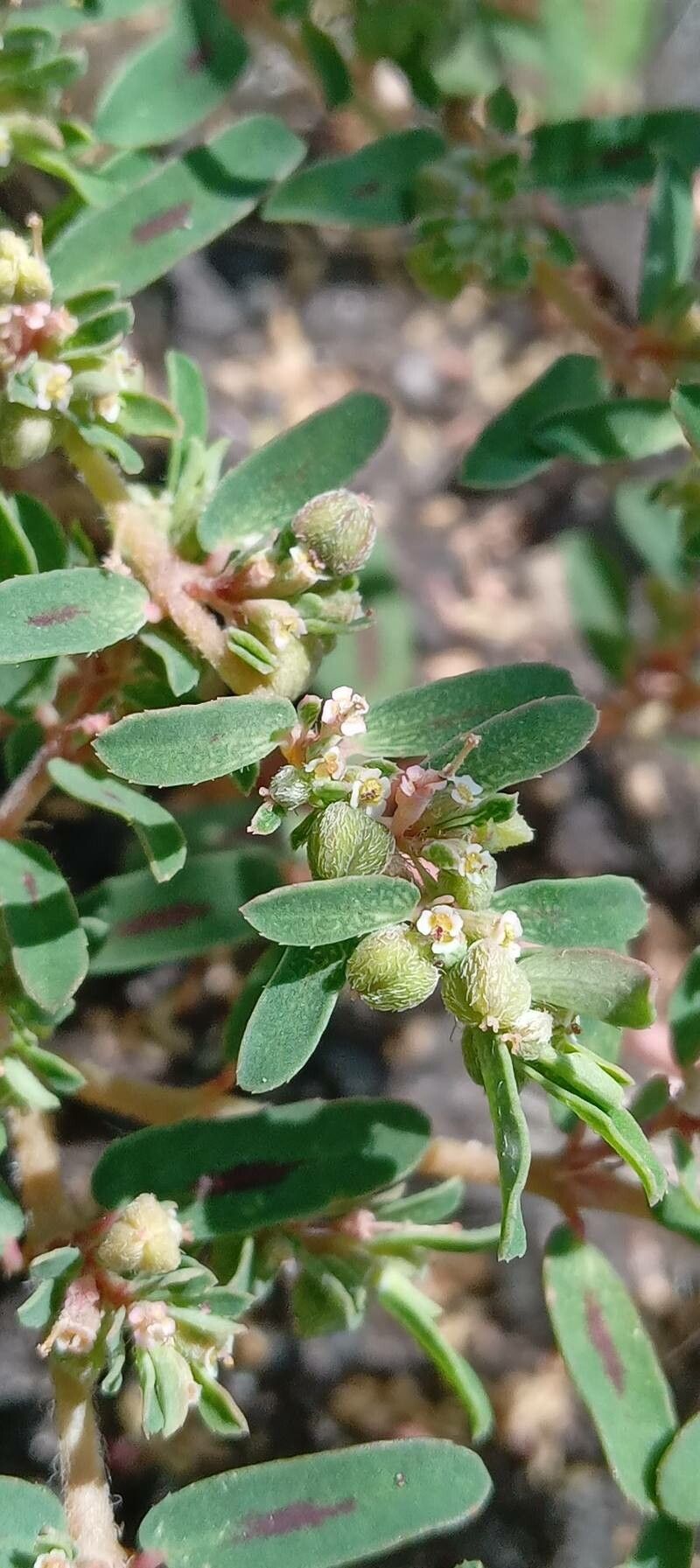


Global distribution
Euphorbia maculata is native from southeastern Canada through the United States to Cuba, the Bahamas and Belize. Trade and agriculture introduced it across much of Europe, East Asia and Oceania. No impact on natural habitats is documented in France.
- Native3
- Introduced6
- United States
- Southeastern Canada
- Cuba and the Bahamas
- Metropolitan France
- Europe
- Japan
- South Korea
- Australia
- New Zealand
Hexagons: regions where the plant occurs. Green dots: native range.1
Identity
Spotted spurge (Euphorbia maculata L., 1753) belongs to the genus Euphorbia in the Euphorbiaceae family. French names include euphorbe maculée, euphorbe tachetée and euphorbe de Jovet. 1 6
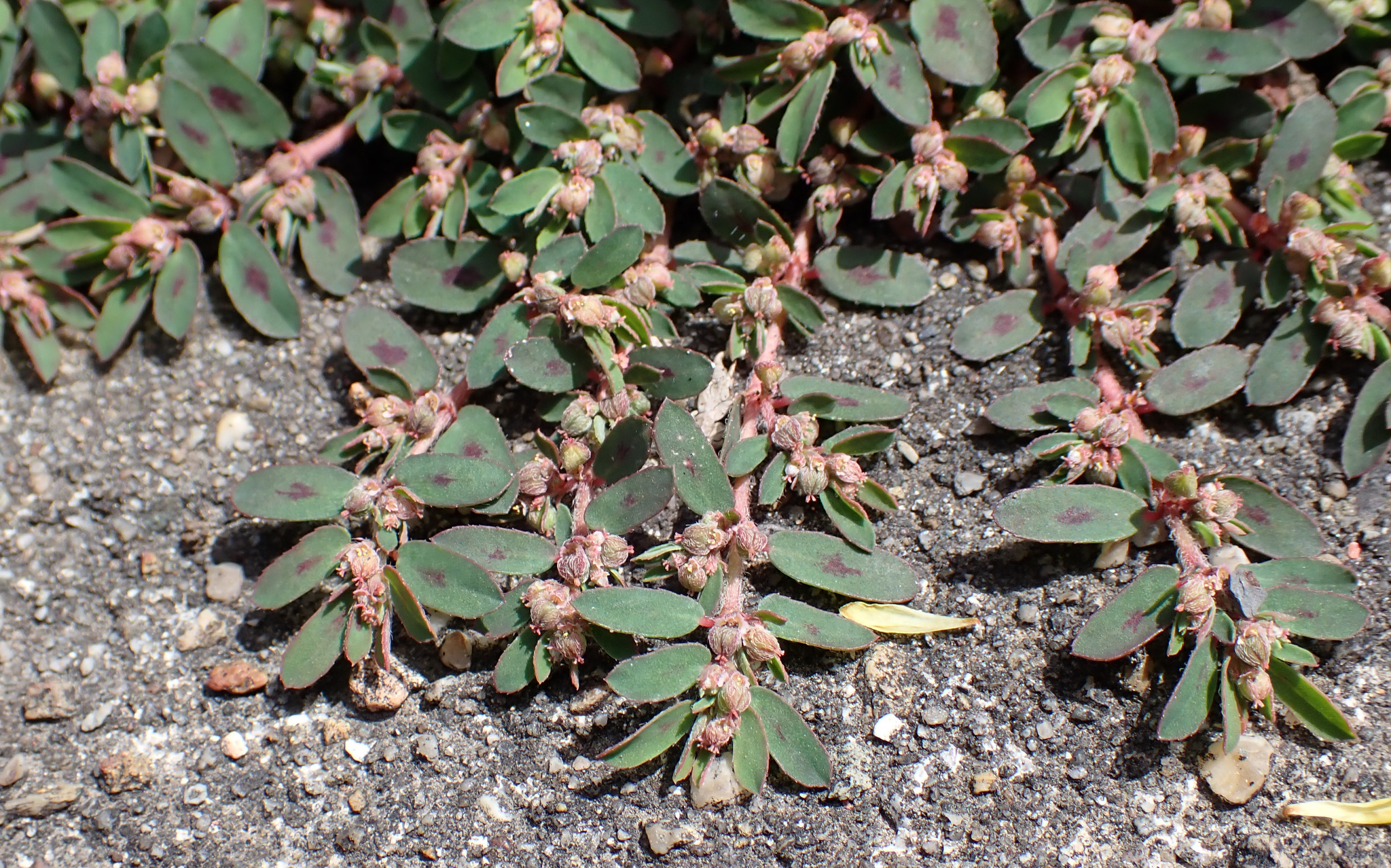
A purple spot 1–2 mm (0.04–0.08 in) across often found in the leaf center provides a quick distinction among prostrate spurges. It is absent in Euphorbia prostrata, the species most often confused with it.
The English names spotted spurge, prostrate spurge and spotted sandmat describe different aspects of the same plant. The first refers to the leaf spot, while the others describe its ground-hugging habit. The Latin epithet maculata means spotted and also refers to this purple mark. 2 3
Recognition
Spotted spurge forms a flat mat radiating from a central taproot. Slender stems often turn pink to red in full sun. A broken stem immediately releases milky white latex, a feature shared by many Euphorbiaceae. 4 2
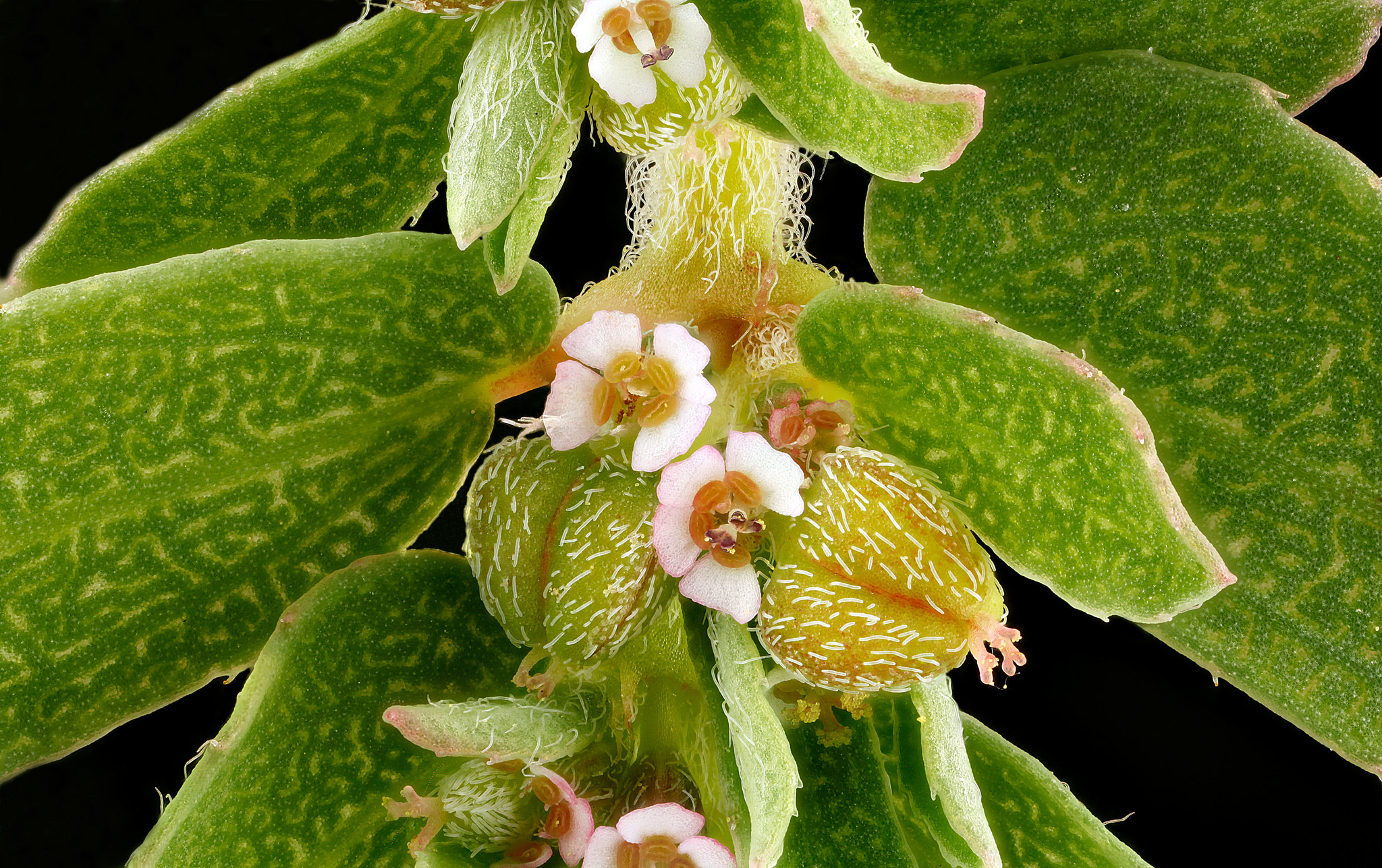
The opposite, oval to oblong leaves are less than 2.5 cm (1 in) long. A maroon to purple spot often marks their center, but is not always present. Tiny greenish-white cyathia with pink-edged appendages are easily overlooked. They develop into small, hairy, pale brown, three-lobed capsules. 2
The fleshy central taproot reaches 60 cm (2 ft) deep. It helps the plant withstand shallow pulling and supplies water during prolonged drought. 4
Useful taxonomy
The species was long placed in Chamaesyce, now incorporated as an infrageneric group within Euphorbia. Important synonyms include:
- Chamaesyce maculata (L.) Small
- Chamaesyce supina (Raf.) Moldenke
- Euphorbia supina Raf.
- Euphorbia maculata var. detonsa Engelm. ex Boiss.
The accepted name remains Euphorbia maculata L., assigned to subsection Hypericifoliae within subgenus Chamaesyce. This botanical name is more stable across sources than trade names or local field names. 1 3 8
The taxonomic serial number TSN 28034 identifies the species in North American reference databases. It is useful when field records or databases still use an older Chamaesyce name. 8
Habitat and range
The native range runs from southeastern Canada through the United States to Belize, Cuba and the Bahamas. Within that range it is a common colonizer of disturbed places rather than a stable component of natural vegetation. 1 3
Introduced through trade and agriculture, Euphorbia maculata now occurs across much of Europe, East Asia and Oceania. In mainland France it mainly occupies vineyards and orchards, as well as sandy riverbanks. Official sources attribute no documented impact on natural habitats to it. 7 6
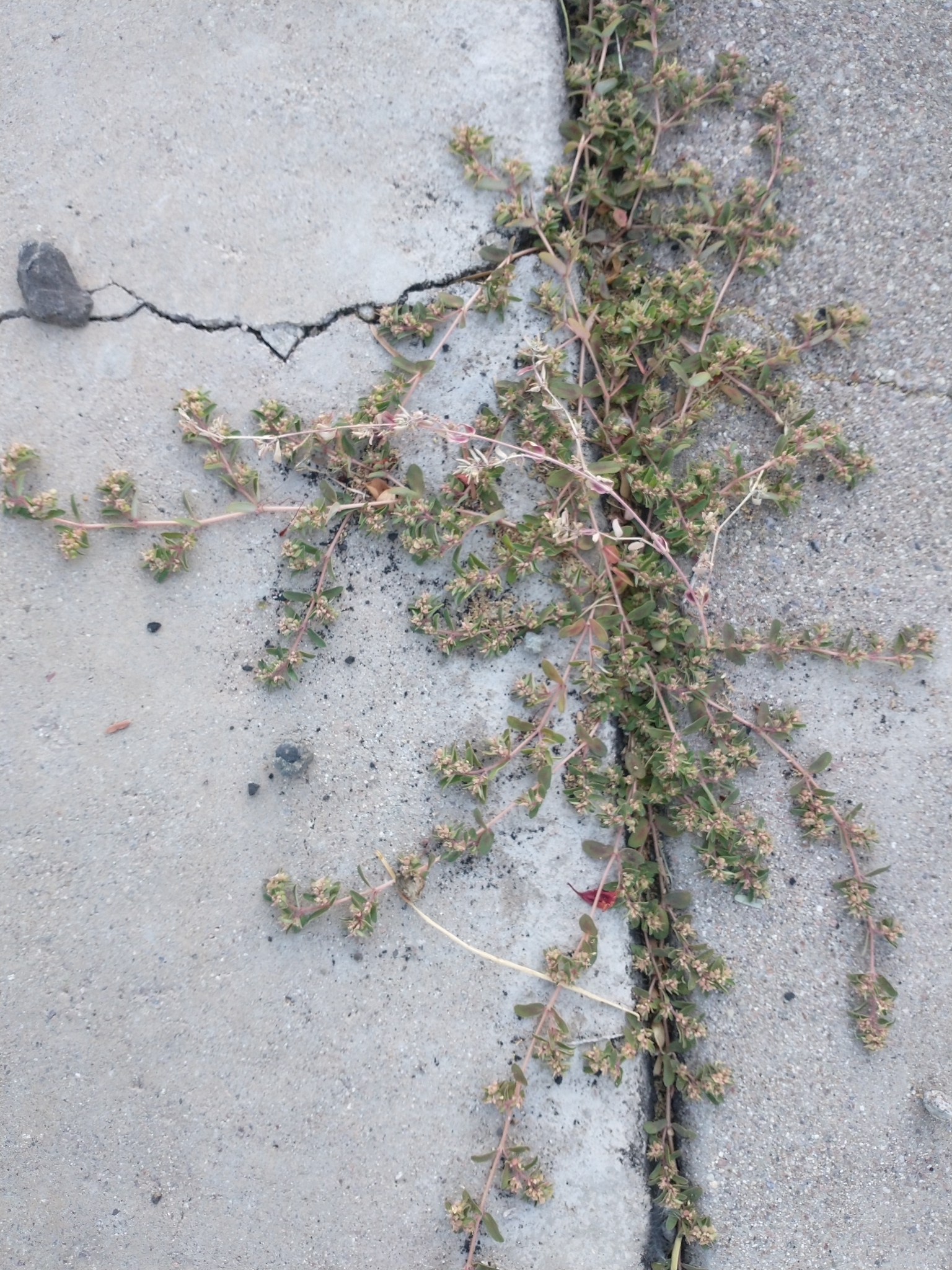
It favors full sun and poor, compacted, sandy or gravelly soils: sidewalk cracks, gravel paths, roadsides, building sites and row crops. Warm, bare ground without vegetation cover can be colonized within weeks. 2 3
Life cycle and reproduction
Spotted spurge completes its life cycle within one season. Germination begins when soil temperatures rise above 15–20 °C (59–68 °F), often in spring, and continues while warmth lasts. 4
Even very young seedlings flower and set seed, allowing several generations in one season in warm climates. Each plant scatters several thousand seeds, first over short distances, then farther on footwear, tires and animal fur. With little or no dormancy, seeds germinate whenever temperatures suit them. 2 4
The first autumn frost destroys the above-ground plant within days. Only the soil seed bank supplies the next generation, germinating the following spring where winters are cold. 4
Uses and risks
Without a recognized horticultural use, this species is considered a weed to control rather than cultivate in most places. 2
The latex contains diterpene esters that irritate skin and mucous membranes. Skin contact can be severe; eye exposure can injure the cornea, and ingestion causes oral burns. The sap is documented as highly toxic to sheep. 3 4 5
In Asia, where Euphorbia maculata is sometimes used in traditional medicine, researchers are investigating anti-inflammatory and antiproliferative properties. These possibilities remain experimental and do not change its toxicity through contact or ingestion. 3
Its cyathia attract bees and wasps, while its seeds feed several seed-eating birds, including mourning doves and northern bobwhites. 2
For control, mulch at least 5 cm (2 in) deep strongly reduces emergence of surface seeds. A preemergence herbicide applied before soil reaches 15–16 °C (59–61 °F) is more effective than late treatment of established seedlings. Shallow hoeing alone is insufficient: regrowth remains possible from root fragments unless the taproot is fully removed. 4 2
Varieties, look-alikes and related plants
No horticultural cultivar is recorded for the species; it is never selected or sold as an ornamental.
The closest look-alike is Euphorbia prostrata, a similar sandmat without the central purple spot and with shorter, rounder-tipped leaves. Other prostrate relatives include Euphorbia hirta, with more upright, hairy growth, and the larger Euphorbia nutans. These are common identification problems in North America. 2
Three useful field clues are a flat mat, an often-present central purple leaf spot and white latex released by the slightest break.
Main sources
- Plants of the World Online / Kew, Euphorbia maculata L.
- NC State Extension Gardener Plant Toolbox, Euphorbia maculata
- Atlas of Florida Plants, Euphorbia maculata (Spotted Sandmat)
- Wisconsin Horticulture Extension, Spotted Spurge (Euphorbia maculata)
- University of Illinois Extension, Plants That Cause Skin Irritation
- Préservons la Nature, Euphorbia maculata L.
- Base information espèces introduites, Euphorbia maculata
- Integrated Taxonomic Information System, Euphorbia maculata L.
Frequently asked questions
Is spotted spurge toxic to cats and dogs?
Yes. Its white latex irritates skin and mucous membranes and causes oral burns if ingested. The sap is also documented as highly toxic to sheep.
How can I distinguish spotted spurge from Euphorbia prostrata?
The most reliable feature is the purple spot in the center of spotted spurge leaves. Euphorbia prostrata lacks this spot and has shorter leaves with more rounded tips.
Why does spotted spurge return each year if frost kills it?
Each plant scatters several thousand seeds with little dormancy before autumn. The soil seed bank provides new seedlings when temperatures allow the following spring.
Where does spotted spurge come from?
Its native range extends from southeastern Canada through the United States to Cuba, the Bahamas and Belize. Introduced through trade and agriculture, it now occurs across much of the temperate and subtropical world.
Is spotted spurge invasive in France?
It is widely naturalized in vineyards, orchards and disturbed ground. Official sources attribute no documented impact on natural habitats to it, and it is not regulated there.
How can I control spotted spurge effectively?
Pull young seedlings before capsules form, removing the taproot, then mulch or cover the soil to limit germination of seeds already present.
Does spotted spurge latex have medicinal uses?
In Asia, the sap is being investigated for anti-inflammatory and antiproliferative properties. These uses remain experimental and do not alter its toxicity through contact or ingestion.
Similar plants

If you are unsure about a plant’s toxicity, ask a botanist or veterinarian for advice.