
Perennial sow thistle (Sonchus arvensis, )
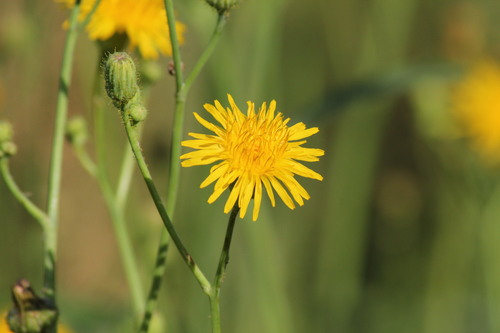
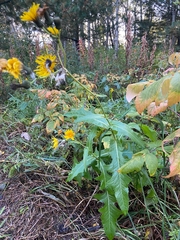
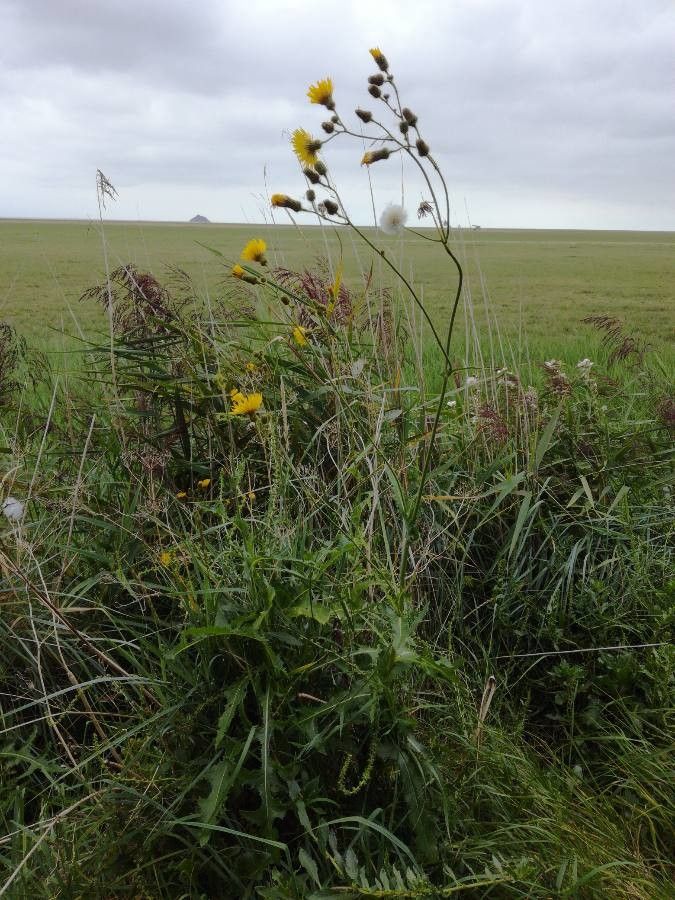
Perennial sow thistle (Sonchus arvensis L., 1753) is an herbaceous perennial in the Asteraceae family, native to temperate Eurasia from Scandinavia and Spain to Siberia. Deep creeping roots, a hollow stem with white latex and large yellow flower heads identify this persistent weed of cultivated fields, ditches and disturbed ground, whose recognition helps explain why it is so hard to remove.
Read morePerennial sow thistle, Field sowthistle and Corn sowthistle
Allow a few hours of direct sun per day, preferably morning or evening.
Full sun to light partial shade
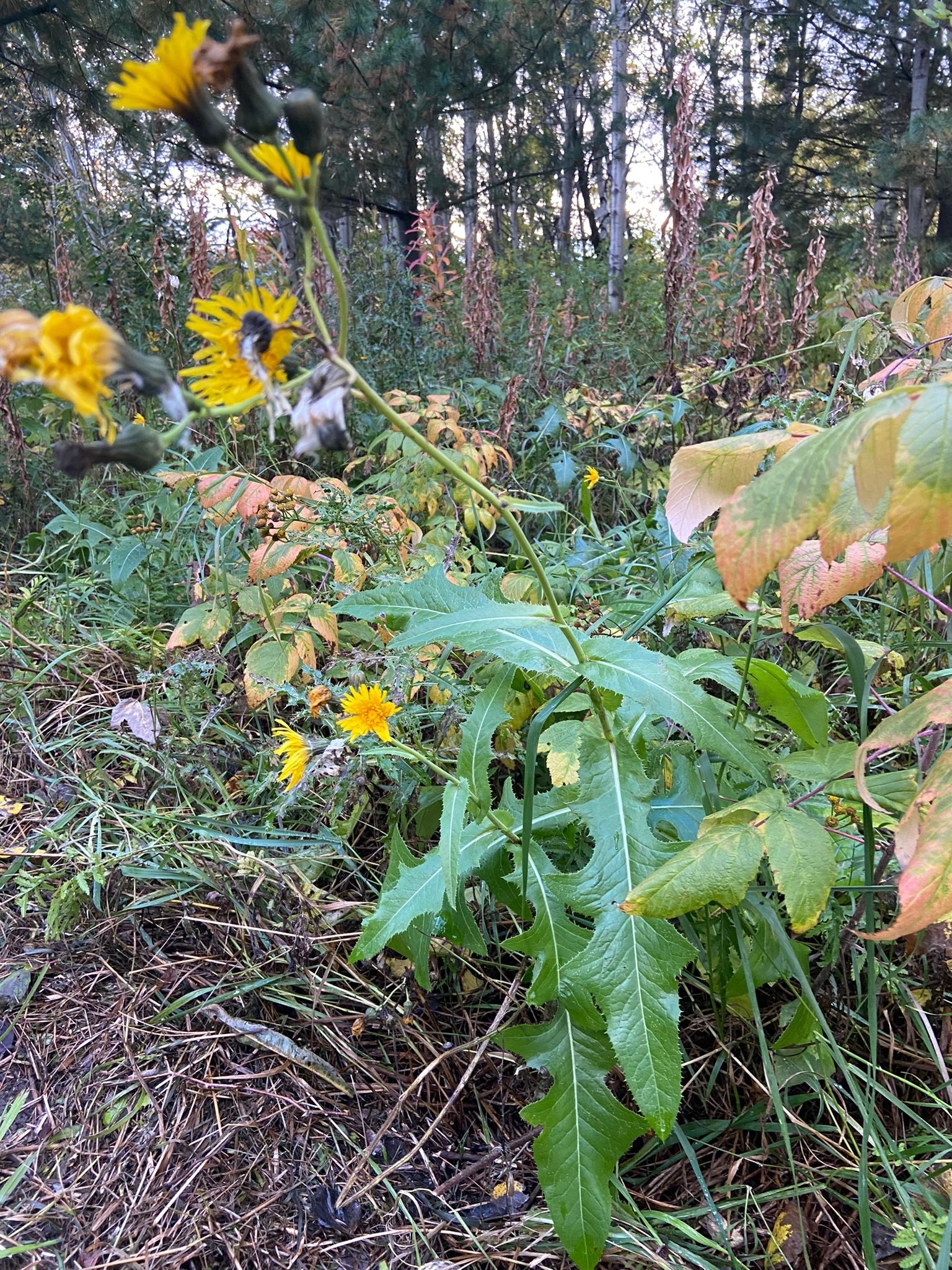


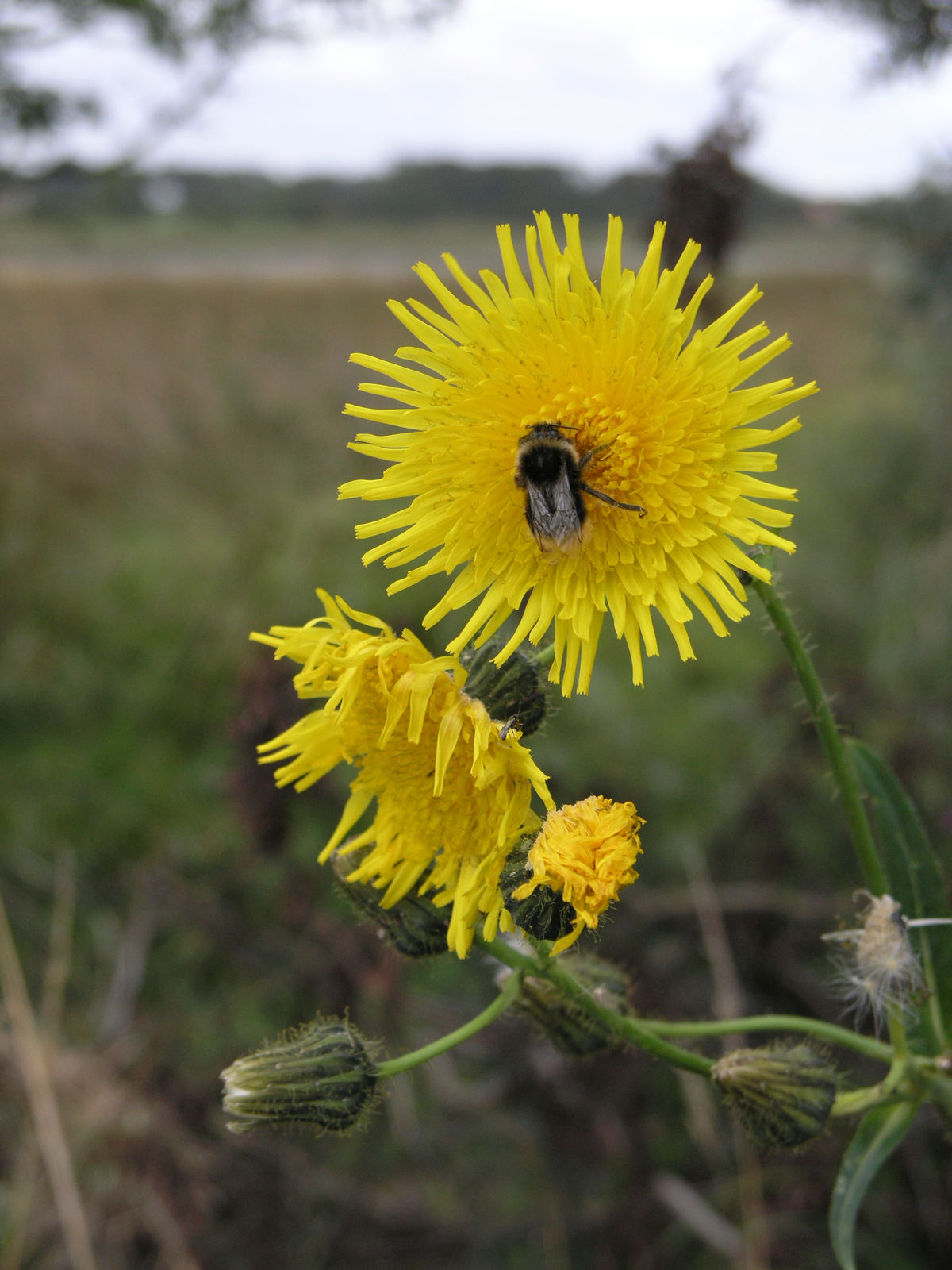
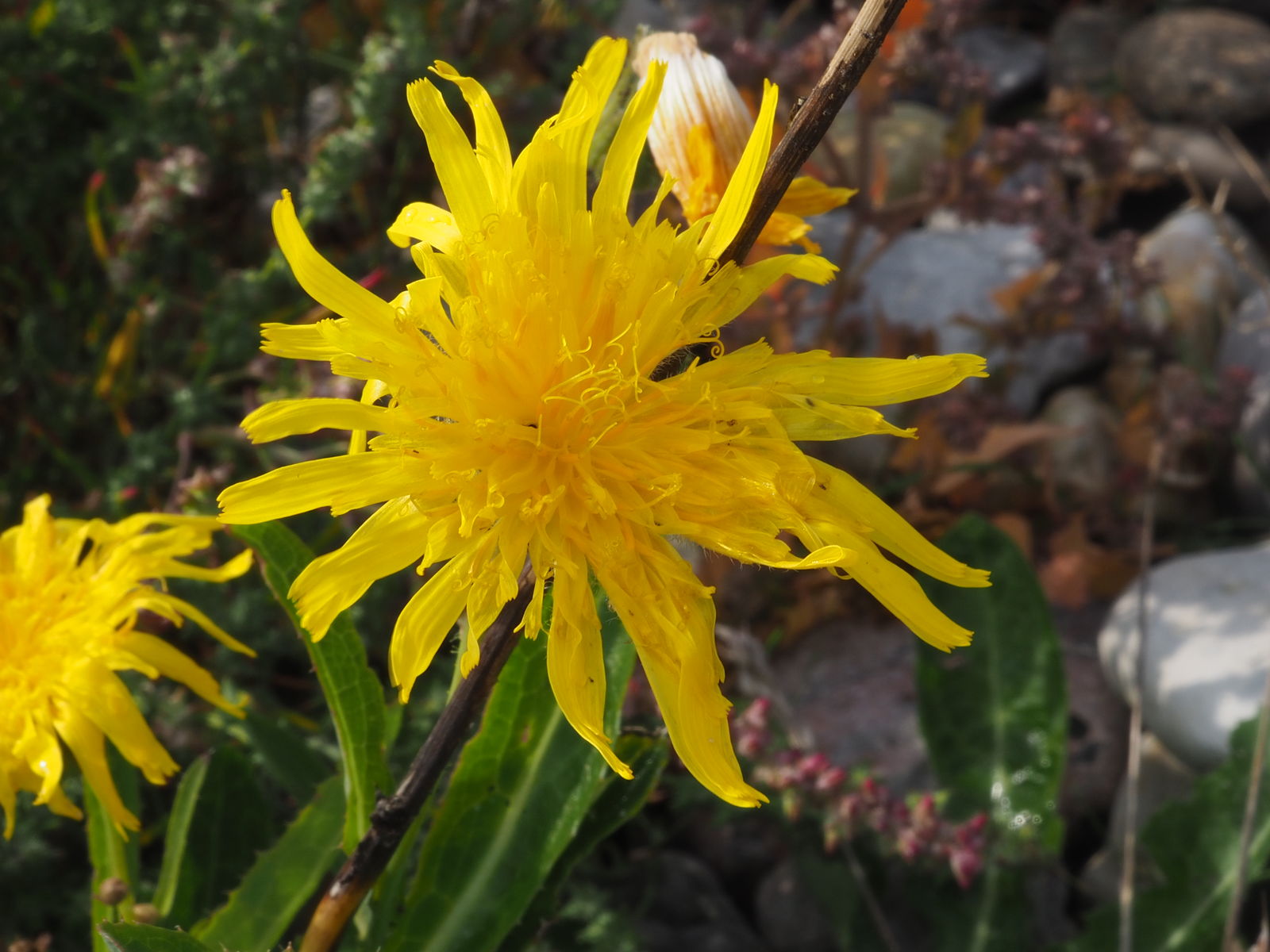
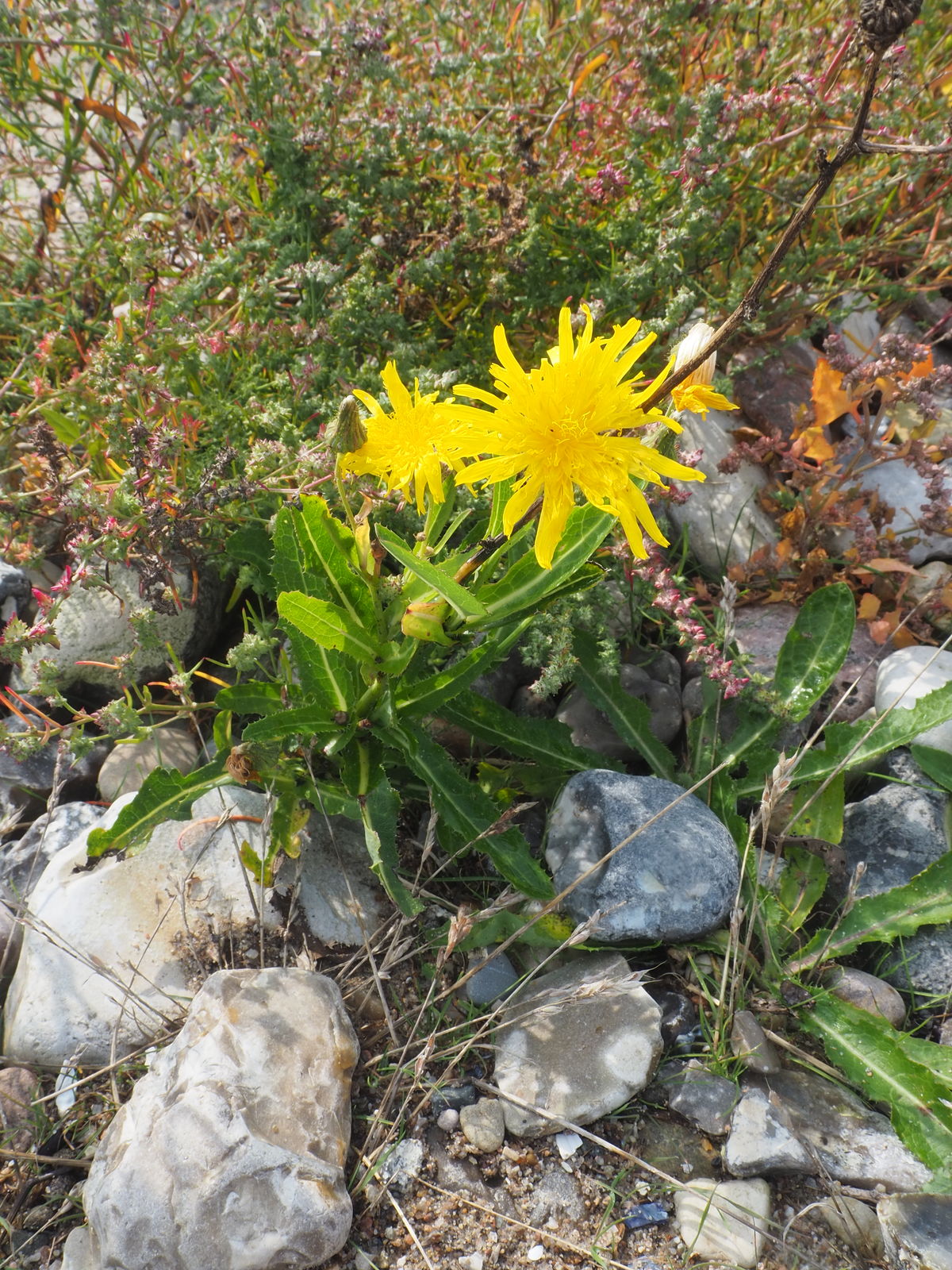
© photo
(c) Кузнецова Татьяна, some rights reserved (CC BY-NC), uploaded by Кузнецова Татьяна · cc-by-nc
Kieran Roy Powell · cc0
Denise Alano · cc0
Taken May 30, 2021 by Béatrice Lagarrigue (cc-by-sa)
Taken Sep 23, 2020 by Ines Guilbaud (cc-by-sa)
Taken Oct 20, 2020 by Tyhjä Luut (cc-by-sa)
Taken Jul 26, 2020 by André van Linn (cc-by-sa)
Taken Jan 1, 1800 by Tela Botanica − Daniel MATHIEU (cc-by-sa)
© copyright of the Board of Trustees of the Royal Botanic Gardens, Kew.




Global distribution
The native range of Sonchus arvensis covers temperate Eurasia, from Scandinavia and Spain to Siberia. Introduced early outside this range, it is now widely naturalized in North America, where several states and provinces list it as a noxious weed.
- Native3
- Introduced3
- Metropolitan France
- Europe
- Siberia and temperate Asia
- United States
- Canada
- Australia
Hexagons: regions where the plant occurs. Green dots: native range.1
Identity
Perennial sow thistle (Sonchus arvensis L., 1753), also called field sowthistle or corn sowthistle, is an herbaceous perennial in the genus Sonchus, family Asteraceae. Plants of the World Online accepts the name published by Linnaeus in 1753. Its native range extends from Scandinavia and Spain to Siberia. 1 7
The Latin epithet arvensis means of the fields, directly describing its favored habitat in cultivated land. White latex beads from a broken stem or leaf, a feature reflected in the French name for sow thistles and shared throughout Sonchus, including the close relative Sonchus oleraceus. 4 8
Recognition
Hollow, upright and brittle stems are characteristic of Sonchus arvensis. Branching is mostly confined to the top, and height commonly reaches 45 cm–1.8 m (1.5–6 ft), depending on soil conditions. 2 3
Lower leaves are lobed and clasp the stem, with prickly edges softer than those of Sonchus asper; leaves become smaller higher up. The most reliable clue, however, is the flower head: yellow heads reach 3–5 cm (1.2–2 in) across, clearly larger than the 1.5–2.5 cm (0.6–1 in) heads of annual sow thistles. Each head contains more than fifty strap-shaped florets. 8 5
Flower heads open about two to three hours after sunrise and close around noon. The flower stalks and involucre of Sonchus arvensis often bear gland-tipped hairs, a useful feature when confirming its identity. 3
Useful taxonomy
Two recognized subspecies sit within the accepted name Sonchus arvensis L., published in 1753. They differ in the glandular hairs on the flower stalks and involucre: Sonchus arvensis subsp. arvensis has stalked glands, while Sonchus arvensis subsp. uliginosus (M.Bieb.) Nyman has sessile glands or none. 1
Regional floras still use several synonyms, including Sonchus vulgaris subsp. arvensis (L.) Rouy and Sonchus arvensis var. maritimus (L.) Wahlenb.. These historical names do not replace the accepted species name. 1
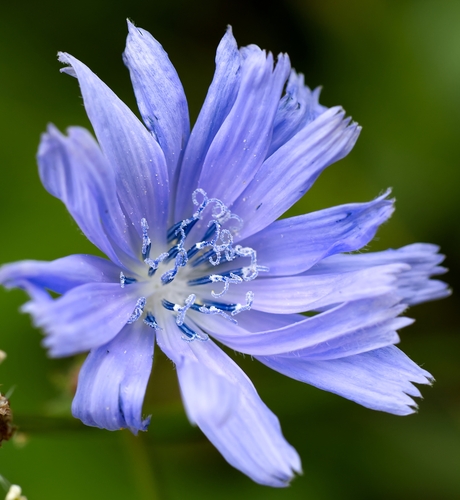
The species belongs to the tribe Cichorieae, alongside dandelions, chicory and Sonchus oleraceus. All share white latex and heads composed entirely of strap-shaped florets, rather than a mixture of ray and disk florets. 7
Habitat and range
Temperate Eurasia is the native home of Sonchus arvensis, from Scandinavia and Spain to Siberia. It primarily occupies cultivated fields and ditches, but also grows on saline or brackish shores. 4 1
In its native French range, INPN records perennial sow thistle under the vernacular name laiteron des champs. It is widespread across metropolitan France. 6
North American records begin in 1814, in Pennsylvania. The introduced plant has since established across most of the United States and Canada. Several jurisdictions regulate it as a noxious weed, including Minnesota and Washington State, where it was reclassified in 2013. 8 2
Life cycle and reproduction
Seeds and creeping roots both allow Sonchus arvensis to reproduce. Its fleshy, brittle root network spreads mainly horizontally within the upper 15 cm (6 in) of soil, while the main roots can reach 2 m (6.5 ft) deep. 9
A single bud-bearing root fragment, sometimes only 2.5 cm (1 in) long, can regenerate an entire plant. Poorly managed shallow cultivation can therefore multiply patches instead of eliminating them, leaving viable fragments distributed through the soil. 9
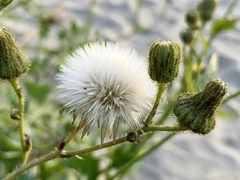
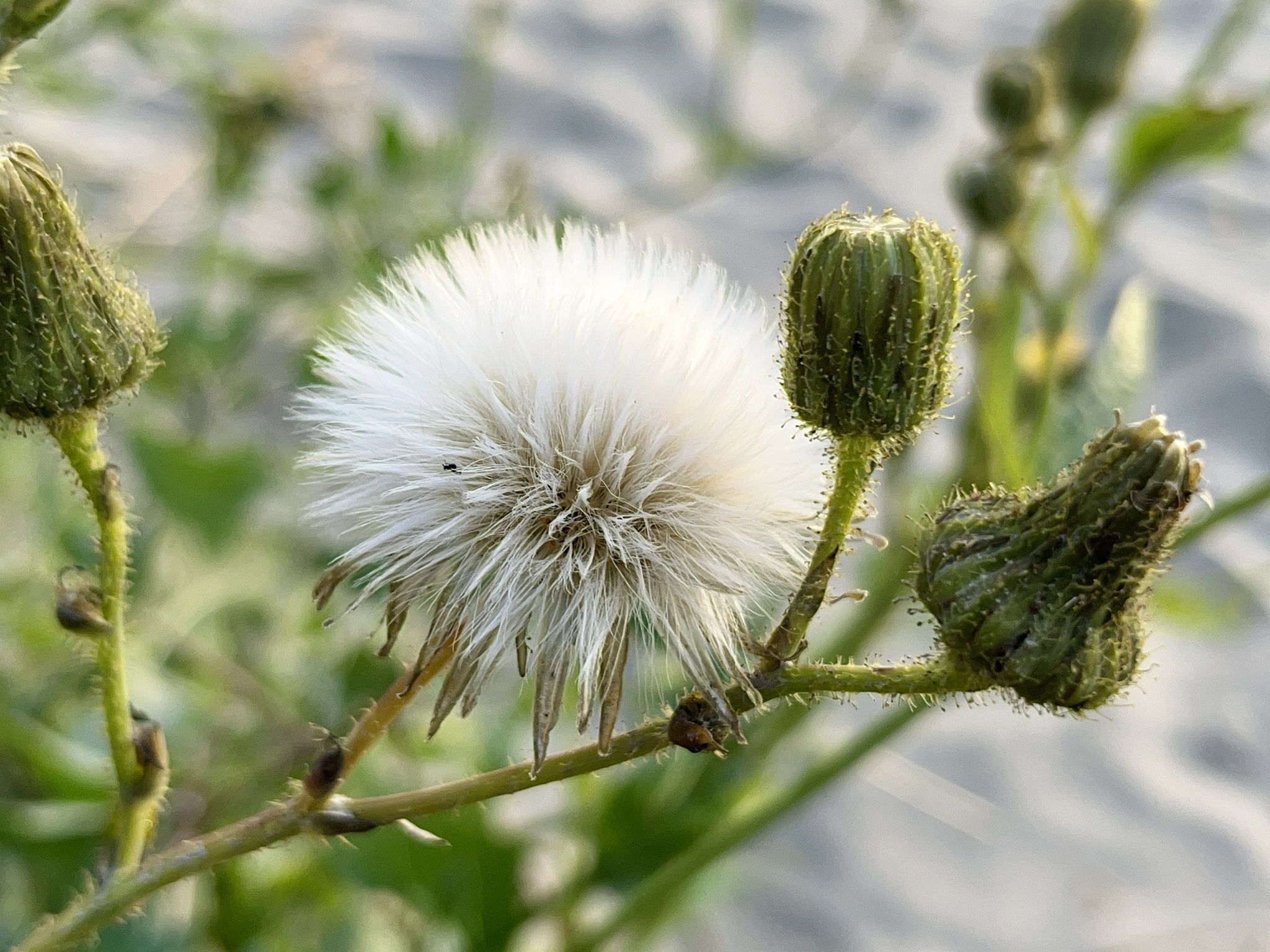
Flowering spans summer and fall, July to October in the northern temperate calendar. After closing, each head quickly produces brown, ribbed achenes about 2.5 mm (0.1 in) long, topped by a silky white pappus that carries them on the wind. Continuous underground expansion accompanies this airborne dispersal, explaining how one established colony can occupy an entire field within a few seasons. 5 2
Uses and risks
Competition with crops gives Sonchus arvensis documented economic importance as an agricultural weed. It competes for soil nitrogen and water, and relative resistance to many common foliar herbicides makes chemical control alone difficult. Agricultural recommendations therefore combine soil cultivation with herbicides suited to perennial weeds. 9 2
Young leaves have long been eaten raw in salads or cooked as greens, with a slightly bitter flavor. Roasted roots sometimes serve as a coffee substitute. The leaves also provide mineral salts and about 47 mg of vitamin C per 100 g (3.5 oz), alongside a protein content reported at roughly 2% of dry weight, giving this wild vegetable nutritional value. 4
No toxicity is documented for humans, cats or dogs. The white latex may simply irritate skin after repeated contact. That minor contact risk sits alongside the plant's value to pollinators visiting its late flower heads. 4
Varieties, look-alikes and related plants
Ornamental cultivars are not recognized for Sonchus arvensis: it is a wild plant that has not been selected for garden display. 3
Annual sow thistles Sonchus oleraceus and Sonchus asper cause the most frequent confusion. Both have a taproot and much smaller heads, 1.5–2.5 cm (0.6–1 in) across. Flower-head size and a colony linked by creeping roots are the most reliable features separating Sonchus arvensis from these annual relatives. 8 3
Other yellow-flowered members of the daisy family can have similar rosettes before flowering, especially dandelions (Taraxacum). Abundant white latex and, later, the width of the flower heads remain the most useful clues when assessing such a plant. 2
Head width gives a practical final check: a head wider than 3 cm (1.2 in) points to Sonchus arvensis, while one below 2.5 cm (1 in) points toward an annual sow thistle.
Main sources
- Plants of the World Online / Kew, Sonchus arvensis L.
- Washington State Noxious Weed Control Board, Perennial sowthistle
- King County Noxious Weeds, Perennial sowthistle identification and control
- Plants For A Future, Sonchus arvensis
- Minnesota Wildflowers, Sonchus arvensis - Perennial Sowthistle
- INPN / MNHN–OFB, Sonchus arvensis L., CD_NOM 124232 — original notice, Internet Archive 2022-12-08
- Tela Botanica eFlore BDTFX, Sonchus arvensis L. — nomenclatural record NN 65165
- Go Botany / Native Plant Trust, Sonchus arvensis - Field sow-thistle
- Ohio State University Weedguide, Perennial sowthistle
Frequently asked questions
Is perennial sow thistle toxic?
No toxicity is documented for humans, cats or dogs. Young leaves are edible; only the white latex may irritate skin after repeated contact.
Can you eat perennial sow thistle?
Yes. Young leaves can be eaten raw or cooked and taste slightly bitter, like other sow thistles. The roasted root is sometimes used as a coffee substitute.
Why is perennial sow thistle so difficult to remove?
It regenerates from root fragments as short as 2.5 cm (1 in) left in the ground after pulling or shallow cultivation, as well as producing seeds.
How can I tell Sonchus arvensis from Sonchus oleraceus?
The most reliable clue is flower-head size: 3–5 cm (1.2–2 in) in Sonchus arvensis versus 1.5–2.5 cm (0.6–1 in) in the annual Sonchus oleraceus, together with creeping roots rather than a single taproot.
Where does perennial sow thistle come from?
Its native range covers temperate Eurasia, from Scandinavia and Spain to Siberia. It was documented in North America as early as 1814 and is now widely naturalized there.
Is perennial sow thistle invasive?
Several North American states and provinces regulate it as a noxious weed because of its impact on crops. In France, where it is native, it remains a common weed of fields and disturbed ground.
Are herbicides enough to control perennial sow thistle?
Rarely on their own. The species is documented as relatively resistant to many common foliar herbicides, so agricultural recommendations combine chemical treatment with soil cultivation.
Similar plants

If you are unsure about a plant’s toxicity, ask a botanist or veterinarian for advice.