
Fiddle-leaf fig (Ficus lyrata, )
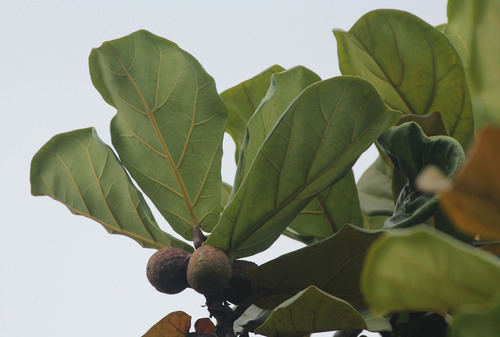
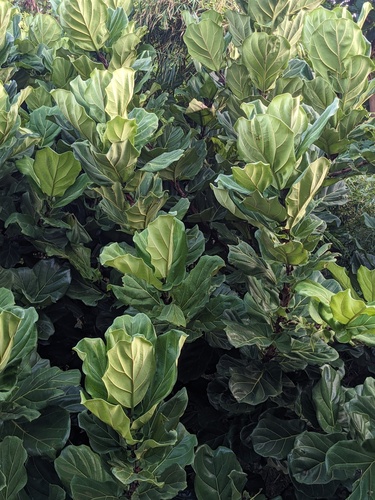
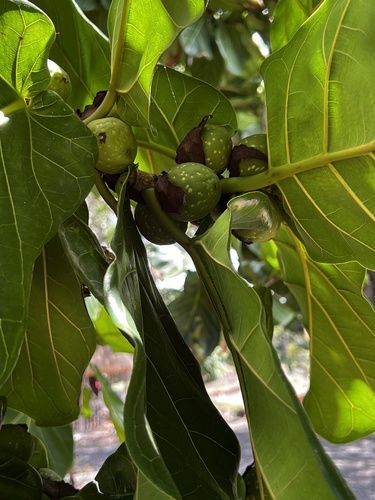
The fiddle-leaf fig (Ficus lyrata) is a hemiepiphytic tree in the mulberry family, Moraceae, native to the humid forests of western and west-central tropical Africa. It is recognized by its large, leathery, lyre- or violin-shaped leaves and by its irritating white latex.
Read moreFicus lyrata, Banjo fig and Fiddleleaf fig
Allow a few hours of direct sun per day, preferably morning or evening.
Global distribution
The native range accepted by POWO and WCVP is western and west-central tropical Africa. Records outside that range mostly reflect cultivation, introduction or regional horticultural observations.
- Native9
- Cameroon
- Gabon
- Ghana
- Guinea
- Ivory Coast
- Liberia
- Nigeria
- Sierra Leone
- Togo
Hexagons: sourced regions. Green dots: native range. Statuses according to POWO (Kew).
Identity
The fiddle-leaf fig is Ficus lyrata Warb., a species in the Moraceae published in 1894. POWO and WCVP treat it as an accepted name, and IPNI traces the name to Botanische Jahrbücher für Systematik 20:172. 1 2
Its common name describes the leaf, not anything edible. Ficus lyrata does belong to the genus Ficus, like the common fig, but the orchard fruit of Ficus carica has nothing to do with this houseplant. The English names fiddle-leaf fig, fiddleleaf fig and banjo fig all play on the same image: a leaf blade shaped like a stringed instrument. 3 4
Recognition
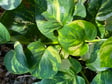
Start with the leaves. They are simple, alternate, large, leathery and green, with sharply raised veins and an entire but wavy margin. Their outline runs from obovate to lyrate: a mature leaf may pinch in at the middle and broaden toward the tip, which is exactly where the fiddle comparison comes from. 4
Potted plants are usually trained as small upright trees, yet the botanical literature describes the species as a hemiepiphytic tree. In its humid home forests it can lean on other plants while it develops; indoors, that strategy becomes a stiff, sometimes staked trunk rather than anything resembling a vine. 1
Nobody grows it for the flowers. In Ficus, the tiny flowers are sealed inside a syconium, the small globular receptacle usually called a fig. NC State describes green syconia with pale dots that turn red as they ripen, and notes that they are seldom seen on houseplants. 4
Useful taxonomy
The stable reference point is the binomial Ficus lyrata Warb. In the classification used by GBIF, the species sits in Plantae, Tracheophyta, Magnoliopsida, Rosales, Moraceae, Ficus. Placement in the tribe Ficeae also signals that the syconium and pollination by fig wasps are part of the fig story. 3
Synonyms need sources behind them, because similar names can point to other plants. WCVP lists Ficus pandurata Sander as an illegitimate synonym of Ficus lyrata; GBIF adds Ficus jollyana A.Chev. to its synonymy. On the other hand, Ficus pandurata in the horticultural or Asian sense can cause confusion, so the accepted name and its authority take priority. 1 3
At the garden center, the usual mix-up is about size rather than Latin. Bambino, Compacta and Little Sunshine are horticultural names for more compact forms cited by NC State; none of them makes the plant a separate species. 4
Habitat and range
POWO places the native range in western and west-central tropical Africa, within the wet tropical biome. NC State spells out a native range that includes Cameroon, Gabon, Ghana, Guinea, Ivory Coast, Liberia, Nigeria, Sierra Leone and Togo. Taken together, these sources support calling it an African rainforest species without stretching it across all of tropical Africa. 1 4
Cultivation has carried the plant far beyond Africa. Records of introduction or cultivation elsewhere do not automatically mean invasion: they mostly describe an ornamental tree planted in warm regions, or a houseplant in temperate climates. IFAS even rates it as non-invasive on its Florida page; that finding stays regional and does not stand in for an assessment in every territory. 5
Its ecology also explains why it struggles indoors. The big leaves want bright but filtered light, a mix that is kept moist and then allowed to drain, and steady conditions. The plant can survive inside, but it never becomes the forest tree the botanical sources describe. 4 6
Life cycle, uses and risks
Growth on an indoor fiddle-leaf fig is almost entirely vegetative: roots establish, the trunk lengthens, large leaves unfold, and branching follows if the plant is pruned or gets enough light. Flowering and syconia are normal for the genus but rare on houseplants, so owners of a potted specimen should not expect fruit. 4 5
Ornament is its main use. In a container, Ficus lyrata works as an architectural plant for a bright living room, a sunroom or a lobby. Outdoors, it belongs in USDA zones 10-12 and in climates without real cold, which rules out most regions with regular frost. POWO lists food and medicinal uses in general terms, but the references used here give too little detail to turn them into recommendations. 1 5
The latex, and swallowing plant parts, pose the main risk. The ASPCA flags the fiddle-leaf fig as mildly toxic to dogs and cats, with possible digestive upset and skin irritation from the sap. Pet Poison Helpline treats the genus Ficus in much the same way: irritating sap, irritation of the mouth and digestive tract after ingestion, and skin irritation on contact. 7 8
The ASPCA data consulted have no exact Ficus lyrata entry, but they list Ficus sp. and Ficus benjamina as toxic to cats, dogs and horses. As a precaution, cats and dogs stay in the at-risk category, while horses keep an unverified status for this exact species. 8
Cultivars, look-alikes and buying
Bambino, Compacta, Little Sunshine and Variegata are first and foremost trade names. The first three advertise a more compact plant; Variegata signals variegation. No label replaces looking at the plant itself: actual size, internode length, vigor, stability of the variegation and the roots matter more than the tag. 4
The look-alikes worth knowing are mostly other indoor figs:
- Ficus elastica, the rubber plant, with more oval, thicker and regular leaves;
- Ficus benjamina, the weeping fig, with small leaves and drooping branches;
- Ficus carica, the common fig, grown for its edible fruit;
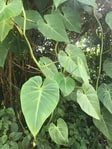
- some large Philodendron or Thaumatophyllum, which produce neither Ficus latex nor syconia.
Confirming a fiddle-leaf fig means checking several features together: the scientific name, the lyre-shaped leaf, the prominent veins, the small-tree habit and the white latex at a cut. A big green leaf on its own proves nothing. 3 4
Main sources
- Plants of the World Online / Kew, Ficus lyrata Warb.
- International Plant Names Index, Ficus lyrata
- GBIF Backbone Taxonomy, Ficus lyrata Warb.
- NC State Extension Gardener Plant Toolbox, Ficus lyrata
- UF/IFAS Santa Rosa County Extension, Fiddle-leaf Fig
- Pet Poison Helpline, Ficus
- ASPCA, houseplant safety note for Fiddle Leaf Fig
Frequently asked questions
Is the fiddle-leaf fig a true fig?
Yes. Ficus lyrata belongs to the genus Ficus, like the common fig, but its small syconia are nothing like the edible fruit of Ficus carica.
Why are its leaves turning brown?
Common causes are harsh direct sun, very dry air, waterlogged potting mix or a sudden change in conditions. The large leaf surface makes these stresses very visible.
Is Ficus lyrata toxic to cats and dogs?
The veterinary sources consulted class the fiddle-leaf fig, or the genus Ficus, as irritating to mildly toxic for dogs and cats, mainly through ingestion or contact with the latex. With no species-specific source, that rating is not extended to horses.
Is Ficus lyrata invasive?
None of the references used documents an invasion in metropolitan France. IFAS rates it as non-invasive in Florida; that does not replace a regional assessment elsewhere.
How does it differ from Ficus elastica?
Ficus elastica has thicker, oval, usually regular leaves, while Ficus lyrata bears lyre- or violin-shaped leaves with wavy margins and strongly marked veins.
Similar plants
Botanical data compiled from reference sources (RHS, Kew Gardens, POWO). This profile is for guidance only and is not a substitute for advice from a botanist or veterinarian if you have concerns about toxicity.