
Fairy washboard (Haworthiopsis limifolia, )
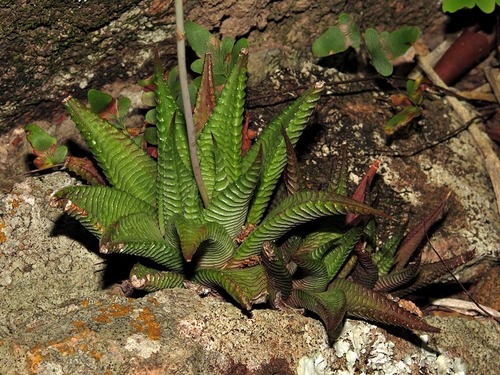
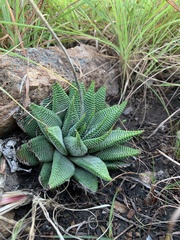

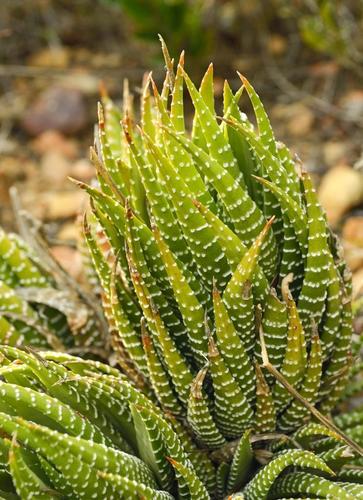
Fairy washboard (Haworthiopsis limifolia) forms a rosette of thick leaves with raised transverse ridges. This perennial succulent from southern Africa produces offsets and grows in a freely draining pot in bright light, with an almost dry winter.
Read moreFairy washboard and Haworthia
Haworthia limifolia
Allow a few hours of direct sun per day, preferably morning or evening.
Bright light or morning sun; protect from scorching sun.


© photo
(c) Kate Braun, some rights reserved (CC BY-NC), uploaded by Kate Braun · cc-by-nc
Dave Richardson · cc-by
Wikimedia Commons · CC BY-SA or Public Domain
© copyright of the Board of Trustees of the Royal Botanic Gardens, Kew.
Global distribution
Native from southern Mozambique to southern Mpumalanga, with records in Eswatini and KwaZulu-Natal.
- Native3
- Mozambique
- South Africa
- Eswatini
Hexagons: regions where the plant occurs. Green dots: native range.1
Identity
Raised ridges across its thick leaves distinguish fairy washboard (Haworthiopsis limifolia), a perennial succulent. The rosette produces offsets at its base and can form a dense clump. “Fairy washboard” refers to the washboard-like texture of the foliage; “haworthia” remains a more general name. 2
Haworthiopsis limifolia belongs to the Asphodelaceae family. Its accepted name carries the authority (Marloth) G.D.Rowley and dates from 2013. The older name Haworthia limifolia Marloth, published in 1910, refers to the same species. An old label therefore does not necessarily identify a different plant. 1
Recognition
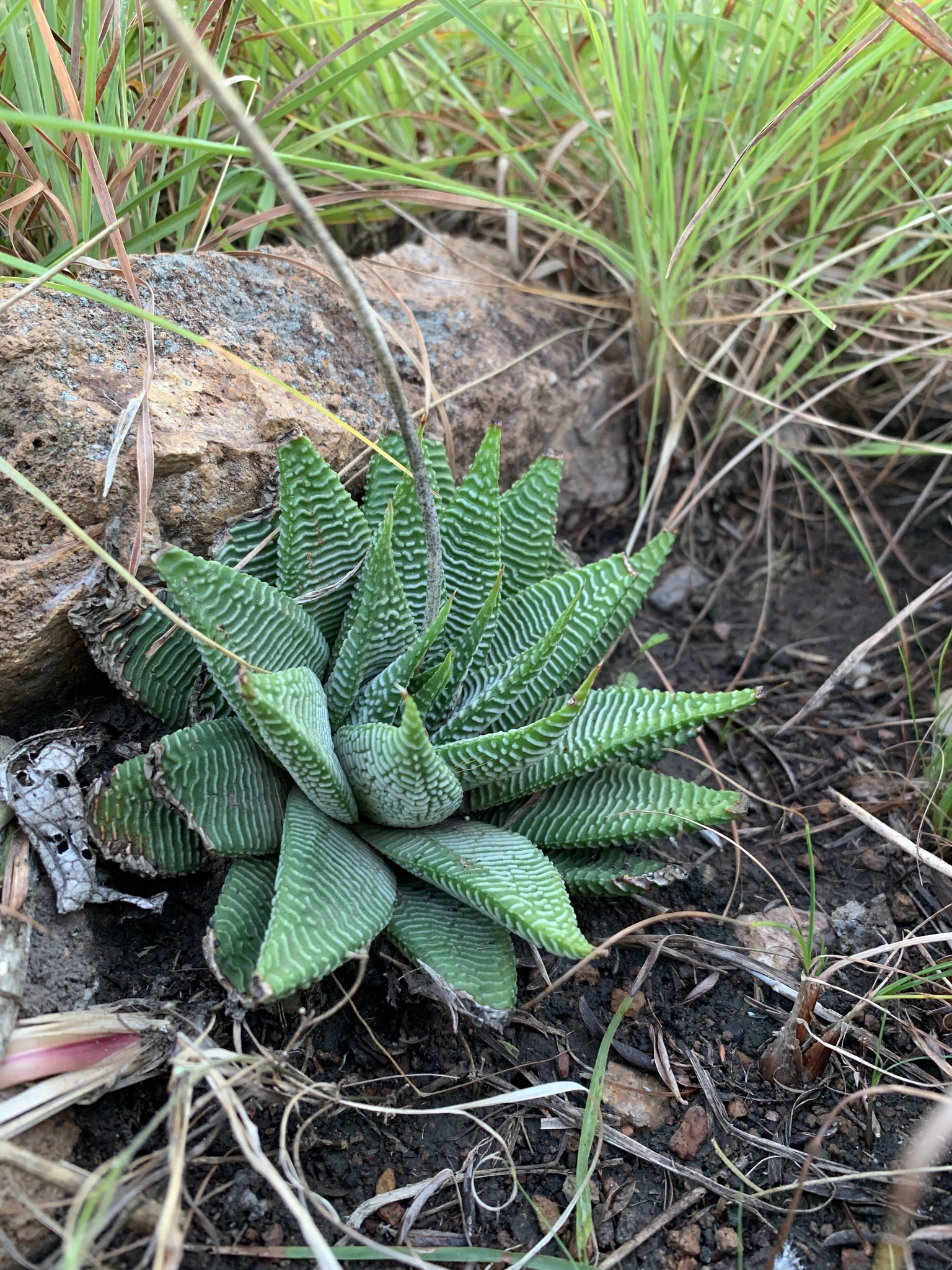
The botanical description gives a rosette diameter of about 12 cm (4.7 in). The thick, rigid, triangular leaves taper to a point and measure 3 to 10 cm (1.2 to 3.9 in) long and 2 to 4 cm (0.8 to 1.6 in) wide at the base. The underside can have a slight keel near the tip. 2
Raised ridges form irregular lines across the spirally arranged leaves. These ridges give the foliage its sculpted appearance, but some forms have almost smooth leaves. Identification should therefore not depend on the depth of the ridges alone. 32
In cultivation, the stated height and spread range from 10 to 50 cm (4 to 20 in). These horticultural dimensions describe a developed plant, including its clump and flowering stems; they do not give the diameter of an individual rosette. 3
Useful taxonomy
The transfer from Haworthia to Haworthiopsis explains why both names appear on labels. Revisions of the group also separated Tulista. Descriptions or growing advice now attached solely to the genus Haworthia therefore do not automatically apply to this species. 6
The accepted botanical varieties include the typical variety limifolia, along with arcana, gigantea, glaucophylla and ubomboensis. These names identify recognized divisions within the species. A botanical variety name is different from a label that simply describes a garden-center plant as variegated. 1
Habitat and pot cultivation
Fairy washboard is native to southern Africa, from southern Mozambique to southern Mpumalanga, with records in Eswatini and KwaZulu-Natal. The species occurs mainly in the subtropical biome. Its origin does not guarantee frost tolerance: in temperate climates, grow it in frost-free conditions. 13
Indoors, choose bright light near a window or a position with morning sun. Protect the rosette from scorching midday sun. Good air circulation and a loose, well-drained potting mix suit this species. 4
Letting the mix dry between waterings reduces conditions that encourage rot. A saucer full of water defeats the purpose of a draining mix, so empty any water that collects after watering. For potted succulents, an oversized container retains more moisture. Repot in spring when the roots have filled the pot. 47
Life cycle and reproduction
Summer flowering produces small, tubular, greenish-white flowers on a stalk that can reach 40 cm (16 in). The botanical description gives a perianth length of 14 mm (0.55 in), white with a greenish-brown midrib. The flowers are less conspicuous than the foliage. 32
Moderate watering during growth and almost dry conditions in winter are recommended for temperate cultivation. A low-nitrogen fertilizer at half strength, applied once or twice during growth, is sufficient. The calendar for an indoor plant in France expresses this pattern as relative scores; it prescribes neither water volumes nor measured growth. Adjust watering and feeding to the actual appearance of new leaves. 34
Offsets can be detached and rooted. Sow seed in spring at 21–24 °C (70–75 °F); separate offsets and take leaf cuttings in spring or summer. Propagation provides a new plant without removing one from the wild. 43
Uses and risks
The evergreen rosette suits indoor pots and succulent collections in a greenhouse or conservatory. Watch for mealybugs, which can colonize the plant. Excess watering or a waterlogged mix also exposes the roots to rot. 34
Traditional medicinal uses of the leaves, roots or whole plant are reported in southern Africa. Those uses do not establish that the plant is safe to eat. Safety after ingestion remains insufficiently established and requires further toxicological assessment. The status is unknown for humans, including children, and for cats, dogs, horses and other animals. Do not ingest the plant. 8
Harvesting for medicinal and ornamental uses puts pressure on wild populations. Choose a nursery-propagated plant. 8
Varieties and look-alikes
The variegated form combines green with cream or pale yellow bands. It has a separate horticultural description, without an established cultivar name. That description rates its growth as slow, whereas growth of the species is described as moderate in cultivation in Singapore. These assessments should not be confused. 54
To distinguish the neighboring genera, examine the leaf tips. Windowed haworthias have translucent areas; Haworthiopsis plants have opaque leaves with raised markings. Transparency and texture provide more information than a general resemblance between rosettes. 6
Main sources
The older name Haworthia limifolia and the accepted name Haworthiopsis limifolia refer to the same species. 1
- Plants of the World Online: Haworthiopsis limifolia
- Flora Zambesiaca: description of Haworthia limifolia
- Royal Horticultural Society: Haworthiopsis limifolia
- NParks Flora & Fauna Web: Haworthiopsis limifolia
- NParks Flora & Fauna Web: variegated Haworthiopsis limifolia
- NC State Extension: the genus Haworthia and the genera split from it
- Royal Horticultural Society: growing cacti and succulents indoors
- Maroyi, 2019: review of the uses and pharmacology of Haworthiopsis limifolia
Frequently asked questions
How can I identify fairy washboard?
Its thick, triangular leaves usually have raised transverse ridges. They form a spiral rosette, though some botanical forms have almost smooth leaves.
When should I water fairy washboard?
Wait until the potting mix dries between waterings. Water more during active growth, then keep the plant almost dry in winter in temperate conditions.
Does fairy washboard need full sun?
Bright light or morning sun suits the plant. Protect it from scorching midday sun and maintain good air circulation.
How do I propagate fairy washboard?
Separating and rooting offsets is a suitable method. Seed sowing and leaf cuttings are also used, in spring or summer depending on the method.
Is fairy washboard safe for cats?
Its safety for cats has not been established. The status remains unknown, as it does for other animals and humans; prevent ingestion.
Similar plants

If you are unsure about a plant’s toxicity, ask a botanist or veterinarian for advice.