
Soft rush (Juncus effusus, )
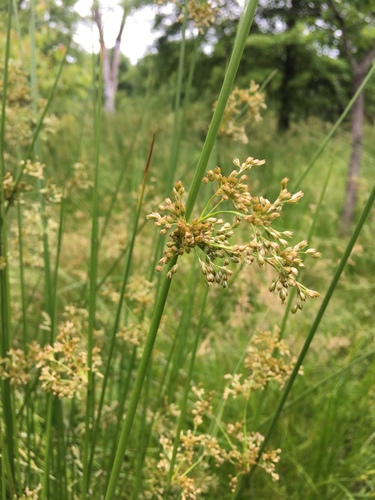
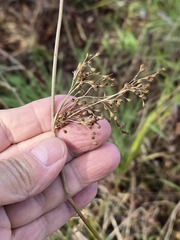
Soft rush (Juncus effusus) is a perennial herb in the Juncaceae family with smooth, cylindrical stems and no obvious leaves. It forms large evergreen clumps in temperate Northern Hemisphere wetlands and is recognizable by a flower cluster that appears to emerge from the side of the stem rather than its tip.
Read moreSoft rush and Common rush
Allow a few hours of direct sun per day, preferably morning or evening.
Full sun to partial shade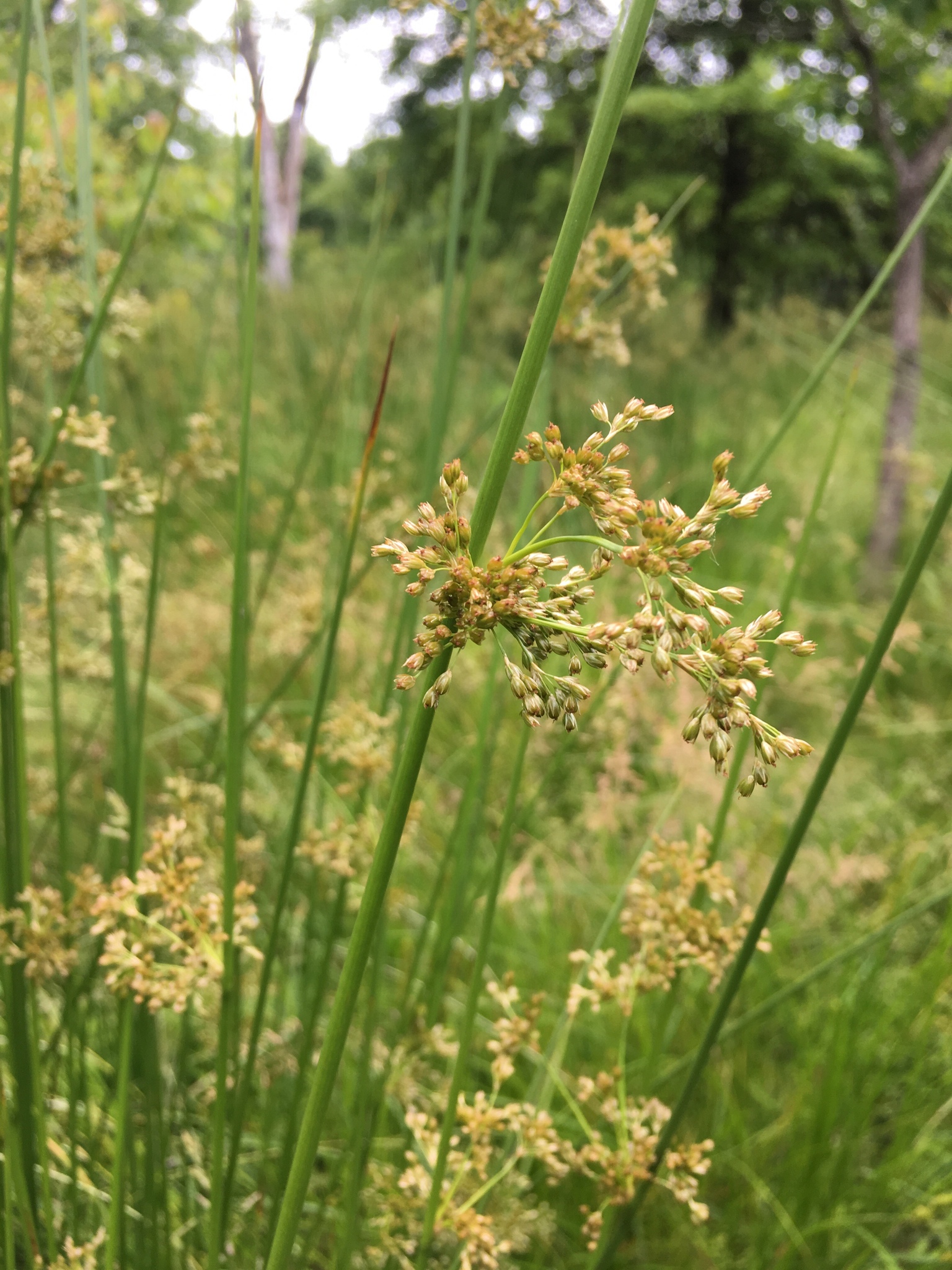
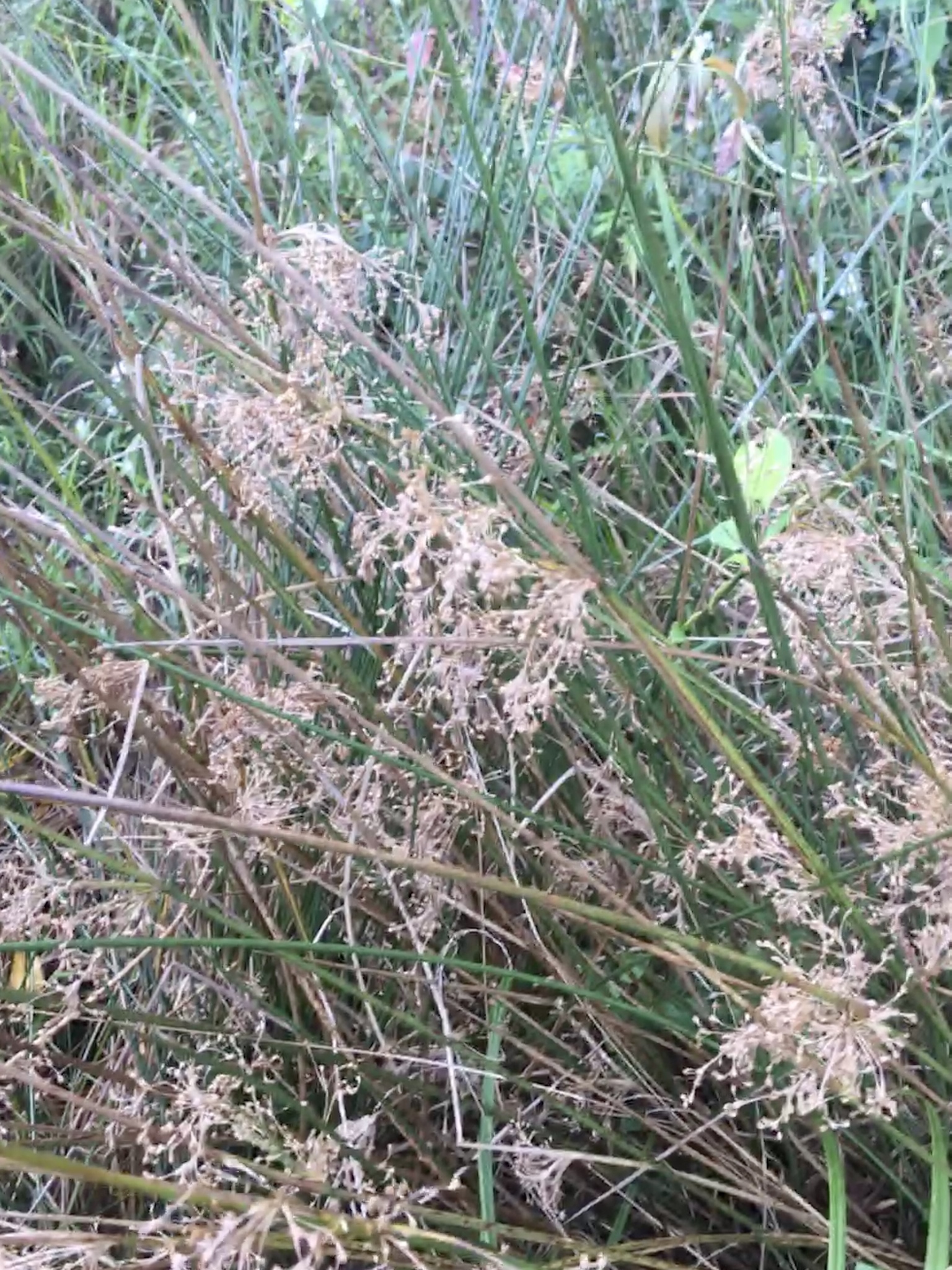
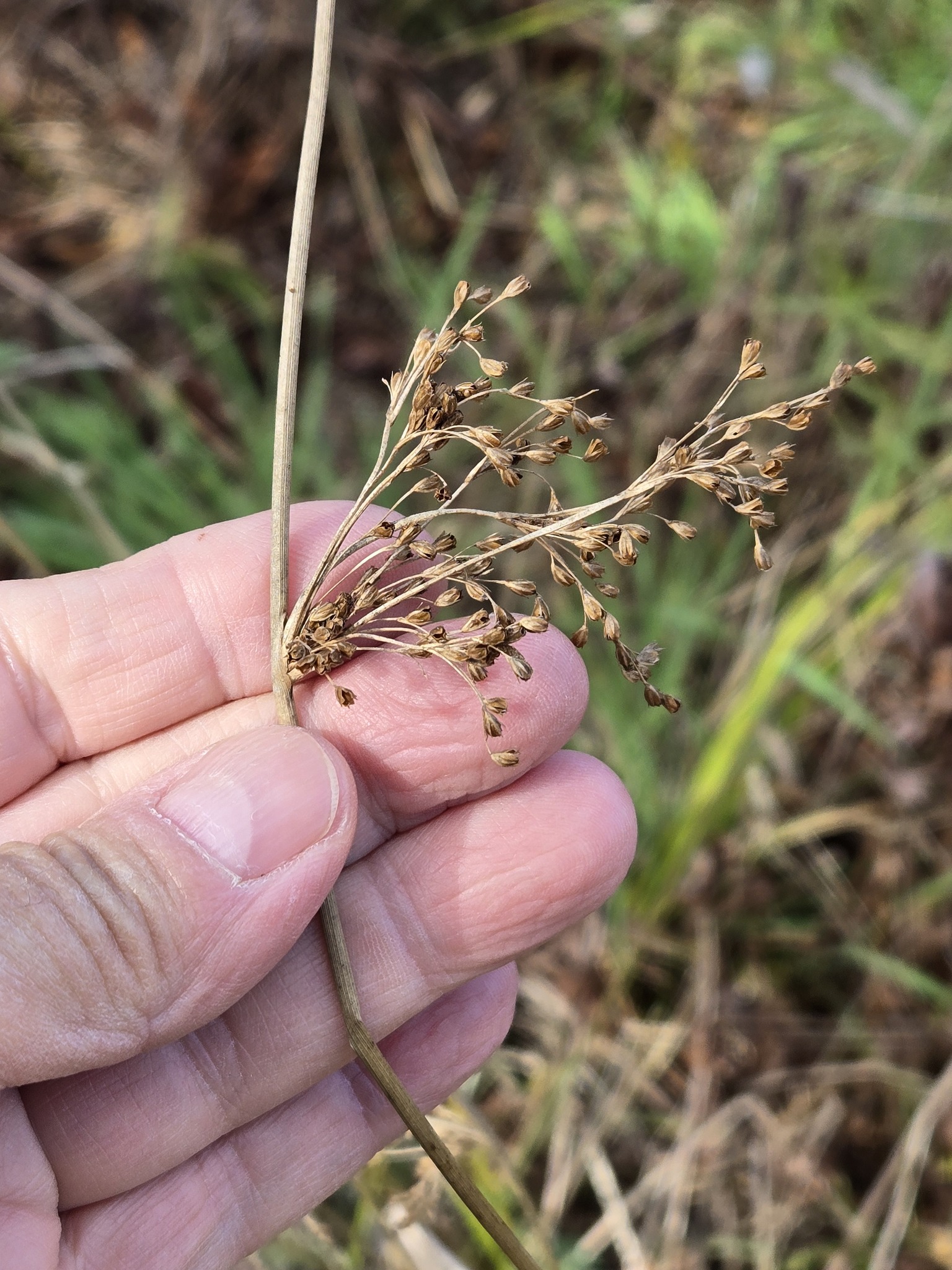
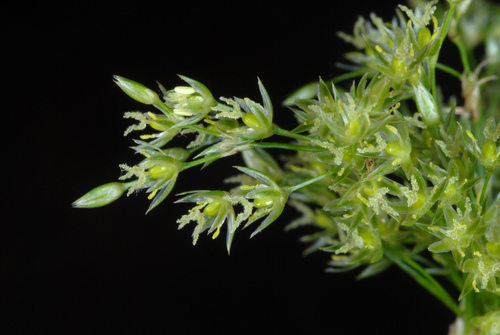
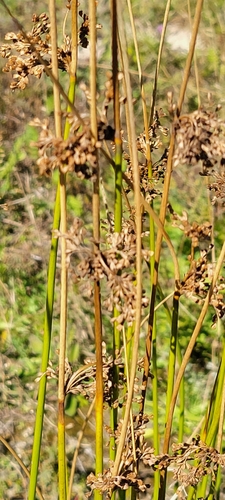
© photo
(c) Nelson DeBarros, some rights reserved (CC BY-NC), uploaded by Nelson DeBarros · cc-by-nc
Becky Dill · cc0
Daniel Atha · cc0
(c) Douglas Goldman, some rights reserved (CC BY-SA) · cc-by-sa
(c) WF_MI, some rights reserved (CC BY) · cc-by

Global distribution
Juncus effusus has an almost cosmopolitan native range, covering much of the temperate Northern Hemisphere and extending to East Africa, Madagascar, and western South America. It has also naturalized in Australia, New Zealand, South Africa, and several oceanic islands, where it can become locally invasive.
- Native6
- Introduced2
- Invasive1
- France
- United Kingdom
- Germany
- United States
- Japan
- Madagascar
- South Africa
- New Zealand
- Australia
Hexagons: regions where the plant occurs. Green dots: native range.1
Identity
Soft rush (Juncus effusus L., 1753), also called common rush, is a perennial herb in the genus Juncus and family Juncaceae. The epithet effusus comes from Latin effundere, “to pour out or spread,” referring to the loose flower cluster that seems to emerge from the side of the stem rather than its tip. 1 3
Large evergreen clumps of soft rush occupy temperate wetlands, where it is among the most familiar rushes of riverbanks, ditches, and waterlogged meadows. In France it grows almost everywhere, from lowlands to mid-elevation mountains. 6
Recognition
Look first for the absence of obvious leaves: smooth, cylindrical, bright green stems commonly grow 60 cm to 1.20 m (2 to 4 ft) tall and carry out all the plant’s photosynthesis. True leaves are reduced to a reddish-brown to blackish sheath without a blade at the base of each stem. 2 5
Cutting a stem reveals continuous white pith, spongy and easily removed with a fingernail once the outer surface is opened. The greenish to pale brown flower cluster appears to emerge from the stem’s side about 20 cm (8 in) below the tip. The stem actually ends at that point; what seems to be its upper portion is a bract continuing the same line, with no obvious break. 3 2
Each tiny flower develops into a shiny brown capsule, egg-shaped to almost spherical and generally shorter than the floral envelope around it. 3
Useful taxonomy
Several hundred species belong to Juncus, and Juncus effusus shares its habitat with easily confused relatives. Key synonyms include:
- Juncus communis var. effusus (L.) E.Mey., a historical varietal name;
- Juncus laevis Wallr., a species-level synonym;
- Juncus effusus var. conglomeratus (L.) Kostel., another varietal synonym.
Five recognized subspecies subdivide this species, including the widespread typical subspecies effusus and more localized ones such as austrocalifornicus in California and laxus in tropical Africa and Madagascar. With so many forms and common names, the accepted scientific name remains a stable reference. 1
Habitat and range
Wetland habitats support Juncus effusus: marshes, bogs, streambanks, ditches, and waterlogged meadows, often on acidic soil low in lime. Its native range covers much of the temperate Northern Hemisphere, extending to East Africa and Madagascar. Isolated populations reach 3,600 m (11,800 ft) in the tropical Andes, showing its broad climatic tolerance. 1 6
Naturalized populations also occur in Australia, New Zealand, South Africa, and several oceanic islands. Livestock avoid its unpalatable stems in waterlogged pasture, allowing dense clumps to develop. It is therefore classed locally as a pasture weed, while it is not regarded as invasive in France. 1 5
Life cycle and reproduction
Depending on the region, flowering runs from May to September in the Northern Hemisphere, peaking between June and August. Wind-pollinated flowers open in successive waves on panicles that often remain throughout winter after fruiting. 6
Tiny seeds need light to germinate and require bare, waterlogged soil to establish. Soft rush therefore first colonizes trampled areas or ground recently exposed by livestock or floods. Once rooted, a clump spreads mainly through branching of its creeping rhizome, a more reliable route to rapid establishment than seed. 4
For cultivated plants, dividing clumps in spring is the simplest propagation method. Each piece of rhizome already carries several stems and establishes quickly in wet soil. 4
Uses and risks
Soft rush is not listed as toxic to cats, dogs, or people; only dry, stiff stems may mechanically irritate the mouth if chewed. 5
Before wax candles became widespread in Europe, white pith extracted from the stems and dipped in fat supplied the wick for inexpensive rushlights. Whole stems are still used for basketry and woven mats, and the plant also supplies papermaking material in some regions. In Japan, soft rush grown in flooded paddies provides the traditional weave for tatami mats. 4
Pond margins, naturalized wetland plantings, and containers used for habitat restoration all suit the species and its cultivars, thanks to their tolerance of shallow standing water. 3
Varieties, look-alikes and related plants
Corkscrew stems distinguish Spiralis, the most widely sold cultivar, which must be propagated by division because seedlings do not reliably retain the twist. Related selections such as Unicorn are more compact, while Quartz Creek keeps straight blue-green stems and Aurea Striata has yellow-striped stems. 2
Common sources of confusion include:
- Juncus conglomeratus, compact rush, with ribbed, dull stems rather than smooth, glossy ones;
- Carex sedges, recognizable by triangular stems and true leaves;
- Acorus calamus, sweet flag, with flattened, creased stems that release an aromatic scent absent in soft rush.
Touch offers a quick identification check: a round, smooth, glossy stem with continuous pith almost always points to Juncus effusus rather than its relatives. 2 3
Main sources
- Plants of the World Online / Kew, Juncus effusus L.
- Royal Horticultural Society, Juncus effusus (soft rush)
- Missouri Botanical Garden Plant Finder, Juncus effusus
- Plants For A Future, Juncus effusus
- North Carolina Extension Gardener Plant Toolbox, Juncus effusus
- INPN / MNHN, Juncus effusus L., 1753 - soft rush
Frequently asked questions
Is soft rush toxic to cats and dogs?
No. Soft rush (Juncus effusus) is not listed among plants toxic to cats and dogs; only its dry, stiff stems may mechanically irritate the mouth if chewed.
Why do soft rush stems have no leaves?
The leaves are reduced to a brown sheath at the stem base. Photosynthesis takes place in the cylindrical stems themselves, an adaptation common in wetland plants where little light reaches ground level.
How can you tell soft rush from other rushes and sedges?
Soft rush has round, smooth, glossy stems with continuous white pith. Juncus conglomeratus has ribbed, dull stems; Carex sedges have triangular stems and true leaves, unlike soft rush.
Is soft rush invasive?
In France, it is native and an ordinary part of wetland vegetation. Livestock avoid its unpalatable stems in waterlogged pasture, favoring its local spread. Elsewhere, including Australia and New Zealand, the introduced species may become invasive.
Can you grow soft rush in a pot or indoors?
Yes, if the growing medium stays permanently wet, for example with a saucer kept full of water. A humid conservatory or a container at a pond edge suits it better than a typical dry room.
What is soft rush pith used for?
Dipped in fat, it long served as the wick of rushlights, an inexpensive light source before wax candles became widespread. Whole stems are also used for basketry, woven mats, and Japanese tatami.
How do you divide Spiralis soft rush without losing its twist?
In spring, take a piece of rhizome bearing several already spiral stems from a true-to-type parent plant. Seed is unsuitable for this cultivar because the stem twist does not reproduce reliably from seed.
Similar plants
If you are unsure about a plant’s toxicity, ask a botanist or veterinarian for advice.