
Yellow iris (Iris pseudacorus, )
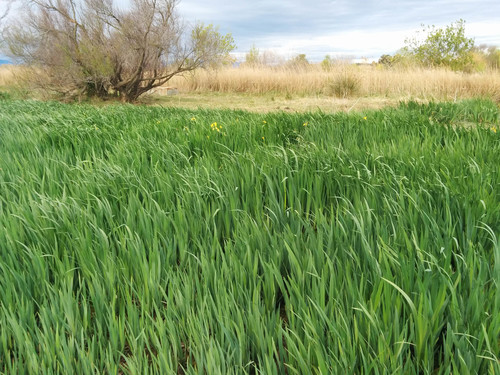
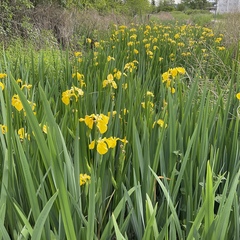
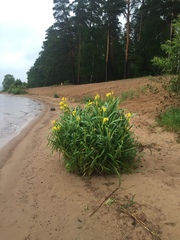
Yellow iris (Iris pseudacorus) is a tall rhizomatous perennial in the Iridaceae, growing along banks, ditches, reedbeds and wetlands. Native to a broad Eurasian and Mediterranean range including France, it can form a striking feature on sunny banks, but becomes an invasive aquatic plant in some introduced regions, notably North America.
Read moreYellow iris, Yellow flag, Yellow flag iris and Water flag
Allow a few hours of direct sun per day, preferably morning or evening.
Full sun to bright partial shade
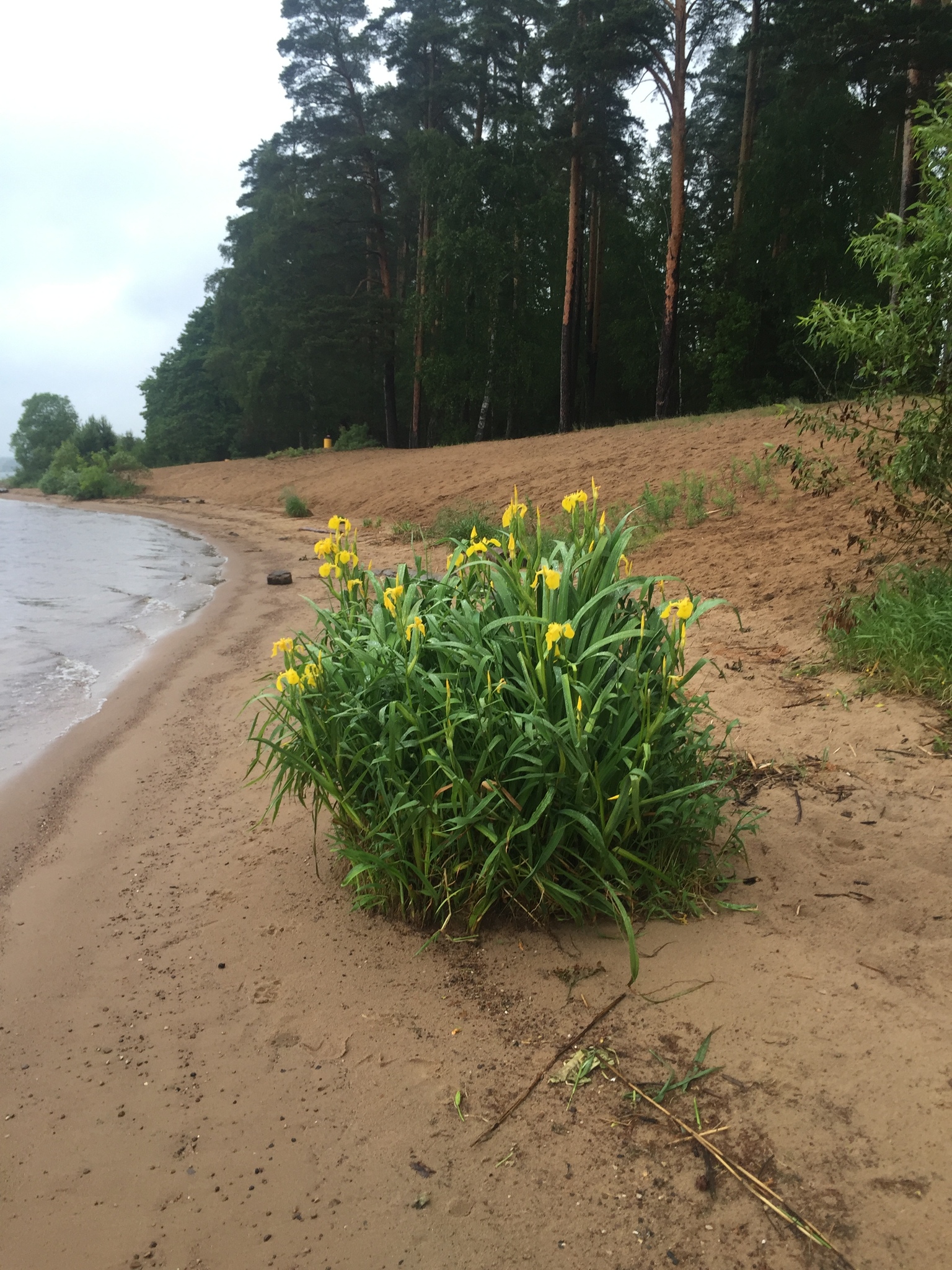
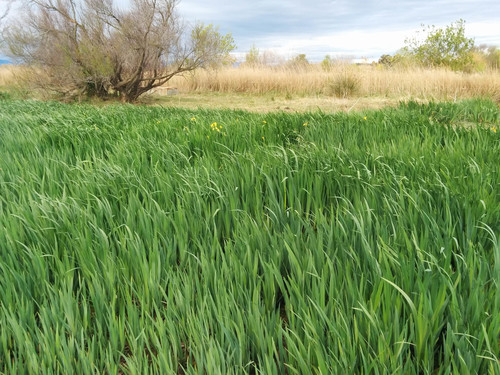
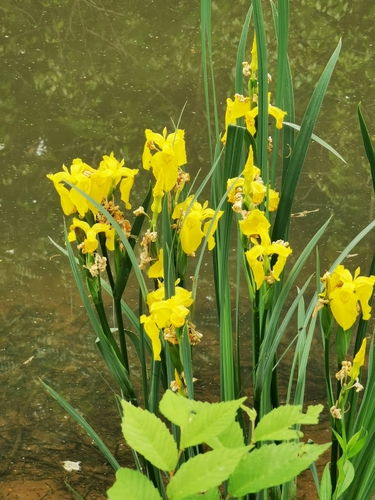
© photo
Julien Renoult · cc0
Daryl Nolan · cc0
Анна Рыбакова · cc-by
(c) Анна Рыбакова, some rights reserved (CC BY) · cc-by
(c) Julien Renoult, some rights reserved (CC BY) · cc-by
Global distribution
Iris pseudacorus is native across a broad Eurasian and Mediterranean range that includes France. In several wetlands beyond this range it is introduced and sometimes invasive; planting may need to be avoided or restricted according to local rules.
- Native4
- Introduced1
- Invasive2
- Mainland France
- Corsica
- Europe
- Caucasus
- New Zealand
- North America
- Japan
Hexagons: regions where the plant occurs. Green dots: native range.1
Identity
Yellow iris (Iris pseudacorus L., 1753) is an accepted species in the Iridaceae, published by Linnaeus in Species Plantarum. POWO describes it as a rhizomatous geophyte or helophyte: a perennial whose rhizome grows in saturated soil or at the water’s edge. 1 2
French common names recorded for this plant include iris des marais, iris faux-acore, iris jaune, flambe d’eau and glaïeul des marais. Each evokes a tall waterside plant with sword-shaped leaves and yellow flowers. Tela Botanica gives Iris des marais as the standardized French name, linked to INPN identifier CD_NOM 103772. 3 4
Geography changes its ecological significance. The species is native in mainland France, whereas in several North American regions it is an introduced plant that can become invasive in wetlands. Its identity stays the same, but its place in the local flora differs. 5 9
Recognition
Robust clumps carry smooth, upright basal leaves, green to gray-green, long and sword-shaped. Field descriptions commonly give leaf lengths of 40–100 cm (16–39 in) and flowering stems around 70–150 cm (28–59 in), depending on conditions. 3 9
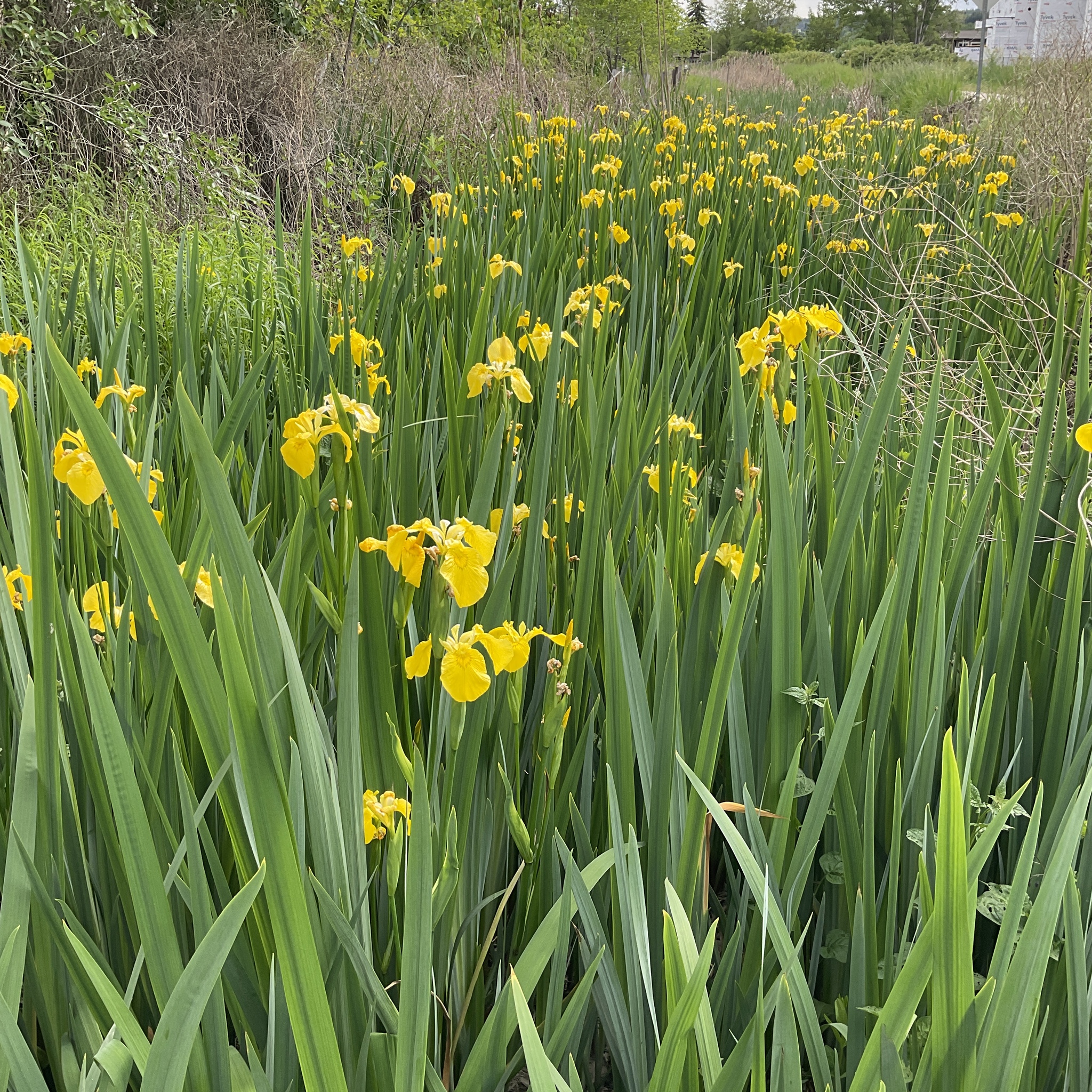
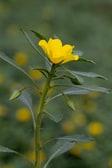
Bright yellow flowers make recognition straightforward during bloom. Three drooping sepals surround three shorter petals, sometimes with brownish or purple basal veins. Tela Botanica gives April–July for flowering in its French context; USGS describes spring flowers about 7–9 cm (2.8–3.5 in) wide. 3 9
Angular capsules follow the flowers and turn brown as they ripen. Their flattened brown seeds float, allowing dispersal along ditches, rivers and pond margins. This waterborne movement is central to the species’ invasive behavior where it has been introduced. 9
Taxonomy and useful names
For identification and records, use Iris pseudacorus L. POWO accepts this name and lists numerous historical synonyms, including Limnirion pseudacorus, Limniris pseudacorus, Xiphion pseudacorus, Iris acoriformis, Iris acoroides and Iris lutea. 1
The epithet pseudacorus means “false acorus,” referring to leaves that can resemble sweet flag. The iris flower resolves that resemblance. Before flowering, other strap-leaved waterside plants can be confusing; once open, the large yellow flower is the clearest shortcut to recognition. 3 6
Introduced populations may also be confused with native wetland irises. North American guides emphasize capsules, rhizomes and site context when plants are not in flower. A fan of leaves alone is insufficient for a confident identification. 9
Habitat, France and ecological status
Across its native range, POWO places the species from Europe to the Caucasus and from the Mediterranean to Iran, including France. Tela Botanica describes marshes and watersides throughout France and Corsica, with a wider range in Europe, western Asia and northern Africa. 1 3
Local French records support that account. CBNFC-ORI lists Iris pseudacorus as native, with LC threat status in France. Habitats include tall-sedge beds, reedbeds, pond and river margins, very wet tall-herb communities, long-flooded meadows, ditches and riverine forests. 5
Being native in France does not make every planting harmless. Vigorous clumps can close over a small pond, crowd a limited basin or spread locally. The French sources consulted do not classify it as an invasive alien species in mainland France, because it is native there. 3 5
Invasiveness outside the native range
Beyond the native range, EPPO records introductions in India, Japan, Korea, North America and Argentina, among other places. It notes cultivation as an aquatic ornamental and an association with North American weed lists. 6
USGS treats yellow iris as an established alien in the United States. It records shorelines, fresh or brackish marshes, wet soil and riverine habitats, as well as clonal rhizome colonies, floating seeds and displacement of other marsh plants at some sites. 9
North Carolina’s NC State account classifies the species as invasive there, with spread by rhizomes and seed and particular risk in wet habitats. Cal-IPC likewise lists it as invasive in California, where it competes with wetland plants and can form stands that are difficult to cross. 8 10
A waterside garden plant
In gardens within its appropriate regional context, yellow iris belongs beside water: ponds, wet ditches, swales, rain gardens or large containers kept very moist. Unlike a dry-border iris, it needs moist to saturated soil, or shallow water, and strong light for good flowering. 7 3
RHS recommends deep, moist, acidic, humus-rich soil in sun or partial shade and describes a vigorous perennial forming colonies up to about 1.5 m (5 ft) tall. NC State notes shallow water and pond-margin mud as suitable settings, while stressing containment and careful waste handling. 7 8
A bank connected to water does not need routine irrigation. In a wet garden away from the bank, keep soil consistently moist to waterlogged, using about 20–40 mm (0.8–1.6 in) per week during dry weather when rain is lacking. Apply fertilizer very cautiously near water, where nutrient enrichment can disrupt the habitat. 7 9
Life cycle and spread
Rhizomes resume growth in spring, followed by flowers generally from late spring to early summer and then capsules. USGS notes that plants often need several years to mature and flower, explaining why young clumps may produce mostly foliage before flowering more freely. 9
Branching rhizomes drive the most visible garden spread, steadily widening the clump. In a small pond, use a basket, divide every few years and contain all removed pieces. A rhizome fragment thrown into a ditch can become a new plant. 8 9
Floating seeds provide a second route for spread. They travel with the current and germinate along wet margins. This is a normal feature of a native waterside plant, but outside its native range it is another reason to choose local native irises instead. 9 6
Toxicity and uses
Ingestion of irises presents a poisoning risk. The ASPCA lists Iris species as toxic to dogs, cats and horses and identifies pentacyclic terpenoids. Reported signs are salivation, vomiting, lethargy and diarrhea, with higher concentrations in the rhizomes. 11
Pet Poison Helpline describes toxicity in dogs and cats as generally mild to moderate, chiefly irritation, salivation, vomiting, diarrhea and lethargy. IVIS notes that rhizomes, bulbs and seed capsules concentrate irritants that can cause gastroenteritis and, in some people, contact dermatitis. 12 13
Yellow iris should not be used as a home food or remedy. Historical references to dyes, tannins, water treatment or herbal use require context: identification, dose, preparation, water quality and toxicity make them unsuitable as domestic gardening advice. 8 13
Cultivars and look-alikes
Horticultural forms include variegated foliage and flowers that are paler, double or more strongly marked. These selections remain Iris pseudacorus, a vigorous rhizomatous waterside iris. Their ornamental differences do not turn them into dry-border plants. 7
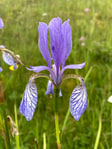
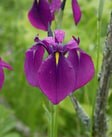
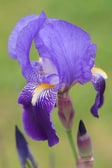
Look-alikes vary by region. In France, sweet flag and some other marginal irises can share the sword-leaved outline before flowering, while yellow blooms clarify identification. Outside Europe, take care to distinguish it from local native wetland irises, often blue or violet. 3 9
Check both the scientific name and the territory before buying or dividing plants. In France, the species can suit a controlled garden pond; in North America or any region where it is classified as invasive, choose a locally native marginal plant instead. 8 10
Main sources
- Plants of the World Online / Kew, Iris pseudacorus L.
- GBIF Backbone Taxonomy, Iris pseudacorus L.
- Tela Botanica eFlore, Iris pseudacorus L.
- INPN, Iris pseudacorus L., CD_NOM 103772
- CBNFC-ORI, Iris pseudacorus L., 1753
- EPPO Global Database, Iris pseudacorus (IRIPS)
- Royal Horticultural Society, Iris pseudacorus
- North Carolina Extension Gardener Plant Toolbox, Iris pseudacorus
- USGS Nonindigenous Aquatic Species, yellow iris (Iris pseudacorus)
- California Invasive Plant Council, Iris pseudacorus profile
- ASPCA Animal Poison Control, Iris
- Pet Poison Helpline, Iris
- IVIS / Guide to Poisonous House and Garden Plants, Iris species
Frequently asked questions
Is yellow iris native to France?
Yes. The references consulted describe it as native to mainland France and Corsica, in marshes, banks, ditches and reedbed vegetation.
Is yellow iris invasive?
It is native in France. In contrast, it is introduced and invasive in several regions beyond its native range, notably parts of North America.
Can I plant yellow iris beside a pond?
In France it can suit a garden pond or wet bank, especially when contained and when plant waste cannot enter connected waterways. In countries or states where it is invasive, choose a local native species instead.
How much water depth can yellow iris tolerate?
It grows chiefly in saturated soil, mud or shallow water. A basket on the wet margin of a small pond is easier to manage than unrestricted planting.
Is yellow iris toxic to animals?
Yes. The ASPCA lists irises as toxic to dogs, cats and horses, with digestive signs and a higher concentration of toxic compounds in the rhizomes.
Why should rhizomes stay out of compost heaps and ditches?
Rhizome fragments can regrow, and floating seeds spread through water. Contain the waste, especially outside the native range or near sensitive natural habitats.
Similar plants
If you are unsure about a plant’s toxicity, ask a botanist or veterinarian for advice.