
Japanese iris (Iris ensata, )
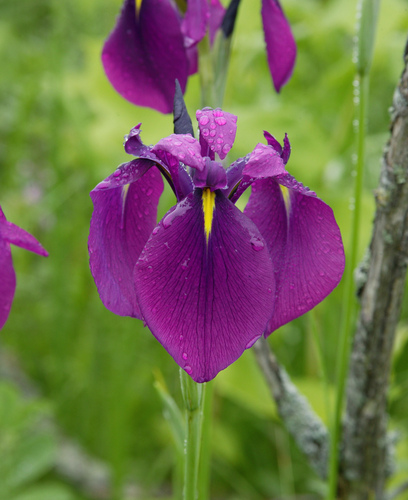

Japanese iris (Iris ensata Thunb.), also called hanashōbu, is a rhizomatous perennial in the Iridaceae, grown for large, flat flowers in purple, blue, white or mixed colors. Native to eastern and northeastern Asia, it needs moist to wet, acidic soil during growth, but its rhizomes tolerate cold standing water poorly in winter.
Read moreJapanese iris, Japanese water iris, Hanashōbu, Japanese flag, Sword-leaved iris and Russian iris
Allow a few hours of direct sun per day, preferably morning or evening.
Full sun in moist soil; bright partial shade in hot climates


© photo
(c) 空猫, some rights reserved (CC BY-NC), uploaded by 空猫 · cc-by-nc
Wikimedia Commons · CC BY-SA or Public Domain
Wikipedia · CC BY-SA
© copyright of the Board of Trustees of the Royal Botanic Gardens, Kew.




Global distribution
POWO, WFO and EPPO describe Iris ensata as an Asian wetland species with a broad range in eastern and northeastern Asia and extensive ornamental cultivation. In France it is treated as cultivated, without a national invasive status retained in the references consulted.
- Native6
- Introduced2
- Japan
- Korea
- Northeastern and eastern China
- Russian Far East
- Eastern Siberia
- Kazakhstan and Central Asia in some references
- Himalayas
- North America
Hexagons: regions where the plant occurs. Green dots: native range.1
Identity
Japanese iris (Iris ensata Thunb., 1794) is an accepted species of Iris in the Iridaceae. POWO/Kew, WFO and EPPO retain Thunberg’s name. Older catalogs may still use Iris kaempferi, now treated as a synonym by the references consulted. ↗ ↗ ↗
The familiar name Japanese iris needs a botanical qualification. In Japanese horticulture, hanashōbu chiefly refers to garden forms of Iris ensata, while other Japanese irises have similar common names. The scientific name remains the safest guide when comparing growing needs and toxicity. ↗ ↗
A rhizome, rather than a true bulb, supports this perennial. Although gardeners sometimes group it with bulbs because it has an underground storage organ, the part to inspect, divide and keep out of reach is its rhizome. ↗ ↗
Recognition
Upright clumps of sword-shaped leaves generally reach 60 cm–1 m (2–3.3 ft) in cultivation. Botanical descriptions emphasize the narrow leaves and conspicuous midrib, while gardeners value the vertical outline beside water. ↗ ↗ ↗
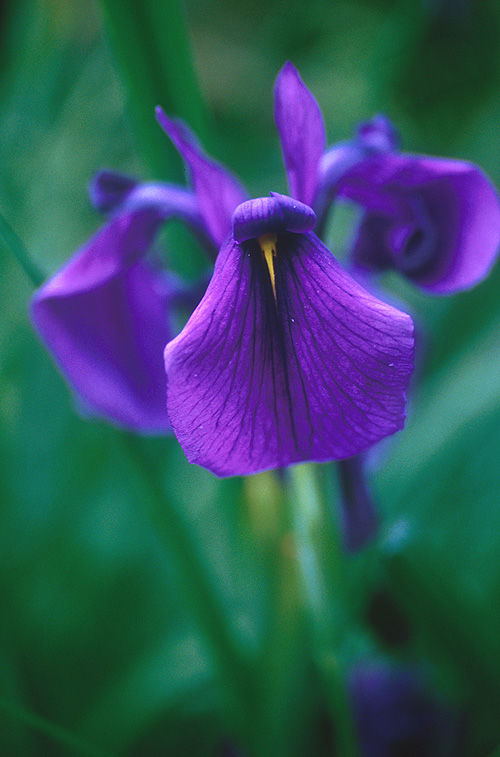
Broad, open flowers provide the main display. Their large outer segments spread or droop around a pale, white or yellow central signal. Horticultural descriptions give purple-violet flowers for the species and white, blue, purple, pink, variegated or finely veined cultivars. ↗ ↗
Garden selections can have much larger flowers than wild plants. NC State describes flat blooms about 20–25 cm (8–10 in) across, while Flora of China gives roughly 9–10 cm (3.5–4 in) for the botanical species. These figures describe different material: wild plants and extensively selected cultivars. ↗ ↗
Elongated capsules and brown seeds may follow flowering. Gardeners often remove spent stems to keep clumps tidy and avoid unnecessary depletion, but the fruits also reveal the species’ botanical cycle. ↗ ↗
Useful taxonomy
Taxonomic references retain Iris ensata Thunb. Useful historical names include Iris kaempferi Lemaire and Limniris ensata (Thunb.) Rodionenko in EPPO, alongside other combinations or forms listed by POWO and eFloras. ↗ ↗ ↗
Names shared by several species can obscure different needs. NC State explicitly lists Iris japonica, Iris laevigata and Iris sanguinea among other plants called Japanese iris. Growing advice under that common name is reliable only when the scientific name is clear. ↗
Cultivar labels need the same care. Edo, Higo and Ise describe Japanese horticultural traditions. They do not replace the species name or establish, by themselves, that a plant suits a pond, bank or moist acidic border. ↗ ↗
Habitat and range
Eastern and northeastern Asia contain the documented range, including Japan, Korea, several regions of China and the Russian Far East. EPPO also records ornamental cultivation and introduced occurrences, so a plant found outside its native range may originate from planting. ↗ ↗
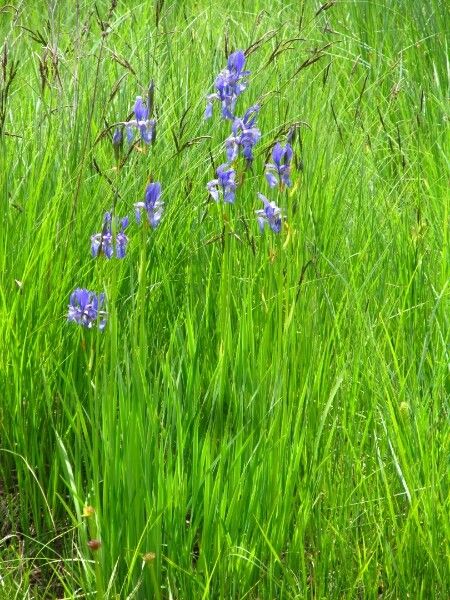
Wet ground along rivers and near lakes is the habitat described by Flora of China, at about 400–1,700 m (1,300–5,600 ft) in the Chinese regions covered. This fits moist banks, wet swales, rain gardens and pond margins better than dry rock gardens. ↗ ↗
For mainland France, the references consulted retain no national invasive status for Iris ensata. Tela Botanica lists it under the French name iris du Japon with an INPN identifier and no known protection in the data consulted. It remains a cultivated ornamental that should not be spread into natural habitats. ↗
Growing in the garden
Deep, humus-rich, moist to wet acidic soil underpins successful cultivation. RHS recommends these conditions and suggests pond or stream margins. NC State likewise stresses abundant moisture during active growth. ↗ ↗
Winter moisture requires a different approach. NC State notes that Iris ensata tolerates saturated ground or standing water poorly in winter. A moist margin during spring and summer is different from a rhizome submerged for months in cold, poorly aerated water. ↗
When rain is lacking during active growth, 15–30 mm (0.6–1.2 in) per week is a watering guide. Deep, mulched soil often needs the lower amount; containers, freely draining banks and hot spells need closer checks. Aim for moist to wet soil, rather than a permanently stagnant saucer. ↗ ↗
Flowering needs sufficient light, but large blooms are vulnerable to harsh conditions. NC State favors sun with some tolerance of partial shade. Its Extension article highlights damage from hot sun, drying wind and heavy rain; morning sun or bright partial shade is often more reliable in hot climates. ↗ ↗
After flowering, divide from midsummer to early fall according to RHS, or in early fall according to NC State. Division every 3–4 years can restore declining flowering, but dividing too often also delays the development of a full clump. ↗ ↗
Life cycle, uses and risks
As a deciduous wetland perennial, this iris rests in winter, resumes growth in spring, flowers from late spring into summer according to climate, then builds its rhizomes. Remove dead leaves and spent stems in fall to keep the clump clean. ↗ ↗
Ornamental uses include pond margins, rain gardens, moist borders, cut flowers and specialist collections. It tolerates wet soil better than many bearded irises, yet can be more demanding than robust marginal plants when pH, moisture or planting depth changes abruptly. ↗ ↗
The ASPCA lists Iris species as toxic to dogs, cats and horses. Reported signs include salivation, vomiting, lethargy and diarrhea, with the highest concentration of toxic compounds in the rhizomes. Ordinary garden contact does not carry the same exposure as eating plant parts. ↗
Pet Poison Helpline also describes irritation from eating or handling irises and related plants, with compounds concentrated in bulbs or rhizomes. Drooling, vomiting, diarrhea and lethargy are among the digestive signs. Keep rhizomes out of reach, use gloves for sensitive skin and seek veterinary advice after ingestion. ↗
Human toxicity is rated low in severity by NC State, which nevertheless lists nausea, salivation, vomiting, abdominal pain, lethargy, diarrhea and possible fever after ingestion. Contact with seeds, roots or sap may irritate skin, so take particular care during division and repotting. ↗
Cultivars and look-alikes
Selected forms of Iris ensata include single, double, very flat, veined and variegated flowers. NC State lists ’Agrippinella’, ’Anytus’, ’Raspberry Candy’, ’Sanda No Otome’, ’Silverband’, ’Taga Sode’ and ’Variegata’. These names identify horticultural selections rather than separate species. ↗
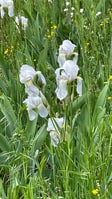
Other irises for moist soil can look similar, especially Iris laevigata, Iris sanguinea, Iris sibirica and sometimes Iris pseudacorus. Useful distinctions include the presence or absence of a beard, flower width, leaf shape, tolerance of permanent water and the color of the floral signals. ↗ ↗
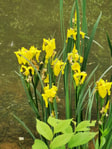
Yellow iris, Iris pseudacorus, deserves particular attention. It is a different, more vigorous species and may cause problems outside its native setting. Management or invasive-status advice for I. pseudacorus should not automatically be applied to I. ensata. ↗ ↗
Before buying, check the full scientific name, a clear cultivar label, firm rhizomes, no smell of rot, an acidic substrate and coherent winter-care instructions. A plant sold simply as Japanese iris may be correctly named, but confirm its identity before planting beside a pond. ↗ ↗
Main sources
- Plants of the World Online / Kew, Iris ensata Thunb.
- World Flora Online, Iris ensata Thunb.
- Royal Horticultural Society, Iris ensata
- NC State Extension Gardener Plant Toolbox, Iris ensata
- NC State Extension Gardener, Japanese Iris — A Popular Perennial for Boggy Sites
- ASPCA, Iris toxicity entry
- Pet Poison Helpline, Iris
- EPPO Global Database, Iris ensata
- Tela Botanica eFlore, Iris ensata Thunb.
Frequently asked questions
Is Japanese iris a true aquatic plant?
It is primarily an iris for very wet soil. It can grow beside a pond or tolerate periods in water during growth, but its rhizomes dislike being submerged in cold water through winter.
Should I grow Japanese iris like a bearded iris?
No. Bearded irises often need exposed rhizomes and comparatively dry, well-drained soil. Iris ensata instead needs acidic, humus-rich soil that stays moist during growth.
Is Japanese iris toxic to cats and dogs?
Yes. The ASPCA lists Iris species as toxic to dogs, cats and horses, with the highest concentration in the rhizomes. Effects are chiefly digestive and irritant.
Why is my Japanese iris not flowering?
Common causes include too little light, spring drought, overly alkaline soil, overcrowding or very recent division. Correct moisture and acidity before applying heavy fertilizer.
When should I divide Japanese iris?
After flowering, from midsummer to early fall, depending on climate. NC State suggests division every 3–4 years if needed; RHS also recommends rhizome division during this period.
Does Japanese iris always mean Iris ensata?
Not necessarily. In gardening, Japanese iris often means Iris ensata, but other Japanese or Asian irises, including Iris laevigata and Iris sanguinea, can have similar names.
Similar plants
If you are unsure about a plant’s toxicity, ask a botanist or veterinarian for advice.