
Florentine iris (Iris florentina, )
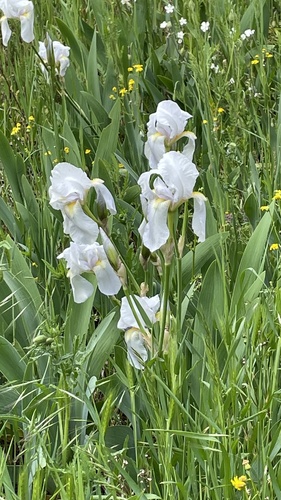
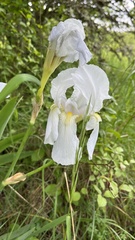
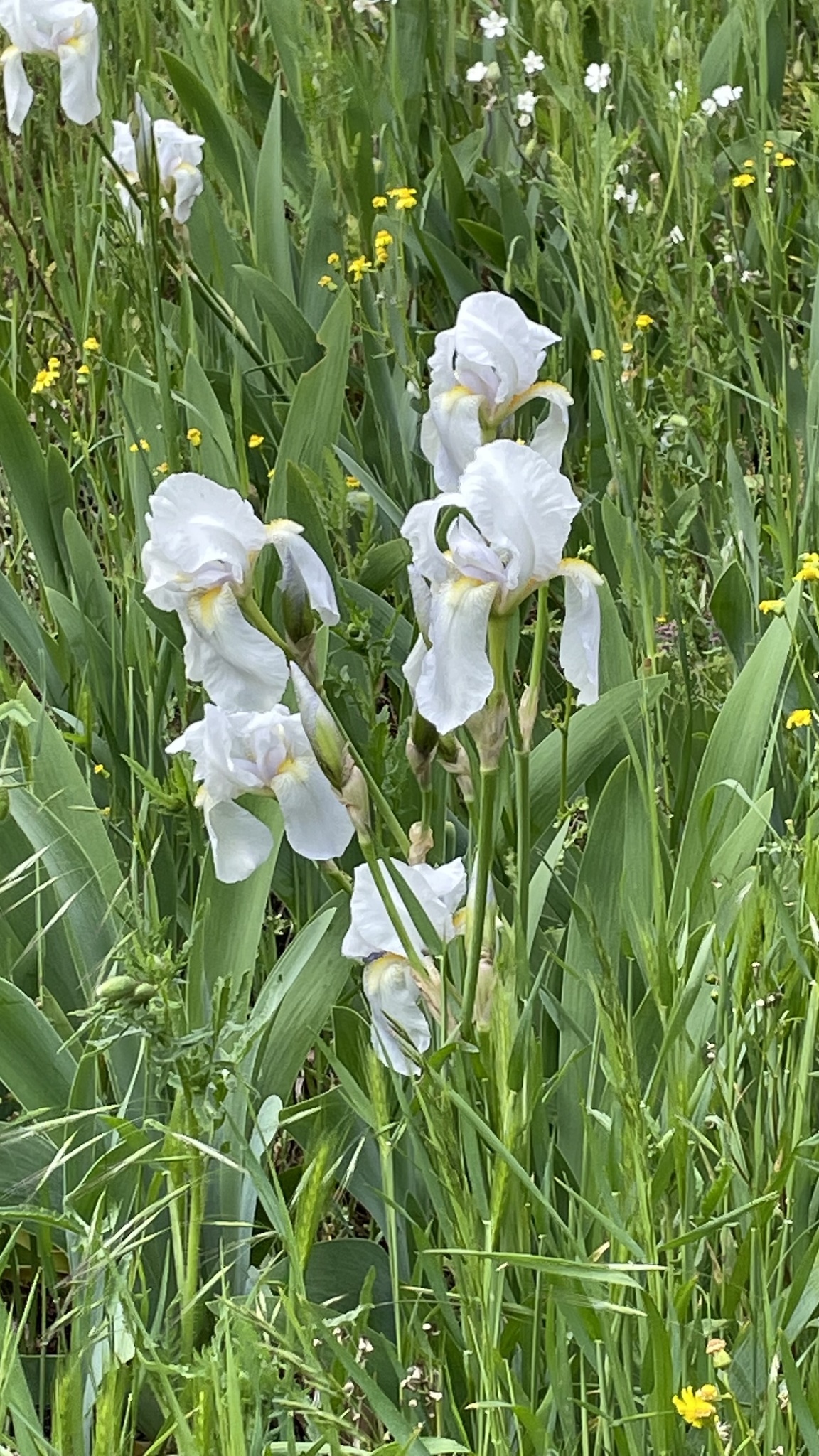
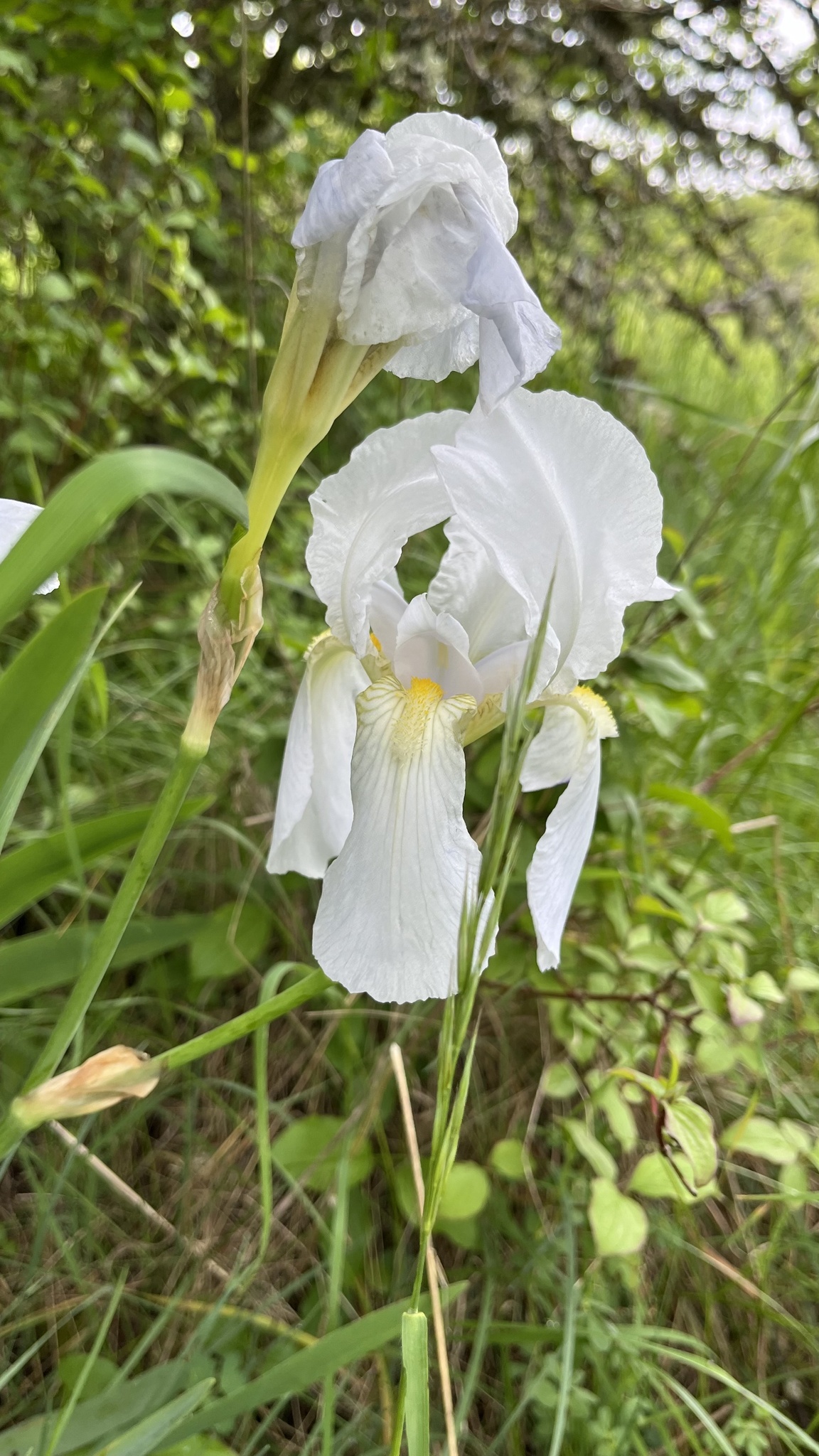
Florentine iris (Iris florentina L., also treated as Iris × florentina L. or Iris germanica var. florentina) is a rhizomatous bearded iris with white or bluish-white flowers, historically associated with orris. Grow it like an old border iris: full sun, very well-drained soil and a partly exposed rhizome.
Read moreFlorentine iris, orris root, orrice root, glaive lily and fleur-de-lys
Iris × florentina, Iris × germanica var. florentina and Iris officinalis
Place in full sun, with intense direct light all day long.
© photo
(c) keralaspice, some rights reserved (CC BY-NC) · cc-by-nc
Jan Herr · cc0
no rights reserved · cc0
(c) TadejM, some rights reserved (CC BY) · cc-by
Global distribution
References differ in their treatment of the name but describe a historic white bearded iris. POWO accepts Iris florentina L. as native to the Arabian Peninsula; WFO uses Iris × florentina L. and lists France and Italy as introduced. French floras chiefly treat the cultivated plant within the Iris germanica complex and as the cultivar Florentina.
- Native2
- Introduced5
- Saudi Arabia
- Yemen
- France
- Italy
- Spain
- Portugal
- Canary Islands
Hexagons: regions where the plant occurs. Green dots: native range.1
Identity
Behind the name Florentine iris lies a long history of white bearded irises. The botanical name used here is Iris florentina L., in the Iridaceae. References differ in their treatment: POWO accepts Iris florentina L., while WFO also publishes the taxon as Iris × florentina L. The hybrid sign therefore matters when reading different sources. 1 2
In gardens, the plant commonly appears as Iris 'Florentina', Iris germanica var. florentina or Iris germanica 'Florentina'. RHS describes a historic bearded iris formerly grown for its aromatic orris rhizome and lists several horticultural synonyms. Its other common names include orris root, orrice root, glaive lily and fleur-de-lys. 4
The reference to Florence tells a story of gardening, perfume and symbolism rather than establishing a strict native range. POWO places Iris florentina in the Arabian Peninsula. WFO lists Saudi Arabia and Yemen as native and France, Italy, Spain and other regions as introduced. 1 2
Recognition
This is a rhizomatous bearded iris. Fleshy horizontal rhizomes lie close to the soil surface, supporting broad, sword-shaped leaves in fans. The foliage is often bluish green or glaucous. Cambridge University Botanic Garden characterizes bearded irises by surface-running rhizomes and fans of sword-like leaves. 6
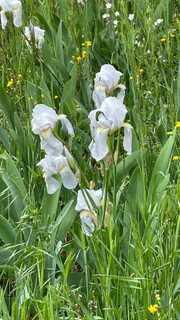
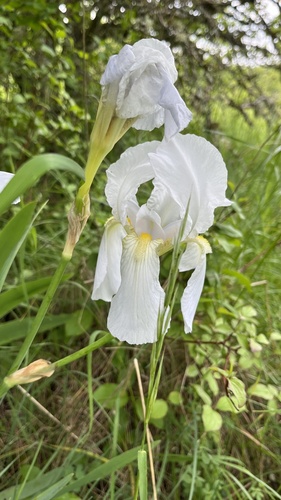
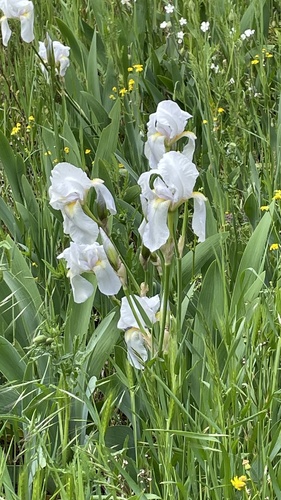
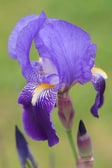
Large white to silvery-white flowers, sometimes faintly washed with blue, carry a yellow beard. RHS describes the florentina form as vigorous and spreading, sometimes semi-evergreen, with stems reaching 120 cm (47 in). Its medium-sized flowers have upright standards and drooping falls. 4
An older French description gives a shorter, more compact picture: broad sword-shaped leaves, large scented white or blue-washed flowers, and blooming from April to May in its French seasonal context. This helps explain the plant’s place in French floras within the Iris germanica complex, rather than as a straightforward wild species originating in Florence. 12
Taxonomy and names
A historic horticultural complex best captures the range of names. Under Iris × florentina L., WFO lists synonyms including Iris albicans Lange, Iris germanica var. florentina (L.) Dykes, Iris officinalis Salisb. and several names based on albicans. GBIF gives a closely comparable list under Iris florentina L. 2 3
RHS publishes its horticultural account under Iris germanica var. florentina, with the common name Florentine iris. The difference is more than a typographic inconsistency. It reflects the long history of white bearded irises across botanical nomenclature, synonyms, cultivars and commercial names. 4
For a gardener, the practical response is to check both the label and the actual flower. A white bearded iris sold as Florentina should be grown as a border bearded iris, even if the full name differs between a nursery label and a botanical reference. 5 4
Habitat and distribution
POWO describes Iris florentina as a rhizomatous geophyte of the subtropical biome, native to the Arabian Peninsula. WFO specifies Saudi Arabia and Yemen as native, with introductions in Macaronesia, North Africa, the eastern Mediterranean and southwestern Europe, including France. 1 2
Its French occurrence should be understood in that context. A long association with Florence does not establish an indigenous Florentine origin, and the consulted references do not establish a generalized national invasive risk in France. They chiefly describe cultivation, introduction or locally escaped plants. 2 12
Its garden habitat is that of a bearded iris: sun, warmth on the rhizome, well-drained soil and roots that are not left without air. RHS recommends sunny sites and good drainage for border irises. The top of the rhizome should remain partly exposed so that sunlight can warm it. 5
Growing and seasonal cycle
Growth resumes in spring, with flowering chiefly from April to June in the Northern Hemisphere temperate settings described, varying by climate and reference, followed by slower summer growth. Water regularly while plants establish, then sparingly. A guide of 10–20 mm (0.4–0.8 in) per week during establishment applies when temperate rainfall is insufficient. An established clump tolerates dry conditions much better than waterlogged soil. 5 4
Plant shallowly. RHS advises leaving the upper surface of bearded iris rhizomes exposed to sun; deep planting commonly contributes to poor flowering and rot. Divide after flowering, from summer to early fall in the local seasonal cycle, using healthy rhizome sections with roots and a fan of leaves. 5
Routine maintenance is modest: remove spent flower stems and dry leaves, maintain air around the clump and divide when the center ages. RHS lists slugs, snails, thrips, aphid-borne viruses, bacterial soft rot and gray mold among possible iris problems. Good siting and an open clump remain important parts of care. 4 5
Orris, uses and toxicity
The aromatic orris rhizome is its best-known historical product. RHS records cultivation of the florentina iris as a source of aromatic rhizomes for perfumery. Cambridge University Botanic Garden likewise describes dried, powdered rhizomes as a valuable scented material. This belongs to cultural and professional history, rather than instructions for home harvesting, cosmetics or ingestion. 4 6
Toxicity deserves attention precisely because the rhizome has attracted such interest. The ASPCA lists Iris species as toxic to dogs, cats and horses, with pentacyclic terpenoids, digestive signs and the highest concentration in rhizomes. Pet Poison Helpline also describes tissue irritation, salivation, vomiting, diarrhea and lethargy, particularly after bulbs or rhizomes are eaten. 8 9
For humans, NC State describes low-severity toxicity from ingestion of Iris x germanica, including nausea, vomiting, abdominal pain and diarrhea, with skin irritation after contact with seeds, rhizomes or sap. Queensland Poisons Information Centre extends the warning to Iris species, noting that all parts are potentially toxic, particularly the roots, and that contact may cause dermatitis. 7 11
Do not use the plant as food, self-medication or a home source of prepared orris. If a child, dog, cat or horse ingests it, seek appropriate medical or veterinary advice based on the amount and symptoms. An established ornamental or perfume use does not establish that raw plant material is safe. 8 10
Lookalikes and related plants
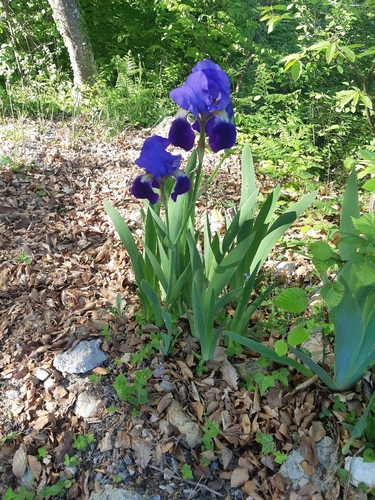
The closest source of confusion is Iris × germanica, the garden bearded iris. Many catalogs treat Florentina as a form, variety or cultivar within that complex. NC State describes Iris germanica as a drought-tolerant rhizomatous border iris for beds, borders, small spaces and naturalized areas, uses that fit the garden role of Florentine iris. 7 4
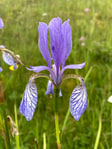
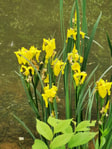
Also distinguish Iris pallida, another historic orris iris, often mauve or pale blue, and Iris pseudacorus, the yellow flag of wet ground that can be problematic in some regions. Florentine iris should not be treated as a wetland-margin plant: its rhizome needs sun and drainage. 5
When buying, look for a firm rhizome without soft patches, a healthy leaf fan, a clear label and a future position in full sun. A plant kept wet, buried deeply or covered with thick organic mulch already faces conditions that increase the risk of rot. 5 4
Main sources
- Plants of the World Online / Kew, Iris florentina L.
- World Flora Online, Iris × florentina L.
- GBIF Backbone Taxonomy, Iris florentina L.
- Royal Horticultural Society, Iris germanica var. florentina / Florentine iris
- Royal Horticultural Society, How to grow border irises
- Cambridge University Botanic Garden, Iris germanica var. florentina
- NC State Extension Gardener Plant Toolbox, Iris x germanica
- ASPCA Animal Poison Control, Iris toxicity entry
- Pet Poison Helpline, Iris
- University of Utah Health Poison Control, Iris
- Queensland Poisons Information Centre, Iris
- Tela Botanica eFlore, Iris germanica L. et cultivar Florentina
Frequently asked questions
Are Iris × florentina and Iris florentina the same name?
In common horticultural usage, they refer to the same plant. POWO accepts Iris florentina L., while WFO uses Iris × florentina L. Catalogs also sell it as Iris germanica var. florentina or Iris 'Florentina'.
Does Florentine iris really come from Florence?
Its name chiefly reflects Florence’s horticultural and perfume history. The consulted POWO/WFO references place its native range in Arabia and list France or Italy as introduced regions rather than its strictly native range.
Can I prepare orris from the rhizome at home?
Orris is discussed as a historical and professional use of dried rhizomes, not as a home harvesting, food, cosmetic or preparation recommendation. Irises remain toxic or irritating when eaten and may cause contact irritation in some people.
Is Florentine iris toxic to cats and dogs?
Yes. The ASPCA lists Iris species as toxic to dogs, cats and horses, with the highest concentration of toxic compounds in the rhizomes. Pet Poison Helpline chiefly describes salivation, vomiting, diarrhea and lethargy.
Why is my Florentine iris not flowering?
Common causes include too little sun, a buried or mulched rhizome, overcrowding, excess nitrogen or very recent division. The rhizome needs to stay shallow and receive sunlight.
When should I divide Florentine iris?
After flowering, preferably from July to September in the Northern Hemisphere temperate schedule described by the source. More generally, use the local summer-to-early-fall period for bearded rhizomatous irises so divisions can establish roots before winter.
Is Florentine iris invasive in France?
No French invasive status is retained in the consulted references. They chiefly describe cultivated, locally escaped or introduced plants. Its behavior should not be equated with yellow flag growing in wetlands.
Similar plants
If you are unsure about a plant’s toxicity, ask a botanist or veterinarian for advice.