
Horsehead philodendron (Philodendron bipennifolium, )

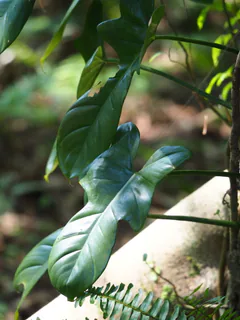
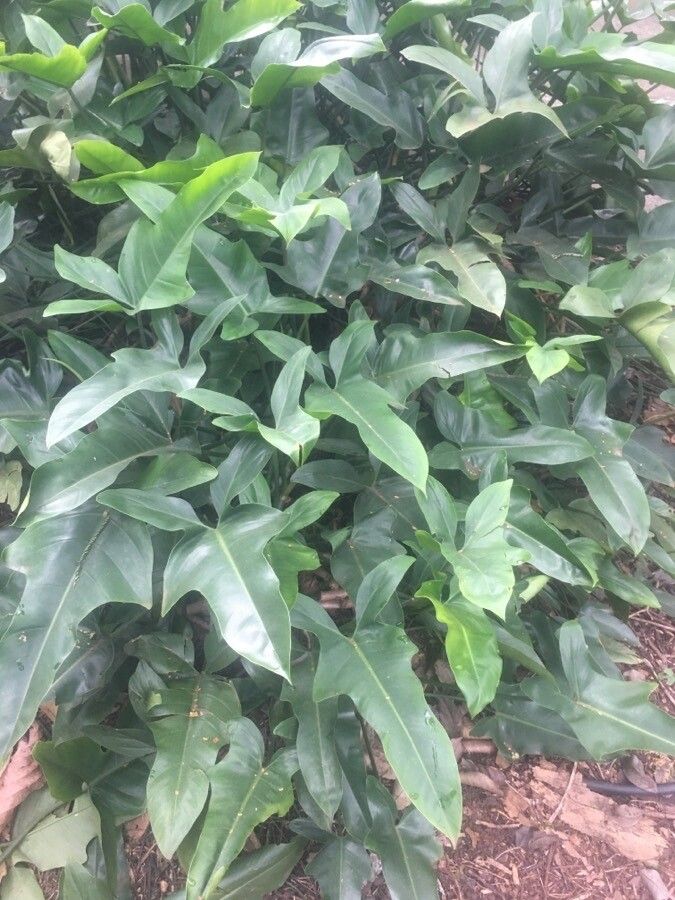
Horsehead philodendron (Philodendron bipennifolium) is a tropical climbing vine in the Araceae family, native to Venezuela, Suriname and Brazil. Its adult leaves have five lobes and a narrow middle section. Younger leaves are less deeply divided.
Read moreHorsehead philodendron
Philodendron wayombense
Give plenty of ambient light without direct sun on the leaves.
Bright, indirect light; protect the foliage from scorching sun.

© photo
no rights reserved, uploaded by 葉子 · cc0
Taken Oct 27, 2022 by H L (cc-by-sa)


Global distribution
Native from southern Venezuela to northern and eastern Brazil, with records in Suriname.
Identity and botanical name
Horsehead philodendron (Philodendron bipennifolium) is a climbing vine with five-lobed adult leaves that narrow through the middle. Juvenile foliage is less deeply divided, so a young plant has yet to develop its mature outline. This change in leaf shape with age makes identification from a single small leaf uncertain. 2
The accepted name is Philodendron bipennifolium Schott, published in 1855. The species belongs to the Araceae, the arum family. Philodendron wayombense is a botanical synonym of the same species, rather than a separate horticultural variety. The binomial preserves a precise identity despite the variable commercial names used for philodendrons. 1
Leaves, stems and inflorescences
The adult leaf combines a generally arrow-shaped outline with deep indentations. The rear lobes narrow at their bases; the front section of a young leaf may be oblong or resemble a violin. The leaf stalk of Philodendron bipennifolium is cylindrical in cross-section. Field descriptions therefore provide more precise identifying features than the overall impression of a divided leaf. 2
The inflorescence consists of a spadix surrounded by a spathe, whose blade is cream and whose tube is wine-red inside. The fruit is light green. These features belong to the botanical description of the species and supplement foliage observations when a plant has reproductive structures. 2 Philodendrons grown indoors generally flower infrequently, so their leaves are a more predictable attraction than their blooms. 4
Native forests and range
Philodendron bipennifolium is native to Venezuela, Suriname and Brazil. In Brazil, it occurs in the North, Northeast and Southeast regions. Its range is therefore confined neither to an island nor to a small locality, and its main habitat belongs to the wet tropical biome. 1
This plant is a hemiepiphyte with a climbing stem. It is described in forest interiors near waterways. 2 In philodendrons, hemiepiphytic growth combines establishment on a tree with a connection to the soil during development. A support accommodates this growth habit in cultivation; it does not replace the potting mix from which the roots absorb water. 3
Light, water and potting mix
The following cultivation advice concerns the genus Philodendron, to which this species belongs. Bright, indirect light suits philodendrons; direct sun can scorch their foliage. Keeping the pot away from cold drafts and radiators avoids unsuitable positions. An indoor temperature above 15 °C is the cultivation guideline given for the genus. 3
A nutrient-rich, well-drained mix retains moisture without leaving the roots sitting in water. Philodendrons prefer a slightly acidic mix, with a pH of 5 to 6. Wait for the surface to dry before watering, then empty any water collected beneath the pot. An unnecessarily large container stays wet longer and encourages root rot. 3
Normal household humidity may be enough for philodendrons, although they appreciate more humid air. Cleaning dusty leaves improves their exposure to light. Insufficient light produces bare stems with fewer or smaller leaves in these plants. 3
Growth, repotting and propagation
Spring repotting suits philodendrons whose roots densely fill the container. Choose a pot only slightly larger to renew the mix without surrounding the roots with a mass of potting mix that remains saturated for a long time. Houseplant fertilizer accompanies growth, from April to September, according to the advice for the genus. 3
For indoor cultivation in the French climate, the calendar translates this seasonal guidance into monthly indicators, concentrating work in the brighter part of the year. The actual condition of the mix takes priority when deciding whether to water. Monthly scores express the relative intensity of needs and growth, without specifying a water volume or measured stem extension.
The aerial roots of climbing philodendrons attach to supports. 4 A moss pole kept moist can accommodate these roots. To propagate a climbing plant, take a section of stem with a node rather than an isolated leaf. Take cuttings from spring to late summer; layering is another method used within the genus. 34
Toxicity and cultivation problems
Philodendron bipennifolium is toxic to cats and dogs. Its insoluble calcium oxalates irritate the mouth after chewing. Excessive drooling, vomiting and difficulty swallowing are among the reported signs. The classification for these animals does not establish the status of horses or every other animal. 5
For humans, information about the genus describes low-severity toxicity and irritating sap. Eating the plant can cause pain and swelling in the mouth. Keeping it out of children's reach and wearing gloves for pruning addresses these risks from contact and chewing. 43
Root rot often accompanies excessive watering in philodendrons. Yellow foliage therefore does not automatically call for another watering. Examine leaf undersides and stems too, since scale insects, mealybugs and mites can establish themselves there. 4
Botanical species and look-alikes
Philodendron bipennifolium here identifies the botanical species, with its climbing habit; a scientific synonym does not constitute a cultivar. 1 Horticultural hybrids in the genus, such as ‘Moonlight’, have their own identity. Their upright habit and coloring do not describe this species. 4
The similarity of its name to Philodendron bipinnatifidum deserves attention. The latter is described as a bushy shrub with leaves divided into many narrow, wavy lobes. 6 In Philodendron bipennifolium, looking for the climbing stem, broad lobes and narrowed middle of the adult leaf helps distinguish the outlines. An incompletely lobed juvenile leaf calls for greater caution. 2
Main sources
- Plants of the World Online: Philodendron bipennifolium
- Pontes, Andrade and Alves, 2010: Flora da Usina São José, Araceae
- Royal Horticultural Society: How to grow philodendrons
- NC State Extension: Philodendron
- ASPCA: Panda Plant, Philodendron bipennifolium
- Royal Horticultural Society: Philodendron bipinnatifidum
Frequently asked questions
Why are the young leaves only slightly divided?
Leaf shape changes with age in this species: juvenile lobes remain incomplete, while adult leaves are clearly lobed.
Does it need a climbing support?
Yes, it has a climbing habit. Climbing philodendrons can root into a moss pole kept moist.
Is this plant toxic to cats and dogs?
Yes. Chewing it can cause mouth irritation, excessive drooling, vomiting and difficulty swallowing.
When should I repot this philodendron?
In spring, when the roots densely fill the container. Choose a slightly larger pot and a well-drained mix.
Similar plants

If you are unsure about a plant’s toxicity, ask a botanist or veterinarian for advice.