
Philodendron pedatum
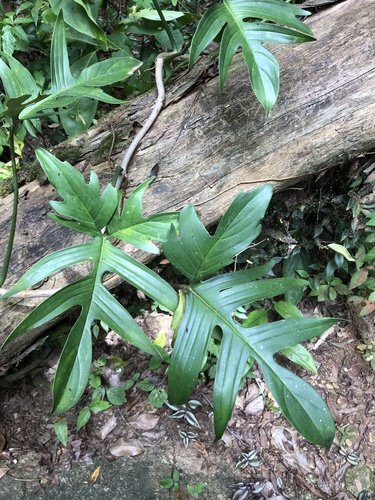
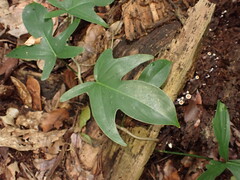
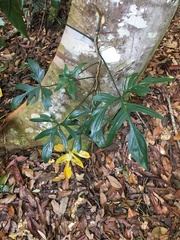
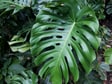
Philodendron pedatum bears leaves that become more deeply divided with age. This evergreen tropical vine in the Araceae is native to South America. Grow it on a support in indirect light and an airy mix; it is harmful if ingested and irritating on contact.
Read moreCaladium pedatum, Philodendron laciniatum and Philodendron polypodioides
Give plenty of ambient light without direct sun on the leaves.
Bright diffuse light, protected from direct summer sun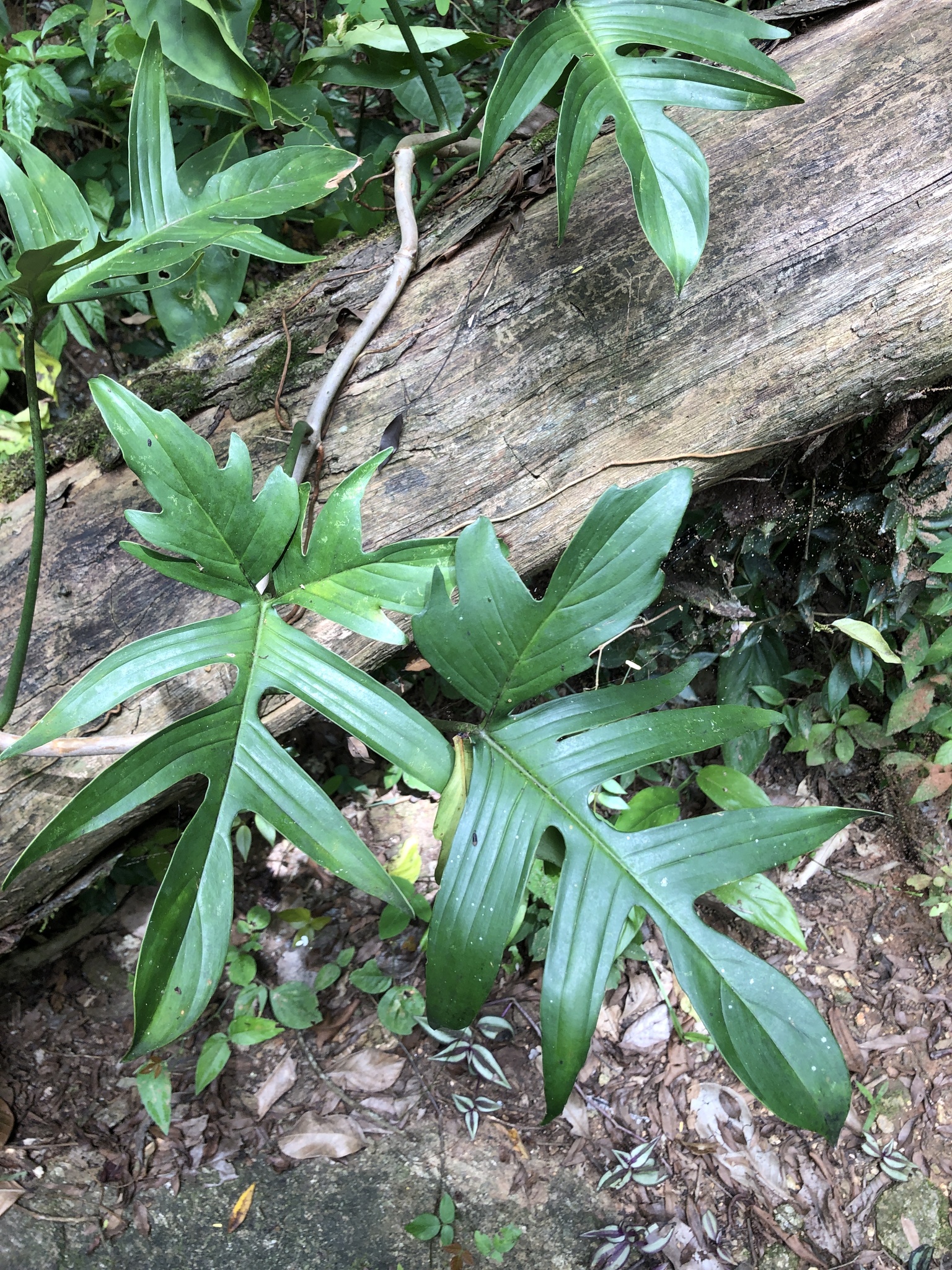
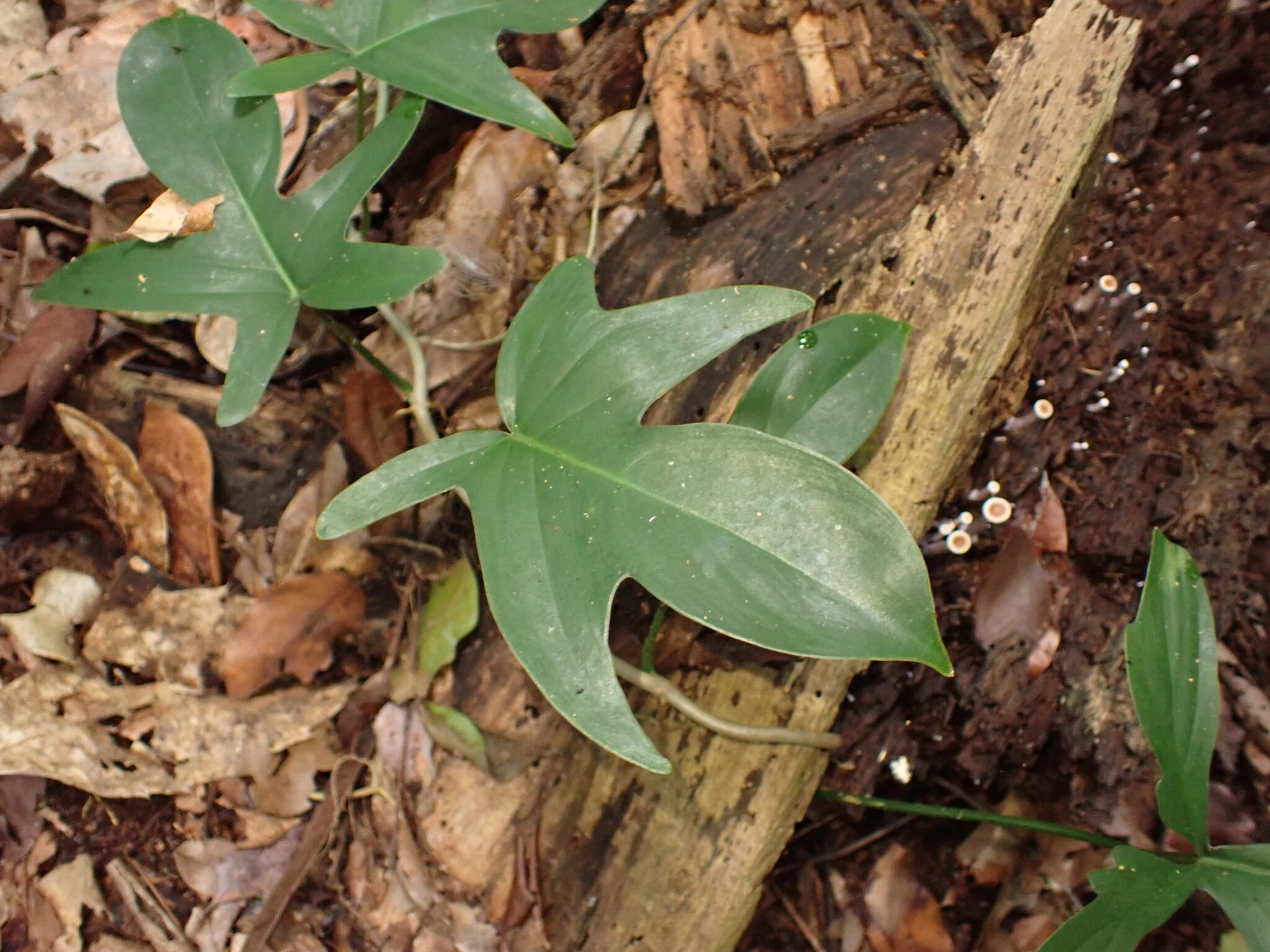
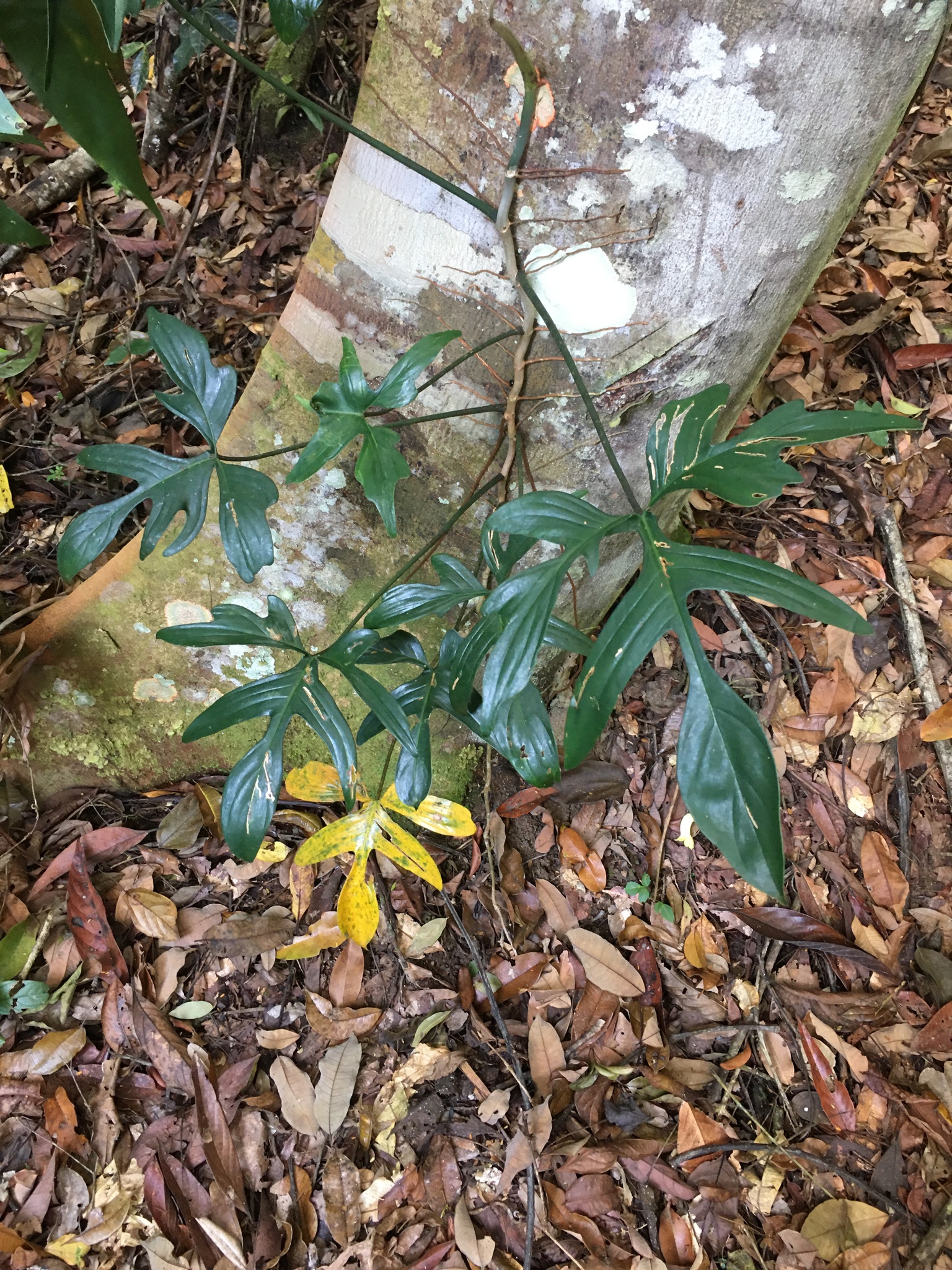


© photo
(c) Diego Monsores, some rights reserved (CC BY-NC), uploaded by Diego Monsores · cc-by-nc
iNaturalist User · cc0
B. Phalan · cc0
© copyright of the Board of Trustees of the Royal Botanic Gardens, Kew.


Global distribution
Species native to tropical South America, occurring in Amazonia, the Guianas and several Brazilian regions.
- Native8
- Bolivia
- Brazil
- Colombia
- Ecuador
- French Guiana
- Guyana
- Suriname
- Venezuela
Hexagons: regions where the plant occurs. Green dots: native range.2
Identity
Philodendron pedatum (Hook.) Kunth, 1841 bears green leaves whose divisions deepen with age. This evergreen perennial vine belongs to the Araceae, in the order Alismatales. Its climbing habit and deeply divided mature foliage help identify it beyond a sales label alone. 1 2
The French name “philo pédalé” is attested in a French-language horticultural column by Albert Mondor. This common name does not replace botanical identity: Philodendron pedatum remains the name accepted by Kew. 9 2
Identification
Mature leaves are pedatisect: the blade is deeply divided, with lobes that are themselves divided. The CATE description published by Kew gives a mature blade length of 16 to 70 cm (6.3 to 27.6 in) and width of 14 to 50 cm (5.5 to 19.7 in). Young leaves often have less distinct divisions; counting lobes on a single leaf is therefore insufficient to identify the species. 3
The Pernambuco flora distinguishes Philodendron pedatum by its primary divisions being lobed in turn. This feature separates it from Philodendron ornatum, whose blade is entire in that key. The same flora describes five-lobed juvenile leaves, whereas CATE often mentions two or three poorly defined segments: leaf stage must accompany the comparison. 6 3
In cultivation, the RHS gives 1.5 to 2.5 m (4.9 to 8.2 ft) in height, with a 0.5 to 1 m (1.6 to 3.3 ft) spread, reaching mature size in 5 to 10 years. These horticultural dimensions describe neither leaf length nor age at first flowering. 1
Taxonomy and names
The current name is based on Caladium pedatum Hook., published in 1826. Kunth placed the species in the genus Philodendron in 1841. Parentheses around Hooker's abbreviation in the botanical authority preserve this nomenclatural history. 2
Kew lists Philodendron laciniatum (Vell.) Engl. and Philodendron polypodioides A.M.E.Jonker & Jonker as synonyms. EPPO nevertheless prefers the name laciniatum, with P. pedatum as another scientific name. These accounts refer to the same taxonomic group under different preferred names; they do not describe two cultivars. 2 8
Habitat and distribution
Philodendron pedatum is native to tropical South America. Kew's range includes Bolivia, Colombia and Ecuador, the Guianas, Suriname and Venezuela, as well as northern, northeastern, southeastern and central-western Brazil. The horticultural phrase “northern South America” therefore summarizes a broader range. 2 1
The plant climbs against trunks as a hemiepiphyte, in humid tropical or premontane forests. Its presence in Pernambuco's Atlantic Forest is documented by botanical collections. CATE only suggests a Central American occurrence from an isolated record; this is not a confirmed extension of the native range. 3 6
Life cycle and reproduction
Philodendron pedatum retains evergreen foliage. Its inflorescences combine a greenish-bronze spathe with a white spadix; flowering remains rare in cultivation and occurs in mature plants. 1
The study by Chouteau and colleagues places the species among tropical hemiepiphytic Araceae pollinated by beetles. Bagged inflorescences produced no seeds through spontaneous self-pollination in that study. The bagging test does not demonstrate an absolute inability to self-fertilize under all conditions. 5
Horticultural propagation uses stem-tip or leaf-bud cuttings. Retaining a portion of stem with a node preserves the structures needed for new growth; an isolated leaf is not a stem or leaf-bud cutting. 1 7
Seasonal cultivation
Bright indirect light suits indoor cultivation. The RHS genus guide recommends protecting leaves from direct summer sun and maintaining a temperature above 15 °C (59 °F), away from radiators and cold drafts. A support accommodates the climbing habit. 7
The growing medium must remain airy and freely draining. Wait until its surface dries slightly, water, then avoid standing water: a saturated mix encourages root rot. Choosing a container only slightly larger than the root ball when repotting limits the time the mix stays wet. Spring is the recommended season for philodendrons. 7
For this species, the RHS prescribes monthly liquid fertilizer from April to September, then no feeding until spring and less frequent winter watering. The calendar translates these trends for a Northern Hemisphere interior; its relative indices are neither water volumes nor a fixed frequency. 1
Uses and risks
Philodendron pedatum is grown as a houseplant. The RHS lists it as harmful if ingested and irritating to skin or eyes, with a similar warning for pets. Wearing gloves when handling it and keeping the plant out of reach of children and animals reduces opportunities for contact. 1 7
Available information specifies neither a dangerous dose nor clinical severity particular to cats, dogs or horses. This uncertainty does not establish that the plant is harmless to these animals. The general pet warning remains applicable. 1
Barabé and colleagues observed extracellular calcium oxalate crystals on the species' stamens. This observation concerns developing floral organs. Observing stamens does not measure the composition of every leaf or the clinical toxicity of each plant part. 4
Main sources
- Royal Horticultural Society, Philodendron pedatum
- Kew, Plants of the World Online: Philodendron pedatum taxonomy
- Kew, Plants of the World Online: CATE Araceae descriptions
- Barabé et al., extracellular crystals on Araceae inflorescences, 2004
- Chouteau, Gibernau and Barabé, floral characters and pollination in Araceae, 2008
- Pontes, Andrade and Alves, Flora da Usina São José: Araceae, 2010
- Royal Horticultural Society, How to grow philodendrons: genus-level care
- EPPO Global Database, Philodendron laciniatum, code PIOLA
- Albert Mondor, Journal de Québec, January 21, 2024: attestation of philo pédalé
Frequently asked questions
Why are young leaves less divided?
The foliage changes with age: divisions are less pronounced in young plants. Lobe number varies with developmental stage and between botanical descriptions.
How large does Philodendron pedatum grow in cultivation?
The RHS gives a horticultural height of 1.5 to 2.5 m (4.9 to 8.2 ft) and a spread of 0.5 to 1 m (1.6 to 3.3 ft). These measurements concern the plant, not leaf length.
Should I water as much in winter?
The RHS recommends watering less often when growth slows in winter. Check whether the growing medium's surface has dried rather than following a fixed frequency.
Is Philodendron pedatum toxic?
The RHS lists it as harmful if ingested and irritating to skin or eyes, with a similar warning for pets. Keep the plant out of reach of children and animals; species-specific data for cats, dogs and horses remain insufficient.
Similar plants
If you are unsure about a plant’s toxicity, ask a botanist or veterinarian for advice.