
Saw palmetto (Serenoa repens, )
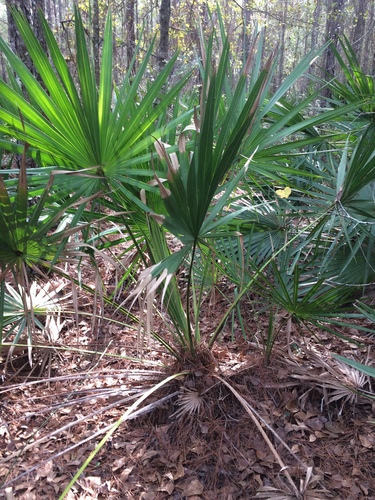
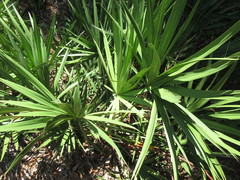
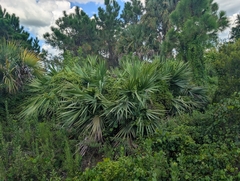
Saw palmetto (Serenoa repens) is the only species of its genus in the Arecaceae family, native to the coastal plain of the southeastern United States. Its creeping trunk and finely toothed leaf stalks distinguish a palm that forms some of the longest-lived known clonal plant colonies. Ripe black fruit has long been eaten and supplies the extract used in widely sold prostate-health supplements.
Read moreSaw palmetto
Allow a few hours of direct sun per day, preferably morning or evening.
Full sun; tolerates partial shade under pines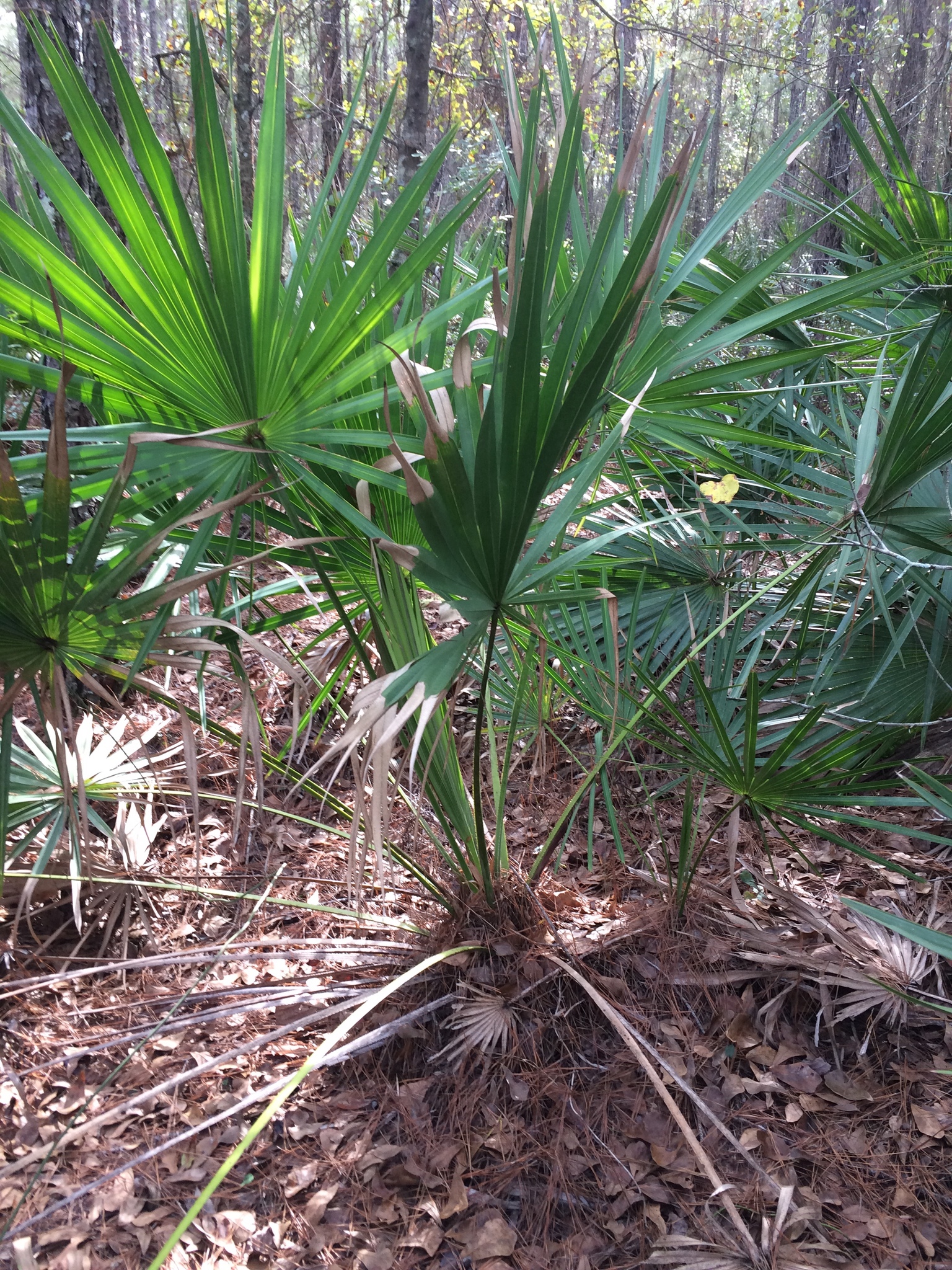

© photo
iNaturalist User · cc-by
Raven Dandridge · CC BY-NC
Scott Allen Davis · cc-by
© copyright of the Board of Trustees of the Royal Botanic Gardens, Kew.


Global distribution
Serenoa repens is native to the southeastern United States coastal plain, from South Carolina to Florida, with populations in Georgia, Mississippi and Louisiana. It is also cultivated as a cold-tolerant ornamental palm well outside that range, including Mediterranean France.
- Native5
- Florida
- South Carolina
- Georgia
- Mississippi
- Louisiana
Hexagons: regions where the plant occurs. Green dots: native range.1
Identity
Saw palmetto (Serenoa repens (W.Bartram) Small, 1926) is the only species of Serenoa, a genus in the Arecaceae family. William Bartram first described it in 1791 as Corypha repens. John Kunkel Small transferred it to its own genus in 1926. 1 8
Small, curved teeth along the leaf stalks give saw palmetto its common name. They provide an immediate tactile contrast with nearby palms whose stalks are smooth. Its fruit supplies the extract sold for benign prostate enlargement, although a Cochrane review involving more than 5,000 patients found no clear benefit over placebo. 2 3 6
Recognition
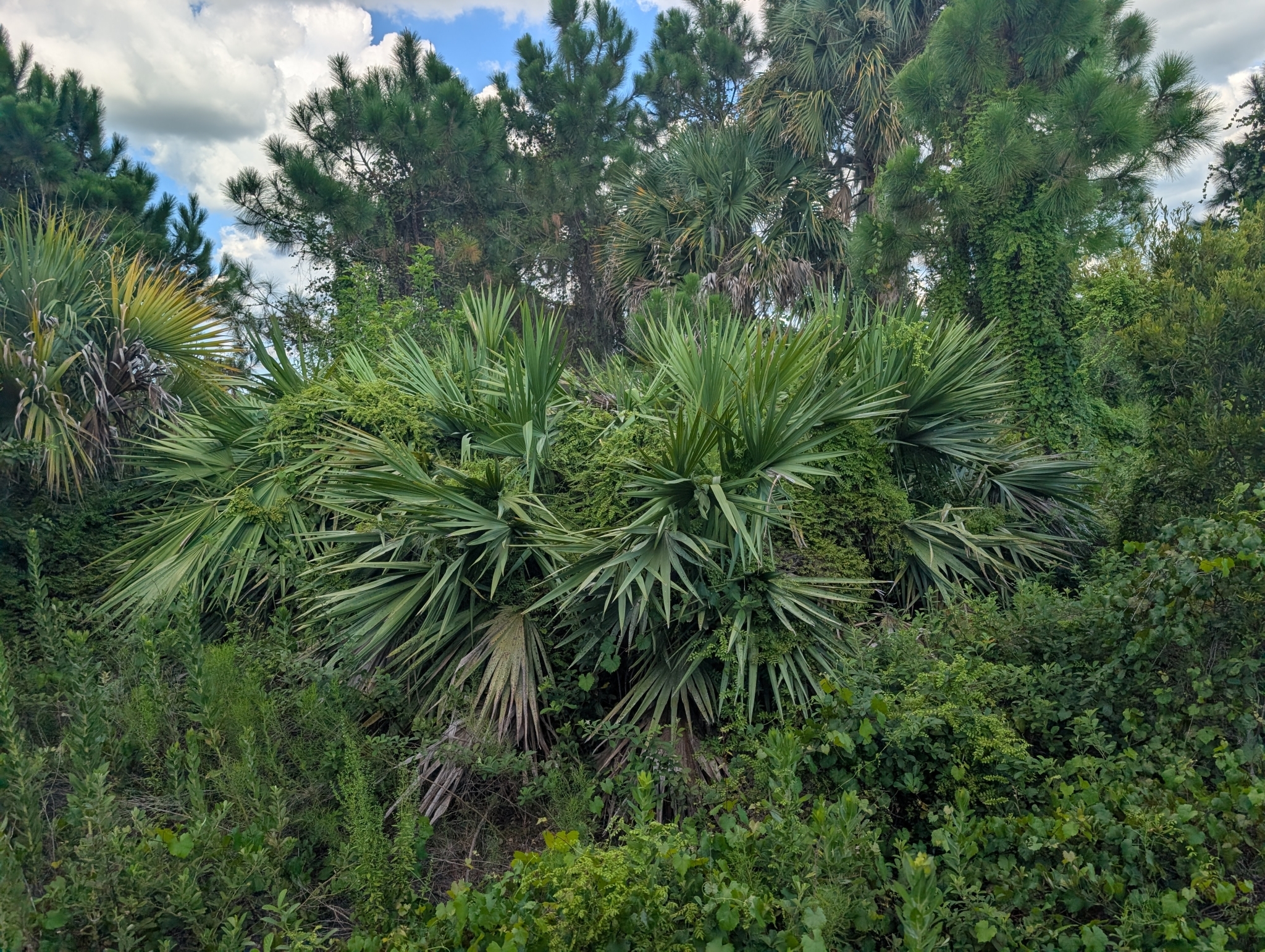
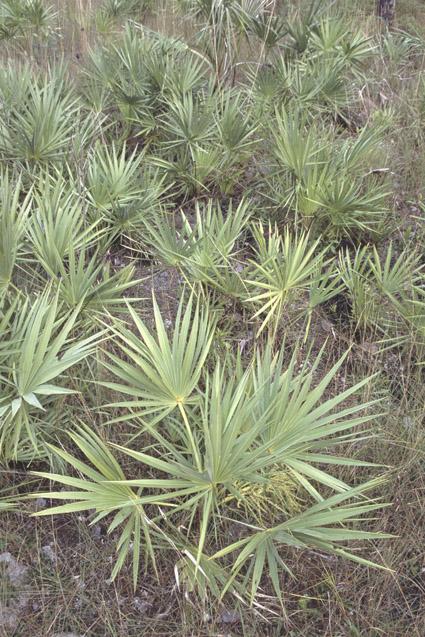
Low clumps spread from a creeping trunk, often partly or entirely underground, that grows horizontally rather than upward. Most plants remain below 2 m (6.5 ft) above ground. Some old individuals develop an angled or upright trunk reaching 2.5–3 m (8–10 ft), giving them the appearance of a small tree. This transition takes several decades in the few plants that make it; most cultivated specimens remain low and creeping throughout their lives. 4 2
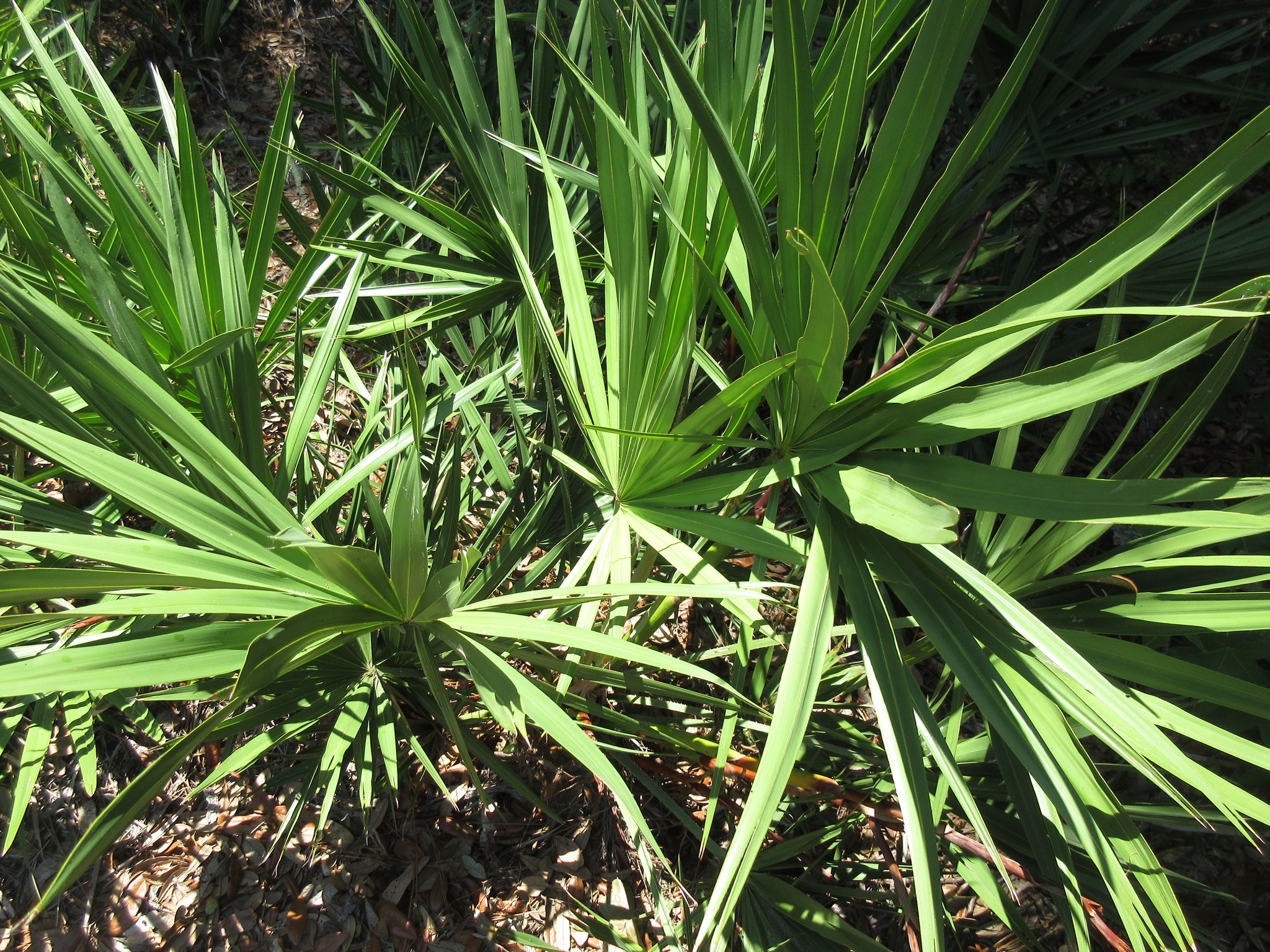
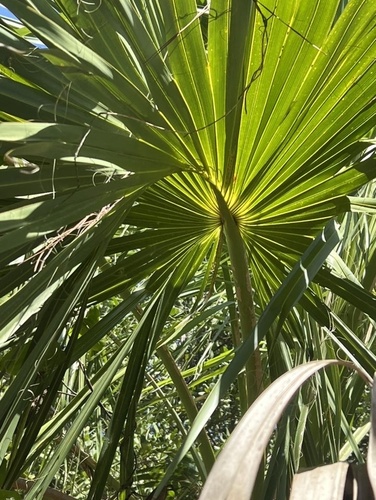
Fan-shaped leaves measure about 1 m (3 ft) across and divide into 25–35 stiff segments. Depending on the population, their color ranges from clear green to silvery blue. Small, backward-curving teeth extend along the whole length of each leaf stalk, the feature behind the name saw palmetto. 2
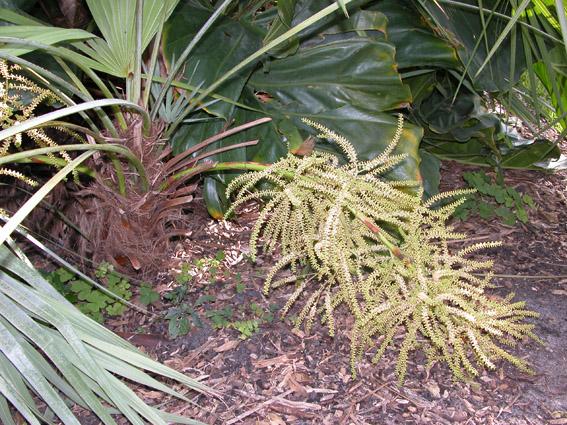
Small white flowers open on branched panicles in the leaf axils. The fleshy, egg-shaped fruit is a drupe that turns from green to yellow and finally bluish black when fully ripe in fall. Its sweet but slightly soapy flavor is a sign of ripeness as well as its color. 2 3
Useful taxonomy
Within POWO/WCVP, Serenoa repens remains the accepted name and the sole recognized species of Serenoa Hook.f. Two other names recur in older literature and horticultural sales:
- Serenoa serrulata (Michx.) Hook.f., long used alongside the accepted name, especially in 20th-century medical publications;
- Serenoa repens f. glauca Moldenke, a silvery-blue form sold as silver saw palmetto.
Using Serenoa repens resolves uncertainty on commercial labels. Some suppliers still sell plants under Serenoa serrulata, a synonym no longer retained as the accepted name in reference nomenclature. The different labels therefore do not necessarily indicate different species. 1
Habitat and range
Southeastern coastal plains support saw palmetto from South Carolina to Florida, with populations in Georgia, Mississippi and Louisiana. It occupies pine flatwoods, coastal dunes and forests, dry Florida prairies and limestone outcrops in pine scrub. These habitats account for its familiar presence beneath pines as well as in more open vegetation. 4 5
Cold tolerance has encouraged cultivation beyond the native range. Well-established plants withstand brief freezes down to -12 °C (10 °F), explaining their use as ornamental palms in Mediterranean France and Spain.
Underground rhizomes help Serenoa repens persist in fire-shaped ecosystems. They survive the periodic burns that pass through pinewoods, and new leaves can emerge within just a few days. This rapid recovery helps saw palmetto remain dominant where less fire-tolerant shrubs disappear. 4
Individual clumps first spread 1.5–3 m (5–10 ft) across. Continuing rhizome growth then fills the gaps between neighboring shoots, forming a continuous colony with a single genetic identity.
A population-genetics study found some clonal colonies to be among the oldest known plant organisms. Estimates based on genetic fingerprints and a growth model exceeded 500 years for ordinary individuals and reached several thousand years for the largest colonies in Florida’s dry prairies. These are estimates of clonal longevity rather than simply the age of a visible upright trunk. 9
Life cycle and reproduction
Spring and summer bring flowering in the native range. Each flower is bisexual, with male and female organs together, and attracts a wide range of pollinators. Honey produced by bees visiting saw palmetto flowers remains a regional Florida specialty. Insufficient cross-pollination delays or prevents fruiting in isolated plants, which is why nurseries group several individuals together. 2
Fruit ripens in fall and feeds many wild animals, particularly black bears and white-tailed deer. These animals subsequently help disperse the seeds, linking the fruit crop to regeneration beyond the parent clump. 3
Nursery propagation relies almost entirely on seed. Rhizomatous growth makes division impractical at nursery scale, and saw palmetto does not produce readily usable offsets like some other clumping palms. Growth is extremely slow, contributing to the remarkable longevity of wild colonies, some estimated by population-genetics research to exceed a thousand years. 4 9
Uses and risks
Fruit extracts rich in lipids and sterols rank among the most widely sold supplements for urinary symptoms associated with benign prostate enlargement. Effectiveness remains disputed. A Cochrane review of more than 5,000 patients found no significant benefit over placebo for urine flow, nighttime urination or symptom scores, even at twice or three times the usual dose. 6
Reported side effects in humans are generally minor and mainly digestive. No major toxicity is documented in domestic animals: cats, dogs and horses tolerate the plant, although eating very large amounts of fruit or supplement capsules may cause temporary digestive upset. 7
Indigenous people in Florida long ate the raw fruit, with its sweet, slightly soapy taste. They also traditionally used it for urinary complaints, centuries before the development of modern herbal supplements. This history of use is distinct from the clinical question of whether a standardized extract provides measurable benefit. 3
Varieties, look-alikes and related plants
Conventional horticultural cultivars are absent apart from the form f. glauca, whose silvery-blue foliage is sold as silver saw palmetto. It has no separate botanical standing from the typical species in the reference treatment. 1
Several other palms can cause confusion:
- Sabal palmetto, cabbage palmetto, has an upright trunk and smooth leaf stalks, unlike saw palmetto’s creeping stem and toothed stalks; the two also share the French name chou palmiste, which can confuse nursery labels;
- Sabal minor, dwarf palmetto, produces no aboveground trunk and also has smooth leaf stalks;
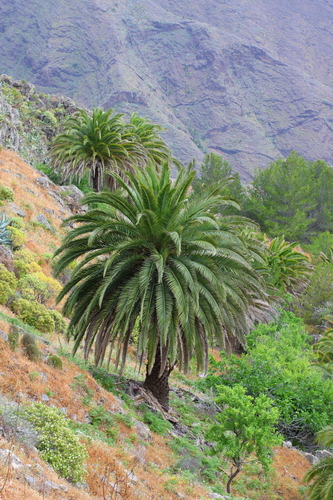
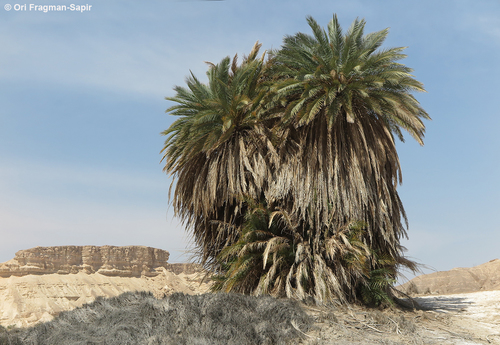
- Chamaerops humilis, European fan palm, has a similar clumping habit, but its leaf stalks carry longer, straighter and more widely spaced spines.
Leaf stalks separate these palms clearly: hooked teeth in Serenoa repens, smooth margins in both Sabal palmetto and Sabal minor, and distinctly different spines in Chamaerops humilis.
Main sources
- Plants of the World Online / Kew, Serenoa repens (W.Bartram) Small
- NC State Extension Gardener Plant Toolbox, Serenoa repens
- Plants For A Future, Serenoa repens
- US Forest Service, Fire Effects Information System, Serenoa repens
- USDA PLANTS Database, Serenoa repens (SERE2)
- American Academy of Family Physicians, Cochrane review summary on saw palmetto for BPH
- Merck Veterinary Manual, toxicoses from human dietary and herbal supplements
- Inventaire National du Patrimoine Naturel, Serenoa repens
- Takahashi et al., 2011, extensive clonal spread and extreme longevity in saw palmetto
Frequently asked questions
Is saw palmetto toxic to cats and dogs?
No. No major toxicity is documented in domestic animals. Eating a large quantity of fruit or supplement capsules may cause temporary digestive upset.
Does saw palmetto extract help with an enlarged prostate?
Its effectiveness remains disputed. A Cochrane review covering more than 5,000 patients found no significant benefit compared with placebo, even at twice or three times the usual dose.
How does saw palmetto differ from cabbage palmetto?
Serenoa repens has a creeping trunk and sharply toothed leaf stalks. Sabal palmetto develops an upright trunk and smooth leaf stalks. Both are sometimes called chou palmiste in French.
Why is it called saw palmetto?
Small, curved teeth line the full length of the leaf stalks, providing an immediate tactile distinction from neighboring palms with smooth stalks.
Can you eat saw palmetto fruit?
Yes. Indigenous people in Florida ate the raw fruit, which tastes sweet and slightly soapy, and traditionally used it for urinary complaints.
How long does saw palmetto live?
Some clonal colonies are among the oldest known plant organisms. A genetic study estimated ages of several thousand years for entire colonies in Florida’s dry prairies.
Can saw palmetto tolerate frost?
Yes. Once well established, it can withstand brief freezes down to about -12 °C (10 °F), making it one of the hardier palms grown in mild temperate climates.
Similar plants
If you are unsure about a plant’s toxicity, ask a botanist or veterinarian for advice.