
Common comfrey (Symphytum officinale, )
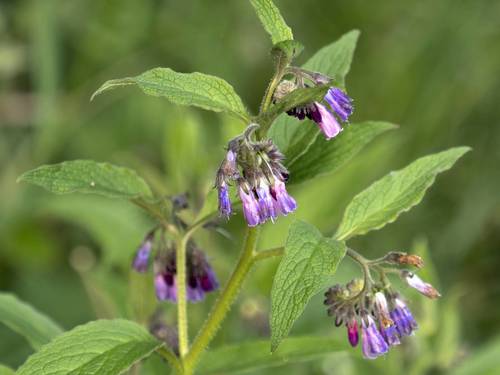
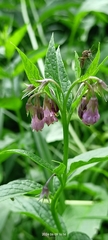
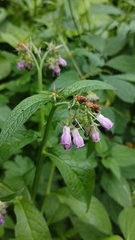
Common comfrey (Symphytum officinale L.) is a large rhizomatous perennial in the Boraginaceae family, native to France and typical of ditches, wet meadows, riverbanks and rich soils. Rough, decurrent leaves, winged stems, nodding tubular flowers and deep roots distinguish it. Its value in gardens and for pollinators is separate from its historical medicinal uses. The plant contains pyrrolizidine alkaloids, so ingestion by people or animals is not a recommended use.
Read moreCommon comfrey, True comfrey, Knitbone and Boneset
Give plenty of ambient light without direct sun on the leaves.
Full sun in moist soil to light partial shade
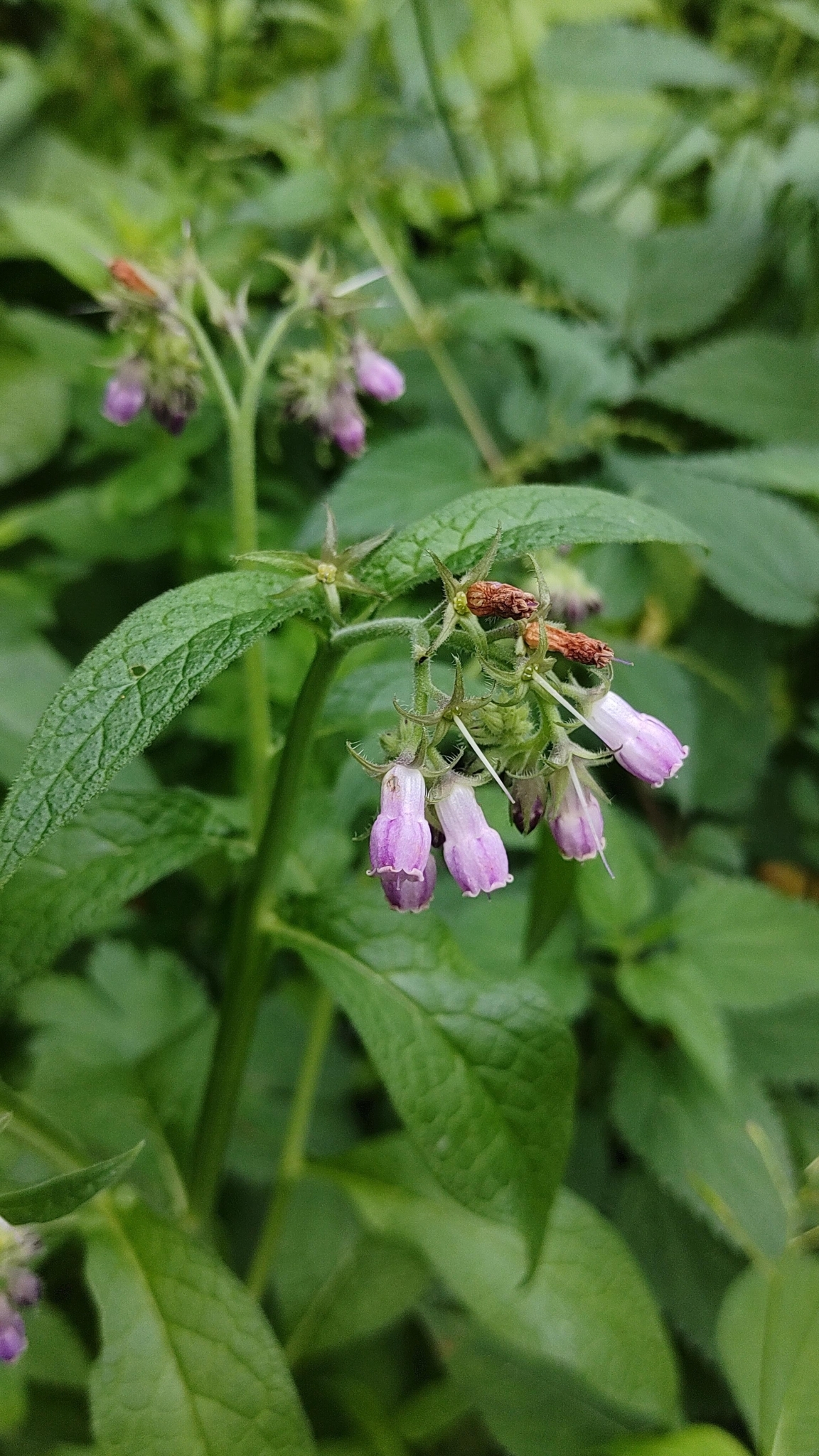


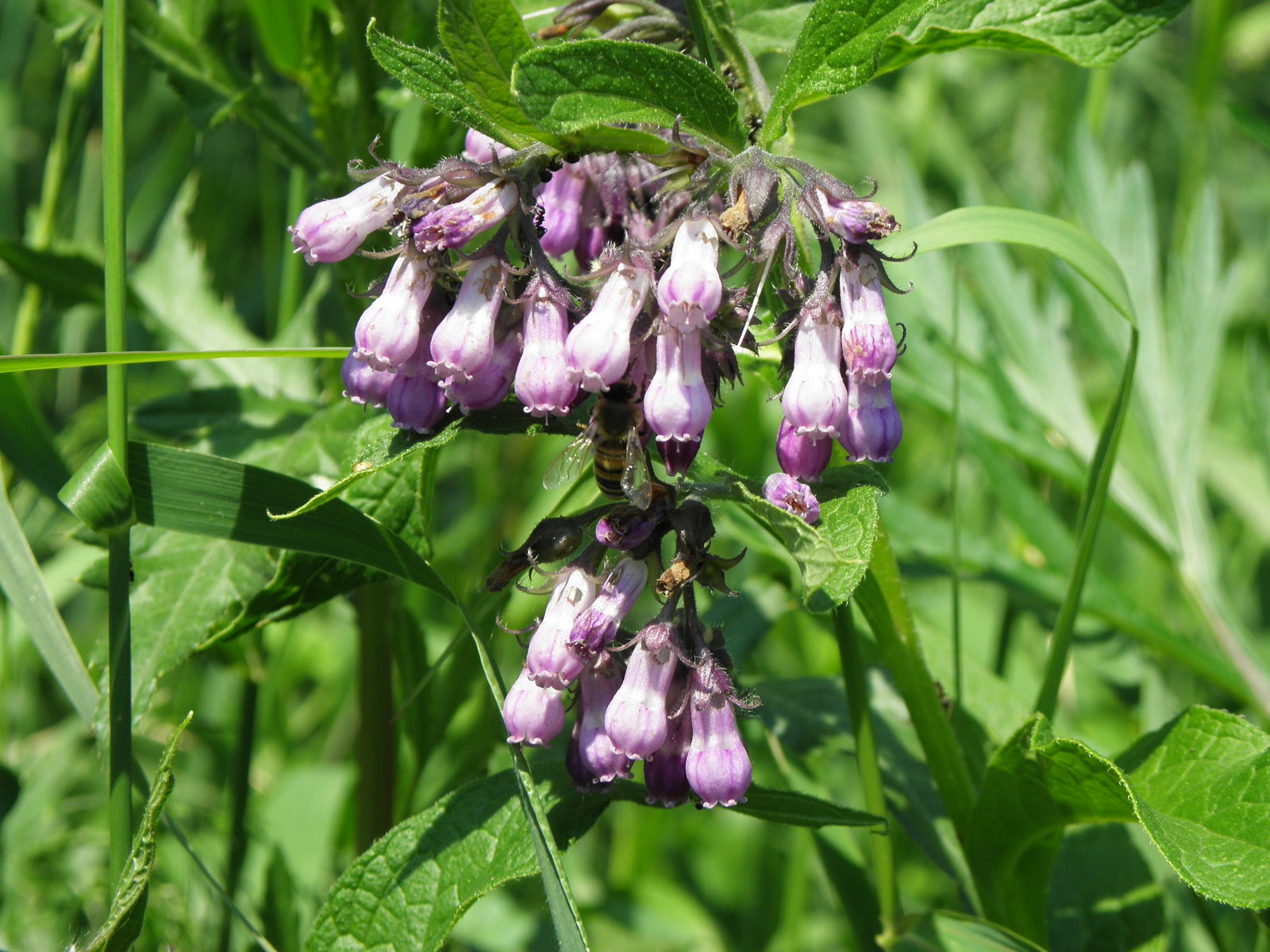
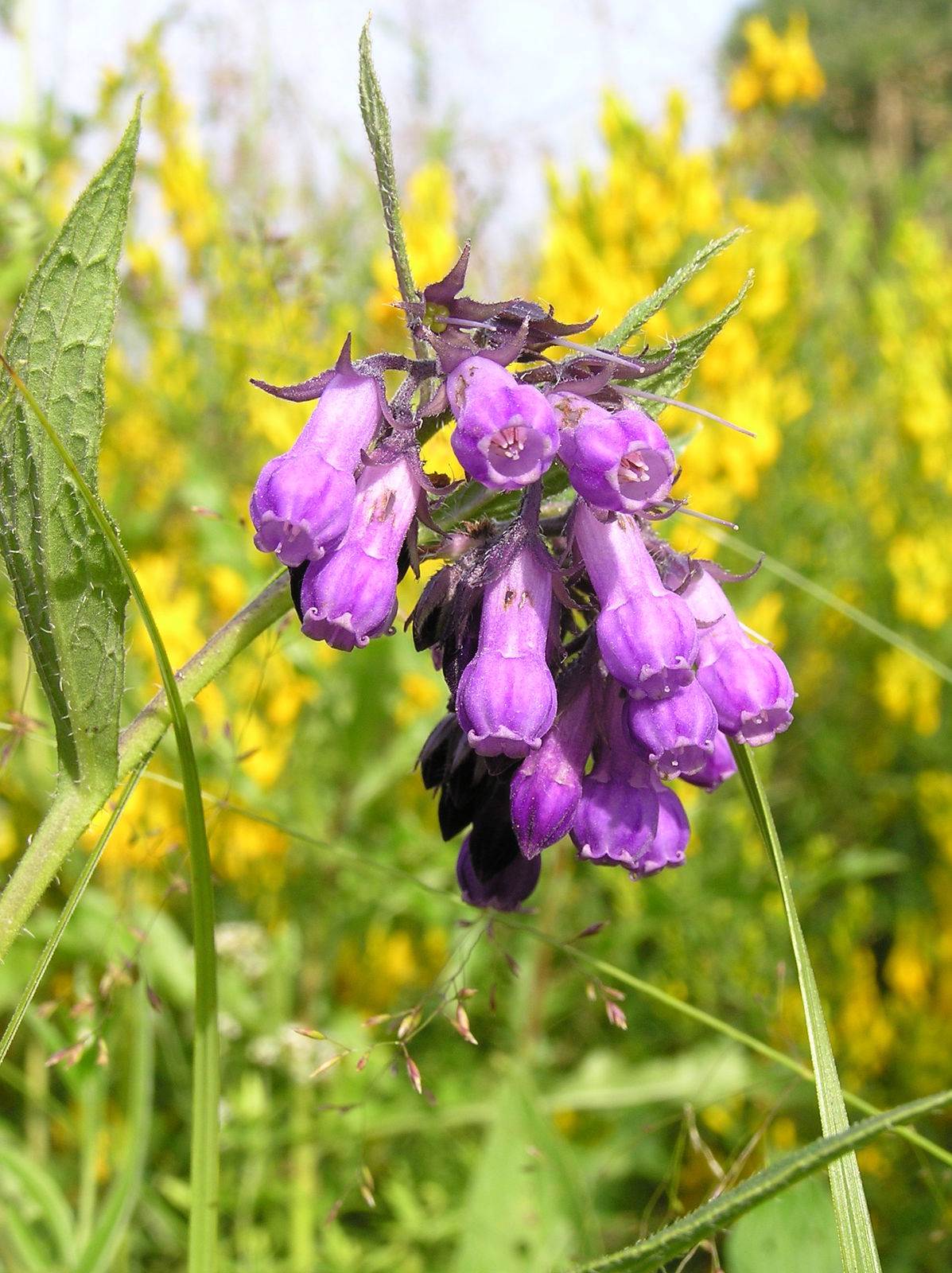
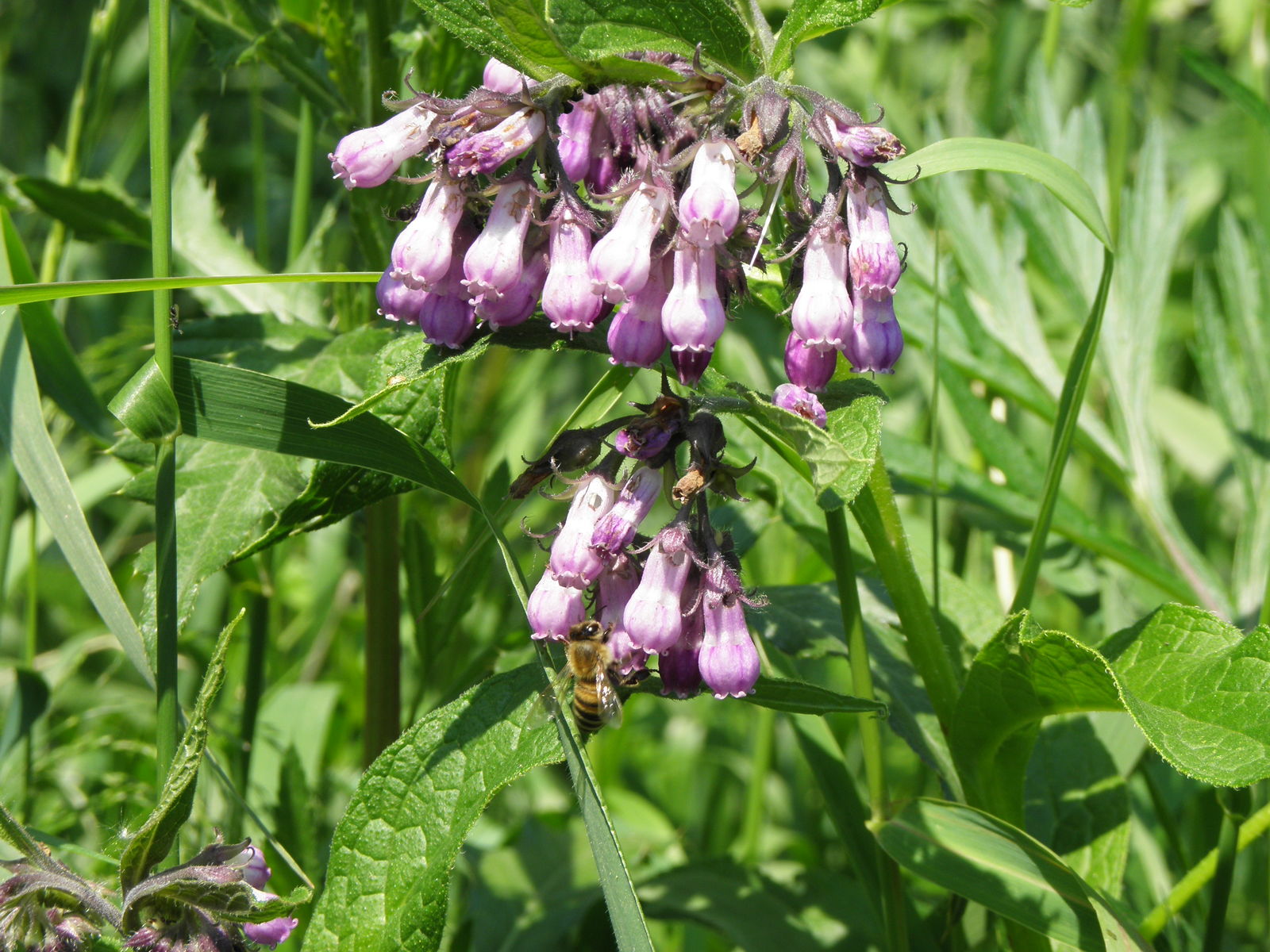
© photo
(c) Wolfgang Bettighofer, some rights reserved (CC BY-NC), uploaded by Wolfgang Bettighofer · cc-by-nc
Евгения · cc0
iNaturalist User · cc-by
Taken Jun 16, 2022 by Nicola Martinoni (cc-by-sa)
Taken Oct 9, 2021 by Christina Morley (cc-by-sa)
Taken May 18, 2019 by Sam Pudney (cc-by-sa)
Taken May 19, 2020 by fruzsina albert (cc-by-sa)
Taken Aug 8, 2021 by Valdis Hliddal (cc-by-sa)
© copyright of the Board of Trustees of the Royal Botanic Gardens, Kew.




Global distribution
POWO lists Symphytum officinale as native across much of Europe and temperate Eurasia, including France, and introduced in many parts of the Americas, Asia and Oceania. Tela Botanica records it across almost all of France, mainly in wet meadows, ditches and watersides. No French invasive status is assigned because it is native there, although it can spread vigorously and regrow from fragments.
- Native9
- Introduced3
- Metropolitan France
- Great Britain
- Belgium
- Germany
- Italy
- Spain
- Central Europe
- Eastern Europe
- Temperate Asia
- North America
- South America
- Australasia
Hexagons: regions where the plant occurs. Green dots: native range.1
Identity
Common comfrey (Symphytum officinale L., 1753) is a perennial in the Boraginaceae family. Linnaeus published the name in Species Plantarum in 1753. POWO, GBIF, WFO and Tela Botanica retain it as an accepted species of Symphytum. 1 2 3 4
English names such as knitbone reflect the plant's cultural history. Tela Botanica lists Grande Consoude as its standardized French name and consoude officinale as a name in use. Names such as cow's tongue, donkey's ear and wound herb also belong to that history; they do not recommend internal use or homemade preparations. 4 8 10
Comfrey's botanical identity, its role in moist-soil gardens and the toxicological risk from pyrrolizidine alkaloids are separate matters. A useful garden plant can still be unsafe to swallow. Historical medicinal traditions provide no basis for homemade treatments or ingestion. 6 11 12
Recognition
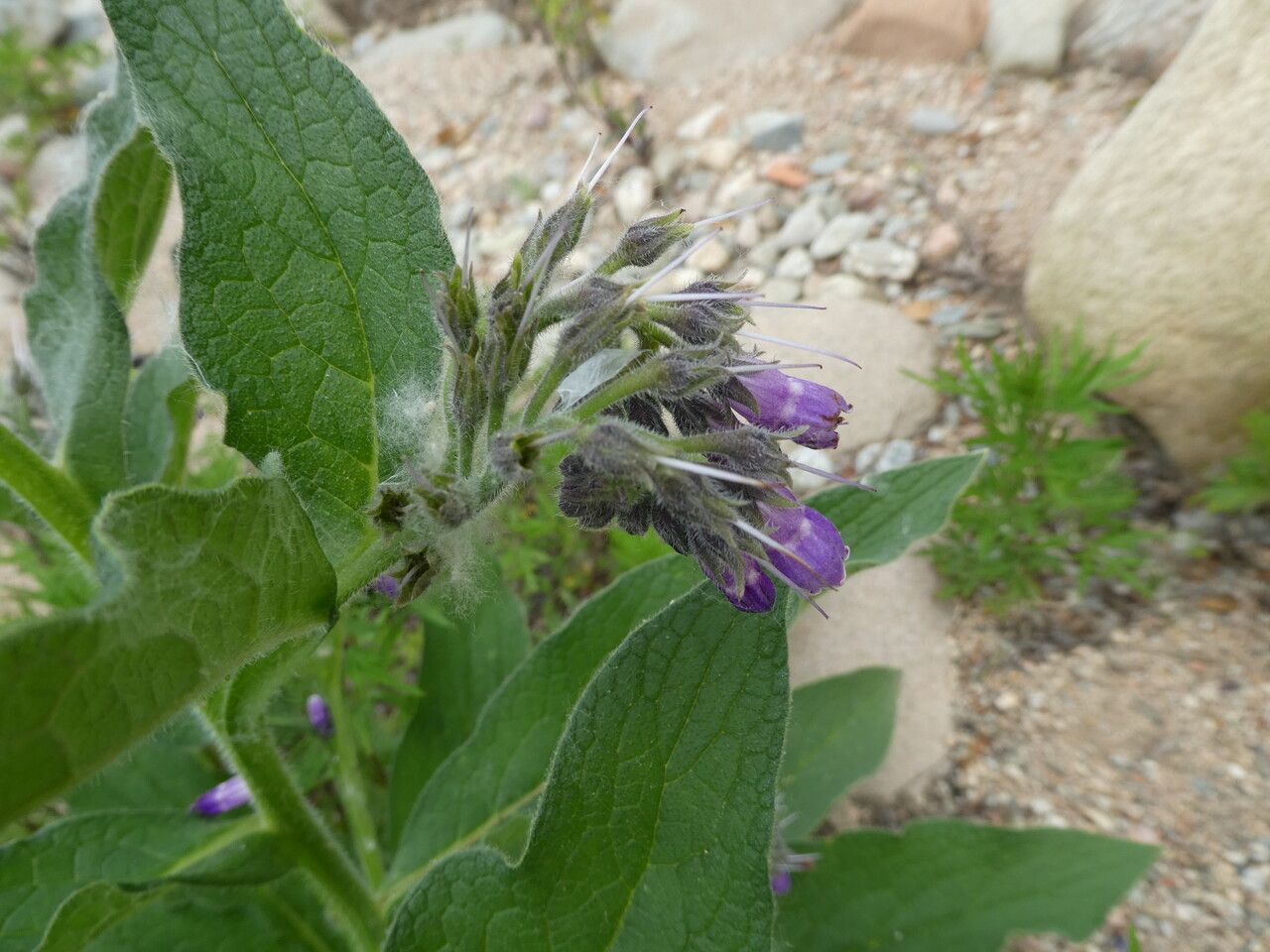
A sturdy clump dies back in winter and commonly reaches 40 cm to 1 m (16 in to 3.3 ft), sometimes more in rich soil. Tela Botanica describes a bristly-haired perennial with a thick, fleshy rootstock and a robust winged stem branching above. The SNHF gives a horticultural range of 30 cm to 1.2 m (12 in to 4 ft) and emphasizes deep rooting. 4 7
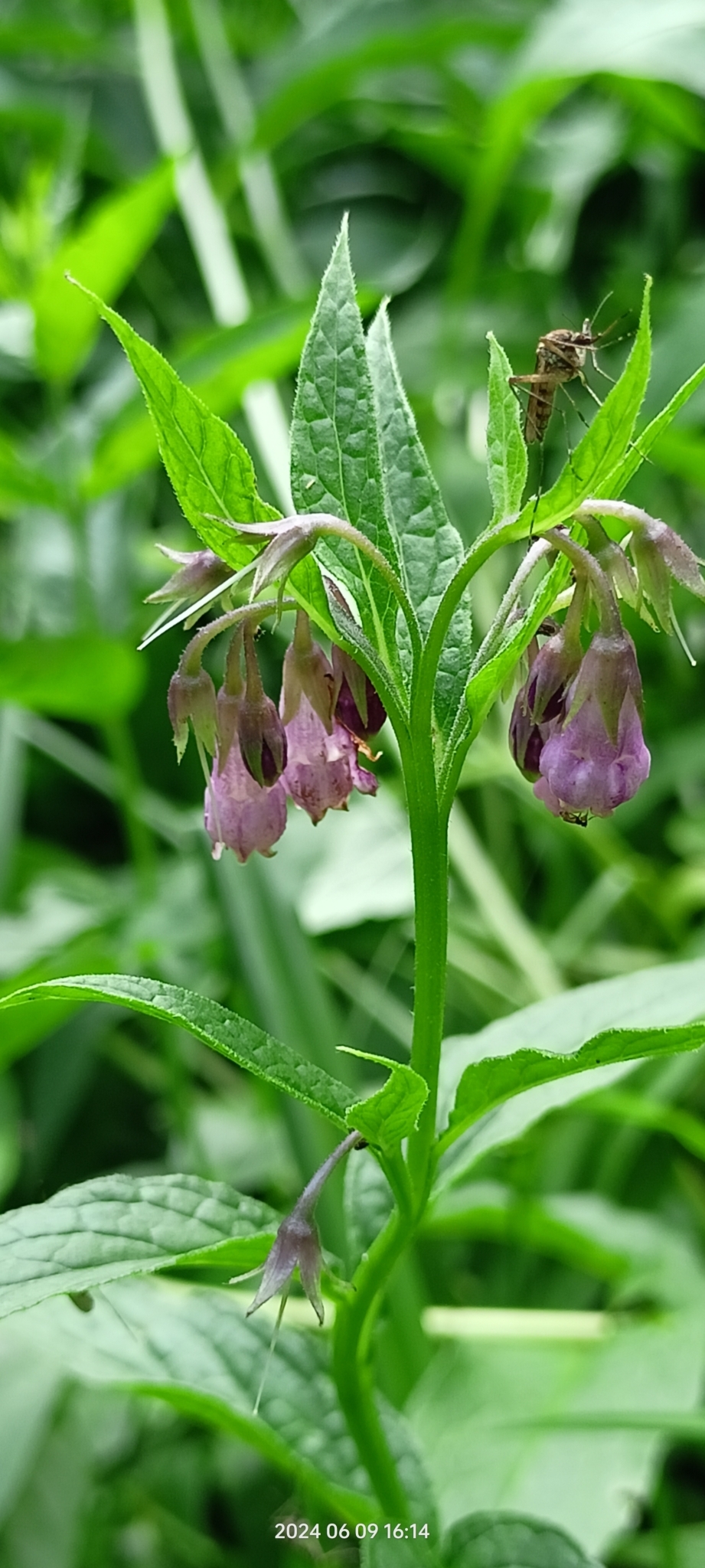
Large, thick, oval to lance-shaped leaves feel rough because of their stiff hairs. Lower leaves are larger; stem leaves extend a long way down the stem, a feature called decurrent. NC State similarly describes broad, coarse, hairy leaves, with the bases of the upper leaves running down the stem. 4 8
Nodding tubular flowers form scorpioid cymes: curled clusters that uncoil as flowers open. Usually pinkish, purple, cream or white, sometimes bluish, the corollas measure about 1-2 cm (0.4-0.8 in), depending on the source. RHS lists common comfrey as useful to pollinators, supplying nectar and pollen to bees and other insects. 7 4 6
Habitat and range
Across Europe and temperate Asia, POWO records a broad native range including France, the British Isles, Central and Eastern Europe, Italy, Spain, Turkey, Ukraine and western Siberia. It also lists many introductions in North and South America, East Asia and Oceania. 1
French records place common comfrey in wet meadows, ditches and watersides across almost the whole country. The SNHF also describes open, damp natural habitats and a nitrogen-loving plant indicative of rich, moist soil. 4 7
British habitats described by The Wildlife Trusts tell a similar story: riversides, marshes, ditches, roadsides and waste ground support this hairy plant, with clusters of nodding flowers from May to July there. That preference helps explain its success at hedge bases, around compost areas and in gardens that retain moisture. 9 6
Its native status in France means no French invasive designation is assigned here. Garden behavior can still be troublesome: thick roots, seedlings and regrowth from fragments make an established clump difficult to move or remove. 4 6
Growing in moist soil
A suitable site makes common comfrey easy to grow. RHS recommends moderately fertile, moist soil in sun or partial shade and notes vigorous growth after establishment. The SNHF describes a broader range from rich clay, including heavy clay, to sandy soil, slightly acid to alkaline, provided it stays moist to wet. 6 7
Deep-soil beds, hedge bases, contained pond margins, garden banks without an escape route into sensitive habitats and naturalistic gardens are suitable settings. Container growing needs a large, heavy pot and much more watering than plants in the ground. Comfrey handles a brief dry spell better than many waterside plants, but loses its appeal where soil repeatedly becomes hard and hot. 8 6
Propagation can be almost too effective. RHS lists division of fleshy roots in spring, root cuttings in early winter and seed sown in a cold frame. The SNHF also includes division, root cuttings and seed. A forgotten root fragment can grow into another plant. 6 7
Maintenance mainly involves controlling bulk. Cutting back after flowering can encourage tidier foliage, reduce seed production and stop tall clumps collapsing over neighbors. Heavy feeding is unnecessary: this plant naturally favors rich, damp ground and benefits more from healthy soil than aggressive fertilization. 6 9
Compost, mulch and garden uses
Organic gardeners value comfrey highly. The Wildlife Trusts mentions leaves for compost, fertilizer and slug control; RHS notes that it can be grown as a plant-based fertilizer. The SNHF particularly identifies vigorous Russian comfrey as a source of material for compost, mulch and garden preparations. 9 6 7
Cut comfrey can supply biomass for compost or mulch in gardens without grazing animals. Its pyrrolizidine alkaloids make casual handling of homemade preparations inappropriate; no liquid-feed recipe, steeping method, dose, application schedule or food-use procedure follows from this garden role. 10 12
Its practical value is as garden biomass. Cut leaves can join mixed, nonfood plant material in a compost area. In vegetable gardens, comfrey should not be mistaken for an edible herb, and root fragments should stay out of beds where a permanent clump is unwanted. 6 8
Toxicity and safety
Pyrrolizidine alkaloids are the central safety concern. LiverTox names symphytine, echimidine, symglandine and lycopsamine among compounds capable of causing hepatic sinusoidal obstruction, formerly called veno-occlusive disease, and severe liver injury. NC State also assigns medium-severity human toxicity to Symphytum officinale because of these alkaloids and notes that all parts may be involved. 10 8
Regulated external preparations discussed by the EMA are limited and controlled. The agency states that pyrrolizidine alkaloids are toxic to the liver when taken orally and that exposure from a product must be specified and limited. This does not make raw garden comfrey suitable for tea, food or homemade remedies. 11 12
Animal exposure also warrants considerable caution. Merck describes pyrrolizidine alkaloidosis as an important plant-related poisoning that damages the liver. IVIS includes Boraginaceae and Symphytum species among plants containing toxic pyrrolizidine alkaloids and identifies horses and cattle as susceptible. 13 14
HorseDVM specifically treats comfrey as poisonous to horses, with toxic material throughout the plant and pyrrolizidine alkaloids especially concentrated in roots but also present in leaves. Precaution applies to cats, dogs, horses, people and other animals. Exposure varies by species, but leaves, roots, seeds and preparations should not be swallowed. 15 14 10
Look-alikes and Russian comfrey
Similar-looking comfreys frequently hybridize. The Wildlife Trusts warns that distinguishing the group can be difficult because hybrids are common. Many plants sold or shared simply as comfrey may not be Symphytum officinale in the strict sense. 9 2
Symphytum × uplandicum, usually called Russian comfrey, is the most important look-alike. Tela Botanica treats it as a distinct taxon, with historical synonyms such as Symphytum peregrinum sensu auct. The SNHF also includes it among garden comfreys, emphasizing its vigor and frequent use for biomass and compost. 5 7
Identification of S. officinale combines decurrent upper leaves, winged stems, nodding flowers in curled clusters, a thick rootstock, damp habitat and a documented scientific name. Plants labeled Bocking, Russian, hybrid or simply comfrey are best treated as garden comfrey in a broad sense until identified reliably. 4 6 5
Correct identification does not remove the toxicity concern. Garden comfreys and their hybrids belong to the same pyrrolizidine-alkaloid context within Boraginaceae; naming the species never authorizes ingestion. It chiefly helps describe the plant accurately, including its vigor, garden behavior and collection value. 14 12
Diseases, pests and management
RHS and the SNHF describe comfrey as generally little affected by pests and diseases. Young shoots may nevertheless attract slugs or snails. Older leaves can develop rust, powdery mildew or spots late in the season, especially in very dense clumps or during drought stress. 6 7
Space is often a greater problem than disease. Established comfrey occupies its full volume, competes with smaller neighboring perennials and regrows from root pieces. Choose a site where a large clump is welcome, and cut before seeds develop if spread is unwanted. 6 8
Where animals have access, managing cut material becomes a safety issue. Keep clippings out of forage, bedding that animals may eat and grazing areas. If an animal swallows comfrey, contact a veterinarian with the botanical name and the plant part involved rather than trying a homemade dose or treatment. 13 15
Main sources
- Plants of the World Online / Kew, Symphytum officinale L.
- GBIF Backbone Taxonomy, Symphytum officinale L.
- World Flora Online, Symphytum officinale L.
- Tela Botanica eFlore, Symphytum officinale L.
- Tela Botanica eFlore, Symphytum ×uplandicum Nyman
- Royal Horticultural Society, Symphytum officinale
- Société Nationale d'Horticulture de France, Common comfrey
- NC State Extension Gardener Plant Toolbox, Symphytum officinale
- The Wildlife Trusts, Common comfrey
- NIH LiverTox, Comfrey
- European Medicines Agency, Symphyti radix summary
- European Medicines Agency, toxic unsaturated pyrrolizidine alkaloids statement
- Merck Veterinary Manual, Pyrrolizidine Alkaloidosis in Animals
- IVIS, Guide to Poisonous House and Garden Plants, pyrrolizidine alkaloids and Symphytum
- HorseDVM, Comfrey poisoning in horses
Frequently asked questions
Is common comfrey native to France?
Yes. Tela Botanica records it across almost all of France in wet meadows, ditches and watersides, and POWO includes France in its native range.
Does common comfrey become invasive?
It has no assigned French invasive status because it is native to France. In gardens, however, its crown, seedlings and regenerating root fragments can make it difficult to contain.
How does it differ from Russian comfrey?
Russian comfrey is mainly Symphytum × uplandicum, a distinct hybrid. It is often more vigorous in gardens and when grown for biomass. A label reading only comfrey does not guarantee Symphytum officinale.
Can the leaves go into compost?
Yes, as garden biomass in managed compost or nonfood mulch. This does not extend to homemade liquid feed recipes, dosing instructions or application to food crops just before harvest.
Can you eat common comfrey?
It is not suitable for home consumption. Toxicology sources identify liver-toxic pyrrolizidine alkaloids, with particular concern about repeated ingestion and concentrated or processed preparations.
Is common comfrey toxic to animals?
Treat it as toxic. Veterinary sources on pyrrolizidine alkaloids include Symphytum or comfrey and describe liver risks, especially in horses and cattle. Cats and dogs should also be kept away.
Are external comfrey products equivalent to the garden plant?
No. The EMA discusses regulated, restricted and controlled preparations. Raw garden comfrey should not be made into home remedies.
Similar plants
If you are unsure about a plant’s toxicity, ask a botanist or veterinarian for advice.