
Painted daisy (Tanacetum coccineum, )
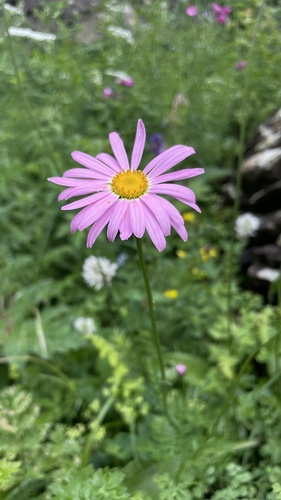

Painted daisy (Tanacetum coccineum (Willd.) Grierson) is an herbaceous perennial in the Asteraceae family, native from eastern Europe through the Caucasus to Central Asia and Iran. Its clumps of finely divided green leaves carry large daisy-like flower heads in late spring or early summer, with red, pink, white or sometimes purplish rays around a yellow disk.
Read morePainted daisy, Persian daisy, Garden pyrethrum, Persian insect-flower and Pyrethrum
Place in full sun, with intense direct light all day long.
Full sun; light partial shade in hot climates


© photo
(c) Afanasovich Alexey, some rights reserved (CC BY), uploaded by Afanasovich Alexey · cc-by
Wikimedia Commons · CC BY-SA or Public Domain
Wikipedia · CC BY-SA
Taken Sep 19, 2020 by Lauren Ehret (cc-by-sa)
Taken Apr 28, 2022 by Diago Clara (cc-by-sa)
© copyright of the Board of Trustees of the Royal Botanic Gardens, Kew.


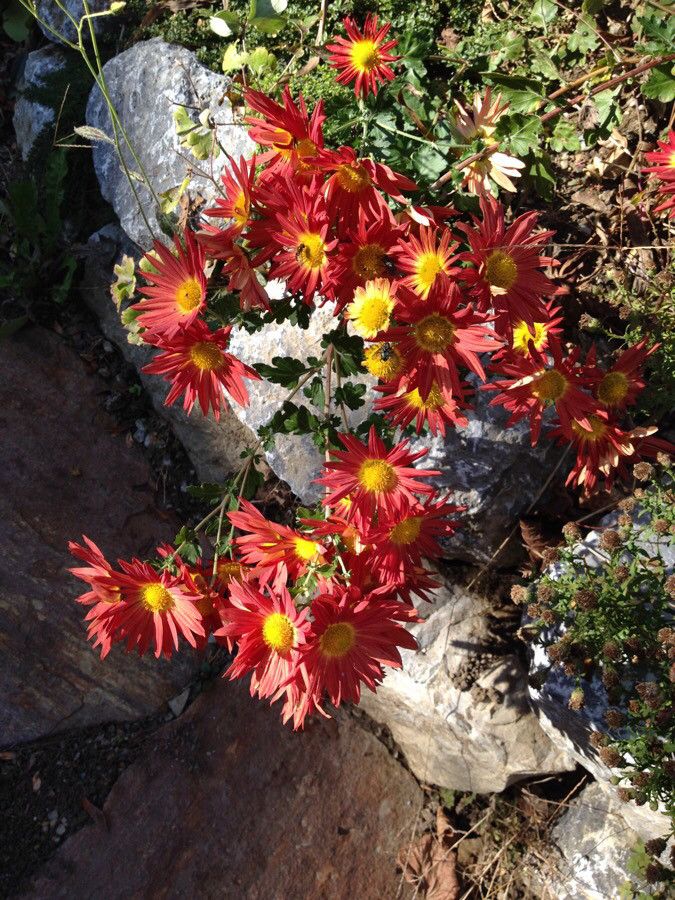


Global distribution
POWO places the native range of Tanacetum coccineum from eastern Europe to Central Asia and Iran. It is introduced in several European countries, including France, where it is better understood as an occasionally naturalized garden plant than as a native wild perennial.
- Native8
- Introduced4
- Eastern European Russia
- North Caucasus
- Transcaucasus
- Turkey
- Iran
- Kazakhstan
- Tajikistan
- Uzbekistan
- France
- Great Britain
- Germany
- Italy
Hexagons: regions where the plant occurs. Green dots: native range.1
Identity
Painted daisy (Tanacetum coccineum (Willd.) Grierson, 1974) is the accepted species treated here. POWO/Kew places it in the Asteraceae family and the genus Tanacetum, and records Grierson’s first publication of this combination in the Notes from the Royal Botanic Garden Edinburgh in 1974. 1 2
Grown outdoors for its vividly colored daisy-like flower heads, this herbaceous perennial also goes by Persian daisy, garden pyrethrum, Persian insect-flower and pyrethrum. English-language horticultural sources use these names, while GBIF also records French names referring to its pink or scarlet flowers. 2 5
Historically, “pyrethrum” helps explain garden labels, but its meaning needs care. It does not identify a homemade insecticide, every plant once placed in Pyrethrum, or the florist’s chrysanthemum. The binomial Tanacetum coccineum remains the reliable identification for gardeners. 1 10
Recognition
An upright, bushy clump gives painted daisy its garden shape. NC State describes plants 30–90 cm (12–35 in) tall and 45–60 cm (18–24 in) wide; the RHS gives an eventual height and spread of 0.5–1 m (20–39 in) for Robinson’s crimson-flowered. In a border, expect a medium-sized perennial with a lighter appearance than a large fall chrysanthemum. 5 4
Before flowers appear, examine the finely divided foliage. The soft, medium to bright green leaves have a fine, fern-like texture. Lower leaves are larger, while shorter upper leaves accompany the slender flowering stems. 5 7
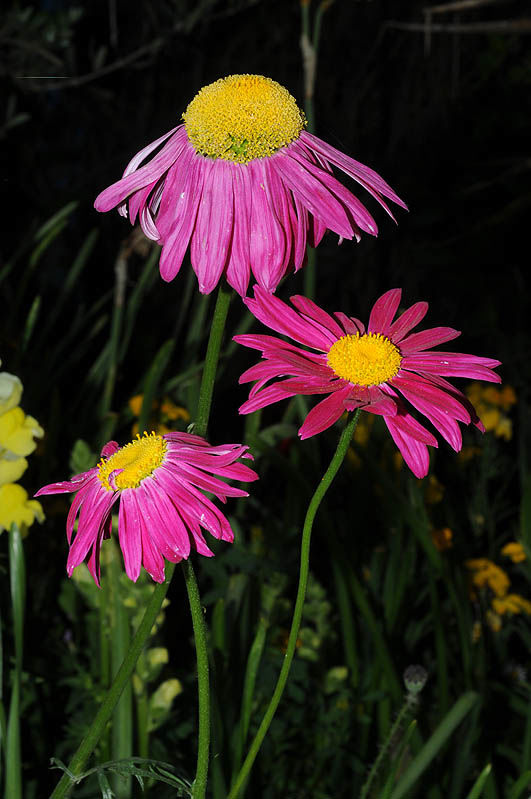
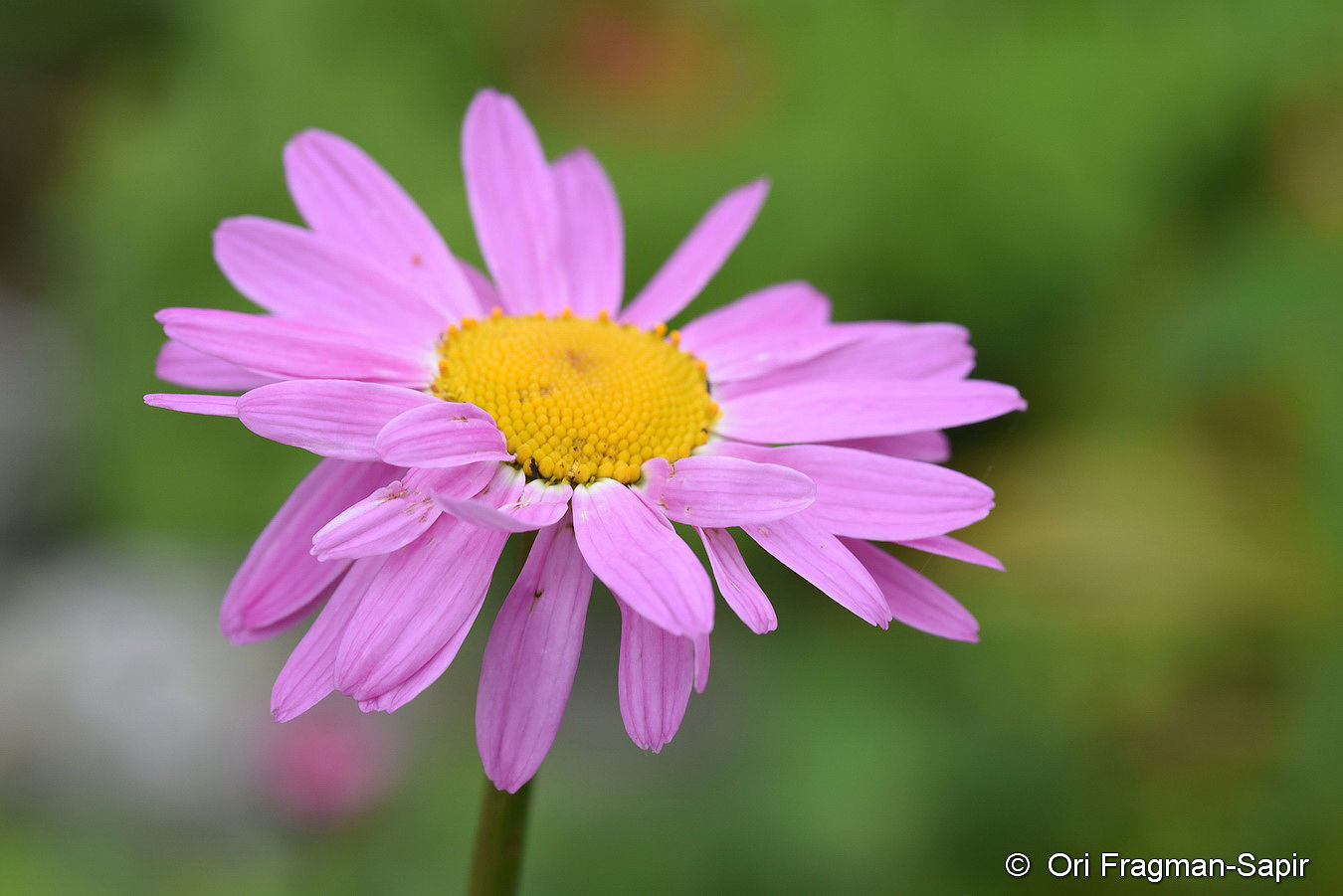
Solitary flower heads, or small numbers of them, top stiff stems. Depending on the selection, the rays are red, pink, white or sometimes purplish around a yellow disk. NC State gives a diameter of 7–8 cm (about 3 in); the RHS describes heads up to 6 cm (2.4 in) on the red cultivar, and Chicago Botanic Garden gives 5–8 cm (2–3 in). 5 4 7
Late spring and early summer bring the main display. In their northern-hemisphere settings, Chicago Botanic Garden lists May–June, NC State June–July, and the RHS early summer. Removing faded heads may prompt a little repeat flowering, but this perennial does not flower continuously like some annuals. 7 5 4
Taxonomy and synonyms
For painted daisy, POWO accepts Tanacetum coccineum (Willd.) Grierson and lists three important homotypic synonyms: Chrysanthemum coccineum Willd., Matricaria coccinea (Willd.) Poir. and Pyrethrum coccineum (Willd.) Vorosch. These names explain older catalog references to scarlet chrysanthemum or pyrethrum. 1 3
GBIF likewise places the plant in Asterales, Asteraceae and Tanacetum, and lists French and English common names. Labels reading Chrysanthemum coccineum or Pyrethrum coccineum can therefore refer to the same garden plant; its current botanical name is Tanacetum coccineum. 2 1
Below species level, POWO recognizes three accepted taxa: subsp. carneum, subsp. chamaemelifolium and subsp. coccineum. NC State’s page covers Tanacetum coccineum subsp. coccineum, explaining why some collection labels are more precise than the species name alone. 1 5
Similar names do not make veterinary evidence interchangeable. The ASPCA lists Chrysanthemum spp. as toxic to dogs, cats and horses, but that page is not a species-specific veterinary account of Tanacetum coccineum. It supports caution for the broader group, reinforced by references to pyrethrins and irritants. 11 12
Habitat and range
Eastern Europe, Central Asia and Iran form the native range described by POWO. Listed native regions include eastern European Russia, the North Caucasus, Transcaucasus, Turkey, Iran, Kazakhstan, Tajikistan and Uzbekistan. 1
Introductions recorded by the same source include France, Germany, Great Britain, Italy, Poland, Switzerland and regions beyond Europe. In France, this account therefore treats it as introduced or escaped from cultivation, rather than as a native wild species comparable to common tansy. 1
Temperate gardens with cool to moderately dry conditions suit its cultivation. The sources agree on sun, drainage and moisture without saturation: NC State describes moist, well-drained sandy to loamy soils, while the RHS recommends light, well-drained soil in full sun. 5 4
The references used here provide no strong indication of invasiveness in France comparable to knotweed or ragweed. Deadheading can still limit unwanted seedlings. Its treatment here is as an introduced ornamental perennial, rather than a regulated invasive plant in France; that framing does not establish its status elsewhere. 1 6
Garden cultivation
Successful flowering depends on light, drainage and reasonable moisture as stems develop. Full sun produces firmer stems and clearer colors. Light partial shade may help in hot climates, but too much shade makes clumps floppy and reduces bloom. 4 5
Choose light, well-drained, moderately fertile soil with enough spring moisture to support stem growth. Compact, waterlogged ground damages the crown; very dry soil during bud formation shortens the display. Container mixes should drain quickly while retaining some moisture. 4 7
Pinching young shoots at about 15–20 cm (6–8 in) is NC State’s recommendation; then allow buds to form. This encourages denser clumps and limits overly long stems. Later, removing spent heads maintains the display and may encourage a few more flowers. 5 4
Cold hardiness is generally good in temperate gardens. NC State and Chicago Botanic Garden both give USDA zones 3–7; the RHS rates the red cultivar H6, indicating good hardiness in the United Kingdom and northern Europe. Wet cold or a saturated pot causes losses more readily than dry cold with good drainage. 5 7 4
Flowering, cutting and cultivars
Cut flowers are an established use for painted daisy. NC State recommends it for bouquets and arrangements, and the RHS also lists the red cultivar for cutting. Harvest stems when the heads are open but still fresh, and remove lower leaves that would sit in vase water. 5 4
Named cultivars account for much of the color range. NC State lists magenta-pink 'Brenda', pale pink 'Eileen May Robinson', bright red 'James Kelway', white 'Mont Blanc', cream aging to pink 'Mrs. James Kelway', and scarlet 'Robinson’s Crimson'. These are horticultural selections, not separate species. 5
The RHS describes Robinson’s crimson-flowered as a bushy perennial about 75 cm (30 in) tall, with fern-like foliage and red heads with yellow centers. It also records value for bees and other pollinators, giving the plant a role in a living border beyond its decorative display. 4
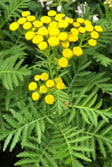
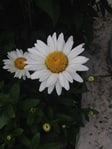
White-flowered forms can resemble other daisies at a distance. Look for more finely divided leaves, lighter stems and the horticultural context of colored cultivars. Chicago Botanic Garden’s name “painted daisy” reflects the palette from white through red. 7 2
Pyrethrum, pyrethrins and look-alikes
Keep the ornamental Tanacetum coccineum, the former genus name Pyrethrum, and pyrethrin products distinct. NPIC describes pyrethrins as six substances naturally present in certain chrysanthemum flowers and toxic to insects; the EPA classifies them as botanical insecticides derived from chrysanthemum flowers. 9 10
Production of pyrethrins by Tanacetum coccineum is noted by NC State. Zeng and colleagues also mention the older names Chrysanthemum coccineum and Pyrethrum coccineum and historical use as an ornamental or natural pesticide. These facts explain its reputation but supply no preparation method. 5 8
Dalmatian pyrethrum, Tanacetum cinerariifolium, is the main source of confusion; it is often cited as a major industrial source of pyrethrins. EPA and NPIC discuss products and chrysanthemum flowers, which does not justify grinding arbitrary garden heads. No homemade dosing, extraction, soaking, dusting or treatment method is recommended. 10 9
Enjoy painted daisy as a border perennial and cut flower. Its history does not make it a homemade pesticide solution. If treatment is needed, use only locally approved products and follow their labels. 10 9
Toxicity and precautions
Contact, ingestion and confusion between related groups shape the safety concerns. NC State recommends gloves because sap and leaves may cause skin irritation or contact dermatitis. This warrants care around children, sensitive adults and gardeners dividing clumps. 5
For Chrysanthemum spp., the ASPCA lists toxicity to dogs, cats and horses from sesquiterpene lactones, pyrethrins and other possible irritants. Reported signs include vomiting, diarrhea, drooling, poor coordination and dermatitis. 11
Pet Poison Helpline treats pyrethrins and pyrethroids as significant poisons, especially for cats, which metabolize them poorly. Although concentration and exposure circumstances differ, the warning supports keeping painted daisy bouquets, trimmings and derived products away from animals. 12
Avoid ingestion and wash exposed skin if irritation occurs. Contact a veterinarian or animal poison service if an animal chews the plant and develops signs. The horse risk is cautiously inferred from the chrysanthemum group and the ASPCA page, rather than a veterinary page devoted to T. coccineum. 11 12
Pests, diseases and problems
Serious disease is not a defining feature of this plant in the sources. The RHS describes the red cultivar as generally disease-free but susceptible to aphids, chrysanthemum eelworm and leaf miners. NC State also lists leafhoppers, nematodes, spider mites and thrips among pests to watch. 4 5
Flopping stems, short flowering after heat, hollow-centered clumps and winter losses in wet soil are common practical problems. The RHS notes that staking may be needed, especially in windy sites or with taller forms. 4
Natural insect-repellent properties of the foliage are noted by NC State, but they do not guarantee a pest-free border. Insects can still establish. Early inspection, airflow, regular watering without saturation and removal of heavily affected parts remain useful responses. 5
Division can renew an aging crown. Clumps that flower less, develop an empty center or produce weaker stems benefit from division in spring or a mild fall, followed by replanting in lighter soil. This is periodic border-perennial maintenance rather than intensive yearly care. 4 5
Propagation and seasonal care
Seeds, cuttings and division are the three propagation routes listed by NC State. The RHS recommends spring division or basal cuttings. Seed produces varied colors; division and cuttings preserve a known parent cultivar more reliably. 5 4
During spring cleanup, remove dry remains, feed very lightly if soil is poor and inspect young shoots. Pinching at 15–20 cm (6–8 in) encourages compact plants. While flowers develop, water if soil dries deeply and remove faded heads to reduce exhaustion. 5
Once the main display ends, cut back spent stems while retaining healthy foliage. Wear gloves when dividing and keep vigorous pieces with roots and buds. Do not leave the waste within reach of curious animals. 5 11
Containers need enough room for a perennial crown and drainage holes to release excess water. Saturated winter compost is more dangerous than dry cold. Shelter pots from prolonged rain while allowing the plant the cold conditions needed for its rest. 4 7
Main sources
- Plants of the World Online / Kew, Tanacetum coccineum (Willd.) Grierson
- GBIF Backbone Taxonomy, Tanacetum coccineum (Willd.) Grierson
- World Flora Online, Tanacetum coccineum (Willd.) Grierson
- Royal Horticultural Society, Tanacetum coccineum Robinson's crimson-flowered
- NC State Extension Gardener Plant Toolbox, Tanacetum coccineum subsp. coccineum
- Missouri Botanical Garden Plant Finder, Tanacetum coccineum
- Chicago Botanic Garden Plant Finder, Tanacetum coccineum
- Zeng et al. 2020, complete chloroplast genome of Tanacetum coccineum
- National Pesticide Information Center, Pyrethrins
- U.S. EPA, Pyrethrins and Pyrethroids
- ASPCA, Chrysanthemum toxicity
- Pet Poison Helpline, Pyrethrins and Pyrethroids
Frequently asked questions
Is Tanacetum coccineum the same as Chrysanthemum coccineum?
Yes in ordinary horticultural use. POWO lists Chrysanthemum coccineum as an older homotypic synonym, while Tanacetum coccineum is the accepted name.
Is painted daisy a perennial?
Yes. POWO and the horticultural sources describe it as perennial, although older clumps may flower less if they are not divided.
Where should I plant painted daisy?
Full sun gives the best flowering. Light partial shade can help in hot climates, but dense shade reduces flower stems.
Can I make an insecticide from painted daisy?
No. The botanical and chemical facts about pyrethrins do not provide a safe practical method. Regulatory sources require following approved product labels rather than making homemade preparations.
Is painted daisy toxic to cats and dogs?
Caution is needed. The ASPCA lists Chrysanthemum spp. as toxic to dogs, cats and horses, and Pet Poison Helpline highlights cats’ particular sensitivity to pyrethrins and pyrethroids.
How can I extend flowering?
Plant in sun, keep the soil moist but well drained as flower stems develop, remove faded flower heads and divide old clumps.
Similar plants


If you are unsure about a plant’s toxicity, ask a botanist or veterinarian for advice.