
Small nettle (Urtica urens, )
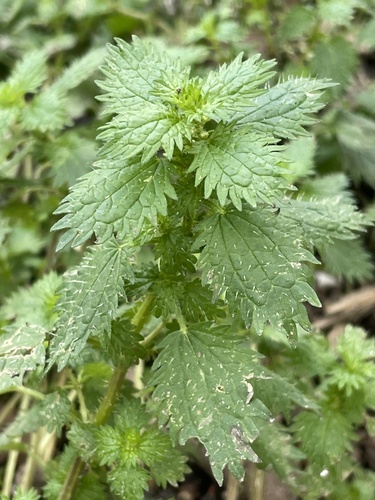
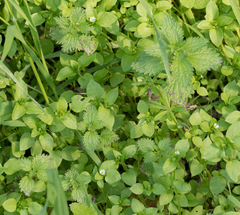
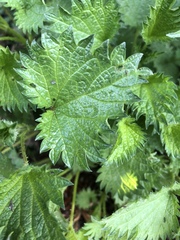
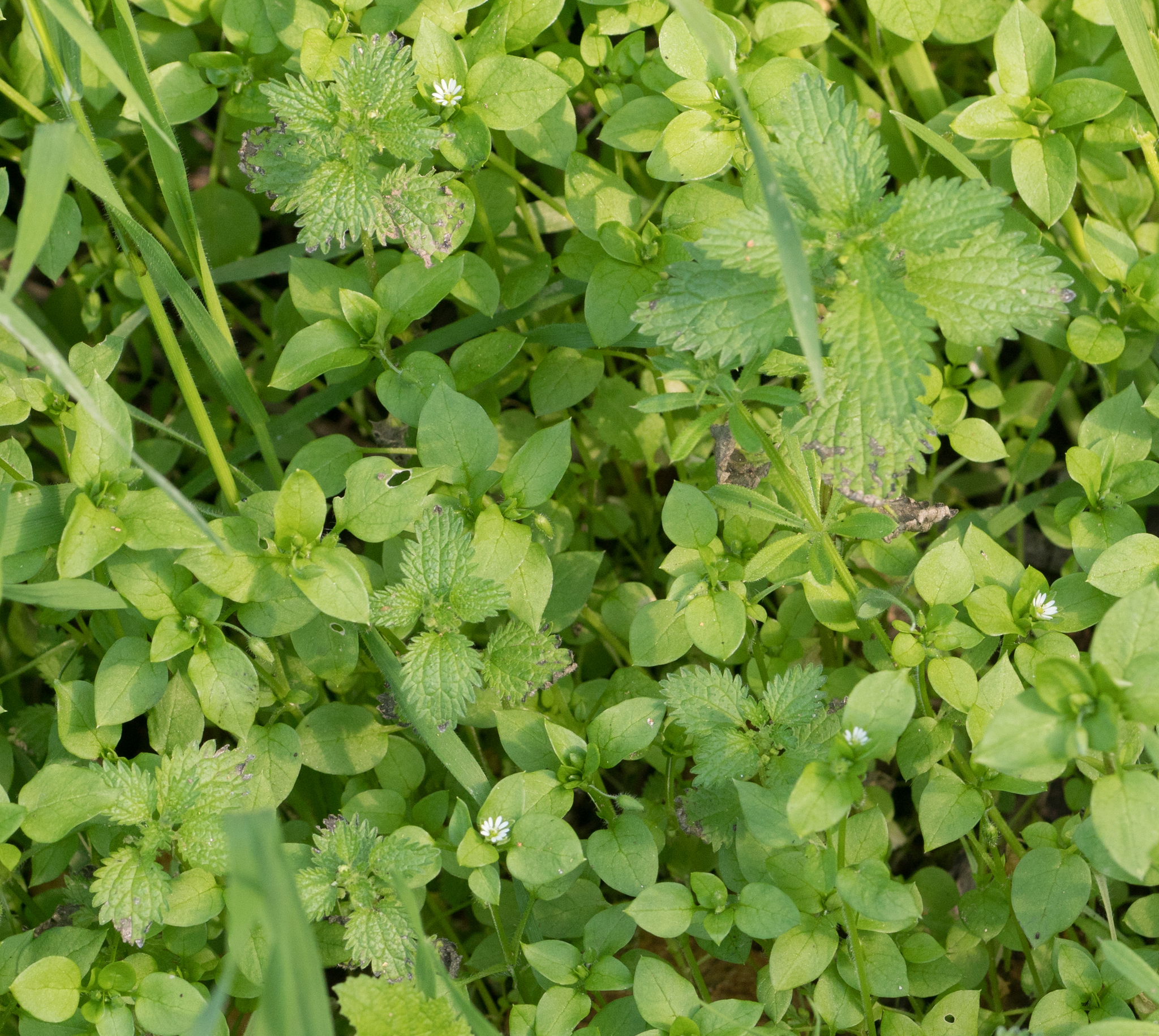
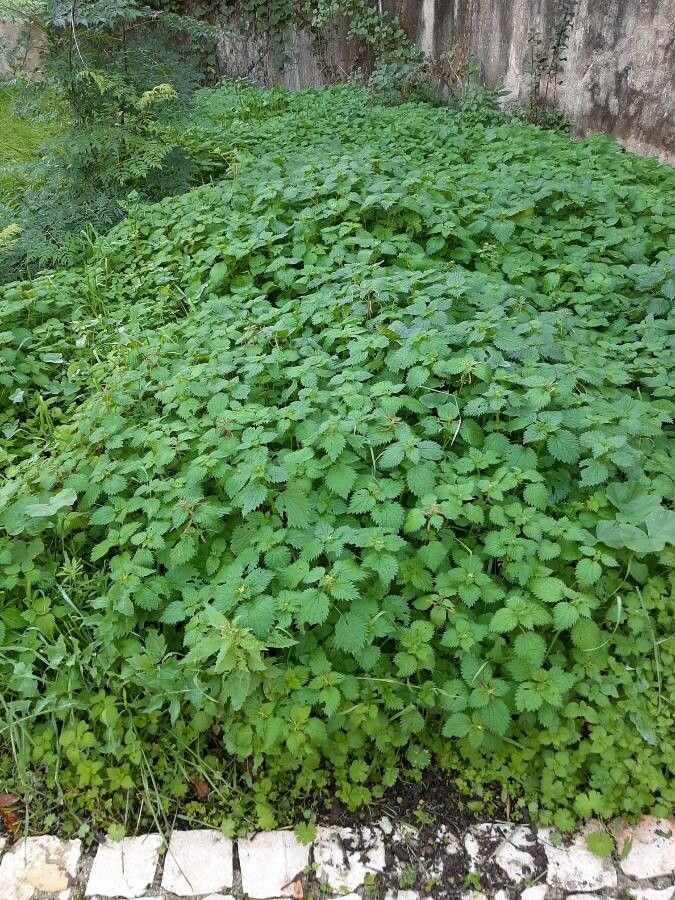
Small nettle (Urtica urens L.) is a low, strongly stinging annual in the Urticaceae family, frequent on disturbed, nitrogen-rich soil. Unlike common stinging nettle, it lives for one year, carries male and female flowers on the same plant and has small flower clusters close to the stem.
Read moreSmall nettle, Annual stinging nettle, Burning nettle, Dwarf nettle and Annual nettle
Allow a few hours of direct sun per day, preferably morning or evening.
Full sun to open partial shade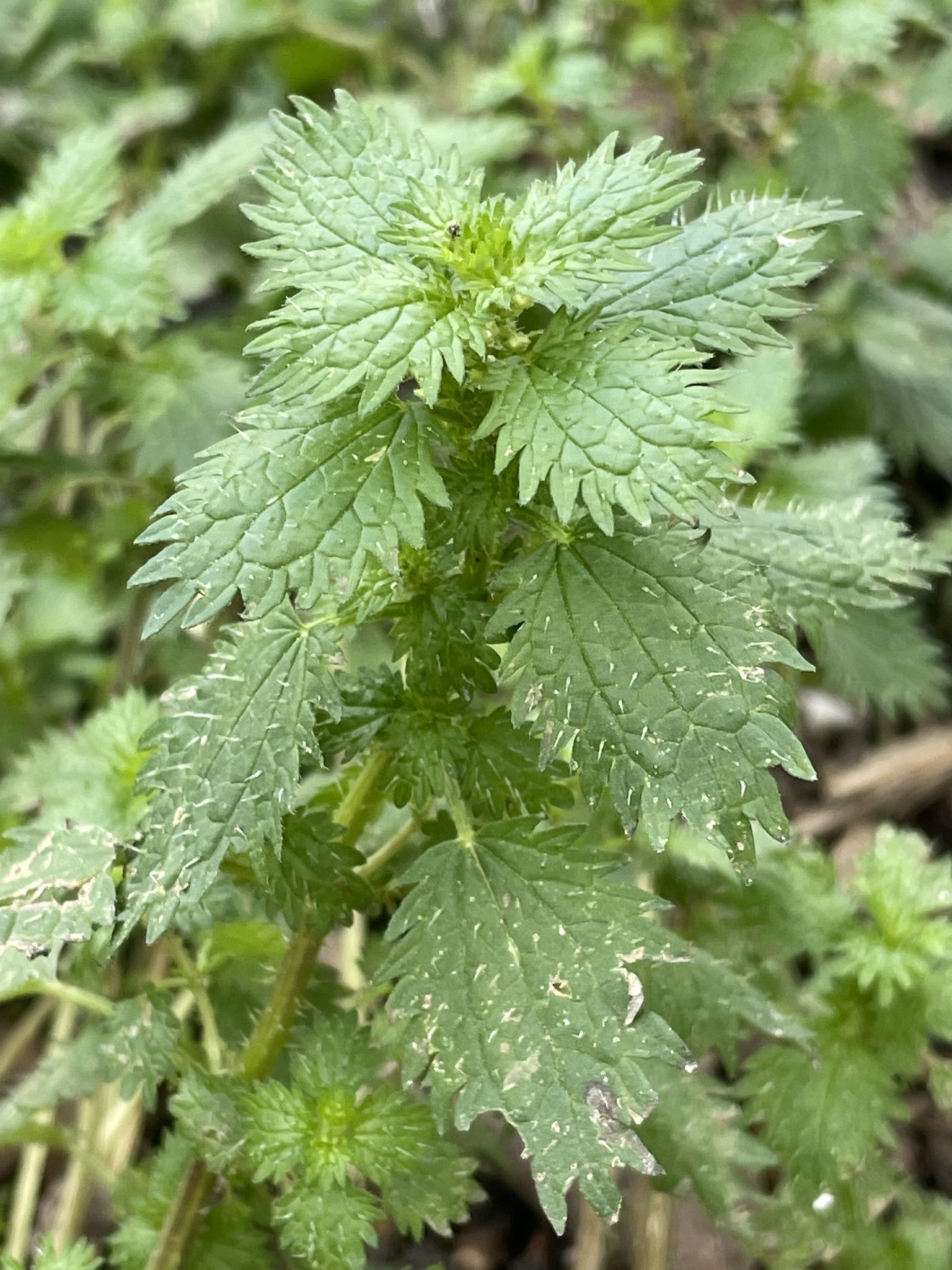



© photo
no rights reserved · cc0
Jesse Rorabaugh · cc0
iNaturalist User · cc0
Taken Jan 8, 2012 by Tela Botanica − Bertrand BUI (cc-by-sa)
Taken May 24, 2021 by Martín Ernesto (cc-by-sa)
Taken Sep 18, 2021 by Fabrice Rubio (cc-by-sa)
Taken Sep 28, 2014 by Tela Botanica − Vivier Emmanuel (cc-by-sa)
Taken Dec 11, 2021 by cscoq (cc-by-sa)
© copyright of the Board of Trustees of the Royal Botanic Gardens, Kew.




Global distribution
POWO treats Urtica urens as native across a broad Eurasian, Mediterranean, North African and Asian range including France, and introduced on many continents. EPPO notes that this annual weed is now so widespread in temperate regions that its exact original range is difficult to summarize.
- Native5
- Introduced4
- Invasive1
- France
- Continental Europe
- North Africa
- Eastern Mediterranean
- Temperate Asia
- Great Britain
- United States
- Canada
- New Zealand
- Hawaii
Hexagons: regions where the plant occurs. Green dots: native range.1
Identity
Small nettle (Urtica urens L., 1753) belongs to the genus Urtica in the Urticaceae family. POWO, GBIF and World Flora Online recognize it as an accepted species, published by Linnaeus in Species Plantarum in 1753. 1 2 3
Names such as annual stinging nettle, burning nettle and dwarf nettle describe its short life cycle, burning sting and low stature. Tela Botanica and GBIF record French names petite ortie, ortie brûlante and ortie grièche; RHS mainly uses small nettle and annual stinging nettle. 8 2 5
Treating every nettle as Urtica dioica obscures a useful distinction. Urtica urens is an annual, usually smaller and without persistent spreading rhizomes. Common stinging nettle is perennial and readily forms rhizomatous patches. For small nettle, garden control therefore centers on preventing seed production. 6 7
Recognition
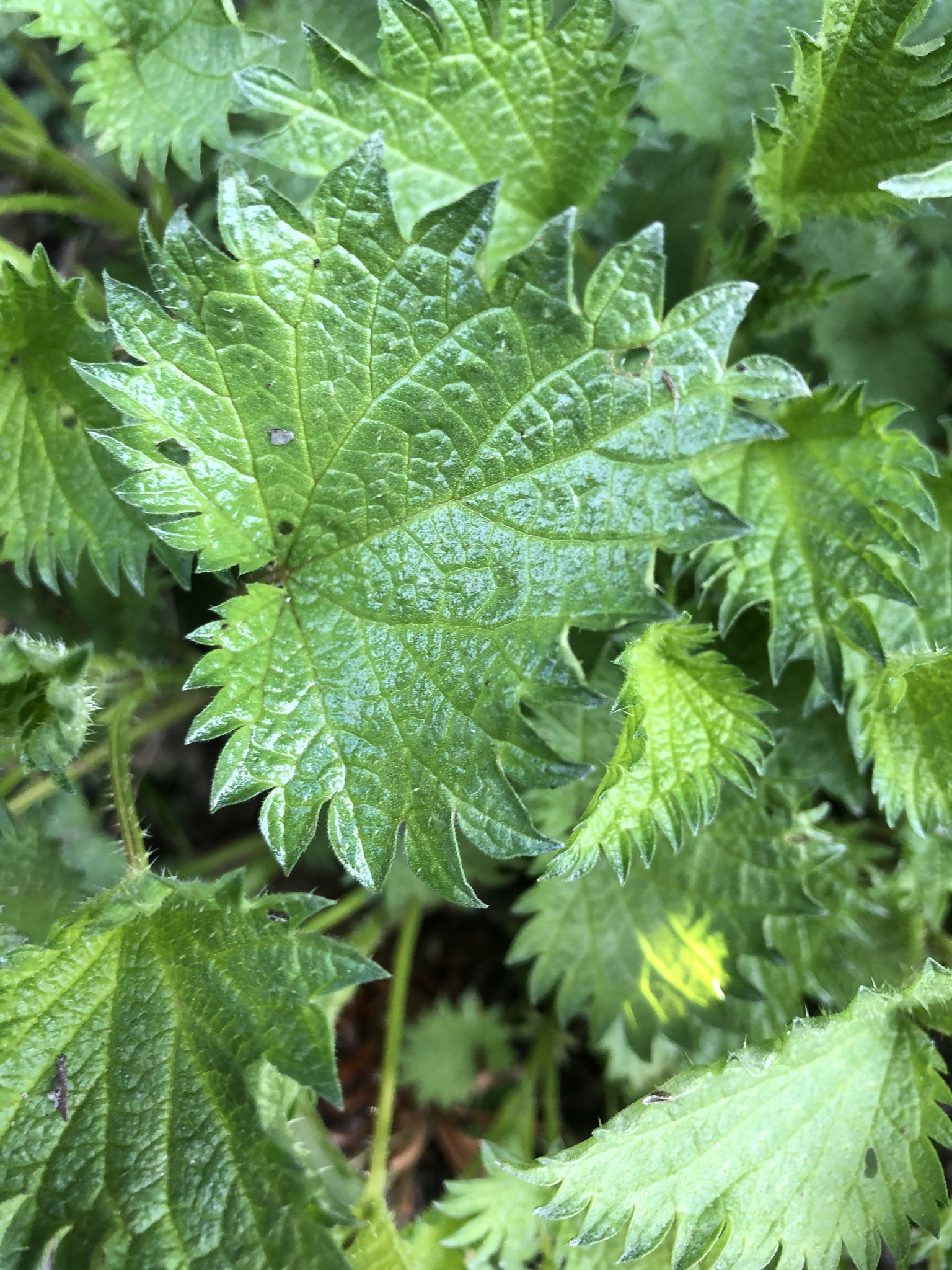
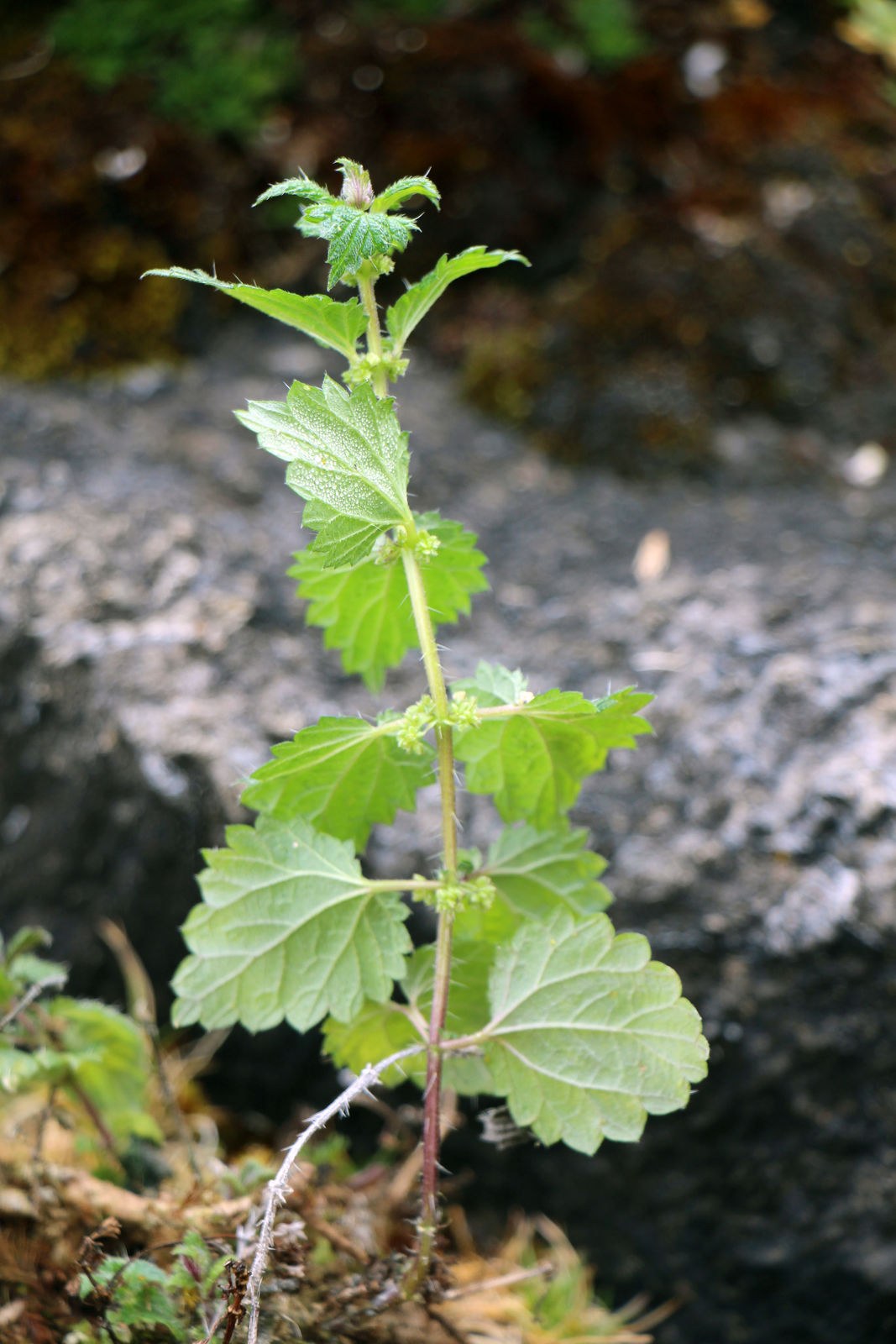
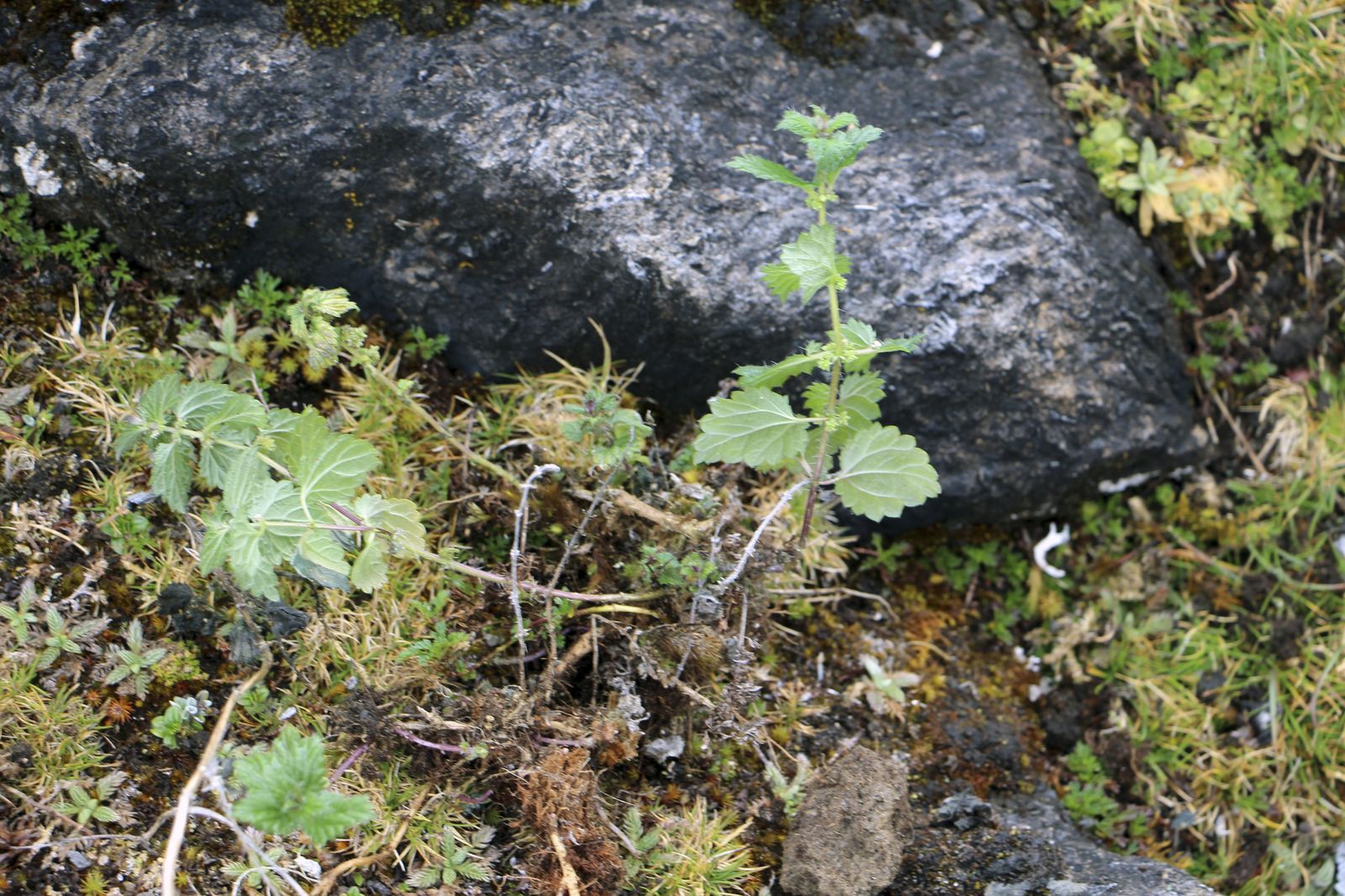
An upright, bushy habit distinguishes Urtica urens, commonly 5–60 cm (2–24 in) tall, with horticultural records reaching 75 cm (30 in). RHS describes sharply toothed leaves and small greenish or whitish summer flowers. UC IPM records mature plants about 13–60 cm (5–24 in) in California: a short but conspicuous weed. 5 7
Opposite, stalked green leaves are oval to elliptical with pronounced teeth. UC IPM gives a leaf length of about 1.3–5 cm (0.5–2 in) and 3–5 veins from the base. RHS notes that small nettle leaves are roughly half the size of common stinging nettle leaves. 7 6
Stinging hairs are often noticed too late. Leaves and stems bear long stinging hairs alongside shorter, non-stinging hairs. Their brittle tips act like tiny needles, delivering irritants into the skin. This explains immediate pain even from very young plants. 7 13
Compact flowers remain close to stem nodes rather than forming the long, drooping clusters of common stinging nettle. They are small and greenish to greenish-white. UC IPM describes male and female flowers in the same groups; RHS identifies the plant as monoecious, with both sexes on one individual. 7 6
Differences from Urtica dioica
Comparison with Urtica dioica matters because both plants sting and share the name nettle. Small nettle germinates, grows, flowers, sets seed and dies within a year. Common stinging nettle is perennial, resprouting from rhizomes and often forming large colonies. 6 7
Height offers a clue, but cannot establish identity alone. Common stinging nettle can grow several tens of centimeters or more in fertile soil, while Urtica urens stays lower. Small nettle has shorter, often rounder leaves with coarse teeth. Common nettle flower clusters are often longer and drooping; small nettle clusters remain compact beside the stem. 6 7
Flower sex provides another distinction. Urtica urens carries male and female flowers on one plant. In Urtica dioica, dioica recalls that the sexes usually occur on separate plants. Flowers can confirm identification, although seed prevention requires earlier action. 6
Roots offer a practical clue. A nettle clump returning from creeping rhizomes is probably not small nettle. Isolated seedlings rapidly setting seed in a vegetable plot, greenhouse, compost or disturbed soil make Urtica urens a stronger possibility. 7 4
Habitat and range
Across its native range, POWO records Urtica urens in Europe, the Mediterranean, North Africa, the Middle East, the Caucasus, Central Asia and several temperate Asian regions. France is native, while Great Britain and many American, Oceanian and Atlantic island regions are listed as introduced. 1
EPPO emphasizes how hard the original range is to delimit: this annual weed is extremely widespread in temperate regions. It records Europe, the Mediterranean, the Caucasus, Siberia, Central Asia and China, with introductions in Canada, the United States, New Zealand and upland areas of some tropical regions. 10
French botanical references Tela Botanica and INPN link this taxon to Urtica urens L., including INPN identifier 128298 and French names petite ortie, ortie brûlante and ortie grièche. INPN records its presence in mainland France; the Tela Botanica summary consulted reports LC, or Least Concern. 8 9
Rich, disturbed, open soil provides typical habitat. UC IPM lists fence lines, ditches, roadsides, gardens, vegetable crops, beet fields, citrus plantings and orchards. In vegetable plots, it favors bare, fertilized soil that is periodically moist and repeatedly disturbed. 7 6
Introduced populations can become troublesome crop weeds. Plant Pono rates Urtica urens as high risk in Hawaii because it is naturalized, suited to disturbance and harmful to people and animals through its hairs. That assessment does not change its French status, but shows how a small annual can cause problems where introduced. 15 10
Life cycle and seed bank
Seed production can be remarkably fast. UC IPM reports germination from late fall to early spring in California, with viable seeds sometimes produced about five weeks later. Flowering can extend over a long period in mild climates; temperate gardens mainly face spring and fall seedling flushes. 7
Spring and summer are common times for small nettle seedlings to appear, according to RHS. Small pale flowers sit close to the stem, followed by fruits containing small brown seeds. Without persistent rhizomes, the soil seed bank drives its return. 6
Removing a plant before flowering often deals with that individual; letting a few mature can renew an infestation for several cycles. In vegetable plots, greenhouses and freshly worked beds, frequent early attention is more useful than late intervention among stinging, seed-bearing stems. 7 6
Soil disturbance has mixed effects. Hoeing in dry weather can kill young seedlings, while deep cultivation can bring buried seeds to the surface. After weeding, close gaps with mulch, plant cover, dense crops, or a stale seedbed followed by removal of emerging seedlings. 7 6
Management in gardens and crops
Protective clothing comes first: gloves, long sleeves and careful movements. UC IPM stresses skin protection during pulling. Small size does not reduce the effectiveness of hairs on leaves, stems and leaf stalks. Avoid touching your face or eyes after handling. 7 11
For scattered individuals, complete removal before seed set is simplest. The annual root usually pulls free in loose soil. In dry, compacted soil, slightly moisten the ground or use a narrow tool; remove advanced flowering plants without shaking them over the bed. 7
RHS recommends removing spent common nettle flowers to prevent seeding, and notes that cutting small nettle below its flowering zone is often easier. This rapid intervention needs follow-up because rain or watering can trigger more seedlings. 6
Home gardens need not rely on herbicides. UC IPM lists active ingredients available mainly to licensed applicators and stresses label compliance. Cultural and mechanical measures are preferable: pulling, early hoeing, mulching, reducing bare ground and preventing seed set. 7
In vegetable production, the sting during harvesting and weeding creates more difficulty than plant height. Small nettle can indicate enriched, repeatedly disturbed soil. Lasting control reduces bare-soil periods, keeps field edges clean, avoids moving contaminated soil and treats small patches before they become seed sources. 7 10
Stings, toxicity and precautions
Contact with stinging hairs causes irritant dermatitis. UC IPM describes redness, itching, burning and sometimes persistent tingling. It distinguishes this from allergic dermatitis caused by poison oak: nettles affect exposed people broadly because their action is mainly mechanical and chemical. 7
Hair chemistry is more complex than formic acid alone. Mustafa and colleagues report acetylcholine, histamine and serotonin in Urticaceae stinging hairs; organic acids have also been discussed across several stinging plant groups. Stinging hairs and irritants is more accurate than assigning the sting to one substance. 13
For ordinary human skin contact, RHS advises washing with soap and water. It describes rubbing dock leaves on a sting as a folk belief with little clear scientific evidence. Severe pain, eye exposure, extensive reactions, very young children or vulnerable people call for qualified advice beyond gardening guidance. 6
Pet Poison Helpline classifies stinging nettles in Urtica as toxic to animals by contact or ingestion. It describes redness, swelling, itching, drooling, pawing at the mouth, vomiting, breathing difficulty, muscle twitching and loss of coordination. Caution applies to dogs, cats and horses, although this is not an ASPCA monograph specific to Urtica urens. 11
Keep dogs, cats and horses away from nettle patches. The animal source covers Urtica stinging nettles generally rather than an ASPCA monograph for this species. An animal that chews nettles, drools, vomits, struggles to breathe or appears disoriented should be removed and assessed by a veterinarian or animal poison service. 11
Documented uses and their limits
Nettles have food and medicinal histories, but Urtica urens requires care. RHS mentions that young small nettle leaves are edible when cooked. This does not justify recommending wild gathering: the plant stings, may have been treated, resembles other nettles and often grows on enriched or contaminated ground. 5
The European Medicines Agency has a monograph for Urticae folium, covering leaves of Urtica dioica and Urtica urens. It documents regulated traditional use in herbal medicines, rather than recommending homemade remedies or establishing the safety of roadside plants. 12
Tela Botanica gives general precautions for plant use and advises professional advice before medicinal use. Historical or regulated uses can be described without therapeutic recipes, doses or instructions for internal use. 8 12
Modern scientific work also includes this species. A 2024 Wellcome Open Research publication presents a Urtica urens genome assembly of about 339.60 Mb, with chromosomal pseudomolecules. Small nettle is both a familiar weed and a species studied through modern genomic resources. 14
Useful look-alikes
The closest everyday look-alike remains common stinging nettle, Urtica dioica. It can support biodiversity, form colonies and grow taller. Urtica urens stays lower, is annual, often has denser growth around the stems and carries male and female flowers on one plant. 6 7
Young small nettles can resemble other weeds of rich soil before contact. Opposite toothed leaves, veins arising from the leaf base and hairs visible against the light offer clues. Touch is a poor identification test: the sting comes before certainty. 7 4
International references use burning nettle, dwarf nettle, annual nettle and small nettle for Urtica urens. Taxonomic databases record older synonyms such as Urtica minor and Urtica ovalifolia. These help when reading weed-control documents or old floras, while Urtica urens L. remains the botanical reference. 1 2 10
Stinging hairs alone cannot identify the species. In North America, UC IPM distinguishes introduced burning nettle, Urtica urens, from several forms or subspecies assigned to Urtica dioica. Natural history records should include photographs of leaves, stems, flowers and overall habit. 7 4
Main sources
Taxonomy, synonymy and global distribution are documented chiefly by POWO/Kew, GBIF, World Flora Online, EPPO and Flora of North America. 1 2 3 10 4
French vernacular names, occurrence in France and national status are documented by Tela Botanica and INPN. 8 9
Identification, comparison with common stinging nettle and mechanical control are covered mainly by RHS and UC IPM. 5 6 7
Stinging-hair chemistry, animal risks and traditional-use limits are addressed by Pet Poison Helpline, the stinging-hair review, EMA and Tela Botanica. 11 13 12 8
- Plants of the World Online / Kew, Urtica urens L.
- GBIF Backbone Taxonomy, Urtica urens L.
- World Flora Online, Urtica urens L.
- Flora of North America, Urtica urens
- Royal Horticultural Society, Urtica urens small nettle
- Royal Horticultural Society, Stinging nettles advice
- UC IPM Pest Notes, Burning and Stinging Nettles
- Tela Botanica, eFlore BDTFX: Urtica urens L. (official nomenclatural record 70431)
- INPN / MNHN–OFB, Urtica urens L., 1753, CD_NOM 128298: original species notice, archived 14 February 2023
- EPPO Global Database, Urtica urens
- Pet Poison Helpline, Stinging Nettle
- European Medicines Agency, Urticae folium
- Mustafa et al. 2021, Distribution, Ecology, Chemistry and Toxicology of Plant Stinging Hairs
- Christenhusz et al. 2024, The genome sequence of the small nettle, Urtica urens
- Plant Pono / HPWRA, Urtica urens — high-risk assessment, score 11, dated 29 November 2016; original page archived 12 July 2026
Frequently asked questions
Is Urtica urens a perennial?
No. RHS and UC IPM describe it as an annual, whereas Urtica dioica is a rhizomatous perennial. Confusion arises because several species share the name nettle.
How can I tell small nettle from common stinging nettle?
Small nettle is shorter, lives for one year, lacks persistent rhizomes and carries male and female flowers on one plant. Common stinging nettle is perennial, often colonial and usually dioecious.
Is a small nettle sting dangerous?
It usually causes irritant dermatitis: redness, burning, itching and tingling. Severe reactions, eye exposure, animal ingestion or breathing symptoms require medical or veterinary advice.
Can you eat Urtica urens?
Some sources mention young cooked leaves, but no dietary recommendation is given here. Identification, freedom from chemical treatment, cooking, individual sensitivity and local gathering rules must be understood before any use.
Should I leave nettles for butterflies?
Nettles can support biodiversity, but circumstances differ. Controlled tolerance in an inaccessible wild corner may be reasonable; in vegetable plots or near children and animals, small nettle is better contained.
Why does it return after hoeing?
Soil often holds more seeds, or inconspicuous plants may already have flowered. Act while plants are young, prevent seed production and cover the soil.
Is small nettle invasive in France?
French sources treat it as present and common, but not as a regulated invasive species in France. In a garden, it is a stinging annual weed.
Is it toxic to dogs, cats and horses?
Pet Poison Helpline treats stinging nettles in Urtica as toxic to animals through contact or ingestion. The lack of an ASPCA monograph specifically for Urtica urens calls for caution and keeping animals away.
Similar plants
If you are unsure about a plant’s toxicity, ask a botanist or veterinarian for advice.