
Aloe yucca (Yucca aloifolia, )
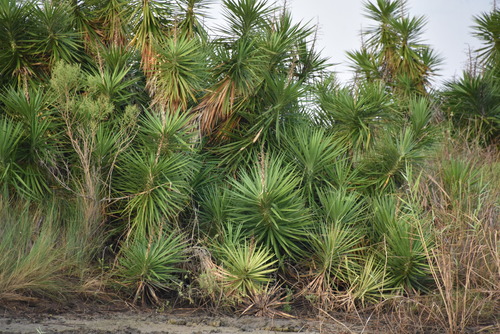
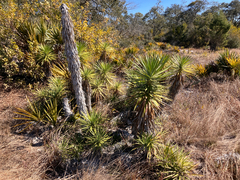
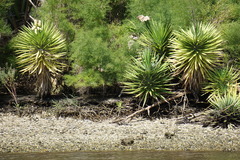
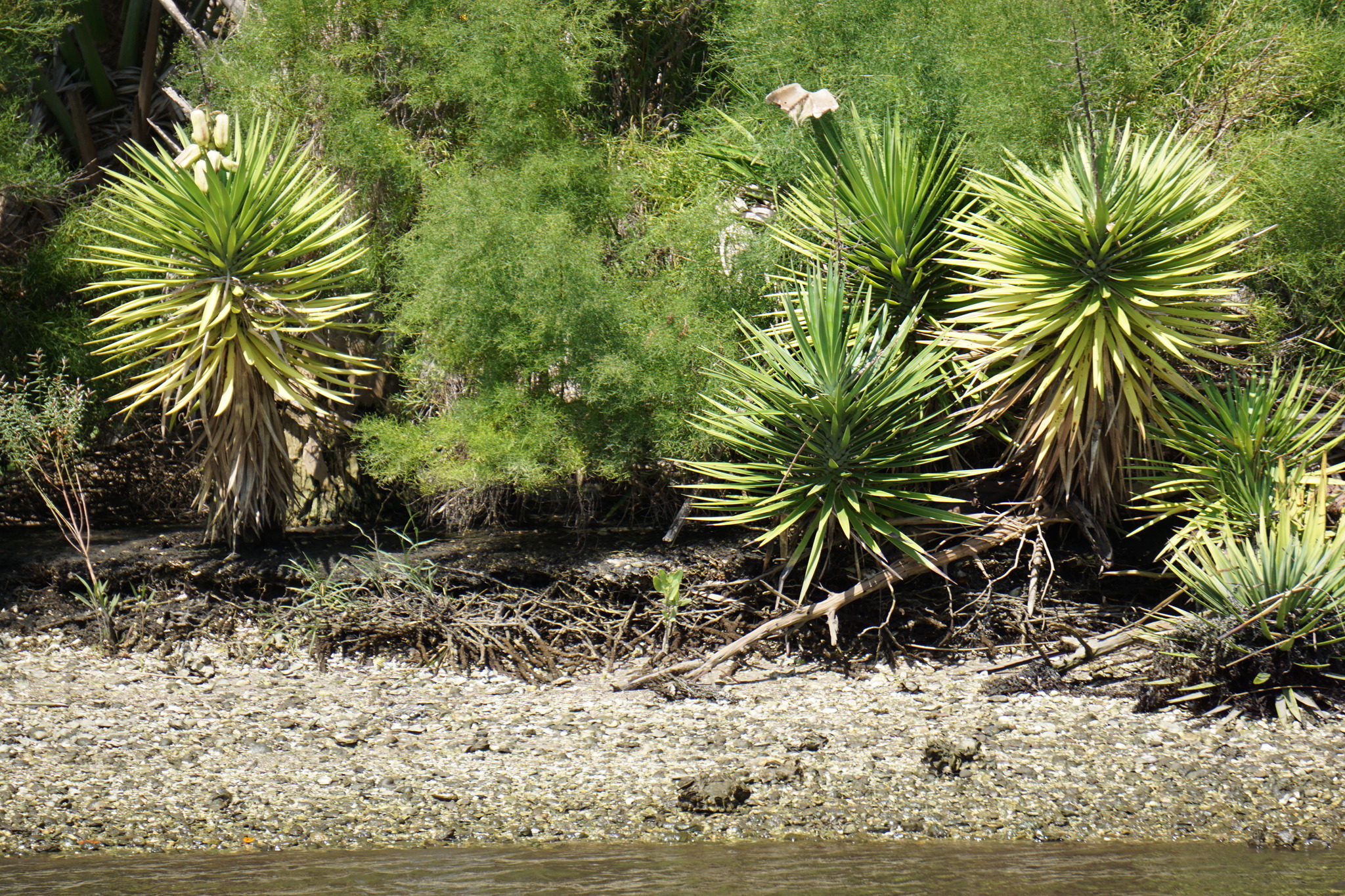
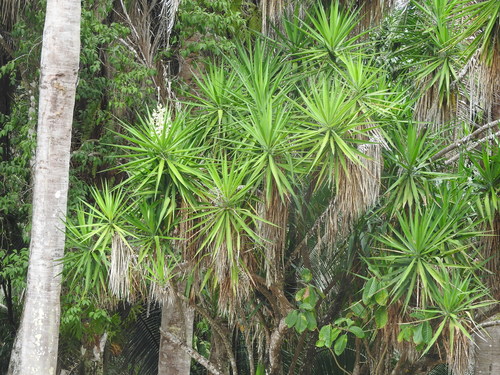
Aloe yucca (Yucca aloifolia) has stiff, finely toothed leaves ending in sharp points. This evergreen shrub in the Asparagaceae family bears rosettes on woody stems that can form a branched clump.
Read moreAloe yucca, Spanish bayonet and Dagger plant
Sarcoyucca aloifolia (L.) Linding., Yucca draconis L. and Yucca serrulata Haw.
Allow a few hours of direct sun per day, preferably morning or evening.
Full sun; partial shade tolerated, with fewer flowers.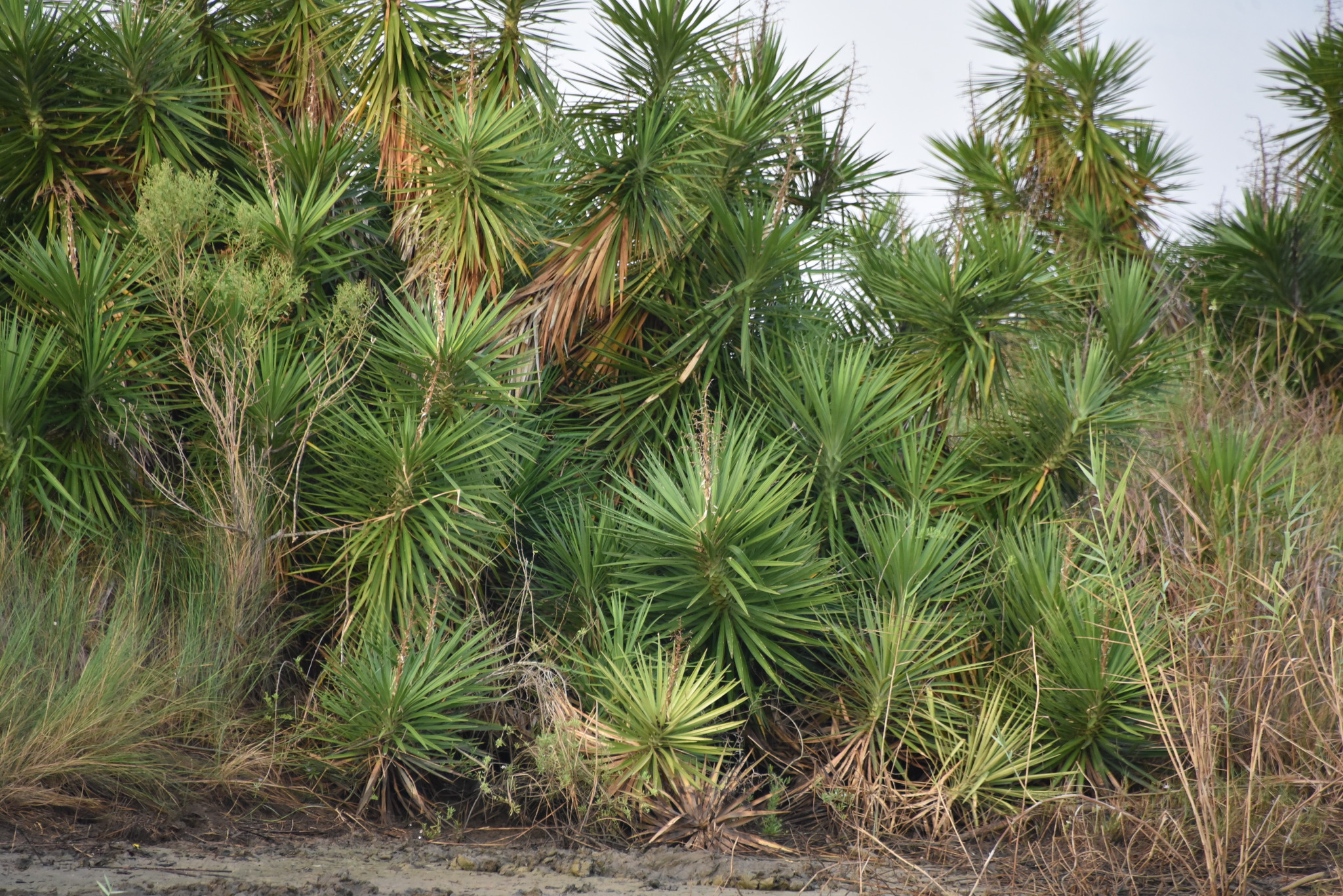



© photo
(c) Cody Stricker, some rights reserved (CC BY), uploaded by Cody Stricker · cc-by
Sterling Herron · cc0
Athena Philips · cc-by
Taken Apr 8, 2020 by De Colli VINCE (cc-by-sa)
Taken May 2, 2020 by Diurka A. (cc-by-sa)
Taken Sep 3, 2013 by selber pflanzen (cc-by-sa)
Taken Oct 29, 2020 by Reyes Ivan (cc-by-sa)
Taken Dec 18, 2021 by Fr Viant (cc-by-sa)
© copyright of the Board of Trustees of the Royal Botanic Gardens, Kew.




Global distribution
Kew recognizes a native range in the southeastern United States, Bermuda, and central and southern Mexico; introduced in several warm regions.
- Native3
- Introduced3
- United States
- Mexico
- Bermuda
- Spain
- Portugal
- Italy
Hexagons: regions where the plant occurs. Green dots: native range.1
Identity
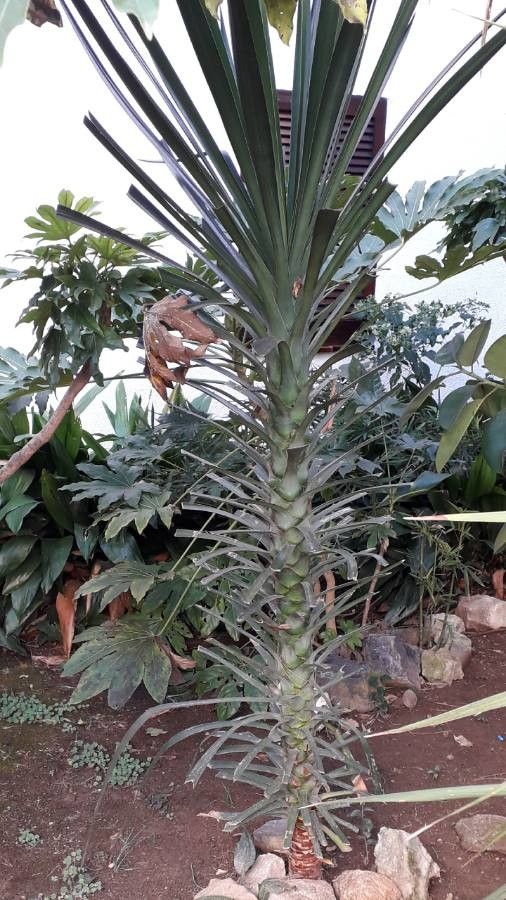
Aloe yucca (Yucca aloifolia L.) has straight, stiff leaves with finely toothed edges. Each leaf ends in a sharp point. This evergreen shrub develops rosettes at the tips of woody stems, which sometimes lean. The University of Florida describes slow growth and clumps with several stems. 9
The botanical inventory of Asson Zoo records a French common name for the species. The epithet aloifolia refers to leaves resembling those of an aloe; this resemblance does not make the plant a member of the genus Aloe. Common-name comparisons and botanical genus membership describe different relationships. 82
Recognition
Dark green leaves form dense rosettes around the stem tips. Their edges bear small teeth, without the whitish threads characteristic of Yucca filamentosa. Old, dry leaves can remain attached below the rosettes. 2 White flowers, sometimes tinged purple or green, hang like bells in a branched panicle partly surrounded by foliage. NParks describes fruits 3.8 to 5 cm long. 6
Dimensions depend on the horticultural setting. The RHS gives 1.5 to 2.5 m in height and 0.5 to 1 m in spread, while NParks records a maximum height reaching 6.1 m in a warm climate. These values describe different conditions, rather than a guaranteed garden size for every plant. 36
Useful taxonomy
Kew accepts the name Yucca aloifolia L., published in Species Plantarum in 1753. Aloe yucca belongs to the Asparagaceae family. Some horticultural publications, including the University of Florida profile, still use the former family name Agavaceae. 19
Kew's synonymy includes Sarcoyucca aloifolia (L.) Linding., Yucca draconis L. and Yucca serrulata Haw. In that reference, these names refer to the same taxon. An old label is therefore insufficient evidence that a plant belongs to a different species. 1
Habitat and range
Kew places the native range of aloe yucca in the southeastern United States, from Texas toward the Atlantic coast, in Bermuda, and in central and southern Mexico. The reference lists introductions in Spain, Portugal and Italy, among other warm regions. 1 Cultivation in France is documented in the Asson inventory; that record does not establish naturalization. 8
On American coasts, the species grows notably in sandy dunes. Its tolerance of drought and salt spray explains its use in coastal gardens. Aloe yucca needs well-drained soil. Full sun favors flowering; in shade, the leaves become smaller and more flexible, and flowers are rare. 2
Life cycle and reproduction
Flowering can occur from spring to late summer, depending on the year. After terminal flowering, the stem concerned stops growing in length and lateral shoots take over. Basal offshoots enlarge the clump, which can also be propagated by division or cuttings. 2
Aloe yucca does not depend on a specialist moth for fruiting in every location. A study published in 2014, on a population in Clarke County, Georgia, showed that the honey bee, Apis mellifera, provided effective pollination during the day. The Georgia experiment does not guarantee fruit production in every garden. Its result applies to the population and setting studied. 10
For yuccas grown in pots, the RHS recommends a balanced liquid fertilizer every fifteen days from April to September, then no feeding in winter, with reduced watering. These seasonal recommendations apply to potted yuccas as a group. In the British context, the species profile recommends overwintering pots under cover. 43
Uses and risks
The rosettes and salt tolerance make aloe yucca an accent shrub for coastal gardens. Its sharp points require careful siting: NC State identifies it as problematic near children. 92 The RHS notes a risk of skin allergy and recommends gloves when handling the plant. 3
The ASPCA classifies Yucca among plants toxic to cats, dogs and horses. Saponins can cause vomiting in cats and dogs; liver damage and dermatitis are reported in horses. The high risk reflects the liver damage documented for the genus, without assigning identical effects to every animal. Contact a veterinarian after suspected ingestion by an animal. 5
Varieties, look-alikes and related plants
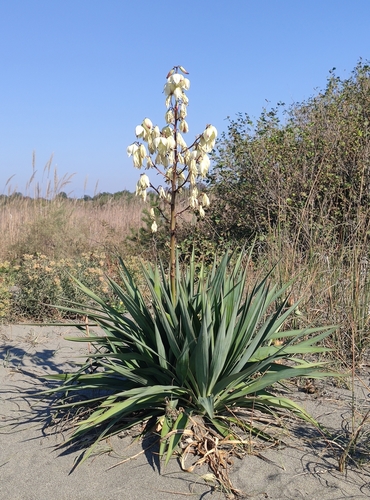
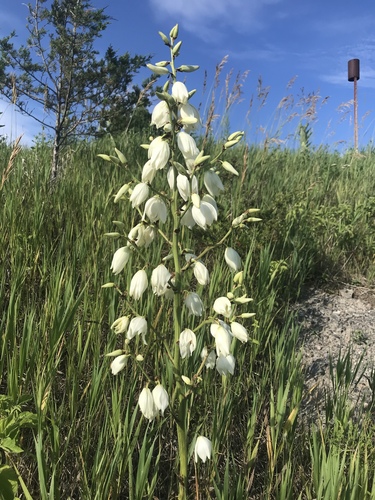
The toothed leaf edge distinguishes aloe yucca from Yucca gloriosa, whose leaf margins are smooth and whose outer leaf portions curve toward the ground. Aloe yucca leaves remain straighter. 9 By contrast, Yucca filamentosa has marginal threads and usually lacks a visible trunk. The edge and posture of the leaves provide useful features for comparing these species. 4
The RHS treats 'Variegata' as a horticultural synonym of 'Marginata,' with leaves edged in pale green and then cream. The University of Florida also describes 'Tricolor,' with green and white leaves. These variegated patterns concern cultivars, rather than the ordinary foliage of the species. They should retain that horticultural scope when used for identification. 79
Main sources
Kew provides the taxonomic reference; the study by Rentsch and Leebens-Mack documents pollination in the field. 110
- Kew, Plants of the World Online : Yucca aloifolia
- NC State Extension : Yucca aloifolia
- Royal Horticultural Society : Yucca aloifolia
- Royal Horticultural Society: growing yuccas
- ASPCA: toxicity of the genus Yucca
- NParks, Flora & Fauna Web : Yucca aloifolia
- Royal Horticultural Society : Yucca aloifolia ‘Marginata’
- Asson Zoo: botanical inventory
- University of Florida, IFAS: Yucca aloifolia, FPS-614
- Rentsch and Leebens-Mack, 2014: pollination of Yucca aloifolia
Frequently asked questions
How can I recognize aloe yucca?
Its stiff leaves have a sharp terminal point and finely toothed edges, without the marginal threads of Yucca filamentosa.
Does this yucca tolerate salt spray?
North American horticultural descriptions report high tolerance of salt and drought, provided the soil is well drained.
Is aloe yucca dangerous to cats?
Yes. The ASPCA classifies the genus Yucca as toxic to cats and reports vomiting linked to saponins after ingestion.
Is a specialist moth needed for fruit production?
Not in every population: a study in Georgia demonstrated effective pollination of Yucca aloifolia by the honey bee.
Similar plants
If you are unsure about a plant’s toxicity, ask a botanist or veterinarian for advice.