
Tree-of-heaven (Ailanthus altissima, )

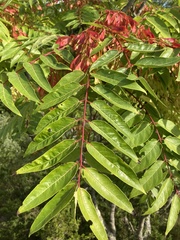
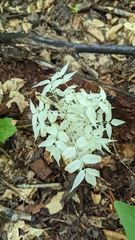
Tree-of-heaven (Ailanthus altissima) is a very fast-growing deciduous tree in the Simaroubaceae, native to northern and central China, Taiwan and northern Korea. Introduced to Europe in 1743 as a horticultural curiosity, it now colonizes waste ground, railways and urban sites. Since 2019 it has been listed as an invasive alien species of Union concern in the European Union.
Read moreTree-of-heaven, Ailanthus, Ailanthus tree and Chinese sumac
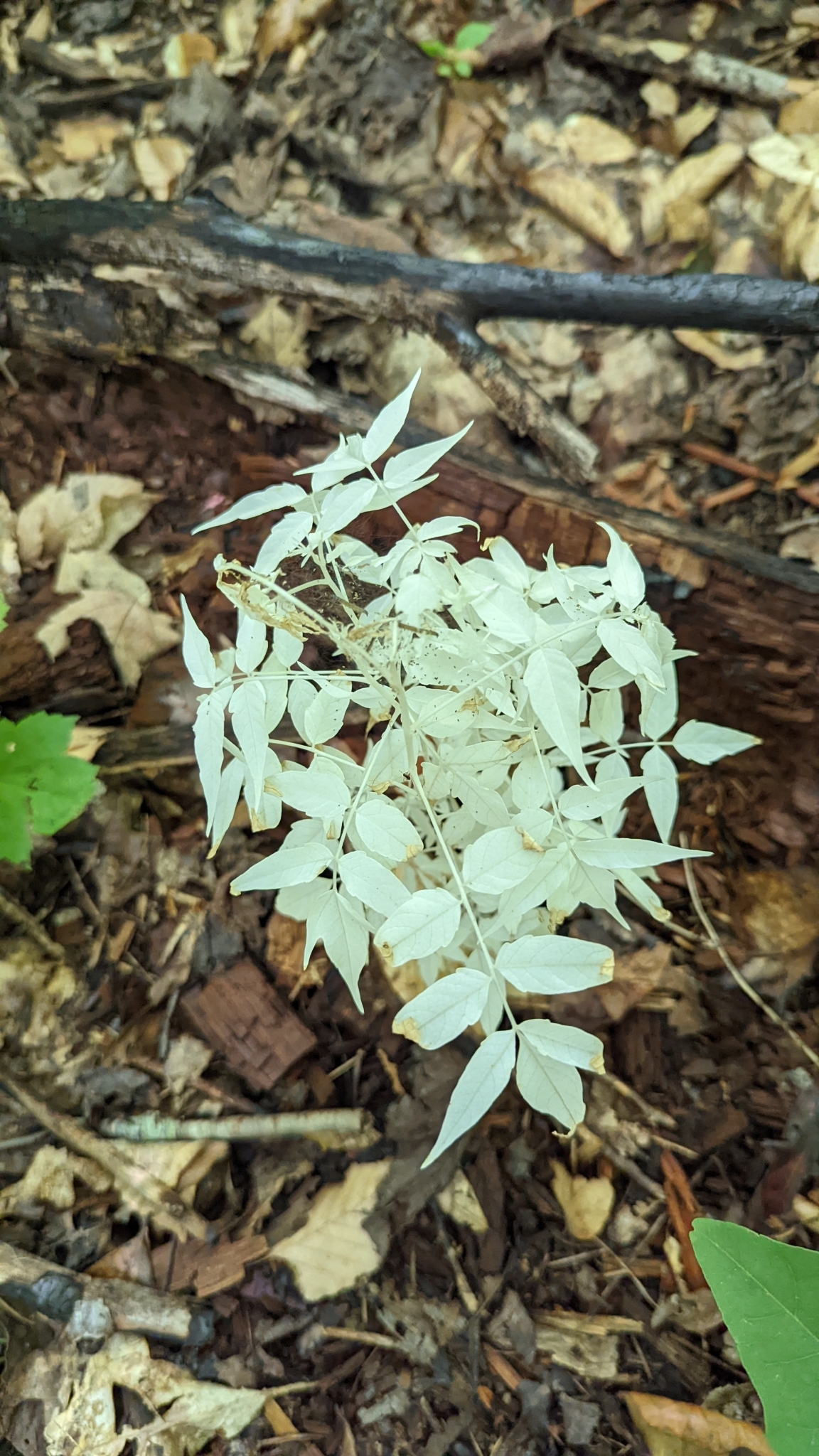


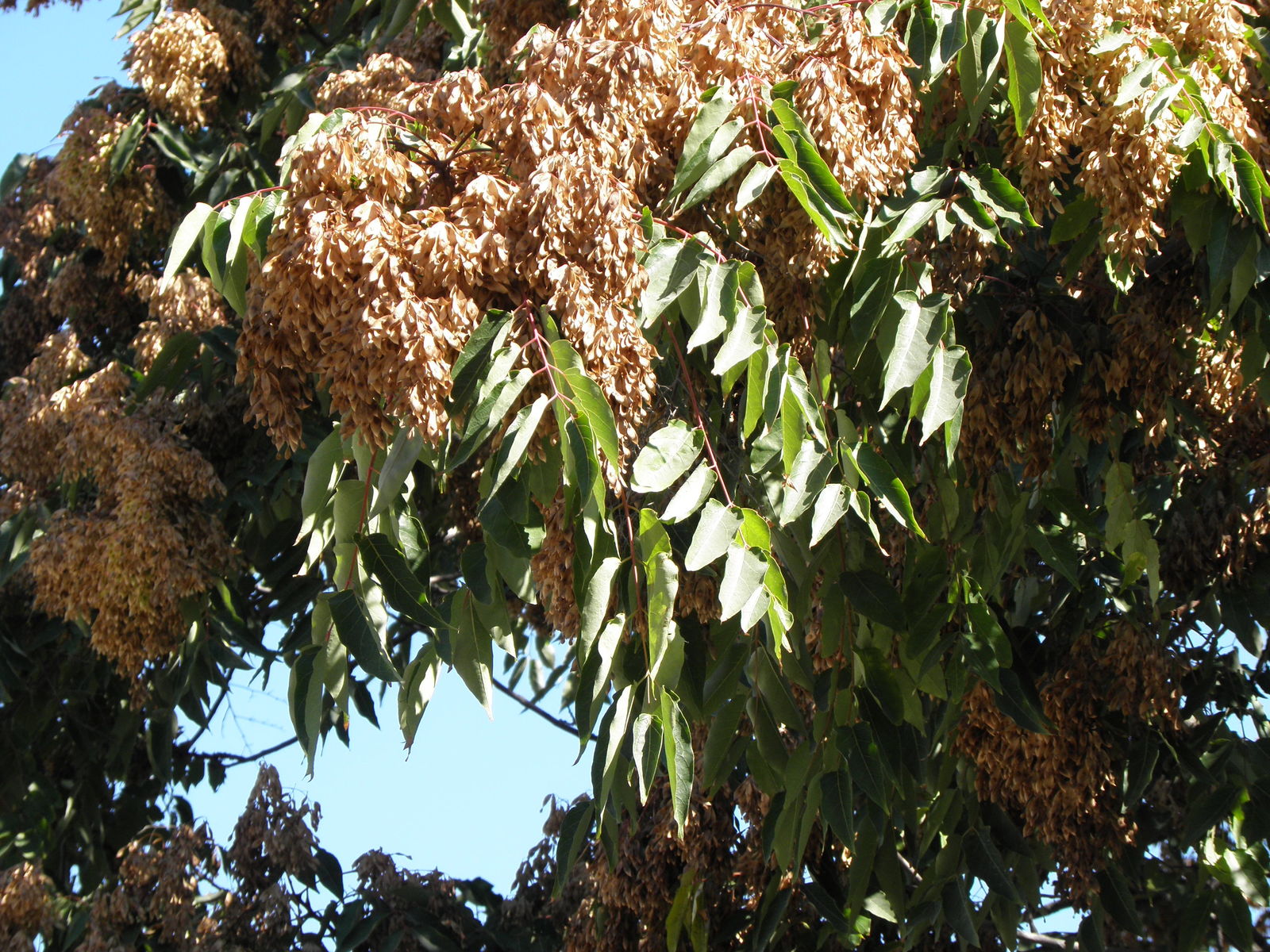
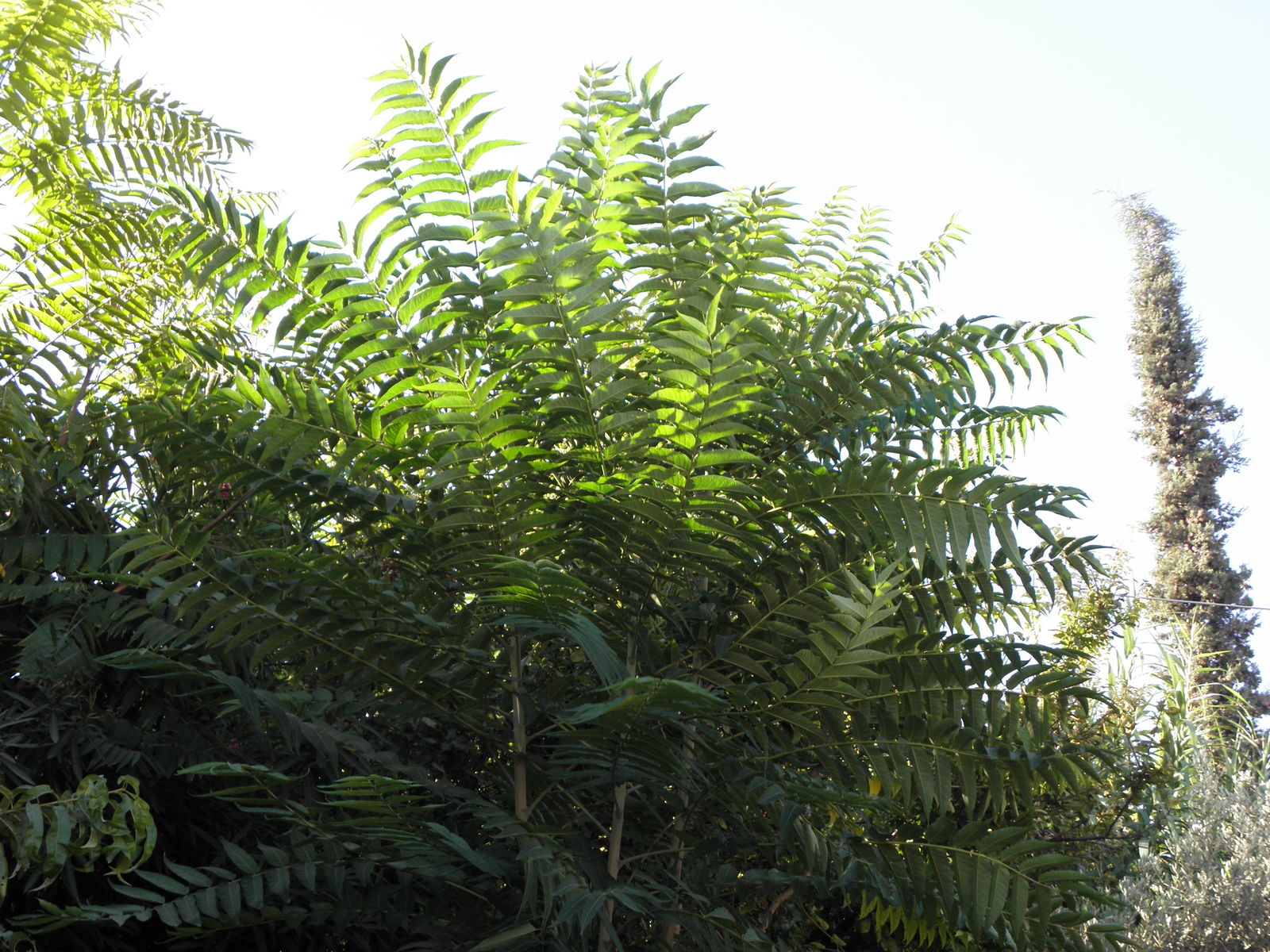
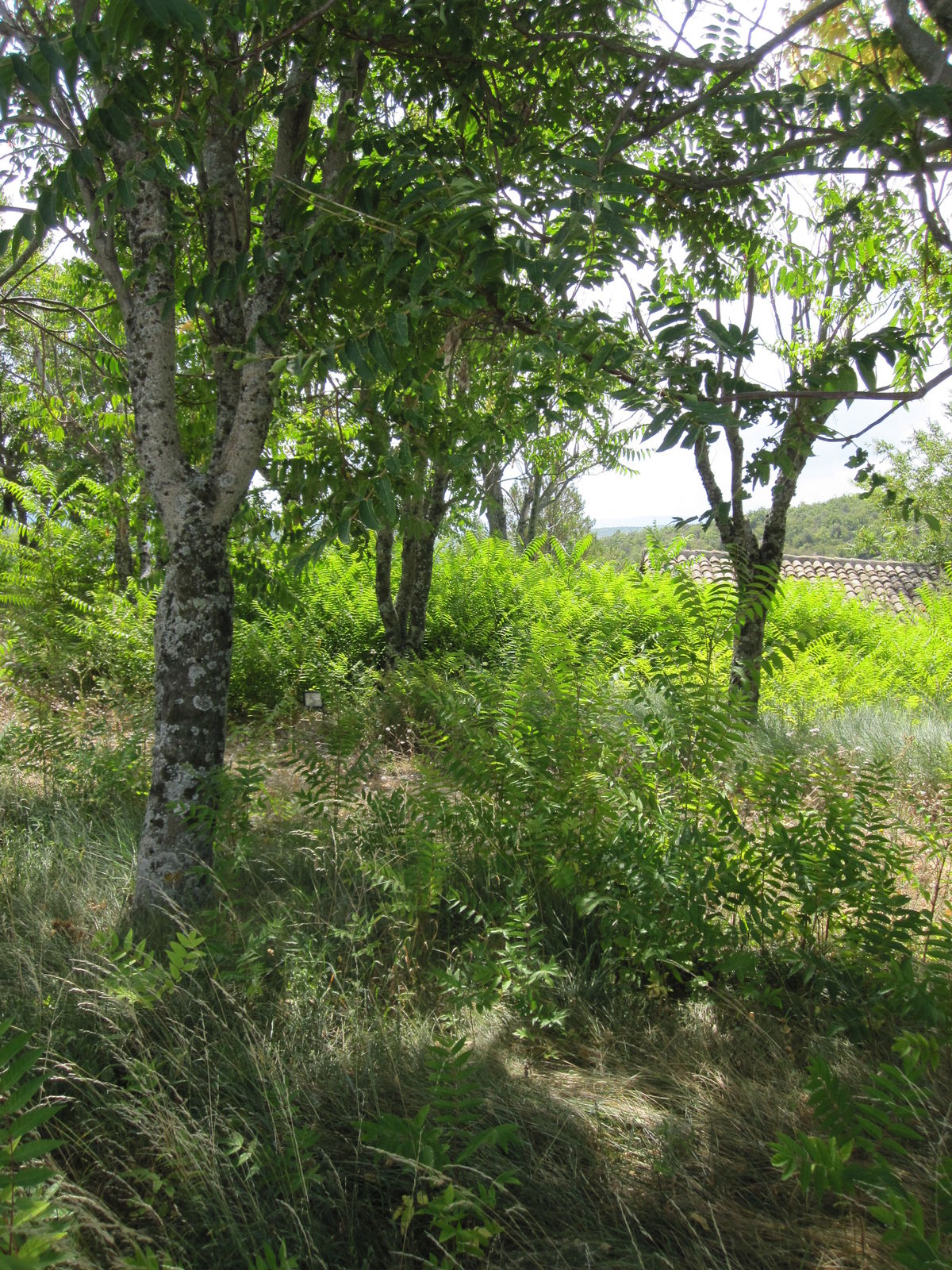
© photo
Daniel Atha · cc0
Chris Merck · cc0
John Abrams · cc-by
Taken Jul 27, 2014 by Tela Botanica − Juliette Martin (cc-by-sa)
Taken Jul 23, 2014 by Tela Botanica − Alice MORALES (cc-by-sa)
Taken Oct 16, 2014 by Tela Botanica − Jérôme Berson (cc-by-sa)
Taken Sep 9, 2020 by Silvana Matuschek (cc-by-sa)
Taken Aug 11, 2021 by Anne Trautmann (cc-by-sa)
© copyright of the Board of Trustees of the Royal Botanic Gardens, Kew.






Global distribution
The native range of Ailanthus altissima is limited to northern and central China, Taiwan and northern Korea. Introduced to Europe in 1743 and widely planted as an ornamental in the 19th century, it has since naturalized on almost every continent. It is now considered among the most invasive plants in North America, Australia, New Zealand and several southern and eastern European countries, including France.
- Native3
- Invasive7
- China
- Taiwan
- North Korea
- Mainland France
- United Kingdom
- Germany
- Hungary
- United States
- Australia
- New Zealand
Hexagons: regions where the plant occurs. Green dots: native range.1
Identity
Tree-of-heaven (Ailanthus altissima (Mill.) Swingle, 1916), also called ailanthus or ailanthus tree, is a very fast-growing deciduous member of the Simaroubaceae. It originates in temperate forests of northern and central China, Taiwan and northern Korea, unlike other Ailanthus species confined to the tropics. Its temperate origin helps explain why it has established far beyond its original Asian range. 1 5
The Latin epithet altissima means “tallest” and refers to the height, up to 27 m (89 ft), reached within a few decades. The French names frêne puant and faux vernis du Japon refer respectively to its unpleasant smell when crushed and an old horticultural confusion with the true varnish tree, Toxicodendron vernicifluum. Seeds of the two trees traveled together to Europe in the 18th century, contributing to the confusion. These French names describe that history rather than serving as English identification names. 6
Recognition
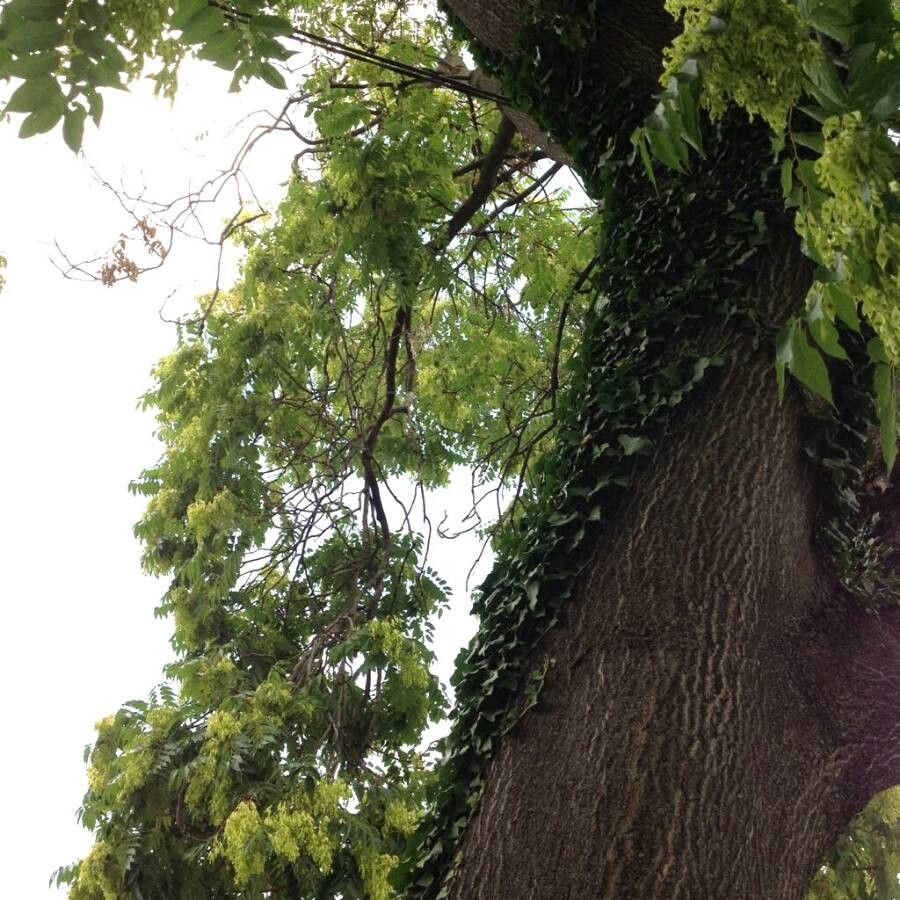
Mature tree-of-heaven commonly reaches 17–27 m (56–89 ft) tall, with a trunk around 1 m (3.3 ft) in diameter. Smooth pale gray bark develops shallow fissures with age. Stout reddish twigs bear lenticels and broad heart-shaped leaf scars, useful features when the tree has shed its leaves. 6 2
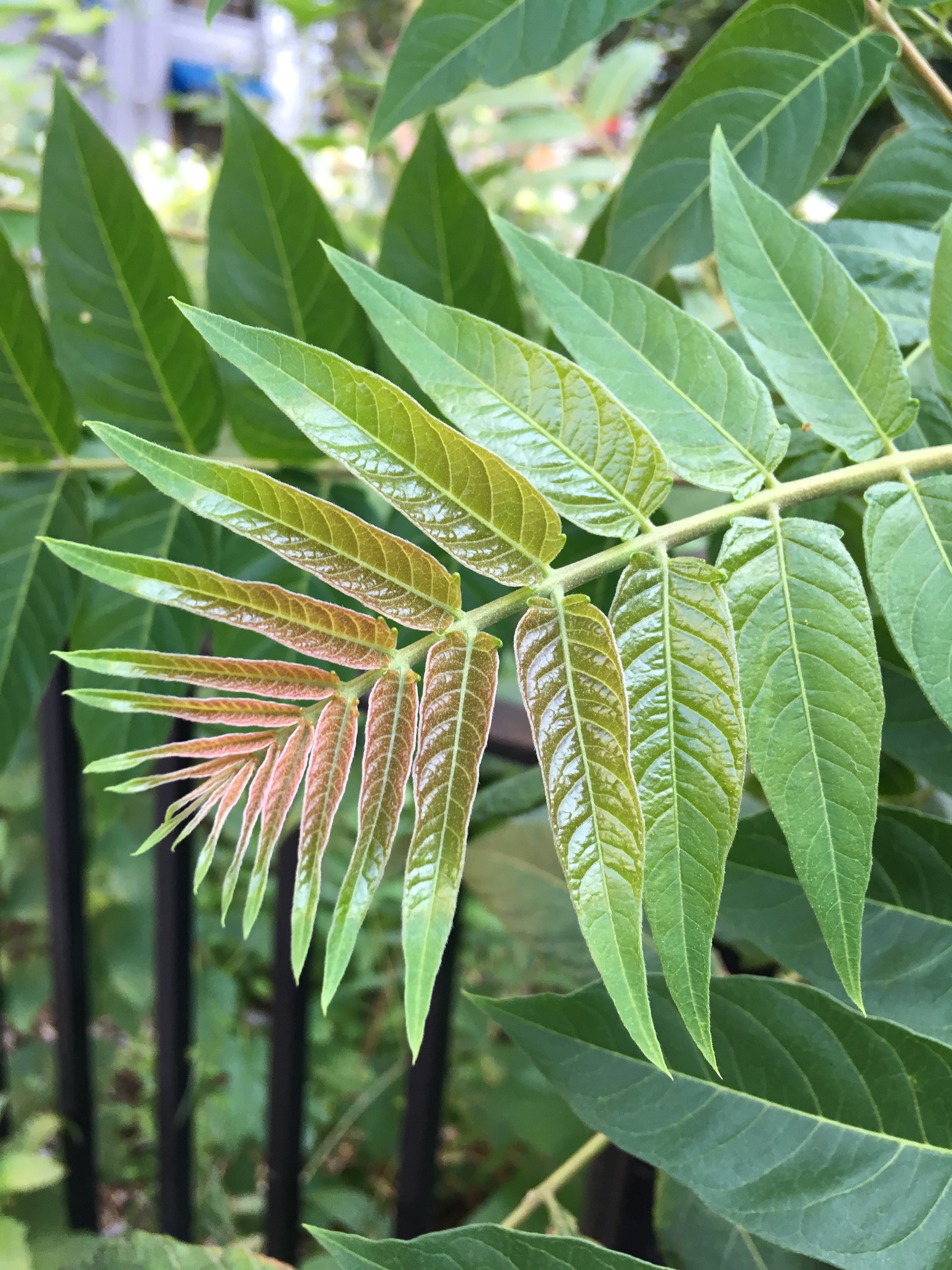
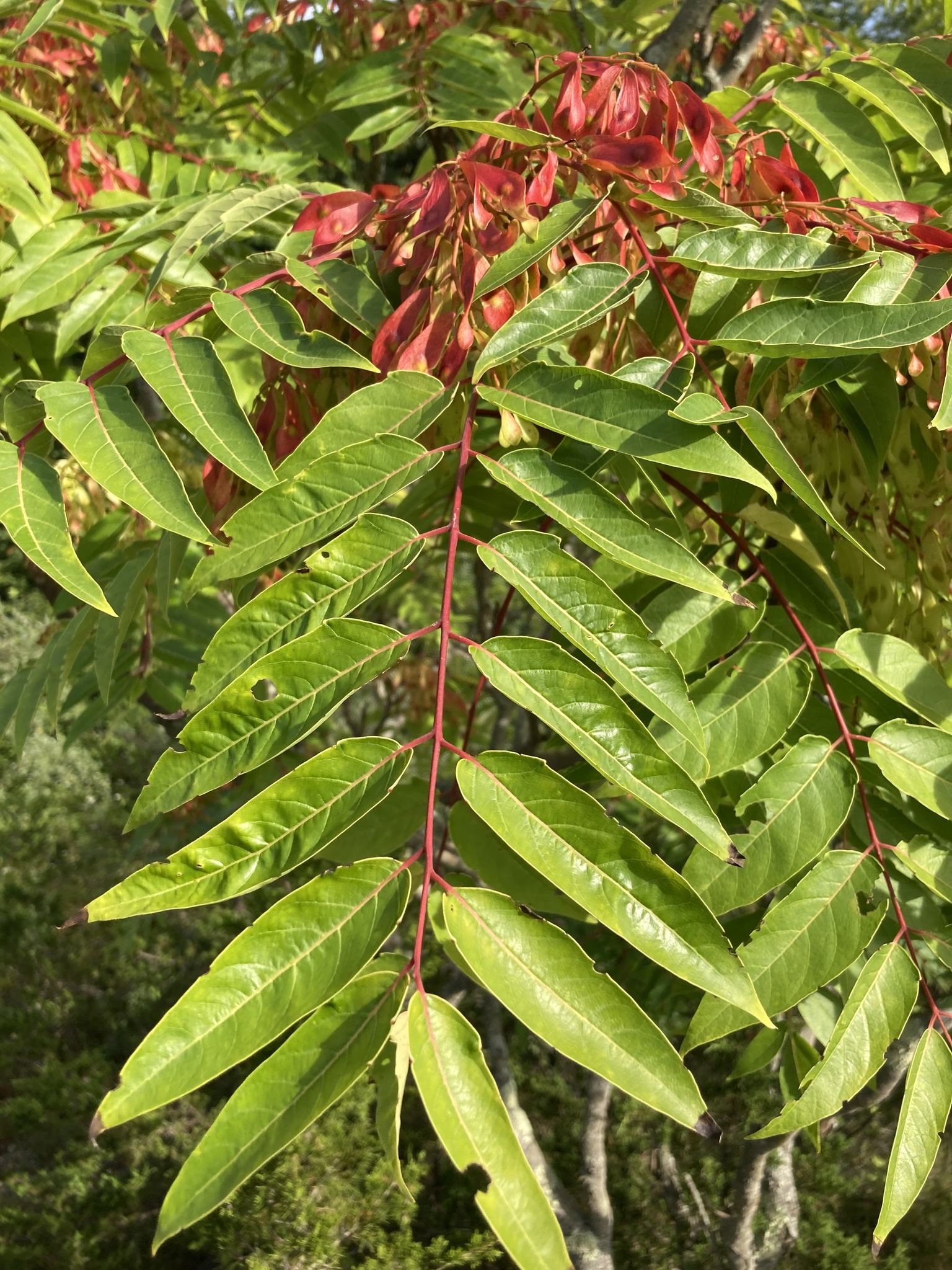
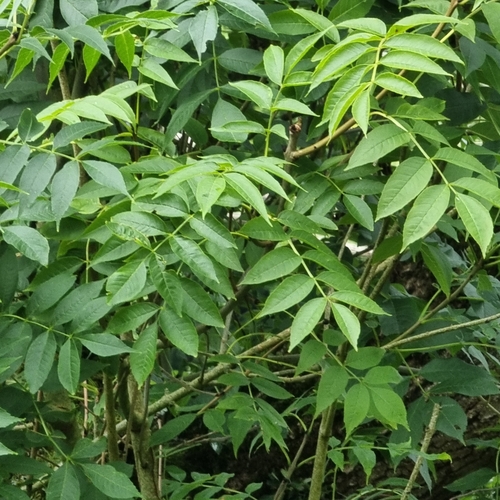
Compound, odd-pinnate leaves measure 30–90 cm (12–35 in) and carry 11–41 lance-shaped leaflets arranged in pairs. Each leaflet has two to four teeth at its base, each with a gland. This basal pattern differs from the regularly toothed leaflet margins of sumacs. Crushed parts release a strong odor often compared with rotten peanuts or cashews. 6 4
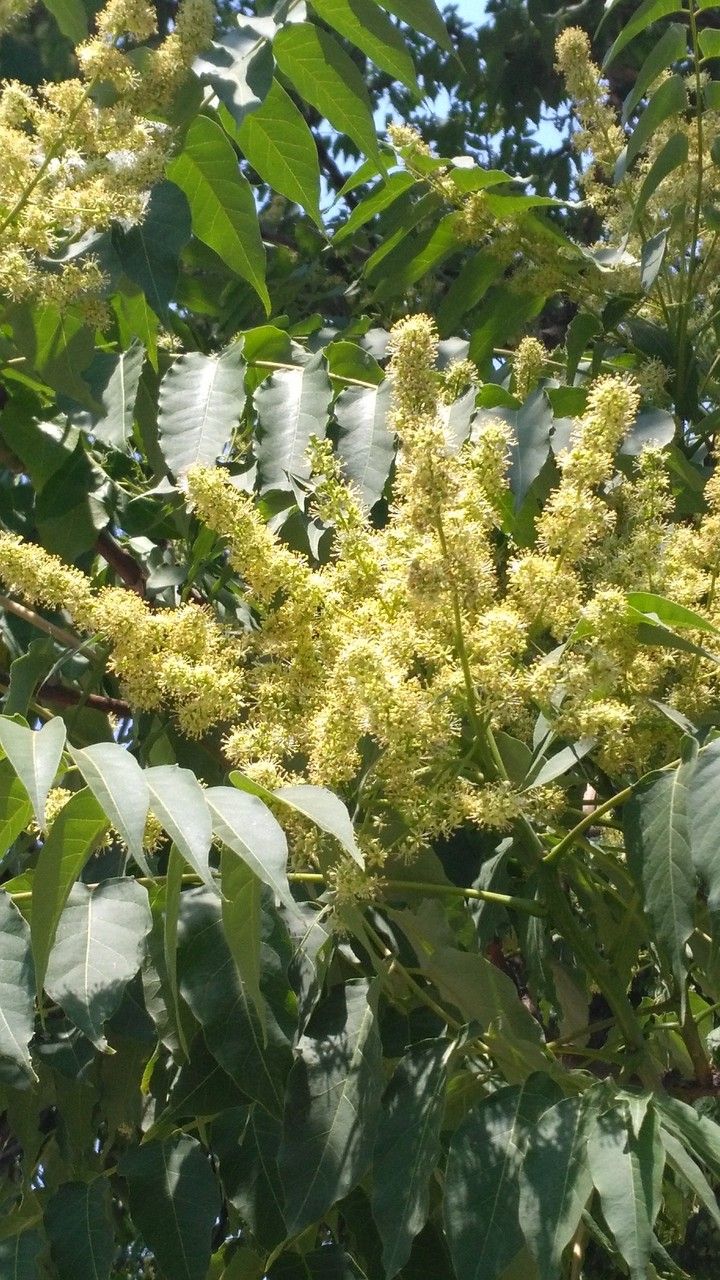
Separate trees bear male and female flowers: the species is dioecious. Small yellowish green to reddish flowers form panicles up to 50 cm (20 in) long at the ends of young shoots. Male trees produce three to four times as many flowers as females, but also a stronger smell during flowering. 6
Useful taxonomy
Confusion accompanied the scientific naming of this tree from its arrival in Europe. The Jesuit missionary Pierre Nicolas Le Chéron d’Incarville sent it from Beijing to Paris in 1743. Three European botanists described it under three different names before René Desfontaines examined its winged fruits in 1788 and placed it in Ailanthus as Ailanthus glandulosa. In 1916, Walter T. Swingle established the current combination, Ailanthus altissima, transferring into Desfontaines’s genus the species Philip Miller had described in 1768 as Toxicodendron altissimum Mill. 1 6
Alongside the typical variety are Ailanthus altissima var. sutchuenensis (Dode) Rehder & E.H.Wilson, native to China and Vietnam, and Ailanthus altissima var. tanakae (Hayata) Kaneh. & Sasaki, endemic to the northern Taiwanese highlands. The IUCN classifies var. tanakae as endangered because construction threatens its upland habitat. Its situation differs sharply from that of the species spreading unchecked in many other regions. 1
Habitat and range
Within its native area, tree-of-heaven grows from lowlands into uplands on soils rich in bases and nitrogen. It favors forest gaps and sites disturbed by storms or defoliating insects. This is the behavior of a pioneer species: newly exposed soil gives it opportunities to establish before a closed plant community develops. 6 5
European introduction began in 1743, followed by widespread ornamental planting in the 19th century and naturalization on almost every continent. The tree tolerates drought, soil pH as low as 4.1, air pollution and sulfur dioxide fumes. These tolerances help explain its urban abundance: a German study recorded it in 92% of densely built Berlin areas, compared with only 3% outside the city. 6 3
European Union rules have listed Ailanthus altissima as an invasive alien species of Union concern since 2019, prohibiting intentional planting, transport and sale in member states. This is an EU regulatory context; requirements elsewhere depend on the jurisdiction. In France, established populations occur in Fontainebleau forest, the Landes and along the Mediterranean coast. 8
Life cycle and reproduction
Spring flowering begins earlier in the warmer southern part of the range and continues into summer farther north. After pollination, female trees produce oval seeds enclosed in brown or reddish samaras, winged fruits about 2.5 cm (1 in) long. A twist at the tip helps them travel on the wind. A single tree can produce several hundred thousand in one growing season. 6
Few temperate trees grow faster: young trees can gain 1–2 m (3.3–6.6 ft) each year during their first four years. Individual trunks are relatively short-lived, rarely surviving beyond 50 years, yet the plant persists through exceptional root suckering. Cutting a trunk promptly stimulates vigorous regrowth from roots that remain intact, so felling alone does not eliminate an established plant. 6
Uses and risks
Rearing the ailanthus silkmoth, whose cocoon supplies a coarse but strong silk, was practiced in China before introduction to Europe in 1856, notably in the Rhône valley and the Cévennes. Bark and roots also remain in use as astringents in traditional Chinese medicine. These uses form part of the species’ history alongside its former popularity as an ornamental tree. 6 9
The allelopathic compound ailanthone, concentrated in bark and roots, inhibits the germination and growth of many other plants. This mechanism partly explains the formation of dense stands in which few other species survive, adding chemical interference to the tree’s rapid growth and strong vegetative spread. 6
Ingestion toxicity is considered low and remains poorly documented in people. However, the sap contains an irritating quinone and compounds related to ailanthone that may cause contact dermatitis, reported after repeated exposure. The RHS also identifies the plant as a skin irritant for dogs. Low ingestion toxicity therefore does not imply that handling sap or crushed foliage is harmless. 6 2
Varieties, look-alikes and related plants
Selections rarely encountered outside China include Erythrocarpa, with bright red samaras, and Hongye, with red spring leaves. Pendulifolia has unusually long, drooping leaves and is mostly a collectors’ form. Metro is a male selection with a narrower crown, presented as somewhat less invasive than the wild type. Such descriptions do not alter applicable invasive-species regulations.
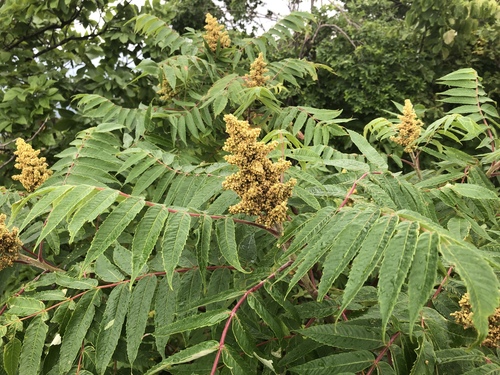
Young staghorn sumac (Rhus typhina) most often causes confusion because its foliage looks similar. Its leaflets are clearly toothed along the full margin, whereas tree-of-heaven has only a few glandular teeth at the base. Mature sumac rarely exceeds 5 m (16 ft), while tree-of-heaven can exceed 20 m (66 ft). The leaflet margin is therefore a more useful clue than the general feathery appearance. 7
Other possible look-alikes include Toona sinensis, Toxicodendron vernicifluum, young walnuts such as Juglans nigra, and Fraxinus excelsior. The last has black buds and odd-pinnate leaves with no more than six pairs of leaflets. Checking the scientific identity together with the characteristic odor of crushed foliage helps resolve these similarities. 7 4
Main sources
- Plants of the World Online / Kew, Ailanthus altissima (Mill.) Swingle
- Royal Horticultural Society, Ailanthus altissima - tree of heaven
- Missouri Botanical Garden, Ailanthus altissima
- NC State Extension, Ailanthus altissima (Tree of Heaven)
- INPN / MNHN, Ailanthus altissima (Mill.) Swingle, 1916 (cd_nom 80824)
- Collin & Dumas, 2009, What do we know about tree-of-heaven (Ailanthus altissima)?, Revue forestière française
- Info Flora Switzerland, Tree-of-heaven - Ailanthus altissima
- Commission Implementing Regulation (EU) 2019/1262, update of the Union list of invasive alien species
- Plants For A Future, Ailanthus altissima
Frequently asked questions
Is tree-of-heaven really invasive?
Yes. Since 2019, Ailanthus altissima has been on the list of invasive alien species of Union concern, restricting its planting, transport and sale across EU member states. In France it is well established in Fontainebleau forest, the Landes and along the Mediterranean coast.
Is tree-of-heaven toxic?
Its toxicity after ingestion is low and poorly documented in people. Sap and crushed foliage can cause contact dermatitis, reported after repeated exposure, and the strong foliage odor may cause nausea.
How can I distinguish tree-of-heaven from staghorn sumac?
The leaflet margins of staghorn sumac (Rhus typhina) are toothed, while those of tree-of-heaven are smooth apart from a few glandular teeth at the base. Mature sumac rarely exceeds 5 m (16 ft), compared with over 20 m (66 ft) for tree-of-heaven, and their fruits differ clearly.
Why does tree-of-heaven smell unpleasant?
Crushed parts release an odor compared to rotten peanuts or cashews. Male flowers smell particularly strong and attract more pollinating insects. Female trees produce less floral odor, although this does not remove invasive-species restrictions.
Will cutting down tree-of-heaven get rid of it?
No. Cutting alone stimulates vigorous suckering from intact roots. Effective control generally combines pulling young seedlings with herbicide treatment during active summer growth, subject to local rules.
Where does the name Ailanthus come from?
It derives from ailanto, a word from the language of Ambon meaning a tree that reaches toward the sky. René Desfontaines adopted it in 1788 to describe the rapid upright growth, before Walter T. Swingle established the combination Ailanthus altissima in 1916.
Does tree-of-heaven have recognized uses?
In China it hosts the ailanthus silkmoth, whose cocoons supply a strong silk; its bark and roots are also used in traditional Chinese medicine. Western uses are chiefly historical, including its planting as a street tree in the 19th century.
Similar plants
If you are unsure about a plant’s toxicity, ask a botanist or veterinarian for advice.