
Wild garlic (Allium ursinum, )
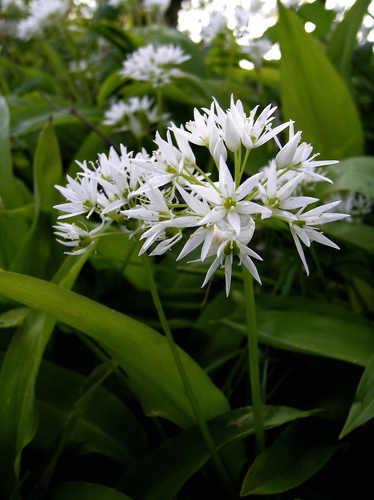
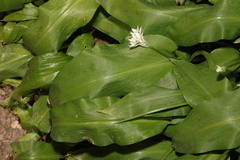
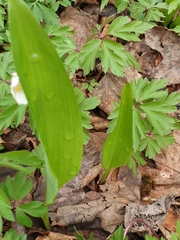
Wild garlic (Allium ursinum L.) is a bulbous woodland perennial in the Amaryllidaceae, native from western and central Europe to the Caucasus. Its spring leaves smell of garlic, but this edible plant must never be gathered or eaten without certain identification: it can be confused with autumn crocus, lily-of-the-valley and lords-and-ladies.
Read moreWild garlic, ramsons, Bear garlic and Wood garlic
Place in indirect light or in a shaded room.
Partial shade, light shade or cool sun
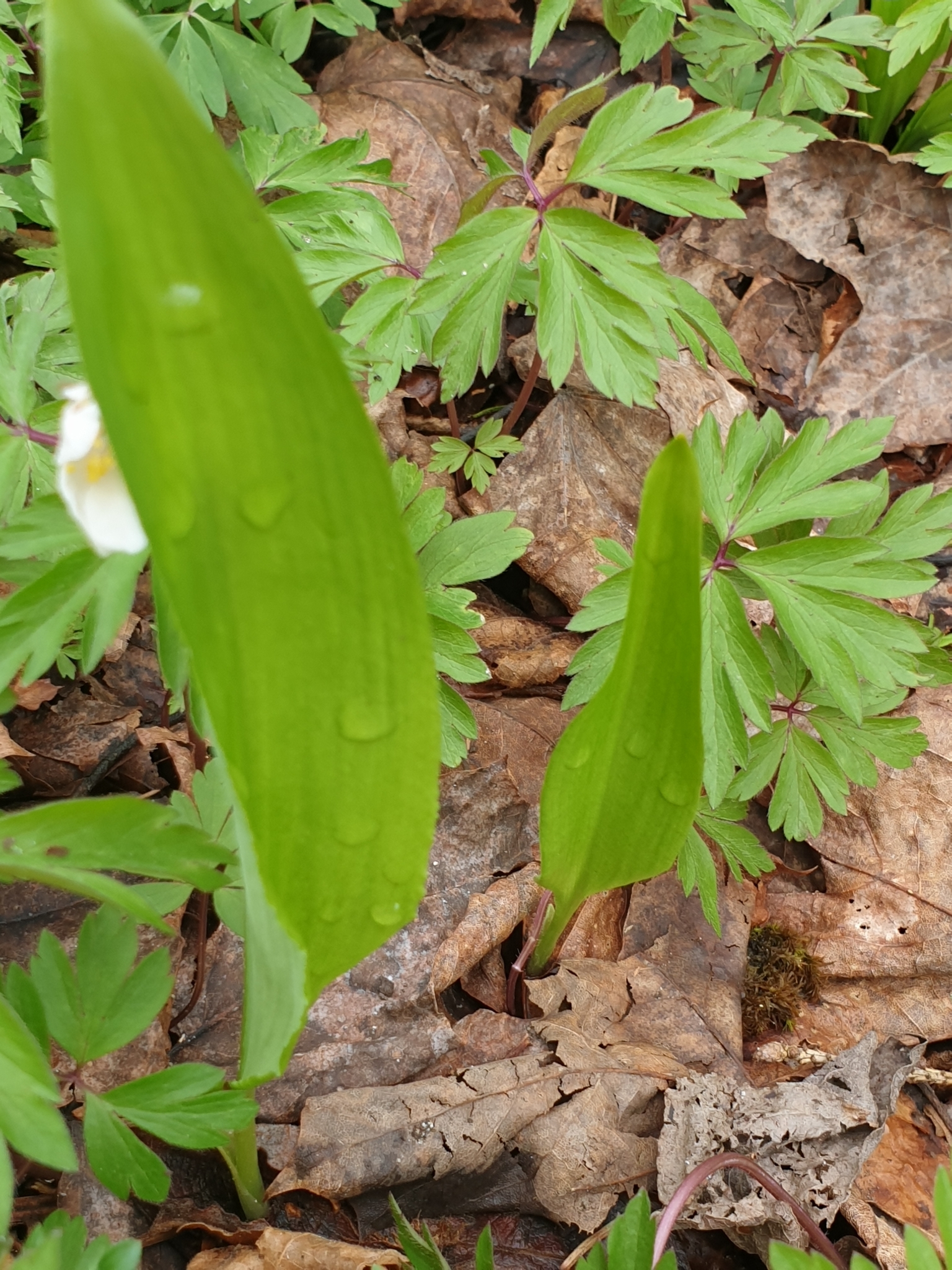


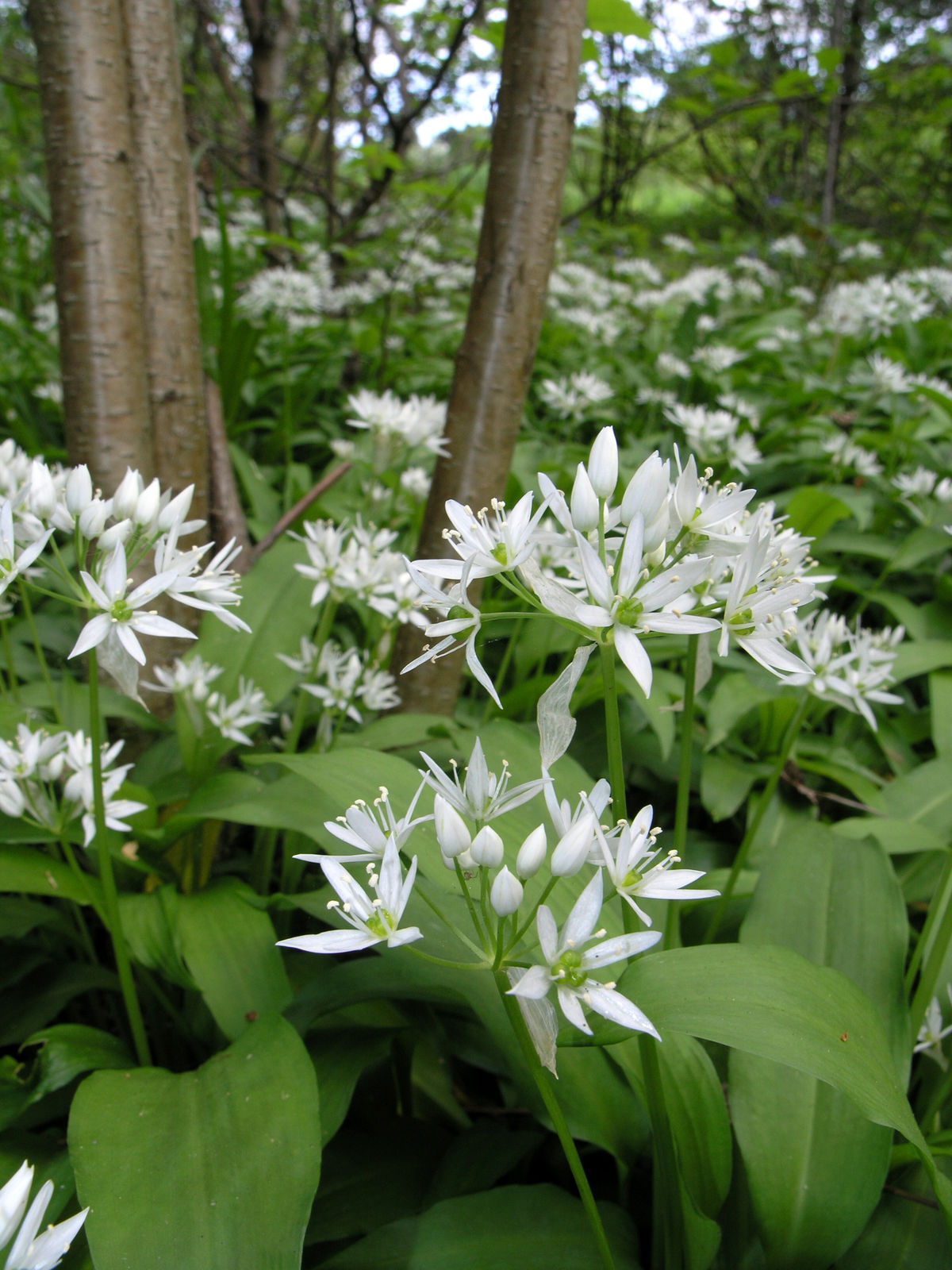
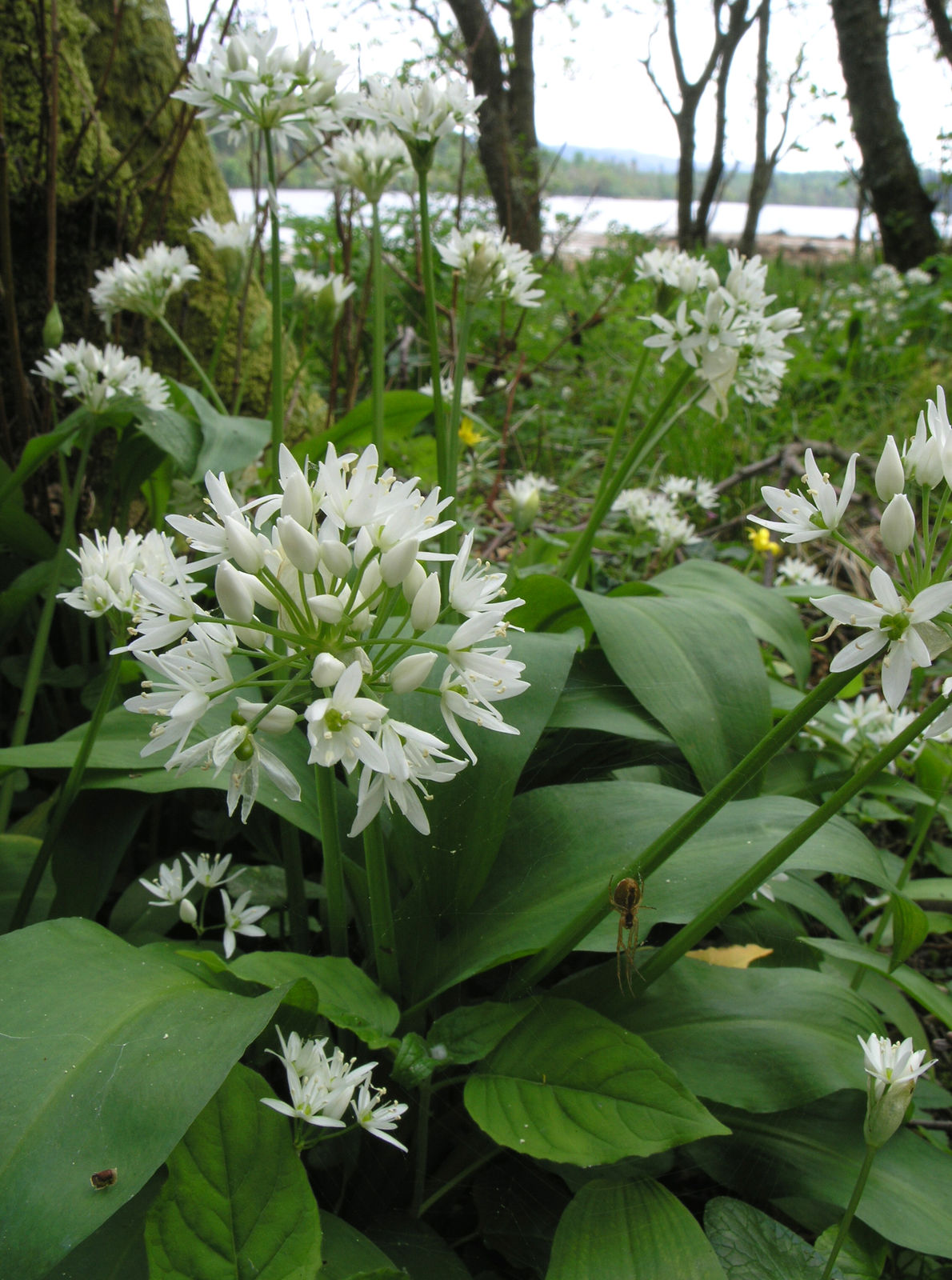
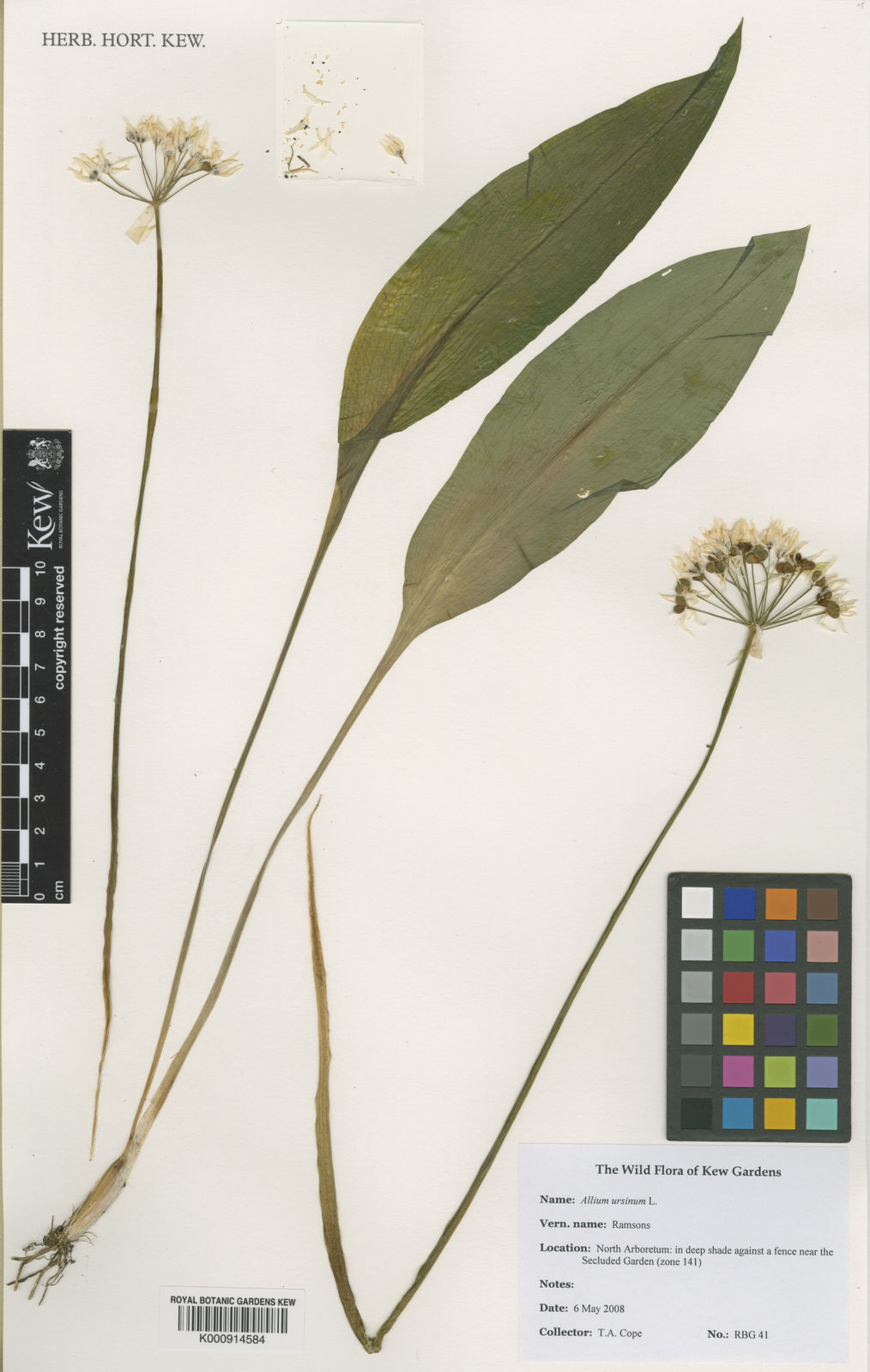
© photo
(c) Ulrika, some rights reserved (CC BY) · cc-by
Stephen James McWilliam · cc0
Thomas Hirsch · cc0
Taken Apr 15, 2022 by Gaël Covain (cc-by-sa)
Taken May 6, 2021 by Tristan Menut (cc-by-sa)
Taken Apr 27, 2019 by De Pascale De Pascale (cc-by-sa)
Taken Apr 19, 2022 by Gaël Covain (cc-by-sa)
Taken Apr 27, 2019 by Denis Bastianelli (cc-by-sa)
© copyright of the Board of Trustees of the Royal Botanic Gardens, Kew.




Global distribution
POWO/WCVP gives a native range from western and central Europe to the Caucasus. French records confirm native status in mainland France, where it is fairly common but scarcer in the southwest and around the Mediterranean coast.
- Native6
- Metropolitan France
- Western Europe
- Central Europe
- Corsica
- Caucasus
- European Russia
Hexagons: regions where the plant occurs. Green dots: native range.1
Identity
Wild garlic (Allium ursinum L., 1753) is an accepted species of Allium in the Amaryllidaceae. POWO/WCVP treats it as a bulbous geophyte of the temperate biome, native from western and central Europe to the Caucasus. 1 2
Wild garlic, bear garlic and wood garlic, together with French names such as ail des bois and ail à larges feuilles, evoke a garlic-scented woodland plant visible chiefly in spring. Common names do not make gathering safe: poisonous plants share its habitat and can have similar leaves before flowering. 3 11
Correctly identified Allium ursinum is edible, but it requires particular caution. Anses and poison centers document serious mistakes, especially confusion with autumn crocus. An edible reputation is therefore insufficient grounds for gathering an uncertain plant. 4 10
Recognition
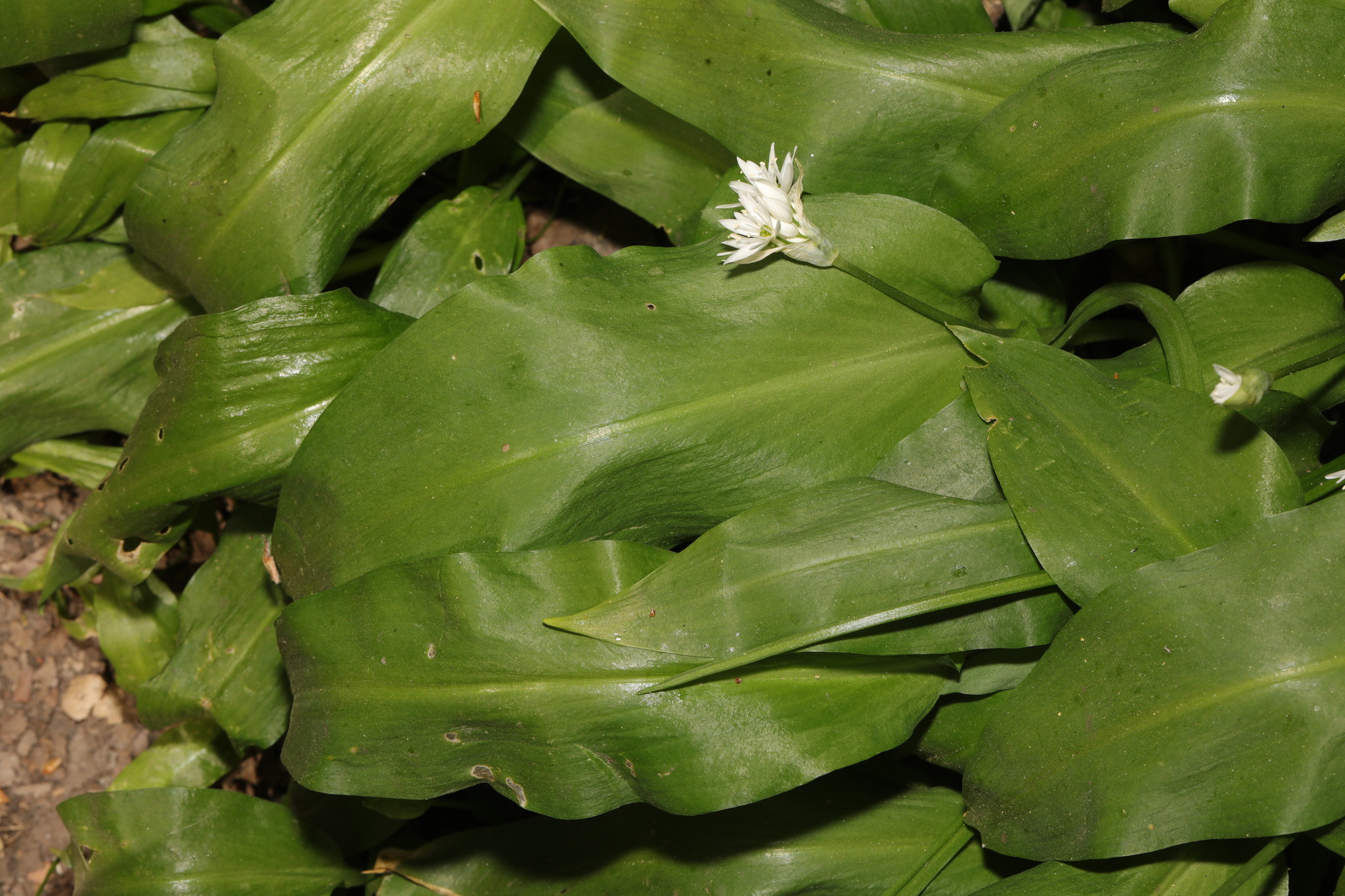
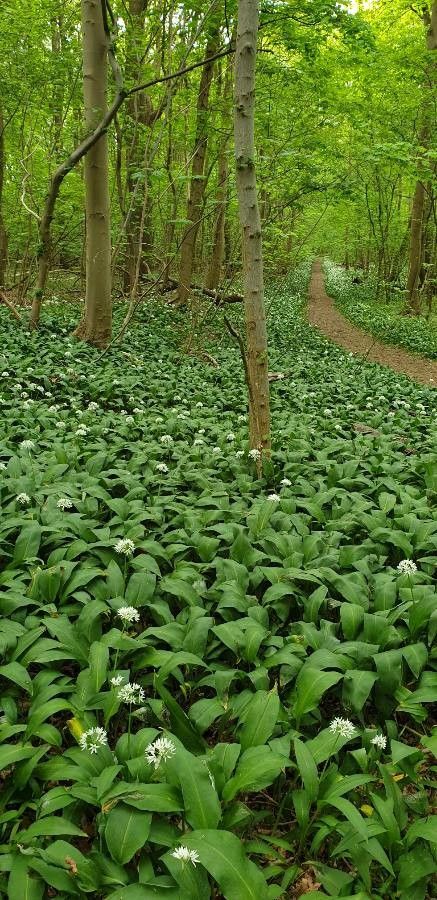
The plant grows from an elongated white bulb, usually producing two oval to lance-shaped basal leaves, each with its own petiole. Crushed tissues smell of garlic. In spring a flowering stem carries an umbel of white, star-shaped flowers, while colonies can form extensive carpets in cool, moist woodland. 4 11
This remains a relatively small plant. Anses gives a mature height of 15–40 cm (6–16 in), while RHS places it in a final-height range of 0.1–0.5 m (4–20 in) with colonies spreading 0.5–1 m (1.6–3.3 ft). Size alone cannot identify it reliably, particularly before flowers appear. 10 4
A garlic smell is useful but not conclusive. The Belgian Poison Centre warns that it can transfer through a mixed gathering. Anses recommends checking every leaf, avoiding handfuls gathered together and not eating any plant whose identity remains uncertain. 11 10
Useful taxonomy
The botanical reference is Allium ursinum L. POWO and WCVP give the same author, publication year and family. Trefle also retains accepted status and records a broad set of French, English and other European common names. 1 2 3
Historical synonyms include Allium ucrainicum, Nectaroscordum ursinum, Ophioscorodon ursinum, Cepa ursina and several names involving latifolium or petiolatum. These are chiefly useful for recognizing the plant in older catalogs and databases, rather than as independent guides to gathering it. 3 6
Allium also includes cultivated garlic, onion, leek, chives and many wild garlics. This relationship explains shared smells and some food uses, as well as the veterinary precaution: alliums can be dangerous to susceptible animals. Human culinary use does not establish animal safety. 12 13
Habitat and range
Western and central Europe to the Caucasus forms the native range given by POWO/WCVP. Trefle lists France among native regions. CBNFC-ORI describes wild garlic as fairly common in France, but scarcer in the southwest and around the Mediterranean coast. 1 3 7
French habitats include cool, damp woods, valley bottoms, river margins and deciduous forests on rich soils. The plant uses spring light before the tree canopy closes, then loses its foliage as the season advances. This woodland cycle explains its brief period of conspicuous growth. 7 9
EUNIS gives Least Concern status in Europe and states that the species is not listed in the European legal instruments covered by its account. That does not confer permission to gather it everywhere. Local site, reserve and property rules still take precedence. 8
Life cycle, cultivation and spread
Allium ursinum is a bulbous perennial whose visible growth concentrates in local spring: leaves, a strong smell, white flowers, then seed and gradual foliage loss. RHS recommends propagation by seed or division and describes a hardy, deciduous plant forming clumps or colonies. 4 5
Cultivation succeeds in conditions resembling woodland: fertile, humus-rich soil that stays moist but drains, with light or partial shade. RHS also accepts full sun if soil moisture remains adequate. A spring foliage carpet beneath deciduous trees remains a useful model where the local climate provides those conditions. 4 7
Wild garlic can spread strongly in gardens. RHS reports rapid expansion by seed and bulbils and advises keeping it out of cultivated areas if that spread becomes a problem. Mainland France assigns no invasive alien status to the species, but substantial garden spread remains possible. 4 8
Edible uses and safety
RHS lists edible leaves, and Anses explicitly describes wild garlic as an edible wild plant. That applies only within strict identification precautions: identify the plant certainly, check each leaf, avoid gathering handfuls indiscriminately and do not eat it if doubt remains. 4 10
Confusion with autumn crocus can cause severe or fatal poisoning. Anses advises contacting a poison center immediately after uncertain ingestion or digestive symptoms. These identification pointers do not replace botanical training, poison-center advice or local gathering rules. 10
Wild garlic remains classified as toxic to cats, dogs and horses. The ASPCA reference concerns cultivated garlic (Allium sativum), while the Merck Veterinary Manual covers Allium toxicosis and Heinz body hemolytic anemia in susceptible species. Do not feed wild garlic to animals. 12 13
Dangerous look-alikes
The three principal dangerous look-alikes are autumn crocus, lily-of-the-valley and lords-and-ladies. The Belgian Poison Centre names all three and warns that their spring leaves can be confused with wild garlic before flowering. 11
Autumn crocus (Colchicum autumnale) presents the greatest danger. Anses describes stiffer, stalkless leaves and a dark, round bulb. Purple flowers appear in autumn, while only leaves are visible in spring. Every part is poisonous. 10
For lily-of-the-valley (Convallaria majalis), the Belgian Poison Centre describes two, sometimes three, rigid leaves on the same stem and a flowering stem that does not rise above them. For lords-and-ladies (Arum maculatum), it describes triangular, bell-shaped leaves reaching 20 cm (8 in). These differences are identification aids, never permission to eat a poorly identified plant. 11
Ecological role and management
Wild garlic belongs to the spring woodland flora and can occur in damp habitats rich in bases and organic matter. The Woodland Trust also describes its early flowers as useful to pollinators and its presence as an indicator of ancient woodland in the United Kingdom. 7 9
The same spreading behavior can be troublesome in gardens. Seed, bulbils and divisions establish dense colonies. Avoid introducing it beside unlabeled plants with similar leaves that might be grown or gathered. A dedicated, monitored, clearly labeled woodland patch separated from poisonous look-alikes offers a more manageable setting. 4 11
Allium ursinum is a well-established botanical species, native in France, useful in naturalistic gardens and edible when identification is certain. Its food value must never obscure the principal hazard: gathering the wrong plant. That caution remains necessary even in an otherwise familiar woodland setting. 1 10
Main sources
- Plants of the World Online / Kew, Allium ursinum L.
- WCVP / Plants of the World Online, Allium ursinum L.
- Trefle, species data, Allium ursinum
- Royal Horticultural Society, Allium ursinum
- Perenual, horticultural traits, Allium ursinum
- Species reference data, Allium ursinum
- CBNFC-ORI, Allium ursinum L., 1753
- EUNIS, Allium ursinum
- Woodland Trust, Wild garlic (Allium ursinum)
- Anses, Beware of confusion between autumn crocus and ramsons
- Belgian Poison Centre, Wild garlic versus lily-of-the-valley, arum and autumn crocus
- Merck Veterinary Manual, Garlic and Onion (Allium spp) Toxicosis in Animals
- ASPCA, Garlic toxicity entry
Frequently asked questions
Is wild garlic edible?
Yes. RHS lists the leaves as edible, but only after certain identification. Do not eat them if any doubt remains.
Why is gathering wild garlic risky?
Before flowering, the leaves can be mistaken for autumn crocus, lily-of-the-valley or lords-and-ladies, leading to severe or even fatal poisoning.
Is a garlic smell enough to identify wild garlic?
No. It helps, but poison centers warn that the smell can transfer through a mixed gathering. Check each leaf individually.
Is wild garlic toxic to animals?
As a veterinary precaution, wild garlic remains classified as toxic to cats, dogs and horses because Allium plants can cause hemolytic anemia in sensitive animals.
Is wild garlic invasive in France?
No French invasive status is assigned. In gardens, however, RHS reports rapid spread by seed and bulbils, so colonies need monitoring.
Similar plants
If you are unsure about a plant’s toxicity, ask a botanist or veterinarian for advice.