
Southern daisy (Bellis sylvestris, )

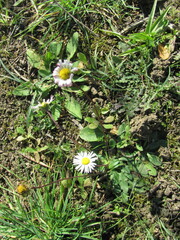

Southern daisy (Bellis sylvestris Cirillo, 1792) is a herbaceous perennial in the Asteraceae. More Mediterranean and often sturdier than lawn daisy (Bellis perennis), it flowers mainly from September to November in the meadows, pastures, grasslands and open woodland edges of southern France.
Read moreSouthern daisy and Garden daisy
Allow a few hours of direct sun per day, preferably morning or evening.
Gentle sun to light partial shade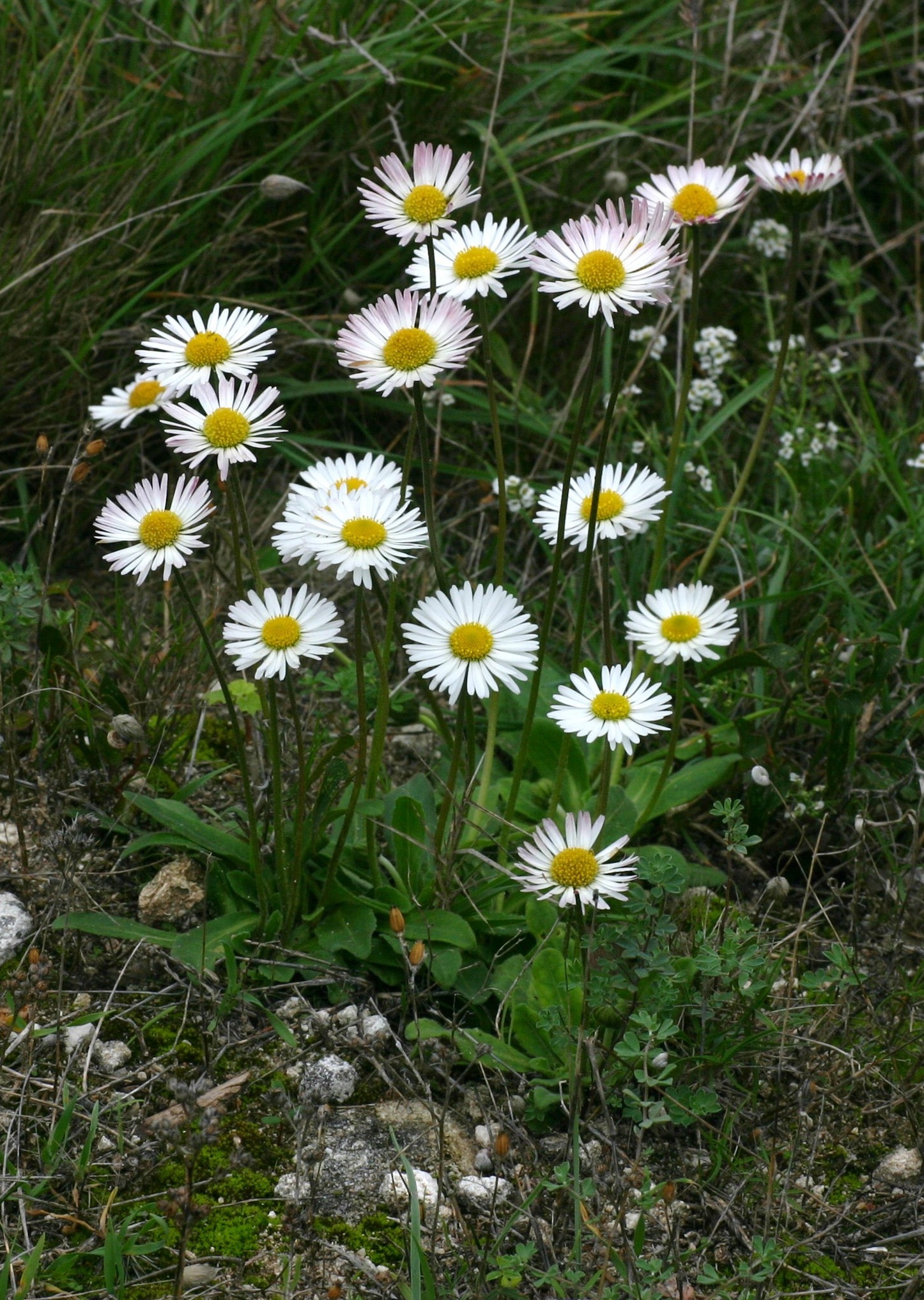
© photo
(c) jltasset, some rights reserved (CC BY-NC), uploaded by jltasset · cc-by-nc
zebedeugalinha · cc-by
Karim Haddad · cc-by


Global distribution
POWO records a Mediterranean native range including France and Corsica, and an introduction in Germany. French descriptions and regional atlases chiefly place it in Mediterranean meadows, pastures, grasslands, woodland edges and open woods; Atlantic and Corsican records require local interpretation.
- Native7
- Introduced1
- Mediterranean France
- Corsica
- Spain
- Italy
- Portugal
- North Africa
- Eastern Mediterranean
- Germany
Hexagons: regions where the plant occurs. Green dots: native range.1
Identity
Southern daisy (Bellis sylvestris Cirillo) is a perennial species of Bellis in the Asteraceae. POWO/Kew accepts the name, published in Plantarum Rariorum Regni Neapolitani in 1792, and places the species in the Mediterranean subtropical biome. 1 3
The name garden daisy also occurs for this species. French references use names meaning fall daisy, woodland daisy and wild daisy. Tela Botanica specifies Cirillo’s fall daisy, helping distinguish it from the common lawn plant Bellis perennis. 4 5
Woodland associations need some qualification. Southern daisy can occupy woodland edges and open woods, but French sources also describe it in Mediterranean meadows, pastures and grasslands. It is therefore not restricted to deep shade. 4 7
Recognition
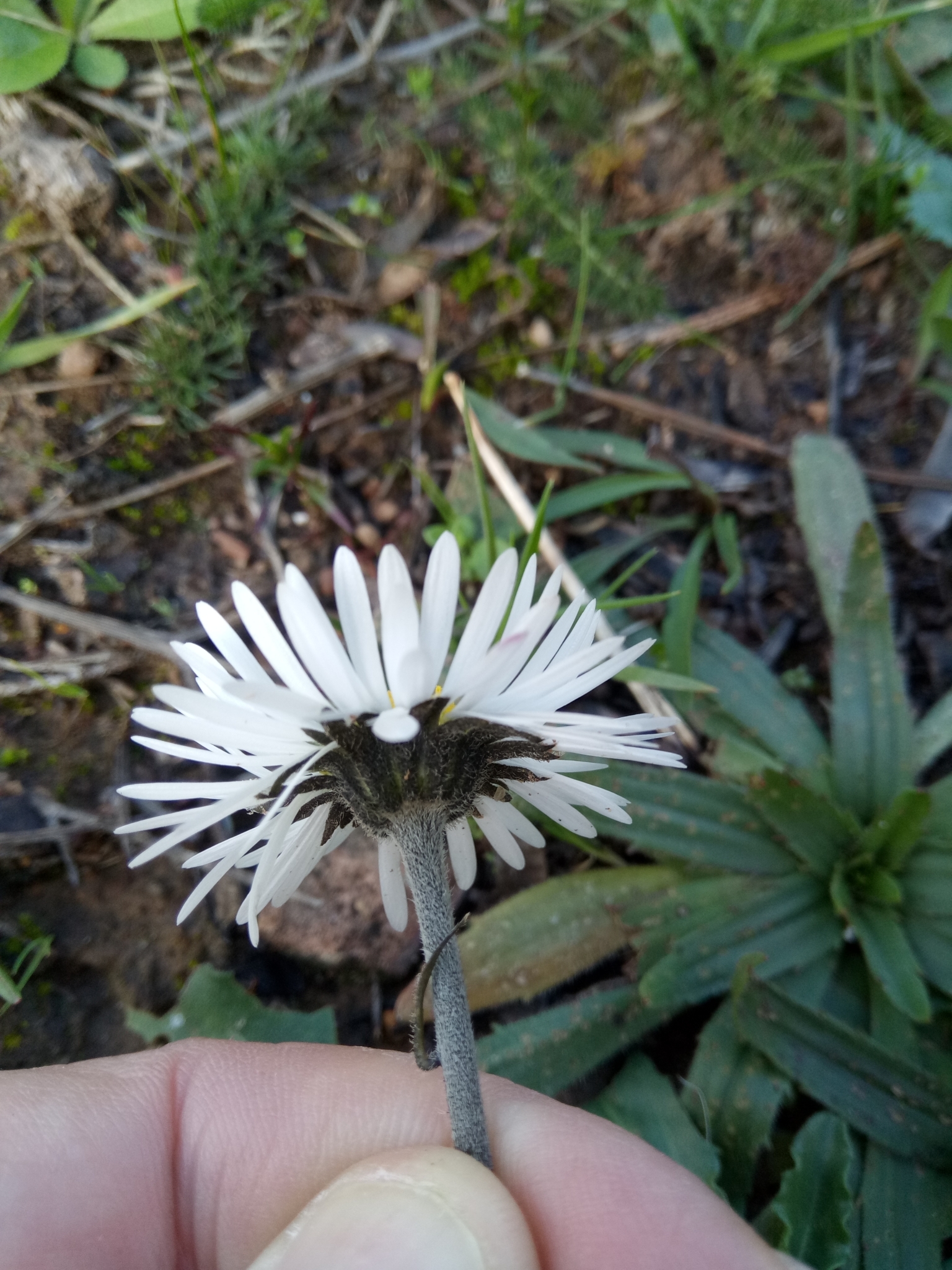
Sturdier growth helps distinguish Bellis sylvestris from B. perennis, although both form perennial rosettes. The simple, upright flower stalks are bare or nearly so, hairy and commonly around 15–30 cm (6–12 in) tall. 4 7
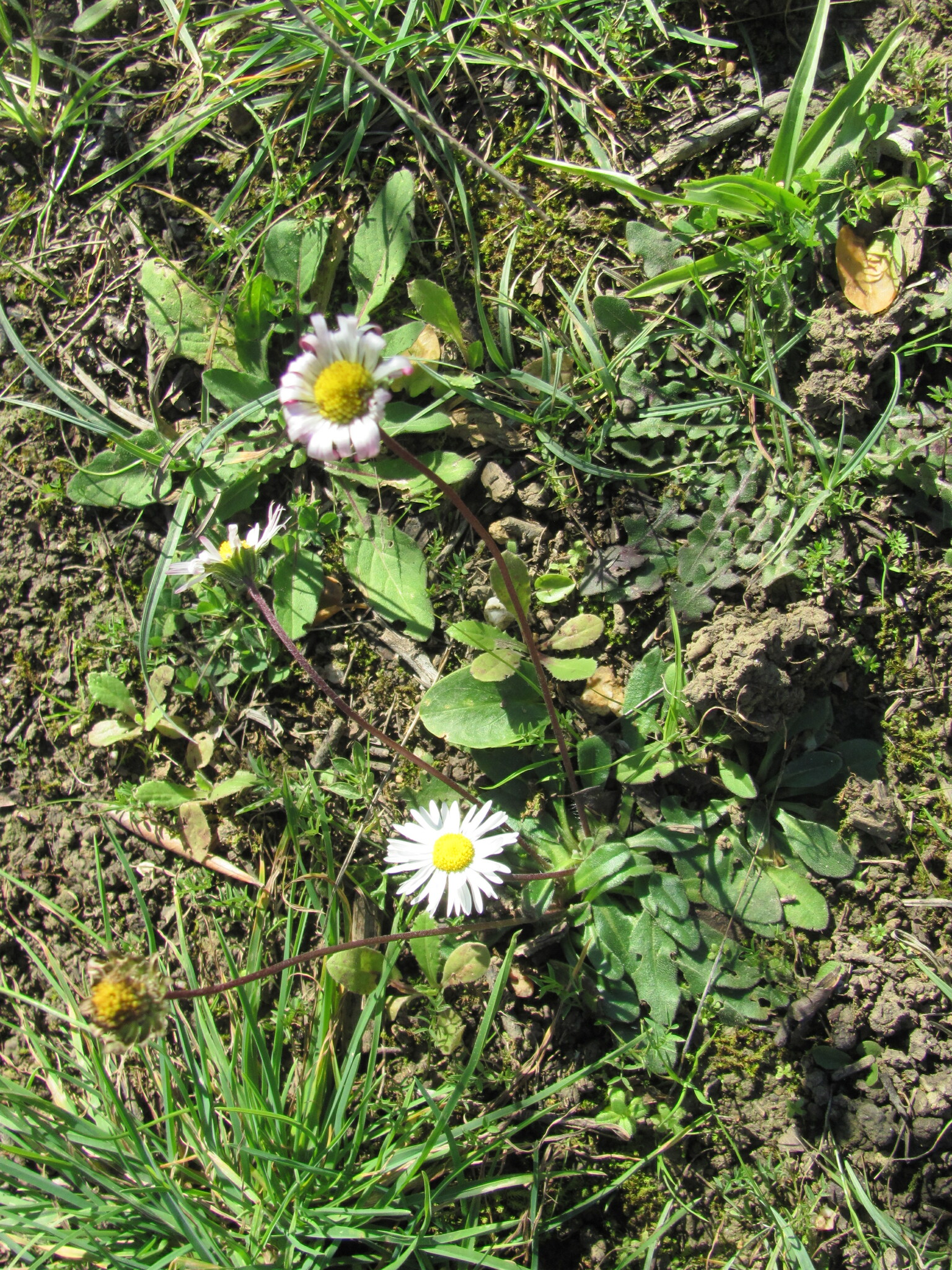
All leaves arise in a basal rosette and look grayish because of their hairs, often feeling almost velvety. The oblong-obovate blade is more elongated than in lawn daisy, narrows gradually into a stalk, and has an entire or faintly rounded-toothed edge with three clearer veins. 4
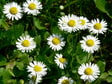
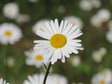
In flower, the solitary head is its most conspicuous feature. Larger than that of Bellis perennis, it reaches or exceeds 3 cm (1.2 in) in Coste’s description, with a yellow disk and often broader white to purplish rays. 4 7
Useful taxonomy
Use the scientific name Bellis sylvestris Cirillo as the taxonomic reference. POWO, GBIF and INPN treat it as a species in Asteraceae, order Asterales, genus Bellis. GBIF records species rank, and the associated French TaxRef record gives cd_nom and cd_ref 85745. 1 3 5
Historical synonymy explains some older uncertainty. POWO lists Bellis perennis subsp. sylvestris and Brachyscome sylvestris as homotypic synonyms; Tela Botanica also lists Bellis croatica and Bellis vallidula. These names should not be revived as separate species. 1 4
Two accepted infraspecific taxa appear under Bellis sylvestris in POWO, including subsp. pappulosa, native to the western Mediterranean. Plants with scaly bristles on the achenes may belong to this group, but precise identification requires a local flora. 1 2
Habitat and range
Mediterranean countries dominate the native range listed by POWO: France, Corsica, Spain, Italy, the Balkans, Greece, Turkey, North Africa and the eastern Mediterranean. Its recorded introduction in Germany illustrates why native range and horticultural or casual occurrence need to be distinguished. 1
For France, Tela Botanica reproduces Coste’s description of meadows and pastures in the Mediterranean region, from Alpes-Maritimes to Pyrénées-Orientales, with records in Charente-Inférieure and Corsica. INPN links it to mainland France, terrestrial habitats and assessment or protection information under cd_nom 85745. 4 5
Regional atlases add ecological detail. In Alpes-de-Haute-Provence, INFLORALHP describes it as narrowly Mediterranean, warmth-loving and adapted to sun through moderate shade, occurring in grasslands, woodland edges and open woods. This local description should not be extended to all of France. 7
Taxonomic references treat it as native within the French Mediterranean setting and do not designate it an invasive alien plant in France. Occurrence outside its native area may call for a different local assessment. 1 5
Life cycle and flowering
A perennial crown supports the flowering stalks of Bellis sylvestris. POWO calls it a perennial, RHS describes Bellis as rosette perennials with spoon-shaped leaves, and French accounts describe its persistent crown. 1 6 4
Fall flowering distinguishes it from lawn daisy in the Mediterranean climate covered by the sources. Tela Botanica gives September to November, with possible flowers in late winter; INFLORALHP emphasizes November in its departmental data. This explains its French fall-daisy name. 4 7
Fruits take the form of achenes, as in many Asteraceae. Coste describes a rare variant with achenes topped by scaly bristles, corresponding to the B. pappulosa group; POWO now treats it as subsp. pappulosa under Bellis sylvestris. 4 2
Cultivation and management
In Mediterranean gardens, southern daisy behaves as a small cool-season perennial. Give it good light or light partial shade, well-drained soil that stays slightly moist while it establishes, and little fertilizer. Overly rich soil chiefly encourages competing grasses. 4 7
Summer growth may slow markedly in Mediterranean ground plantings. Water is most useful at planting, in containers or when fall rains return. Container plants are vulnerable to both prolonged dryness and standing water, so drainage is essential. 7 6
Mowing decisions depend on the purpose of the planting. To see its flowers in the French Mediterranean setting described, avoid mowing occupied patches from September to November. To contain a small border colony, cut heads before seed ripens and remove surplus rosettes from moist soil. 4 7
Edibility, toxicity and look-alikes
Food use is not established specifically for Bellis sylvestris in the cited references. Barari lists edibility as unknown, and Tela Botanica provides a general warning about plant uses. Uses sometimes described for Bellis perennis should not be transferred automatically. 8 4
Pet safety remains uncertain rather than confirmed as non-toxic. No specific ASPCA entry for Bellis sylvestris is available, and ASPCA notes that any plant material can cause vomiting or digestive upset in dogs and cats. A cautious approach is therefore warranted. 9
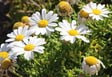
Lawn daisy, Bellis perennis, is the principal look-alike. It is more frequent in moist lawns, lower-growing, with smaller heads and a much longer flowering season, often associated with spring. B. sylvestris is more Mediterranean, more velvety and robust, with mainly fall flowering. 4 10
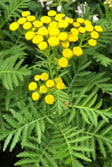
Names used in trade can blur identification further. “Daisy,” “marguerite” and “pâquerette” can refer to Bellis, Leucanthemum, Gerbera, Chrysanthemum or other Asteraceae, depending on context. For foraging, animal safety or horticultural purchases, verify the scientific name. 3 9
Main sources
- Plants of the World Online / Kew, Bellis sylvestris Cirillo
- Plants of the World Online / Kew, Bellis sylvestris subsp. pappulosa
- GBIF Backbone Taxonomy, Bellis sylvestris Cirillo
- Tela Botanica eFlore, Bellis sylvestris Cirillo
- INPN, Bellis sylvestris Cirillo, 1792, cd_nom 85745
- Royal Horticultural Society, Bellis sylvestris
- INFLORALHP, Bellis sylvestris Cirillo, 1792
- Barari Flora Taxonomy, Bellis sylvestris Cirillo
- ASPCA, Toxic and Non-Toxic Plants List
- Tela Botanica eFlore, Bellis perennis L.
Frequently asked questions
Is southern daisy the same as lawn daisy?
No. They are related, but POWO and GBIF accept Bellis sylvestris as a separate species. It is more Mediterranean, often sturdier, with more velvety leaves and mainly fall flowering.
Why is southern daisy associated with fall?
Classical French descriptions give a main flowering period from September to November, with occasional flowers in late winter.
Is southern daisy native to France?
Yes, according to the cited sources, chiefly in Mediterranean France and Corsica. Regional records should be interpreted using local atlases.
Can you eat southern daisy like lawn daisy?
Eating it is not recommended. The cited references do not establish food use specifically for Bellis sylvestris, and uses of Bellis perennis should not be transferred automatically.
Is southern daisy poisonous to cats and dogs?
No strong species-specific source was found to classify Bellis sylvestris as safe or toxic. Caution remains appropriate, since any plant material may cause digestive upset in cats and dogs.
Is southern daisy invasive in France?
No. The taxonomic sources consulted consider it native. In France, correct identification and regional context are the main concerns.
Similar plants
If you are unsure about a plant’s toxicity, ask a botanist or veterinarian for advice.