
Quinoa (Chenopodium quinoa, )


Quinoa (Chenopodium quinoa) is an annual herb in the Amaranthaceae, grown for millennia on the Andean high plateaus for its protein-rich seeds. It is a pseudocereal rather than a cereal, related to spinach and beet. A bitter seed coating naturally protects the crop from birds. Its taxonomic history is intertwined with that of common lambsquarters, a familiar European garden weed.
Read moreQuinoa, Quinua and Kinwa
Place in full sun, with intense direct light all day long.


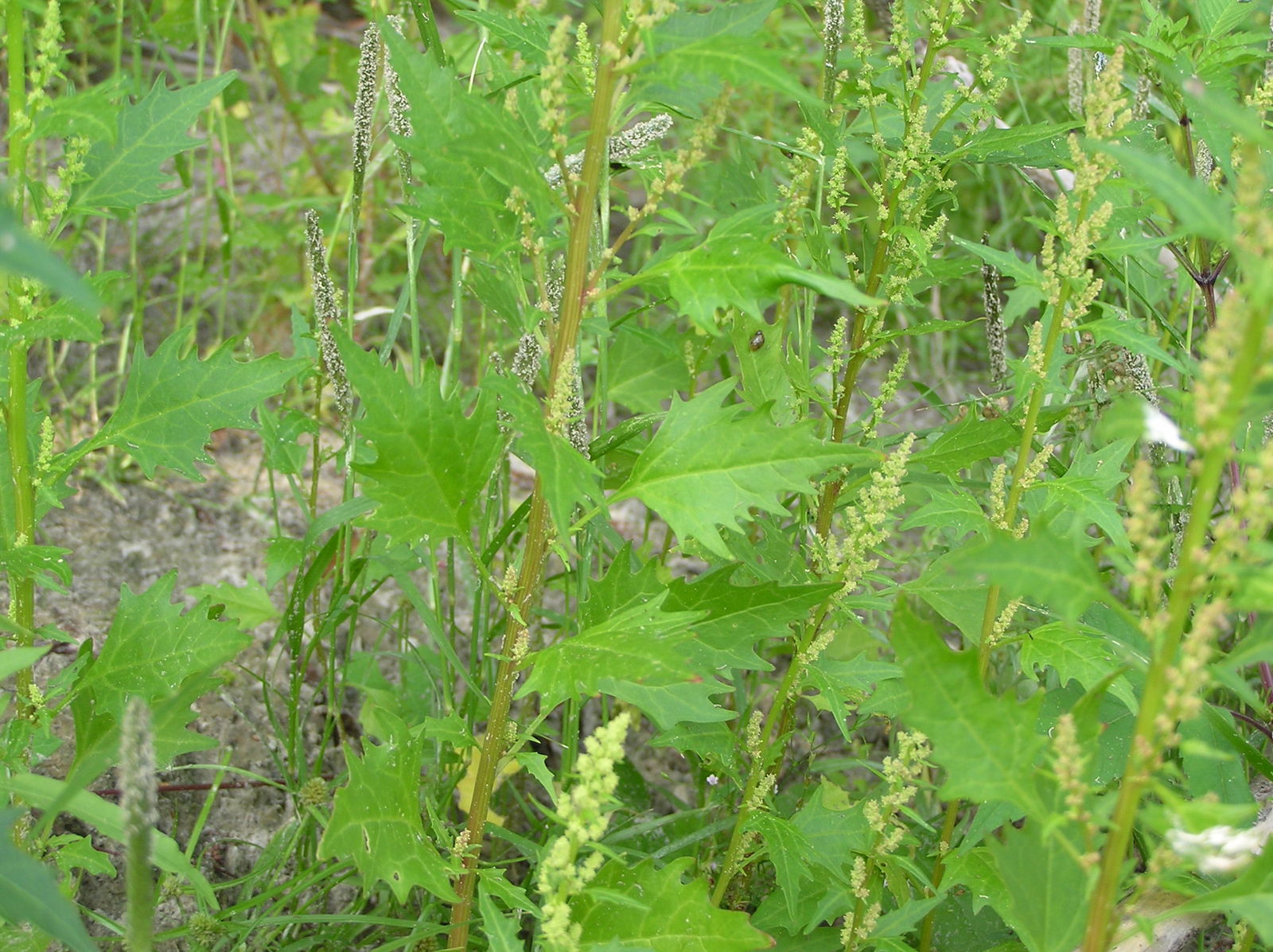
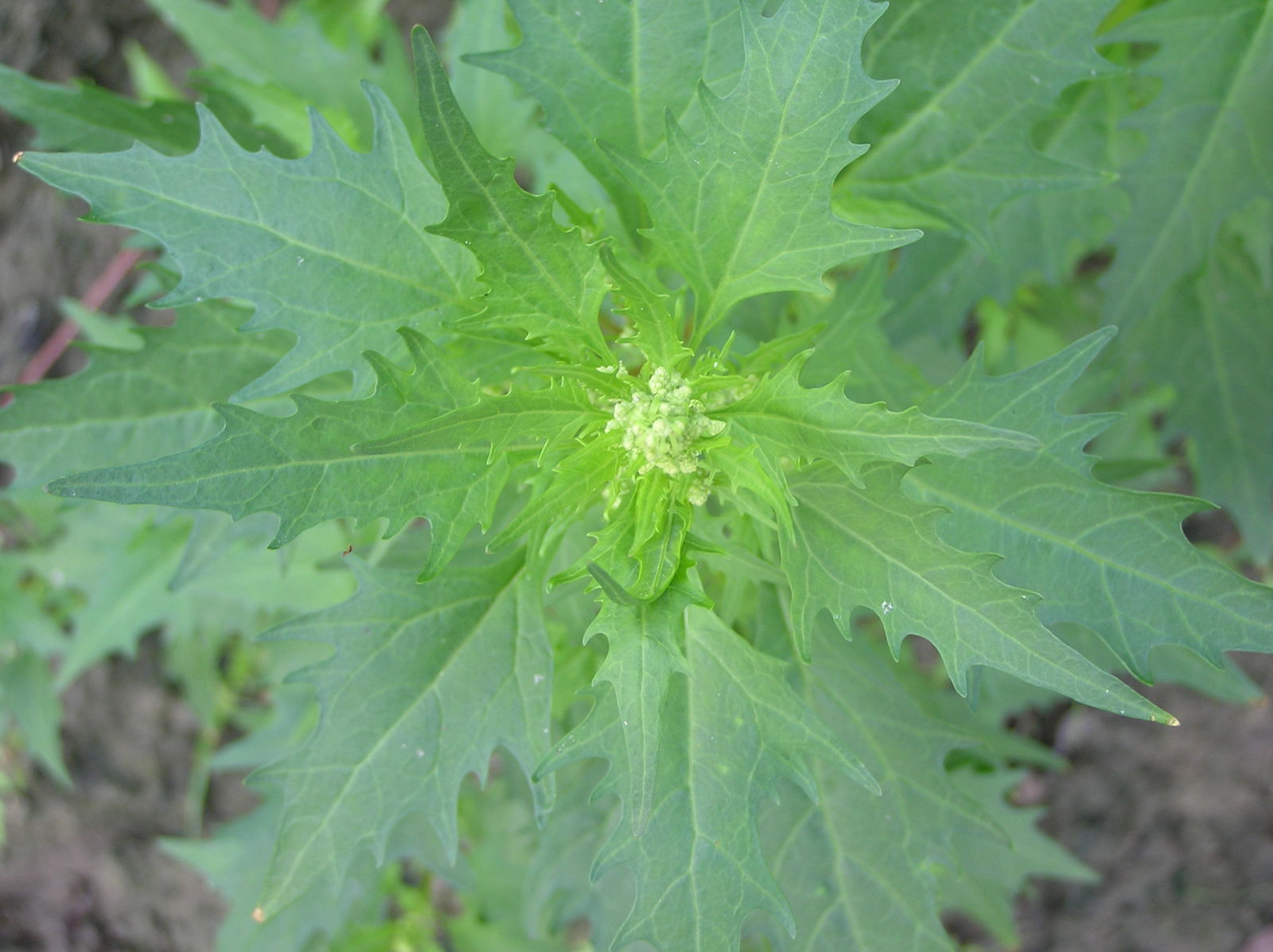
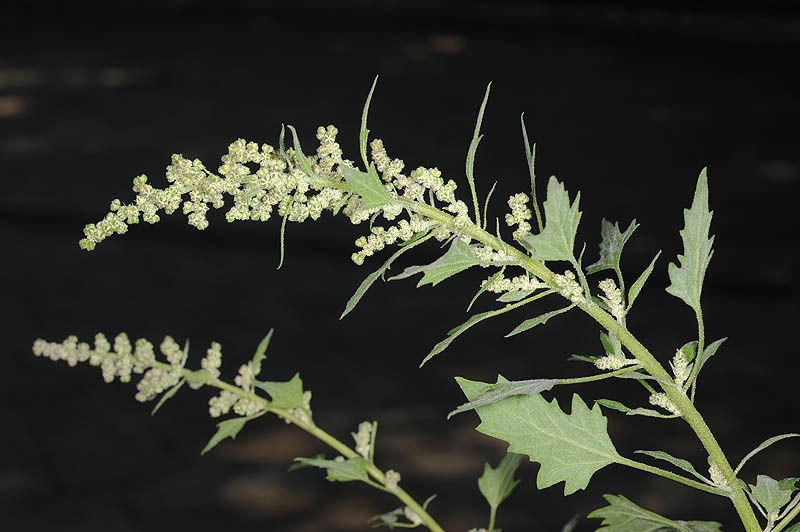
© photo
Wikimedia Commons · CC BY-SA or Public Domain
Taken Sep 15, 2005 by Photoflora - Jean-Luc TASSET (©)
Taken Apr 29, 2020 by ilgrandediopan (cc-by-sa)
Taken Jan 28, 2017 by Yoan MARTIN (cc-by-sa)
© copyright of the Board of Trustees of the Royal Botanic Gardens, Kew.


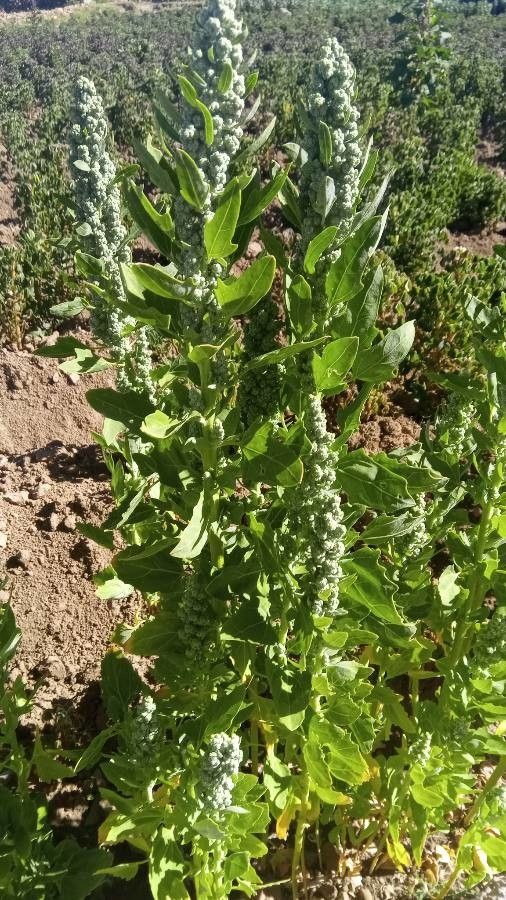


Global distribution
POWO/WCVP places the native range from Ecuador to northwestern Argentina, with Peru and Bolivia as historical centers of cultivation. Domestication and consumption have continued for about 5,000 years in the Andean basin. Outside the Andes, quinoa remains a minor crop, commercially grown in the United States and trialed in France and Canada without becoming invasive.
- Native4
- Introduced2
- Peru
- Bolivia
- Ecuador
- Argentina (northwest)
- United States
- Canada
Hexagons: regions where the plant occurs. Green dots: native range.1
Identity
Quinoa (Chenopodium quinoa Willd., 1798) is an annual herb in the Amaranthaceae. POWO/WCVP accepts this name as the botanical reference for the species, a seed crop rather than a member of the grass family. 1 4
The Greek roots of Chenopodium mean goosefoot, referring to the outline of certain leaves in the genus. The epithet quinoa comes from Quechua kinuwa, borrowed through Spanish before passing into other languages. The Incas also called it chisiya mama, mother of all grains. 3
Although cooked and traded like a grain, quinoa is a pseudocereal. It is grown for its seed much as wheat is, but belongs to a different botanical family. Within the Amaranthaceae it is related to spinach and beet, a distinction relevant to its gluten-free food labeling. 2
Recognition
An upright, sometimes branching stem varies greatly in height with the variety and growing conditions. Some cultivated lines reach only 60 cm (2 ft), while spontaneously growing plants in good soil can exceed 3 m (10 ft). 4 3
Alternate leaves are diamond-shaped or triangular. Their color varies from clear green to red or purple, depending on the pigments present in the variety. This range of colors, together with the sometimes mealy surface typical of Chenopodium, can help draw attention to the plant before flowering. 3
Terminal and axillary panicles carry small greenish flower clusters without petals. Growth at this stage is directed toward seed production rather than attracting pollinators. Each seed, barely 2 mm (0.08 in) across, has a saponin coating that naturally protects it from birds and insects while it remains on the panicle. 4 2
Useful taxonomy
The accepted name in POWO and WCVP is Chenopodium quinoa Willd., placed in the Amaranthaceae subfamily Chenopodioideae. Its synonymy records an older interpretation: several authors treated quinoa as a variety of common lambsquarters, Chenopodium album. 1
The principal recorded synonyms illustrate this historical overlap:
- Chenopodium album var. quinoa (Willd.) Kuntze
- Chenopodium album subsp. quinoa (Willd.) Kuntze
- Chenopodium hircinum var. quinoa (Willd.) Aellen
- Chenopodium quinoa var. melanospermum Hunz.
- Chenopodium quinoa f. purpureum Aellen
Whole-genome sequencing confirmed quinoa’s allotetraploid origin: it combines two ancestral diploid genomes inherited from wild Chenopodium species. It shares this genetic history with the North American relative Chenopodium berlandieri, independently domesticated to produce Mexican huauzontle. 6
Habitat and range
POWO/WCVP recognizes a native range from Ecuador to northwestern Argentina, with Peru and Bolivia as historical centers of cultivation. Missouri Botanical Garden places its favored Andean elevations between 2,400 and 4,000 m (7,900–13,100 ft). 1 4
Purdue University describes approximately 5,000 years of uninterrupted cultivation and consumption by communities on the Andean plateaus of Peru, Bolivia, Ecuador and Chile. 3
Beyond the Andes, quinoa remains a minor but established crop. It is commercially grown in southern Colorado in the United States, cultivated on a small scale in France, where it appears in the national natural heritage inventory, and trialed as far north as the Canadian Prairies. 3 5
Life cycle and reproduction
Direct-sown quinoa germinates quickly once soil warms in spring, where that seasonal pattern applies. The developing plant forms a deep taproot, which underlies its drought tolerance once established. 2 3
Flowering is inconspicuous. The greenish clusters are chiefly self-pollinating but are also wind-pollinated, without relying on insects. Depending on the variety, the full cycle from sowing to harvest takes 90–220 days. 2
Harvest comes as the flower clusters dry and the seeds harden and change color. Genome sequencing identified the gene controlling production of bitter saponins in the seed coating. A mutation underlies so-called sweet varieties, which are less bitter without prior rinsing. 6
Uses and risks
Food is the main use. The seed supplies good-quality protein with a better amino-acid balance than wheat, helping explain its popularity in gluten-free diets. Young leaves can also be prepared like spinach. 2
Seeds should be rinsed before cooking to remove the saponin coating responsible for their natural bitterness. These compounds are largely broken down during cooking and poorly absorbed by the body. People prone to rheumatism, gout or kidney stones nevertheless have reason to limit poorly rinsed seeds because of associated oxalic acid. 2
For domestic animals, no toxicity is documented in cats, dogs or humans. Horse status alone remains uncertain because species-specific data are lacking.
Varieties, look-alikes and related plants
Regional ecotypes, developed through centuries of Andean farmer selection, are more relevant to quinoa than named ornamental cultivars. Plants For A Future emphasizes that day-length sensitivity varies greatly among ecotypes. Lines from Chile flower more readily under the long days of temperate regions than classic Andean lines do. 2
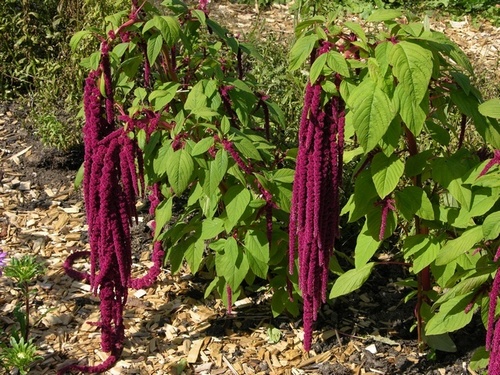
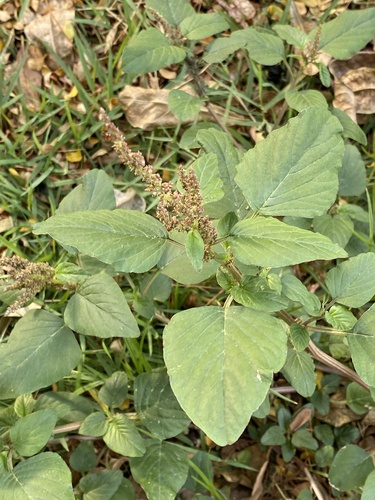
The most familiar look-alike is common lambsquarters, Chenopodium album, a widespread weed of European gardens and cultivated fields. The history of classification preserves this connection directly: several scientific synonyms formally place quinoa within that species. 1
A more distant source of confusion is Chenopodium berlandieri, which grows wild in North America and was domesticated independently in Mexico as huauzontle. The two domestications remain genetically distinct despite an ancient shared origin. Scientific names, rather than overall appearance alone, distinguish these two crops in the field. 6
Main sources
- Plants of the World Online / Kew, Chenopodium quinoa Willd.
- Plants For A Future, Chenopodium quinoa
- Purdue University Center for New Crops & Plants Products, Quinoa
- Missouri Botanical Garden Plant Finder, Chenopodium quinoa
- INPN, Chenopodium quinoa Willd. 1798, CD_nom 160222
- Jarvis et al. 2017, The genome of Chenopodium quinoa, Nature
Frequently asked questions
Is quinoa a cereal?
No. Chenopodium quinoa belongs to the Amaranthaceae, not the grass family. It is a pseudocereal: its seed is cooked like a grain without botanically being one.
Is quinoa toxic to cats and dogs?
No toxicity is documented in cats, dogs or humans. Horse status remains uncertain because data are lacking. Saponins on raw seed chiefly affect taste and digestibility rather than toxicity.
Why should quinoa be rinsed before cooking?
The seed coating contains bitter saponins that naturally protect it from birds and insects while it is on the plant. Thorough rinsing removes most of this bitterness before cooking.
Where does quinoa come from?
According to POWO, its native range extends from Ecuador to northwestern Argentina, with Peru and Bolivia as historical centers. Cultivation has continued there for about 5,000 years.
Is quinoa invasive in France?
No. It remains a minor cultivated crop there, without invasive status. INPN records it as cultivated rather than naturalized.
How can quinoa be distinguished from common lambsquarters?
The two share a taxonomic history: quinoa was long treated as a variety of Chenopodium album. The most reliable distinction remains quinoa’s cultivated use, whereas common lambsquarters grows spontaneously as a weed.
Do all quinoa varieties grow in the same way?
No. Andean ecotypes respond very differently to day length. Chilean lines flower better under the long days of temperate regions, while Altiplano lines remain adapted to their original photoperiod.
Similar plants
If you are unsure about a plant’s toxicity, ask a botanist or veterinarian for advice.