
Creeping thistle (Cirsium arvense, )
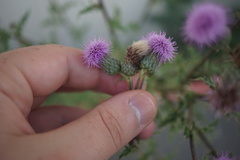
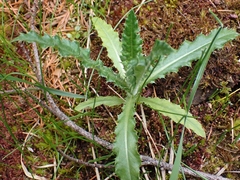
Creeping thistle (Cirsium arvense (L.) Scop., 1771) is a perennial in the Asteraceae, native to temperate Europe, western Asia and northwestern Africa, and widely introduced to North America, Australia and New Zealand. Its upright, unwinged stems bear spiny leaves and small lilac heads in corymbs. Extensive creeping roots can regenerate a whole colony from a tiny fragment.
Read moreCreeping thistle, Canada thistle and Field thistle
Allow a few hours of direct sun per day, preferably morning or evening.
Full sun; tolerates light partial shade

© photo
(c) Adja Gaye, some rights reserved (CC BY-NC), uploaded by Adja Gaye · cc-by-nc
iNaturalist User · cc0
Ellyne Geurts · cc0
(c) Colin Meurk, some rights reserved (CC BY-SA) · cc-by-sa
(c) Douglas Goldman, some rights reserved (CC BY-SA) · cc-by-sa
Global distribution
The WCVP places the native range of Cirsium arvense in temperate Eurasia and northwestern Africa, including mainland France. Introduced from Europe, the species is now considered an invasive weed in 42 US states and 13 Canadian provinces or territories, as well as Australia, New Zealand and Japan.
- Native3
- Introduced4
- Invasive1
- Metropolitan France
- Europe
- Russia
- United States
- Canada
- New Zealand
- Japan
- Australia
Hexagons: regions where the plant occurs. Green dots: native range.1
Identity
Creeping thistle (Cirsium arvense (L.) Scop., 1771) is recognizable first by its upright, unwinged stem, a feature distinguishing it from most other thistles. The French names chardon des champs and calcide also refer to this member of Cirsium in the Asteraceae. Plants of the World Online accepts the combination published by Giovanni Antonio Scopoli in 1771, based on a name described by Carl Linnaeus. 1 2
The name Cirsium derives from the Greek kirsos, a varicose vein: roots of several species in the genus were long used in decoctions for venous complaints. The epithet arvense means of cultivated fields, its favored habitat. 3
Canada thistle is a documented misnomer: the plant is not native to North America. It arrived from Europe, probably as a contaminant in agricultural seed as early as the 17th century. Field thistle is another English name for the species. 6
Recognition
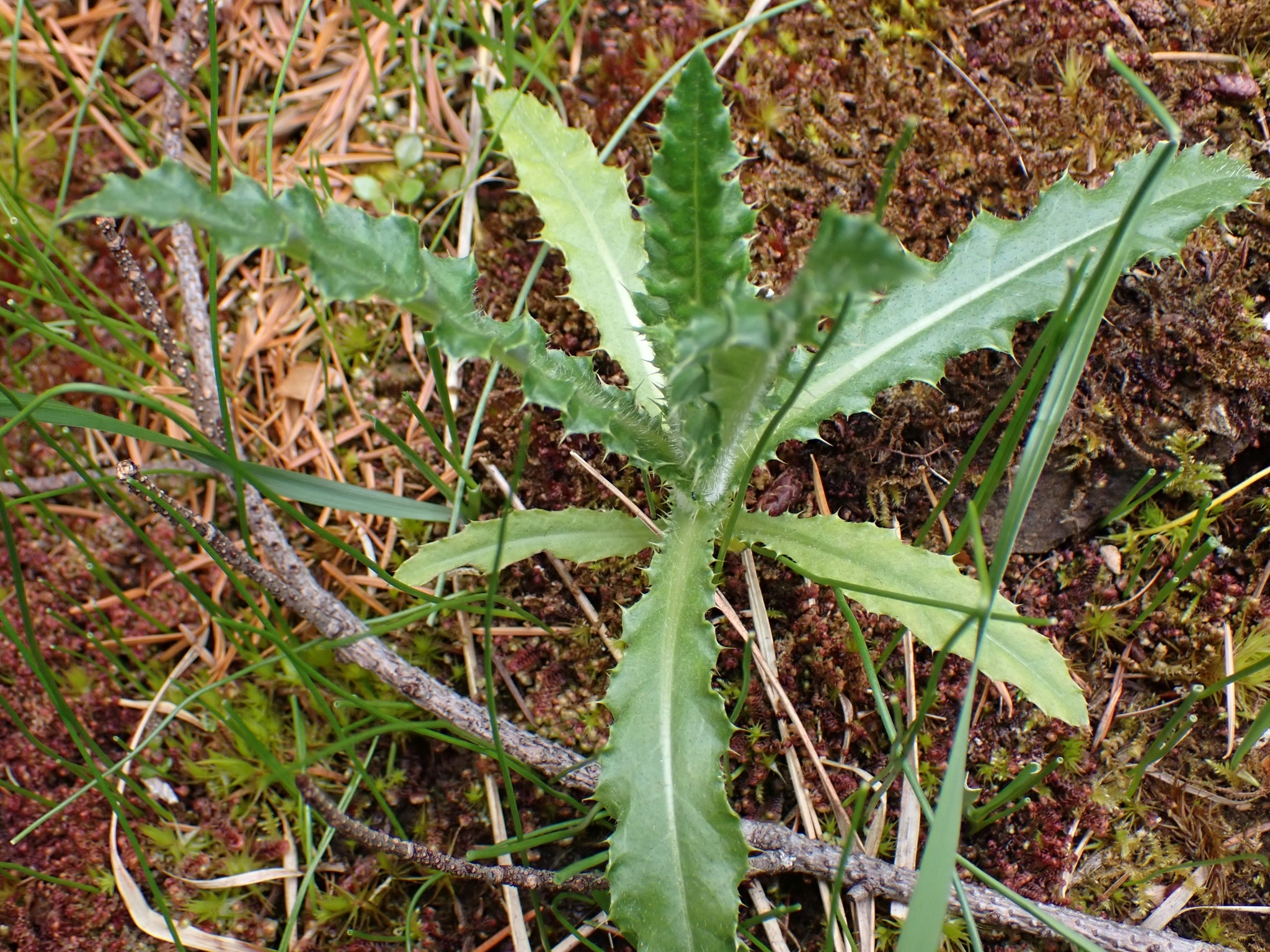
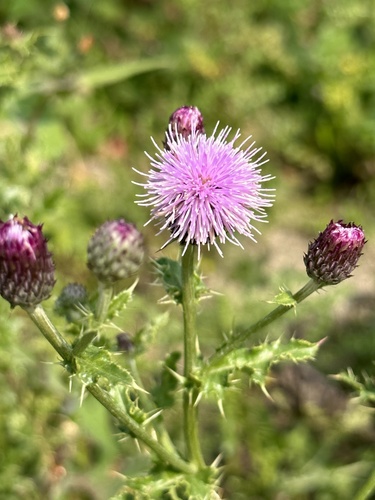
An upright stem, unwinged and unarmed throughout its length, often distinguishes creeping thistle from most other thistles. It reaches 30–150 cm (12–59 in). Alternate leaves have spiny lobes, gray-green upper surfaces and paler, sometimes woolly undersides. 5 4
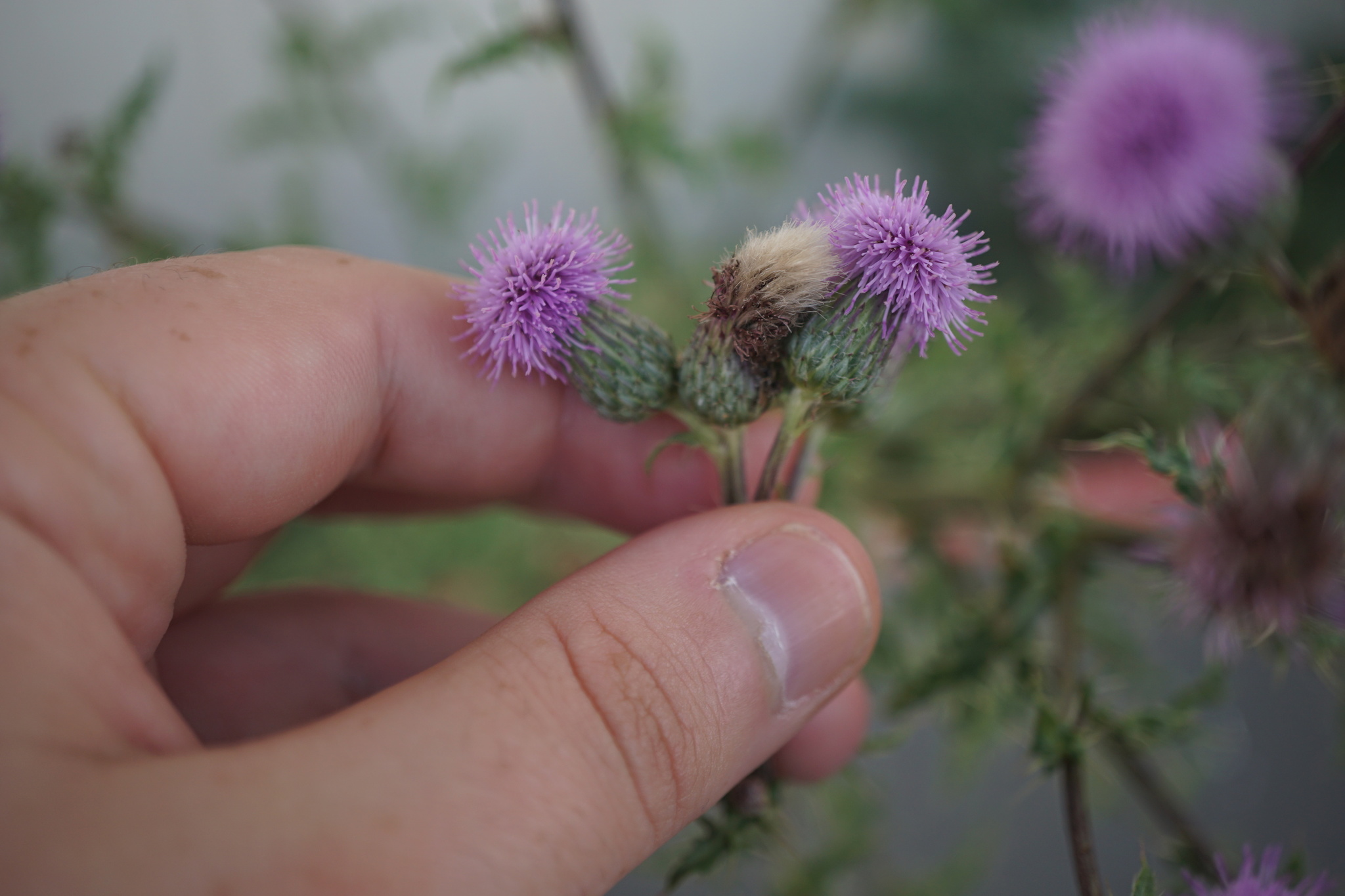
The flower heads are small, 10–22 mm (0.4–0.9 in) across, lilac to pale purple, and cluster in dense corymbs. Most large thistles instead bear solitary, much larger heads. 7
Unusually for the Asteraceae, creeping thistle is functionally dioecious: male and female heads grow on separate plants. Female flowers have a vanilla-like fragrance absent from the pollen-rich male flowers. 7
Useful taxonomy
The WCVP accepts Cirsium arvense (L.) Scop., a name resulting from a transfer: Linnaeus first described the plant in Serratula, before Giovanni Antonio Scopoli placed it in Cirsium in 1771. 1
Two varieties differ chiefly in leaf hairiness: Cirsium arvense var. arvense, widespread across most of Europe, and Cirsium arvense var. incanum (S.G.Gmel.) Ledeb., a more densely woolly southern form. 1
The WCVP places numerous historical synonyms under this taxon, including Cirsium arvense var. setosum (Willd.) Hohen. and Cirsium arvense var. vestitum Wimm. & Grab.. These names reflect local differences in hairiness rather than distinct species. 1
Habitat and range
According to the WCVP, the native range spans temperate Eurasia and northwestern Africa, including mainland France. The INPN records creeping thistle across much of France, from lowlands to the subalpine zone, chiefly in fields, meadows and roadsides. 1 2
Introduced from Europe, probably in contaminated seed from the 17th century onward, creeping thistle is now classified as an invasive weed in 42 US states and 13 Canadian provinces or territories, and in Australia, New Zealand and Japan. 6
A Colorado study found an inverse relationship between the frequency of creeping thistle and the diversity of surrounding native vegetation, one of the ways it gradually displaces local flora in invaded areas. 6
Life cycle and reproduction
Its root system combines long horizontal roots, extending several meters (many feet) from the original plant, with deeper vertical roots. These are not true rhizomes: new shoots arise from adventitious buds on the roots, and the smallest fragment can regenerate an entire colony. 7 5
One plant produces an average of 1,530 seeds, distributed among as many as a hundred heads per stem in favorable conditions. Each achene has a feathery pappus for wind dispersal, although most travel no farther than a few tens of meters (dozens to a few hundred feet) from the parent. 7
Vegetative spread from root fragments and windborne seed together explain why pulling or occasional mowing so often fails. The smallest root segment left in the soil can regenerate a whole colony. 5 4
Uses and risks
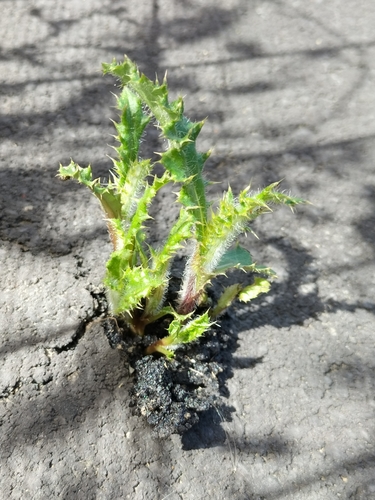
Creeping thistle has no recommended ornamental use: recognizing the rosette and managing it before flowering take priority. PFAF records peeled young shoots, sometimes prepared like asparagus, and a root formerly used as a tonic and diuretic, although it is fibrous and rarely eaten today. 3
Current databases do not document toxicity in dogs, cats or humans; the principal practical risk comes from spines, which cause mechanical irritation on contact. Toxicity in horses remains poorly established and inconsistently reported by different sources. 4
Despite its agricultural weed status, creeping thistle provides substantial nectar for butterflies and bees. Its oil-rich seeds also feed seed-eating birds such as goldfinches. 4
Control and look-alikes
Three organisms have been studied as biological control agents against creeping thistle. The rust fungus Puccinia punctiformis infects plants systemically and can reduce populations by 43–81% over several years. The weevil Larinus planus destroys up to 95% of the seeds in an infested head, while the fly Orellia ruficauda also parasitizes the seeds. 5
The most frequent confusion is with bull thistle (Cirsium vulgare), whose stem has continuous spiny wings absent from Cirsium arvense, and whose solitary heads are much larger than creeping thistle's small heads in corymbs. Marsh thistle (Cirsium palustre) and cotton thistle (Onopordum acanthium) can also resemble it as rosettes, but neither has the same creeping root system. 7
Main sources
- Plants of the World Online / Kew, Cirsium arvense (L.) Scop.
- INPN / MNHN, Cirsium arvense (L.) Scop., 1772
- Plants For A Future, Cirsium arvense
- North Carolina State University Extension, Cirsium arvense (Canada Thistle)
- USDA Forest Service, Fire Effects Information System, Cirsium arvense
- IUCN Global Invasive Species Database, Cirsium arvense
- Tiley 2010, Biological Flora of the British Isles, Cirsium arvense, Journal of Ecology
Frequently asked questions
Is creeping thistle poisonous?
Current databases do not document toxicity in dogs, cats or humans; the main practical risk is irritation from its spines. Toxicity in horses remains poorly established and inconsistently reported by different sources.
Why is creeping thistle so hard to remove?
Horizontal roots extend several meters (many feet) and regenerate a whole colony from the smallest fragment left in the soil. A single mowing or herbicide treatment usually fails to exhaust the plant.
How does it differ from bull thistle?
The most reliable feature is the stem: unwinged and unarmed in Cirsium arvense, but with continuous spiny wings in Cirsium vulgare. Creeping thistle also has much smaller heads grouped in corymbs.
What does the name Cirsium arvense mean?
Cirsium derives from the Greek kirsos, a varicose vein, recalling historical medicinal use of the roots. Arvense simply means of cultivated fields, its favored habitat.
Is creeping thistle edible?
Peeled young shoots are technically edible and sometimes prepared like asparagus, but the root is fibrous and rarely eaten compared with those of other, biennial thistles.
Does creeping thistle benefit wildlife?
Yes. Its heads provide substantial nectar for many butterflies and bees, while its oily seeds feed seed-eating birds such as goldfinches.
Where does creeping thistle usually grow?
In cultivated fields, fallows and grazed meadows, along paths and roads and on riverbanks, wherever disturbed or open soil is available.
Similar plants
If you are unsure about a plant’s toxicity, ask a botanist or veterinarian for advice.