
Boat orchid (Cymbidium, )

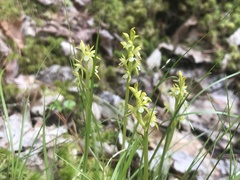
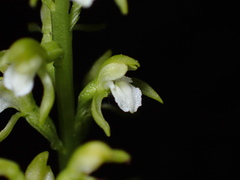
Boat orchid (Cymbidium Sw., 1799) is an Orchidaceae genus native from tropical and subtropical Asia to Australia. These orchids have pseudobulbs, long strap-shaped leaves and lasting flower spikes. In cultivation, strong light, an airy orchid mix and cool nights are particularly important for flowering.
Read moreBoat orchid and Cymbidium orchid
Allow a few hours of direct sun per day, preferably morning or evening.
Bright light, filtered sun or light shade


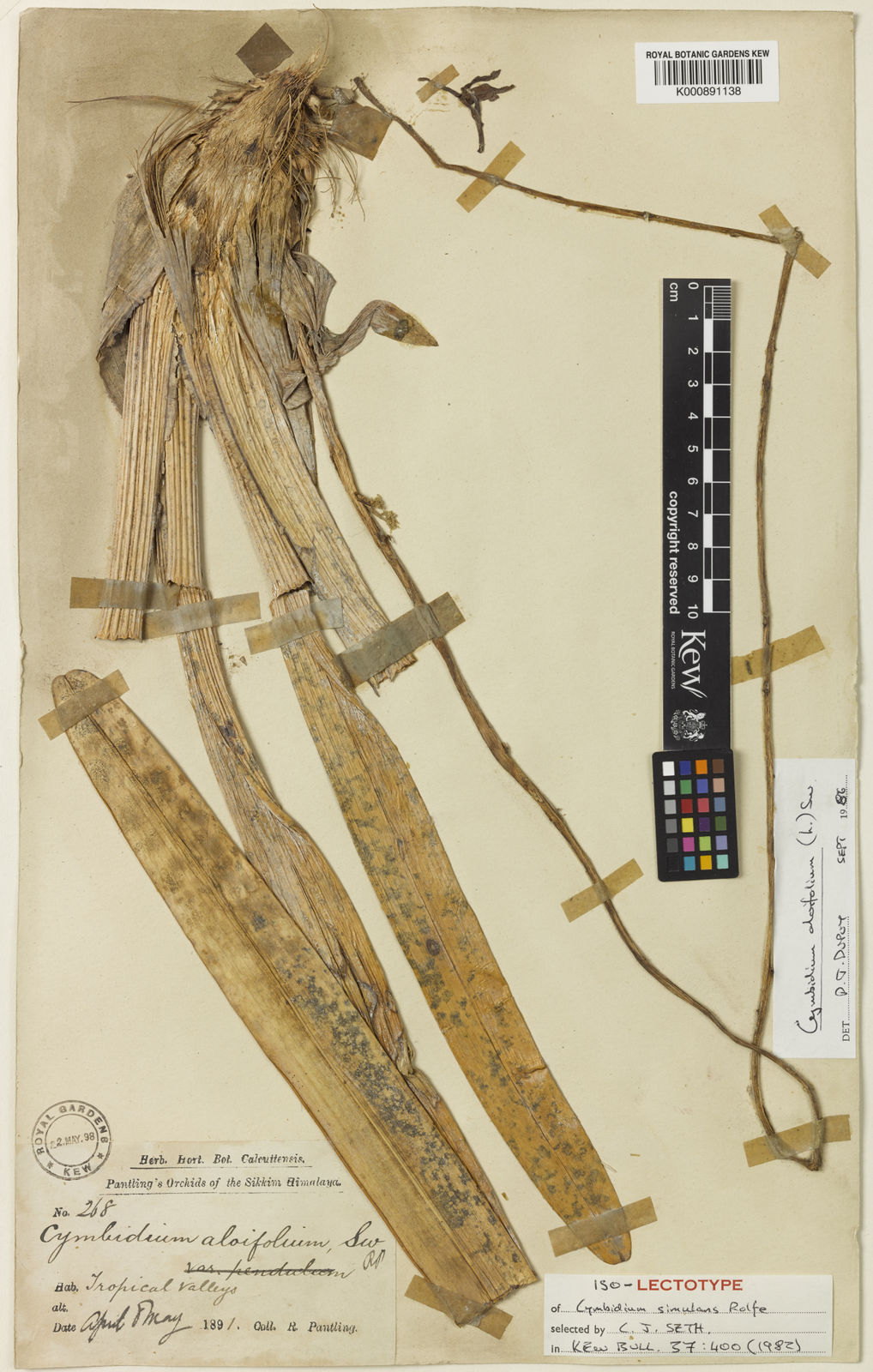

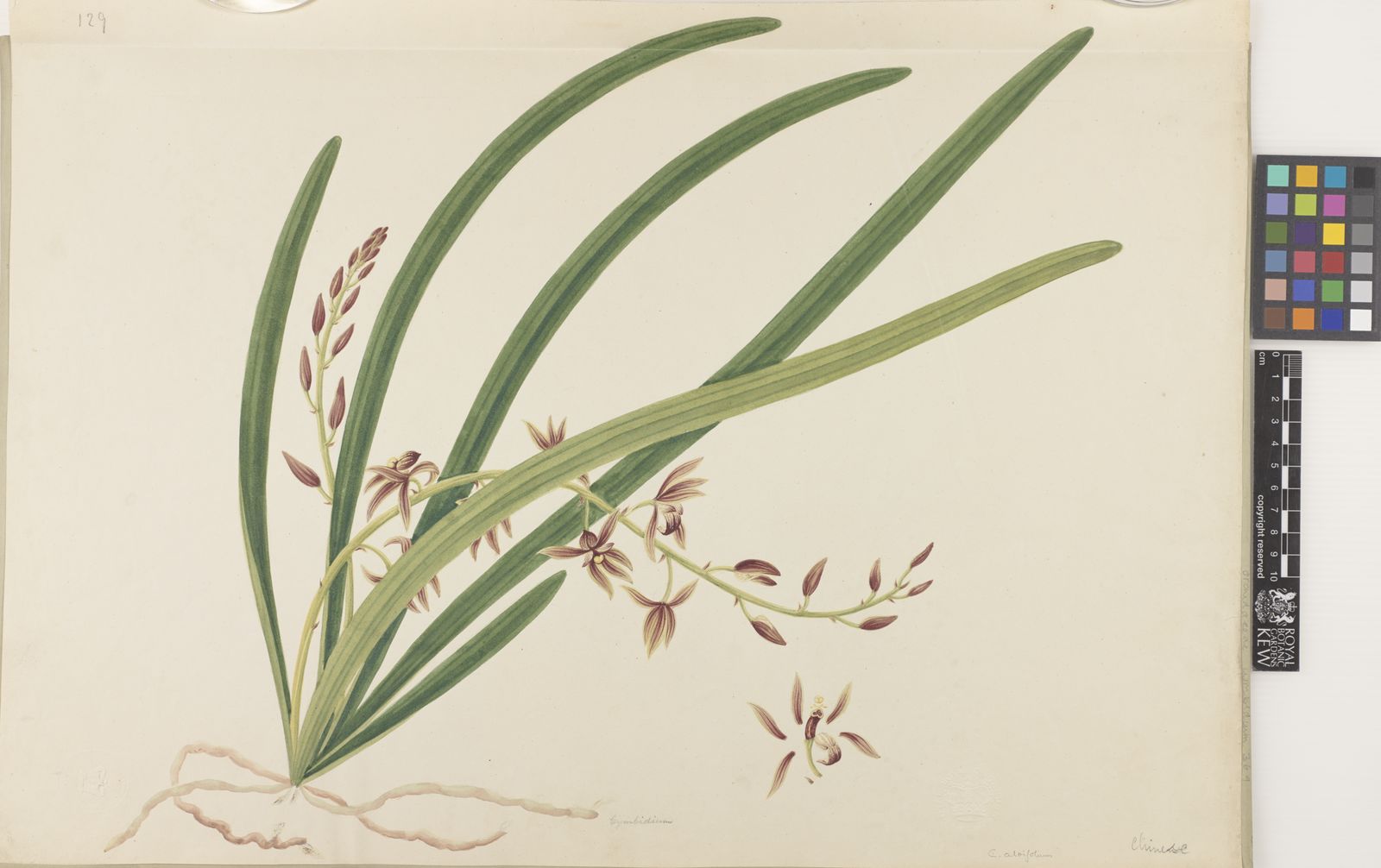
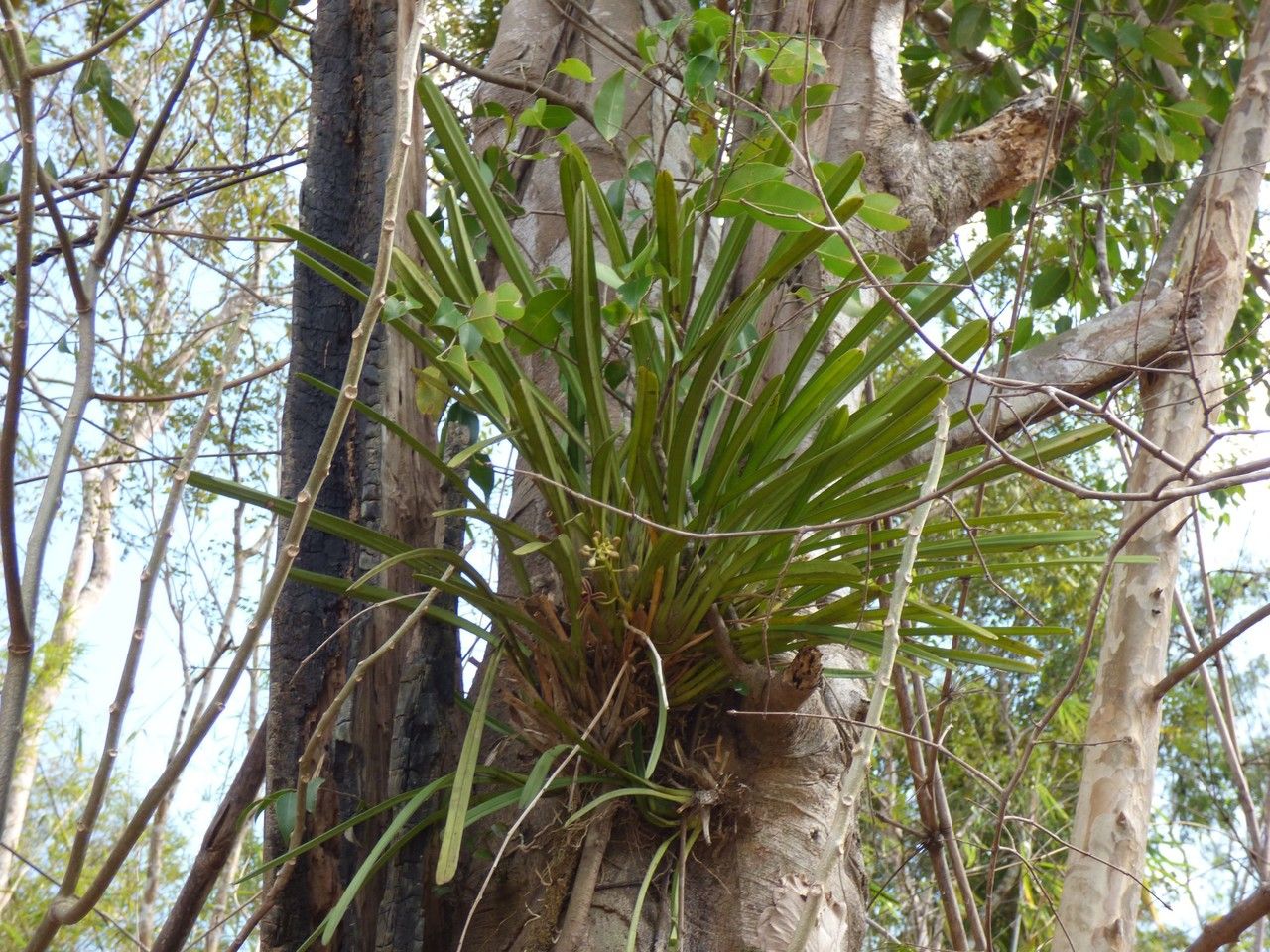
© photo
Pieter Pelser · cc0
Lucian Vazquez · cc-by
Jared Shorma · cc-by
© copyright of the Board of Trustees of the Royal Botanic Gardens, Kew.


Global distribution
POWO accepts Cymbidium as a genus native from tropical and subtropical Asia to Australia, with an introduction recorded in Hawaii. In mainland France it is grown indoors, in sunrooms or cool greenhouses, rather than treated as a naturalized plant.
- Native8
- Introduced1
- Tropical and subtropical Asia
- Himalayas
- China
- Japan
- India
- Southeast Asia
- New Guinea
- Australia
- Hawaii
Hexagons: regions where the plant occurs. Green dots: native range.1
Identity
Boat orchid (Cymbidium Sw., 1799) is an accepted genus in the Orchidaceae, published by Olof Swartz. POWO places its native range from tropical and subtropical Asia to Australia, while the RHS uses boat orchid as its English common name. 1 2
Cymbidium and Cymbidium orchid are also established horticultural names. Plants sold in garden centers are very often hybrids, grexes or pots without a reliable species name. The genus name is useful when choosing and growing an orchid, but it does not identify a particular botanical species. 3 5
The boat comparison refers to the shape of the flower's lip, which resembles a small boat. The name describes that flower part; successful cultivation depends more on the combination of pseudobulbs, strong light, an airy growing medium and cool nights. 5 2
Recognition
Evergreen clumps carry round to egg-shaped pseudobulbs, long linear leaves and fleshy white roots. Flower spikes emerge from the base of the pseudobulbs. Each carries several lasting flowers with a three-lobed lip, often more strongly colored than the surrounding sepals and petals. 2 5
Size varies considerably among species and hybrids. The RHS distinguishes standard plants reaching about 1.2 m (4 ft) from miniatures 30–60 cm (1–2 ft) tall. NC State gives a general height range of 30 cm–1.2 m (1–4 ft) and a spread of 30–90 cm (1–3 ft). These ranges reflect different kinds of boat orchid rather than one uniform size. 3 5
Flowering also varies. Large hybrids often bloom from late fall to spring, whereas some miniatures flower in summer. Flowers may be white, cream, yellow, green, pink, purple, brown or red, frequently marked with contrasting spots or streaks. 3 5
Useful taxonomy
POWO accepts Cymbidium and lists 92 accepted species, together with generic synonyms such as Cyperorchis, Cymbidiopsis and Jensoa. NC State also records older names, which helps explain labels and horticultural accounts using outdated classifications. 1 5
The genus encompasses a broad range of wild species and horticultural hybrids from different geographical ranges. Familiar species include Cymbidium aloifolium, C. ensifolium, C. goeringii and C. sinense. Their shared genus name should not obscure this botanical diversity. 7 4
Three distinct kinds of name therefore matter: the botanical genus Cymbidium, accepted wild species, and horticultural hybrids. A grex or cultivar name can be very useful when buying a plant, but it is not interchangeable with an accepted species name in POWO. 1 3
Habitat and range
Across its broad native range, the genus occurs in the Himalayas, India, China, Japan and Southeast Asia, extending to New Guinea and Australia. POWO also records an introduction to Hawaii. NC State describes the same overall range from tropical and subtropical Asia to Australia. 1 5
Boat orchids do not share a single ecology. The RHS describes epiphytic, lithophytic and terrestrial orchids; NC State likewise notes that species may grow on trees, rocks or in soil. This diversity helps explain why potted hybrids need a draining orchid mix, but not necessarily conditions as dry as those of an orchid mounted on bark. 2 5
In mainland France, boat orchids are cultivated in very bright rooms, cool sunrooms, temperate greenhouses or sheltered outdoor positions in summer. No French invasive status is established by the references consulted. That limited geographical assessment does not determine their status in other regions. 1 8
Life cycle, cultivation and flowering
Flowering is often the main challenge. The American Orchid Society emphasizes strong light together with cool temperatures: many plants develop large leafy clumps but fail to bloom when nights stay too warm. Standard types often need nights around 10–14 °C (50–57 °F) and moderate daytime temperatures to initiate flowers. 6 3
The RHS recommends a sheltered position in light shade outdoors from mid- to late summer into early fall, while local conditions remain suitable. The difference between day and night temperatures helps buds form. Wait until the flowers open before moving plants to a warmer position, because warmth while the spikes develop can cause bud drop. 3 6
Miniatures and some warmer-growing hybrids are more flexible, so a plant's label matters. For an unnamed pot, use moderately cool conditions: strong light, moving air, cool nights toward the end of the growing season, and stable conditions while buds develop. Seasonal timing follows local conditions in either hemisphere. 5 3
Growing medium, watering and repotting
An airy growing medium is essential. The RHS recommends bark-based orchid compost, and its individual species accounts often include perlite, sphagnum moss or coir. The American Orchid Society describes a more moisture-retentive mix than for some epiphytic orchids, using medium-grade bark, peat or an equivalent fibrous material, and perlite. 3 4 6
During active growth, water thoroughly and regularly, then let the pot drain. Reduce watering toward late summer and in winter, without allowing the pseudobulbs to become persistently shriveled. Water left standing in an outer pot is especially damaging: fleshy roots quickly blacken in a compact or saturated mix. 6 3
Repot after flowering, often every two years, when the mix breaks down or the clump outgrows its container. Divisions need several healthy pseudobulbs, as the RHS advises. The American Orchid Society also stresses retaining enough reserves to support the next new shoot. 3 6
Uses, toxicity and risks
Ornamental uses include flowering pots, cool sunrooms, temperate greenhouses, sheltered summer patios and cut flowers. NC State notes that florists use the lasting flower spikes. The RHS describes colorful orchids for bright rooms, often flowering when few other houseplants are in bloom. 5 3
Toxicity calls for caution. Perenual marks the group as non-toxic to animals and people, but no Cymbidium-specific entry was found in the ASPCA material consulted. That list includes several non-toxic Orchidaceae, including Phalaenopsis sp., but no Cymbidium record. This provides limited veterinary evidence for boat orchids themselves; keep the plant, growing medium and fertilizer from being eaten. 8 9 10
Practical growing problems include aphids, scale insects, spider mites, outdoor slugs, root rot, Botrytis on flowers in stagnant air, and viruses such as Cymbidium mosaic virus. Clean tools, moving air and a well-drained pot matter more than intensive preventive treatments. 4 3 5
Main sources
- Plants of the World Online / Kew, Cymbidium Sw.
- Royal Horticultural Society, Cymbidium
- Royal Horticultural Society, How to grow cymbidium orchids
- RHS content, Cymbidium genus and selected species
- NC State Extension Gardener Plant Toolbox, Cymbidium
- American Orchid Society, Cymbidium culture sheet
- Trefle, species data, selected Cymbidium species
- Perenual, horticultural traits, Cymbidium group
- ASPCA Animal Poison Control, Toxic and Non-Toxic Plants List
- ASPCA animal toxicity data, Orchidaceae rows
Frequently asked questions
Is Cymbidium a species or a genus?
Cymbidium is a genus. POWO accepts it within the Orchidaceae and includes numerous species; commercially sold plants are often hybrids or grexes.
Why will my boat orchid not bloom again?
Common causes include nights that are too warm, insufficient light or keeping the plant in a heated living room all year. A sheltered spell outdoors in late summer often helps create a difference between day and night temperatures.
Does a boat orchid need a special orchid mix?
Yes. An airy bark-based mix, with perlite, sphagnum moss or coir, protects the fleshy roots. A compact potting soil increases the risk of rot.
Is boat orchid poisonous to cats?
No Cymbidium-specific ASPCA entry was found in the references consulted. Caution is therefore appropriate: this does not establish a major poison, but ingestion should be avoided and symptoms warrant veterinary advice.
Can a boat orchid go outdoors?
Yes, in summer, in a sheltered, bright position away from scorching sun. Acclimate it gradually and bring it indoors before prolonged cold.
When should I repot a boat orchid?
After flowering, often in spring, when the bark breaks down or the clump outgrows its pot. Very small divisions take longer to flower again.
Similar plants
If you are unsure about a plant’s toxicity, ask a botanist or veterinarian for advice.