
Artichoke thistle (Cynara cardunculus, )

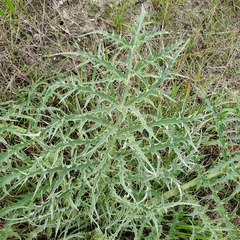

Artichoke thistle (Cynara cardunculus) is a large herbaceous perennial in the Asteraceae, native to the Mediterranean basin and Macaronesia. The species includes the spiny wild plant, cultivated cardoon grown for its fleshy leaf ribs, and globe artichoke, grown for its immature flower heads.
Read moreArtichoke thistle, Cardoon and Wild cardoon
Place in full sun, with intense direct light all day long.



© photo
(c) José Antonio Domínguez Llovería, some rights reserved (CC BY-NC), uploaded by José Antonio Domínguez Llovería · cc-by-nc
John Cowles · cc0
Todd Boland · cc-by
Taken Sep 15, 2008 by Photoflora - Benoit BOCK (©)
Taken Jan 1, 1970 by Photoflora - L'Abbé COSTE (©)
Taken Aug 15, 2009 by Photoflora - Jean-Luc TASSET (©)
Taken May 18, 2008 by Tela Botanica − Mathieu MENAND (cc-by-sa)
Taken Feb 4, 2022 by Fabrice Rubio (cc-by-sa)
© copyright of the Board of Trustees of the Royal Botanic Gardens, Kew.




Global distribution
Cynara cardunculus is native to the western Mediterranean basin and Macaronesia, particularly Spain, Italy, Greece, the Canary Islands and Madeira. Domesticated early for its leaf ribs and introduced as a vegetable into many temperate regions, it has also naturalized beyond its original range, sometimes invasively.
- Native5
- Introduced2
- Invasive2
- Spain
- Italy
- Greece
- Canary Islands
- Madeira
- United States (California)
- South Africa
- Argentina
- South Australia
Hexagons: regions where the plant occurs. Green dots: native range.1
Identity
Artichoke thistle (Cynara cardunculus L., 1753), also called cardoon, is a large herbaceous plant in the Asteraceae and a close relative of globe artichoke. The name cardoon derives from Latin carduus, meaning thistle, and recalls the spiny habit of the wild form. 1 2
In 1753, Carl Linnaeus placed under this species name three forms harvested for very different parts: wild cardoon (var. sylvestris), spiny and with little flesh; cultivated cardoon, selected for tender ribs; and globe artichoke (subsp. scolymus), grown for its immature flower head. This classification explains why the two vegetables remain, botanically, the same plant. 6 4
Recognition
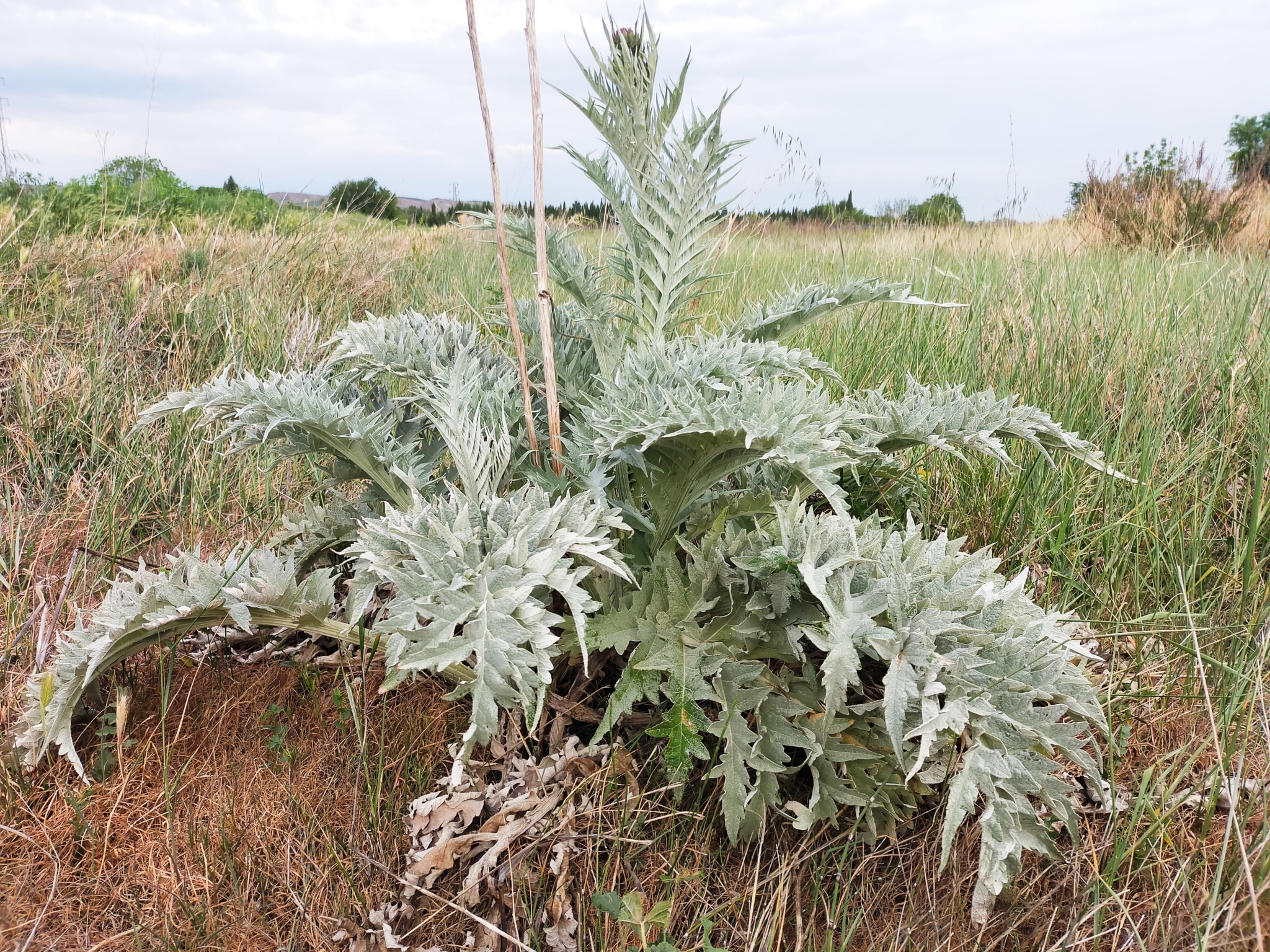
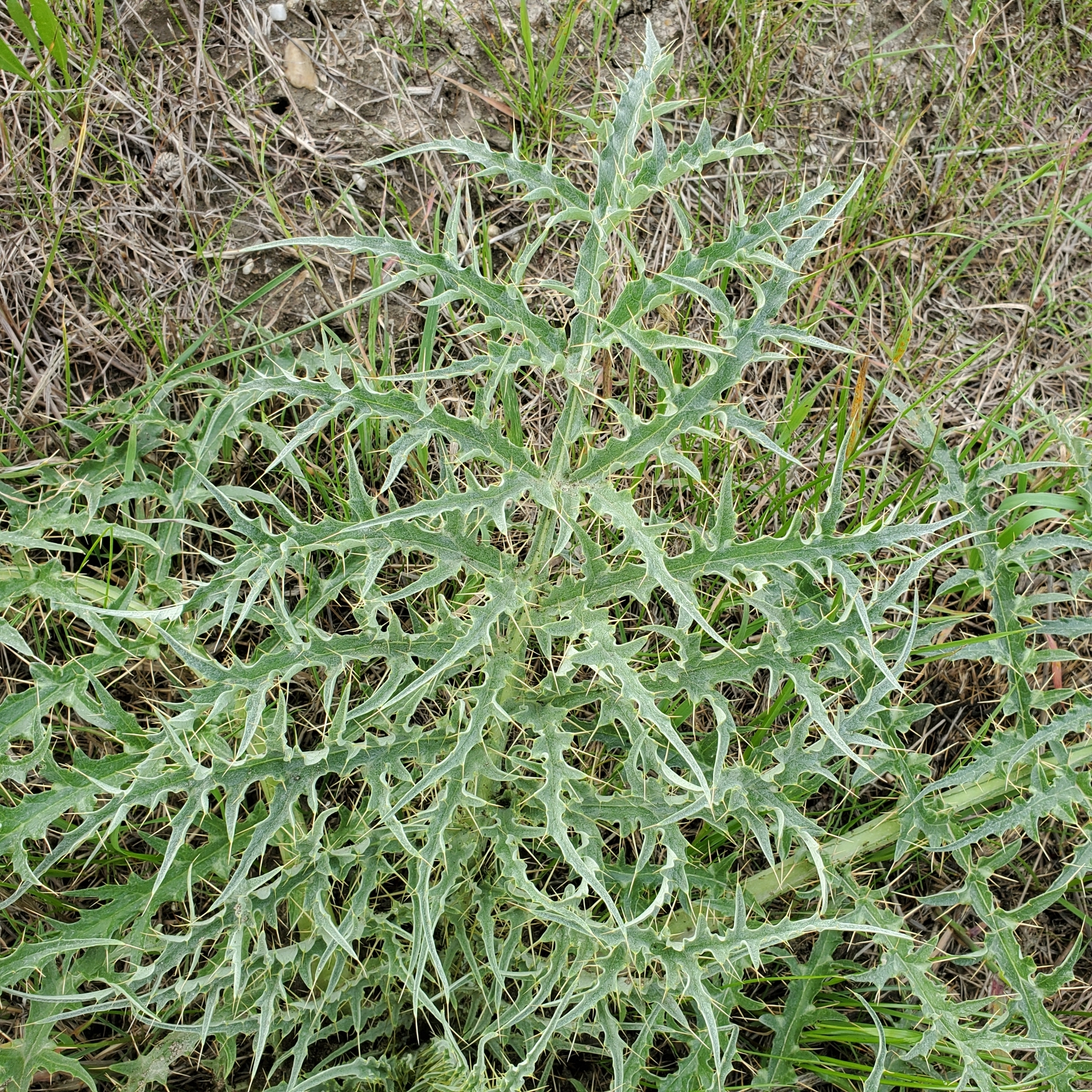
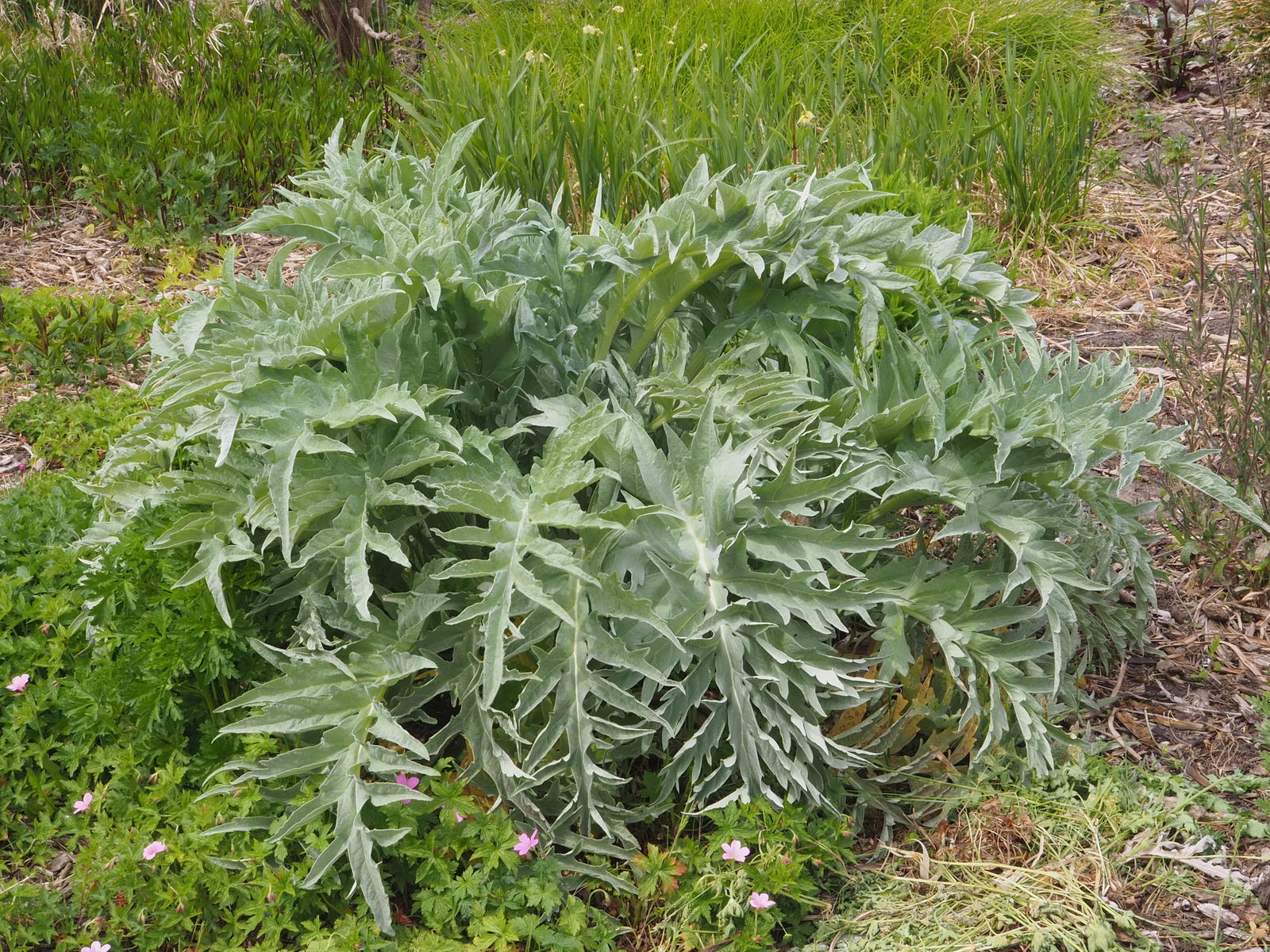
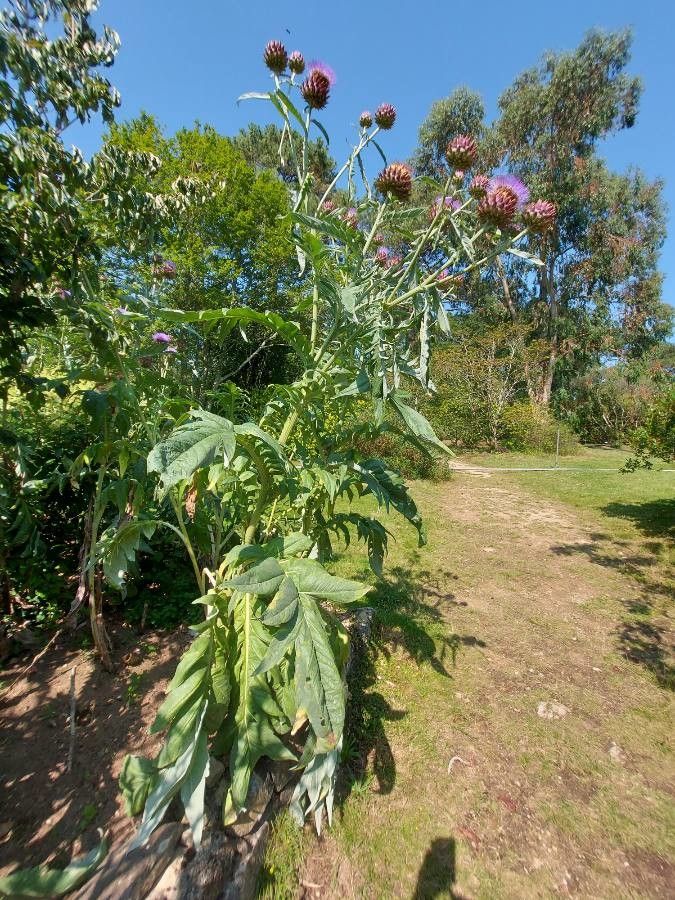
Silver foliage makes a flowering clump of Cynara cardunculus conspicuous in a garden or on waste ground. The plant reaches 1.5–2.5 m (5–8 ft) tall in flower. Its large leaves, up to 1 m (3.3 ft) long, are deeply divided, spiny and often covered with white down underneath. 2 4
The vegetable crop is the leaf rib, the thick, fleshy central vein of each leaf. Wild forms and some older varieties have spines; modern spineless cultivars are smoother and easier to harvest. Their lack of spines changes handling rather than the identity of the edible part. 2 3
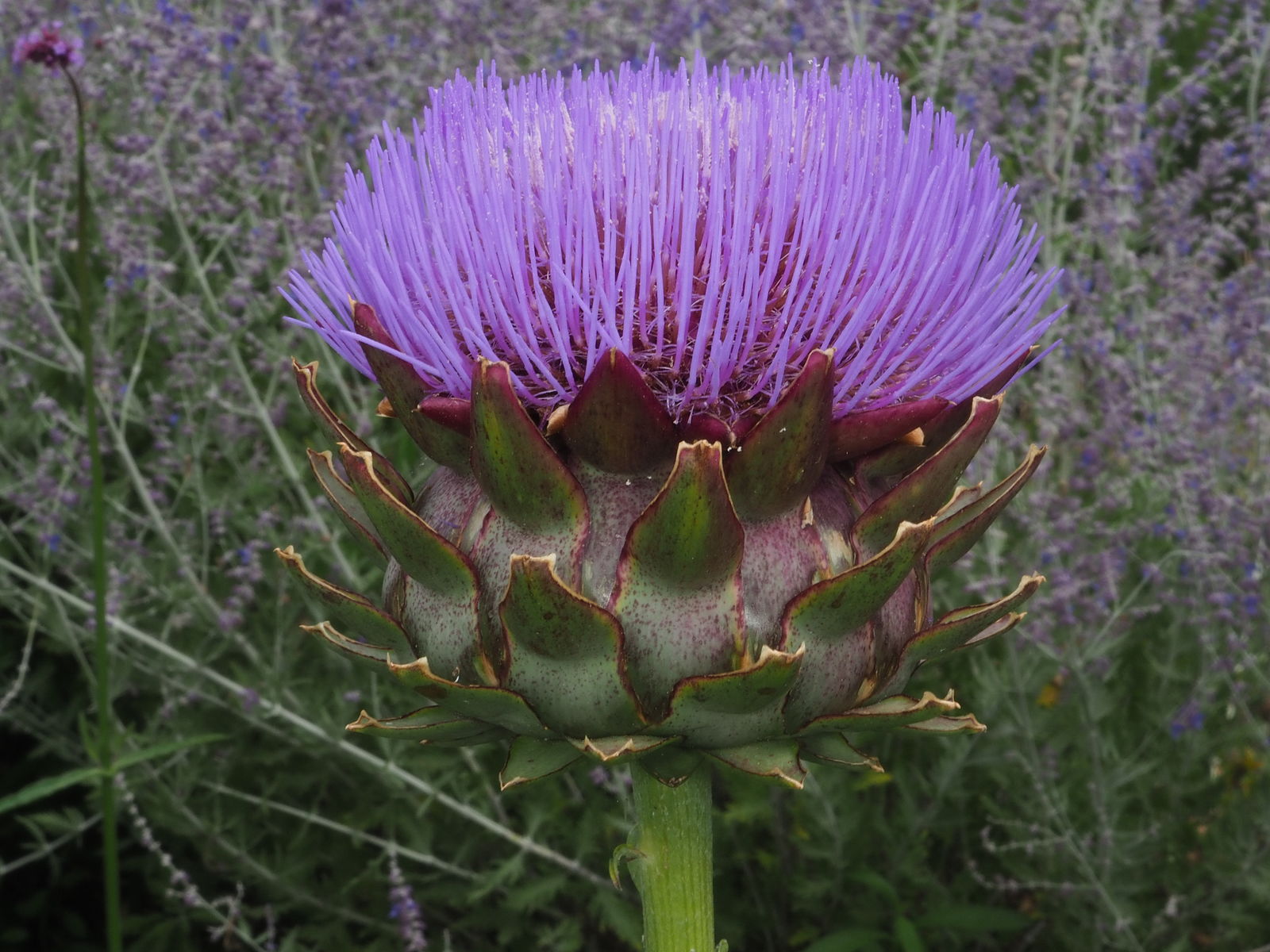
In summer, a sturdy flowering stem carries violet to bluish flower heads, 4–8 cm (1.5–3 in) across, surrounded by pointed, leathery bracts. In globe artichoke, these bracts develop thick, fleshy bases, the parts harvested for cooking. In cardoon, the bracts remain thin and prickly until the flowers fade. 4 5
Useful taxonomy
Botanical names do not always line up neatly with kitchen-garden uses. The main forms to recognize are:
- Cynara cardunculus var. sylvestris (Lam.) Brot., wild cardoon, the ancestor of cultivated forms
- Cynara cardunculus subsp. scolymus (L.) Hegi, globe artichoke, long described as a separate species
- Cynara scolymus L., the former name of globe artichoke, now treated as a synonym
- Cynara cardunculus var. altilis DC., a historical name for more tender vegetable forms
The accepted name Cynara cardunculus remains the common botanical reference. Cultivated cardoons and globe artichokes do not constitute separate species, however different the harvested vegetables may look. Their names describe forms selected for different parts of the plant. 1 6
Habitat and range
Wild populations occupy waste ground, dry banks and roadsides in the western Mediterranean basin and Macaronesia, on sunny, well-drained calcareous soils. These open habitats suit a plant whose large rosette needs plenty of light. 6 7
After its early domestication for leaf ribs, cardoon was introduced as a vegetable into many temperate regions. Some plants escaped cultivation. In Argentina and southern Australia, dense naturalized stands are locally considered invasive on grazing land. That regional status does not imply the same classification everywhere the species is grown. 8 1
In France, cardoon remains chiefly a garden and field vegetable, notably around Lyon, without a documented invasive status. This French cultivation history is distinct from its behavior in the introduced populations of Argentina and Australia. 7
Life cycle and reproduction
Although botanically perennial, cardoon often behaves as a biennial crop. Sown in spring, it develops harvestable leaf ribs in its first year, then flowers and sets seed the following year if left unharvested. Harvesting decisions therefore affect whether the gardener sees the plant's full reproductive cycle. 3 2
Summer flower heads attract honeybees, bumblebees and hoverflies. After pollination, each head produces achenes topped with silky tufts, which help carry them on the wind. The large purple heads serve both as conspicuous garden features and as the source of the next generation of plants. 4
Garden propagation relies mainly on seed, sown under cover in early spring or directly outdoors later in spring, according to local conditions. Seedlings do not reliably preserve the spineless character of a cultivar such as Plein Blanc Inerme. Only division of side shoots in spring passes that character on unchanged. 2 3
Uses and risks
Food is the principal use. About three weeks before harvest, the leaf ribs are tied together and kept out of the light, reducing bitterness and making them more tender. This blanching takes place in fall and precedes prolonged cooking, often in a gratin. Blanching here means excluding light from the growing plant, rather than briefly boiling the harvested vegetable. 5 4
Cardoon is not listed as toxic to cats or dogs. The main risk is mechanical injury from the spines of wild or older forms when handling the leaves. A spineless vegetable cultivar and a thorny wild plant may therefore differ markedly in how easily they can be handled. 3 2
The ribs contain inulin, a low-calorie storage carbohydrate, and cynarin, the bitter compound also found in globe artichoke. This chemical relationship helps explain the recognizable family resemblance in flavor, despite the different parts harvested from the two vegetables. 3 5
Outside the vegetable garden, cardoon is also ornamental. Silver foliage and a tall outline make it an effective specimen in dry borders, alongside other drought-tolerant Mediterranean perennials. Its appearance remains useful even when the leaf ribs are not being grown for the kitchen. 2
Varieties, look-alikes and related plants
Named cultivars include Plein Blanc Inerme, prominent in French commercial growing because of its spineless ribs. Épineux genevois retains the spines of older forms and is valued for a firmer texture after cooking. These are horticultural selections within Cynara cardunculus, rather than separate species. 2
Before flowering, several large Mediterranean thistles can look similar. Wild forms of globe artichoke also resemble cardoon closely before their differently harvested parts have developed:
- Onopordum acanthium, Scotch thistle, with woolly leaves and spiny, winged stems;
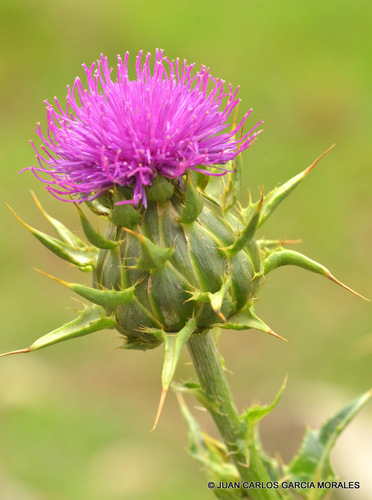
- Silybum marianum, milk thistle, recognizable by white-marbled leaves.
Flowering resolves most of these uncertainties. The shape and color of the involucral bracts distinguish cardoon from Onopordum, Silybum and wild forms of globe artichoke.
At market, a cardoon rib is flat and ridged, very different from the rounded flower bud sold as a globe artichoke. Unlike a comparison of involucral bracts, which requires flowering, this difference can be checked at the vegetable stall without having seen either plant in bloom. 4
Main sources
- Plants of the World Online / Kew, Cynara cardunculus L.
- Royal Horticultural Society, Cynara cardunculus - cardoon
- Plants For A Future, Cynara cardunculus database entry
- Missouri Botanical Garden Plant Finder, Cynara cardunculus
- Encyclopaedia Britannica, cardoon
- Tela Botanica, Cynara cardunculus L.
- INPN / MNHN, Cynara cardunculus L., 1753 (cd_nom 93783)
- FloraBase Western Australia, Cynara cardunculus
Frequently asked questions
Are cardoon and globe artichoke the same plant?
They belong to the same species, Cynara cardunculus. Cardoon is the form grown for its fleshy leaf ribs; globe artichoke belongs to subspecies scolymus, selected for its immature flower buds.
Is cardoon poisonous to animals?
No. Cardoon is not listed as toxic to cats or dogs. Its spines, present on wild forms and some older varieties, can cause mechanical injuries on contact.
Why are cardoon ribs blanched before harvest?
Tying the leaves together or wrapping them to exclude light for about three weeks reduces the ribs’ natural bitterness and makes them more tender before cooking.
Where does cardoon come from?
The species is native to the western Mediterranean basin and Macaronesia. It has since naturalized beyond its original range, notably in South America and Australia, where it is sometimes considered invasive.
What plants can be mistaken for cardoon?
The most frequent look-alikes are Onopordum acanthium, Scotch thistle, and Silybum marianum, milk thistle. The involucral bracts and the shape of the flower heads are the most reliable identifying features.
Can cardoon withstand frost?
An established crown tolerates short frosts down to about -10 °C (14 °F), especially when mulched. Aboveground foliage blackens with the first substantial cold spells.
Similar plants

If you are unsure about a plant’s toxicity, ask a botanist or veterinarian for advice.