
Clove pink (Dianthus caryophyllus, )
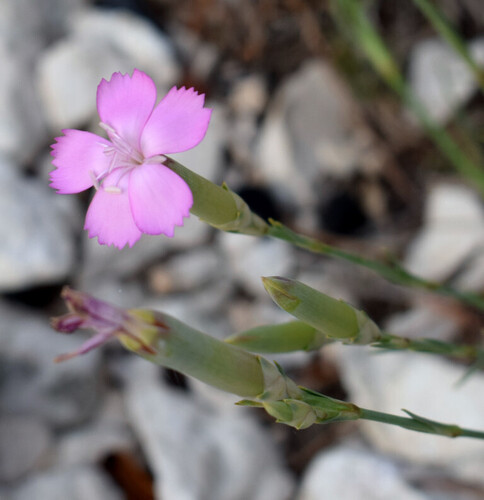


Clove pink (Dianthus caryophyllus L., 1753), also called carnation, is a perennial in the Caryophyllaceae that may develop a woody base. The botanical species is native to the Balkan Peninsula; florist carnations are mainly horticultural forms selected for fragrant, double or brightly colored flowers.
Read moreClove pink, Carnation, Border carnation and Gillyflower
Place in full sun, with intense direct light all day long.


© photo
(c) jppiquet, some rights reserved (CC BY-NC), uploaded by jppiquet · cc-by-nc
Yves Bas · cc-by
Wikimedia Commons · CC BY-SA or Public Domain
Taken Sep 27, 2022 by Alboss (cc-by-sa)
Taken May 27, 2021 by nbx (cc-by-sa)
Taken Jun 2, 2022 by Jim Knopf (cc-by-sa)
Taken May 31, 2015 by Tela Botanica − sebastian lyche (cc-by-sa)
Taken Aug 17, 2021 by Monteiro Henrique (cc-by-sa)
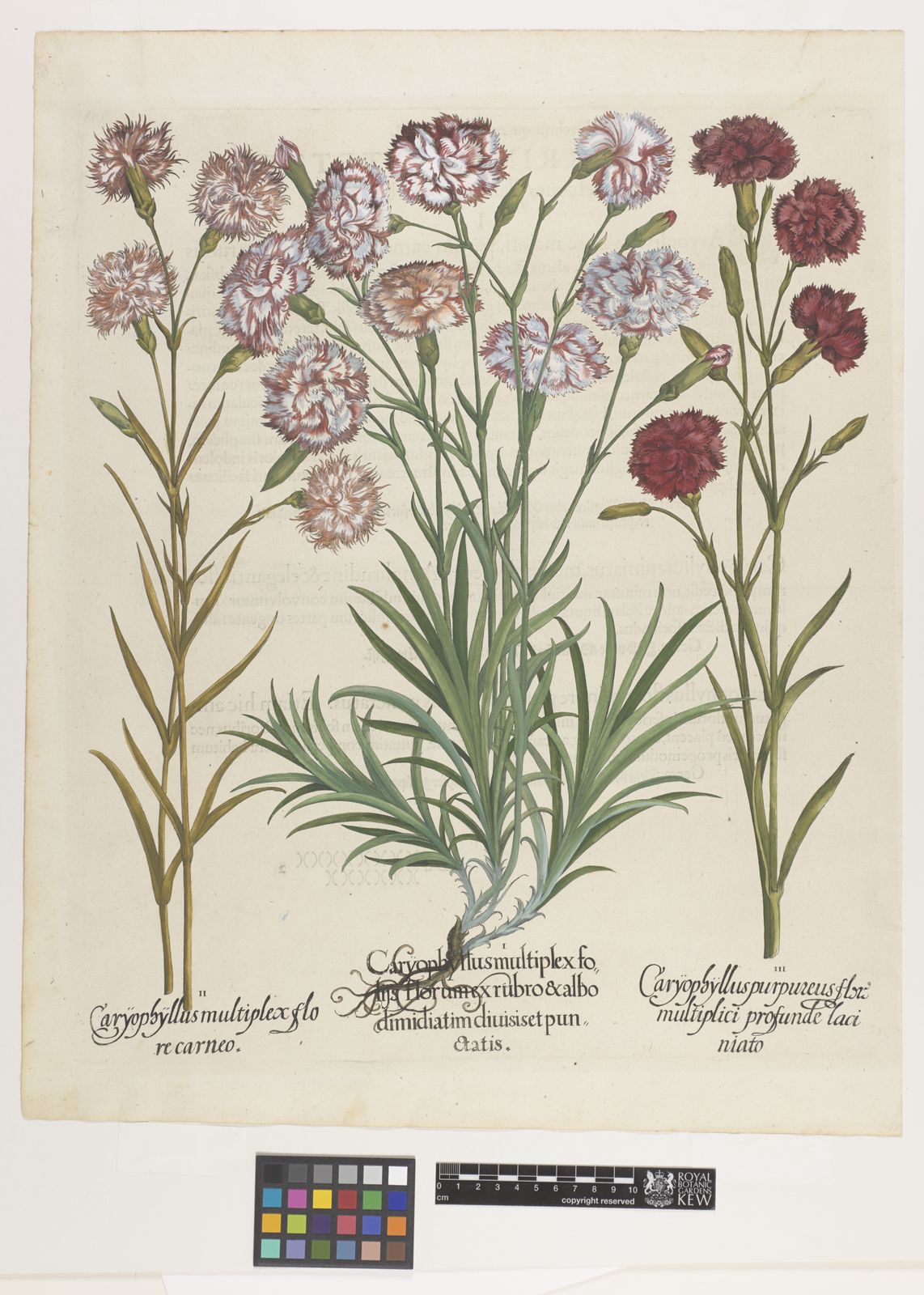
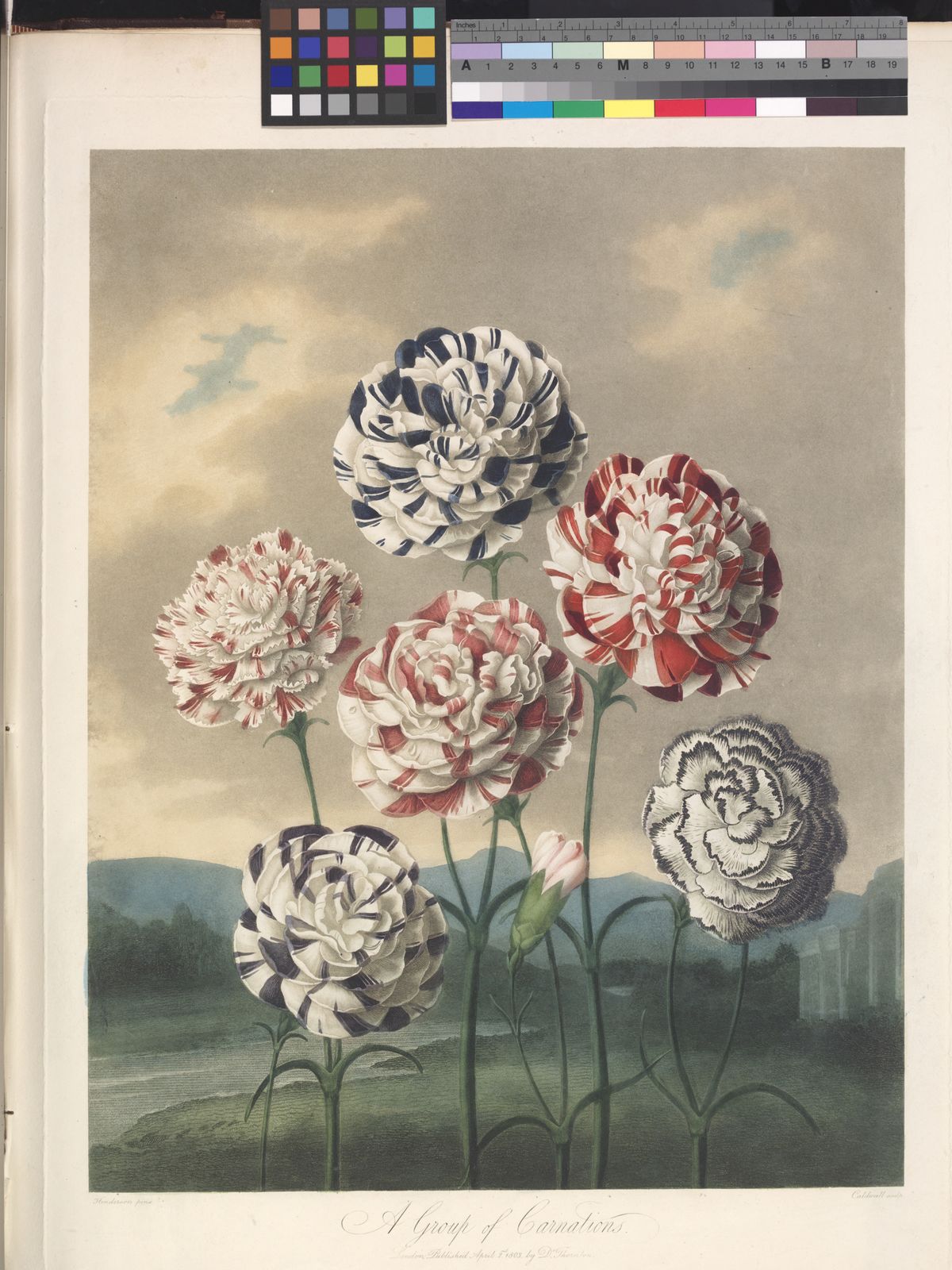
© copyright of the Board of Trustees of the Royal Botanic Gardens, Kew.


Global distribution
POWO/WCVP gives a Balkan native range, including Albania, Greece and the northwestern Balkans. Horticultural references often use broader descriptions such as the Mediterranean or southern Europe, reflecting a long history of cultivation and introduction.
- Native3
- Introduced4
- Albania
- Greece
- Northwestern Balkans
- Metropolitan France
- Great Britain
- Spain
- Germany
Hexagons: regions where the plant occurs. Green dots: native range.1
Identity
Clove pink (Dianthus caryophyllus L.) is an accepted species in Dianthus, family Caryophyllaceae. POWO/WCVP dates its name to Species Plantarum in 1753 and places it in Caryophyllales. 1
Carnation, border carnation and gillyflower are established English names. Trefle also records wild carnation. French names emphasize its familiar garden and florist uses, but those uses do not by themselves identify a botanical species. 2
Florist carnations need careful interpretation. The botanical species provides a reference, while flowers sold in bouquets are often cultivars, cut-flower strains or horticultural hybrids selected for lasting quality, size and color. 3 4
Recognition
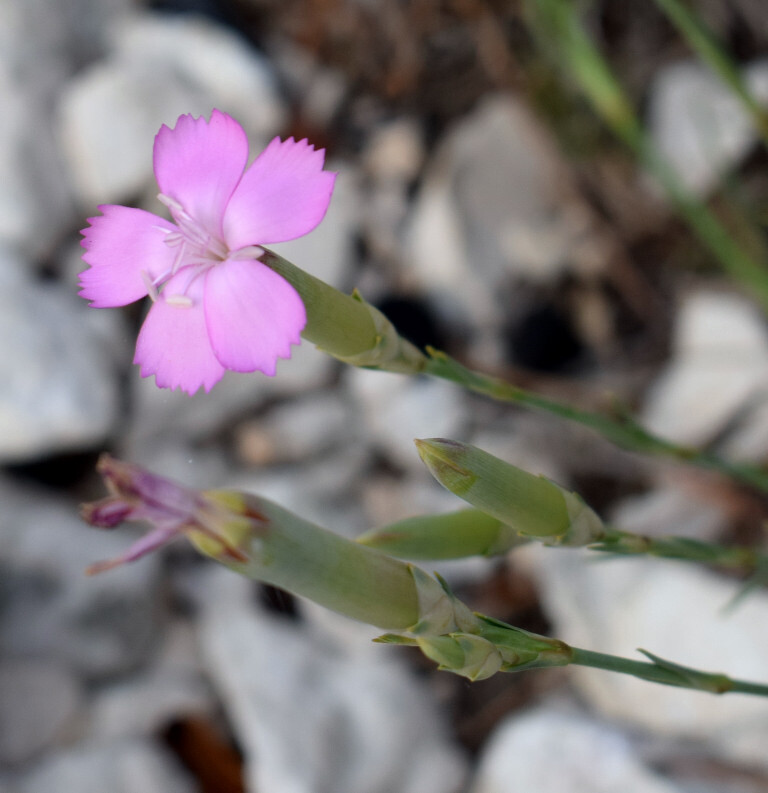
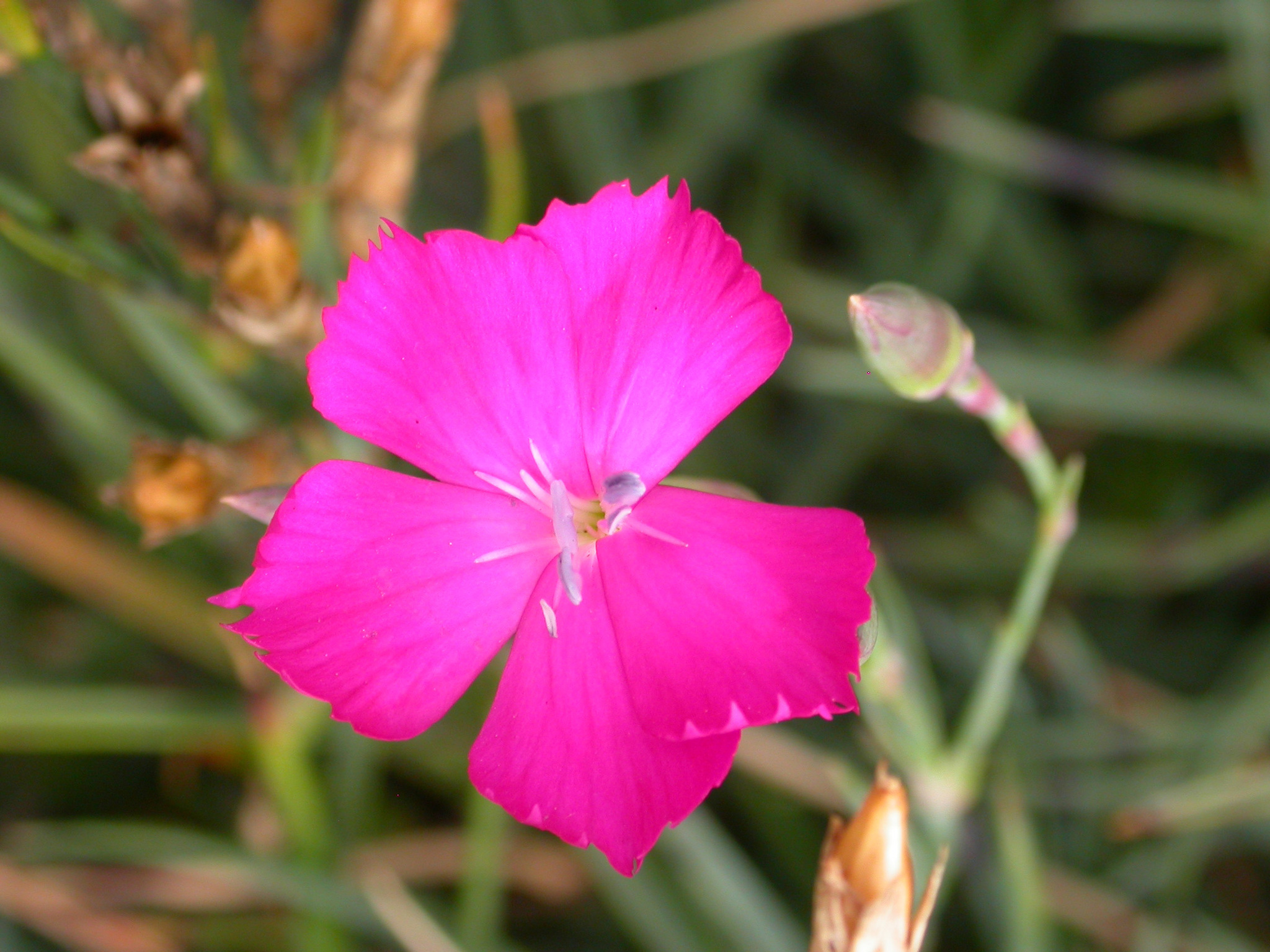
Carnation is a herbaceous perennial that may develop a slightly woody base with age. RHS describes a border pink with gray-green leaves and single, clove-scented flowers in shades of pink and purple. NC State includes white, red, yellow, orange, violet and patterned garden forms. 3 4
Leaves are opposite, simple, linear and waxy, ranging from gray-green to blue-green. Upright, branched stems have conspicuously swollen nodes, a useful clue to Dianthus even when a bouquet stem has been cut short. 4
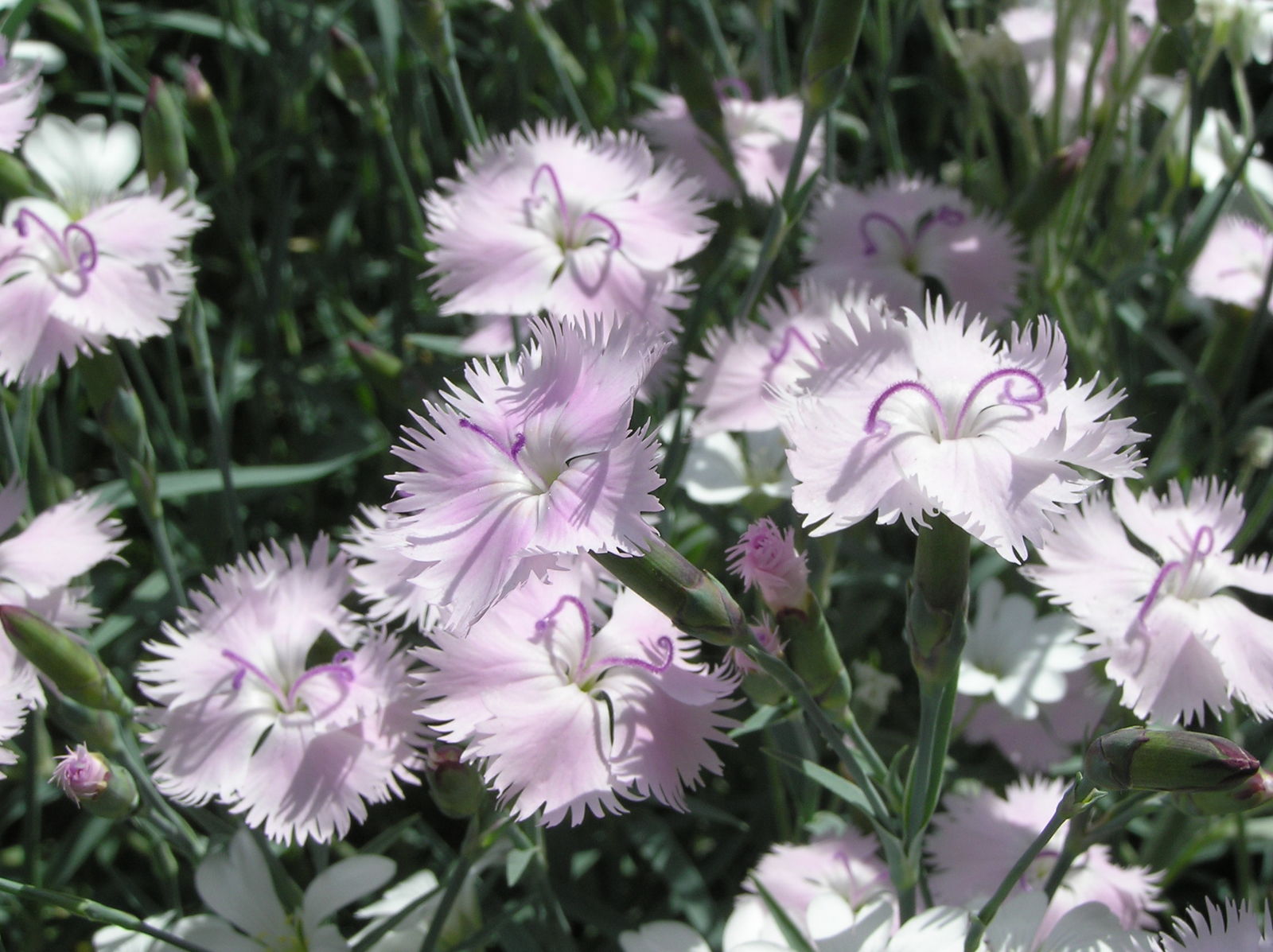
The species and related forms often have fragrant, fringed petals. Very double, regular florist flowers mainly reflect horticultural selection rather than a wild plant. The combination of glaucous linear foliage, knobby stems and clove scent is particularly useful for recognition. 3 4
Taxonomy and names
Dianthus caryophyllus L. remains the botanical reference. POWO lists historical synonyms including Tunica caryophyllus, Silene caryophylla, Dianthus coronarius, Dianthus arbuscula, Dianthus kayserianus and several associated varieties or subspecies. They may occur in herbaria, older catalogs and horticultural writing. 1
Carnation may mean the species, a horticultural group or hybrids with other Dianthus. Some other common names are particularly confusing: ASPCA lists “Sweet William” among the names for its Carnation entry, although sweet William is generally distinguished as Dianthus barbatus. 5 1
Separate the botanical name, common selling names and cultivars. A packet labeled carnation, a border pink and a florist stem may be closely related without sharing the same hardiness, height or garden behavior. 3 8
Habitat and range
The Balkan Peninsula is the native range given by POWO/WCVP, including Albania, Greece and the northwestern Balkans. Trefle similarly lists Albania, Greece and “Yugoslavia” in its historical floristic sense. 1 2
Broader references to the Mediterranean, southern Europe or France need context. NC State describes a Mediterranean range with uncertain exact limits, while POWO and Trefle list France among introductions. French national observation records establish recorded presence, rather than native status. 4 7
In cultivation, the essentials are full sun, very good drainage and preferably neutral to alkaline soil. RHS recommends a sunny position and well-drained ground; NC State notes that several soil textures are suitable if drainage remains good. 3 4
No invasive status is established for mainland France. An introduced or cultivated occurrence does not in itself demonstrate invasive behavior. 1 7
Life cycle and cultivation
Carnations may be grown as perennials, annual bedding plants or cut-flower crops. RHS gives a mature height of 0.5–1 m (1.6–3.3 ft), spread of 0.1–0.5 m (4–20 in) and two to five years to reach final height. NC State’s broader horticultural height range is 30 cm–1.2 m (1–4 ft), reflecting garden and florist forms. 3 4
Propagation depends on the desired result. Seed suits mixtures and bedding strains; cuttings of nonflowering shoots preserve a particular cultivar more reliably. RHS recommends softwood cuttings in summer for D. caryophyllus. 3
Deadheading, full sun and good drainage help extend flowering. Common growing problems include aphids, slugs, powdery mildew, rust, viruses and Fusarium wilt, especially with poor air circulation or a persistently wet crown. 3
Uses, edibility and toxicity
Ornamental uses include borders, sunny containers, rock gardens, cutting gardens and bouquets. The clove scent and long history of selection explain its importance to florists, but also make it difficult to assign every commercial stem to a pure species. 3 4
Horticultural and culinary sources describe the petals as edible under strict conditions: remove the bitter white base, and use only correctly identified, untreated flowers grown for food. Florist carnations are not recommended for eating. 6 4
ASPCA lists carnation (Dianthus caryophyllus) as toxic to dogs, cats and horses, with an unspecified irritant and mild clinical signs, chiefly digestive upset or dermatitis. NC State also gives low poisoning severity for people and reports problems for cats, dogs and horses. 5 4
These are different, limited uses: people may use petals from a food crop in cooking, while the plant should remain out of pets’ reach. Florist bouquets are not food. 6 5
Historical medicinal uses reported by POWO, NC State or PFAF are not treatment advice. The available accounts do not establish a modern protocol, dose, medical setting or sufficient clinical validation for self-treatment. 1 9
Cultivars and look-alikes
RHS notes that many old and modern pinks were selected from this species. Perenual lists 'Clarion' and 'Vienna Mischung' directly under Dianthus caryophyllus, with full sun, alkaline or drained soil and a perennial life cycle. 3 8
Selling groups such as border carnation, florist carnation and grenadine are horticultural categories. They help buyers choose a plant, but are not taxonomic ranks equivalent to species, subspecies or botanical variety. 3
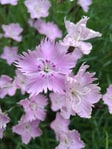
Useful comparisons include sweet William (D. barbatus), China pink (D. chinensis), cottage pink (D. plumarius) and maiden pink (D. deltoides). French marigold is different: despite the French word œillet in œillet d’Inde, it belongs to Tagetes, not Dianthus. 1 10
Main sources
- Plants of the World Online / Kew, Dianthus caryophyllus L.
- Trefle, species data, Dianthus caryophyllus
- Royal Horticultural Society, Dianthus caryophyllus border carnation
- NC State Extension Gardener Plant Toolbox, Dianthus caryophyllus
- ASPCA, Carnation toxicity entry
- University of Minnesota Extension, Edible flowers
- INPN / MNHN, Dianthus caryophyllus L., 1753
- Perenual, horticultural traits, Dianthus caryophyllus cultivars
- Plants For A Future, Dianthus caryophyllus
- Plants of the World Online / Kew, Tagetes patula L.
Frequently asked questions
Is Dianthus caryophyllus the florist carnation?
Yes, it is the reference species, but florist carnations are often cultivars or selected strains. A very double bouquet flower should not be mistaken for a wild form.
Where does carnation come from?
POWO/WCVP gives a Balkan native range, particularly Albania, Greece and the northwestern Balkans. Broader descriptions such as Mediterranean often reflect horticultural or historical usage.
Are carnation flowers edible?
Some culinary sources describe the petals as edible after removing the bitter white base. Do not eat florist carnations, which may have received chemical treatments.
Are carnations poisonous to cats and dogs?
Yes. ASPCA lists carnation as toxic to dogs, cats and horses, with mild digestive signs and mild dermatitis. The risk is described as low, but ingestion should be avoided.
Is carnation invasive in France?
No invasive alien status is established for mainland France. POWO and Trefle list France as a region of introduction or occurrence, which does not itself establish invasive behavior.
How does it differ from sweet William?
Sweet William is generally Dianthus barbatus, with dense clusters of small flowers. Dianthus caryophyllus is the familiar garden or florist carnation, grown on cutting stems for its large, fragrant flowers.
Similar plants
If you are unsure about a plant’s toxicity, ask a botanist or veterinarian for advice.