
Chinese-pink (Dianthus chinensis, )
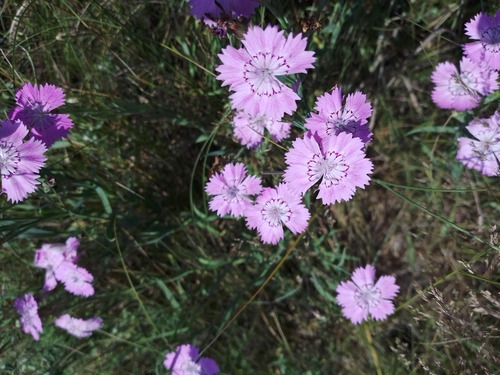
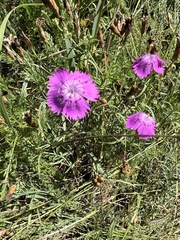
Chinese-pink (Dianthus chinensis L., 1753) is a temperate member of the Caryophyllaceae, widely grown in beds, borders, pots and for cutting. Botanically a short-lived perennial or subshrub, depending on the treatment, it is often grown as an annual or biennial for its flat, fringed flowers in white, pink, red or purple.
Read moreChinese-pink, China pink, Rainbow pink, Japanese pink, Indian pink and French mignonette


© photo
(c) maxpauel, some rights reserved (CC BY-NC), uploaded by maxpauel · cc-by-nc
Алёна Осипова · cc-by
Taken Jul 21, 2022 by Oktay Meriç (cc-by-sa)
Taken Jul 2, 2020 by luciecharlo (cc-by-sa)
Taken Jun 18, 2020 by Katalin K. (cc-by-sa)
Taken May 2, 2020 by guimaraes jocemara (cc-by-sa)
Taken Jan 7, 2021 by Espinoza-Zevallos Marco Elías (cc-by-sa)
© copyright of the Board of Trustees of the Royal Botanic Gardens, Kew.




Global distribution
POWO treats Dianthus chinensis broadly, with a native range from eastern Europe through temperate Asia to northern India. EPPO includes eastern Europe, Siberia, the Russian Far East, central Asia, the Himalayas, China, Korea, Mongolia and Indochina. In France, INPN records an introduced, unestablished presence, without an invasive classification.
- Native7
- Introduced2
- Eastern Europe
- Temperate Asia
- Northern India
- China
- Korea
- Mongolia
- Siberia and Russian Far East
- Metropolitan France
- Canada, Ontario
Hexagons: regions where the plant occurs. Green dots: native range.1
Identity
Chinese-pink (Dianthus chinensis L.) belongs to the genus Dianthus in the Caryophyllaceae family. Kew accepts the name, published in Species Plantarum in 1753; GBIF likewise recognizes the species and Linnaeus as its author. 1 2
China pink, rainbow pink, Japanese pink, Indian pink and French mignonette are established horticultural names alongside Chinese-pink. French uses “oeillet de Chine,” but a complete scientific name matters when discussing toxicity or floristic status: pink and carnation names cover several different plants. 5 2
Bedding displays often treat this plant as an annual, although botanical and horticultural descriptions range from short-lived perennial to biennial or subshrub, depending on climate and selection. In practice, grow it for a relatively short flowering life and renew plants readily from seed. 5 6
Recognition
Branched upper stems give Dianthus chinensis a low, upright to rounded outline. NC State gives a height of 15–75 cm (6–30 in), depending on the selection; RHS generally gives mature height and spread of 0.1–0.5 m (4–20 in). 6 5
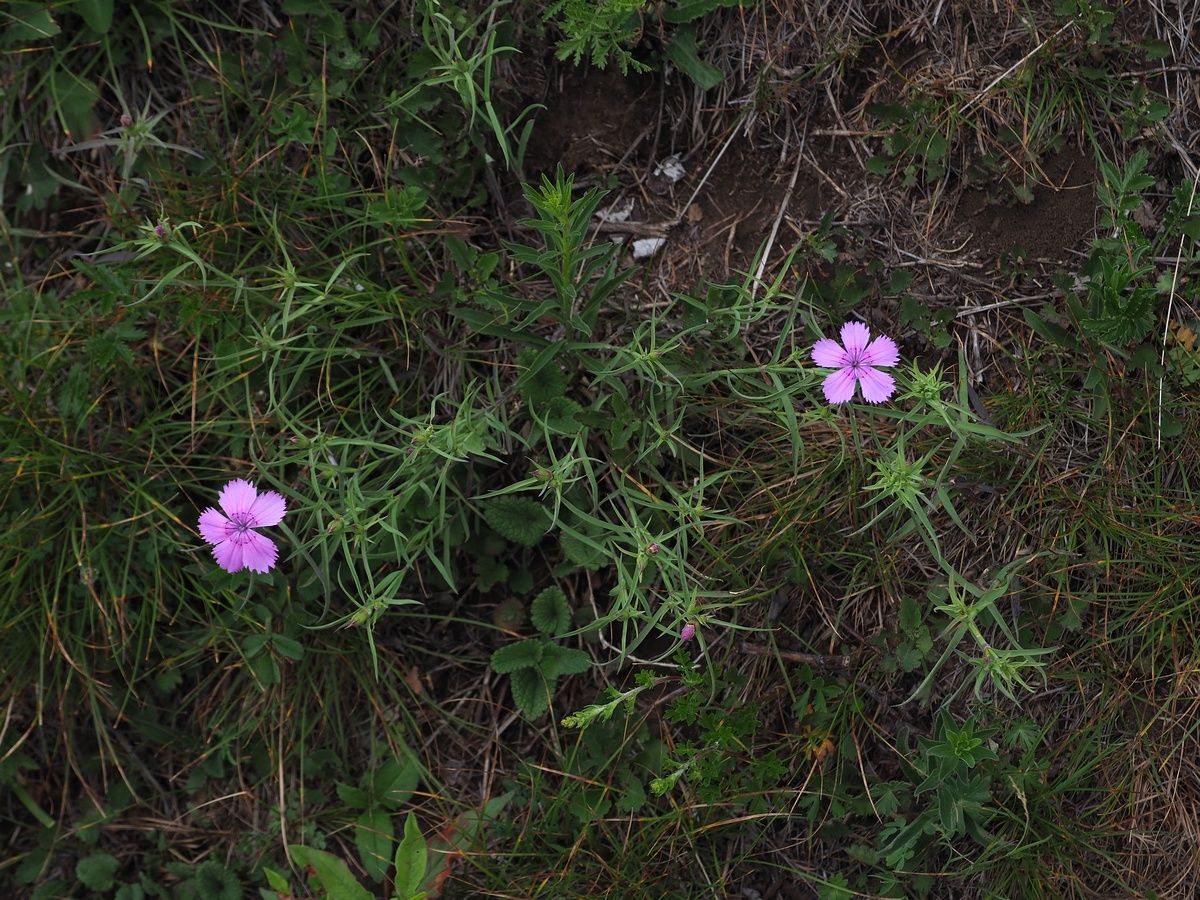
Opposite, simple leaves are narrow, linear to lance-shaped, green to gray-green and often slightly waxy. Flora of China, presented through EOL, describes linear-lanceolate leaves 3–5 cm (1.2–2 in) long and 2–4 mm (0.08–0.16 in) wide, with a clear midrib, a slightly narrowed base and entire or finely toothed margins. 4 6
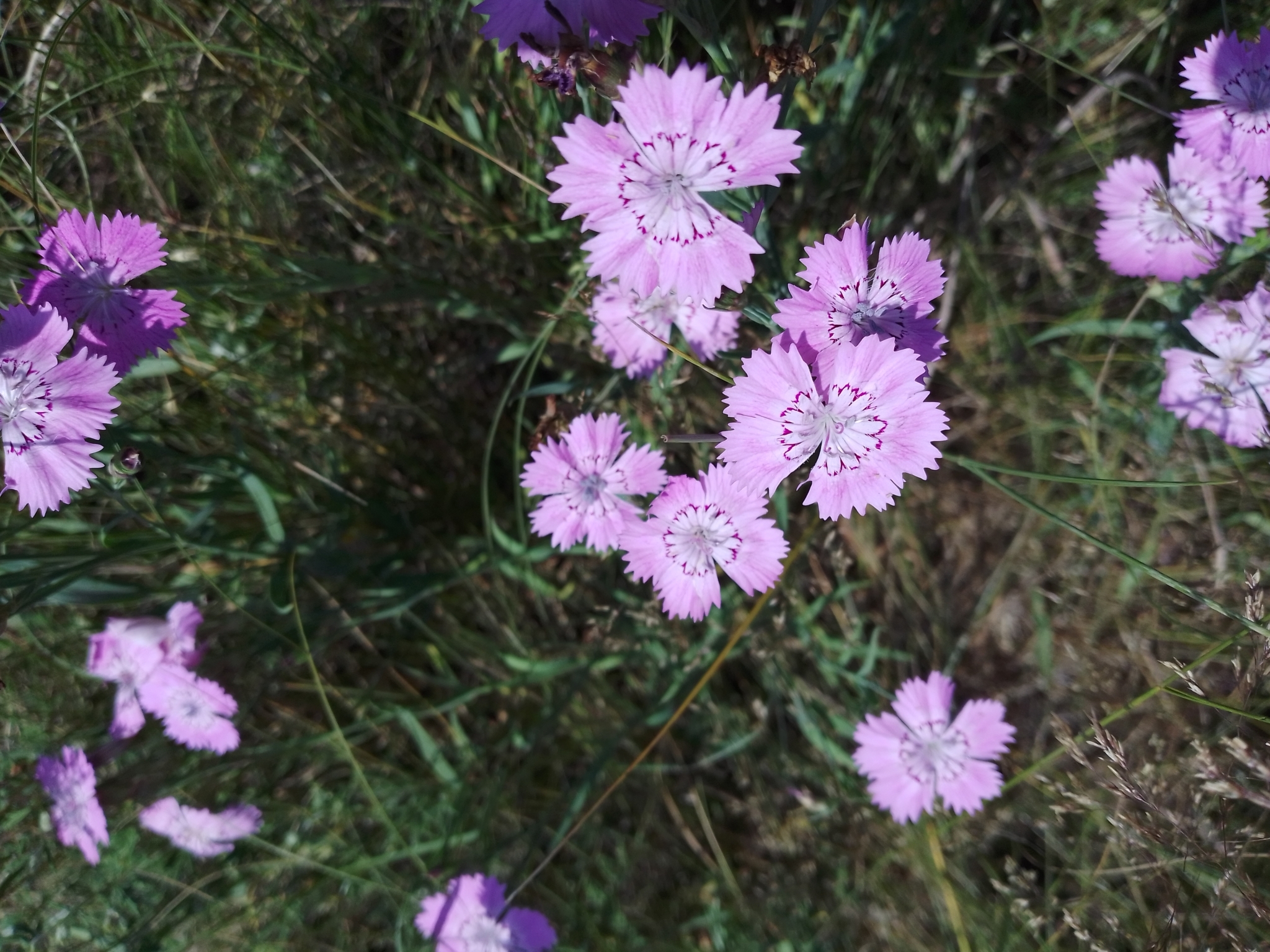
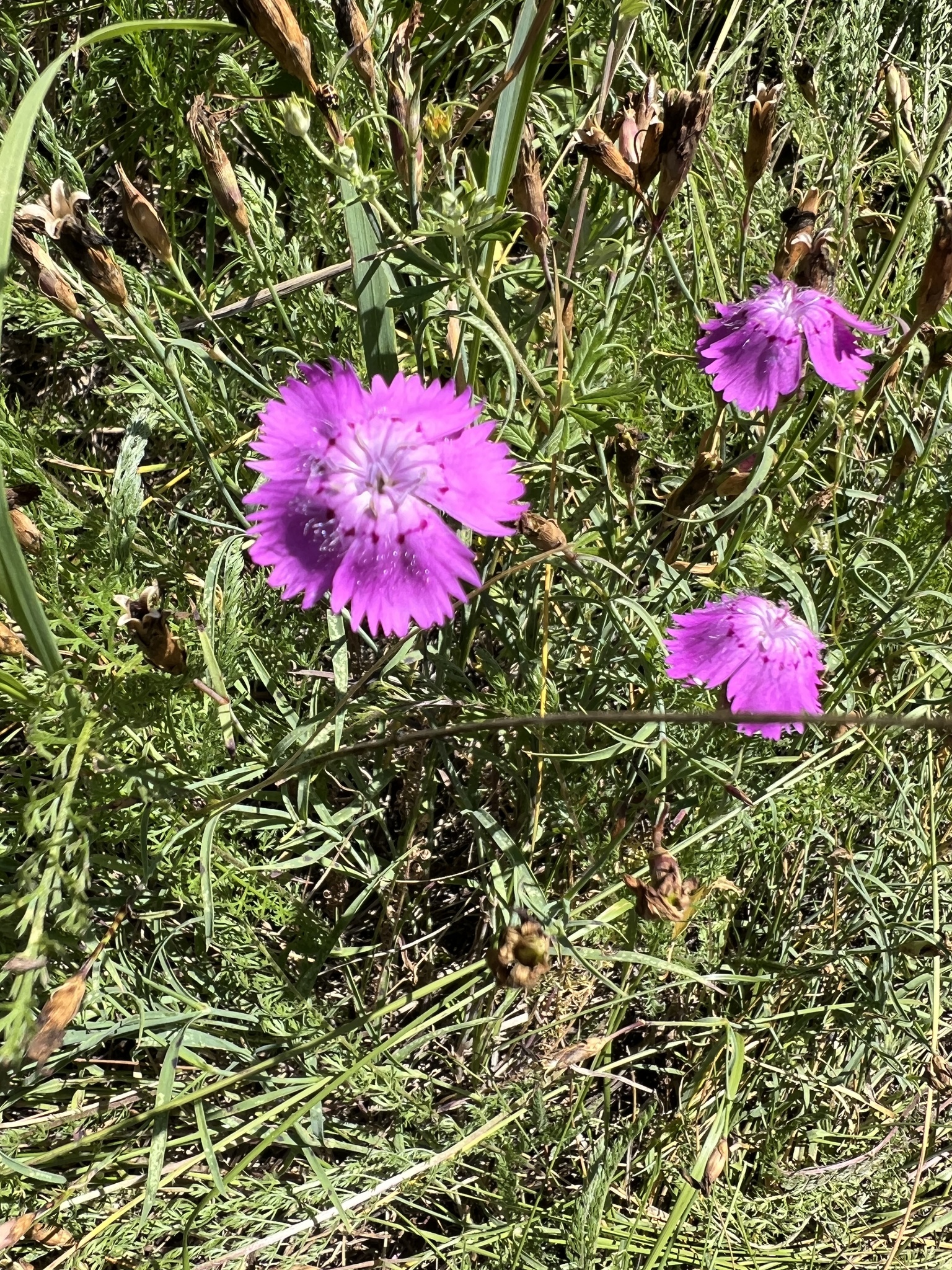
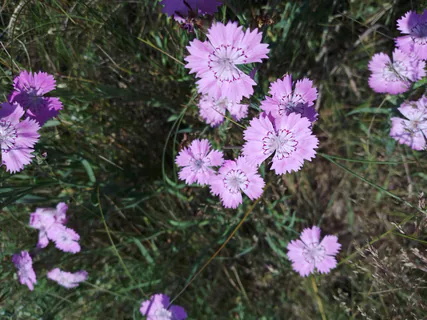
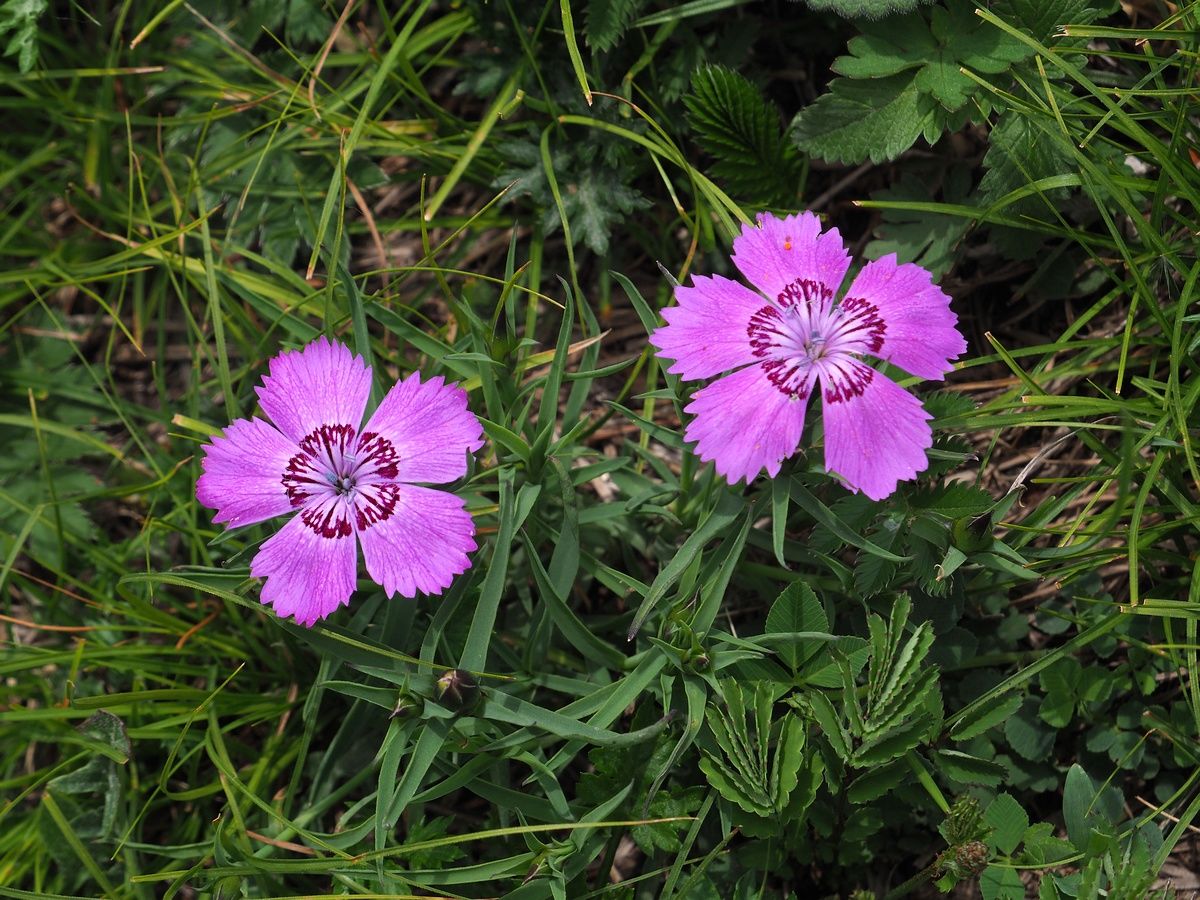
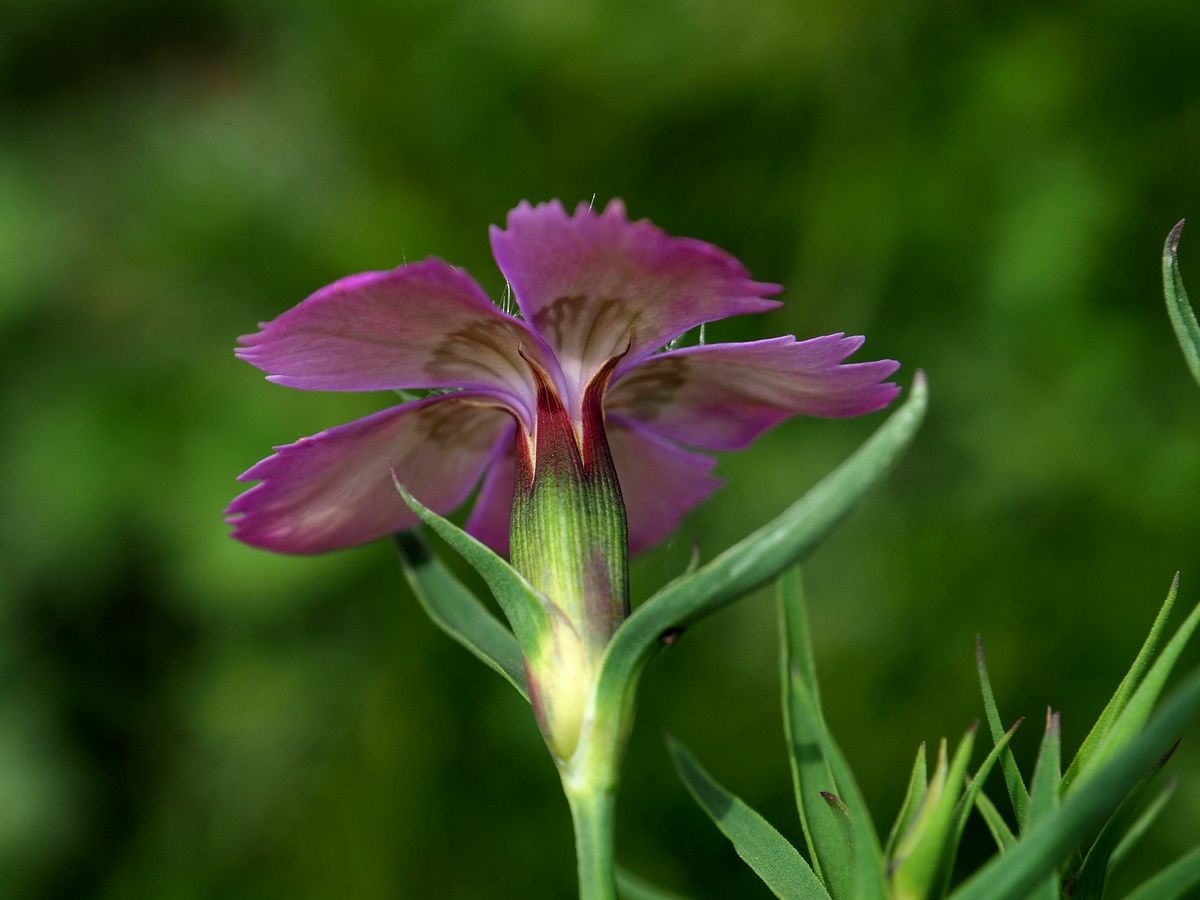
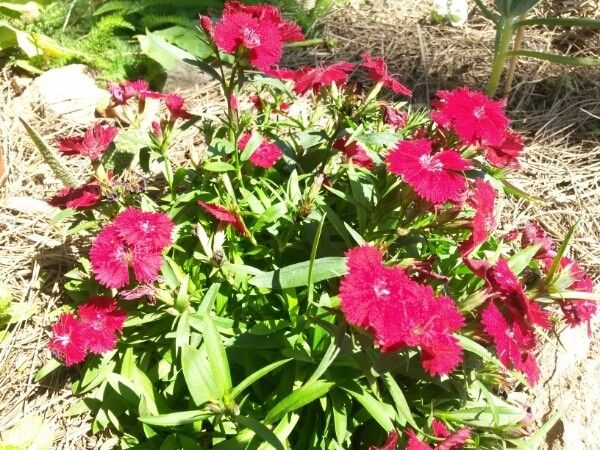
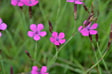
Flat flowers provide the clearest visual clue. Usually five-petaled and strongly fringed or toothed, they appear singly or in small cymes. Wild and cultivated colors include white, pink, red and purple, often surrounding a darker eye or central ring. 5 6
Common look-alikes include Dianthus barbatus, or Sweet William, with dense heads of many small flowers, and Dianthus caryophyllus, the florist’s carnation, often taller, more fragrant and more extensively selected for cutting. The French garden name “oeillet d’Inde” belongs to Tagetes, a marigold, rather than to Dianthus. 6 5
Taxonomy and range
Taxonomic accounts center on Dianthus chinensis L., accepted by POWO. GBIF also recognizes species rank and lists historical synonyms and forms, including Dianthus amurensis, D. fischeri and several forms or varieties assigned to D. chinensis. 1 2
Native range depends on the circumscription used. POWO gives a broad range from eastern Europe across temperate Asia to northern India. EPPO includes eastern Europe, Siberia, the Russian Far East, central Asia, the Himalayas, China, Korea, Mongolia and Indochina, alongside widespread cultivation in numerous ornamental cultivars. 1 3
North American horticultural descriptions often emphasize northern China, Korea, Mongolia and southeastern Russia. These accounts serve different purposes: POWO describes the broadly circumscribed taxon, while Chinese-pink remains the familiar horticultural name used in gardens. 1 6
In France, the documented position is an introduced, unestablished presence, rather than native or invasive status. INPN records D. chinensis on that basis; it is not presented as an indigenous French species or as the subject of an invasive alert. 8
Life cycle and cultivation
Mild growing conditions favor rapid growth and abundant flowers on young, well-lit plants in freely draining soil. For bedding, starting again with seed or young plants often gives a better display than retaining an aging clump for several years. 5 6
Provide full sun and well-drained soil. RHS recommends a sunny, freely draining position; NC State includes clay, loam or sand where drainage is good, with dry to moderate moisture. In hot summer conditions, light afternoon shade can reduce stress. 5 6
Water enough to establish roots without soaking the crown. For pots and newly planted beds, 10–20 mm (0.4–0.8 in) per week during establishment and flowering is a useful starting point when rain is lacking. Reduce this if the soil stays moist, and allow the growing medium to drain between waterings, particularly in containers. 6 5
Remove faded flowers and trim lightly after a heavy flush to extend flowering. RHS also lists seed propagation and summer cuttings from non-flowering shoots. 5
Uses and safety
Ornamental planting is the main use: low borders, pots, rock gardens, seasonal beds, cottage gardens, patios and small cut flowers. NC State also records visits by bees, butterflies and hummingbirds in gardens where those visitors occur. This does not make a bedding selection a wild species suitable for ecological restoration. 6 5
Historical medicinal uses remain descriptive accounts. POWO records medicinal use, and NC State describes applications in traditional Chinese medicine. These records do not establish a dose, justify self-medication or demonstrate that using the plant is safe. 1 6
Low toxicity is nonetheless documented. NC State directly assigns Dianthus chinensis low-severity poison characteristics, identifying triterpenoid saponins, possible contact dermatitis and vomiting. It also flags problems for cats, dogs and horses. 6
ASPCA’s Pinks account concerns Dianthus caryophyllus, not a species-specific account for D. chinensis. It lists toxicity to dogs and cats, with mild digestive signs and dermatitis. Precaution for these animals therefore also draws on this related pink, while horse caution rests on NC State rather than an ASPCA confirmation for Chinese-pink. 7 6
Cultivars and look-alikes
Cultivars and commercial series mainly differ in compactness, flower size, earliness and color. NC State lists Corona Rose, Diamond Blush Pink, Diamond Carmine, Diamond Coral, Diamond Pink, Diamond Scarlet, Floral Lace Crimson and Floral Lace Lilac. These are horticultural selections, not separate wild taxa. 6
Heddewigii, also written var. heddewigii, often appears around large-flowered, deeply fringed forms. GBIF includes it among names associated with D. chinensis. Its historical or horticultural use needs checking against the individual plant rather than treating every label as the same selection. 2
A low plant with narrow leaves, flat flowers borne singly or in small groups, and strongly fringed petal margins is consistent with Chinese-pink. Dense flower heads suggest Sweet William; a tall, strongly scented bouquet flower suggests a florist’s carnation. A French label reading “oeillet d’Inde” instead points outside Dianthus. 6 5
Main sources
- Plants of the World Online / Kew, Dianthus chinensis L.
- GBIF Backbone Taxonomy, Dianthus chinensis L.
- EPPO Global Database, Dianthus chinensis
- Flora of China via Encyclopedia of Life, Dianthus chinensis
- Royal Horticultural Society, Dianthus chinensis, Chinese pink
- NC State Extension Gardener Plant Toolbox, Dianthus chinensis
- ASPCA, Pinks toxicity entry
- INPN / MNHN, Dianthus chinensis L., 1753
- VASCAN, Dianthus chinensis, old report not established
Frequently asked questions
Is Chinese-pink an annual or a perennial?
Botanical accounts describe a short-lived perennial or subshrub, but gardeners often grow it as an annual or biennial because young plants flower quickly and become exhausted.
Where should I plant Chinese-pink?
Full sun produces the most compact, freely flowering clumps. Light afternoon shade can help in regions with very hot afternoons.
Does Chinese-pink need much water?
No. Water to establish the plant, then keep the soil moist without waterlogging it. Around 10–20 mm (0.4–0.8 in) per week is a practical range during establishment and flowering when rain is lacking.
Is Chinese-pink toxic to cats and dogs?
Yes, with a low level of toxicity. NC State directly identifies Dianthus chinensis as a low-severity poisonous plant that can cause problems for cats and dogs. ASPCA also documents pinks and carnations as toxic to dogs and cats, with mild digestive signs or dermatitis.
What about horses?
NC State flags a potential problem for horses with D. chinensis, but the ASPCA account does not document horses for this species. Caution is therefore more appropriate than a strong claim of confirmed horse toxicity.
Is Chinese-pink invasive in France?
No. INPN records an introduced, unestablished presence, rather than a French invasive classification.
How does Chinese-pink differ from Sweet William?
Dianthus barbatus carries dense clusters of numerous small flowers. Dianthus chinensis usually has flatter flowers, borne singly or in small cymes, with strongly fringed petals.
Similar plants
If you are unsure about a plant’s toxicity, ask a botanist or veterinarian for advice.