
Maiden pink (Dianthus deltoides, )
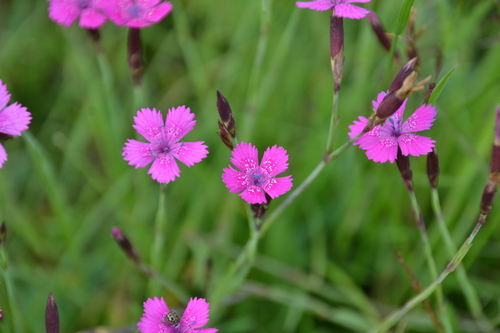
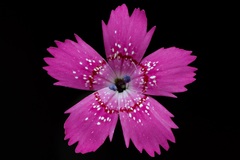
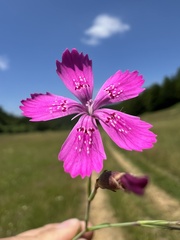
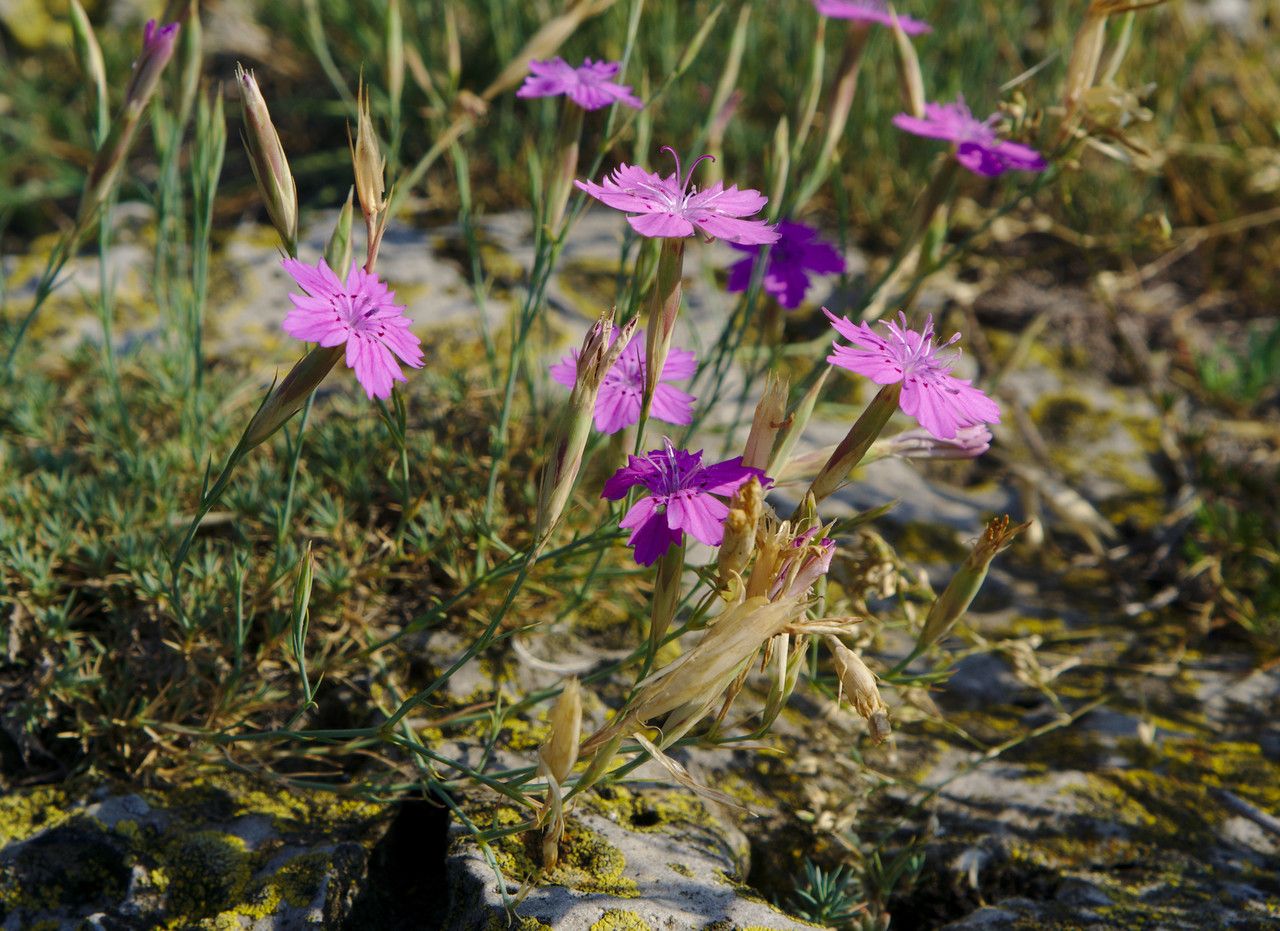
Maiden pink (Dianthus deltoides L., 1753) is a small, mat-forming perennial in the Caryophyllaceae, native across much of Europe to Siberia. In France it grows in dry grasslands, nutrient-poor meadows and open edges, especially in upland areas. In gardens it makes a low rock-garden or border plant for full sun, with small pink, red or white flowers marked by a dark ring.
Read moreMaiden pink, Meadow pink and Lady’s cushion
Place in full sun, with intense direct light all day long.

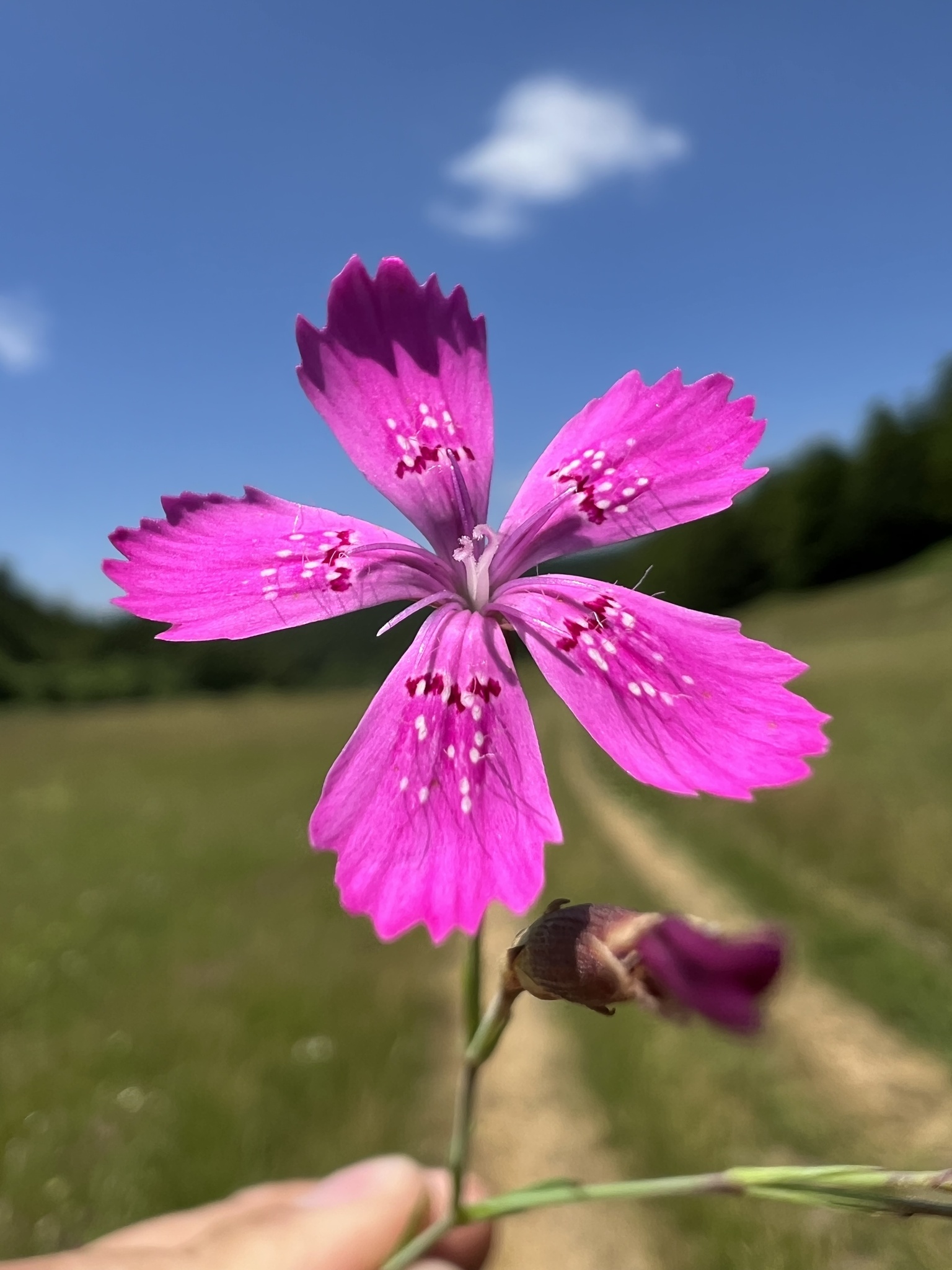


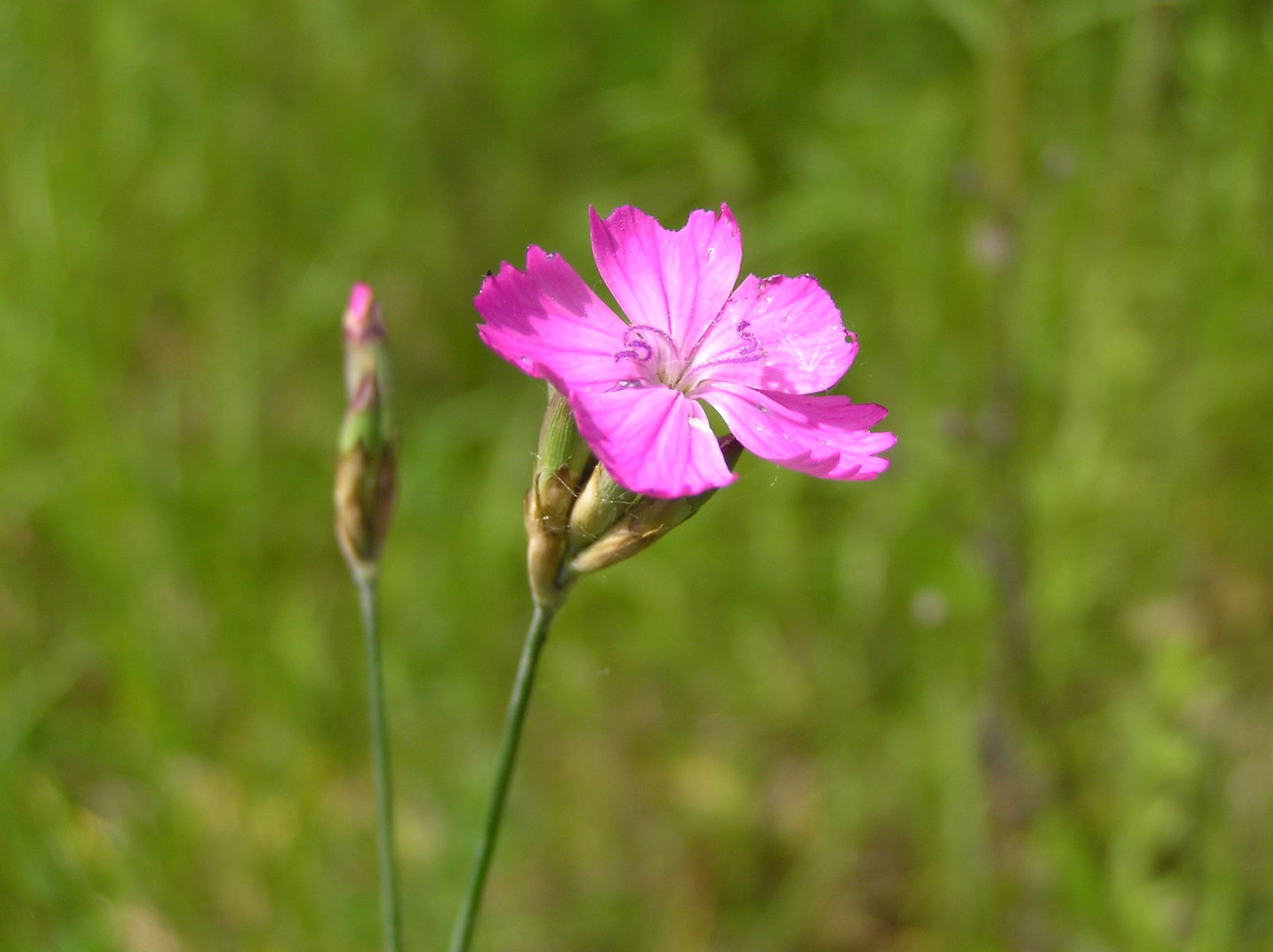
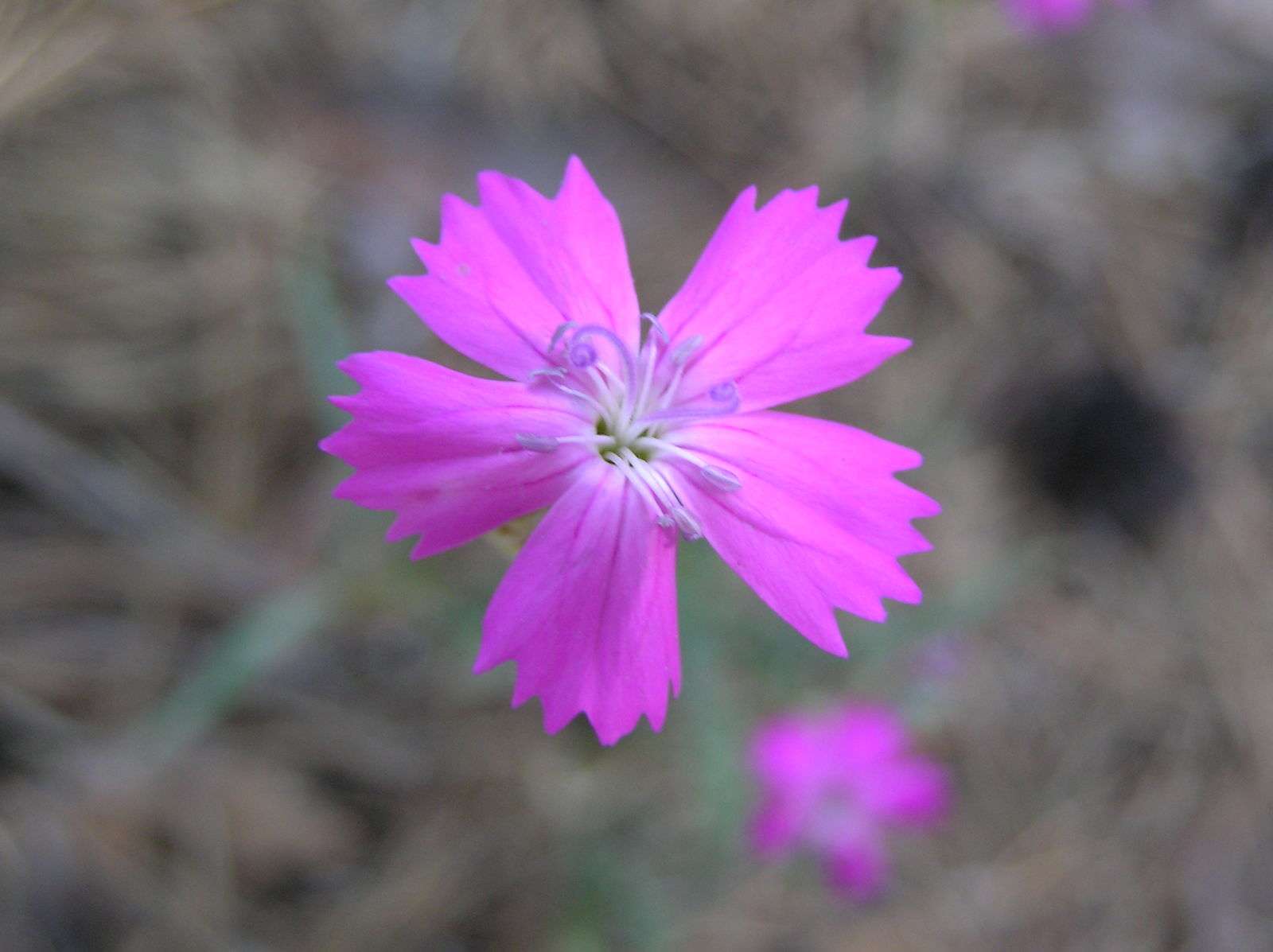
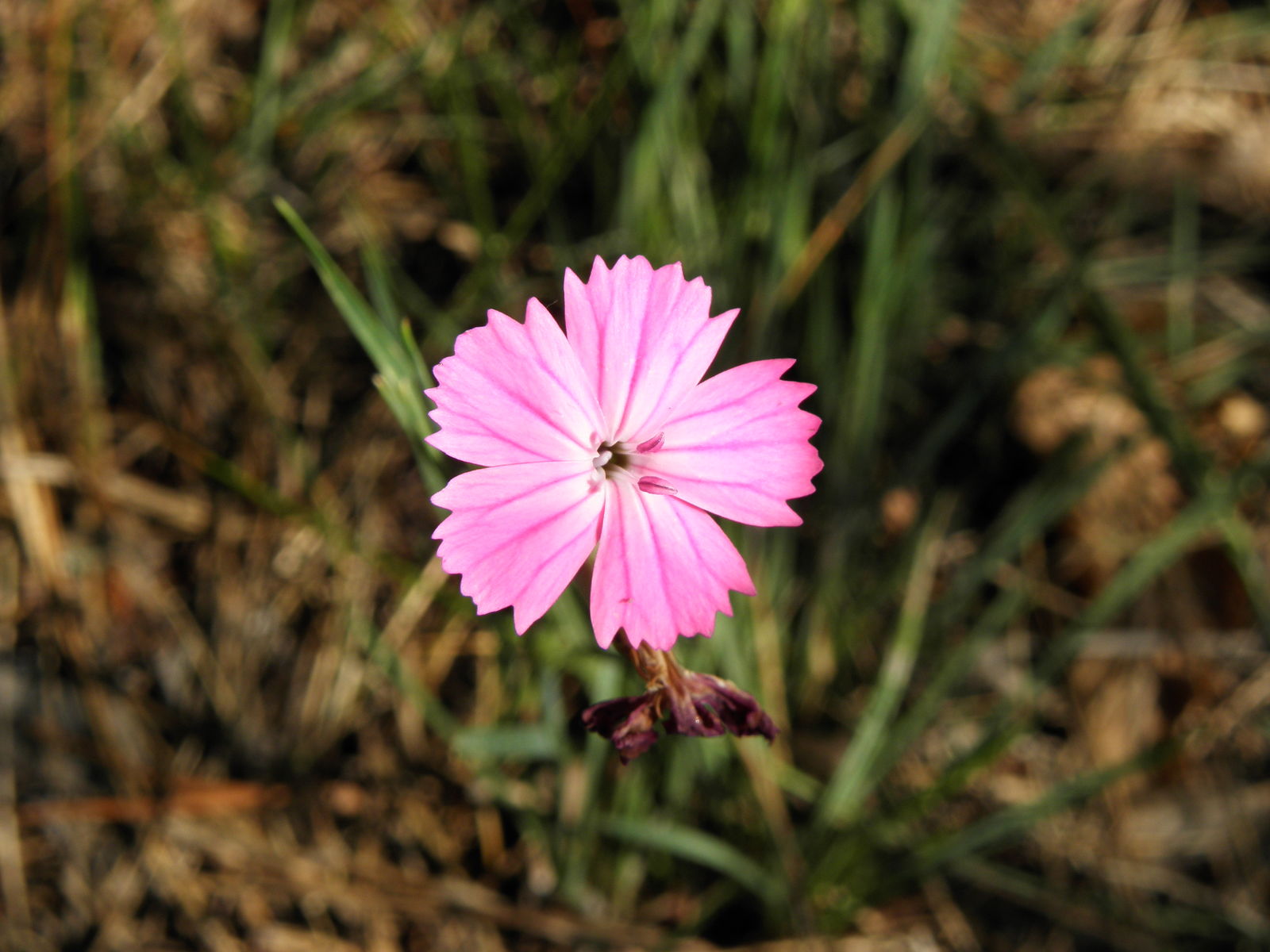
© photo
(c) Ángel Argüelles, some rights reserved (CC BY-NC), uploaded by Ángel Argüelles · cc-by-nc
Hannes · cc0
Mirko Ubović · cc0
Taken Jul 27, 2017 by Ronald Kruwinus (cc-by-sa)
Taken Jul 17, 2019 by Nicolas Gouti (cc-by-sa)
Taken Jan 1, 1800 by Tela Botanica − Daniel MATHIEU (cc-by-sa)
Taken Jul 5, 2022 by Pavel Veselý (cc-by-sa)
Taken Jul 11, 2021 by Alain Bigou (cc-by-sa)
© copyright of the Board of Trustees of the Royal Botanic Gardens, Kew.




Global distribution
POWO places the native range of maiden pink from Europe to Siberia and includes France. Records in North America, New Zealand and other temperate regions concern introductions or garden escapes, not the native range.
- Native8
- Introduced3
- Metropolitan France
- Great Britain
- Germany
- Switzerland
- Central Europe
- Northern Europe
- European Russia
- Western Siberia
- Canada
- United States
- New Zealand
Hexagons: regions where the plant occurs. Green dots: native range.1
Identity
Maiden pink (Dianthus deltoides L.) is an accepted species of Dianthus in the Caryophyllaceae family. POWO/WCVP traces the name to Species Plantarum in 1753; GBIF records the same original publication for the taxon. 1 2
Meadow pink and Lady’s cushion are other English names. In French, the plant is called “œillet à delta,” “œillet deltoïde,” “œillet couché” or “œillet en delta.” Tela Botanica records the delta and low-growing names, while GBIF includes maiden pink and meadow pink among its English names. 7 2
The epithet deltoides, recalling a triangle or delta, is a useful memory aid but not a sufficient identification. Combine the binomial with the low, grassy mat, narrow leaves and small pink or red flowers bearing a dark marking near the center. 6 5
Recognition
Slender, ascending stems give maiden pink a loosely mat-forming habit. Botanical descriptions commonly give a height of 10–30 cm (4–12 in), with opposite, linear to oblanceolate leaves. The overall effect is a low carpet rather than the tall flowering stems of a cut-flower carnation. 7 6
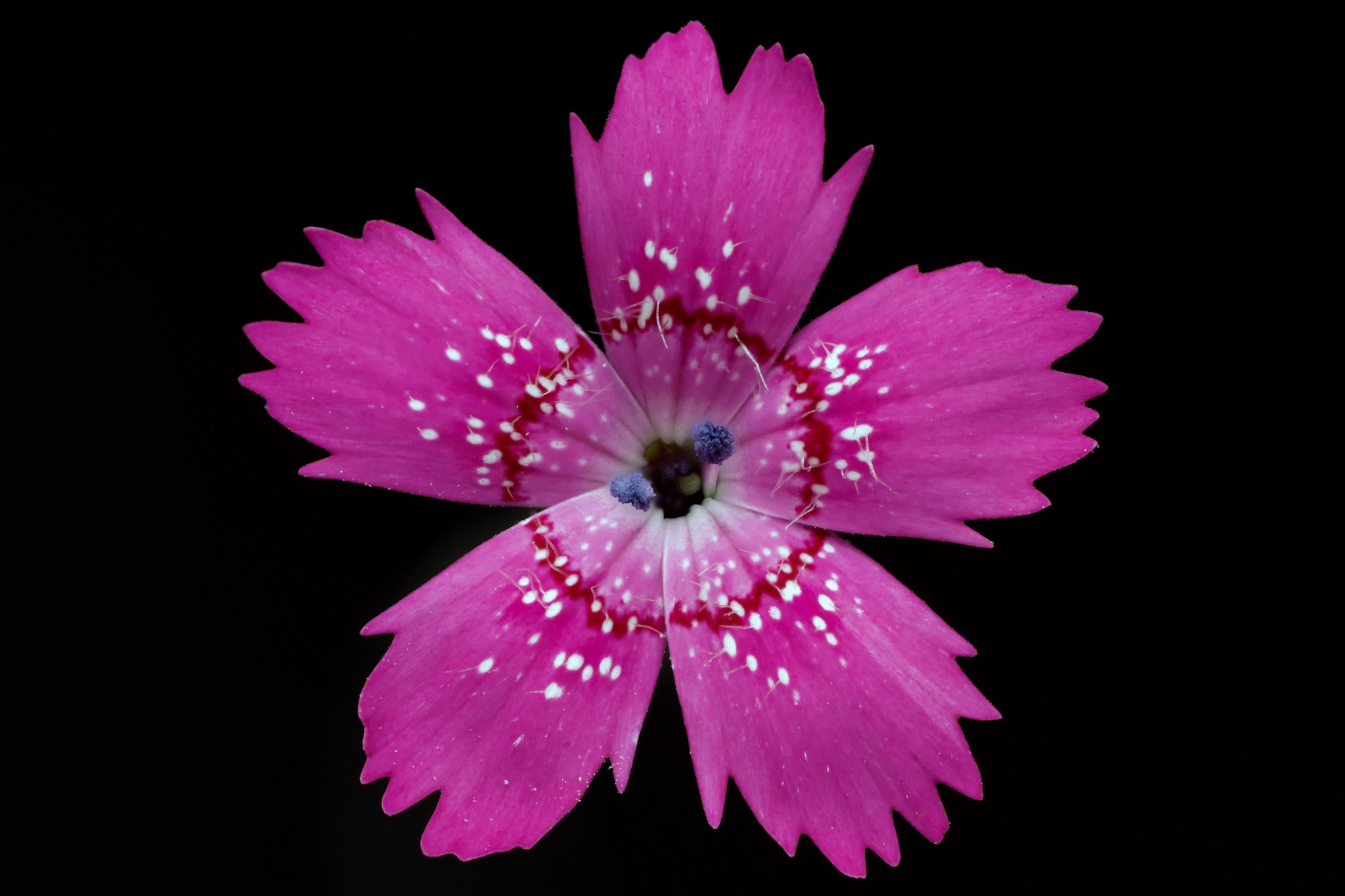
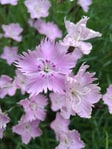
Small flowers measure 12–20 mm (0.5–0.8 in) across in BSBI’s account and about 18 mm (0.7 in) in RHS’s description. Five toothed or fringed petals range through pink, red and purple, sometimes white. A dark ring, bar or zigzag at the base of the expanded petal blade is especially useful. 6 3
NC State describes bright five-petaled flowers, sometimes white, with a dark central ring. It also notes short, narrow, often grayish leaves on prostrate shoots. Cultivated selections may look more compact, robust or uniform than wild plants. 5 6
Taxonomy and related names
Historical floras may use a different generic name for this same species. POWO lists three principal homotypic synonyms: Caryophyllus deltoides (L.) Moench, Cylichnanthus deltoides (L.) Dulac and Silene deltoides (L.) E.H.L.Krause. 1
Two accepted infraspecific taxa are recognized by POWO: Dianthus deltoides subsp. deltoides and subsp. degenii. They reflect variation within a broadly European complex; a subspecies name does not replace examination of the flower and growth habit. 1
Look-alikes mostly belong to Dianthus. BSBI distinguishes Dianthus armeria, whose flowers have surrounding leafy bracts, and Dianthus gratianopolitanus, with hairless stems and fragrant flowers lacking a clear dark bar on the petals. 6
Habitat and range
Across Europe to Siberia, maiden pink occupies a broad native range that includes France. POWO lists introductions in North America and some temperate Southern Hemisphere regions; RHS likewise summarizes the native range as Europe to Siberia. 1 3
French records include an INPN national account for Dianthus deltoides L., 1753. Tela Botanica links the species to INPN number 94728 and reproduces Coste’s description of meadows and woods, especially in upland parts of eastern, central and southern France. 8 7
Dry, open and sunny sites suit the species better than wet potting soil. BSBI describes basic to mildly acidic soils in poor grasslands, heaths, dunes, rock slabs, cliffs, quarries and old mine spoil. INPN also associates the taxon with dry acidic, neutral and calcareous-siliceous grasslands. 6 8
In metropolitan France, maiden pink is a native plant of open habitats, also grown and sold in garden selections. It is not classified there as an invasive alien species. That French position is distinct from the introductions recorded elsewhere. 1 8
Life cycle and cultivation
An evergreen mat-forming perennial, Dianthus deltoides reaches a horticultural height and spread of 0.1–0.5 m (4–20 in) and maturity in 2–5 years, according to RHS. NC State gives a low plant about 15–30 cm (6–12 in) tall, suited to full sun and freely draining soil. 3 5
Flowering runs from late spring into summer in horticultural accounts; French and British floras give June to September in their respective Northern Hemisphere settings. Dry capsules open when ripe. BSBI describes reproduction both by seed and by creeping vegetative shoots. 5 7 6
For garden cultivation, choose full sun and well-drained, neutral to alkaline soil, whether sandy, chalky or stony. RHS recommends rock gardens and border edges. NC State emphasizes drainage: leaf spot and crown rot are most troublesome in humid summers, crowded planting or poorly drained soil. 3 5
Propagation depends on whether the aim is a species population or a particular cultivar. Seed is straightforward for the species; division or cuttings of non-flowering shoots better preserve a selection. RHS lists softwood cuttings, seed and division for Flashing Light, with division every 3–5 years. 3 4
Uses and toxicity
Low ground cover, rock gardens, borders, banks, freely draining pots and sunny walls are the main ornamental uses. The flowers attract pollinating insects. NC State records bees and butterflies; BSBI discusses daytime pollination in which butterflies play an important role in some studied populations. 5 6
Food use is not recommended. Edible-flower accounts for other garden Dianthus do not establish a food use for Dianthus deltoides. It remains an ornamental with a low irritant risk, particularly for animals and sensitive skin. 5 9
Mild toxicity is documented. NC State assigns Dianthus deltoides low-severity poison characteristics, flags problems for cats, dogs and horses, and records skin irritation, possible vomiting and triterpenoid saponins. ASPCA lists pinks and carnations within Dianthus as toxic to dogs and cats, with mild digestive signs and dermatitis. 5 9 10
Keep cats, dogs and horses from grazing the leaves, and wear gloves if your skin is reactive. Contact a veterinarian or animal poison service after substantial ingestion or if symptoms persist. The documented profile is one of irritation and mild signs rather than major systemic toxicity. 5 10
Cultivars and garden look-alikes
Garden centers sell the species alongside more colorful selections. RHS documents Flashing Light, also associated with Leuchtfunk, as an evergreen mat with ruby-red flowers and a darker central ring. The name Dianthus deltoides may therefore appear on a wild plant, a rock-garden selection or a named cultivar. 4
White-flowered, red-flowered or more compact forms are horticultural selections to check against the label and actual plant. They can be useful in gardens without representing botanical ranks such as a wild subspecies or variety. 3 4
Other pinks can be confused with it: Dianthus caryophyllus, the florist’s carnation; Dianthus barbatus, Sweet William; Dianthus plumarius, garden pink; and Dianthus armeria, Deptford pink. For maiden pink, look again for the low mat, small flowers, dark central bar and absence of tall florist-type flowering stems. 6 1
Main sources
- Plants of the World Online / Kew, Dianthus deltoides L.
- GBIF Backbone Taxonomy, Dianthus deltoides L.
- Royal Horticultural Society, Dianthus deltoides maiden pink
- Royal Horticultural Society, Dianthus deltoides Flashing Light
- NC State Extension Gardener Plant Toolbox, Dianthus deltoides
- BSBI species account, Dianthus deltoides L., Maiden Pink
- Tela Botanica eFlore, Dianthus deltoides L.
- INPN / MNHN, Dianthus deltoides L., 1753
- ASPCA, Pinks toxicity entry
- ASPCA, Carnation toxicity entry
Frequently asked questions
Is maiden pink native to France?
Yes. POWO includes France in its native range, and French resources such as INPN and Tela Botanica have national accounts for Dianthus deltoides L., 1753.
What does the name deltoides mean?
The epithet deltoides refers to a triangle or the Greek letter delta. In practice, the low habit and dark marking near the petal centers are more useful identification clues.
Where does maiden pink grow best?
Full sun is the starting point. RHS and NC State recommend strong light and well-drained soil; lasting shade produces looser clumps and fewer flowers.
How much water does maiden pink need?
Little once established. It prefers dry to moist but well-drained soil. In dry weather, 5–15 mm (0.2–0.6 in) per week is often enough in the garden, adjusted for soil and heat.
Is maiden pink toxic to cats and dogs?
Yes, with low toxicity. NC State flags Dianthus deltoides as a problem for cats and dogs; ASPCA lists pinks and carnations as toxic, with mild digestive signs and mild dermatitis.
Is maiden pink invasive in France?
No. It is treated as native in metropolitan France, without a French invasive classification.
How does maiden pink differ from a florist’s carnation?
Florist’s carnation generally means Dianthus caryophyllus and its cut-flower lines. Dianthus deltoides is lower and mat-forming, with smaller flowers, suited to rock gardens and dry grasslands.
Similar plants
If you are unsure about a plant’s toxicity, ask a botanist or veterinarian for advice.