
Crown daisy (Glebionis coronaria, )
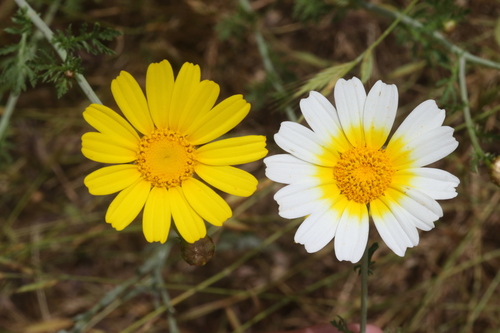

Crown daisy (Glebionis coronaria) is a herbaceous annual in the Asteraceae family, native to the Mediterranean region from Portugal to the Near East. Cultivated for centuries in East Asia as shungiku, it supplies aromatic leaves eaten raw or cooked. In Europe it is chiefly an annual bedding flower, with yellow or bicolored heads on upright, branching stems.
Read moreCrown daisy, Garland chrysanthemum and Shungiku


© photo
(c) James Bailey, some rights reserved (CC BY-NC), uploaded by James Bailey · cc-by-nc
Bob Walker · cc0
Pantazi Katerina · CC BY-NC
Taken Jan 23, 2022 by Gaël Herve (cc-by-sa)
Taken May 9, 2021 by Florence Bousquet (cc-by-sa)
Taken Apr 2, 2022 by aymen aimen (cc-by-sa)
Taken Apr 10, 2011 by Tela Botanica − Liliane Roubaudi (cc-by-sa)
Taken Apr 9, 2021 by Monteiro Henrique (cc-by-sa)
© copyright of the Board of Trustees of the Royal Botanic Gardens, Kew.




Global distribution
Glebionis coronaria is native around the Mediterranean, from Portugal and Spain to Asia Minor, the Near East and North Africa. Introduced to China during the Song dynasty, it is now cultivated and naturalized across much of East Asia, where it is best known as a leafy vegetable.
- Native6
- Introduced1
- Metropolitan France
- Spain
- Italy
- Greece
- Israel
- Morocco
- United States (New England)
Hexagons: regions where the plant occurs. Green dots: native range.1
Identity
Crown daisy (Glebionis coronaria (L.) Cass. ex Spach, 1841), also called garland chrysanthemum, is a herbaceous annual in the Asteraceae family. Carl Linnaeus first described it in 1753 as Chrysanthemum coronarium. Alexandre de Cassini placed it in Glebionis, a combination published by Édouard Spach in 1841 and now accepted by POWO. 1 9
The epithet coronaria comes from Latin corona, a crown. The ring of ray florets around the yellow center resembles the points of a crown, and the flowers were long used to weave garlands. The Japanese name shungiku, meaning spring chrysanthemum, identifies the same plant grown as a leafy vegetable in East Asia. 9
Recognition
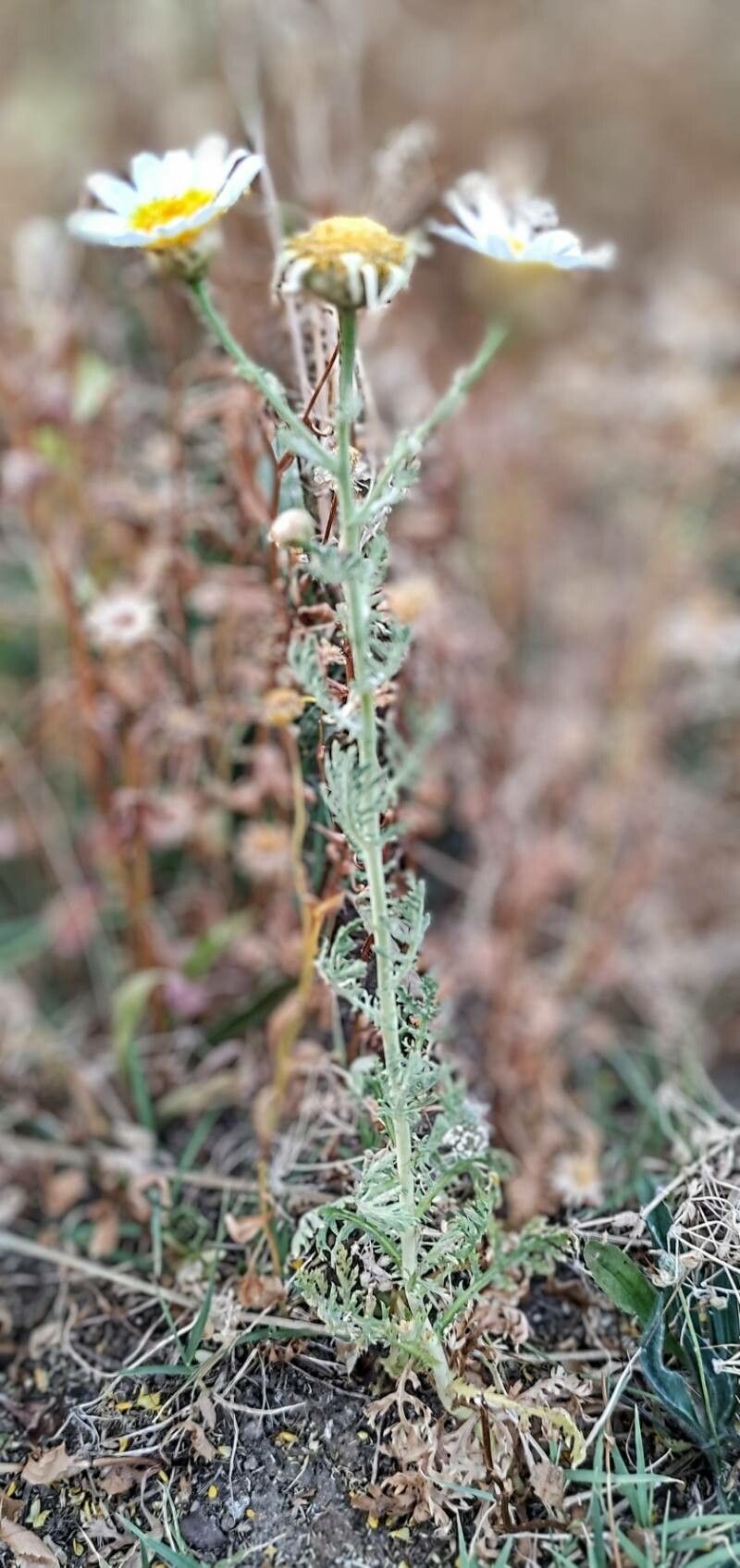
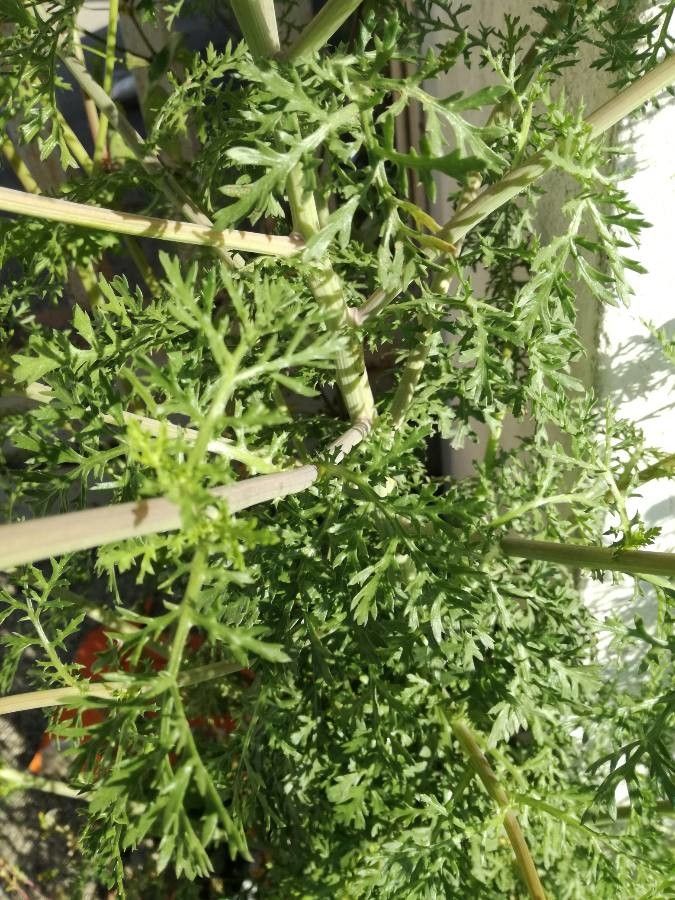
Upright, hairless, branching stems form a bushy clump 20–120 cm (8–47 in) tall, depending on growing conditions. Alternate leaves lack a distinct stalk and are deeply divided into narrow lobes, a form botanists call bipinnatipartite. Crushed leaves release a strong aroma, an important feature of both the garden plant and the vegetable. 8 3
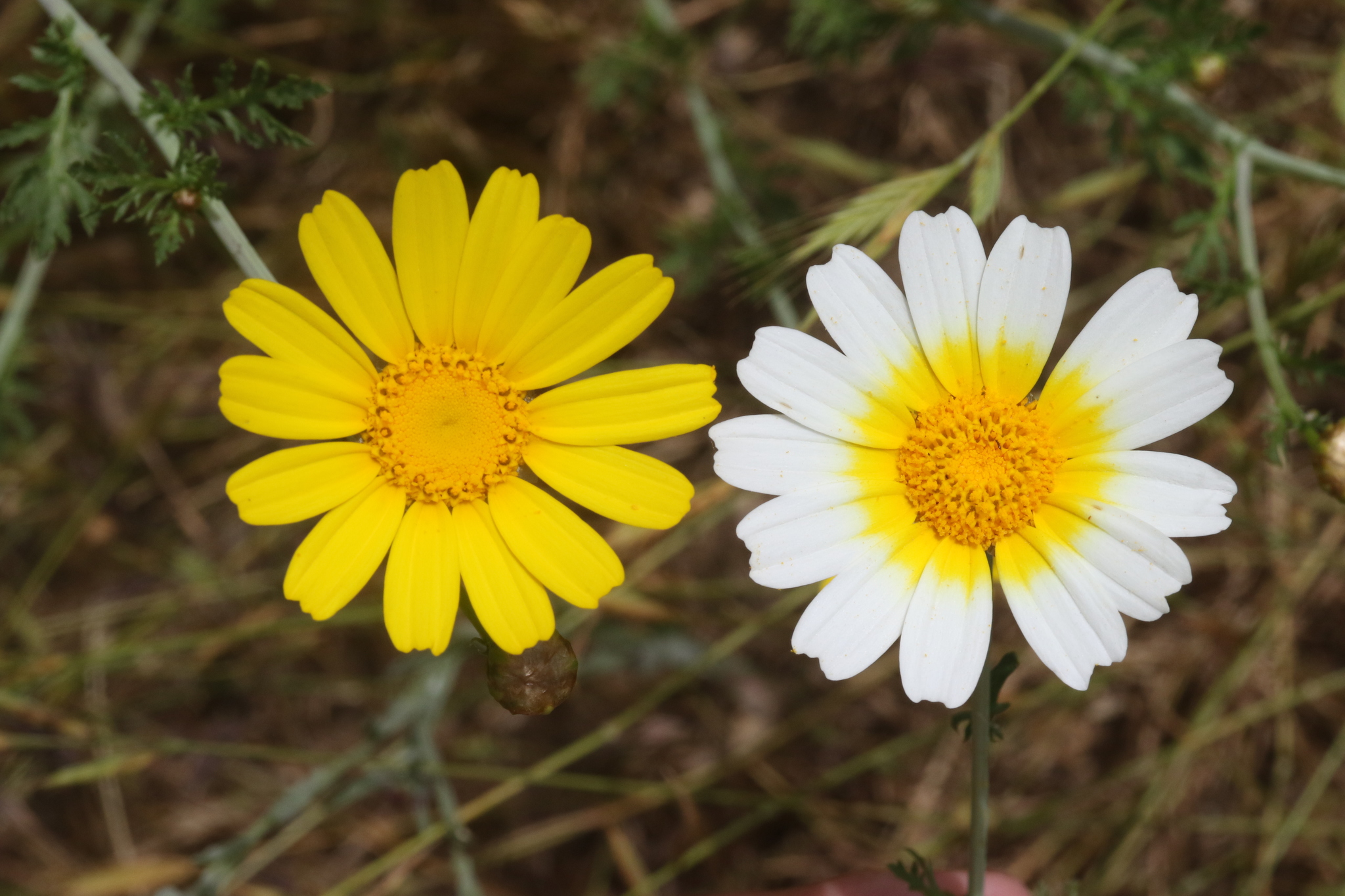
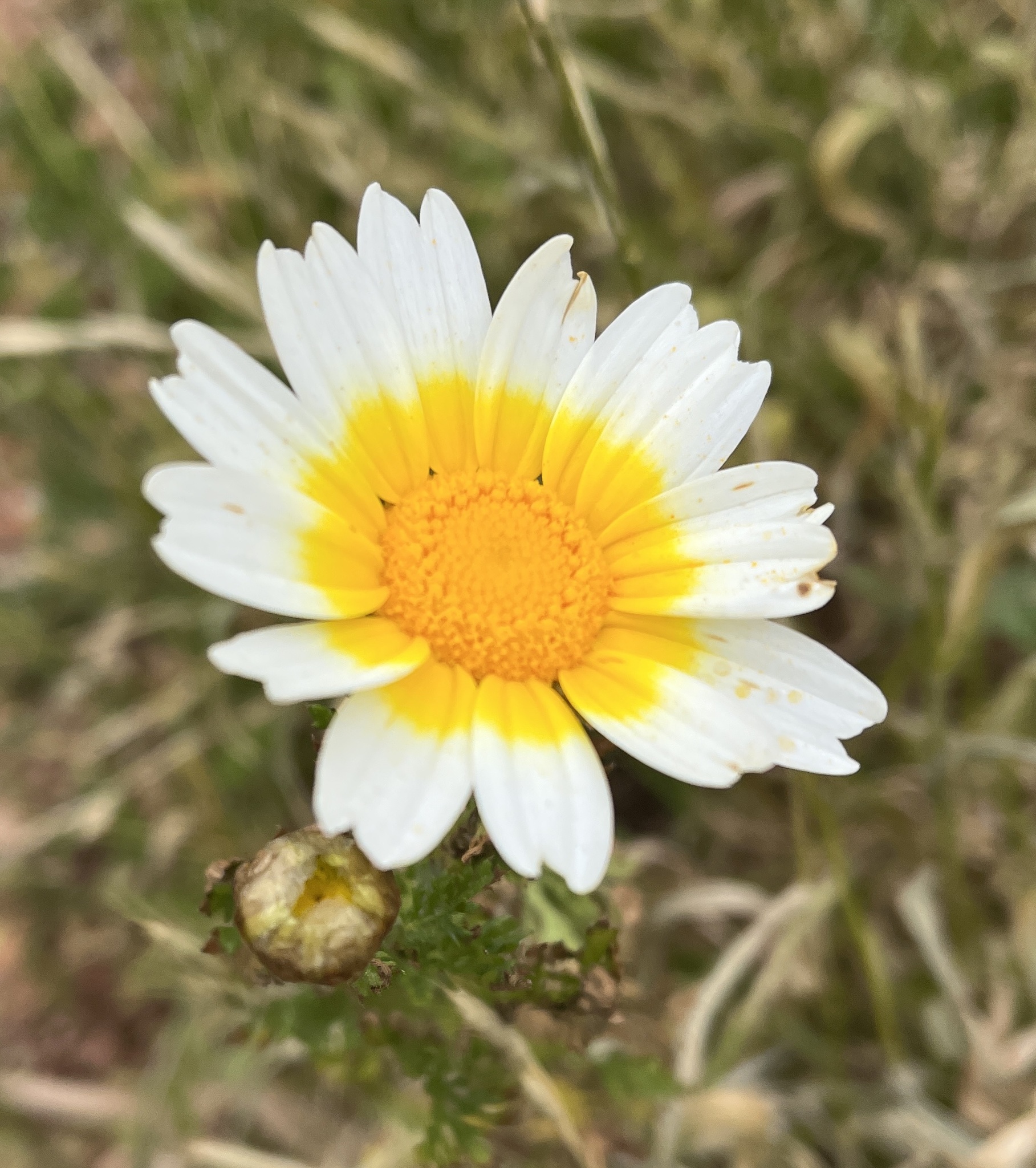
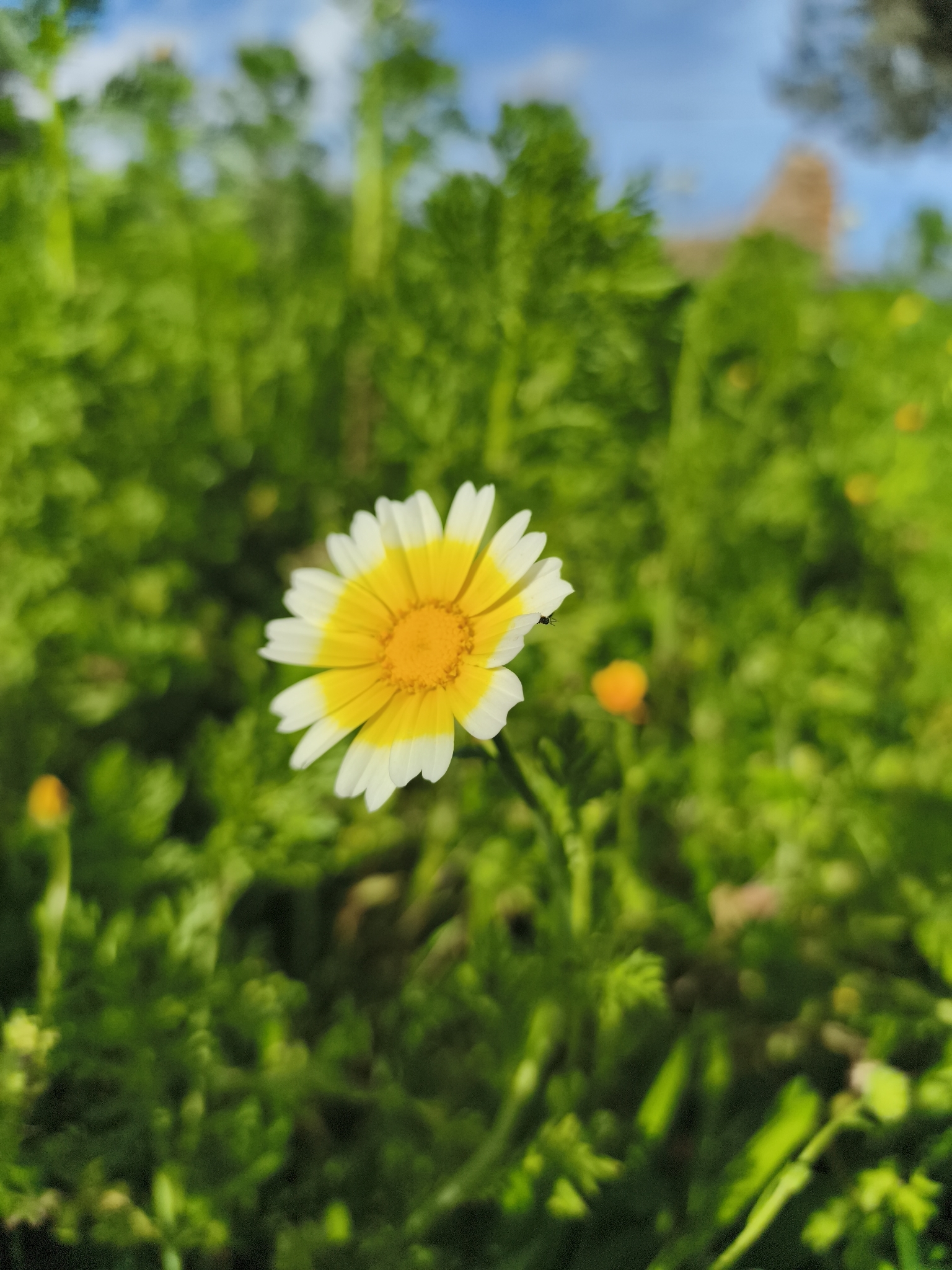
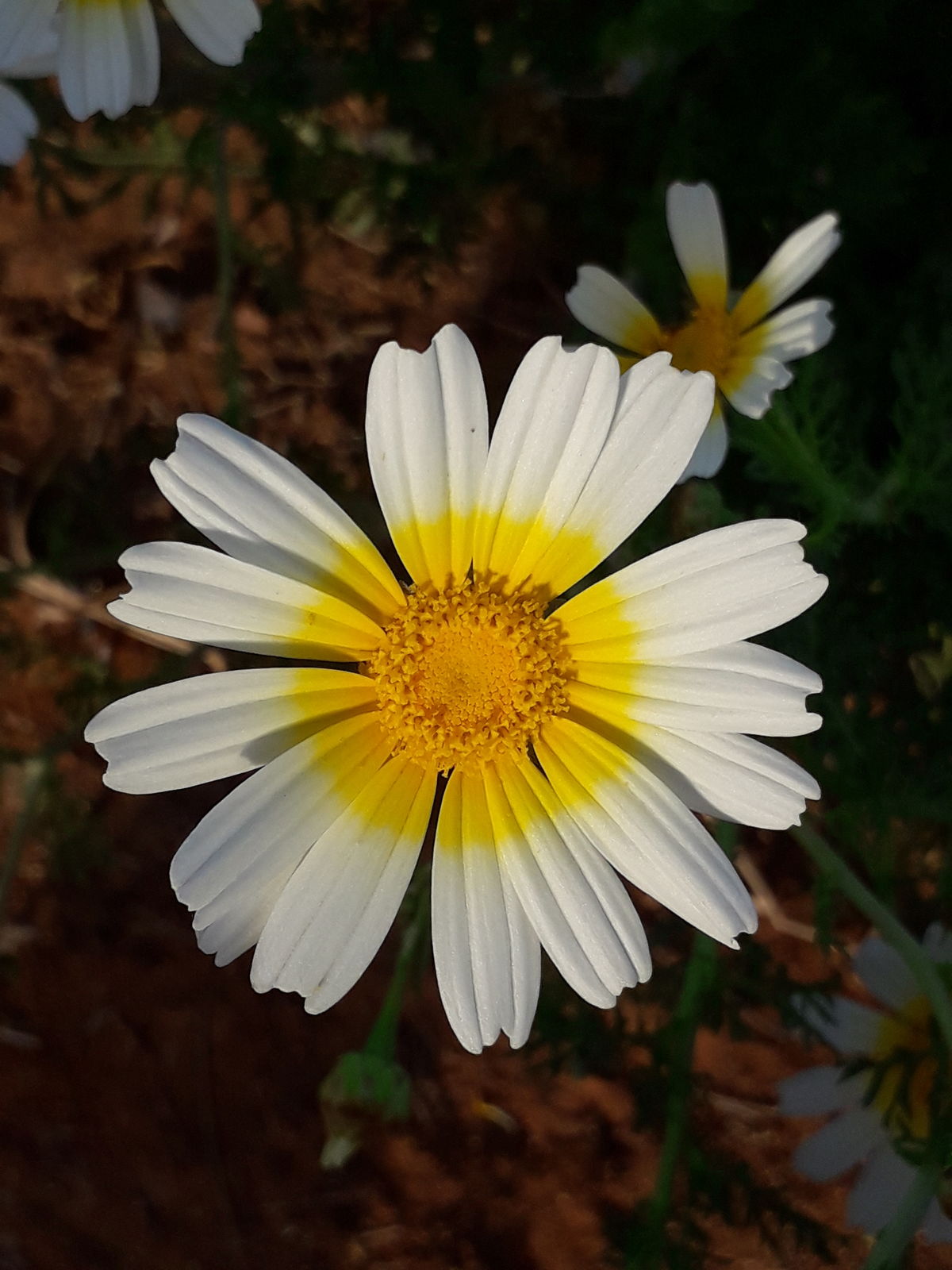
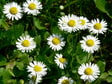
Each solitary flower head measures 3–6 cm (1.2–2.4 in) across. Yellow disk florets are surrounded by rays that are either entirely yellow or white with a yellow base, depending on the variety. After flowering, 2–3 mm (0.08–0.12 in) achenes develop. Those around the edge of the head are winged and lack a pappus, clearly differing from the central disk fruits. 2 11
Foliage offers the most reliable garden distinction: the leaf rachis is narrower than 6 mm (0.24 in) and the upper leaves do not clasp the stem. In the close relative Glebionis segetum, the rachis is broader. 4
Useful taxonomy
POWO accepts Glebionis coronaria (L.) Cass. ex Spach. Its basionym and five other synonyms still occur in older horticultural literature:
- Chrysanthemum coronarium L., 1753 (basionym)
- Pinardia coronaria (L.) Less., 1832
- Matricaria coronaria (L.) Desr., 1791
- Chamaemelum coronarium (L.) E.H.L.Krause, 1905
- Xantophtalmum coronarium (L.) P.D.Sell, 2006
- Chrysanthemum coronarium var. discolor d'Urv., 1822
Chrysanthemum coronarium remains common in seed catalogs and horticultural books predating the transfer to Glebionis, including for the vegetable sold as shungiku. That name does not indicate a misidentified plant: POWO recognizes it as a valid homotypic synonym. Glebionis coronaria is the stable name for locating botanical literature. 1
Habitat and range
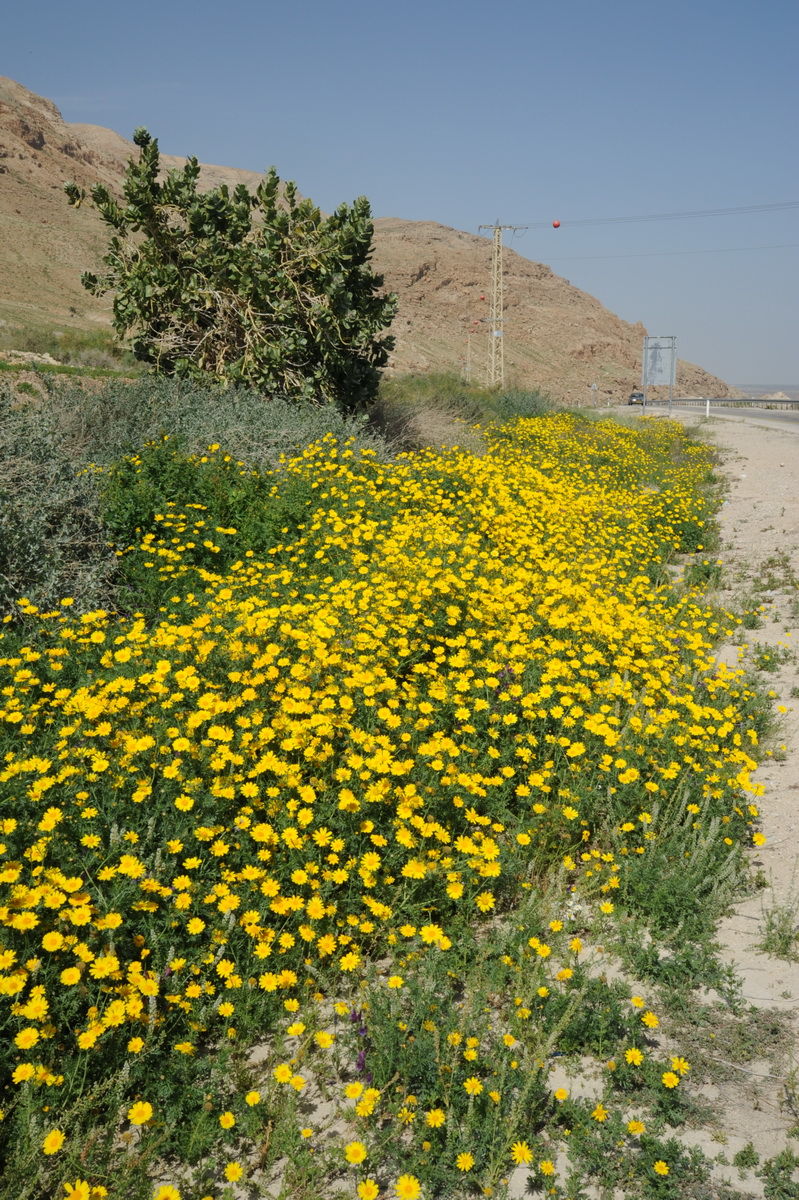
Mediterranean populations extend from Portugal and Spain to Asia Minor, the Near East and North Africa. The species colonizes waste ground, rubble, roadsides and cultivated fields, chiefly on sunny calcareous soils. A pH of 6–7.5 corresponds to its documented preference for disturbed calcareous ground. 1 7
In France, it grows spontaneously along the Mediterranean coast, in Corsica and in several southern and western departments. It remains recorded in the national natural heritage inventory. 6
Introduced to China during the Song dynasty, 960–1279, it is now cultivated and widely naturalized in East Asia, where its main identity is a leafy vegetable rather than an ornamental flower. Beyond the native range elsewhere, it is chiefly an occasional garden escape, recorded for example in New England in the United States. 9 3
Life cycle and reproduction
Direct sowing suits spring, or late summer for an autumn harvest in mild climates. Seeds germinate in 5–10 days at about 18–20 °C (64–68 °F), first forming a rosette of divided leaves before the flowering stem develops. 8
Flowering can extend from mid-spring to early fall in northern temperate climates, depending on local conditions and sowing date. Each faded head gives way to winged achenes without a pappus. They fall mainly near the parent rather than traveling far on the wind, helping explain dense colonies on the same patch of disturbed ground. 7 11
In cultivation, propagation is solely by seed; neither cuttings nor division suits this annual, which completes its life cycle in 8–12 weeks. Sowing another batch every three to four weeks maintains a succession of young leaves before the plants flower and turn bitter. 8
Frost kills the plant at the end of its cycle. Its temperature tolerance of −5 to 35 °C (23–95 °F) explains the preference for spring and late-summer sowings rather than winter sowing.
Uses and risks
Culinary use predominates in East Asia, where the species has been cultivated since the Song dynasty. Young leaves and tender stems are eaten raw in salads or cooked by steaming, stir-frying or in hotpots. Regional names include shungiku in Japan, tong ho in China and ssukgat in Korea. Cooking softens the strong aroma of the raw foliage. In Europe, by contrast, it is chiefly an ornamental annual for beds and borders. 9 3
ASPCA’s Chrysanthemum entry supports caution around cats, dogs and horses, but does not provide a separate assessment of Glebionis coronaria. Pyrethrins and sesquiterpene lactones can cause vomiting, diarrhea, hypersalivation and contact dermatitis in a sensitive animal. This precaution does not concern the usual human consumption of the cooked vegetable. 5
Leaves become noticeably more bitter after flowering begins. Regular cutting of young shoots before bolting gives milder, more digestible foliage. 8
Varieties, look-alikes and related plants
Two botanical varieties differ in ray-floret color: var. coronaria has entirely yellow rays, while var. discolor has white rays with yellow bases and is sometimes treated as a separate species, Glebionis discolor. Japanese vegetable selections include large-leaved Ō-ba, with a milder flavor, and small-leaved Ko-ba, with more deeply divided, aromatic foliage. RHS lists the ornamental selection Primrose Gem, with cream-and-yellow heads. 2
The closest look-alike is Glebionis segetum. Its leaf rachis exceeds 6 mm (0.24 in) in width and its leaves clasp the stem, whereas Glebionis coronaria has a narrow rachis and non-clasping leaves. 4
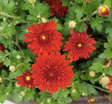
Garland chrysanthemum should also be distinguished from the florist’s chrysanthemum, Chrysanthemum × morifolium, which belongs to another genus. Despite their similar common names, they flower in different seasons: the former from mid-spring to early fall in northern temperate conditions, the latter chiefly in autumn. Florist’s chrysanthemum also has no common culinary use.
Main sources
- Plants of the World Online / Kew, Glebionis coronaria (L.) Cass. ex Spach
- Royal Horticultural Society, Glebionis coronaria - crown daisy
- Go Botany / Native Plant Trust, Glebionis coronaria (crown daisy)
- Go Botany / Native Plant Trust, Glebionis segetum (corn daisy)
- ASPCA, Chrysanthemum toxicity entry
- INPN, Glebionis coronaria (L.) Cass. ex Spach, 1841
- Préservons la Nature, Glebionis coronaria (L.) Cass. ex Spach
- Florealpes, Glebionis coronaria - crown daisy
- Wikipedia FR, crown daisy
- Wikidata, Glebionis coronaria
- PMC / NCBI, Morphometric analysis and bioclimatic distribution of Glebionis coronaria s.l.
Frequently asked questions
Is garland chrysanthemum edible?
Yes. Young leaves and tender stems are eaten raw in salads or cooked by steaming, stir-frying or in hotpots, as shungiku in Japan, tong ho in China and ssukgat in Korea.
Is garland chrysanthemum toxic to cats and dogs?
ASPCA lists Chrysanthemum as toxic to cats, dogs and horses, without a separate assessment of Glebionis coronaria; caution remains appropriate. Pyrethrins and sesquiterpene lactones can cause vomiting and contact dermatitis.
How can Glebionis coronaria be distinguished from Glebionis segetum?
The most reliable feature is the leaf rachis: narrower than 6 mm (0.24 in) and not clasping the stem in Glebionis coronaria, but broader and with upper leaves clasping the stem in Glebionis segetum.
Why do leaves harvested late become bitter?
Bitterness increases markedly after flowering begins. Regularly harvesting young shoots before the plant bolts produces milder leaves.
What does shungiku mean?
Shungiku means spring chrysanthemum in Japanese. The name refers to the preferred harvest season for this East Asian vegetable rather than its taxonomy.
Is garland chrysanthemum invasive?
It is not considered invasive in France, where it belongs to the native Mediterranean flora. Elsewhere it is chiefly an occasional garden escape, as recorded in New England in the United States.
When should garland chrysanthemum be sown?
Sow directly in spring, or in late summer for an autumn crop in mild climates. Germination takes 5–10 days at about 18–20 °C (64–68 °F).
Similar plants

If you are unsure about a plant’s toxicity, ask a botanist or veterinarian for advice.