
Honey locust (Gleditsia triacanthos, )
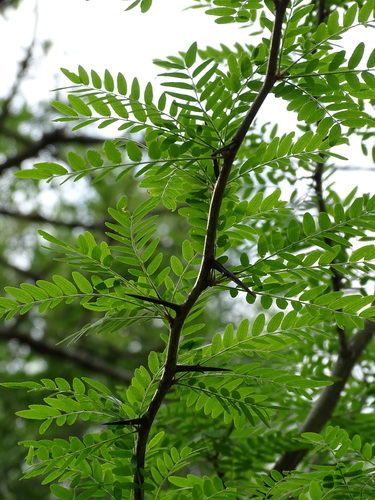
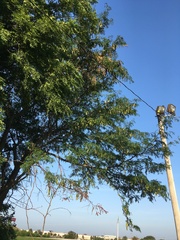
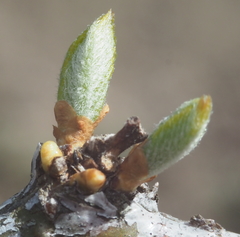
Honey locust (Gleditsia triacanthos) is a large deciduous Fabaceae tree native to alluvial valleys in central and eastern North America. Wild trees bear formidable branching thorns, often grouped in threes on trunks and branches. Garden cultivars, almost all derived from thornless var. inermis, are widely planted in cities for their light shade and tolerance of compacted soils.
Read moreHoney locust, Thorny locust and Sweet bean tree
Allow a few hours of direct sun per day, preferably morning or evening.
Full sun; tolerates light partial shade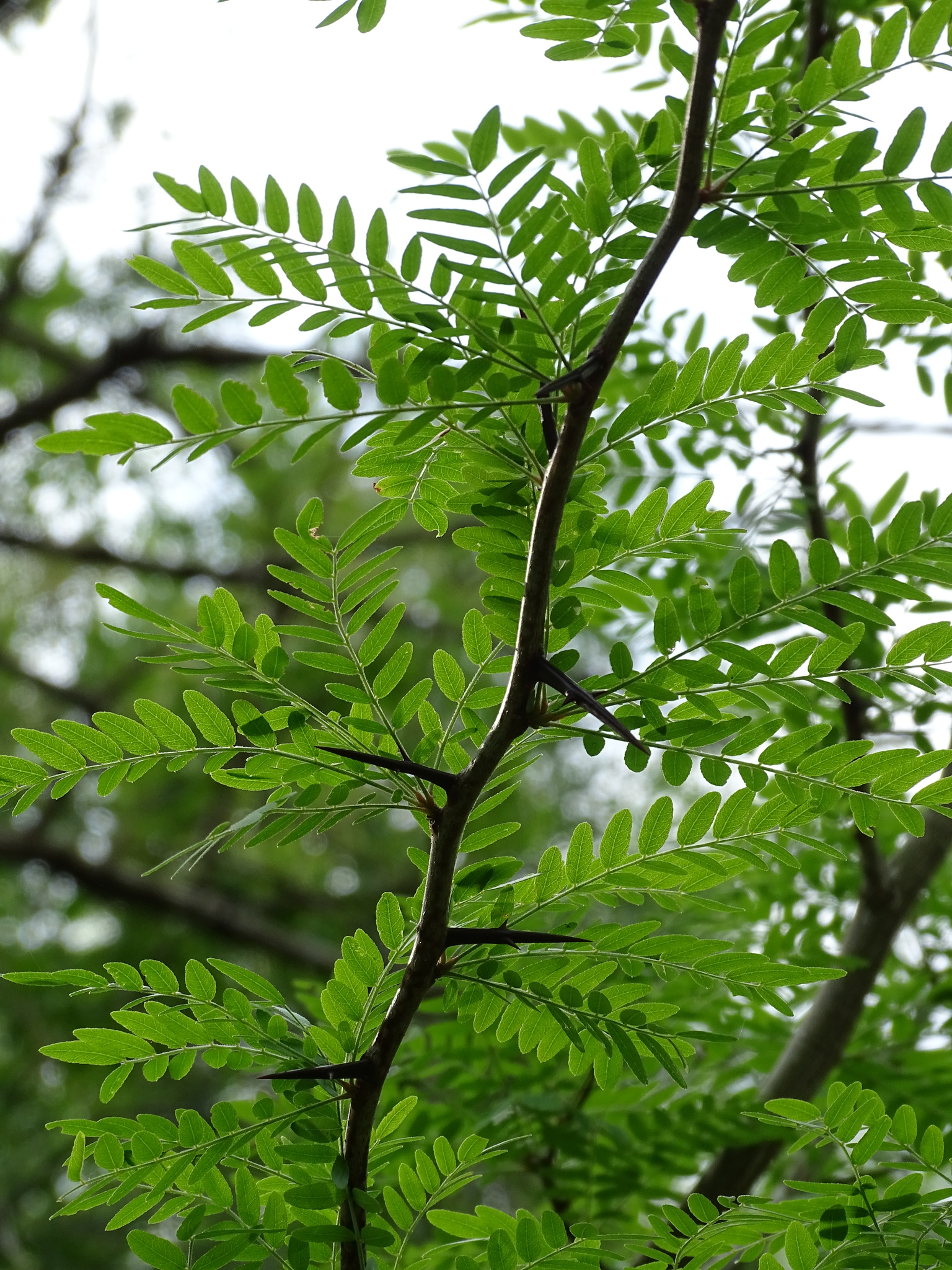


© photo
(c) Dwight Bohlmeyer, some rights reserved (CC BY-NC), uploaded by Dwight Bohlmeyer · cc-by-nc
Daniel Atha · cc0
Adam Kranz · cc0
Taken Jan 28, 2022 by Monteiro Henrique (cc-by-sa)
Taken Aug 30, 2021 by S M (cc-by-sa)
Taken Nov 13, 2022 by Bernadette Gaspardel (cc-by-sa)
Taken Oct 17, 2020 by Prieta Javier (cc-by-sa)
Taken Nov 3, 2016 by Yoan MARTIN (cc-by-sa)
© copyright of the Board of Trustees of the Royal Botanic Gardens, Kew.


Global distribution
Gleditsia triacanthos is native to central and eastern North America, chiefly alluvial valleys in the Mississippi and Ohio basins, south to northeastern Mexico. Widely planted across temperate regions, it has become locally invasive outside its native range, particularly in Australia and Argentina.
- Native2
- Invasive2
- United States
- Mexico
- Argentina
- Australia
Hexagons: regions where the plant occurs. Green dots: native range.1
Identity
Honey locust (Gleditsia triacanthos L., 1753), also called thorny locust or sweet bean tree, is a large deciduous tree in the genus Gleditsia, family Fabaceae. The genus honors Johann Gottlieb Gleditsch, a German botanist contemporary with Linnaeus. Greek tri- and akantha, meaning three thorns, describe the branched thorns often grouped in threes on wild trunks and branches. The scientific name thus literally describes a visible feature of a wild tree. 1 2
The French name févier comes from fève, broad bean, because the large flat pods resemble oversized bean pods. Honey locust refers to the sweet pulp surrounding seeds in the ripe pod, compared with carob pulp, rather than to honey production by the tree. 6
Recognition
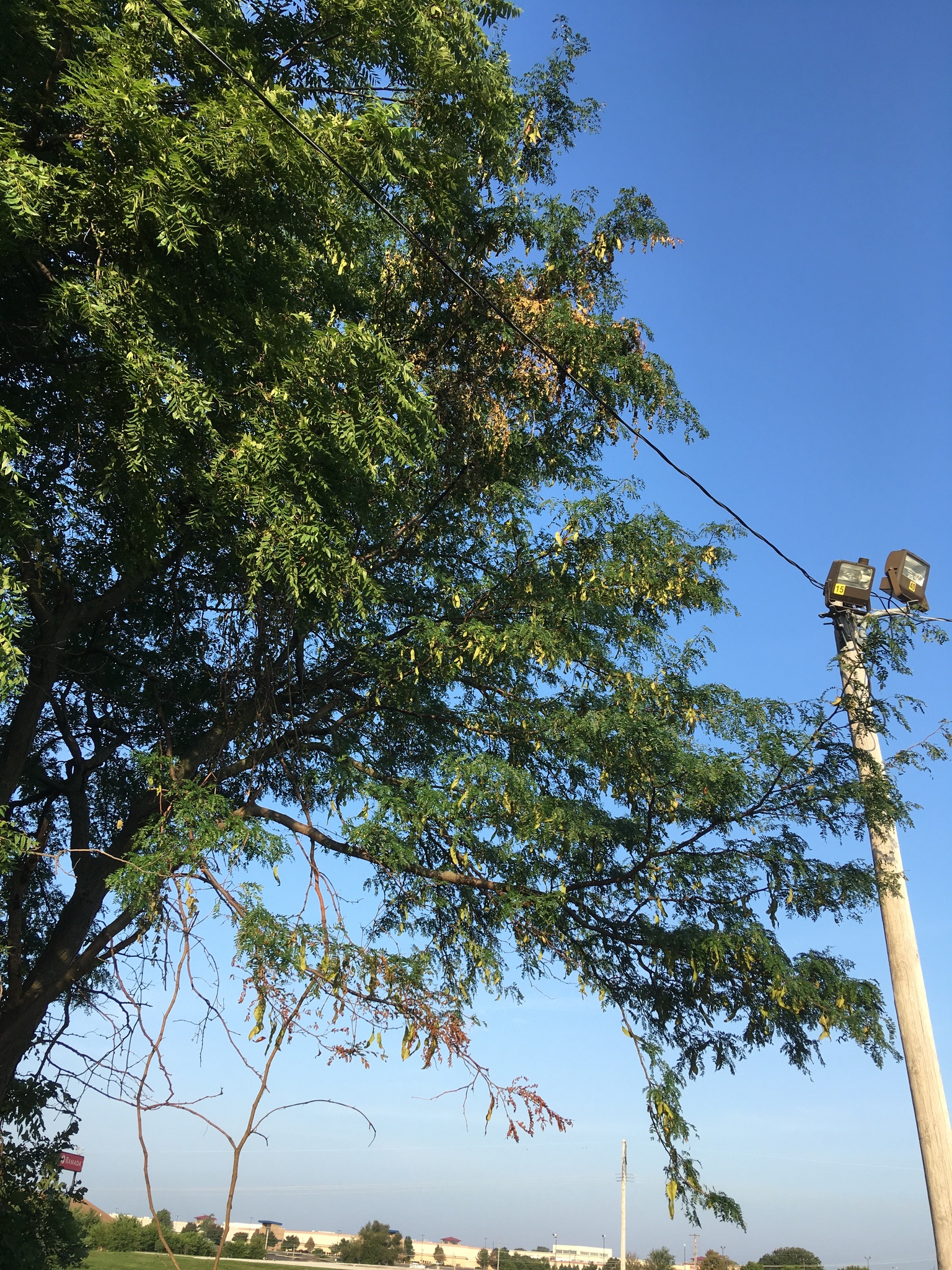
Mature trees commonly reach 20–30 m (65–100 ft) tall and 12–20 m (40–65 ft) across. Growth is rapid, particularly during the first twenty to thirty years. Wild trees carry long, branching thorns, often grouped in threes and 5–8 cm (2–3 in) long, on the trunk and major branches. Almost all cultivars planted since the 1950s lack them. 2 3
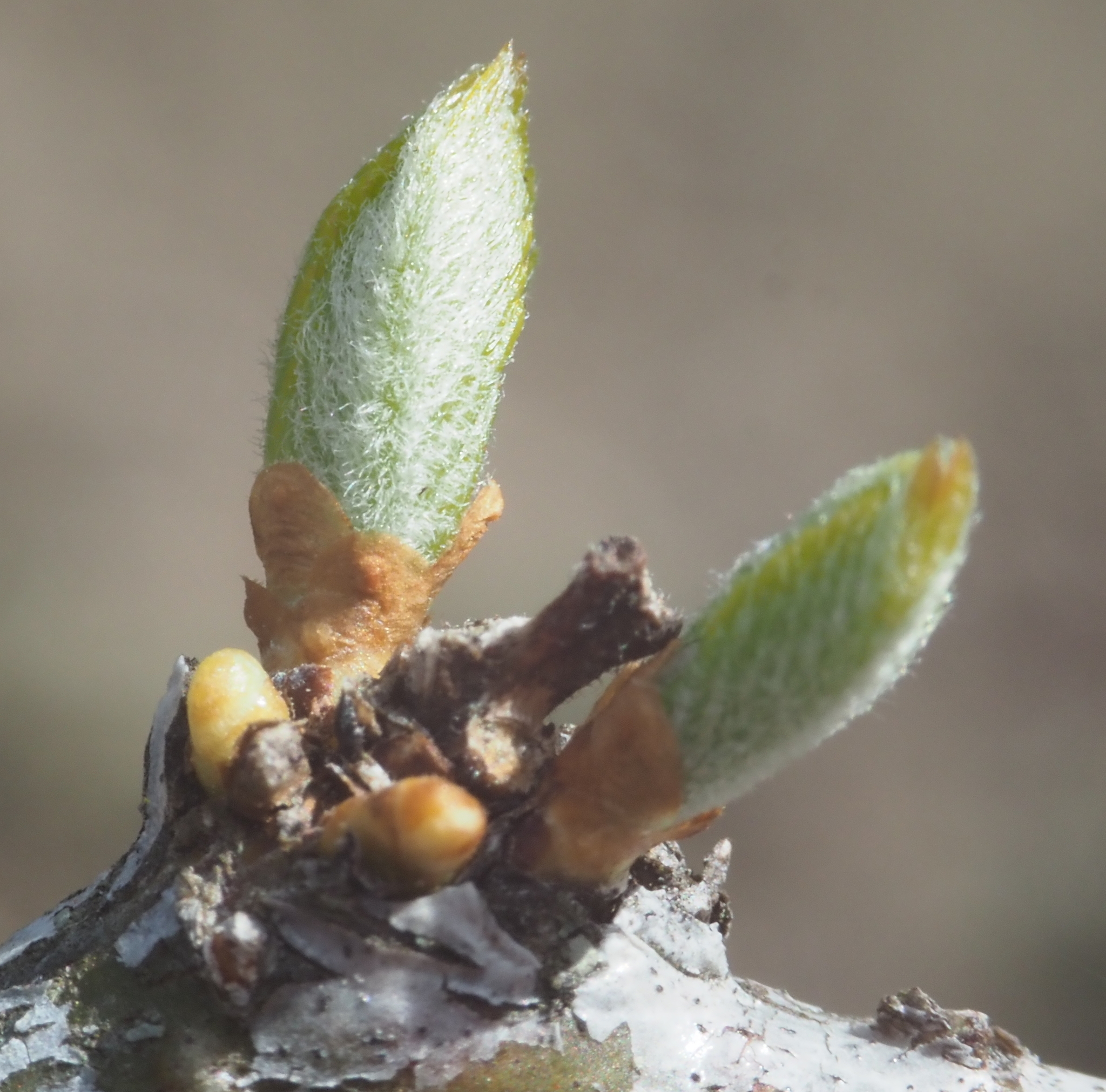
Pinnately or bipinnately compound leaves measure 10–20 cm (4–8 in) long and carry numerous small, elliptical leaflets, giving the crown a delicate outline and filtered shade. Dark green and glossy above, the foliage turns yellow in autumn. Small greenish-yellow flowers are fragrant and grouped in racemes in spring and summer, yet remain inconspicuous despite their numbers. 2 4
Flat, often twisted pods are 30–45 cm (12–18 in) long, reddish brown before turning purplish black at maturity. They stay on the tree through much of winter before falling. Their size, more than their color, distinguishes a wild-type tree at a distance from a fruitless cultivar such as Shademaster. 4 2
Useful taxonomy
The accepted botanical name is Gleditsia triacanthos L., described by Linnaeus in 1753. Several varieties and forms have been proposed, some now chiefly of horticultural rather than botanical interest:
- Gleditsia triacanthos var. inermis (L.) Pursh
- Gleditsia triacanthos f. elegantissima (Grosdem.) Rehder
- Gleditsia triacanthos f. pendula (Asch. & Graebn.) Rehder
- Gleditsia triacanthos var. ferox (Desf.) Asch. & Graebn.
- Gleditsia triacanthos f. nana (Loudon) Rehder
Unlike the collection plants or rare forms elegantissima, pendula, ferox and nana, var. inermis has direct commercial importance. Its exact botanical status varies between references, but the name identifies the thornless horticultural lineage behind nursery cultivars such as Shademaster and Skyline. With or without thorns, the accepted species name remains Gleditsia triacanthos. 1 3
Habitat and range
Alluvial valleys in central and eastern North America form its native setting, especially the Mississippi and Ohio basins. The range extends from Pennsylvania to Nebraska, south to Texas, Georgia and northeastern Mexico. Rich, moist lowland soils beside rivers are its characteristic habitat. 1 2
The International Union for Conservation of Nature assesses Gleditsia triacanthos as Least Concern, reflecting its wide native range and generally abundant population. 8
Introduced widely as an ornamental in temperate regions, honey locust has become locally invasive beyond its native range. In Australia, it forms dense thickets along waterways; in Argentina, it colonizes grassland and subtropical forest. In France it remains chiefly a planted tree, without a recognized invasive status. 10
Life cycle and reproduction
Flowering falls in late spring and early summer, depending on climate. Racemes of small greenish-yellow flowers often combine male, female and hermaphroditic flowers on the same tree. After pollination, pods develop slowly, ripening in late summer as they change from green to reddish brown and then purplish black. 4 2
Branched thorns and large sweet pods are interpreted as inherited adaptations to the Pleistocene, when mastodons and other now-extinct large herbivores browsed the tree and dispersed seeds by swallowing the pulp. Without these dispersers, seeds falling near the tree germinate less readily without help from smaller animals such as deer and squirrels. 9
Despite belonging to Fabaceae, Gleditsia triacanthos does not reliably fix nitrogen like most legumes. Symbiotic root nodulation has not been demonstrated with certainty, unlike in related genera such as Robinia. In cultivation, scarified seed reproduces the typical species, while grafting preserves the characteristics of a named thornless, generally podless cultivar. 3
Uses and risks
Urban ornamental and street planting are its main uses today. Filtered shade allows grass beneath the crown, while tolerance of compacted soil, drought, salt and pollution suits city conditions. Thornless, generally podless cultivars have largely replaced wild trees in cities since the mid-20th century, avoiding injuries and the work of clearing fallen pods. 4 3
Hard, rot-resistant timber is used chiefly for posts and fencing. Supplies are too limited for a large industrial sector, so it serves more specialized woodworking markets. Indigenous North American peoples historically ate the sweet pod pulp, which remains attractive to livestock and wildlife. 2
The ASPCA lists Gleditsia triacanthos as non-toxic to cats, dogs and horses. The danger is mechanical rather than chemical: long, rigid thorns on wild trees can puncture skin. A thornless cultivar such as Imperial or Skyline removes that particular risk at its source. 5
Varieties, look-alikes and related plants
Thornless, generally podless cultivars dominate the current nursery trade. Shademaster and Skyline provide regular vase-shaped or pyramidal crowns for street planting. Sunburst opens with golden foliage that greens in summer, while Imperial stays more compact for smaller gardens. All derive from the thornless lineage called var. inermis. 3
Two trees can cause confusion. Black locust (Robinia pseudoacacia), another thorny, drought-tolerant Fabaceae tree, has simple paired thorns at each leaf base, never branching or grouped in threes like honey-locust thorns. Its Asian relative Gleditsia japonica has narrower pods, often spirally twisted rather than simply flat. Among these three species, thorn number and arrangement settle identification faster than the leaf outline, which is nearly identical between genera.
Main sources
- Plants of the World Online / Kew, Gleditsia triacanthos L.
- NC State Extension, Gleditsia triacanthos (Honeylocust)
- NC State Extension, Gleditsia triacanthos var. inermis (Thornless Honeylocust)
- Missouri Botanical Garden Plant Finder, Gleditsia triacanthos
- ASPCA, Honey Locust toxicity entry
- Tela Botanica, Gleditsia triacanthos L.
- INPN / MNHN, Gleditsia triacanthos L., 1753 (cd_nom 100330)
- IUCN Red List, Gleditsia triacanthos assessment
- Arnoldia / Harvard University Arboretum, anachronistic fruits and the ghosts who haunt them
- Australian Government, Gleditsia triacanthos weed profile
Frequently asked questions
Is honey locust toxic to cats and dogs?
No. The ASPCA lists Gleditsia triacanthos as non-toxic to cats, dogs and horses. The real risk is serious injury from the wild type’s thorns rather than a chemical substance in the plant.
Why do some honey locusts have no thorns?
Most cultivars planted since the mid-20th century derive from var. inermis, a naturally thornless variety. Wild trees bear branching thorns, often grouped in threes.
Does honey locust fix nitrogen like other legumes?
This remains debated. Unlike most Fabaceae, Gleditsia triacanthos has no reliably demonstrated root nodules with nitrogen-fixing bacteria, despite belonging to the legume family.
Where does the name honey locust come from?
It refers to the sweet pulp surrounding the seeds inside a ripe pod, compared with carob pulp. Despite its name, the tree is not an important source of honey.
Is honey locust invasive?
Outside its native range, yes, particularly in Australia and Argentina, where it forms dense thickets along waterways. In France it remains chiefly an ornamental tree, without a recognized invasive status.
How does honey locust differ from black locust?
Both are thorny, drought-tolerant Fabaceae, but belong to different genera. Honey-locust thorns branch and occur in groups of three; black-locust thorns are simple and paired at each leaf base.
Can honey-locust pods be eaten?
The sweet pulp around the seeds was eaten historically, but it is not a common food today. The hard-coated seeds cannot be eaten as they are.
Similar plants
If you are unsure about a plant’s toxicity, ask a botanist or veterinarian for advice.