
Flame lily (Gloriosa superba, )
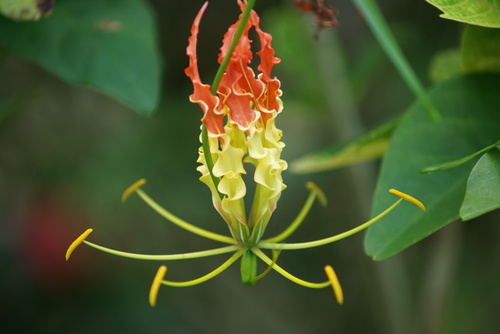

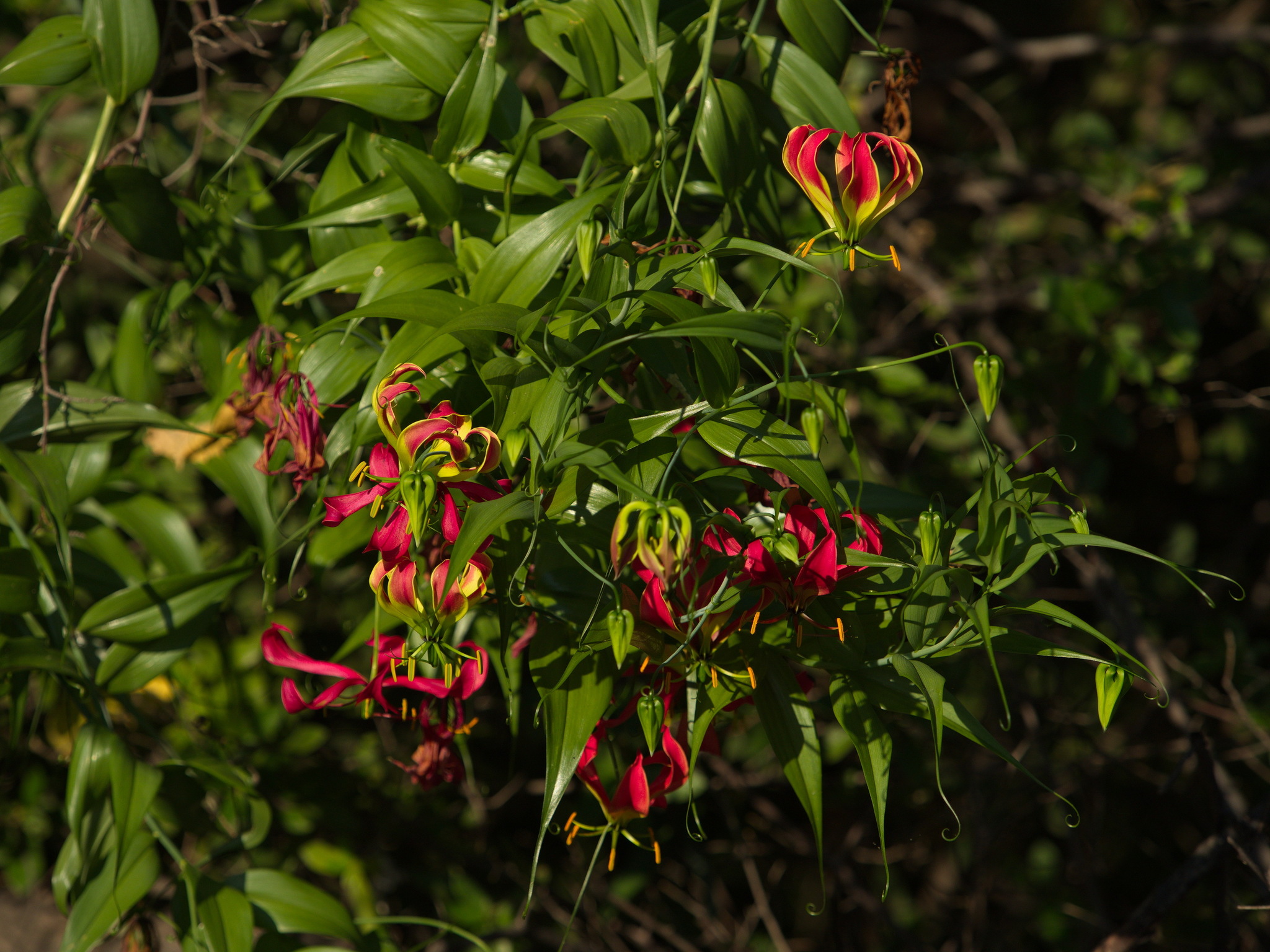
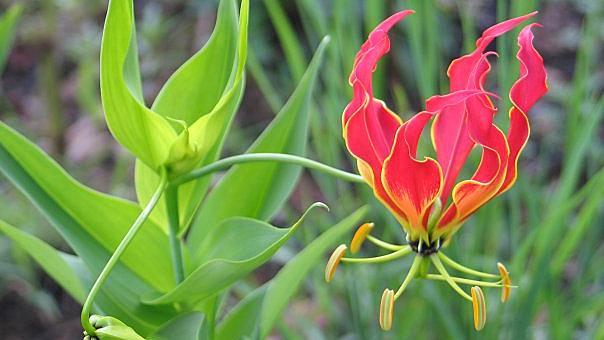
Flame lily (Gloriosa superba) is a tuberous perennial climber in the Colchicaceae, native to sub-Saharan Africa and tropical Asia as far as the Sunda Islands. Leaf-tip tendrils attach it to supports, while reflexed tepals grade from yellow at the base to vivid orange-red at their tips. Zimbabwe’s national flower is also an extremely poisonous ornamental, with colchicine concentrated in its tuber.
Read moreFlame lily, Glory lily, Climbing lily, Malabar lily and Tiger claw
Gloriosa rothschildiana, Methonica superba, Gloriosa superba var. angustifolia and Gloriosa superba f. grandiflora
Allow a few hours of direct sun per day, preferably morning or evening.
Full sun; tolerates light partial shade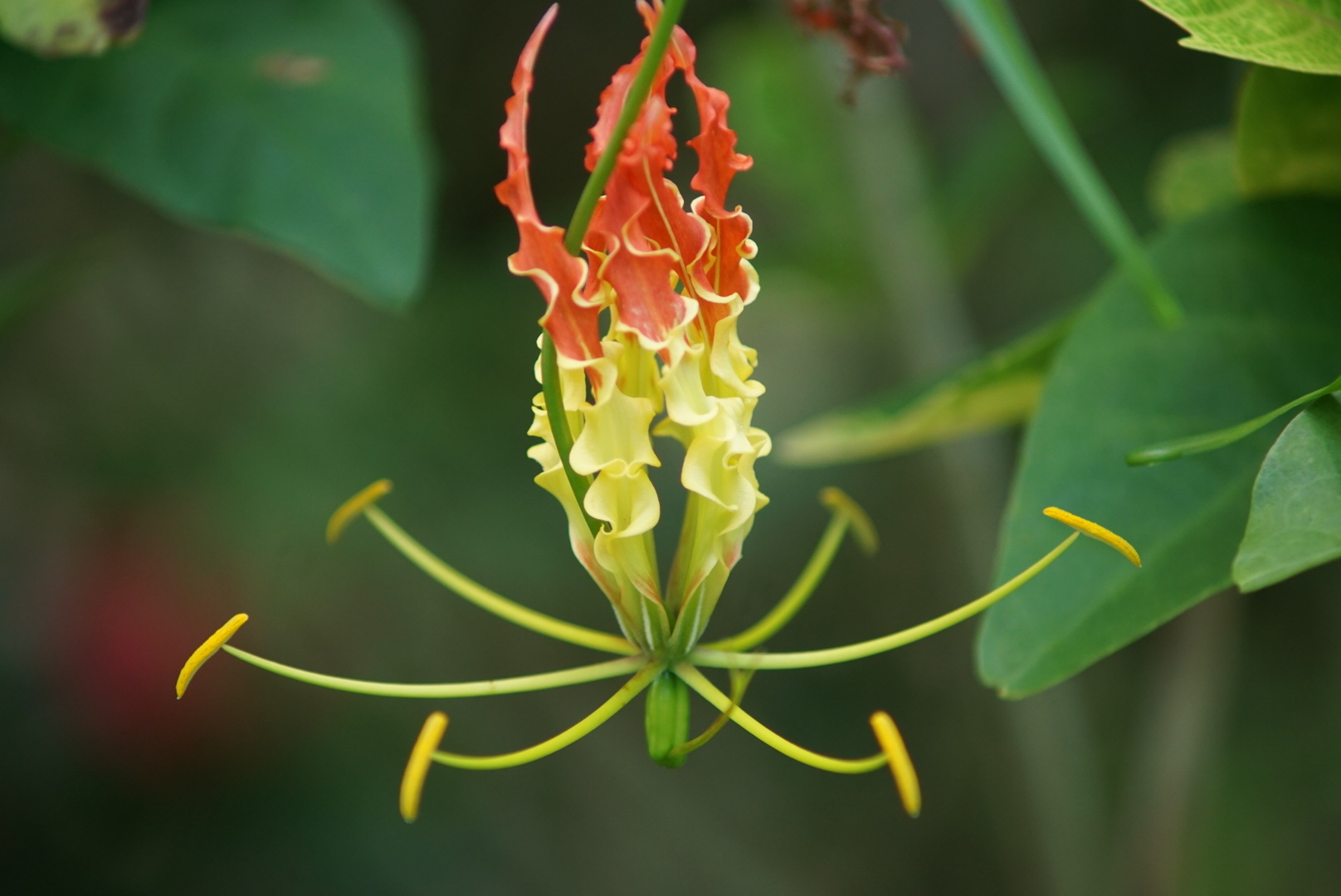



© photo
(c) Tan Yi Hern, Tan Chin Qian, Tan Li TA, Tan Hou Aun, some rights reserved (CC BY-NC), uploaded by Tan Yi Hern, Tan Chin Qian, Tan Li TA, Tan Hou Aun · cc-by-nc
Bethlea Bell · cc0
Peter Archdale · cc-by
Taken Feb 22, 2021 by ian connop (cc-by-sa)
Taken Jul 11, 2022 by xusta (cc-by-sa)
Taken Apr 10, 2016 by Hugo SANTACREU (cc-by-sa)
Taken Jul 17, 2015 by Tela Botanica − Djah François Malan (cc-by-sa)
Taken Dec 8, 2016 by Eric Leeuwerck (cc-by-sa)
© copyright of the Board of Trustees of the Royal Botanic Gardens, Kew.



Global distribution
Gloriosa superba is native across much of sub-Saharan Africa, including South Africa, Zimbabwe, Botswana and Angola, and through the Indian subcontinent and tropical Asia to the Sunda Islands. Horticulture and traditional medicinal use have spread it beyond this range. It has naturalized and become invasive in several tropical territories.
- Native5
- Introduced1
- Invasive2
- South Africa
- Zimbabwe
- Botswana
- Angola
- India
- United States (Florida, Alabama)
- Eastern Australia
- French Polynesia
Hexagons: regions where the plant occurs. Green dots: native range.1
Identity
Flame lily (Gloriosa superba L., 1753) is a tuberous perennial climber in the Colchicaceae and the only member of its genus widely grown in horticulture. POWO and IPNI retain Gloriosa superba, published by Linnaeus in Species Plantarum, as its accepted name. 1 2
From Latin gloriosus, glorious or splendid, the genus name evokes the flower's fiery, reflexed tepals. Established English names include glory lily, climbing lily, Malabar lily and tiger claw. In southern Africa and Asia the plant also has a long history of traditional medicinal use, despite its extreme toxicity. 10
Zimbabwe recognizes the species as its national flower. In 1947 Elizabeth II, then a princess, received a diamond brooch shaped like the flower during her visit to Rhodesia. The gift remains closely associated with the flower's national symbolism. 9
Recognition
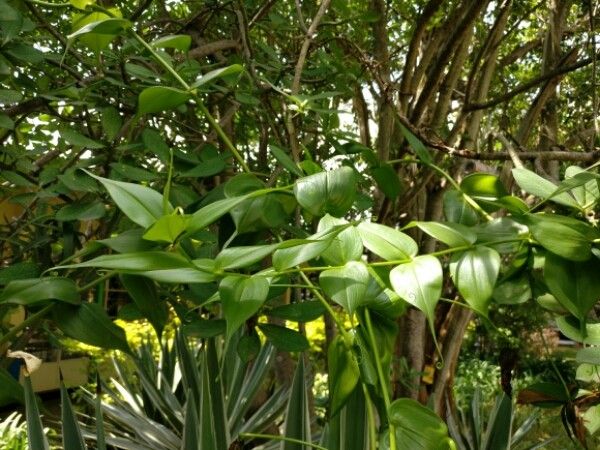
A brittle, finger-shaped underground tuber produces the slender herbaceous stems. These commonly climb 1.5–2.5 m (5–8 ft) in cultivation and can reach 4 m (13 ft) in favorable tropical conditions. Tendrils at the tips of the leaves grip surrounding vegetation or a support, rather than arising from the leaf axils or relying on a twining stem. 3 4
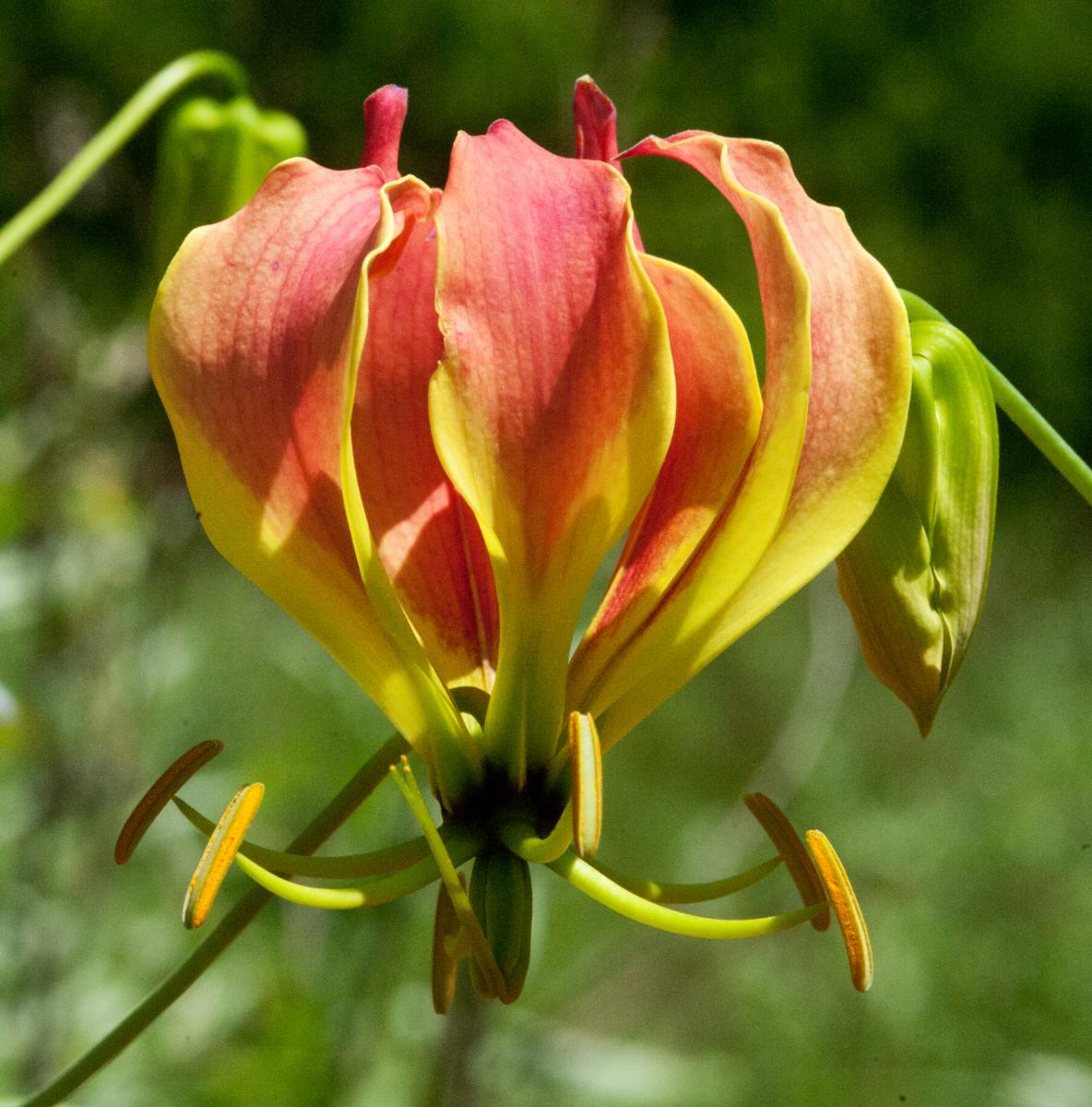
The flower is the most conspicuous distinguishing feature among the roughly dozen species of Gloriosa: six reflexed tepals, each 5–7.6 cm (2–3 in) long, with wavy margins. Yellow at the base, they turn bright orange-red as they age, producing the flame-like gradient behind the common name. Six long stamens bearing yellow pollen spread below them in a star. 9
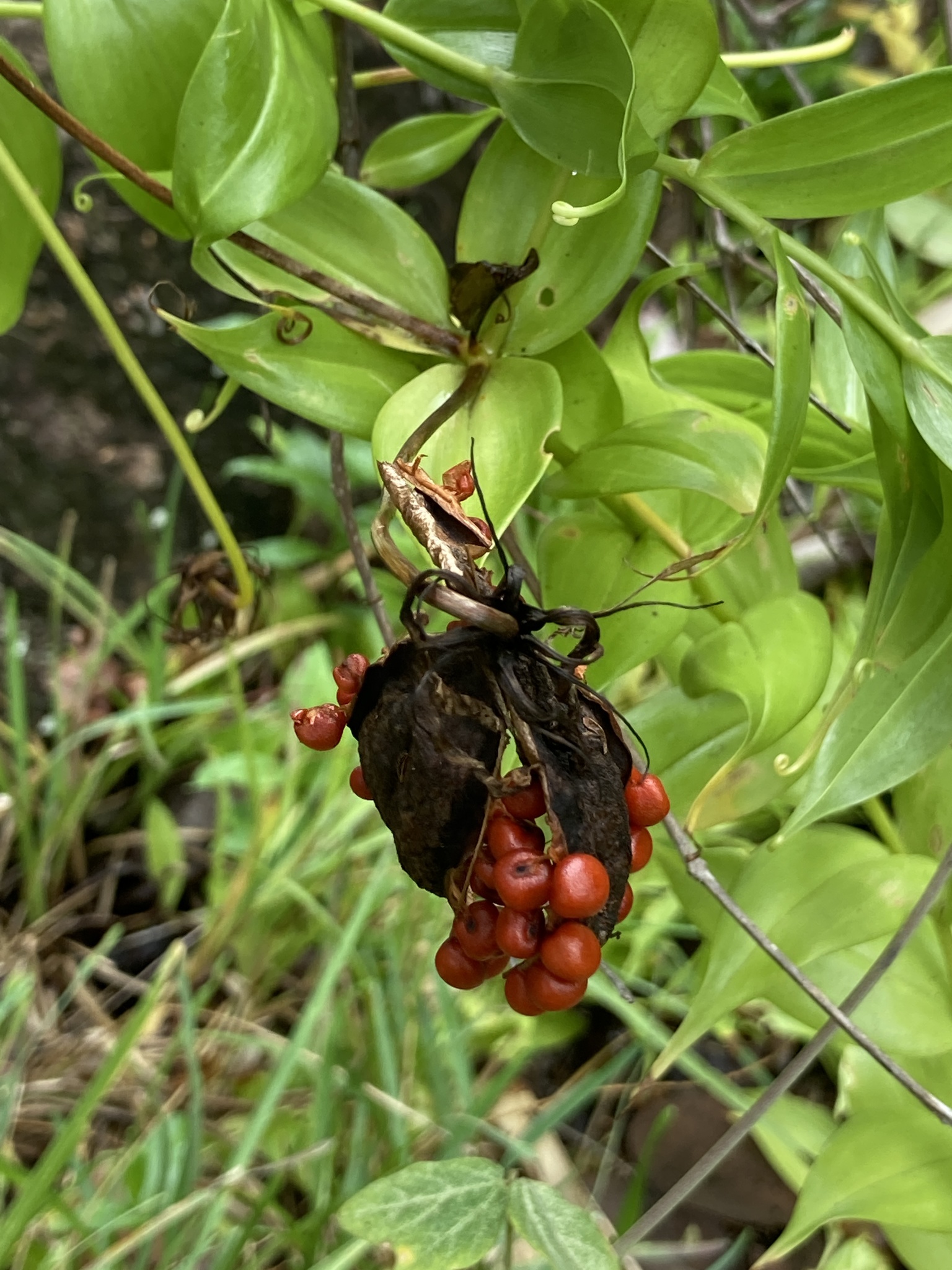
An elongated capsule 6–12 cm (2.4–4.7 in) long follows flowering and contains red seeds when ripe. Underground, the tuber can be mistaken for a sweet potato or yam. Informal gathering in Asia and Africa has led to severe poisonings when the tuber was collected as an edible vegetable. 9
Useful taxonomy
The synonymy of Gloriosa superba accounts for several familiar names. Gloriosa rothschildiana O'Brien remains prominent in the trade for plants with vivid red tepals and a sharply defined yellow base. The older Methonica superba (L.) Crantz is a homotypic synonym resulting from placement in a genus no longer retained for this species. 1 2
Around a dozen accepted species belong to Gloriosa, most from southern and eastern Africa. They include Gloriosa simplex, with less strongly waved tepals and a more restricted distribution. A label giving only the genus is insufficient: the full name Gloriosa superba distinguishes flame lily from its African relatives. 1
Habitat and range
Across sub-Saharan Africa, its native range includes South Africa, Zimbabwe, Botswana and Angola, extending through the Indian subcontinent and tropical Asia to the Sunda Islands. In southern Africa it occupies forest margins, bushveld, savanna and even coastal dunes, rather than one narrowly defined habitat. 1 6
The IUCN assessment lists Gloriosa superba as Least Concern globally because it remains common across a wide range. That broad assessment does not exclude local depletion: wild collection for pharmaceutical colchicine extraction has reduced some Indian populations. 8
Horticultural introductions have carried flame lily well beyond its native range, including Florida, Alabama and the Caribbean. In eastern Australia it has become an invasive weed, ranked among southeastern Queensland's hundred most invasive plants. NSW WeedWise describes dense infestations in full sun with up to 70 stems per square meter (6.5 per sq ft), and competition with native vegetation in coastal areas. 7
Life cycle and flowering
Southern African plants flower during the southern summer, November to March. Under temperate cultivation, flowering comes instead with established summer warmth, corresponding to July to September in the Northern Hemisphere. The tuber is dormant outside active growth and must remain dry until foliage resumes; watering a dormant tuber prematurely can cause it to rot before new growth appears. 6 3
Its pollination remains incompletely understood. The reflexed tepals suggest a strong flying visitor with a long bill or proboscis, and sunbirds and certain butterflies are often proposed as pollinators. The flower's unusual form alone does not settle which visitor is responsible. 6
Horticultural propagation chiefly uses tuber division in late winter. A bud-bearing piece produces only one additional plant in a year, making commercial multiplication relatively slow compared with raising many seedlings. Seed propagation is possible, and chemical scarification can accelerate germination. 4
Uses and risks
Every part of flame lily is extremely poisonous, especially the tuber, which contains colchicine and gloriocine. Ingestion can cause nausea, vomiting, abdominal pain and bloody diarrhea, progressing in severe cases to convulsions, coma and ascending polyneuropathy. The ASPCA lists the plant as toxic to cats, dogs and horses. 5 9
Traditional Indian and African medicine has nevertheless used the tuber for gout, snakebite and childbirth-related purposes. The genus also supplies pharmaceutical colchicine, whose medical use requires strict supervision. Traditional use does not make the ornamental safe: handle it with gloves and keep the plant away from children and animals. 4 9
Garden use is ornamental, trained over a trellis or obelisk, or grown in a container under glass in cool climates. Frost damages the growing shoots. In frost-prone places, protect the dormant tuber from freezing rather than relying on the hardiness-zone range alone. 3
Varieties, look-alikes and related plants
Two horticultural forms are particularly familiar. Rothschildiana, derived from the former name Gloriosa rothschildiana, is the usual commercial form, with broader, vivid red tepals and a clear yellow base. Citrina is sold as a yellow-flowered form, although accounts differ on the presence of red markings; check the supplier’s identification. 1
The best-documented dangerous confusion involves the tuber rather than another ornamental flower. Mistaking it for an edible sweet potato or yam during informal gathering has caused fatal poisonings in Asia and Africa. The tuber's resemblance to food is therefore a more serious identification problem than the appearance of the flowers. 9
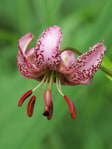
Reflexed, waved tepals also recall turban-flowered lilies such as Lilium martagon. Their toxicity and climbing habit are very different, however: martagon lily does not climb and has no leaf-tip tendrils. Those tendrils are a useful distinction even before flame lily flowers. 10
Main sources
- Plants of the World Online / Kew, Gloriosa superba L.
- International Plant Names Index, Gloriosa superba
- Royal Horticultural Society, Gloriosa superba - glory lily
- Plants For A Future, Gloriosa superba
- ASPCA, Gloriosa Lily toxic plant entry
- South African National Biodiversity Institute (PlantZAfrica), Gloriosa superba
- NSW WeedWise, Glory lily (Gloriosa superba)
- IUCN Red List, Gloriosa superba assessment
- Wikipedia, Gloriosa superba
- Wikipedia, Gloriosa superba
Frequently asked questions
Is flame lily dangerous?
Yes. All parts, especially the tuber, contain colchicine. Ingestion can be fatal to people and animals; wear gloves when handling the plant.
Can the tuber be mistaken for a vegetable?
Yes, for a sweet potato or yam. This confusion has caused several documented severe poisonings during informal gathering in Asia and Africa.
Why do flame lily flowers change color?
The tepals open yellow at the base and turn vivid orange-red as they age. Their flame-like gradient explains the plant’s most familiar common name.
Is Gloriosa superba Zimbabwe’s national flower?
Yes. In 1947 Elizabeth II, then a princess, received a diamond brooch shaped like the flower during her visit to Rhodesia, a gift still associated with its national symbolism.
How do you plant the tuber without breaking it?
The tuber is brittle and its sap irritating. Wearing gloves, plant it almost horizontally, 7–10 cm (2.8–4 in) deep, after spring frost danger has passed.
Is flame lily invasive?
Yes, in eastern Australia and French Polynesia, where dense stands on coastal dunes strongly compete with local vegetation.
Can flame lily stay in the ground in a frost-prone climate?
Not reliably. It does not tolerate frost and is chiefly grown in containers under glass, or with the tuber lifted and stored frost-free each winter.
Similar plants

If you are unsure about a plant’s toxicity, ask a botanist or veterinarian for advice.