
Kentucky coffeetree (Gymnocladus dioicus, )
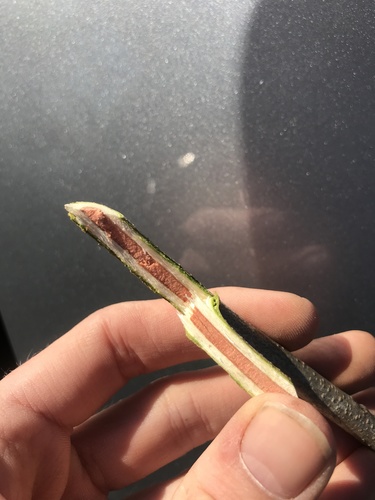
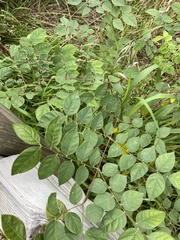
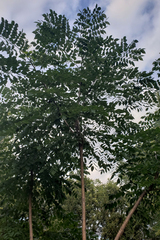
Kentucky coffeetree (Gymnocladus dioicus) is a deciduous tree in the Fabaceae, native to southern Ontario and the central and eastern United States. Thick branches remain almost bare for much of the year, while its huge, twice-divided leaves are among the largest in temperate trees. Heavy reddish-brown pods hang through winter on female trees.
Read moreKentucky coffeetree and Stump tree
Allow a few hours of direct sun per day, preferably morning or evening.
Full sun; tolerates light shade when young


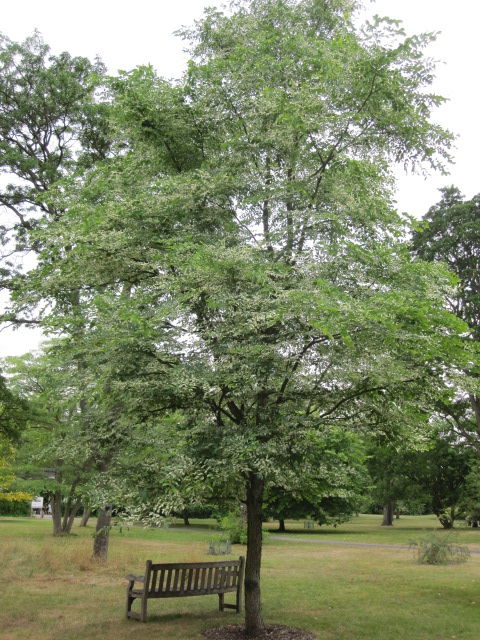
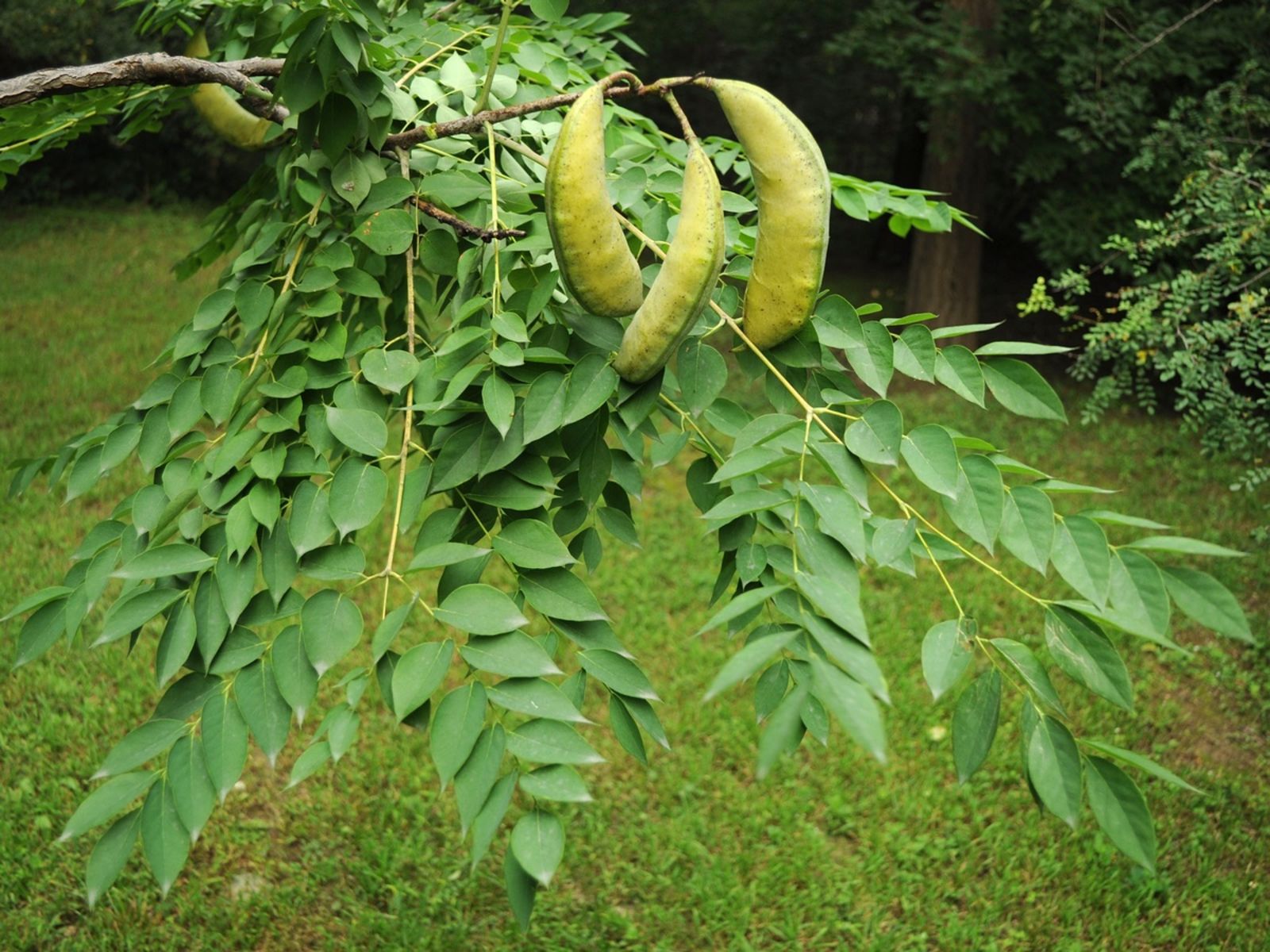
© photo
Andrew Conboy · cc-by
Elliot Greiner · cc-by
aarongunnar · cc-by
© copyright of the Board of Trustees of the Royal Botanic Gardens, Kew.
Global distribution
Native from southern Ontario in Canada through the central and eastern United States, from New York and Pennsylvania west to Kansas, Nebraska and southern South Dakota. Despite that wide range, wild trees are scarce and scattered, often isolated or in small clonal groves connected by roots. It is widely planted outside its native range as a street tree.
Identity
Kentucky coffeetree (Gymnocladus dioicus (L.) K.Koch, 1869) is a deciduous member of the Fabaceae, the legume family. Only a few species make up Gymnocladus, scattered between North America and eastern Asia; this is its sole North American representative. 1 3
Greek gumnós, naked, and kládos, branch, describe the thick limbs with very little fine twig growth. That almost skeletal winter outline also explains the English name stump tree. The French name chicot evokes the same image of a bare stump or broken remnant of wood. 5
Recognition
At 18–24 m (59–79 ft) tall and 12–17 m (39–56 ft) wide, Kentucky coffeetree develops a narrow, oval crown that opens out with age. Its most distinctive feature is the enormous bipinnate foliage: individual leaves, divided twice into smaller units, often measure 60–90 cm (24–35 in) long, larger than those of most neighboring temperate trees. 2 3
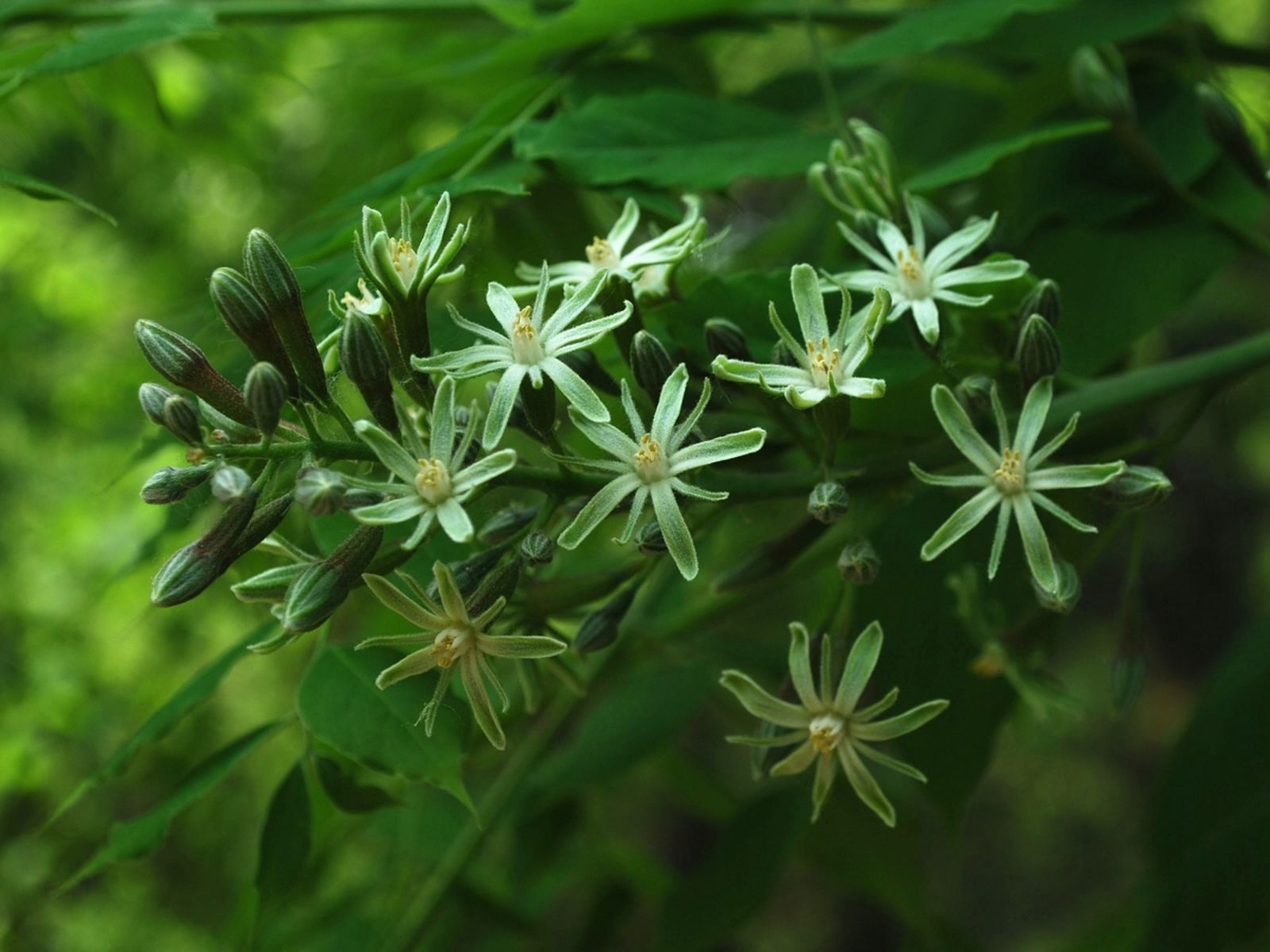
Separate male and female trees make the species dioecious. Fragrant greenish-white flowers form upright panicles 10–30 cm (4–12 in) long, visually subdued despite their scent. Females alone bear the leathery reddish-brown pods, 12–25 cm (5–10 in) long, which remain attached through much of winter before opening. 3 4
Late spring leaf emergence and early fall leaf drop leave the angular branches exposed for an unusually long part of the year. Deeply furrowed gray bark adds to that winter character; on older trunks, pieces sometimes lift into curled plates. The bare outline is therefore a normal seasonal feature, rather than evidence by itself that a tree has died. 5
Useful taxonomy
The original name, Guilandina dioica, dates to Linnaeus in 1753. Karl Koch transferred the species to Gymnocladus in 1869, establishing the combination now accepted by Plants of the World Online. Between those publications, Danish naturalist Martin Vahl proposed Hyperanthera dioica in 1790, now treated as a homotypic synonym. 1 5
Older botanical and horticultural accounts may use:
- Guilandina dioica L.
- Hyperanthera dioica Vahl
- Gymnocladus canadensis Lam.
- Guilandina inermis Salisb.
Use Gymnocladus dioicus to distinguish the North American tree from its Asian relatives. Gymnocladus chinensis and Gymnocladus assamicus occur from the eastern Himalayas to southern China, well outside its native North American range. Their shared genus does not make them interchangeable species. 1
Habitat and range
Southern Ontario marks the Canadian part of a range extending through the central and eastern United States, from New York and Pennsylvania west to Kansas, Nebraska and southern South Dakota. River woods on calcareous alluvium are characteristic habitat, but dry hillsides, scree and rocky outcrops also support it. Its ecological flexibility has often been underestimated. 8 3
A broad range does not mean an abundant tree. Kentucky coffeetree remains scarce and scattered in the wild. Missouri surveys found only a handful of individuals in sampled populations, despite records from most counties in the state. A nearly waterproof seed coat limits natural recruitment, helping explain a rarity noted for more than a century. IUCN assessed it as Vulnerable in 2020. 8 6
Street planting has carried the tree beyond its native range, in Europe and elsewhere. Tolerance of pollution, road salt and urban drought helps explain this use. A cultivated street tree should be distinguished from a wild population when interpreting its distribution. 3
Life cycle and reproduction
Among the largest seeds of temperate North American trees, these seeds have an almost waterproof coat. Without scarification, germination may be delayed for years. Nursery propagation breaks that barrier by nicking the coat, then soaking the seeds for 24 hours to overcome this physical dormancy. 4 9
The seed coat also underlies an ecological hypothesis: the heavy pods may be an evolutionary anachronism, adapted to dispersal by extinct Pleistocene megafauna such as mastodons and gomphotheres. Without an equivalent modern disperser, intact pods often accumulate beneath the parent tree. Researchers have described this as the puzzle of fruit left to rot where it falls; it remains an evolutionary interpretation of the fruit’s traits. 7 8
Where seedlings are scarce, root suckers sustain local populations. Connected below ground, the resulting clonal groves account for the small groups often encountered in the field. Persistence of an existing clone and establishment of a new seedling are different processes, both relevant to its scattered occurrence. 8
Uses and risks
Hard, durable wood has long been used by cabinetmakers and carpenters. Furniture and some weather-exposed outdoor work remain among its uses, distinct from its increasingly familiar role as an ornamental street tree. 5
Raw seeds and pods are poisonous to people and domestic animals, including dogs and livestock, chiefly causing abdominal pain and vomiting. Cytisine is often named as the responsible alkaloid, although its identification has not been formally confirmed in a dedicated study. Roasted seeds were historically brewed as a caffeine-free coffee substitute during the colonial period, giving Kentucky coffeetree its name. That history is not a verified preparation method or a guarantee of safety: accounts of roasting reducing or eliminating the suspected toxin lack scientific confirmation. 3 5
Varieties, look-alikes and related plants
The male cultivar Espresso was selected for street planting and produces no pods, reducing sidewalk fruit litter without sacrificing the giant leaves. Prairie Titan, also male, offers a more symmetrical crown for the same setting. A tree’s sex therefore matters when choosing a planting where falling pods would require regular cleanup. 3
Two other trees with large compound leaves are frequent sources of confusion:
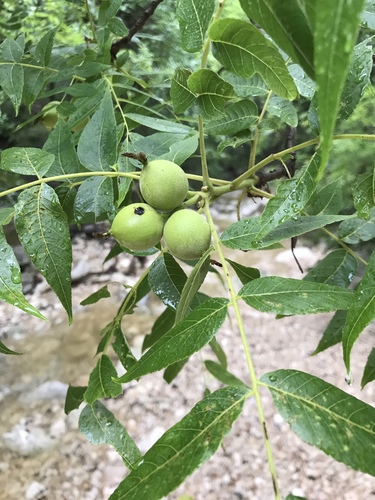
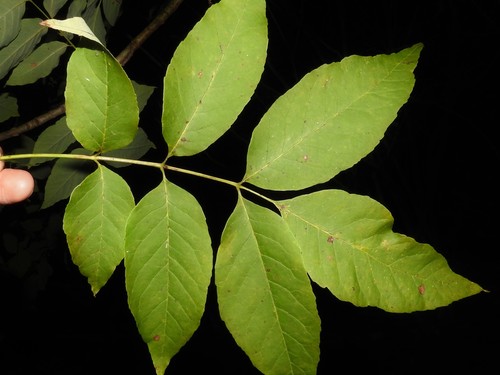
- Juglans nigra, black walnut, has once-pinnate leaves, never bipinnate ones;
- Gleditsia triacanthos, honey locust, has many more, much smaller leaflets and an often thorny trunk.
Some large ashes also have an open winter outline. The lack of fine leafy twigs in winter, together with heavy persistent pods on female trees, is more useful than silhouette alone. Pods are a sex-dependent clue: their absence on a male Kentucky coffeetree does not exclude the species. 3
Main sources
- Plants of the World Online / Kew, Gymnocladus dioicus (L.) K.Koch
- Missouri Botanical Garden Plant Finder, Gymnocladus dioicus
- NC State Extension, Gymnocladus dioicus
- Plants For A Future, Gymnocladus dioica
- Wikipedia EN, Kentucky coffeetree
- IUCN Red List, Gymnocladus dioicus assessment
- Zaya & Howe, 2009, Oecologia — the anomalous Kentucky coffeetree
- Harvard Arnold Arboretum, exploring the native range of Kentucky coffeetree
- USDA NRCS Plant Guide, Gymnocladus dioicus
Frequently asked questions
Is Kentucky coffeetree poisonous?
Raw seeds and pods are considered mildly toxic to people, dogs and livestock, chiefly causing digestive symptoms. Cytisine is often named as the responsible alkaloid, although a dedicated study has not formally confirmed it.
Why do its branches look so bare in winter?
Thick, angular branches lack the fine secondary twigs found on most deciduous trees. This open outline gave Gymnocladus its name, meaning naked branch in Greek.
Why do some trees never produce pods?
Male and female flowers grow on separate trees. A lone male, including the male cultivar Espresso selected for its lack of fruit, will never bear pods.
Where does the name Kentucky coffeetree come from?
European settlers reportedly roasted the seeds for a caffeine-free coffee substitute during shortages. Most historical accounts describe an unpleasant taste, and the drink remained a makeshift substitute.
Is Kentucky coffeetree rare in the wild?
Yes, despite a wide range from southern Ontario to the central and eastern United States. IUCN lists it as Vulnerable. Trees mostly occur singly or in small clonal groups, a pattern linked to the loss of their natural seed dispersers.
What trees resemble Kentucky coffeetree?
Black walnut and honey locust also have large compound leaves. The lack of fine leafy twigs in the winter outline and the heavy persistent pods provide more useful clues.
What is Espresso Kentucky coffeetree?
Espresso is a male cultivar selected for street planting, so it never produces pods. It reduces fruit litter on sidewalks while retaining the species’ enormous leaves.
Similar plants
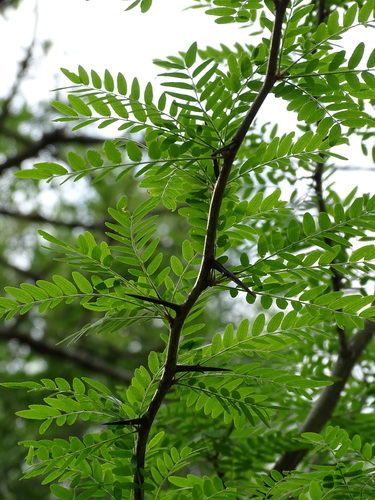
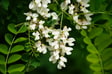
If you are unsure about a plant’s toxicity, ask a botanist or veterinarian for advice.