
Butterfly ginger lily (Hedychium coronarium, )
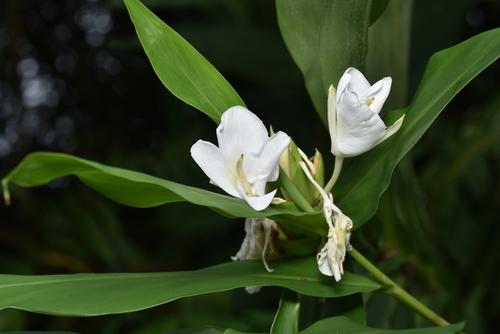
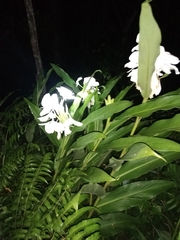

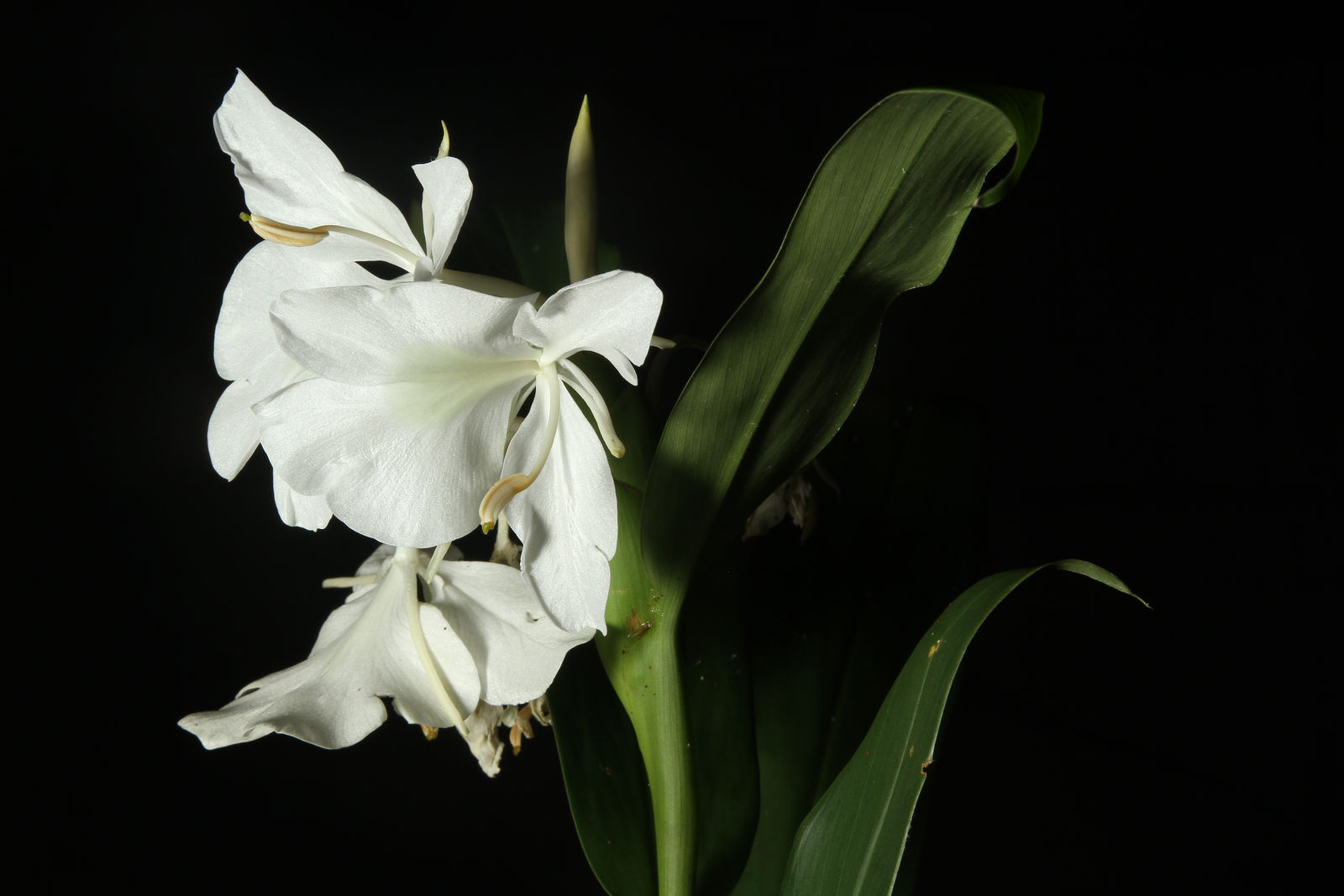
Butterfly ginger lily (Hedychium coronarium), also called white ginger lily, is a rhizomatous perennial in the Zingiberaceae, native to humid Asian woodland from the Indian subcontinent to Taiwan. Terminal spikes bear strongly fragrant white flowers with yellow throats. Known in Cuba as mariposa, it is the country’s national flower.
Read moreButterfly ginger lily, white ginger lily, white garland-lily and Mariposa
Allow a few hours of direct sun per day, preferably morning or evening.
Full sun; tolerates light partial shade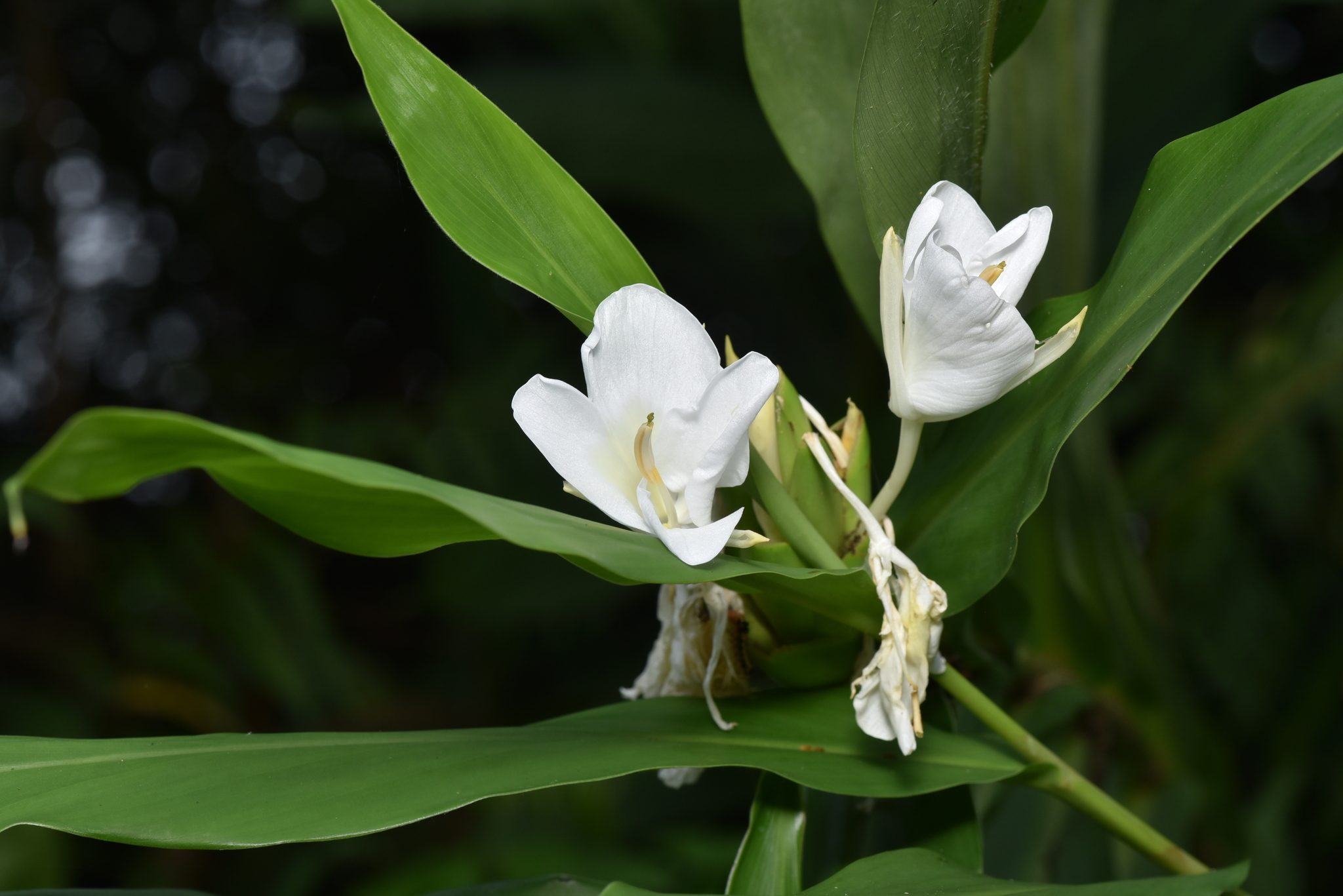



© photo
(c) Yung-Lun Lin, some rights reserved (CC BY), uploaded by Yung-Lun Lin · cc-by
Greg III Espera · cc-by
Wikimedia Commons · CC BY-SA or Public Domain
Taken Jul 26, 2019 by Jon Jon Drews (cc-by-sa)
Taken Jan 11, 2020 by Chee Keong Chan (cc-by-sa)
Taken Jul 26, 2021 by Trap Hers (cc-by-sa)
Taken Jun 28, 2020 by Noel Dionson (cc-by-sa)
Taken Jul 27, 2021 by Trap Hers (cc-by-sa)
© copyright of the Board of Trustees of the Royal Botanic Gardens, Kew.




Global distribution
Hedychium coronarium is native from the Indian subcontinent through southern China to Taiwan, in humid woodland and subtropical valleys. Widely introduced as an ornamental, it has naturalized and sometimes become invasive in Hawaii, Réunion, Guadeloupe and other tropical islands. In metropolitan France, winter cold limits cultivation to mild areas or containers brought under cover.
- Native5
- Invasive3
- India
- Nepal
- Bhutan
- Southern China
- Taiwan
- Hawaii
- Réunion
- Guadeloupe
Hexagons: regions where the plant occurs. Green dots: native range.1
Identity
Butterfly ginger lily (Hedychium coronarium J.Koenig, 1783) is a rhizomatous perennial in the Zingiberaceae. Also called white ginger lily or white garland-lily, it is grown for clusters of white flowers crowning the top of each flowering spike. The epithet coronarium refers to that crown-like display. 1 2
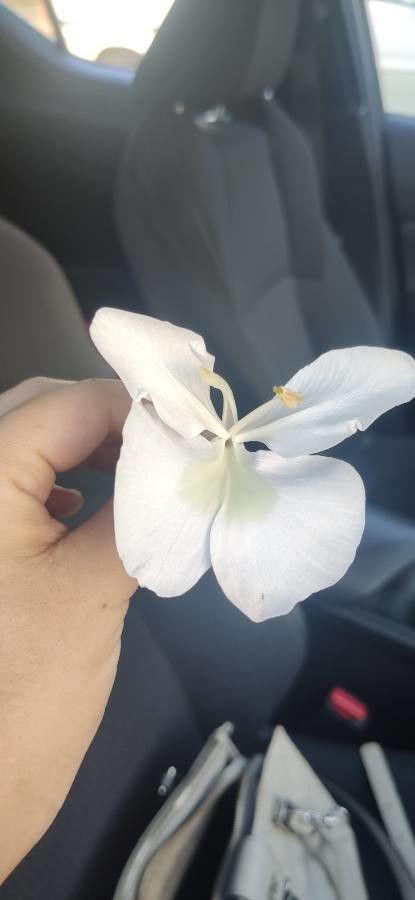
Its names combine two familiar images. The rhizome and foliage recall culinary ginger, Zingiber officinale, while each flower spreads narrow petals around a broad lip like a butterfly opening its wings. That silhouette also explains the Cuban name mariposa. Under that name it became Cuba's national flower in 1936. 8
Recognition
Upright, unbranched stems carry two ranks of lance-shaped leaves, which can reach 60 cm (24 in) long. A clump stands 1.5–3 m (5–10 ft) tall depending on climate, with reports of up to 4 m (13 ft) in warm, wet ground. The tall leafy shoots and terminal flowers distinguish its appearance from a low-growing culinary ginger. 2 3
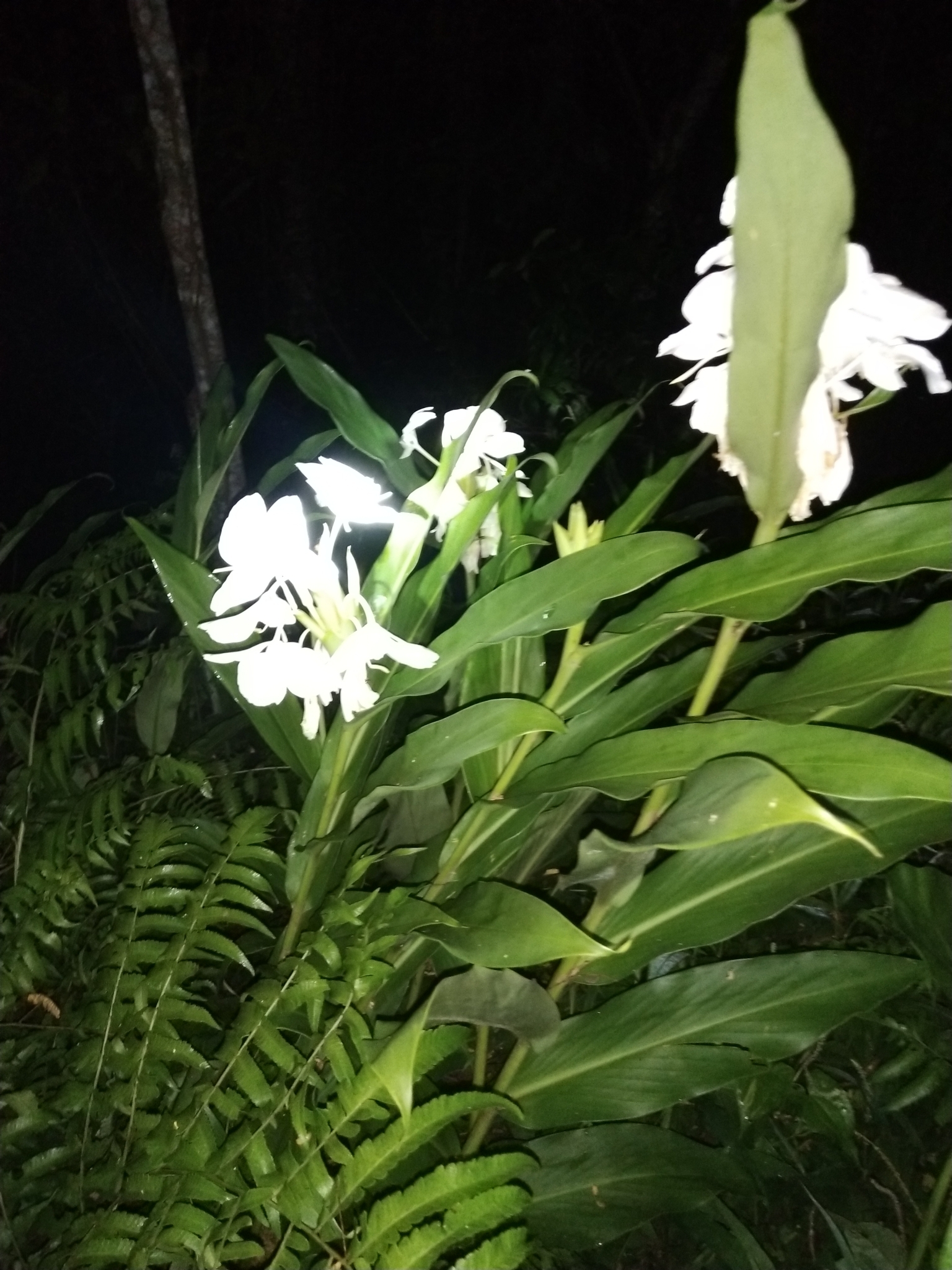
The dense terminal flower spike is 10–20 cm (4–8 in) long. White flowers with yellow throats release a strong fragrance, especially toward evening. Each individual flower lasts only a day, but the spike opens further flowers in succession for several weeks from late summer into early fall. 3 2
Below ground, fleshy, spreading rhizomes carry the plant through its annual cycle and quickly produce new shoots. Their ability to occupy moist soil over only a few seasons explains the invasive behavior recorded outside the native range. The same organ that makes a garden clump persistent also makes an established infestation difficult to remove. 6
Useful taxonomy
The accepted name, Hedychium coronarium J.Koenig, has accumulated several combinations and proposed varieties:
- Gandasulium coronarium (J.Koenig) Kuntze, a historical synonym
- Hedychium chrysoleucum Hook., a historical synonym
- Hedychium coronarium var. chrysoleucum (Hook.) Baker, a historical synonym
- Hedychium maximum Roscoe, a historical synonym
- Hedychium album Buch.-Ham. ex Wall., a historical synonym
Some of these names have also circulated as horticultural varieties, without consistently referring to the same plant. The accepted scientific name is therefore the most useful reference when identifying a specimen or comparing a nursery label with older descriptions. A familiar flower color alone does not resolve the synonymy. 1
Habitat and range
From the Indian subcontinent, its native range extends through southern China to Taiwan. Humid woodland understories, riverbanks and forest margins at moderate elevations provide characteristic habitats. Moisture is a recurring feature of these sites, rather than simply a consequence of irrigation in gardens. 1 8
Ornamental cultivation has spread the plant through many tropical and subtropical regions. It has naturalized in Hawaii, Réunion, Guadeloupe, French Polynesia, Brazil and South Africa. Its introduction to Hawaii as an ornamental dates to around 1888. Dense rhizomatous colonies along streams and beneath moist woodland can displace local vegetation. 6
Cold winters constrain outdoor cultivation in metropolitan France, generally limiting it to mild regions or containers brought into frost-free shelter. There it does not show the invasive behavior associated with tropical growing conditions. That climatic comparison concerns France and should not be read as a prediction for every temperate region. 7
Life cycle and reproduction
A newly planted clump generally begins flowering in its second or third year, once sufficiently developed. Flowering extends from late summer into fall, with August–September a typical peak under Northern Hemisphere temperate conditions. The timing depends on both the growing season and the age of the rhizome clump. 2 3
Most garden propagation uses rhizome division in spring. Each piece with a viable bud resumes growth within a few weeks once the soil warms. Seed can also be sown under heated cover at around 20–24 °C (68–75 °F), although slow germination makes it less common among home gardeners. 4
Where winters freeze the ground, the first frosts blacken the foliage and dormancy follows. Rhizomes require a thick mulch as temperatures fall below 5 °C (41 °F), or lifting and frost-free dry storage until spring. The appropriate method depends on how deeply the ground freezes, rather than on a universal calendar month. 2
Uses and risks
Fragrance and conspicuous flowers make ornamental planting the main use, often as a specimen or in a bed near water where the evening scent can be appreciated. In China the plant is also used in perfumery and traditional medicine, including preparations associated with rheumatism and digestive complaints. 4
Young flower buds and fresh flowers are eaten in several Asian food traditions. Cooked rhizomes have also been used as famine food during shortages. These uses concern particular parts and preparations and do not make butterfly ginger lily interchangeable with Zingiber officinale, the culinary ginger. 4
The ASPCA lists Hedychium coronarium as non-toxic to cats, dogs and horses. Large amounts can nevertheless cause mild digestive discomfort. The classification concerns this species and these animals; it should not be transferred to another ornamental simply because both plants share a ginger or lily common name. 5
Ecological impact is the main concern in tropical and subtropical territories where the species is invasive. Dense, nearly single-species stands in Hawaii and Réunion are difficult to eliminate once established. Repeated manual removal of rhizomes over several growing seasons remains the main control method cited for these territories, where no proven biological control method is available. 6
Varieties, look-alikes and related plants
No stable cultivar is widely distributed under the name Hedychium coronarium itself. Plants sold under that name with yellower flowers often belong instead to Hedychium flavescens, a related species formerly treated as a variety. Flower color and the botanical name should be checked together. 1
Common sources of confusion include:
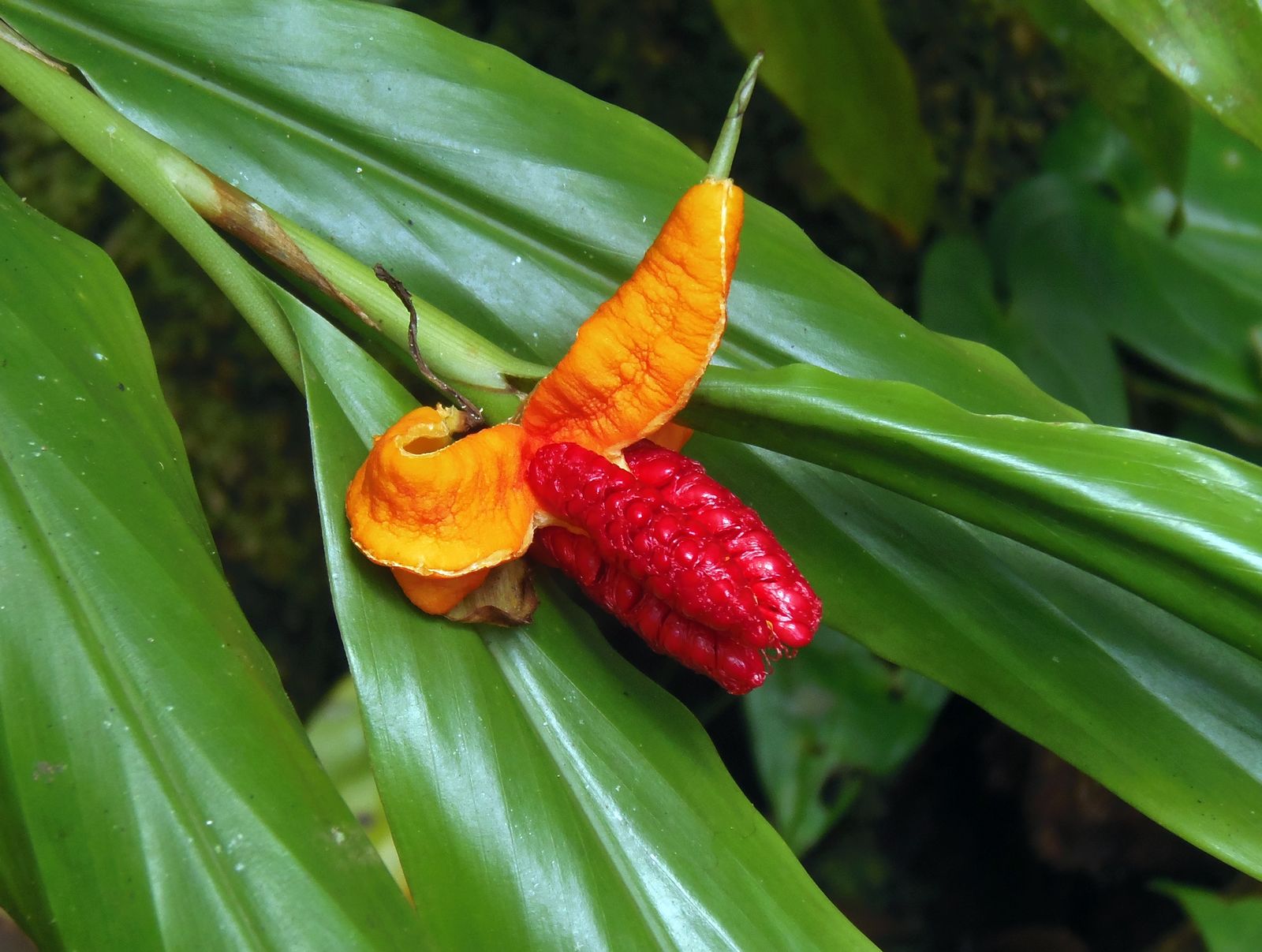
- Hedychium gardnerianum, with orange-yellow flowers and long red stamens, also invasive in Hawaii;
- Hedychium flavescens, with cream to pale yellow flowers, sometimes sold as butterfly ginger lily;
- Zingiber officinale, culinary ginger, in the same family but a separate genus, grown chiefly for its rhizome rather than its flowers.
Before flowering, these plants can have very similar silhouettes. The scientific name is the necessary reference for distinguishing them when the flowers are unavailable, rather than assuming that every ginger-like clump is the same species.
Main sources
- Plants of the World Online / Kew, Hedychium coronarium J.Koenig
- Royal Horticultural Society, Hedychium coronarium
- Missouri Botanical Garden Plant Finder, Hedychium coronarium
- Plants For A Future, Hedychium coronarium
- ASPCA, White Ginger toxicity entry
- IUCN Global Invasive Species Database, Hedychium coronarium
- INPN / MNHN, Hedychium coronarium J.Koenig
- Encyclopædia Britannica, white ginger
Frequently asked questions
Is butterfly ginger lily toxic to cats or dogs?
No. The ASPCA lists Hedychium coronarium as non-toxic to cats, dogs and horses. Eating a large amount can nevertheless cause mild digestive discomfort.
Is butterfly ginger lily the same plant as culinary ginger?
No. Hedychium coronarium belongs to the same family, Zingiberaceae, as true ginger, Zingiber officinale, but is a different genus grown for flowers rather than a culinary rhizome.
Why is my butterfly ginger lily not flowering?
Excessive shade, a young plant or winters severe enough to destroy the rhizomes are common causes. A clump generally reaches flowering maturity in its second or third year.
Is butterfly ginger lily invasive?
Yes, in several tropical and subtropical territories, including Hawaii, Réunion, Guadeloupe and French Polynesia. Spreading rhizomes form dense colonies in humid woodland. Winter cold limits this behavior in metropolitan France; that does not establish the status everywhere else.
What is the connection between Hedychium coronarium and Cuba?
Called mariposa in Cuba, Hedychium coronarium has been the national flower since 1936 despite its Asian origin. Cuban tradition associates the flowers with secret messages concealed by 19th-century independence supporters.
How should the rhizomes be protected from winter frost?
Below 5 °C (41 °F), a thick mulch is sufficient in mild-winter regions. Where the ground freezes deeply, lift the rhizomes after frost kills the foliage and store them dry and frost-free until spring.
Which plants resemble Hedychium coronarium?
Hedychium gardnerianum has orange-yellow flowers and long red stamens. Yellowish forms formerly treated as coronarium varieties include the related species Hedychium flavescens.
Similar plants
If you are unsure about a plant’s toxicity, ask a botanist or veterinarian for advice.