
Barbados nut (Jatropha curcas, )
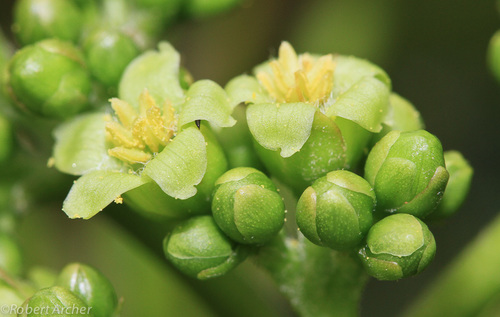

Barbados nut (Jatropha curcas L., 1753), also called physic nut, is a shrub in the Euphorbiaceae native to Mexico and Central America and now grown throughout much of the tropics. Its oil-rich seeds brought it attention as a biofuel crop, but they are also highly poisonous, with fatal ingestion documented in both people and animals.
Read moreBarbados nut, Physic nut, Poison nut, Bubble bush and Purging nut



© photo
(c) Robert Archer, some rights reserved (CC BY-NC), uploaded by Robert Archer · cc-by-nc
Wikimedia Commons · CC BY-SA or Public Domain
Wikipedia · CC BY-SA
Taken Aug 10, 2017 by Nelson Zamora Villalobos (cc-by-nc)
Taken Mar 4, 2021 by Sébastien TRASBOT (cc-by-sa)
Taken Jul 3, 2020 by The Garden Lanzarote (cc-by-sa)
Taken May 14, 2022 by Nelson Zamora Villalobos (cc-by-nc)
Taken Feb 28, 2013 by Tela Botanica − Céline PIRAT (cc-by-sa)
© copyright of the Board of Trustees of the Royal Botanic Gardens, Kew.


Global distribution
The strict native range of Jatropha curcas is concentrated in central Chiapas, Mexico, identified by genetic studies as its probable center of origin. Pre-Columbian communities spread it through a wider area from Mexico to Central America and northern South America, selecting it for living hedges and remedies rather than its seeds. After the 16th century, Portuguese trade between Veracruz and Cape Verde carried a small number of plants to Africa and then Asia, leaving these introduced populations with much lower genetic diversity.
- Native4
- Introduced4
- Invasive1
- Mexico
- Guatemala
- Costa Rica
- Brazil
- Cape Verde
- Mozambique
- India
- Philippines
- Australia
Hexagons: regions where the plant occurs. Green dots: native range.1
Identity
Barbados nut (Jatropha curcas L., 1753), also called physic nut, is a shrub in the genus Jatropha, within the Euphorbiaceae family. 1 2
The generic name combines the Greek iatros (healing) and trophê (food), an old reference to traditional medicinal uses. Portuguese physician and naturalist Garcia de Orta, who described the plant from Goa in the 16th century, established the epithet curcas. 2 7
In East Africa and parts of Asia, the plant is sometimes called “castor oil plant.” That name is misleading: it is not Ricinus communis, the true castor oil plant, although both belong to the Euphorbiaceae and have a history of purgative use. 5
Recognition
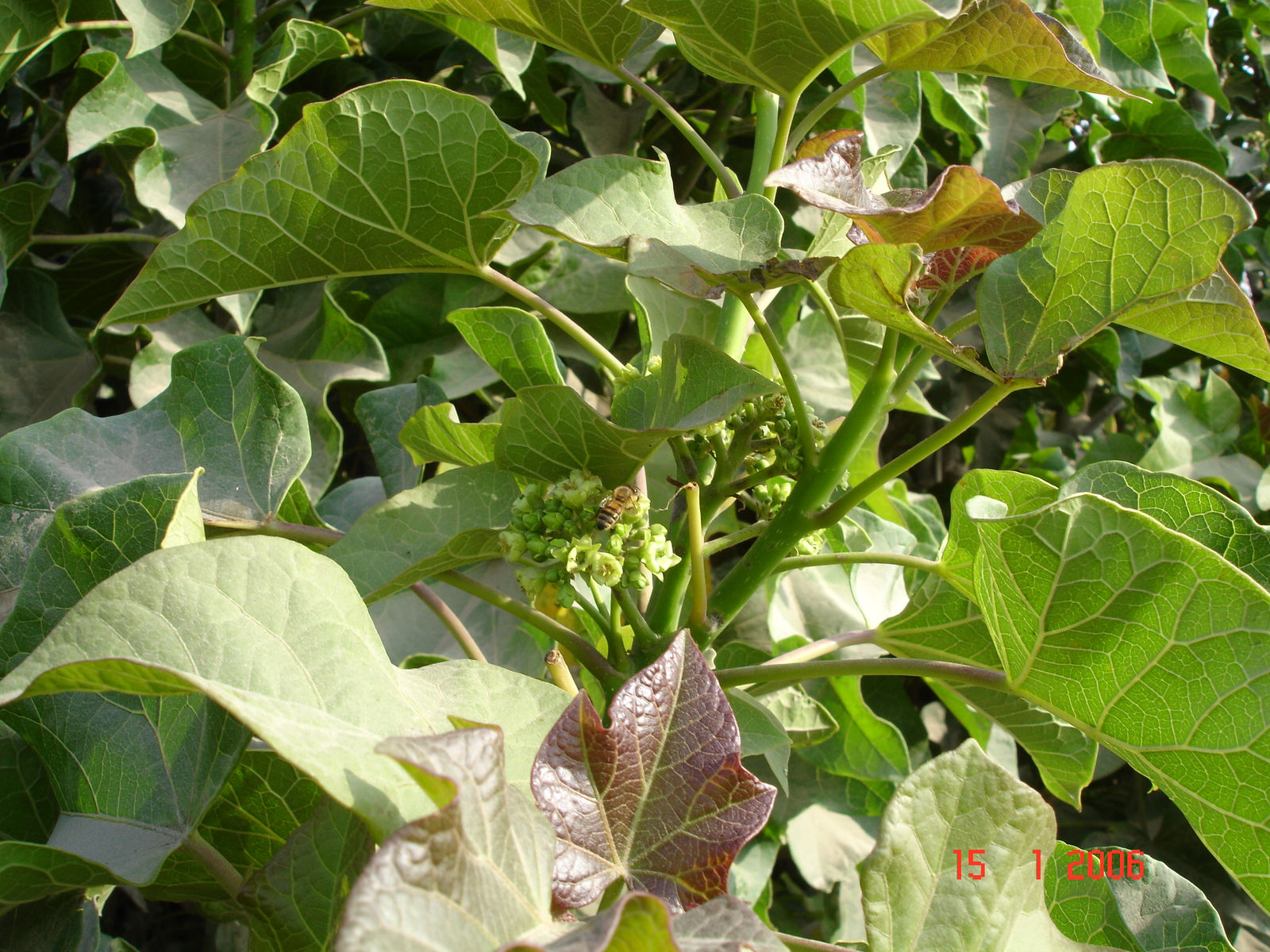
A semi-evergreen shrub or small tree, Jatropha curcas reaches 2–6 m (6.5–20 ft) depending on climate and management. Its alternate leaves have three to five shallow lobes, reach 15 cm (6 in) across and fall during the dry season or after a cold spell. 6 9
Separate male and female flowers share an inflorescence, making the plant monoecious. All are small and yellow-green, with about 10–20 male flowers per female flower. This imbalance favors cross-pollination between neighboring plants. 2
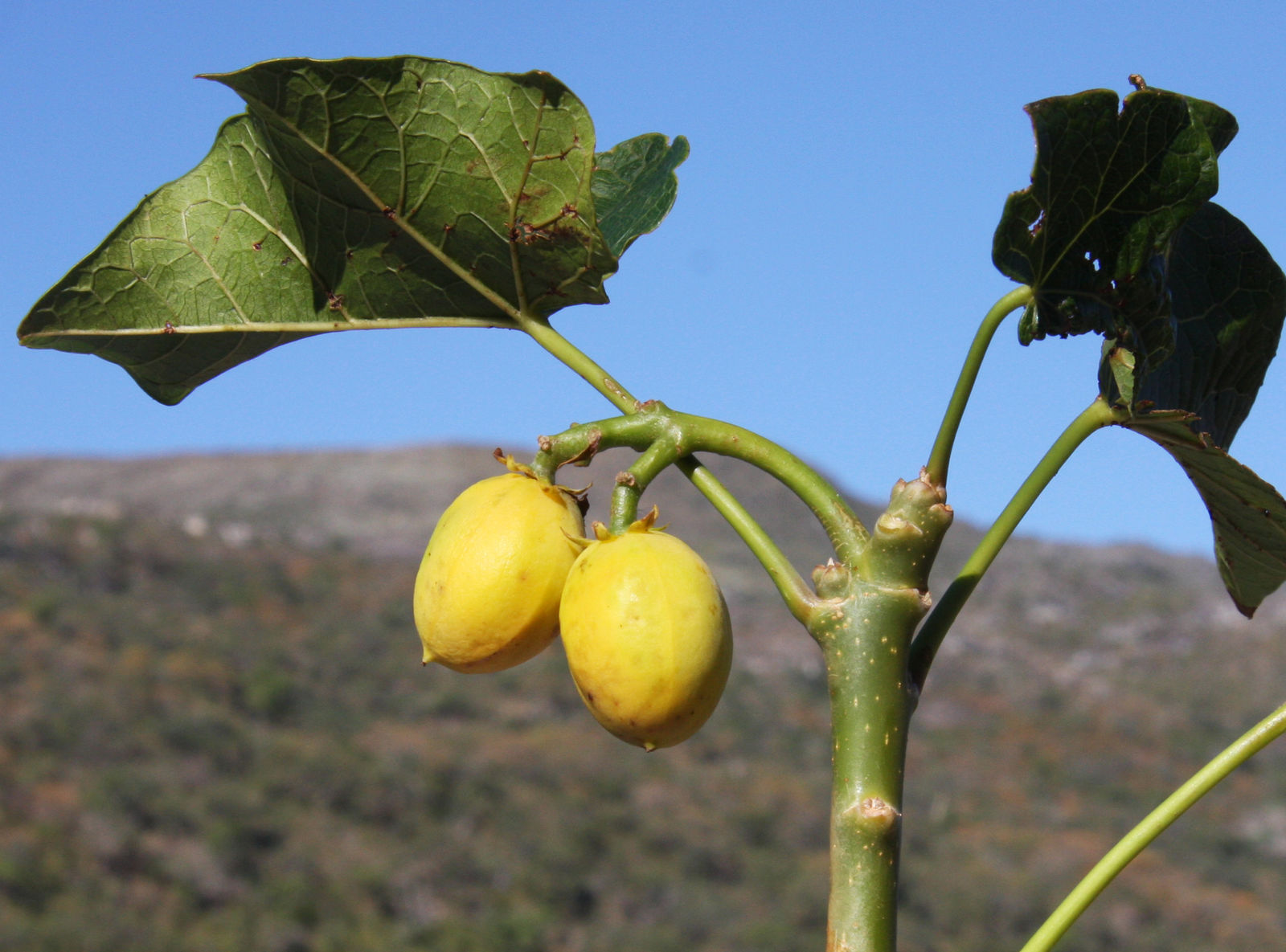
An egg-shaped capsule changes from green to blackish at maturity and holds two or three black seeds, about 2 cm (0.8 in) long, with white, oily flesh. Oil makes up 30–40% of seed weight, explaining much of the agricultural and industrial interest in the species. 6 9
Useful taxonomy
Under the accepted name Jatropha curcas, around a dozen synonyms help identify old collection labels and names in historical botanical literature:
- Historical synonym: Curcas curcas (L.) Britton & Millsp.
- Historical synonym: Manihot curcas (L.) Crantz
- Historical synonym: Castiglionia lobata Ruiz & Pav.
- Historical synonym: Curcas purgans Medik.
- Historical synonym: Curcas indica A.Rich.
- Historical synonym: Jatropha edulis Sessé
Taxonomically, the shrub belongs to subfamily Crotonoideae and tribe Jatropheae, alongside other Jatropha species with latex and oily seeds. The accepted name is the reliable reference: names once used in trade or older literature do not indicate different species. Linnaeus described it in 1753, and its name has remained unchanged. 1 2
Habitat and range
Genetic studies place the center of origin of Jatropha curcas in central Chiapas, Mexico, where wild populations retain the greatest diversity. 7
The recorded native range is broader, extending from Mexico through Central America to northern South America. Much of this spread reflects pre-Columbian selection: local communities valued the plant for living hedges and remedies rather than as a food crop. 2 7
After the 16th century, a Portuguese trade route linking Veracruz with Cape Verde carried a small founding population to Africa and then Asia. That narrow genetic base left African and Asian populations less diverse than those in Chiapas. 7 9
Now distributed across the tropics, Barbados nut has become naturalized in many regions and behaves as an invasive plant in parts of Australia. 2
Life cycle and reproduction
Warm, humid conditions can allow flowering almost year-round, beginning in the first year of cultivation. In climates with stronger seasonal contrasts, flowering is concentrated in the rainy season. 2
Propagation usually relies on stem cuttings. Semi-ripe cuttings root so easily that the plant is commonly used as a living fence post. Seed propagation also works, although emergence is slower. 9
Growth is rapid in favorable climates, a feature that encouraged large planting programs in the 2000s before actual yields challenged the initial projections. A seedling takes about 6–18 months to become a branched shrub 1–3 m (3–10 ft) tall, followed by another 2–4 years to reach a mature, tree-like habit of 2–6 m (6.5–20 ft). 9
Uses and risks
Seeds contain curcin, a toxalbumin related to ricin that blocks protein synthesis, and strongly purgative phorbol esters. Estimates of a dangerous dose range from a few seeds to around twenty, but all sources indicate a serious risk to children. Chewing just two or three seeds can sometimes trigger initial symptoms. 6 9
Within half an hour to several hours, ingestion causes abdominal pain, vomiting and diarrhea that may become bloody. Severe cases progress to dehydration and low blood pressure, with kidney or heart damage documented in animals. 6 8
The fatty-acid-rich seed oil prompted numerous biofuel programs from the 2000s onward. Yet trials in Nicaragua in the 1990s produced only about 200 liters per hectare (21 US gal per acre), far below claims of 2,000 liters per hectare (214 US gal per acre). The gap fueled debate over the true profitability of the crop. 9
Varieties and look-alikes
Ecotypes differ in toxin content, rather than foliage color. Some Mexican populations, known as piñón manso, lack phorbol esters and yield seeds traditionally roasted and eaten. Populations introduced to Africa and Asia remain toxic. 9
Confusion most often comes from names: “castor oil plant” also refers to Ricinus communis, a different species in the same family. Its seeds are poisonous too, but its outline is more herbaceous and its palmate leaves are deeply divided. 5
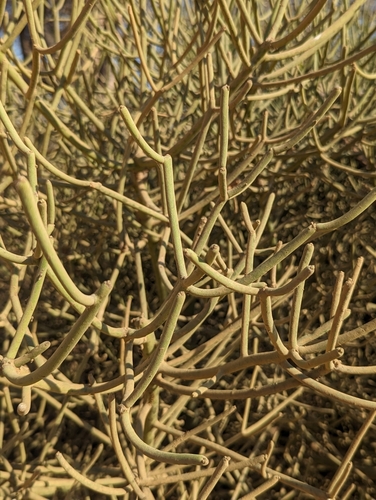
Without flowers or fruit, several shrubby Euphorbiaceae share the same bushy outline and milky sap. Leaves with three to five shallow lobes, together with the plant’s American origin, provide the distinguishing combination: similar shrubby Euphorbia have entire leaves or none, rather than leaves lobed in this way.
Main sources
- Plants of the World Online / Kew, Jatropha curcas L.
- USDA GRIN Global, Jatropha curcas taxonomy and distribution
- INPN / MNHN, Jatropha curcas
- IUCN Red List, Jatropha curcas assessment
- Encyclopaedia Britannica, Jatropha
- IPCS INCHEM, Poisonous Plants monograph, Jatropha curcas (PIM 570)
- PMC, Genetic Tracing of Jatropha curcas L. from Its Mesoamerican Origin to the World
- Hospital Authority Hong Kong, Atlas of Poisonous Plants, Jatropha curcas
- Purdue University NewCROP, Duke's Handbook of Energy Crops, Jatropha curcas
Frequently asked questions
Is Barbados nut really dangerous?
Yes. Its seeds contain curcin, a toxalbumin related to ricin, and purgative phorbol esters. Toxicology monographs report severe and sometimes fatal poisoning after only a few seeds were eaten.
Is Barbados nut the same as the castor oil plant?
No. The true castor oil plant is Ricinus communis, another member of the Euphorbiaceae. The local name “castor oil plant,” used for Jatropha curcas in parts of Africa and Asia, causes confusion but does not indicate that they are the same species.
Where does Barbados nut come from?
Its center of origin lies in Chiapas, Mexico. It first spread through a wider area of Central America and northern South America, before Portuguese trade routes through Cape Verde carried it to Africa and Asia.
Has Barbados nut lived up to its biofuel promise?
Actual yields have been far below early projections. Trials in Nicaragua in the 1990s produced only about 200 liters of oil per hectare (21 US gal per acre), compared with claims of as much as 2,000 liters per hectare (214 US gal per acre).
Can you eat Barbados nut seeds?
Only certain nontoxic Mexican ecotypes without phorbol esters are traditionally eaten after roasting. The toxic ecotypes grown elsewhere in the world must never be eaten.
How is Barbados nut propagated?
Stem cuttings root so readily that they are used as living fence posts. Seeds also work, but germination is slower and less reliable.
What is the lowest temperature Barbados nut can tolerate?
Tissues begin to suffer below 5 °C (41 °F) and turn irreversibly black in frost. The plant suits USDA zones 9b to 11 and has no real tolerance of prolonged cold.
Similar plants
If you are unsure about a plant’s toxicity, ask a botanist or veterinarian for advice.