
Asian bleeding-heart (Lamprocapnos spectabilis, )
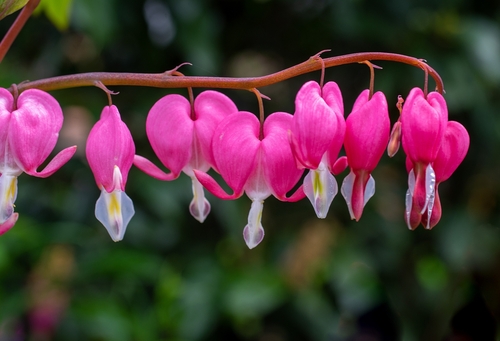

Asian bleeding-heart (Lamprocapnos spectabilis (L.) Fukuhara, 1997) is an herbaceous perennial in the Papaveraceae and the sole species of its genus. Native to northeastern China, the Korean Peninsula and southeastern Siberia, it bears pink-and-white heart-shaped flowers on arching stems in spring, before its foliage disappears in summer dormancy.
Read moreAsian bleeding-heart and Bleeding heart
Place in indirect light or in a shaded room.
Partial to light shade; more sun in cool climates with moist soil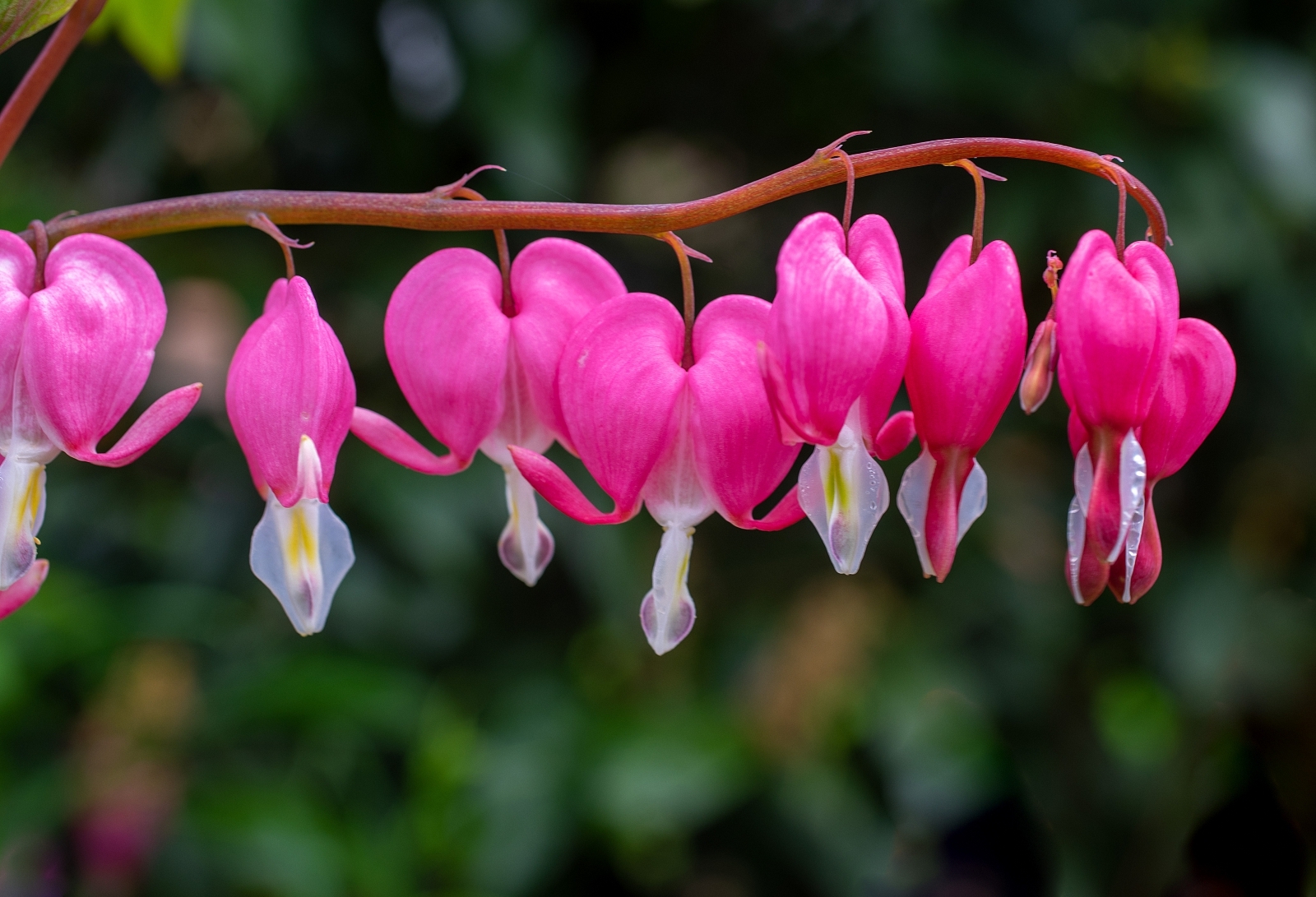


© photo
(c) to.wi, some rights reserved (CC BY-NC-SA) · cc-by-nc-sa
Thierry Arbault · cc-by
Wikimedia Commons · CC BY-SA or Public Domain
Taken Apr 21, 2018 by De Lanriec Annie (cc-by-sa)
Taken Nov 14, 2020 by DAngelo luisa (cc-by-sa)
Taken Apr 6, 2022 by Alex W (cc-by-sa)
Taken Apr 17, 2022 by ole olsen (cc-by-sa)
Taken May 22, 2022 by Akshaya Thippur (cc-by-sa)
© copyright of the Board of Trustees of the Royal Botanic Gardens, Kew.




Global distribution
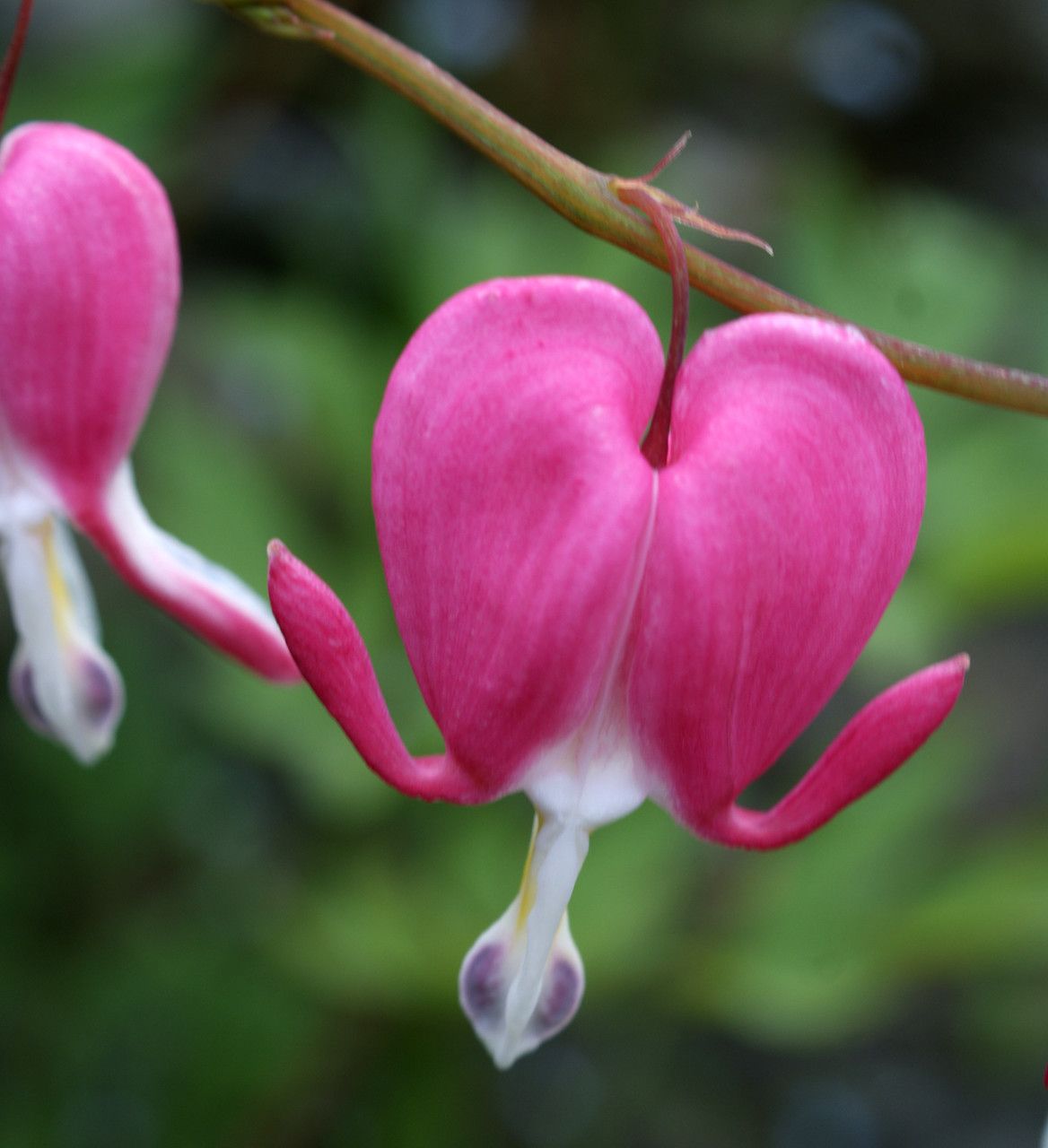
The native range covers northeastern China, the Korean Peninsula and southeastern Siberia. Widely naturalized in Japan, the species occurs elsewhere as a cultivated ornamental perennial in temperate shade gardens.
- Native4
- Introduced1
- China
- North Korea
- South Korea
- Russia (Siberia)
- Japan
Hexagons: regions where the plant occurs. Green dots: native range.1
Identity
Asian bleeding-heart (Lamprocapnos spectabilis (L.) Fukuhara, 1997), also called bleeding heart, is an herbaceous perennial and the sole species in the monotypic genus Lamprocapnos. It belongs to the fumitory subfamily Fumarioideae within the Papaveraceae. 1 7
Linnaeus first described the species in 1753 as Fumaria spectabilis. It later became widely known as Dicentra spectabilis, until Japanese botanist Teruyoshi Fukuhara separated it from the other Dicentra in a 1997 revision, establishing a genus for this species alone. 7
An introduction to England in 1810 failed to survive. Robert Fortune’s collection on the Chinese island of Chusan in 1846 established the plant permanently in Western gardens, where it soon became a familiar spring perennial. 5
Recognition
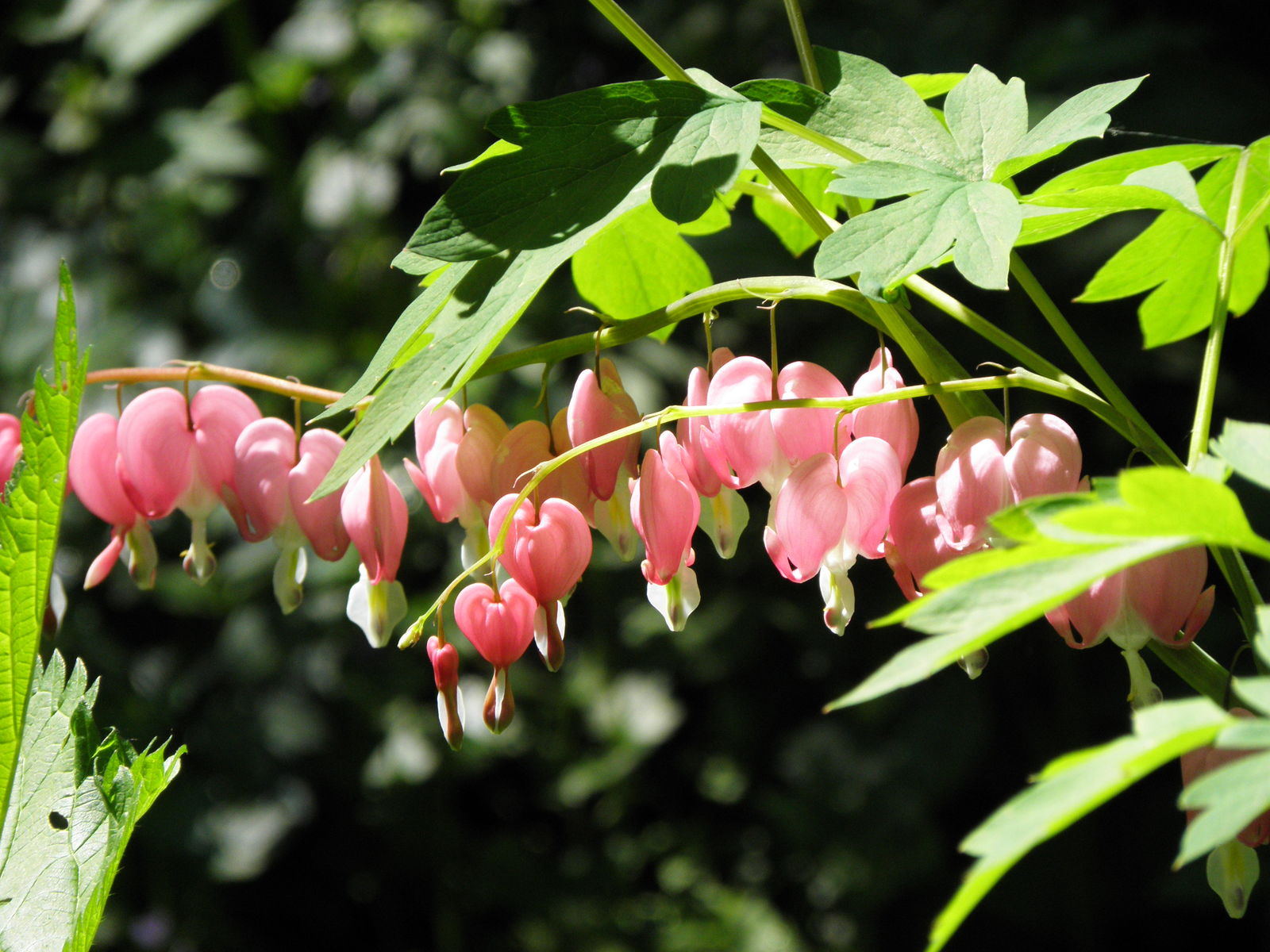
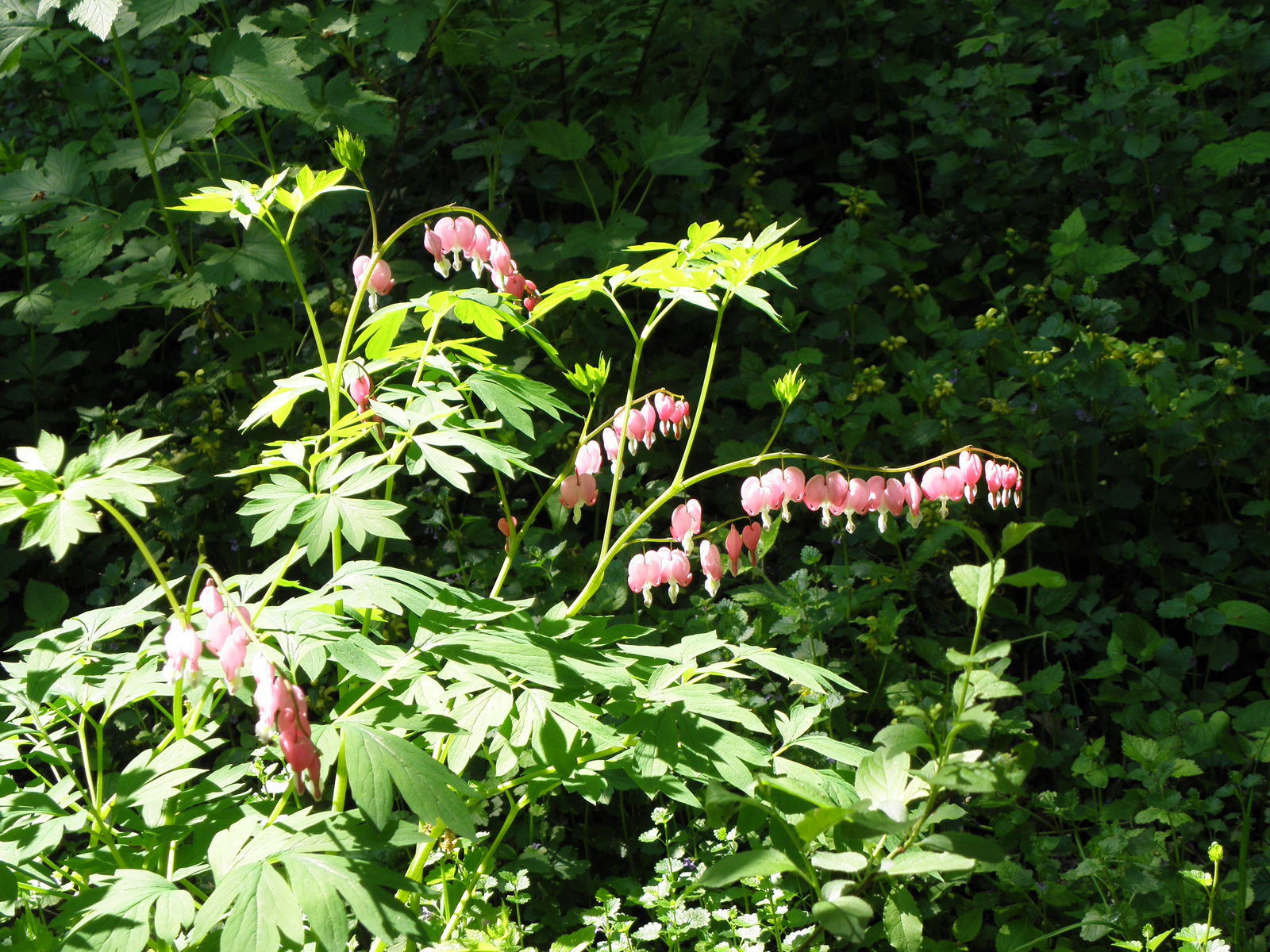
An arching clump of Lamprocapnos spectabilis reaches 40–100 cm (16–39 in) tall and up to 1.2 m (4 ft) wide, supported by flexible, nodding stems. 2 4
Blue-green, finely divided leaves give Asian bleeding-heart a fernlike appearance. They disappear completely in summer, often by August in the Northern Hemisphere, a normal feature that can make new gardeners think the plant has died. 2 5
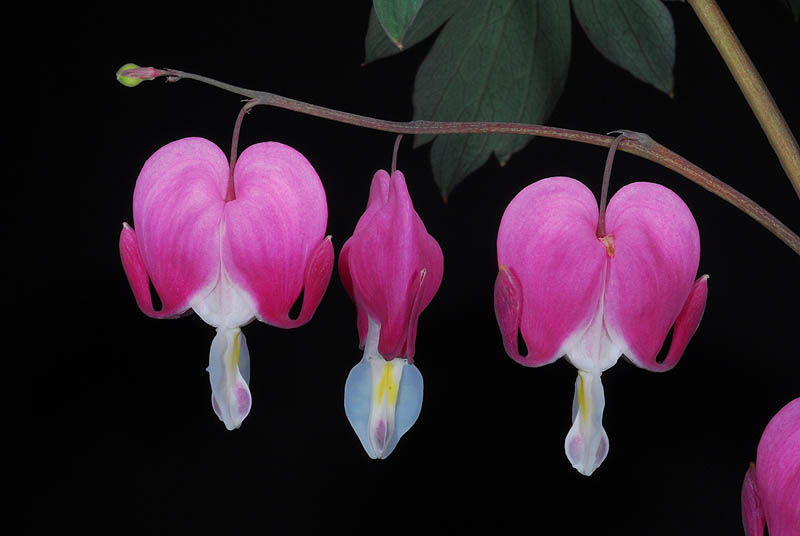
Flowers 2.5–5 cm (1–2 in) long resemble bright pink hearts with a protruding white inner petal hanging below. Seven to fifteen line one side of each arching stem, opening from April to July in the Northern Hemisphere according to climate and exposure. 5 3
Beneath the soil, the fleshy, brittle crown stores the reserves needed for fresh growth each spring despite the complete loss of summer foliage. This crown, rather than a seed or bulb, is the structure to protect when dividing the plant. 6
Useful taxonomy
For this species, Plants of the World Online accepts Lamprocapnos spectabilis (L.) Fukuhara. Several synonyms remain widespread, particularly in horticultural trade: 1
- Fumaria spectabilis L., the original name
- Dicentra spectabilis (L.) Lem., the familiar nursery synonym
- Diclytra spectabilis (L.) DC., another historical combination
The label Dicentra spectabilis causes the most confusion because it still dominates nursery catalogs and older books. The 1997 revision separated Lamprocapnos from the North American Dicentra, which have smaller flowers and lack its distinctive shiny capsule. 7 6
The genus name Lamprocapnos combines the Greek lampros, meaning bright, with kapnos, meaning smoke, recalling the fumitory subfamily Fumarioideae. The Latin spectabilis means remarkable, referring to the showy flowers. 1
Both botanical names refer to the same growing requirements: light shade, moist soil and a summer rest. An older nursery label does not change the plant’s needs.
Habitat and range
Northeastern China, the Korean Peninsula and southeastern Siberia form the native range of Lamprocapnos spectabilis. There it grows in open woodland and moist, shaded valleys. 6 4
Long introduced to Japan, the species has become widely naturalized there. Elsewhere it is cultivated in temperate shade gardens in Europe and North America, including France, where INPN records it as a widespread ornamental perennial. 7
Asian bleeding-heart tolerates roughly −20 °C (−4 °F) and is grown in USDA zones 3–9. It suits cold continental and mild oceanic climates provided the soil stays moist without becoming waterlogged in winter. 4 2
Life cycle and reproduction
Early spring brings Asian bleeding-heart into flower ahead of most shade perennials. In the Northern Hemisphere, flowering extends from April to July depending on climate and exposure. 4
After flowering, the foliage yellows and disappears completely, generally by August in the Northern Hemisphere. Heat and dry soil intensify dormancy, which may begin as early as July in warm climates or dry ground. 5 3
Propagation usually relies on crown division during dormancy, in late summer or very early spring. The plant resents disturbance during active growth; seed and root cuttings are slower alternatives. 6 4
Uses and risks
Shaded borders and woodland gardens are the main setting for this almost exclusively ornamental perennial. Late-emerging hostas or ferns help fill the gap left when its foliage enters summer dormancy. 5
Flowers, leaves, stems, roots and sap contain isoquinoline alkaloids, including protopine. Methanol extracts concentrate up to 0.25% in roots. Ingestion can cause tremors, vomiting and diarrhea and, after substantial exposure, breathing problems; repeated sap contact irritates skin. 4 9
Germany named the species poisonous plant of the year in 2017 to highlight this risk. An accidental poisoning case in Korea, after confusion with an edible wild vegetable, also documents the danger. 8
Varieties, look-alikes and related plants
Flower and leaf colors distinguish several cultivars: ‘Alba’ has entirely white flowers, ‘Valentine’ deep red flowers with white inner petals, and ‘Gold Heart’ golden foliage contrasting with the usual pink flowers. 2
Other Dicentra cause the most frequent confusion, particularly Dicentra formosa and Dicentra eximia. These lower-growing North American species flower longer but have much smaller flowers and lack the characteristic arching habit. Dicentra cucullaria is easier to recognize by its white flowers shaped like upside-down trousers rather than hearts. 6
Nurseries still widely sell the same plant under Dicentra spectabilis. The arching, one-sided flower spikes remain a reliable identifying feature that distinguishes it from other Dicentra. 7
Main sources
- Plants of the World Online / Kew, Lamprocapnos spectabilis (L.) Fukuhara
- Royal Horticultural Society, Lamprocapnos spectabilis - bleeding heart
- Missouri Botanical Garden Plant Finder, Lamprocapnos spectabilis
- NC State Extension Gardener Plant Toolbox, Lamprocapnos spectabilis
- University of Wisconsin Extension, Bleeding Heart - Lamprocapnos spectabilis
- Plants For A Future, Dicentra spectabilis
- INPN / MNHN, Lamprocapnos spectabilis (L.) Fukuhara, 1997
- Zentralblatt für Arbeitsmedizin, Lamprocapnos spectabilis toxicity, poisonous plant of the year 2017
- PMC, measurement of isoquinoline alkaloids in Lamprocapnos spectabilis and related species
Frequently asked questions
Is Asian bleeding-heart poisonous?
Yes. All parts contain irritating isoquinoline alkaloids. Ingestion can cause digestive and neurological symptoms, while repeated sap contact can irritate skin. In Germany it was named poisonous plant of the year in 2017.
Why does Asian bleeding-heart disappear in summer?
Rising temperatures trigger natural summer dormancy, which dry soil intensifies. The foliage yellows and dries away completely, generally in July or August depending on climate.
How do you propagate Asian bleeding-heart?
Divide the crown during dormancy in late summer or very early spring for the most reliable results. Fresh seed and root cuttings also work but take more patience.
Is Asian bleeding-heart the same as Dicentra?
It was long called Dicentra spectabilis, a name still common in nurseries. Current classification places it in its own genus, Lamprocapnos, separate from North American Dicentra such as Dicentra formosa, which have smaller flowers and lack the same arching habit.
Does Asian bleeding-heart attract pollinators?
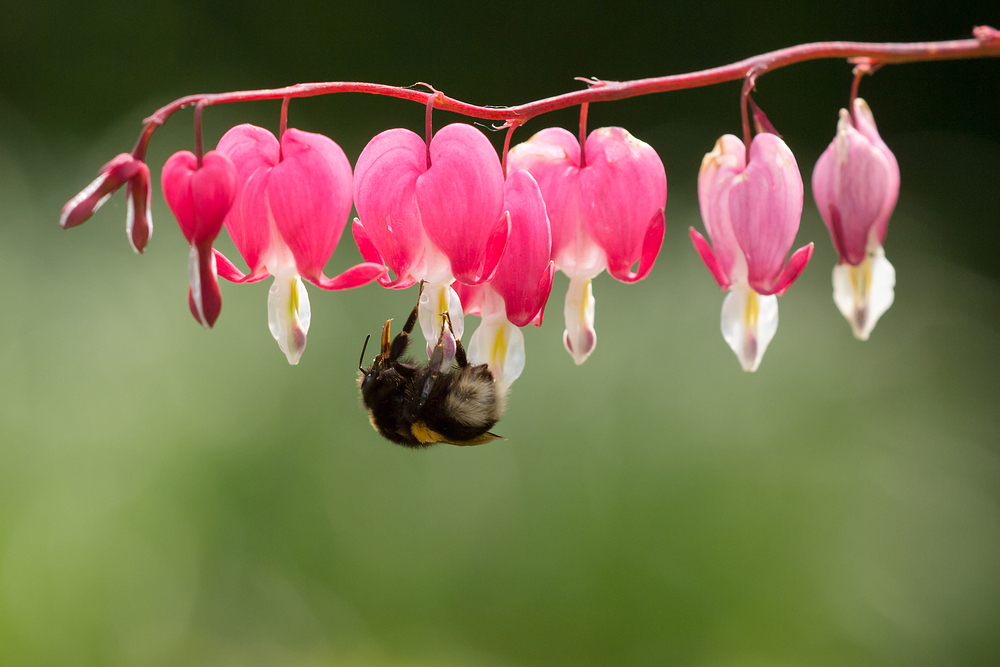
Its early spring flowers provide useful nectar for bumblebees and the first active bees, when few other shade perennials are blooming.
What does Lamprocapnos mean?
It comes from the Greek lampros, meaning bright, and kapnos, meaning smoke, recalling its relationship to the fumitories in the subfamily Fumarioideae.
What can grow alongside Asian bleeding-heart?
Late-emerging perennials such as hostas or ferns naturally fill the space left by summer dormancy in a shaded border or woodland garden.
Similar plants
If you are unsure about a plant’s toxicity, ask a botanist or veterinarian for advice.