
White mulberry (Morus alba, )
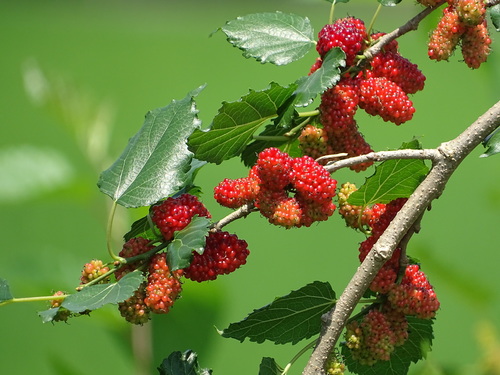
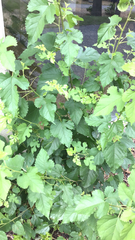
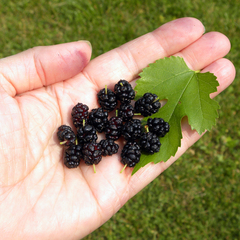
White mulberry (Morus alba) is a fast-growing deciduous fruit tree in the Moraceae family, native to central and northern China. Cultivated for nearly five thousand years to feed silkworms, it has highly variable leaves and sweet, often bland fruit quite unlike that of black mulberry.
Read moreWhite mulberry, Mûrier blanc, Mûrier à vers à soie, Common mulberry, Silkworm mulberry and Morera blanca

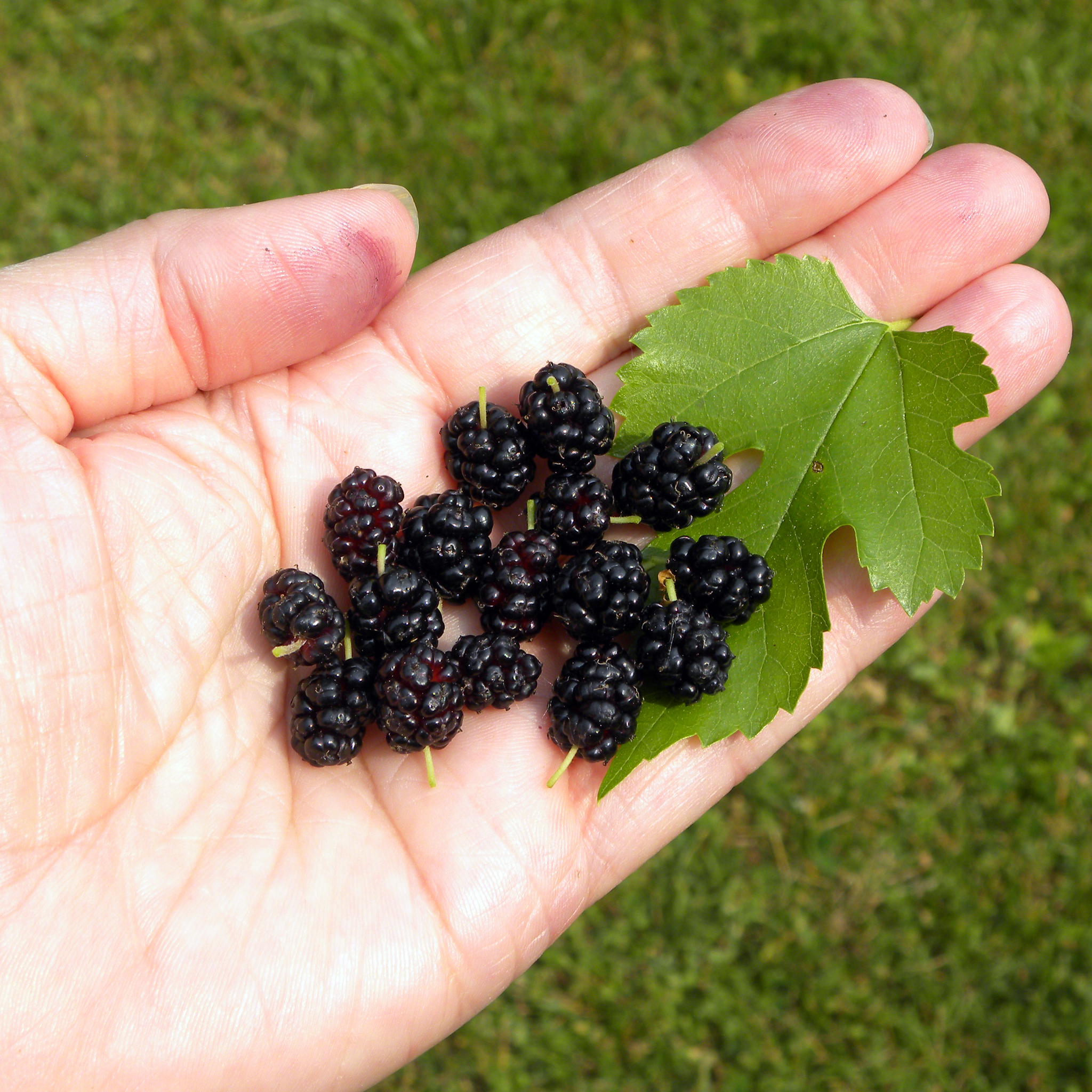


© photo
no rights reserved, uploaded by 葉子 · cc0
iNaturalist User · cc0
M. Whitson · cc-by
Taken Oct 12, 2011 by Tela Botanica − daniel BARTHELEMY (cc-by-sa)
Taken Oct 17, 2022 by Herman Van Boxem (cc-by-sa)
© copyright of the Board of Trustees of the Royal Botanic Gardens, Kew.




Global distribution
Morus alba is native to central and northern China, with native populations sometimes also reported in Korea. Its long cultivation for silk production spread it to almost every continent, where it has become widely naturalized.
- Native2
- Introduced4
- Invasive1
- China
- South Korea
- Iran
- Turkey
- Mexico
- United States
- Eastern Australia
Hexagons: regions where the plant occurs. Green dots: native range.1
Identity
White mulberry (Morus alba L., 1753), also known as common mulberry or silkworm mulberry, is a deciduous fruit tree in the genus Morus and family Moraceae. The epithet alba means white, referring mainly to the pale fruit of many cultivated forms rather than to the foliage. 1 2
Native to central and northern China, with native populations sometimes also reported in Korea, the species has been cultivated for nearly five thousand years to feed the silkworm Bombyx mori. Silkworm rearing encouraged growers to propagate the tree far beyond its native range. This explains both its ancient spread to Europe and the Americas and the diversity of its horticultural forms. 1 6
Recognition
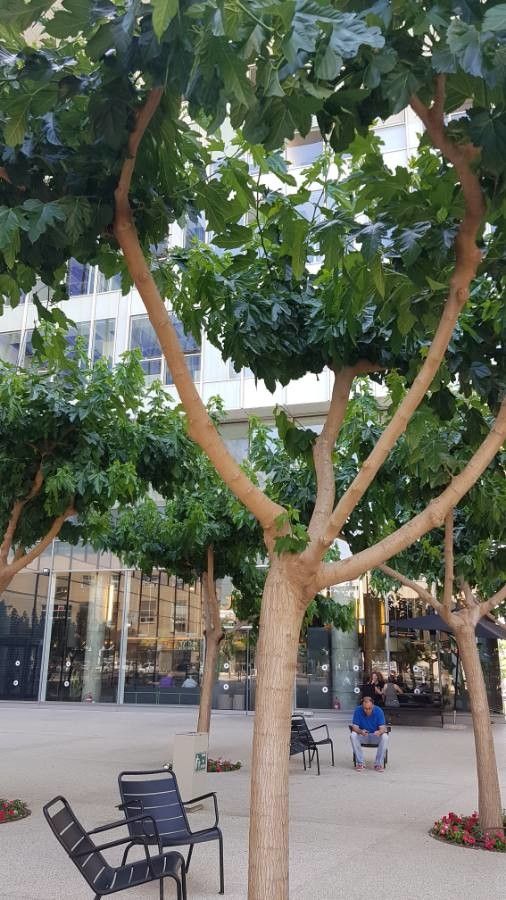
Fast-growing Morus alba commonly reaches 9–20 m (30–66 ft) tall with a comparable spread. Its grayish bark is slightly fissured. A damaged leaf or twig releases milky sap, an immediate clue to its membership of Moraceae, as with the fig tree. 2 3
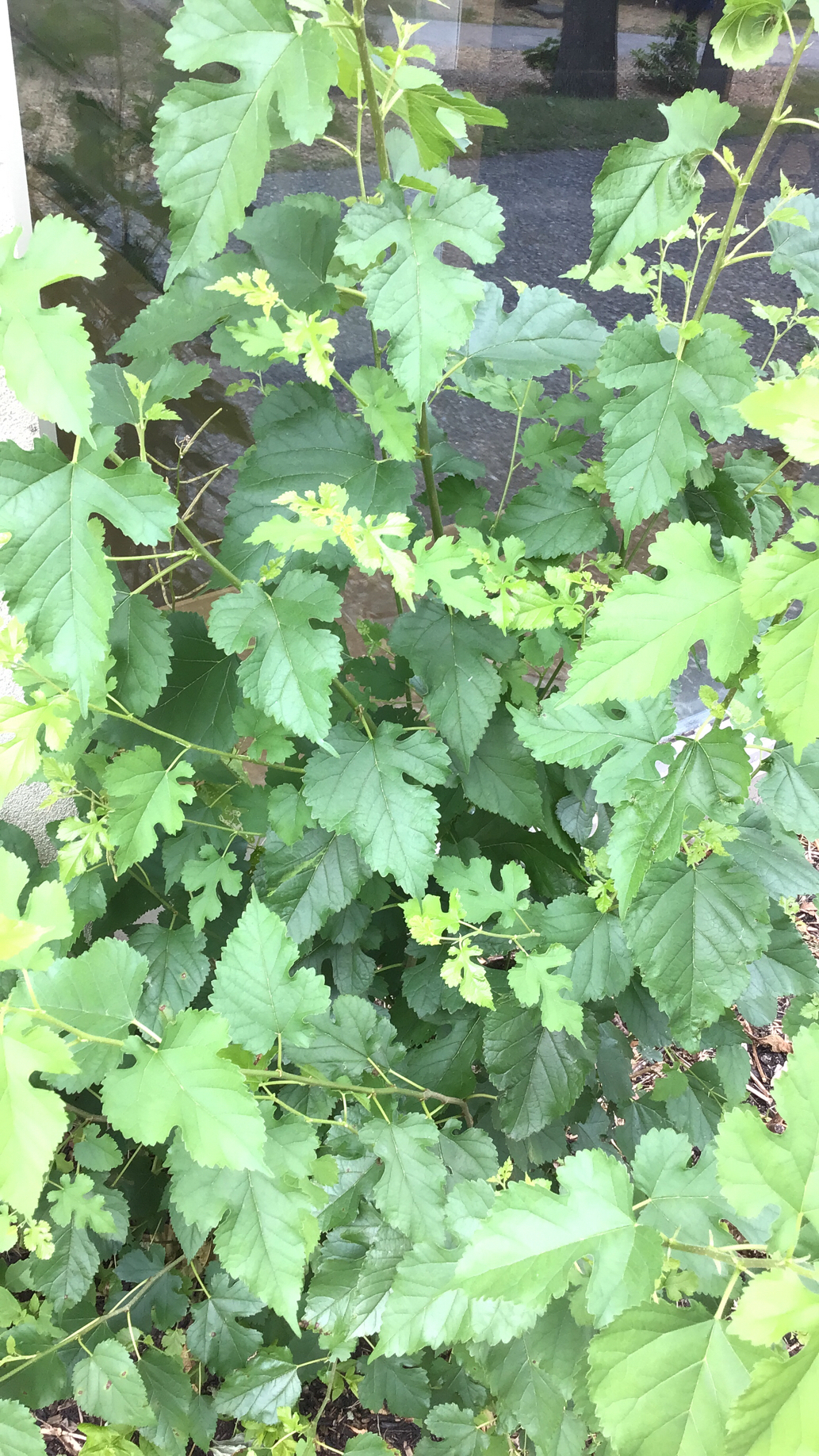
Leaf shape varies markedly. On vigorous sprouts and young shoots, leaves can reach 30 cm (12 in) and have deep, rounded lobes. On established mature trees, they are usually 5–13 cm (2–5 in) long, unlobed, heart-shaped at the base and toothed along the edges. This contrast between lobed juvenile leaves and unlobed adult leaves makes identification from a single twig difficult without examining the whole tree. 2
Small unisexual catkins, 1–3.5 cm (0.4–1.4 in) long, usually grow on separate male and female trees, although some trees bear both. The resulting fruit is an infructescence 1–1.5 cm (0.4–0.6 in) long. Its color ranges from white to pink in cultivated varieties, rarely the dark purple of wild forms. Its sweet but often bland flavor differs from the stronger taste of black mulberry. 2
Useful taxonomy
Two varieties are recognized within Morus alba: Morus alba var. alba and Morus alba var. multicaulis. The latter was long grown as a low, closely pruned hedge to produce leaves rapidly for silkworms. 1
The species has a particularly extensive botanical synonymy, reflecting its long history of local naming and horticultural selection:
- Morus multicaulis Perr.
- Morus tatarica L.
- Morus lhou (Ser.) Koidz.
- Morus nigriformis (Bureau) Koidz.
- Morus italica Poir.
- Morus indica L.
The accepted scientific name, Morus alba L., remains the reliable reference for identification. 1
Habitat and range
Central and northern China form its native range, with native populations sometimes also reported in Korea. It grows wild in open woodland and temperate riverside forests. Cold tolerance to about −25 °C (−13 °F) in continental climates, corresponding to USDA zones 4–8, allowed silk production to follow the tree beyond subtropical regions into temperate Europe and later North America. 1 2
Cultivation and garden escapes on almost every continent have led to widespread naturalization. In North America it occupies roadsides, urban waste ground and the edges of cultivated plots, readily hybridizing with the native red mulberry, Morus rubra. Botanists in the United States monitor this hybridization closely because it dilutes red mulberry's distinctive genetic heritage over successive generations. In Australia, white mulberry is monitored as a potential weed in some regions. 3 7
French floristic references record it as cultivated and locally naturalized in metropolitan France, a direct legacy of former silkworm-rearing houses in the south. 4 5
Life cycle and reproduction
In temperate climates, inconspicuous catkins appear in spring. White mulberry is scientifically notable for the speed of its pollen release: the stamens act as catapults, releasing stored elastic energy in just 25 microseconds. Pollen is propelled at about 610 km/h (379 mph), nearly half the speed of sound. No other plant movement measured to date, in any species, has reached this speed. 8
Fruit-eating birds consume the sweet pulp and disperse the seeds widely. Cultivated trees are mainly propagated by hardwood cuttings or grafting onto vigorous rootstocks. Seed propagation is also possible, but the offspring vary more than the planted variety. 2
Uses and risks
Feeding animals remains its principal historical use. The leaves are the preferred food of the silkworm Bombyx mori, driving the expansion of silk production from ancient China to Mediterranean Europe and then to Latin America after the Spanish conquest. The protein-rich, readily digestible leaves also feed livestock. 6 1
Ripe fruit is sweet and edible, and is made into syrups or drinks depending on the region. The fibrous bark is used to make paper and textiles. Toxicity is low: rodent studies have not revealed a significant risk, but swallowing the milky sap or unripe fruit can cause mild digestive upset. 3 2
Released abundantly at about 610 km/h (379 mph), white mulberry pollen also triggers respiratory allergies in some cities where the trees line streets. 2
Varieties, look-alikes and related plants
Several horticultural forms belong to this species rather than being separate species. The weeping 'Pendula' is grown purely for ornament. 'Fruitless', developed for the American silk industry and later used as an urban shade tree, avoids fruit that stains sidewalks. The variety multicaulis retains its value for leaf production in closely pruned hedges. 1
Black mulberry, Morus nigra, is the most useful comparison. It has a lower habit, a rounder crown, thicker bark, darker leaves hairy on both sides, and longer, juicier, much darker fruit. In North America, hybridization with Morus rubra makes field identification more difficult still. 2
- Morus nigra has darker, juicier fruit that is more tart before full ripeness;
- Morus rubra, the native North American red mulberry, frequently hybridizes with white mulberry;
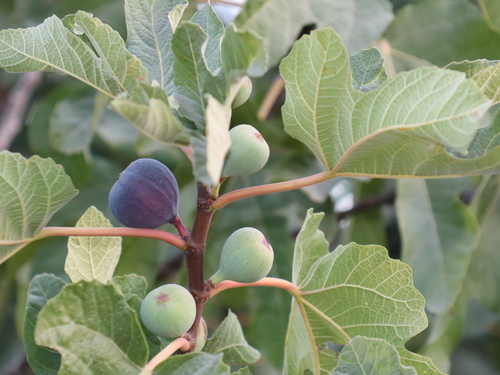
- Ficus carica is another Moraceae with milky sap, but its lobed leaves are quite different.
Smooth, barely fissured bark, variable leaf shapes and pale fruit ranging from white to pink remain the most reliable clues for confirming Morus alba.
Main sources
- Plants of the World Online / Kew, Morus alba L.
- North Carolina State Extension, Morus alba - Plant Toolbox
- USDA PLANTS Profile, Morus alba - white mulberry
- Tela Botanica / BDTFX reference, Morus alba L.
- INPN / MNHN, Morus alba L. taxon account
- Feedipedia, White mulberry (Morus alba)
- Weeds of Australia / Lucidcentral, Morus alba L.
- Taylor et al., 2006, high-speed pollen release in the white mulberry tree, Morus alba L. (Sexual Plant Reproduction)
Frequently asked questions
Is white mulberry toxic?
Its toxicity is low. Rodent studies have not shown a significant risk, but swallowing milky sap or unripe fruit can cause mild digestive upset in people and pets.
Why has white mulberry been planted so widely?
Its leaves are the preferred food of the silkworm Bombyx mori. This relationship led to nearly five thousand years of cultivation in China and its later spread to Europe and Latin America for silk production.
How can I tell white mulberry from black mulberry?
Black mulberry has a lower habit, a rounder crown, thicker bark and darker leaves hairy on both sides. Its fruit is longer, juicier and much darker than white mulberry fruit.
Does white mulberry really have the fastest known pollen release?
Yes. Its stamens catapult pollen at about 610 km/h (379 mph), nearly half the speed of sound. This remains the fastest movement ever measured in a plant.
Why do some white mulberries never produce fruit?
Male and female flowers usually grow on separate trees. An exclusively male tree, or a fruitless clone deliberately chosen for urban shade, will therefore never produce fruit.
Is white mulberry invasive?
Fruit-eating birds spread its seeds readily. It is monitored as a potential weed in some parts of Australia and North America, where it also hybridizes with the native red mulberry, Morus rubra.
How can I grow leaves for silkworms at home?
A low, closely pruned white mulberry hedge, managed like the historical variety multicaulis, quickly regrows tender leaves. This is the simplest way to provide abundant foliage throughout summer.
Similar plants
If you are unsure about a plant’s toxicity, ask a botanist or veterinarian for advice.