
Bog myrtle (Myrica gale, )
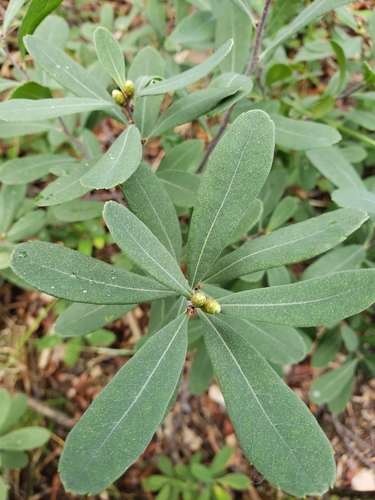
Bog myrtle (Myrica gale) is a deciduous shrub in the Myricaceae family and the only member of its genus native to Europe. It forms suckering thickets on waterlogged acidic bogs and heaths. Resinous foliage, usually separate male and female catkins, and atmospheric nitrogen fixation suit it to poor, wet soils.
Read moreBog myrtle and Sweet gale
Allow a few hours of direct sun per day, preferably morning or evening.
Full sun to light partial shade
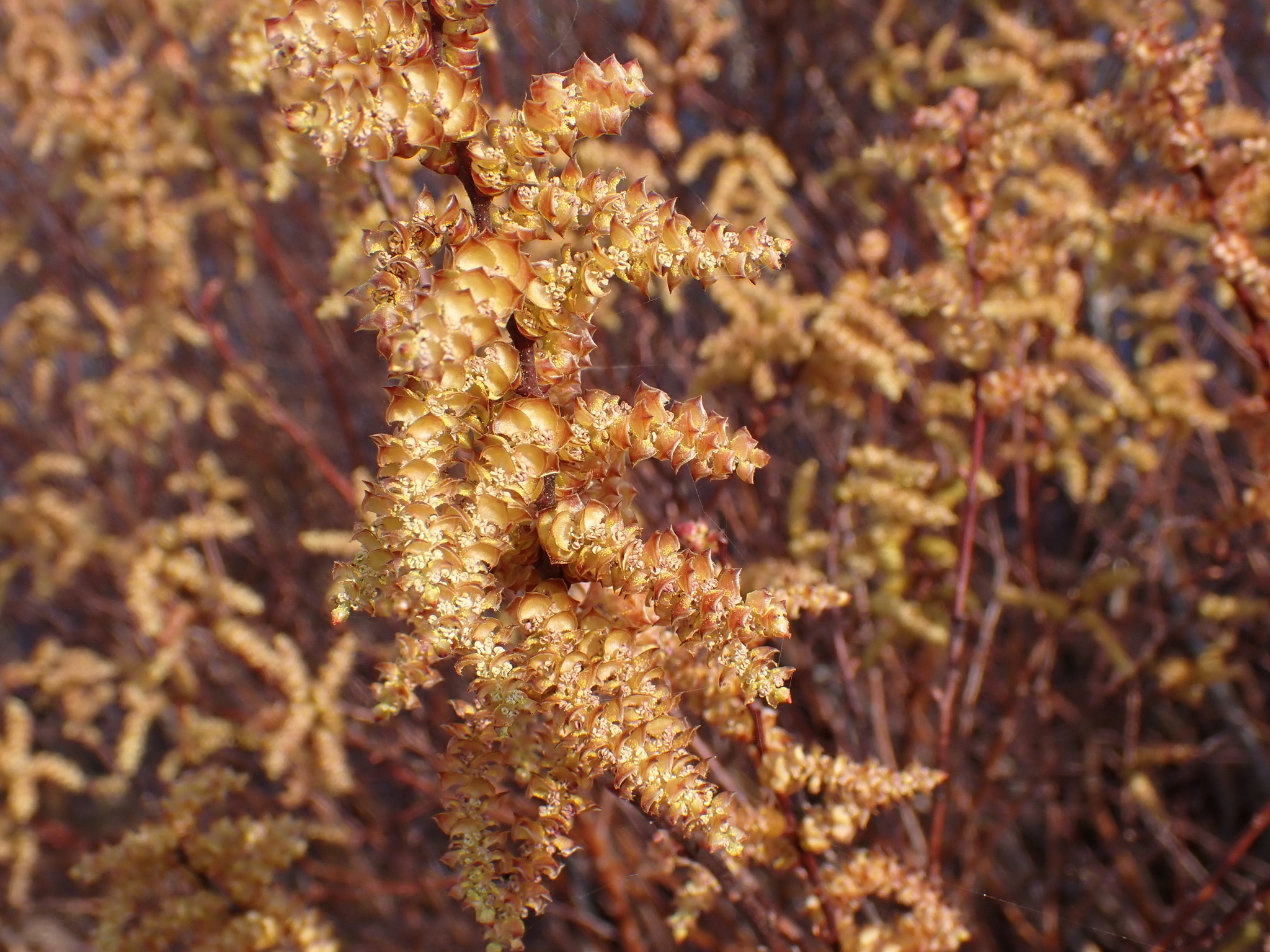


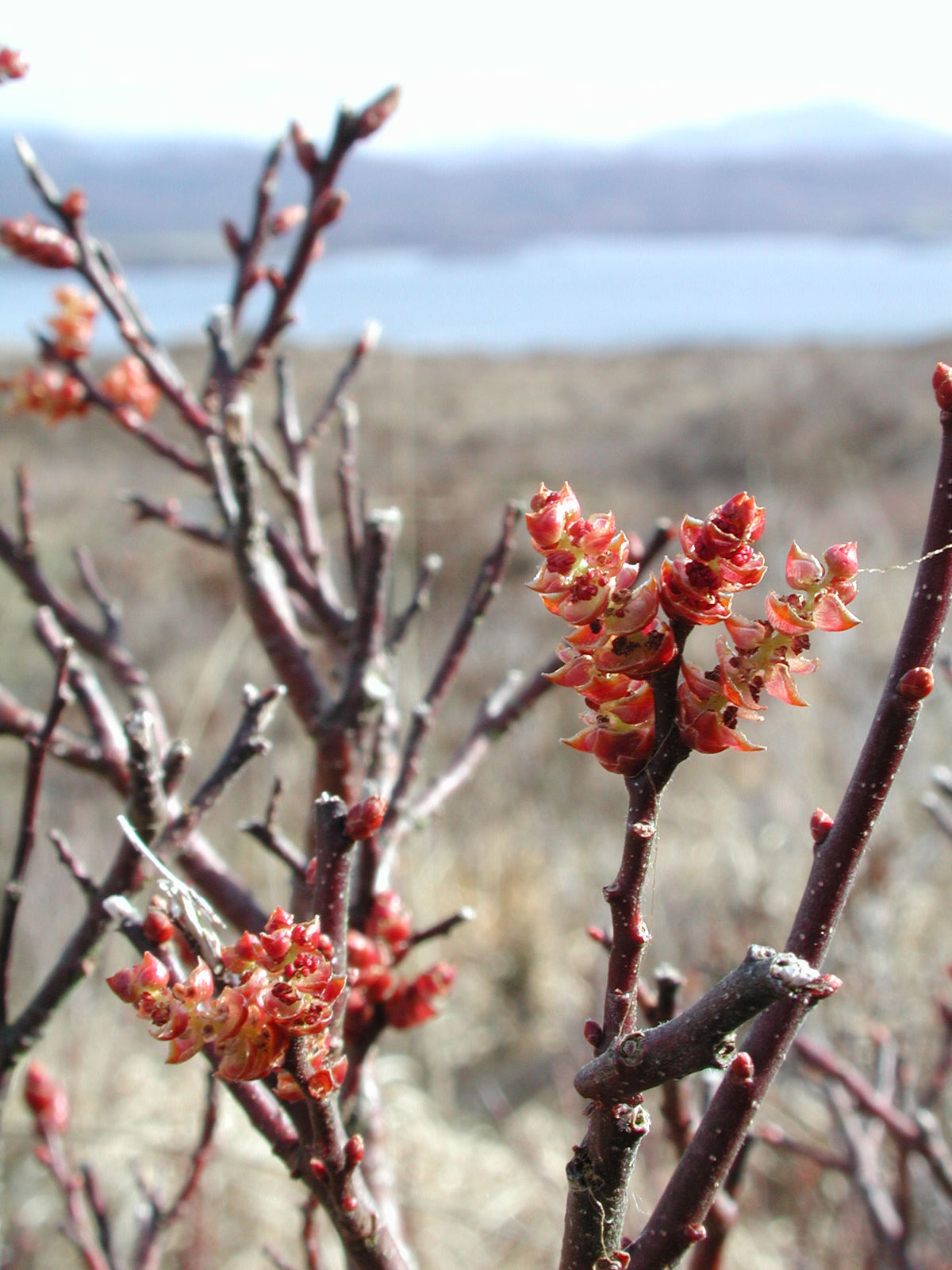
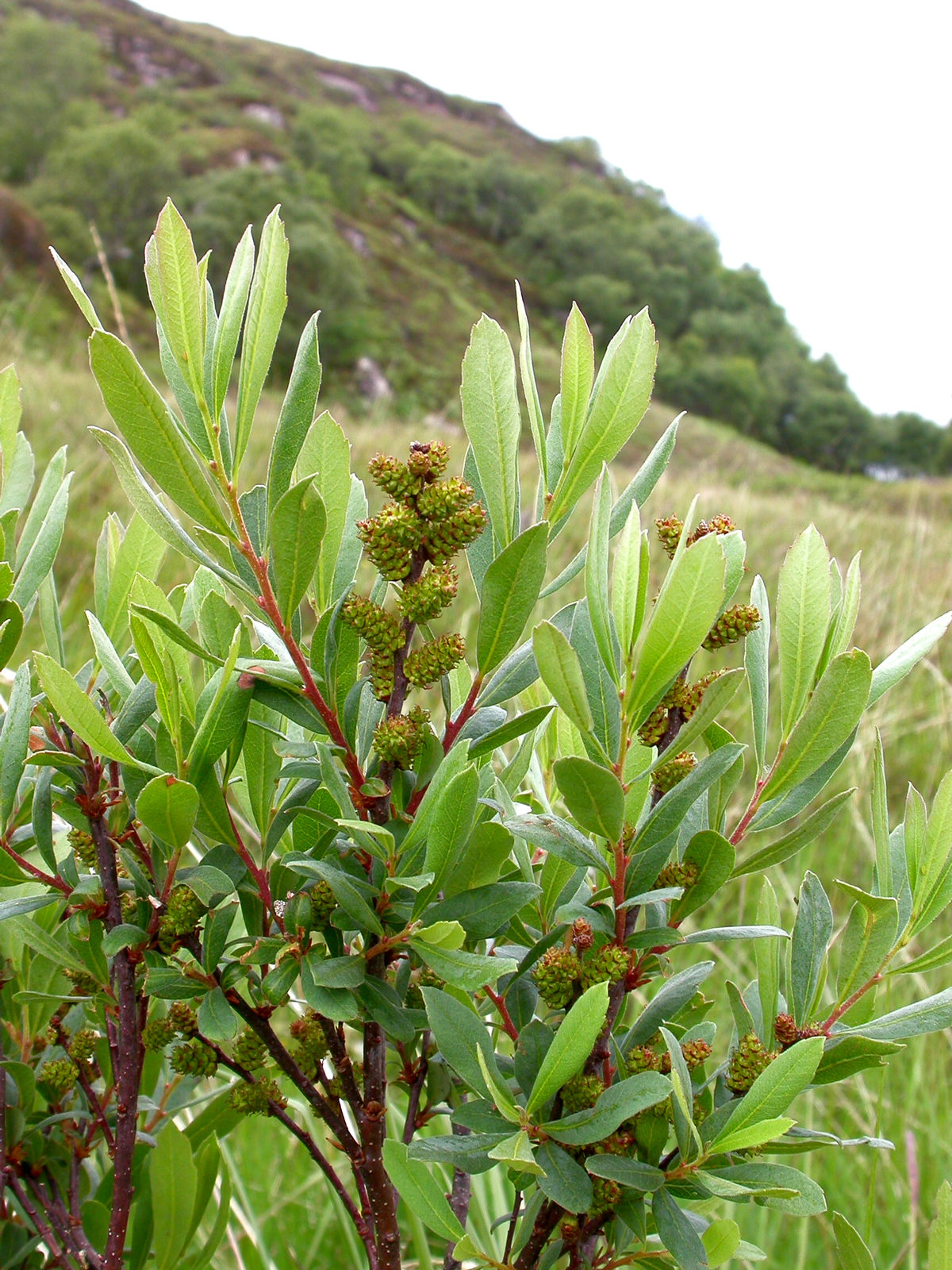
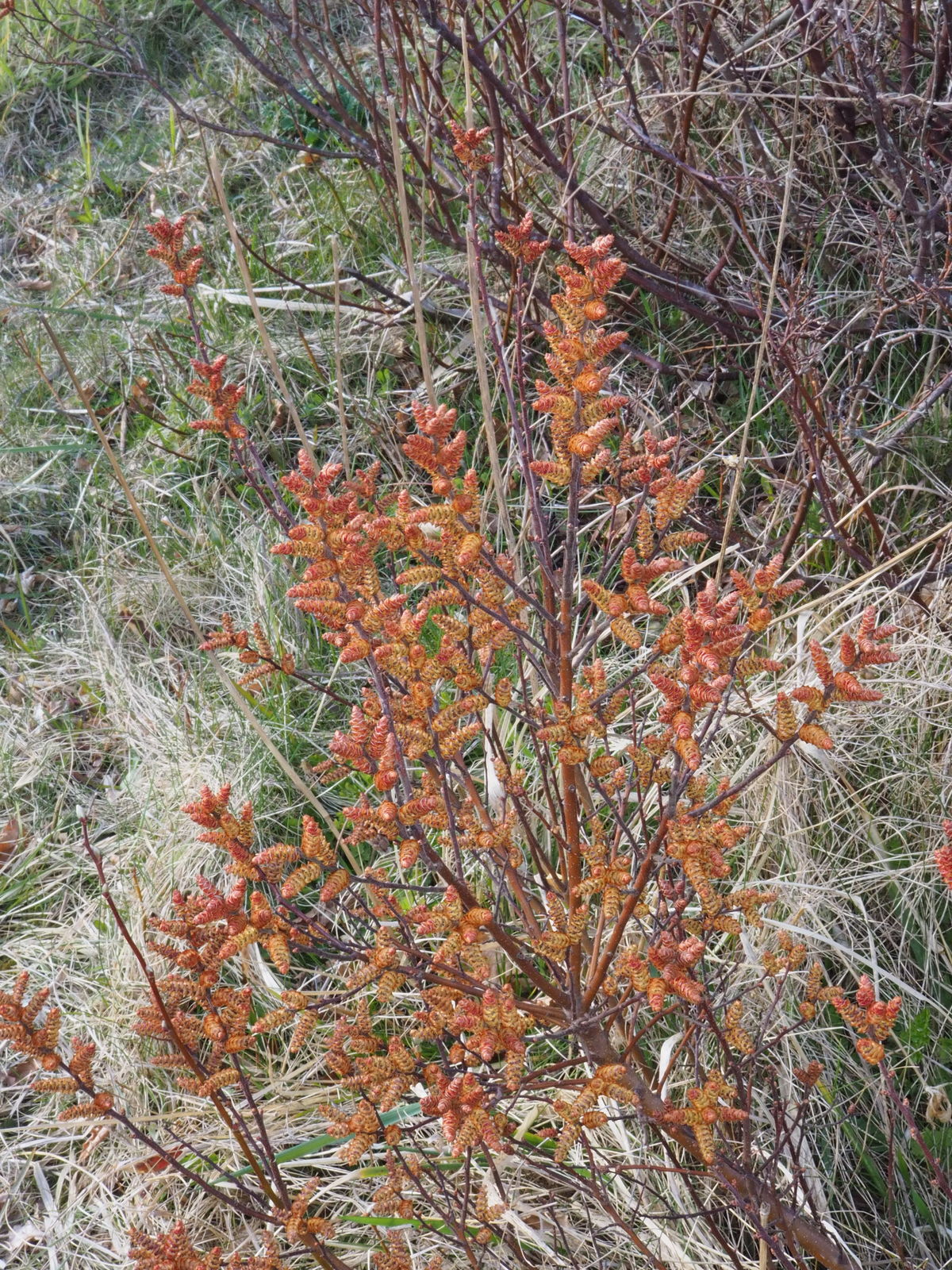
© photo
(c) Michele Grabke, some rights reserved (CC BY-NC), uploaded by Michele Grabke · cc-by-nc
Deniz Wilson · cc0
Jean-Paul Boerekamps · cc0
Taken Jul 15, 2014 by Photoflora - Benoit BOCK (©)
Taken Jan 1, 1900 by EOL − Encyclopedia of Life (cc-by-nc-sa)
Taken Jan 1, 1800 by Tela Botanica − Daniel MATHIEU (cc-by-sa)
Taken Nov 19, 2013 by Tela Botanica − Thibault LANGLOIS (cc-by-sa)
© copyright of the Board of Trustees of the Royal Botanic Gardens, Kew.


Global distribution
Myrica gale is native from western and northern Europe to the Russian Far East and Japan, and in subarctic and temperate North America. Its restriction to acidic, waterlogged habitats fragments this range into often localized and sometimes protected populations.
- Native8
- France
- United Kingdom
- Ireland
- Norway
- Poland
- Canada
- United States
- Japan
Hexagons: regions where the plant occurs. Green dots: native range.1
Identity
Bog myrtle (Myrica gale L., 1753) is a deciduous shrub in Myricaceae and the only member of the genus Myrica native to Europe. Also called sweet gale, it makes suckering clumps 60 cm–2 m (2–6.5 ft) tall, spreading 1–2 m (3–6.5 ft), on bogs and waterlogged heaths. 1 2
Crushing the leaves releases a distinct resinous fragrance, often compared with bay or eucalyptus, from tiny golden glands on the leaf undersides. The aromatic foliage accompanies a long history of culinary use: dried leaves and fruits locally replaced pepper in parts of northwestern Europe. 3 4
Recognition
Alternate, narrow elliptical leaves measure 2–6 cm (0.8–2.4 in) and remain gray-green, dotted beneath with tiny golden resin glands visible against the light. Unlike the hairless, scentless leaves of Andromeda polifolia, crushed bog myrtle leaves release a clear bay-like resinous fragrance. In the field, scent distinguishes them faster than leaf shape. 3 6
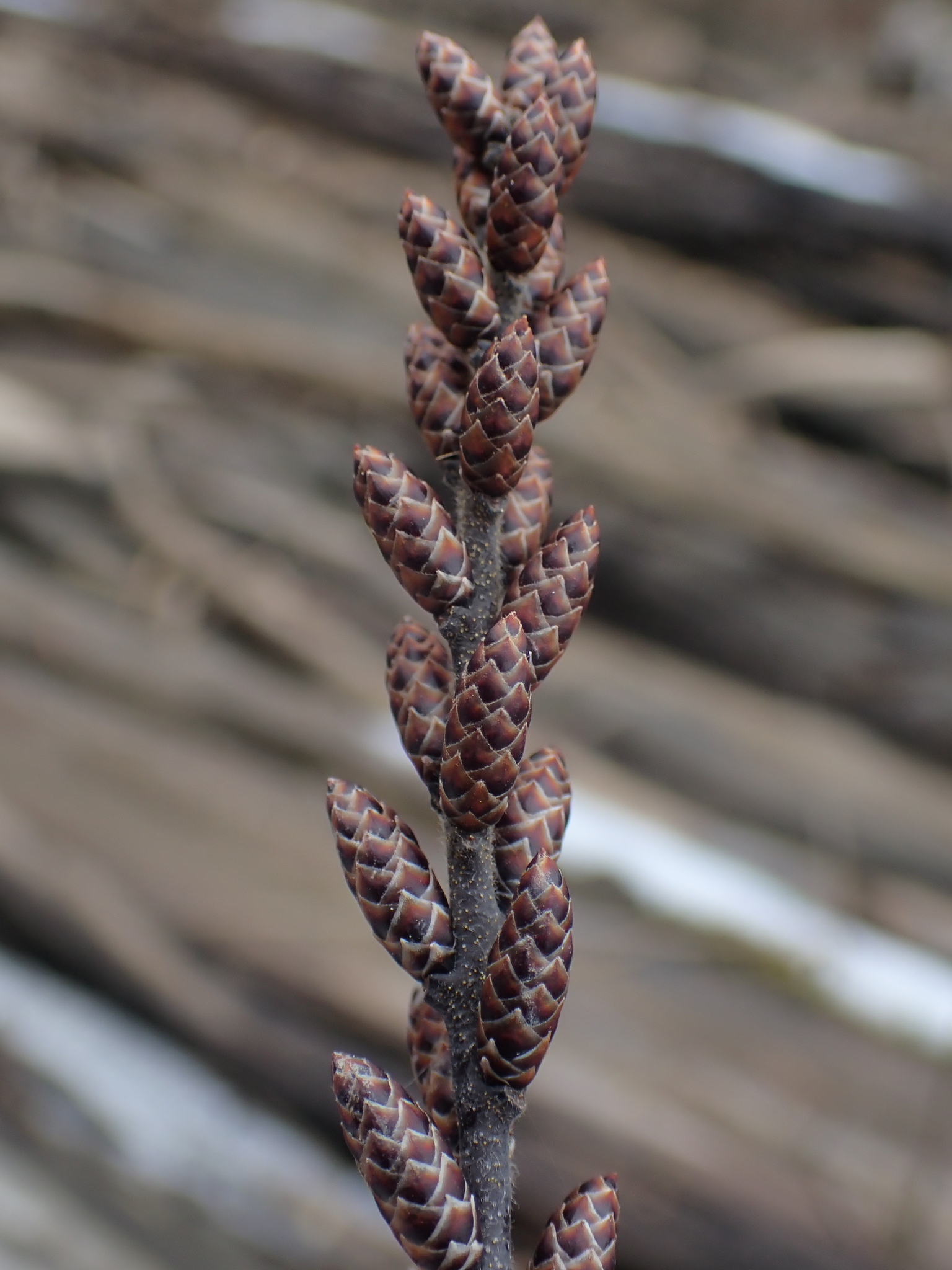
Usually dioecious, the shrub carries male and female catkins on separate plants. Upright orange-brown male catkins cluster at branch tips and open in March–April in its northern range, before the leaves; female catkins are less conspicuous. Rare monoecious or hermaphroditic individuals are reported, but most plants carry only one sex. 6 2
A pollinated female develops tightly clustered small fruits: waxy golden-brown drupes just a few millimeters across, ripening in late summer. Their fatty coating was once used for scented candles, an artisanal practice limited by low yields. 3
Useful taxonomy
POWO/WCVP accepts Myrica gale L., the only species of its genus naturally present in Europe. Several historical names describe regional variants now treated as synonyms:
- Myrica gale subsp. tomentosa (C.DC.) A.E.Murray (historical subspecies name)
- Myrica gale var. subglabra (A.Chev.) Fernald (historical variety name)
- Myrica gale var. subarctica J.Rousseau (historical variety name)
- Myrica gale var. portugalensis Mirb. ex C.DC. (historical variety name)
These four hairier or less hairy forms correspond to North American populations without distinct taxonomic status. POWO and WCVP include all of them within the single accepted species, Myrica gale. 1
Habitat and range
Across its native range, bog myrtle occurs in western and northern Europe, subarctic and temperate North America, the Russian Far East and Japan. It is restricted to acidic, waterlogged habitats: bogs, wet heaths, fens and peaty margins of lakes and streams. 1 7
In France, it is localized in Atlantic bogs and heaths. Elsewhere in Europe, coastal populations are rare and legally protected in some areas, including the sole section of Poland's Baltic coast where it survives. Wetland drainage has reduced local populations, yet the IUCN assesses Myrica gale as Least Concern worldwide: its broad global range offsets these regional losses. 5 7
Nodules on roots and rhizomes house Frankia, a filamentous bacterium that fixes atmospheric nitrogen. This symbiosis lets bog myrtle establish in bogs where available nitrogen is too scarce for most other shrubs. 6
Life cycle and reproduction
Catkins flower before the leaves in March–April in the northern part of its range. Male and female flowers usually grow on separate plants, so an isolated stand may flower annually without setting a single fruit if the opposite sex is absent nearby. 2 6
For propagation, division of suckers during dormancy is faster than seed or cuttings, since spreading rhizomes naturally form thickets. Seed can germinate after three months of cold stratification, but emergence remains slow and uneven. Summer cuttings of semi-ripe shoots offer a more reliable alternative. 3
Uses and risks
Before hops became widespread, bog myrtle was included in gruit, a mixture of bitter aromatic plants used to flavor and preserve beer in medieval northwestern Europe. Dried leaves also flavored soups and stews as a local alternative to bay. 4 3
Modern laboratory tests found that oil extracted from the leaves and fruits repels several biting insects, supporting a longstanding traditional use. The plant was also used for tanning and dyeing, with bark and stems producing yellow to brown shades. 6
Veterinary data classify bog myrtle as non-toxic to cats and dogs. Traditional use, however, identifies the essential oil as abortifacient, so ingestion is discouraged during pregnancy. Documented animal safety and a traditional human precaution remain distinct claims. 3
Varieties, look-alikes and related plants
No stable horticultural selection is recognized for bog myrtle. The hairier or less hairy variants described among North American populations remain botanical synonyms rather than recognized cultivars. 1
In bogs and acidic heaths, other low shrubs are the most likely look-alikes:
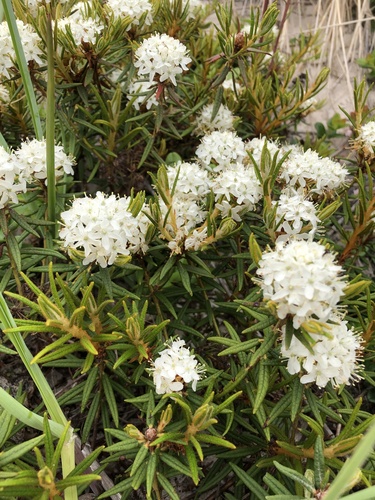
- Rhododendron tomentosum, with evergreen leaves and a much stronger camphor scent;
- Andromeda polifolia, with hairless leaves lacking the resinous scent that identifies bog myrtle;
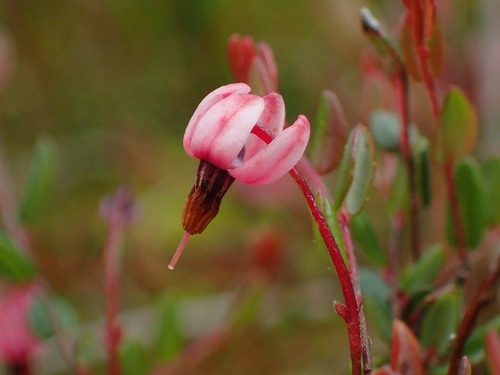
- bog-dwelling berries such as Vaccinium uliginosum and Vaccinium oxycoccos, recognizable by fleshy blue or red fruit rather than waxy brown drupes.
The decisive feature is the resinous fragrance released by crushed bog myrtle leaves. It is absent or distinctly different in the neighboring plants listed above.
Main sources
- Plants of the World Online / Kew, Myrica gale L.
- Royal Horticultural Society, Myrica gale - bog myrtle
- Plants For A Future, Myrica gale
- Encyclopaedia Britannica, sweet gale
- IUCN Red List, Myrica gale assessment (Maiz-Tomé, 2016)
- Trees for Life, Bog myrtle facts and information
- INPN / MNHN, Myrica gale L., 1753
- Tela Botanica, BDTFX reference database, Myrica gale L.
- USDA PLANTS Database, Myrica gale (MYGA) profile
Frequently asked questions
Is bog myrtle toxic to cats and dogs?
No. Veterinary data classify Myrica gale as non-toxic to cats and dogs. Essential oil is traditionally discouraged during pregnancy, a precaution separate from animal toxicity.
Why does my bog myrtle never produce fruit?
The species is usually dioecious, with male and female flowers on separate plants. An isolated female can flower every year without producing fruit if there is no male nearby.
Can bog myrtle grow in ordinary garden soil?
Only with difficulty unless conditions are adapted. It needs acidic, constantly wet soil; in chalky or excessively free-draining soil it quickly develops chlorosis and grows poorly.
Was bog myrtle really used to make beer?
Yes. Before hops became widespread, it was included in gruit, a mixture of bitter plants used to flavor and preserve beer in medieval northwestern Europe.
Does bog myrtle repel insects?
Modern tests on its essential oil have confirmed the traditional repellent use against several biting insects, beyond folk belief alone.
Which plants resemble bog myrtle?
The most frequent look-alikes are Rhododendron tomentosum and Andromeda polifolia, two low bog shrubs. The resinous scent of crushed leaves remains the key distinction for bog myrtle.
Is bog myrtle rare or threatened?
The IUCN lists it as Least Concern globally, but some coastal populations, such as those on the Polish Baltic coast, remain rare and legally protected.
Similar plants

If you are unsure about a plant’s toxicity, ask a botanist or veterinarian for advice.