
Common peony (Paeonia officinalis, )
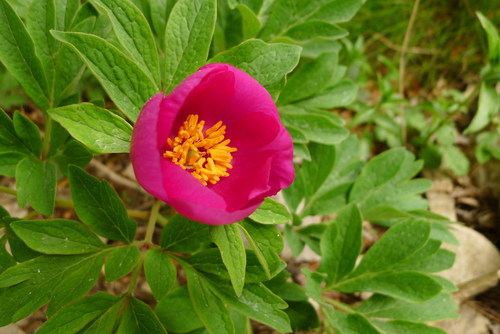

Common peony (Paeonia officinalis L.) is a herbaceous perennial in the Paeoniaceae, native to east-central and southern Europe. The botanical species is distinct from the many horticultural peonies in the genus Paeonia with which it can be confused.
Read moreCommon peony, Cottage peony and Garden peony
Moutan officinalis, Paeonia nemoralis, Paeonia peregrina proles officinalis and Paeonia peregrina var. officinalis
Allow a few hours of direct sun per day, preferably morning or evening.
Full sun to light partial shade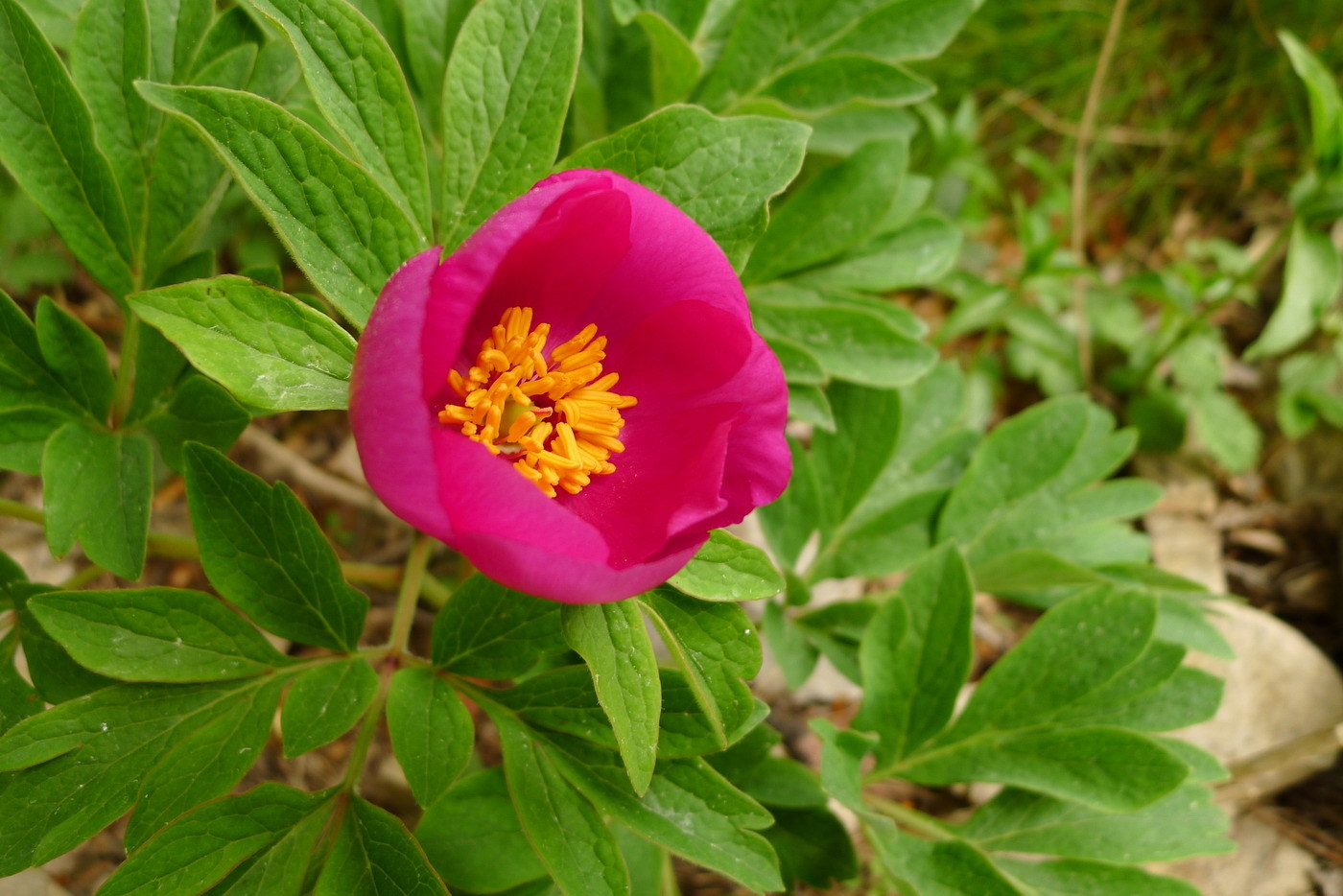


© photo
(c) Xavier Béjar, some rights reserved (CC BY-NC-SA) · cc-by-nc-sa
Yves Bas · cc-by
Wikimedia Commons · CC BY-SA or Public Domain
Taken Apr 23, 2021 by ICG (cc-by-sa)
Taken Jun 9, 2021 by Jani Zadrgal (cc-by-sa)
Taken Apr 28, 2021 by Adéla Adéla Levá (cc-by-sa)
Taken Jun 10, 2022 by Jim Knopf (cc-by-sa)
Taken Aug 26, 2022 by Annemarie Ahrens-Stehle (cc-by-sa)
© copyright of the Board of Trustees of the Royal Botanic Gardens, Kew.




Global distribution
POWO/WCVP records a native range in east-central and southern Europe. Tela Botanica and GBIF confirm the name in references used for France, but the botanical species must be distinguished from horticultural peonies planted in gardens.
- Native9
- Introduced3
- France
- Switzerland
- Italy
- Spain
- Portugal
- Hungary
- Romania
- Northwestern Balkans
- Metropolitan France
- Great Britain
- Ireland
- Vermont
Hexagons: regions where the plant occurs. Green dots: native range.1
Identity
Common peony (Paeonia officinalis L., 1753) is an accepted species in the genus Paeonia, family Paeoniaceae. Linnaeus published the name in Species Plantarum in 1753, and POWO/WCVP describes it as a perennial of the temperate biome. 1 2
Peony is a broader name than this species alone. In gardens it can mean herbaceous peonies, tree peonies, Itoh hybrids or cultivars of other species such as Paeonia lactiflora. Common peony in the botanical sense means Paeonia officinalis; care is needed when applying guidance that describes the whole genus. 9 7
Names such as cottage peony and garden peony are widely used alongside common peony, but can also circulate in a horticultural context broader than the strict species. French names include pivoine officinale, pivoine des jardins, pivoine commune and Rose de Notre-Dame; these likewise need to be read in their botanical or garden context. 4 6
Recognition
Herbaceous growth distinguishes Paeonia officinalis: shoots regrow from a perennial crown, while aerial stems disappear after the growing season. RHS describes a compact, bushy deciduous perennial with dark green leaves divided into elliptical segments. 6
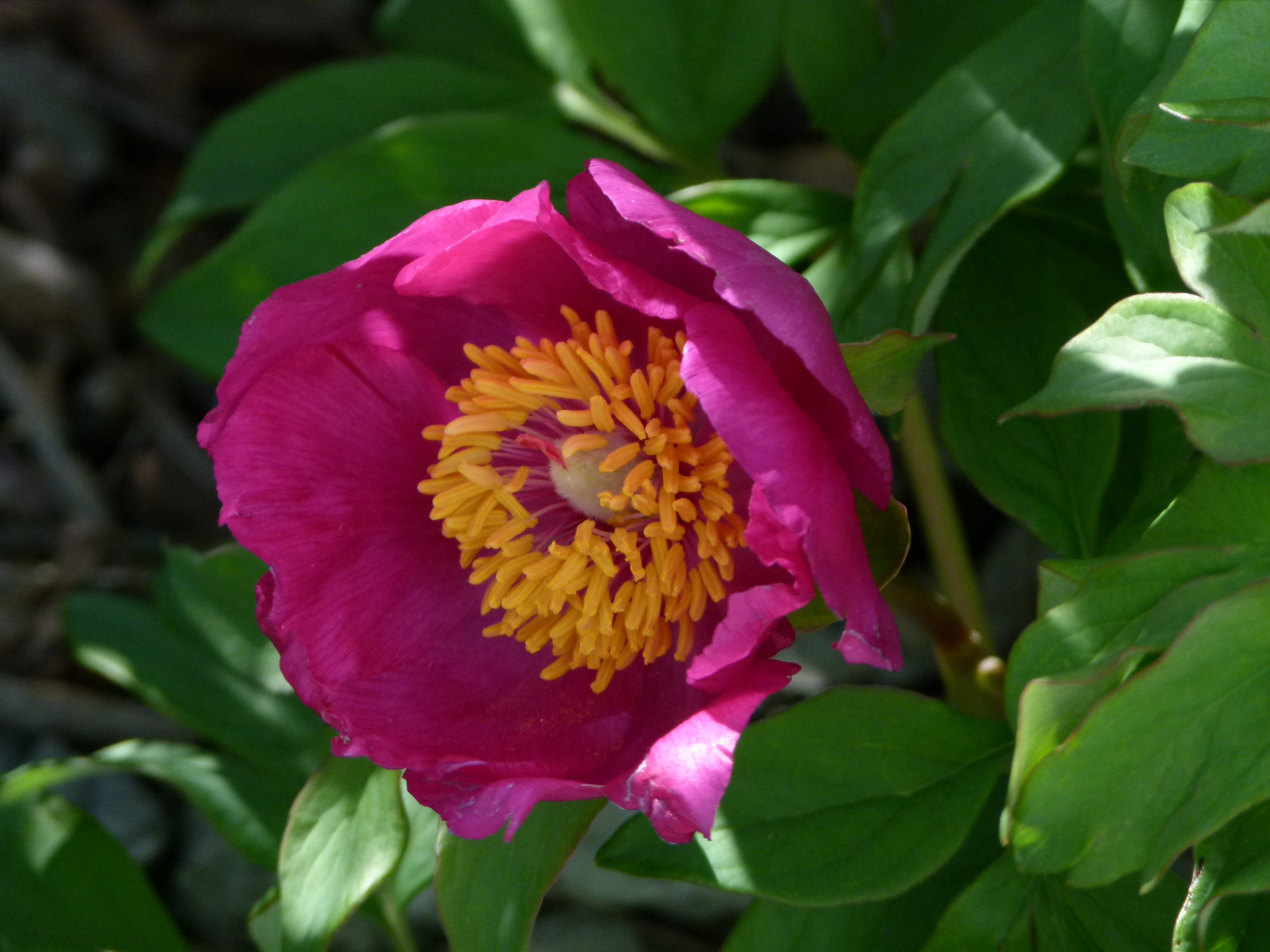
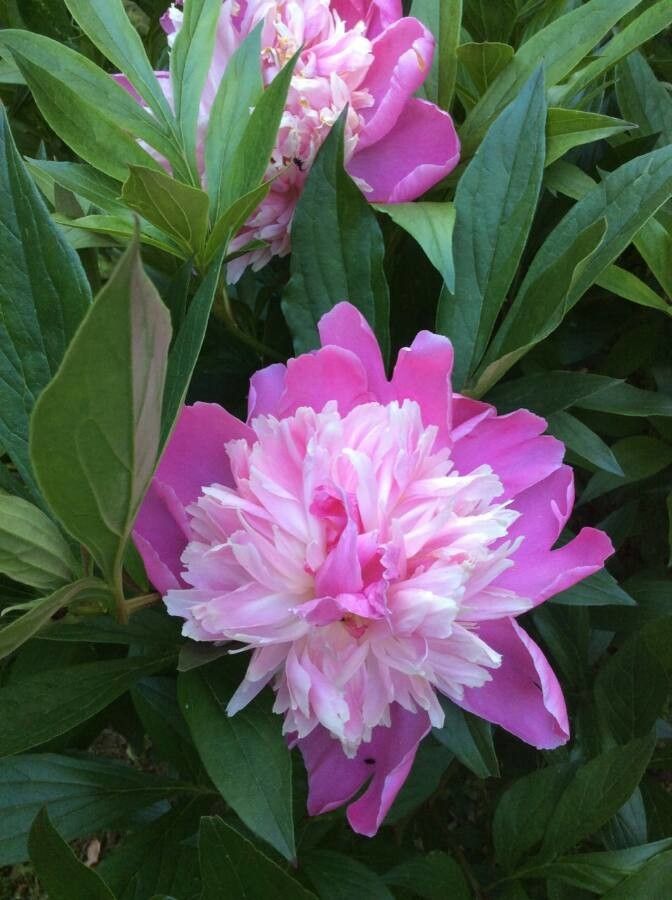
The typical flower is bowl-shaped, slightly fragrant and often purplish red, reaching about 12 cm (5 in) across in the RHS species account. Genus-level sources describe a wider range of single, semi-double and double flowers, in pink, white, red, yellow or mixed colors depending on species and cultivar. Identifying P. officinalis requires separating the botanical type from this wider horticultural diversity. 6 9
Fruits develop as follicles that open when ripe and release a few fleshy black seeds. This feature helps identify the genus after flowering, but cannot establish the species without considering the foliage, habit and context as well. 9
Useful taxonomy
The binomial Paeonia officinalis L. provides a stable botanical reference. POWO accepts the species and lists several synonyms, including Moutan officinalis, Paeonia nemoralis and combinations under Paeonia peregrina. 1 3
Below species level, the taxonomy becomes more complex. POWO lists accepted subspecies including P. officinalis subsp. banatica, subsp. huthii, subsp. italica, subsp. microcarpa and subsp. officinalis. Species-level treatment is appropriate because cultivation and toxicity sources do not always distinguish those ranks. 1 2
Commercial labels add another complication. A plant sold simply as a peony may be P. officinalis, P. lactiflora, a tree peony or a hybrid. Cultivar names therefore serve as horticultural clues rather than botanical synonyms. 9 8
Habitat and range
East-central and southern Europe form the native range summarized by POWO/WCVP. References used for France, including Tela Botanica and GBIF, allow the name Paeonia officinalis to be followed in natural-history records. That botanical presence must be distinguished from horticultural peonies merely planted in gardens. 1 4 3
France is included as native in the broad sense used by distribution databases. This does not make every garden peony encountered there a local wild plant. Double forms and nursery hybrids often belong to horticulture even when they share the same genus. 1 6
Garden conditions reflect this temperate ecology: full sun to light partial shade, deep fertile humus-rich soil that stays moist but drains well, and a fairly sheltered position. RHS notes that herbaceous peonies dislike poor or very wet soils and dense shade. 6 7
Life cycle, cultivation and care
Common peony establishes slowly but persists for many years. NC State notes that peonies can take one or two years to flower again after transplanting, then live a long time once established. This delay favors getting the planting position right initially rather than moving the clump repeatedly. 9
GIFT records consulted describe a perennial with measured height around 0.3–0.6 m (1–2 ft) and flowering recorded in May, a Northern Hemisphere spring observation. Garden dimensions vary more widely with cultivar and conditions, so those recorded traits provide a comparison rather than a universal garden limit. 13 6
Reliable horticultural propagation mainly uses crown division in fall or very early spring. A useful division must have buds and fleshy roots; an isolated flower stem cannot produce a new plant. 6 9
After planting, water deeply rather than superficially. For dry conditions in France, 10–20 mm (0.4–0.8 in) per week during establishment or rainless periods provides a reference amount. An established clump in open ground mainly needs soil that remains moist without standing water; this reference should be read in relation to local rainfall and conditions. 6 7
After flowering, remove spent blooms, then cut stems back once the foliage has yellowed and dried. Double flowers may need discreet support, especially after rain. RHS does not regard the ants seen on buds as a problem for herbaceous peonies. 6 7
Uses and risks
Ornamental uses include perennial beds, cottage gardens, flower borders and cut flowers. RHS also records P. officinalis as providing nectar and pollen for pollinators, supporting its value in a garden without implying exceptional ecological benefits. 6
The epithet officinalis recalls historical uses. Some Paeonia species have appeared in medicinal or ritual contexts, but the cited references provide no safe public preparation, precise plant part or dose. No food or medicinal use is recommended. 9 12
Animal toxicity calls for clear caution. ASPCA lists “Peony” as toxic to dogs, cats and horses, identifies paeonol as the toxic principle, and notes possible vomiting, diarrhea and depression. Its page spells the botanical name “Paeonis officinalis” and the family “Paeniaceae”; POWO/WCVP establishes the botanical spelling while the toxicological warning remains applicable. 10 11 1
RHS also notes a risk of skin irritation for pets. For children and adults, the practical nonfood precaution is straightforward: do not chew the plant or try homemade medicinal preparations, and seek medical or veterinary advice after substantial ingestion. 6 10
Cultivars, look-alikes and related plants
'Rubra Plena' is the best-documented cultivar in the cited references. RHS places it under Paeonia officinalis and describes a robust herbaceous form with double crimson-red flowers. It is a cultivar rather than a separate species. 8
Many celebrated peony names belong to other species or hybrids. 'Sarah Bernhardt', 'Festiva Maxima', 'Bowl of Beauty', 'Bartzella', 'Cora Louise' and 'Red Charm' are useful garden-center references, but do not prove that a plant is P. officinalis. 9 7
Practical look-alikes fall into three groups: related Asian herbaceous peonies, especially P. lactiflora; tree peonies, which retain wood in winter; and Itoh hybrids between herbaceous and tree peonies. Sound identification requires the full scientific name, growth type and, where possible, the cultivar's origin. 9 1
Main sources
- Plants of the World Online / Kew, Paeonia officinalis L.
- WCVP record consulted, Paeonia officinalis L.
- GBIF Backbone Taxonomy, Paeonia officinalis L.
- Tela Botanica eFlore BDTFX, Paeonia officinalis L. — nomenclatural record NN 47339
- Trefle, species data, Paeonia officinalis
- Royal Horticultural Society, Paeonia officinalis
- Royal Horticultural Society, Herbaceous peonies guide
- Royal Horticultural Society, Paeonia officinalis Rubra Plena
- NC State Extension Gardener Plant Toolbox, Paeonia — Herbaceous Types, including horticultural comparisons
- ASPCA, Peony toxicity entry
- ASPCA toxic plant list consulted
- Perenual data consulted, Paeonia officinalis
- GIFT, Global Inventory of Floras and Traits: original database portal, Internet Archive copy dated 2 September 2026
Frequently asked questions
Does common peony mean all peonies?
No. The primary species is Paeonia officinalis L. Peonies sold in garden centers may belong to P. lactiflora, Itoh hybrids or tree peonies.
Is common peony toxic to pets?
Yes. ASPCA lists peony as toxic to dogs, cats and horses, naming paeonol as the toxic principle and noting possible digestive signs.
Why is my common peony not flowering?
Frequent causes include planting too deeply, too much shade, a recently divided clump or water stress while buds are developing.
Are ants on peony buds a problem?
RHS horticultural guidance indicates that ants seen on the buds generally do not cause problems for the plant.
Can common peony be eaten or used as a remedy?
No food or medicinal use is recommended. Sources mention historical uses or uses within the genus, but do not provide a safe protocol for the public.
How does common peony differ from a tree peony?
Paeonia officinalis is herbaceous and regrows from its perennial crown each year. Tree peonies retain a woody framework outside the growing season.
Similar plants
If you are unsure about a plant’s toxicity, ask a botanist or veterinarian for advice.