
Waterpepper (Persicaria hydropiper, )
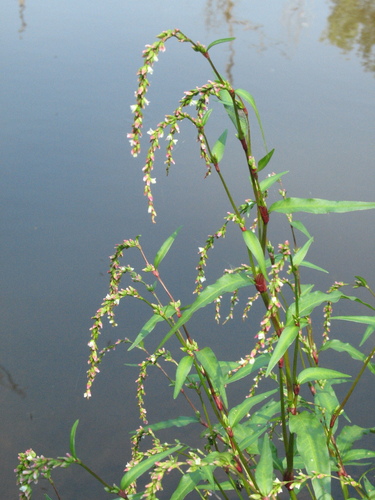
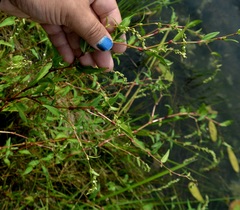
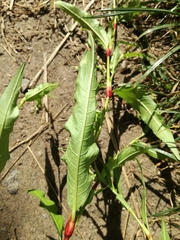
Waterpepper (Persicaria hydropiper (L.) Delarbre, 1800) is an annual herb in the Polygonaceae family, native to northwestern Africa, temperate Eurasia extending into western and central Malesia, and Australia. Hair-fringed ochreas and strongly pungent crushed leaves distinguish it in ditches, on riverbanks and in wet meadows, where it is often confused with Persicaria lapathifolia and Persicaria maculosa.
Read moreWaterpepper, Water pepper and Marshpepper smartweed
Allow a few hours of direct sun per day, preferably morning or evening.
Full sun; tolerates light partial shade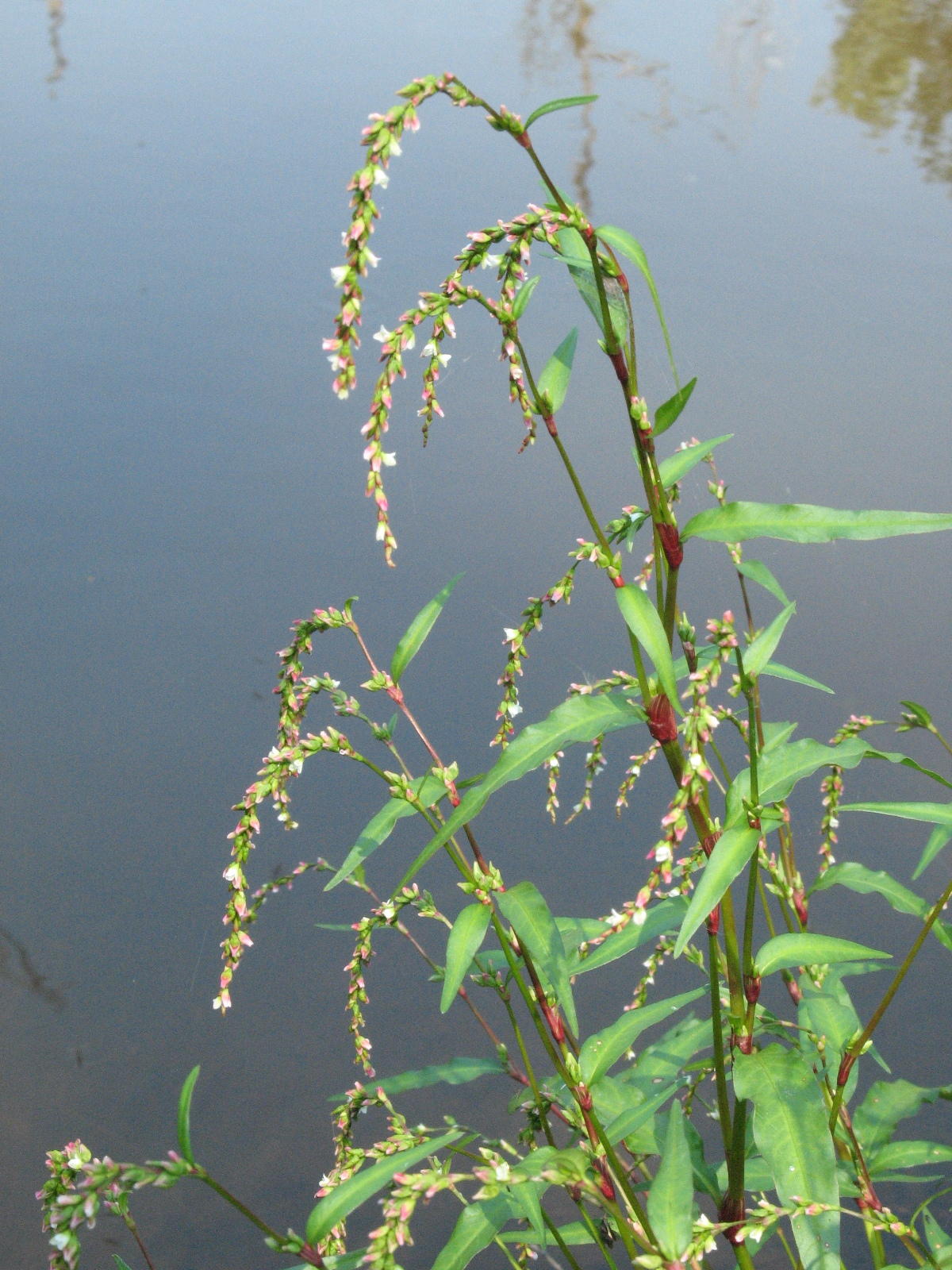
© photo
no rights reserved, uploaded by Татьяна Горбушина · cc0
Evan Barker · cc0
Ina Siebert · cc0
© copyright of the Board of Trustees of the Royal Botanic Gardens, Kew.




Global distribution
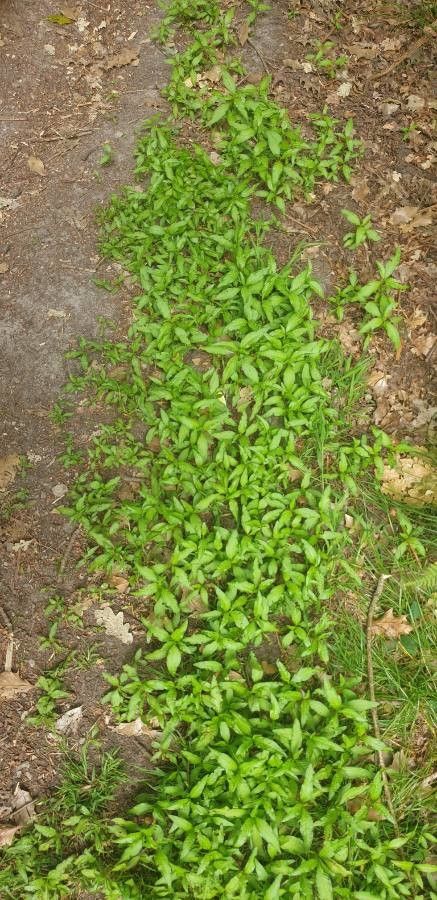
Waterpepper is native to northwestern Africa, temperate Eurasia extending into western and central Malesia, and Australia. It has also become widely naturalized in North America, where it is not native despite a long and widespread presence.
- Native5
- Introduced1
- Metropolitan France
- Europe
- Northwestern Africa
- Temperate Asia to western and central Malesia
- Australia
- North America
Hexagons: regions where the plant occurs. Green dots: native range.1
Identity
Waterpepper (Persicaria hydropiper (L.) Delarbre, 1800), also called water pepper or marshpepper smartweed, is an annual herb in the genus Persicaria and the Polygonaceae family. Its accepted name in Plants of the World Online is the combination established by Delarbre in 1800, based on Polygonum hydropiper, published by Linnaeus in 1753. 1 2
A crushed waterpepper leaf has a strongly pungent, almost burning taste, yet the plant grows in shallow water or beside ditches. This combination of peppery flavor and wet habitat explains its English name. It also distinguishes Persicaria hydropiper from Persicaria lapathifolia and Persicaria maculosa, both of which taste bland. 4 6
Recognition
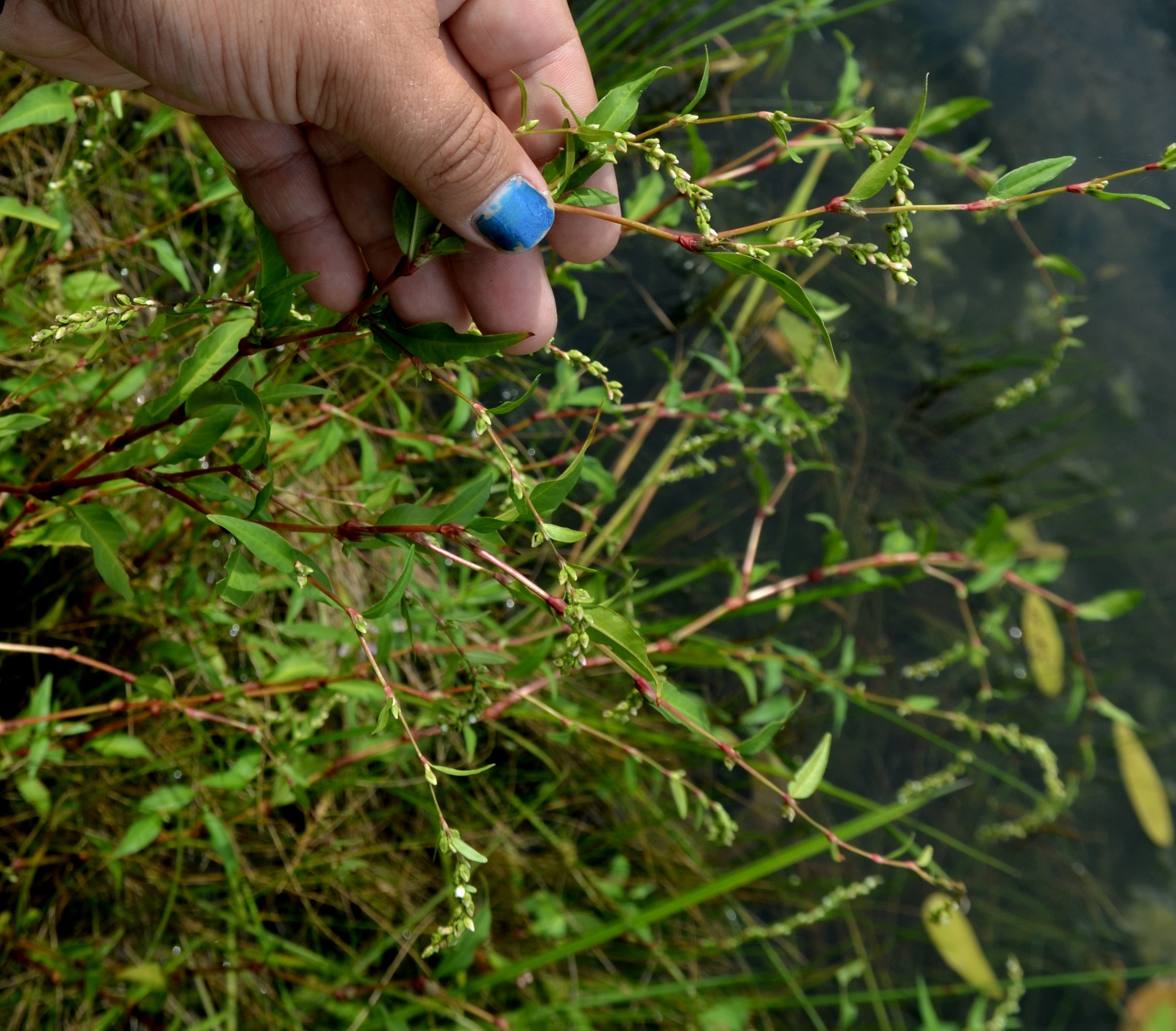
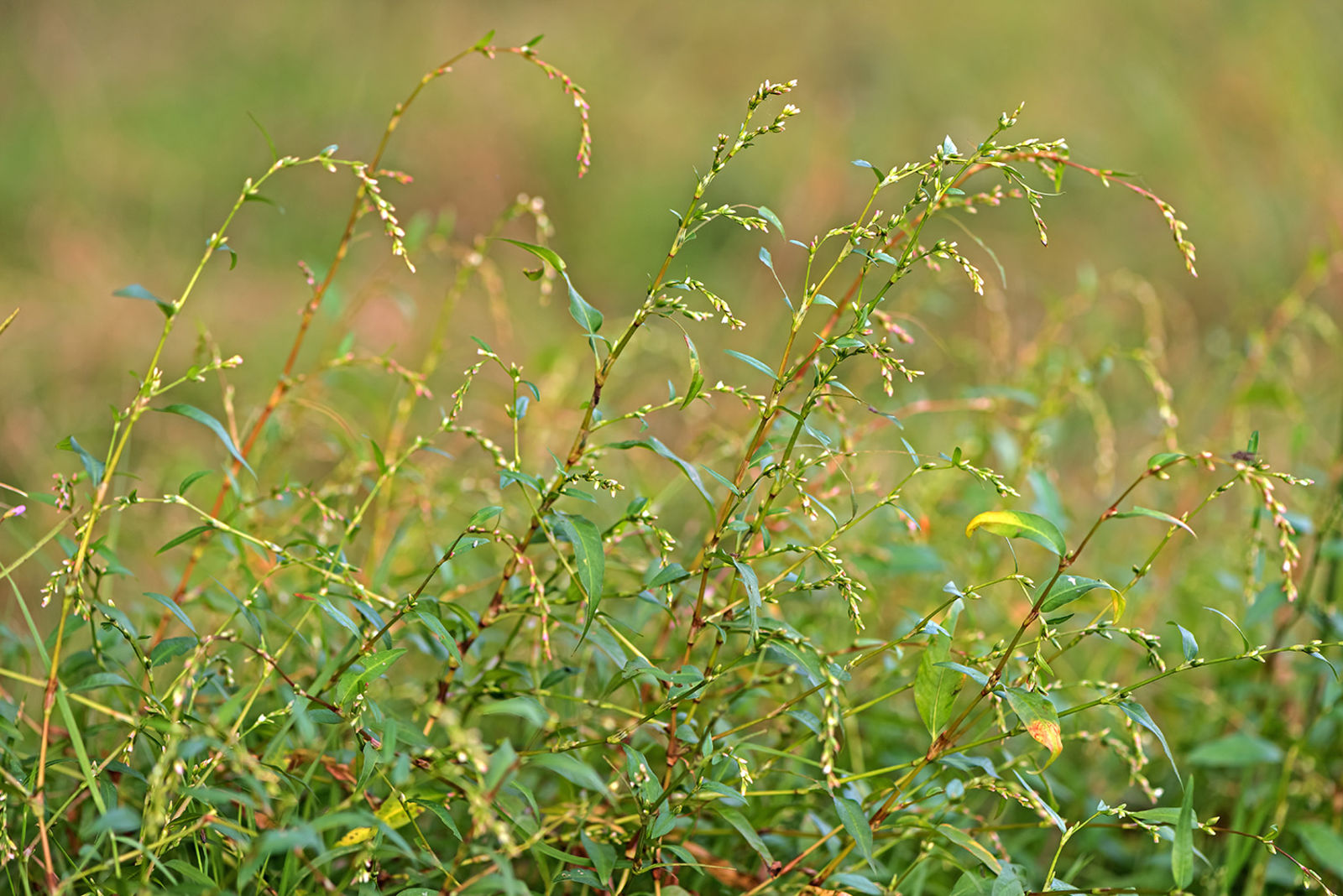
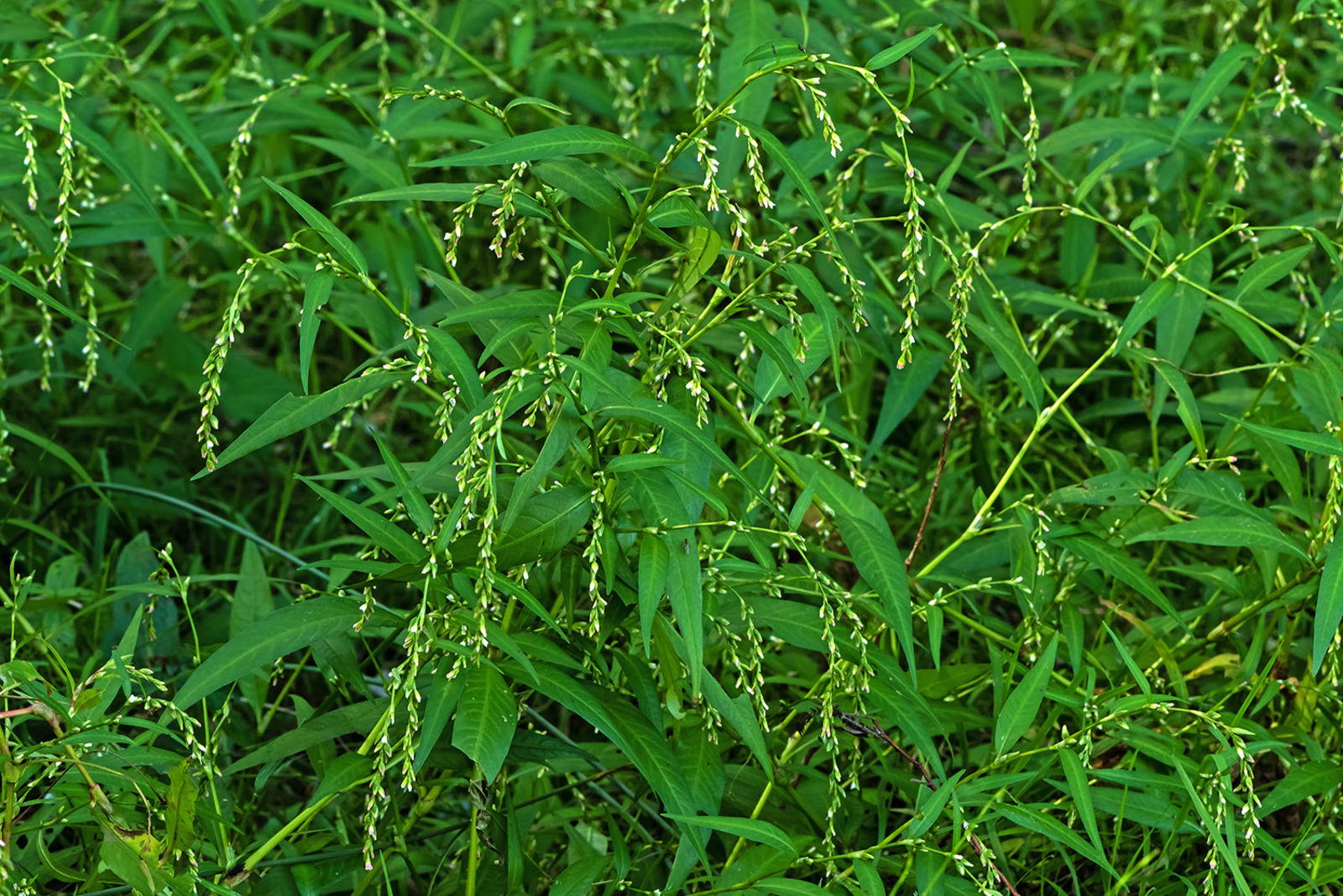
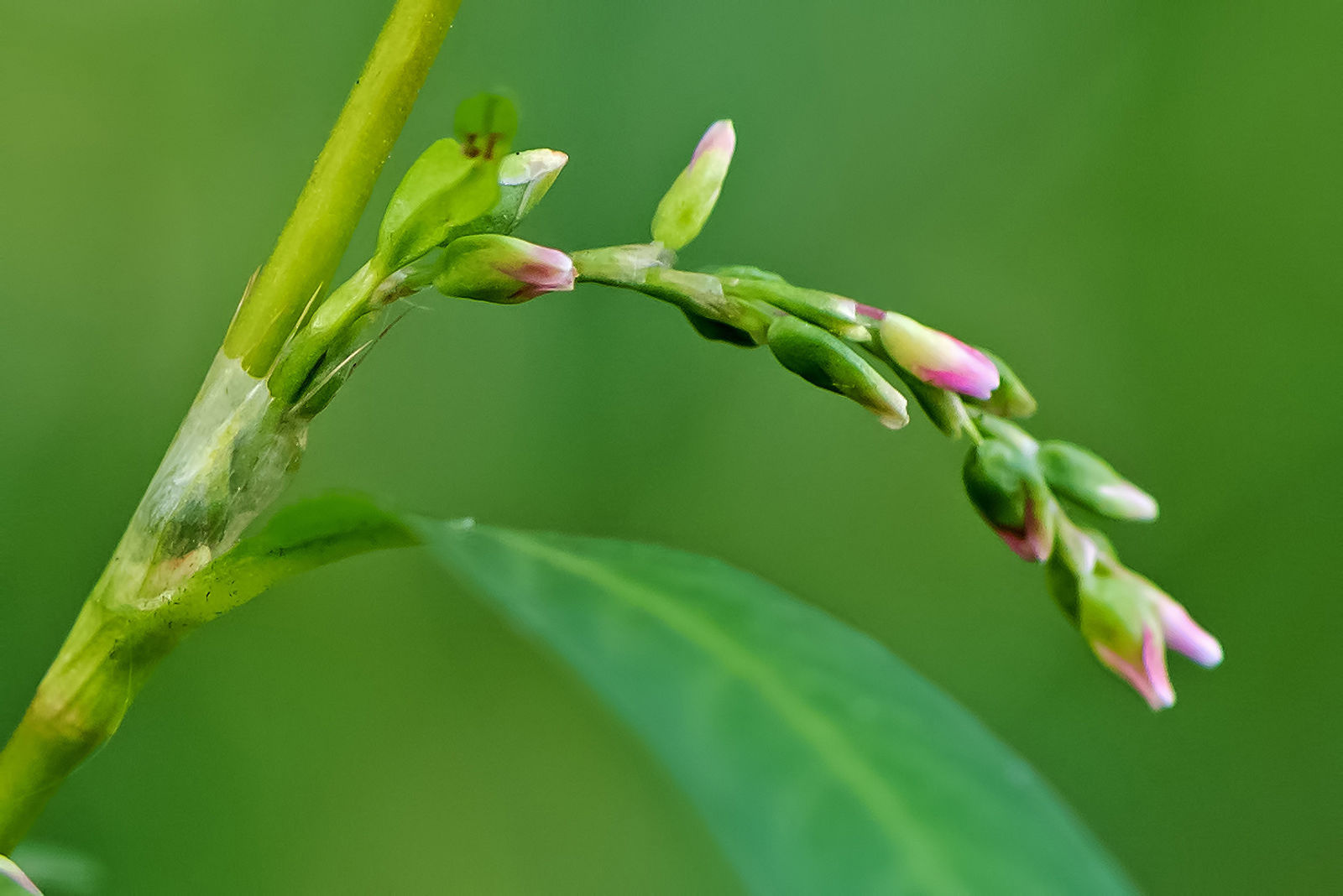
Waterpepper produces a hairless, green or reddish stem that may be upright, ascending or prostrate. It reaches 10–80 cm (4–31 in), depending on soil fertility. Its alternate, lance-shaped leaves have smooth margins, tapering tips and almost no stalk. 5 4
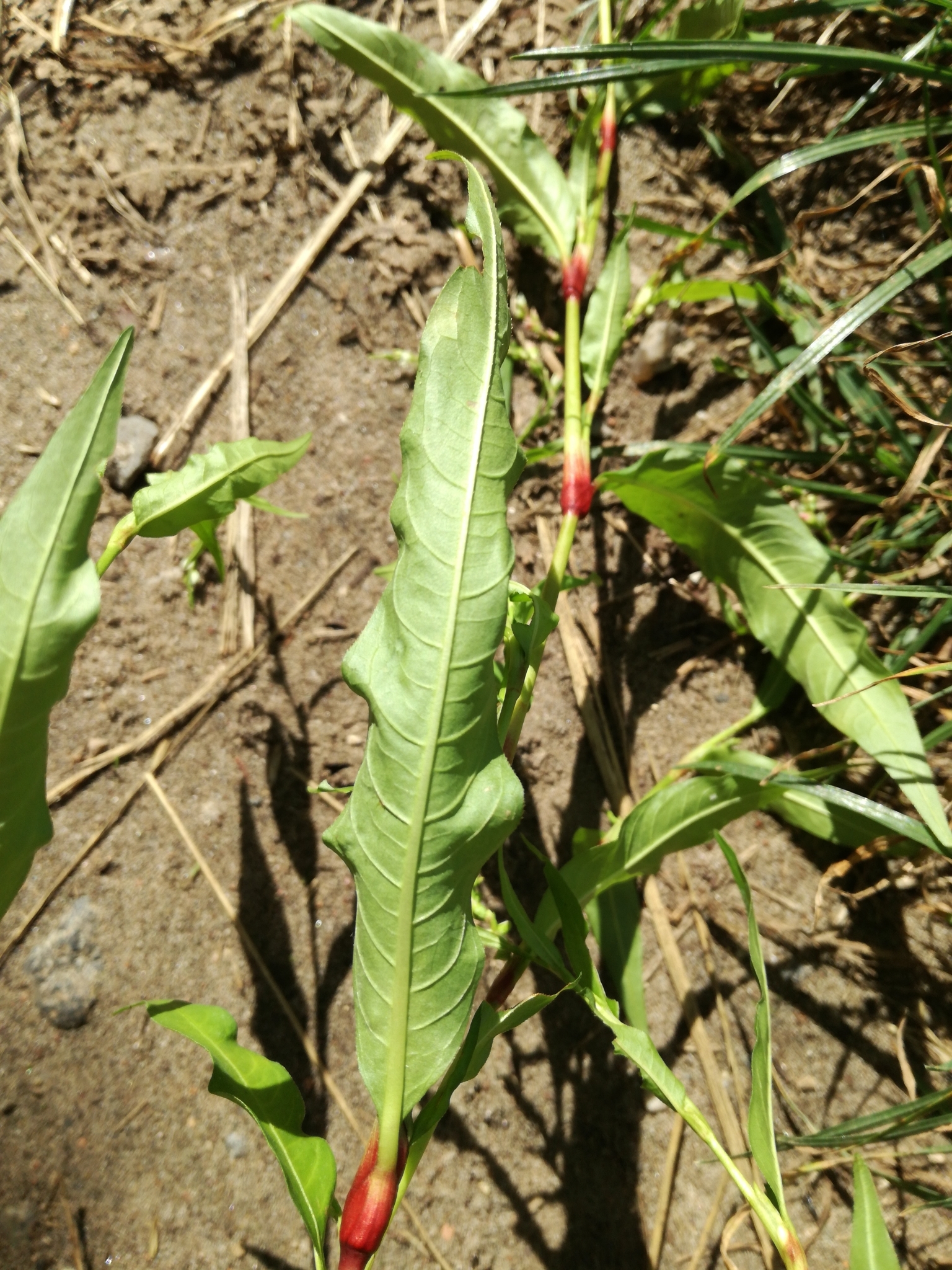
Look closely at the ochrea, the tubular stipule that surrounds each stem node. In this species its upper edge carries a fringe of long hairs, absent in Persicaria lapathifolia. The tiny flowers form slender, drooping spikes, often interrupted by small leaves. These details are useful when several smartweeds grow together. 6
Individual flowers usually have four tepals, greenish with white or pink margins and clearly dotted with glands. This separates the species from Persicaria lapathifolia, which lacks these glands, and from Persicaria punctata, which has glossy fruits. Waterpepper's fruit is a dull, dark brown to black achene, rather than a shiny one. 6 5
Useful taxonomy
Botanical authors have proposed combinations in related genera for this taxon since 1753. None has displaced Delarbre's combination: Persicaria hydropiper (L.) Delarbre, published in 1800, remains the reference name accepted by Plants of the World Online. 1
The best-documented synonyms and infraspecific taxa include:
- Polygonum hydropiper L. (botanical synonym or infraspecific name)
- Persicaria hydropiper subsp. maximowiczii (Regel) Soják (botanical synonym or infraspecific name)
- Persicaria hydropiper subsp. hispida (Hook.f.) Soják (botanical synonym or infraspecific name)
- Persicaria hydropiper var. angustifolia (A.Braun) Kitag. (botanical synonym or infraspecific name)
Japanese cultivars selected as vegetable seasonings belong to this same species. None constitutes a separate botanical taxon, despite intensive selection for the color and vigor of the young shoots. 1 8
Habitat and range
Northwestern Africa, temperate Eurasia extending into western and central Malesia, and Australia make up waterpepper's native range. In France, where it is native, the INPN records it in wet habitats throughout metropolitan France. 1 2
Ditches, pond margins, riverbanks, flooded meadows and disturbed waterside soils provide its typical habitat. Waterpepper tolerates light partial shade but disappears when the ground stays dry: its whole life cycle depends on persistent moisture. Soil pH, between 5.5 and 7.5, matters less than water saturation. 6 5
Beyond its native range, waterpepper has become widely naturalized in North America. It now occurs in all six New England states, where its long and widespread presence does not make it native. 6
Life cycle and reproduction
As a strict annual, waterpepper germinates in spring, flowers in summer and dies with the first frosts, without regrowing from a perennial crown. In the temperate Northern Hemisphere, flowering runs from June to October. In USDA zones 3–9, including conditions down to −15 °C (5 °F), only the seed stock survives winter; the adult plant does not. 5 4
Seed is the sole means of reproduction. Each dull achene, dropped onto the soil or carried by water, germinates the following year once the ground is waterlogged. Without standing water, seedlings do not emerge, and vegetative propagation does not compensate for failed germination in this species. 5 6
In Japan, cultivars derived from wild populations produce reddish shoots sold as a vegetable seasoning. Molecular-marker analysis shows genetic diversity clearly distinct from that of their wild ancestors, reflecting long-standing domestication directed toward culinary use rather than ornament. 8
Uses and risks
Fresh leaves provide a sharply flavored seasoning. Europeans formerly used them as a pepper substitute during shortages, while young shoots traditionally accompany raw fish dishes in Japan. 4 8
Traditional Indian medicine uses the leaves against intestinal parasitic worms. Laboratory studies show measurable anthelmintic activity in vitro, but this has not yet been clinically validated in humans. 7
No serious toxicity is documented for humans or common domestic animals. However, sap and fresh leaves can irritate the skin after prolonged contact. Their acrid taste discourages livestock and wild herbivores from grazing the growing plant, leaving its biomass intact until fruiting. 4 5
Varieties, look-alikes and related plants
European horticulture recognizes no ornamental cultivar of waterpepper. The cultivated forms are Japanese food cultivars selected for shoot color and vigor rather than decorative use. 8
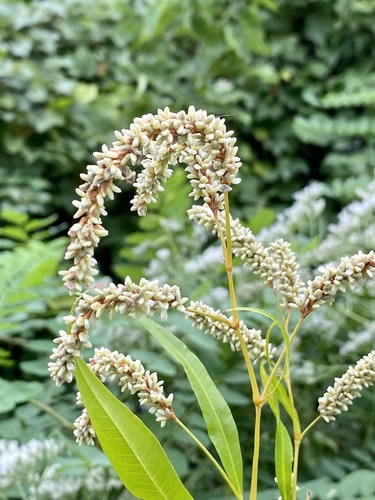
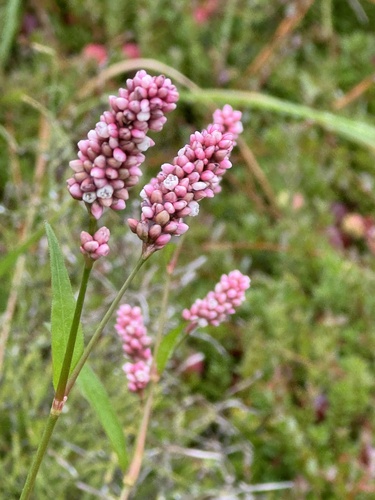
Among similar plants, Persicaria lapathifolia is confused with waterpepper more often than Persicaria maculosa or Persicaria hydropiperoides. Its hairless ochrea and bland taste distinguish it. Persicaria maculosa also has a hairy ochrea but lacks strong pungency. The North American perennial Persicaria hydropiperoides produces stolons and has tepals without glands. 6
Three features together identify waterpepper: a distinctly pungent crushed leaf, a hair-fringed sheath and gland-dotted tepals. If one of these characters is absent, consider a related species.
Main sources
- Plants of the World Online / Kew, Persicaria hydropiper (L.) Delarbre
- INPN / MNHN, Persicaria hydropiper (L.) Delarbre, 1800
- Tela Botanica / eFlore bdtfx, Persicaria hydropiper (L.) Delarbre
- Plants For A Future, Polygonum hydropiper - water pepper
- NC State Extension Gardener Plant Toolbox, Persicaria hydropiper
- Go Botany / Native Plant Trust, Persicaria hydropiper - marshpepper knotweed
- Journal of Parasitic Diseases, in vitro cestocidal activity of Persicaria hydropiper
- Breeding Science, genetic diversity of vegetable water pepper Persicaria hydropiper
Frequently asked questions
Is waterpepper poisonous?
No serious toxicity is documented for humans or common domestic animals. Sap and fresh leaves can, however, irritate the skin after prolonged contact.
Can you eat waterpepper?
Yes. Young leaves and shoots are used as a strongly pungent seasoning. In Europe the plant was historically a pepper substitute, while selected food cultivars are grown in Japan.
Why is it called waterpepper?
The name combines its most reliable clue, a crushed leaf with a strongly peppery, almost burning taste, with its preference for wetlands and shallow water.
How can you tell waterpepper from pale smartweed?
Check the ochrea at each stem node. Its edge is fringed with hairs in Persicaria hydropiper and bare in Persicaria lapathifolia. The pungency of a crushed waterpepper leaf provides another distinction.
Where does waterpepper grow in France?
It is native throughout metropolitan France in wet habitats, including ditches, pond and river margins, and flooded meadows.
Is waterpepper cultivated in Japan?
Yes. Food cultivars selected for the color and vigor of young shoots are grown as vegetable seasonings. Their genetic diversity differs from that of wild populations.
Is waterpepper invasive in France?
No. It is native there and remains a common wetland weed without a regulated status, unlike other Polygonaceae such as Reynoutria japonica.
Similar plants
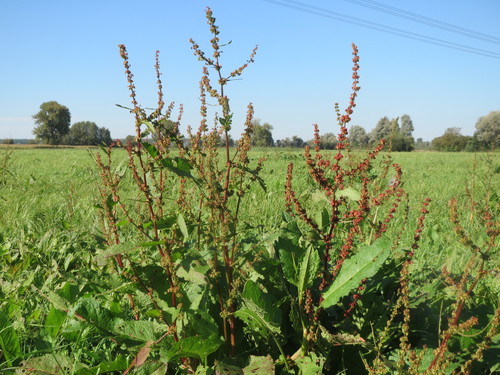
If you are unsure about a plant’s toxicity, ask a botanist or veterinarian for advice.