
Pale smartweed (Persicaria lapathifolia, )
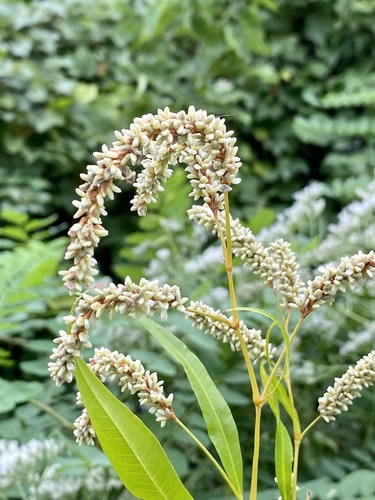
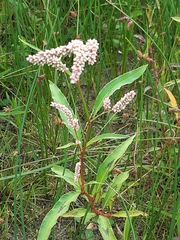
Pale smartweed (Persicaria lapathifolia (L.) Delarbre, 1800) is an herbaceous Polygonaceae with a nearly cosmopolitan native range, from the temperate Northern Hemisphere to northern and eastern Australia. Its swollen stem nodes bear lance-shaped leaves dotted with glands, followed by narrow, drooping flower spikes. A common weed of riverbanks, ditches and wet cultivated land, it is often confused with Persicaria maculosa and Persicaria hydropiper.
Read morePale smartweed, Pale persicaria, Willow weed and Dock-leaved smartweed
Allow a few hours of direct sun per day, preferably morning or evening.
Full sun to light partial shade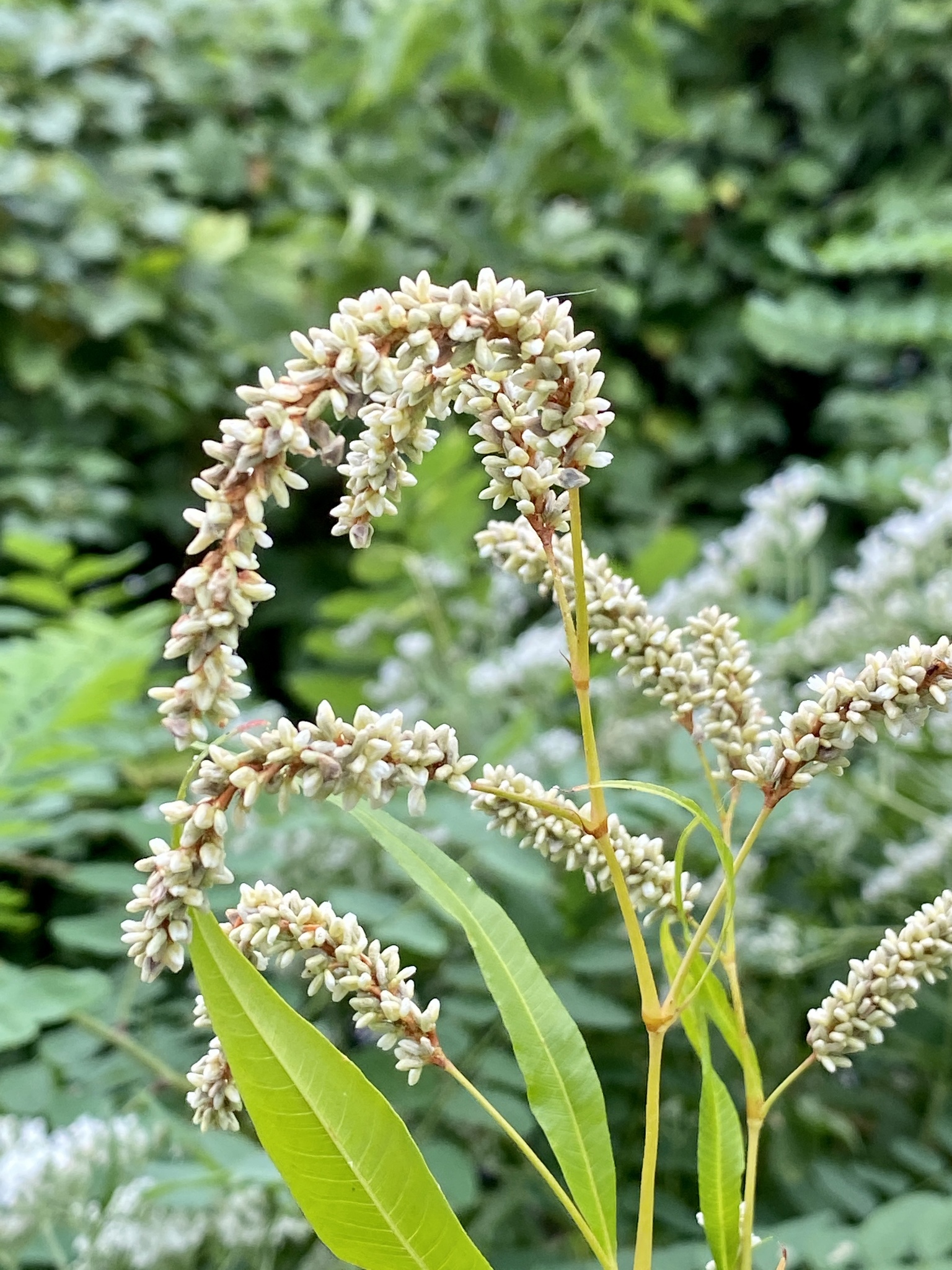


© photo
(c) Sandy Wolkenberg, some rights reserved (CC BY), uploaded by Sandy Wolkenberg · cc-by
Daniel Atha · cc0
Catherine Faber · cc0
Taken Jan 1, 1970 by Photoflora - L'Abbé COSTE (©)
Taken Sep 12, 2021 by Albert Mallol Camprubí (cc-by-sa)
Taken Aug 12, 2022 by Patrice Bracquart (cc-by-sa)
Taken Sep 3, 2022 by Sanne Plant (cc-by-sa)
Taken Sep 15, 2011 by Tela Botanica − Bertrand BUI (cc-by-sa)
© copyright of the Board of Trustees of the Royal Botanic Gardens, Kew.




Global distribution
Pale smartweed is native across the temperate and subarctic Northern Hemisphere, from North America through Europe and Asia, with native extensions into North Africa, Ethiopia, and northern and eastern Australia. It is not native to South America or southern Africa and has become locally naturalized beyond its native range, including Western Australia.
- Native6
- Introduced1
- Metropolitan France
- Europe
- North America
- Temperate Asia
- North Africa and Ethiopia
- Northern and eastern Australia
- Western Australia
Hexagons: regions where the plant occurs. Green dots: native range.1
Identity
Pale smartweed (Persicaria lapathifolia (L.) Delarbre, 1800), also known as pale persicaria, willow weed or dock-leaved smartweed, is an annual herb in the genus Persicaria and the Polygonaceae family. Plants of the World Online accepts the combination made by Delarbre in 1800, based on Polygonum lapathifolium, published by Linnaeus in 1753. 1 2
The epithet lapathifolia means “dock-leaved,” referring to the resemblance between this plant's foliage and that of Rumex, the docks. Swollen stem nodes are another conspicuous feature shared by Persicaria and related Polygonum species; they explain the French name for these knotweeds. 3
Recognition
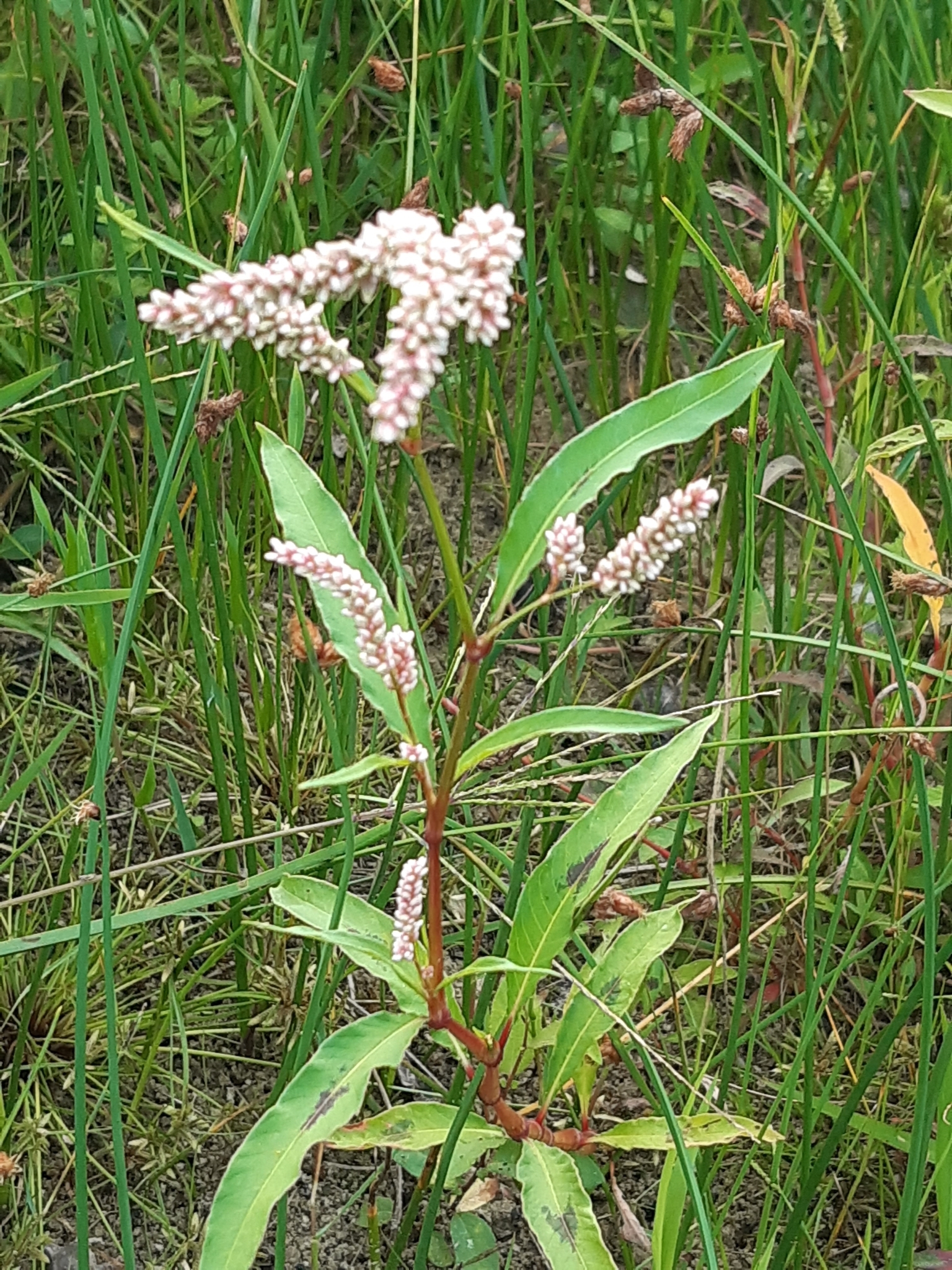
Pale smartweed has an upright or ascending stem, often reddish, with distinctly swollen nodes. Height varies considerably with climate: 20–80 cm (8–31 in) in France and temperate Europe, but up to 1.80 m (6 ft) or even 2 m (6.6 ft) on well-watered tropical riverbanks in northern Australia. 5 6
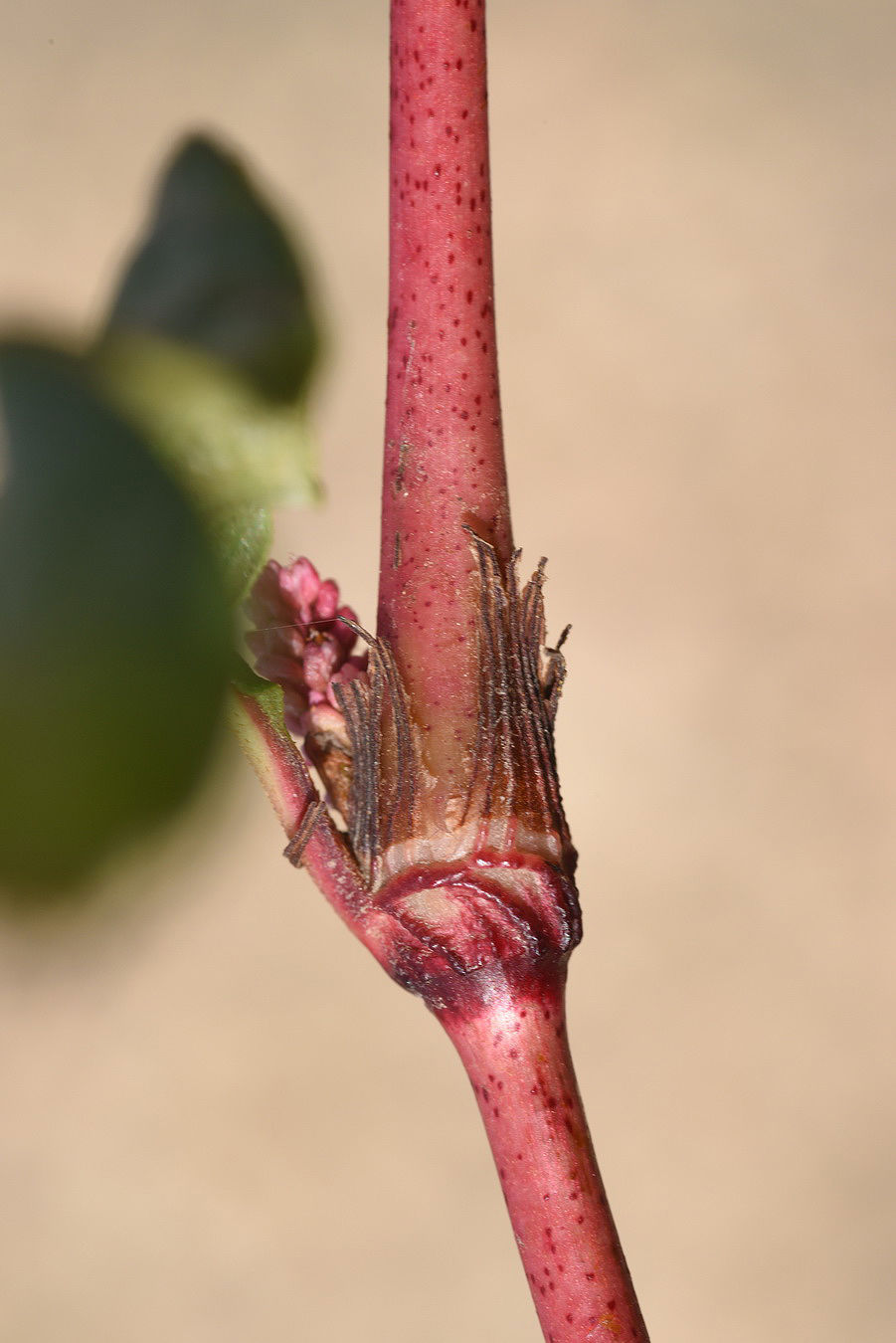
At every swollen node sits a tubular ochrea, the stipule sheath characteristic of Polygonaceae. In pale smartweed its upper margin lacks a fringe of hairs, whereas the sheath of Persicaria maculosa is clearly hairy. Examining this detail with a hand lens is more reliable than stem color or leaf size for distinguishing the two in the field. 7 4
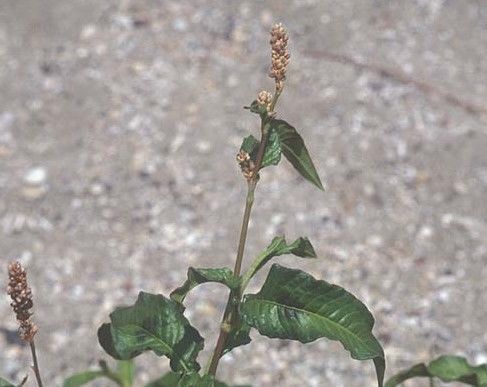
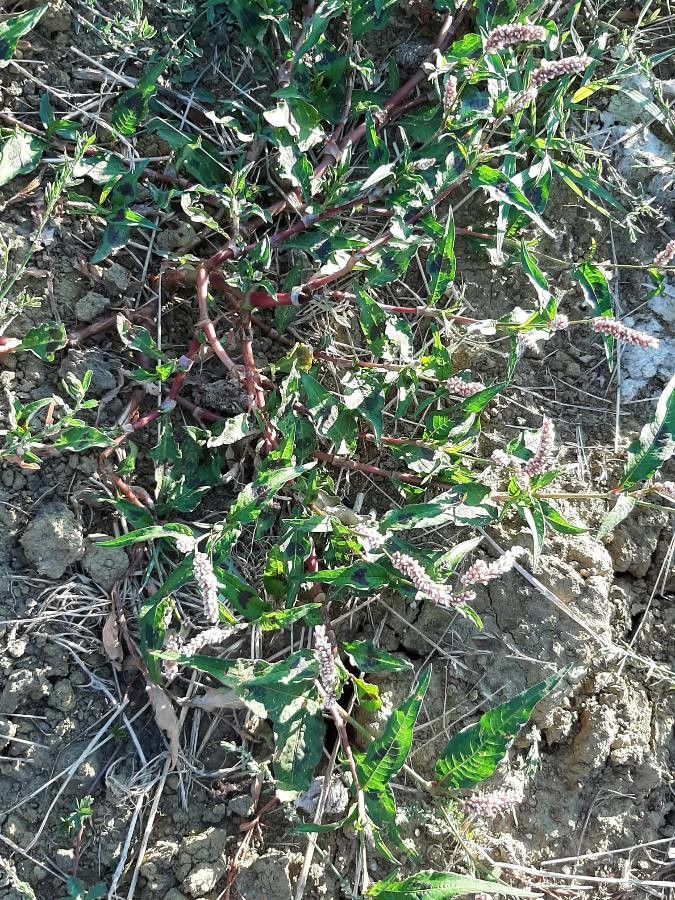
Its alternate, lance-shaped leaves measure 4–22 cm (1.6–8.7 in) long. Their undersides often carry small, stalkless glands, visible as dots under magnification and absent in Persicaria maculosa. Some leaves have a central dark blotch, but this variable feature never confirms the identification by itself. 6 4
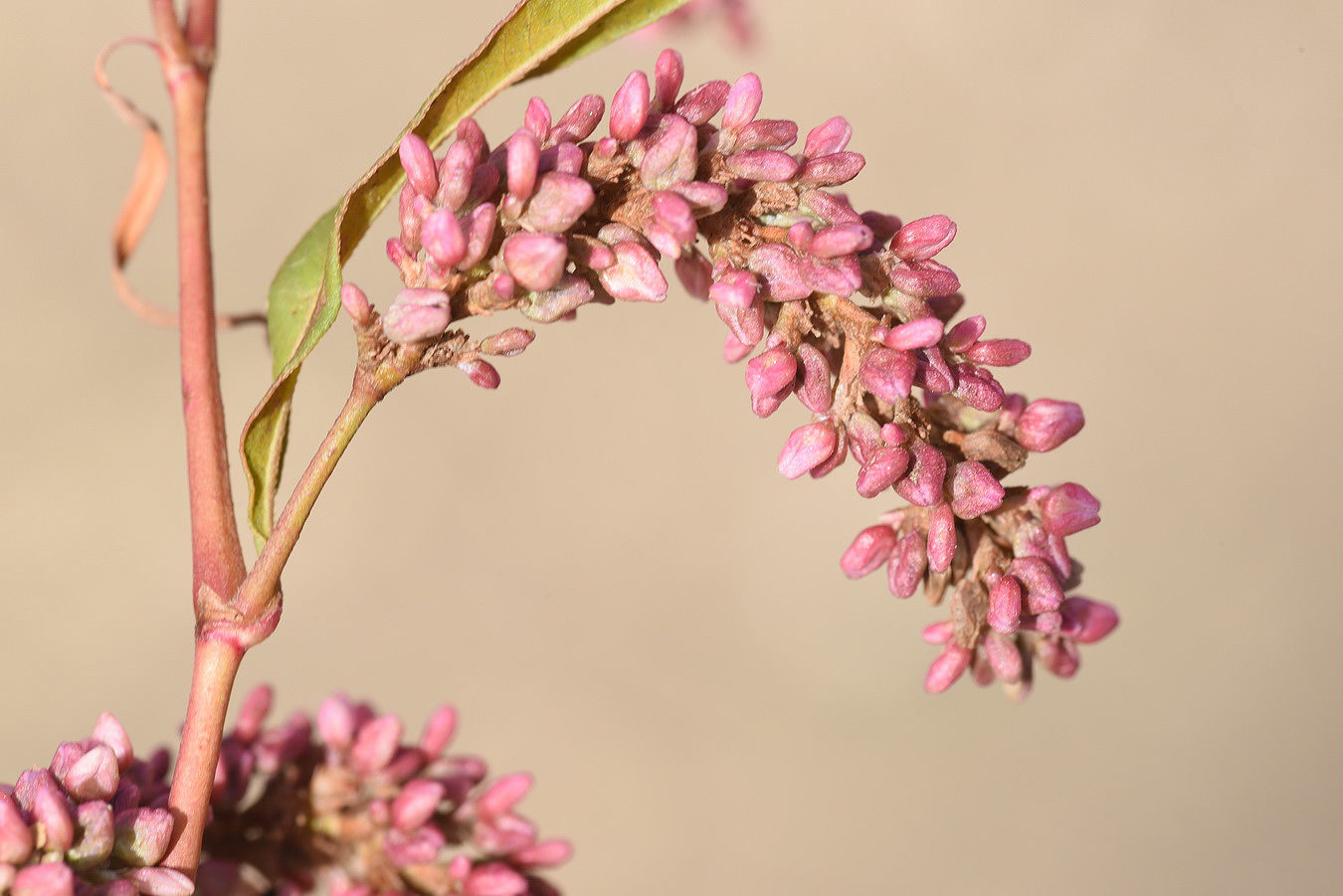
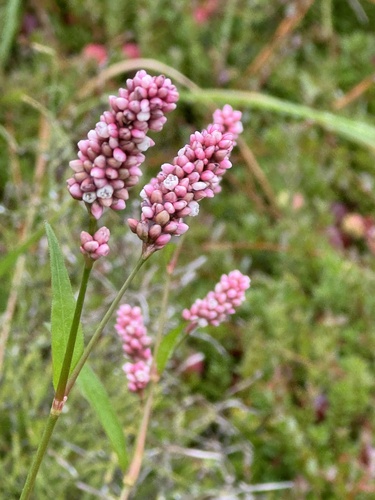
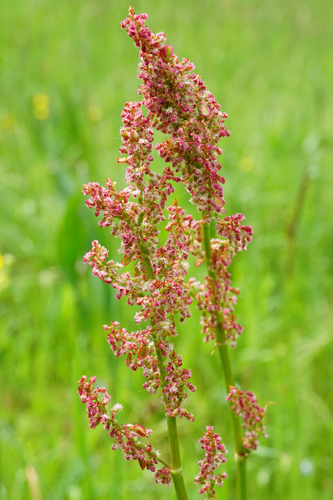
Narrow, dense flower spikes droop or arch distinctly at maturity, unlike the shorter, upright spikes of Persicaria maculosa. Each tiny flower measures 3–4 mm (0.12–0.16 in), with four pink, white or pale green tepals and five to six stamens bearing reddish anthers. 4 7
Useful taxonomy
For this variable species complex, Plants of the World Online retains Persicaria lapathifolia (L.) Delarbre, published in 1800 from the basionym Polygonum lapathifolium L., 1753. Four documented infraspecific taxa and synonyms illustrate its morphological diversity without displacing the accepted name. 1
Frequently documented infraspecific taxa and synonyms are:
- Persicaria lapathifolia subsp. brittingeri (Opiz) Soják (botanical synonym or infraspecific name)
- Persicaria lapathifolia subsp. pallida (With.) Á.Löve (botanical synonym or infraspecific name)
- Persicaria lapathifolia var. salicifolia (Sibth.) Miyabe (botanical synonym or infraspecific name)
- Polygonum nodosum Pers. (botanical synonym or infraspecific name)
Regional floras sometimes treat the complex as an aggregate rather than a uniform species because stable characters separating some local forms are lacking. The accepted name in Plants of the World Online remains the consistent taxonomic reference. 1 7
Habitat and range
Across the temperate and subarctic Northern Hemisphere, pale smartweed is native from North America through Europe and Asia. Native extensions reach North Africa, Ethiopia, and northern and eastern Australia. South America and southern Africa fall outside its native range. 1
French records in the INPN place this native species in wet habitats throughout metropolitan France, including Corsica. 2
Water shapes its typical habitat: pond margins, ditches, riverbanks, wet farmland and disturbed ground on sandy, dark or clay-rich mud. In northern Australia, pale smartweed grows mainly along intermittent streams and around artificial ponds. It has also become naturalized beyond its native range, including Western Australia. 5 6
Life cycle and reproduction
Through most of its temperate range, pale smartweed behaves as an annual: spring germination is followed by rapid growth, summer flowering and death with the first frosts. In humid tropical climates it can persist longer and exceed 1.80 m (6 ft), compared with 20–80 cm (8–31 in) in temperate conditions, as documented in northern Australia. 6 1
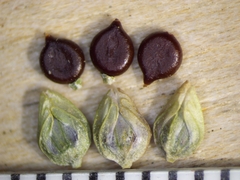
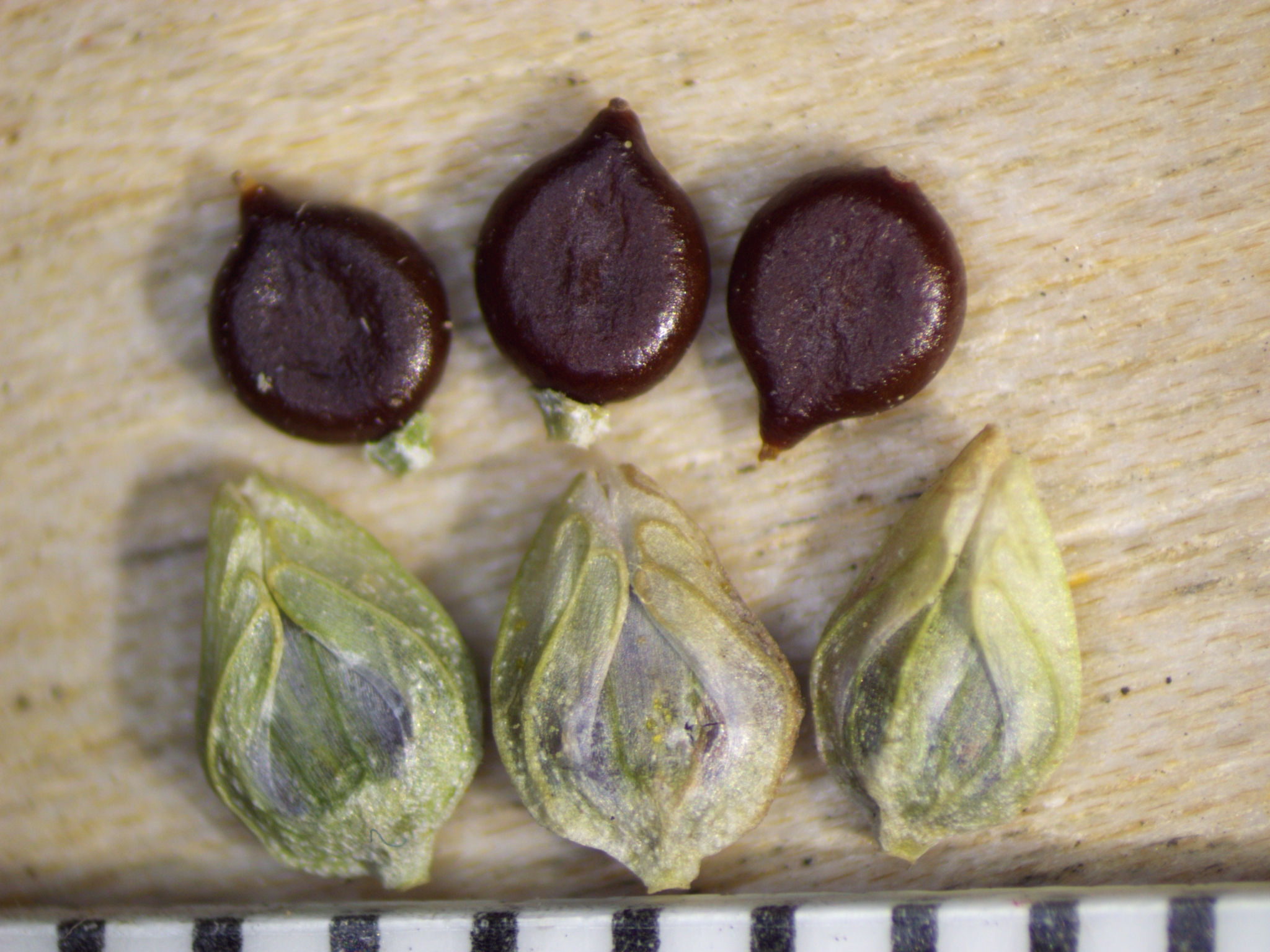
Temperate Northern Hemisphere plants flower from July to October, while tropical plants may flower almost year-round. Each spike produces numerous shiny brown, flat-convex or biconvex achenes, 1.5–3.2 mm (0.06–0.13 in) long. They fall near the parent plant or travel with floodwater. 4 6
Moisture strongly controls seed germination. Dense carpets of seedlings appear on newly exposed mud after water levels fall, explaining the crowded stands often seen on drying riverbanks in late summer. 5
Uses and risks
Agricultural records chiefly describe pale smartweed as a weed of wet cultivated land and disturbed ground, without a recognized horticultural use. Current reference databases list no documented toxicity to humans or common domestic animals. 2 3
Unlike its peppery relative Persicaria hydropiper, pale smartweed has no distinctly pungent taste. Field botanists use this contrast as an additional clue alongside morphological characters when distinguishing the two species. 4
Flower clusters and fallen riverside achenes contribute to wetland ecology. They provide a late-season resource for pollinating insects and replenish the seed stock characteristic of periodically flooded soils. 5
Varieties, look-alikes and related plants
There are no recognized horticultural cultivars of pale smartweed. It is a spontaneously growing plant that has not been selected for ornamental use. 7
The closest routine look-alike is spotted lady's thumb (Persicaria maculosa), with its hairy ochrea and shorter, upright spikes. Other possible confusions include Persicaria hydropiper, with pungent leaves and conspicuous flower glands, and Persicaria pensylvanica, whose thicker inflorescences bear flowers with five tepals. 4 7
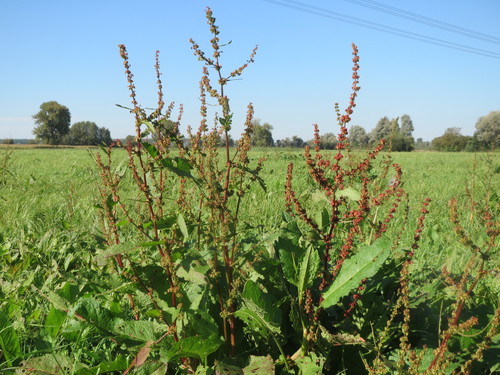
Wet habitats also support other Polygonaceae, including Rumex obtusifolius and Rumex acetosa, whose foliage is likewise described as dock-like, and the much more invasive Reynoutria japonica. None has pale smartweed's characteristic drooping flower spikes. 2
Confirm pale smartweed by combining three details: an ochrea without a fringe of hairs, stalkless glands beneath the leaves and a distinctly arched flower spike. Hairs along the ochrea's edge instead point toward Persicaria maculosa.
Main sources
- Plants of the World Online / Kew, Persicaria lapathifolia (L.) Delarbre
- INPN / MNHN, Persicaria lapathifolia (L.) Delarbre, 1800
- Tela Botanica / eFlore bdtfx, Persicaria lapathifolia (L.) Delarbre
- Go Botany / Native Plant Trust, Persicaria lapathifolia - dock-leaved smartweed
- FloraBase / Western Australian Herbarium, Persicaria lapathifolia
- eFlora NT / Northern Territory Government, Persicaria lapathifolia
- Wilcox M., 2021, Recording Persicaria maculosa and P. lapathifolia, British & Irish Botany
Frequently asked questions
Is pale smartweed poisonous?
Current reference databases document no toxicity to humans or common domestic animals, unlike some ornamental houseplants.
How can you tell pale smartweed from spotted lady's thumb?
The most reliable character is the ochrea at the stem nodes. Its upper edge has no fringe of hairs in Persicaria lapathifolia, whereas the sheath of Persicaria maculosa is distinctly hairy.
Does pale smartweed taste peppery like waterpepper?
No. Unlike Persicaria hydropiper, whose crushed leaf is distinctly pungent, Persicaria lapathifolia has no pronounced flavor.
Where does pale smartweed grow?
It colonizes pond margins, ditches, riverbanks and wet cultivated land, on sandy, dark or clay-rich mud that is regularly flooded.
Where is pale smartweed native?
Its native range covers almost the entire temperate and subarctic Northern Hemisphere, with extensions into North Africa, Ethiopia, and northern and eastern Australia.
Is pale smartweed invasive in France?
No. It is native there and remains a common weed of wet places without a regulated status, unlike other Polygonaceae such as Reynoutria japonica.
Does pale smartweed have subspecies?
Yes. Regional floras recognize several subspecies and varieties, including Persicaria lapathifolia subsp. brittingeri and subsp. pallida, without displacing the accepted name.
Similar plants
If you are unsure about a plant’s toxicity, ask a botanist or veterinarian for advice.