
Common sorrel (Rumex acetosa, )

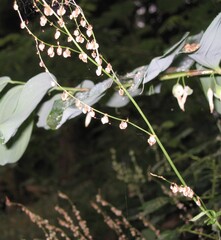
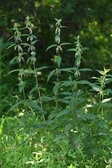
Common sorrel (Rumex acetosa L., 1753) is an herbaceous perennial in the Polygonaceae family, native to temperate Eurasia and northwestern Africa and widely naturalized in North America. A rosette of arrow-shaped leaves precedes an upright flowering stem with small male or female flowers on separate plants, followed by brown achenes enclosed by persistent valves.
Read moreCommon sorrel, Sorrel, Meadow sorrel, Green sorrel, Sour dock and Garden sorrel
Allow a few hours of direct sun per day, preferably morning or evening.
Full sun to light partial shade
© photo
(c) Patrick Hacker, some rights reserved (CC BY), uploaded by Patrick Hacker · cc-by
Munster Mad · cc0
zebedeugalinha · cc-by
(c) zebedeugalinha, some rights reserved (CC BY) · cc-by
no rights reserved · cc0
Global distribution
POWO records the native range of Rumex acetosa as temperate Eurasia and northwestern Africa. The species has been widely introduced elsewhere, including North America and Greenland, where it has naturalized in meadows and along paths.
- Native3
- Introduced3
- Metropolitan France
- Temperate Europe
- Northwestern Africa
- United States
- Canada
- Greenland
Hexagons: regions where the plant occurs. Green dots: native range.1
Identity
Common sorrel (Rumex acetosa L., 1753), also called Meadow sorrel or Garden sorrel, is an herbaceous perennial in the genus Rumex, family Polygonaceae. Its accepted name in Plants of the World Online covers a species native to temperate Eurasia and northwestern Africa. 1 6
Latin writers used Rumex for the elongated, lance-shaped leaves of sorrels and docks. The epithet acetosa comes from acetum, meaning “vinegar.” Oxalic acid gives the foliage its sour flavor, a feature already noticed by the Romans. 7
Recognition
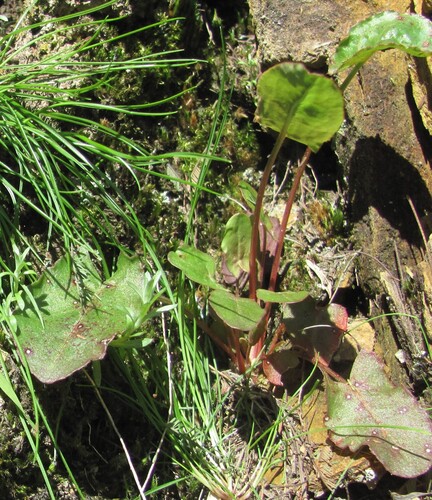
Arrow-shaped, or sagittate, basal leaves form a rosette in Rumex acetosa. Their two basal lobes point backward along the leaf stalk. This backward direction, rather than the more forward-pointing lobes of Rumex acetosella (sheep’s sorrel), distinguishes the two more reliably than overall size. Basal leaves commonly measure 7–15 cm (3–6 in) before the flowering stem develops. 2 3
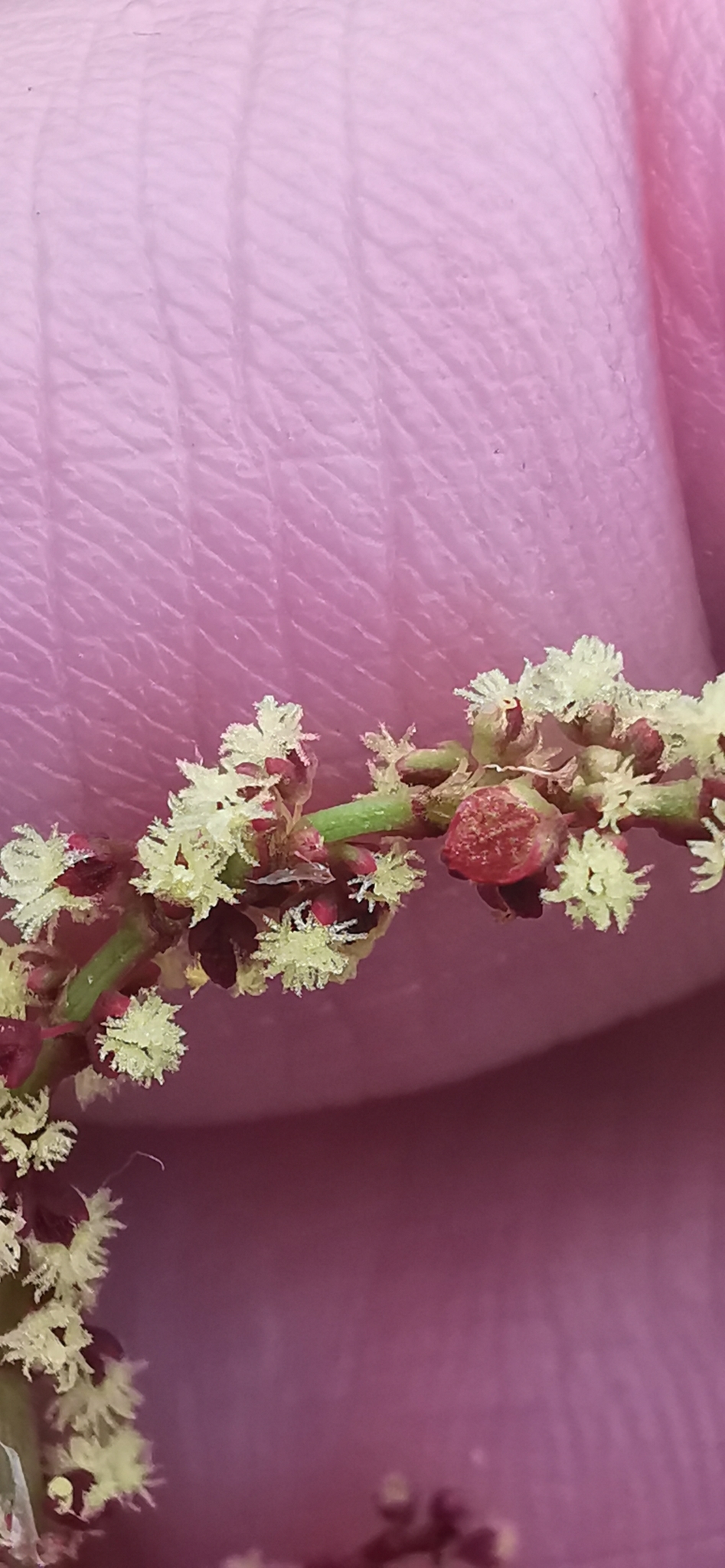
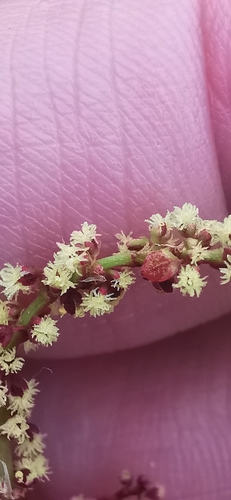
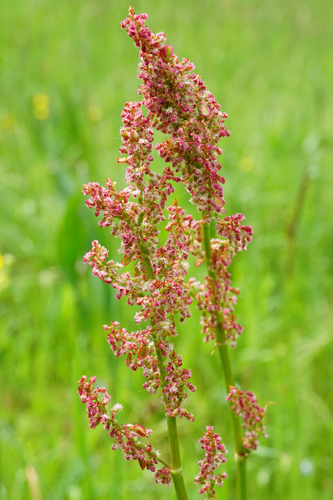
An upright, sparsely branched flowering stem reaches 50 cm–1 m (20–39 in), occasionally 1.2 m (4 ft) in rich, moist soil, and carries a narrow panicle. Small flowers turn from greenish to reddish as they age and grow in spaced whorls along the stem. 2 3
A nonfruiting clump may simply be male: Rumex acetosa is dioecious, with male and female flowers on separate plants. Failure to set fruit therefore does not necessarily indicate disease. 2
Useful taxonomy
Kew accepts Rumex acetosa L., published in 1753, within Polygonaceae and its subfamily Polygonoideae. 1
Older floras and herbarium collections may use these synonyms:
- Acetosa pratensis Mill., an older synonym;
- Lapathum acetosa (L.) Scop., another historical name;
- Rumex acidus Salisb., a name now considered illegitimate.
Recognized subspecies include subsp. acetosa, subsp. biformis and subsp. nebroides. Leaf shape and geographic range provide their main distinguishing features. 7
French records from the national natural heritage inventory list several vernacular names for this same species. The names refer to Common sorrel rather than to separate botanical taxa. 8
Habitat and range
Temperate Eurasia and northwestern Africa make up the native range recorded for Rumex acetosa by POWO. Introductions have since established naturalized populations elsewhere, particularly in North America and Greenland. 1 5
Damp meadows, pastures, streambanks and open woodland edges provide habitat for Common sorrel. It favors moist to wet soils, preferably acidic to neutral. 4 2
Across its native French range, regional floras record it from mountain meadows to lowland pathsides. Its regular presence in pasture can suggest moist, moderately acidic soil rather than strongly calcareous ground. 8
Soil pH for Rumex acetosa lies between 5 and 7. Its taproot tolerates frost down to about −20 °C (−4 °F); the recorded hardiness range is USDA zones 3–7.
Life cycle and reproduction
Wind carries pollen from male Common sorrel plants to female flowers without the involvement of pollinating insects. Flowering falls in May–August in the temperate Northern Hemisphere calendar described here, with timing dependent on climate. 2 3
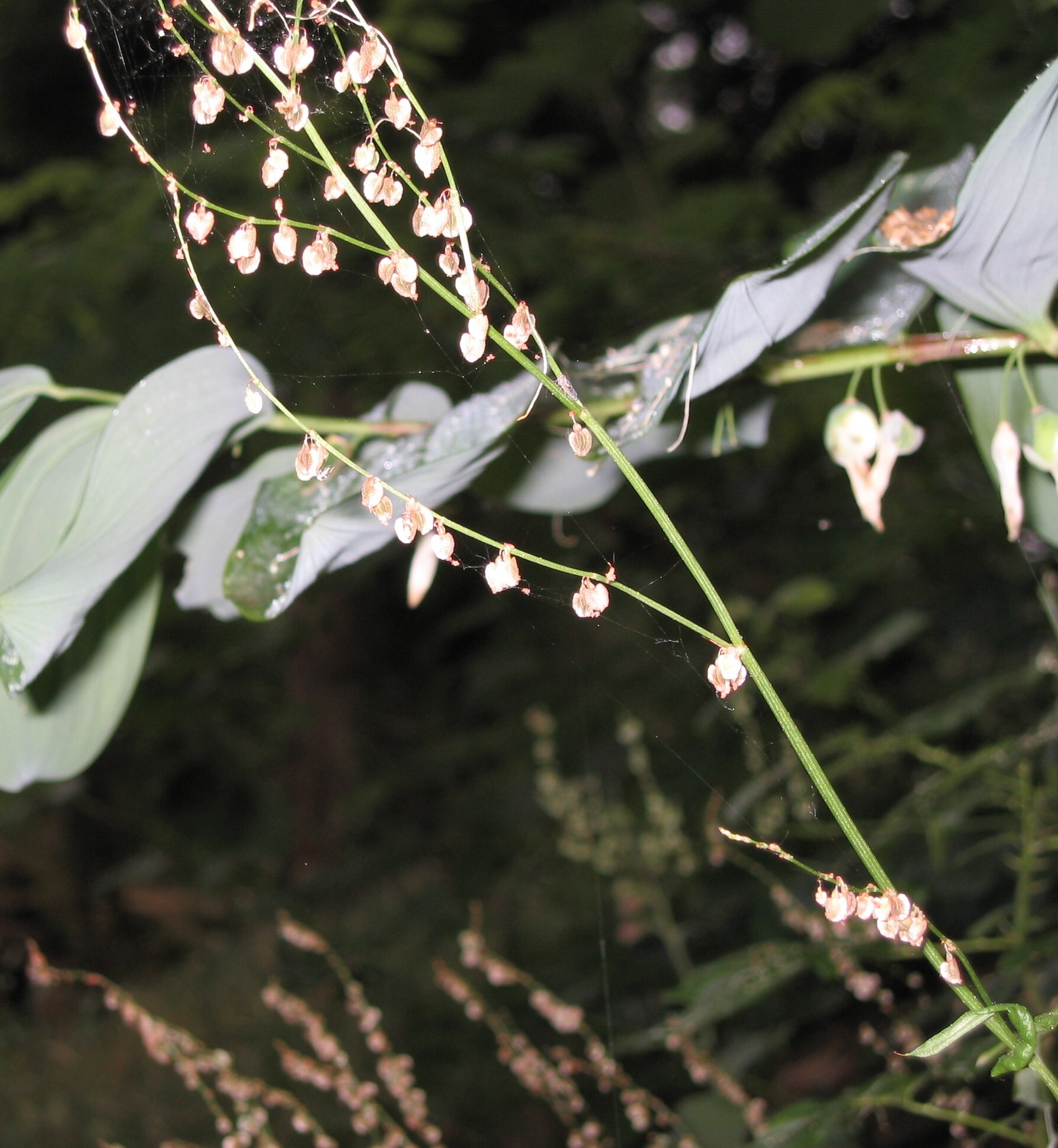
After fertilization, each female flower forms a small brown achene enclosed by persistent valves that help wind dispersal. Abundant self-seeding and a deep taproot make established plants difficult to remove. 2
Spring-sown plants can yield their first leaves after eight weeks. Dividing established clumps in spring is a faster way to propagate a favored selection. 4
Caterpillars of the Small Copper (Lycaena phlaeas), a widespread butterfly of European grasslands, also feed on Rumex acetosa leaves. 9
Uses and risks
Young Common sorrel leaves have a lemon-like tartness and are eaten raw in salads or cooked in soups and sauces, particularly alongside oily fish. Culinary use is the species’ main role. 4 3
Less acidic foliage distinguishes 'De Belleville', a selection chosen for more regular culinary use than the wild plant. 2
Traditional herbal accounts describe the species as astringent, diuretic and mildly laxative. Its vitamin C content also underlies historical use against fever and scurvy. 4
Older leaves contain more oxalic acid, the main concern with consumption. Excessive intake may aggravate kidney stones, gout or rheumatic conditions; cooking reduces some of the oxalic acid. The cited account does not identify documented acute toxicity for humans, cats or dogs, distinguishing Common sorrel from poisonous vegetable-garden plants. 4
Varieties, look-alikes and related plants
Only a few stable horticultural selections of Rumex acetosa are recognized. The best known is 'De Belleville', valued for milder acidity in cooking rather than ornamental qualities. 2
Several plants can be mistaken for Common sorrel:
- Rumex acetosella, sheep’s sorrel, is smaller, with basal lobes pointing more forward than backward and a more sharply acidic taste;
- Rumex scutatus, French sorrel, has shield-shaped, less acidic leaves and is sometimes cultivated instead of Common sorrel;
- Oxalis species are also called sorrels, although they belong to a different family, Oxalidaceae.
Backward-pointing basal lobes remain the most reliable identifying feature of Rumex acetosa. They are more consistent than plant size or the intensity of its sour taste. 2
Main sources
- Plants of the World Online / Kew, Rumex acetosa L.
- Royal Horticultural Society, Rumex acetosa - common sorrel
- Missouri Botanical Garden Plant Finder, Rumex acetosa
- Plants For A Future, Rumex acetosa
- USDA PLANTS Database, Rumex acetosa plant profile
- Integrated Taxonomic Information System, Rumex acetosa L.
- Tela Botanica, eFlore BDTFX: Rumex acetosa L. (official nomenclatural record 58578)
- INPN / MNHN–OFB, Rumex acetosa L., 1753, CD_NOM 119418 — original notice, Internet Archive 2023-03-22
- Butterfly Conservation, Small Copper (Lycaena phlaeas) foodplants
Frequently asked questions
Is Common sorrel poisonous?
No acute toxicity is documented for humans, cats or dogs. The known concern is oxalic acid, more concentrated in older leaves, which warrants caution with kidney stones or gout.
Can you eat Common sorrel raw?
Yes. Young leaves are eaten raw in salads or cooked in soups and sauces. Oxalic acid gives them a tart, lemon-like flavor.
How do you tell Common sorrel from sheep’s sorrel?
The most reliable feature is the direction of the basal leaf lobes. They point backward in Rumex acetosa and more forward in Rumex acetosella, which is also smaller.
Why do sorrel leaves taste sour?
The sour taste comes from oxalic acid, which is more concentrated in older leaves. Cooking reduces some of it, and the selection De Belleville was chosen for its milder acidity.
When should you harvest Common sorrel?
Harvest young leaves in spring and summer, before flowering stems develop and the foliage becomes narrower and more acidic.
Is Common sorrel the same as French sorrel?
No. Rumex scutatus, known as French sorrel, is a separate species with shield-shaped leaves. It is often less acidic and is sometimes grown instead of Rumex acetosa.
How can you keep sorrel from going to seed too soon?
Remove flowering stems as they appear and keep the soil moist in summer. This limits early bolting, which mainly affects plants in full sun and dry soil.
Similar plants

If you are unsure about a plant’s toxicity, ask a botanist or veterinarian for advice.