
Edo higan (Prunus itosakura, )


Prunus itosakura, also called Edo higan, is a deciduous tree in the Rosaceae family, native to Japan and the Korean Peninsula. It flowers early in spring before its leaves emerge and gave rise to most weeping cherry cultivars grown worldwide, including the hybrid Prunus × subhirtella.
Read moreEdo higan, Higan cherry and Weeping cherry
Place in full sun, with intense direct light all day long.
Full sun for dense flowering; light partial shade tolerated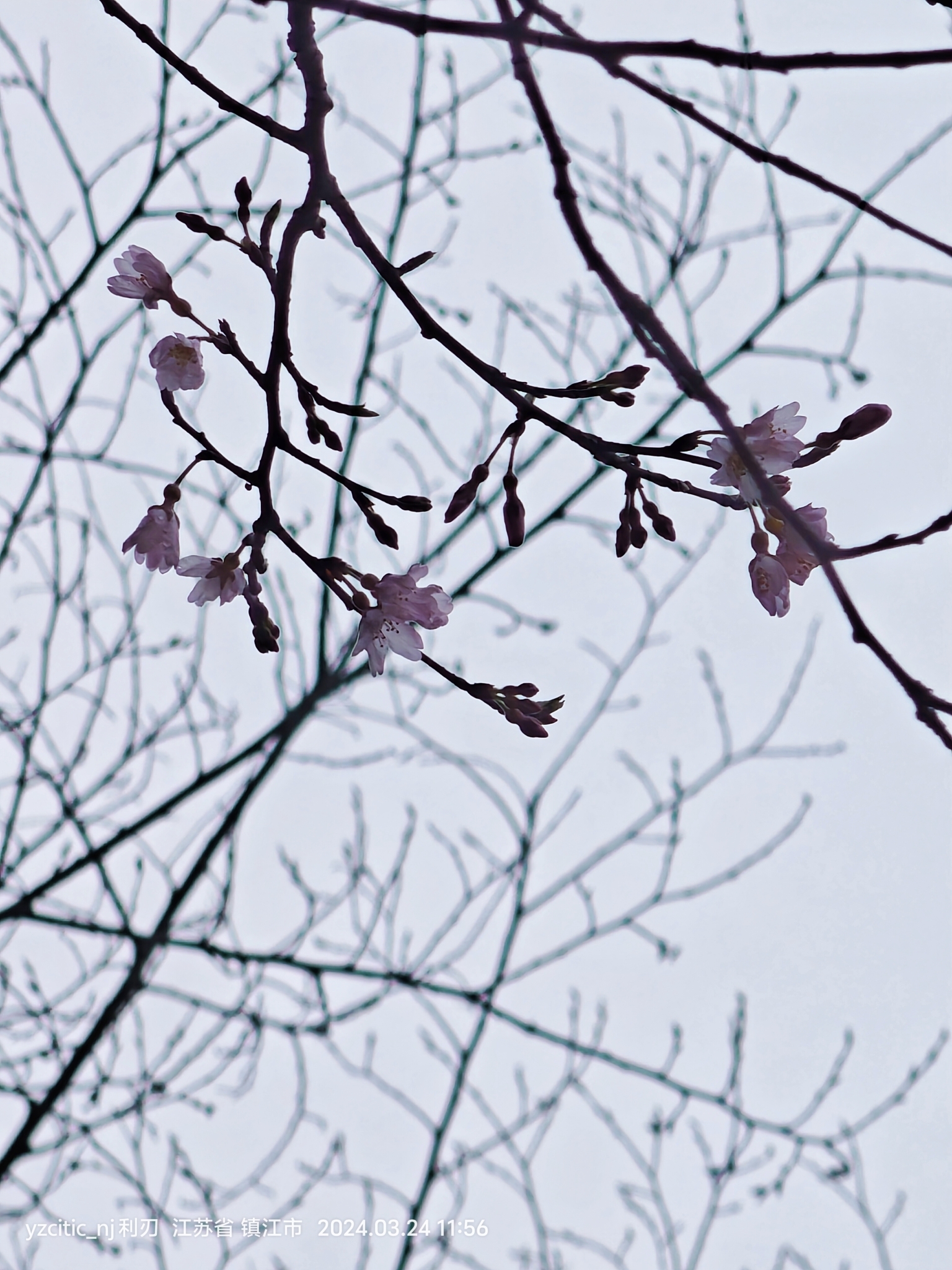


© photo
(c) 利刃, some rights reserved (CC BY-NC-ND), uploaded by 利刃 · cc-by-nc-nd
Wikimedia Commons · CC BY-SA or Public Domain
Wikipedia · CC BY-SA
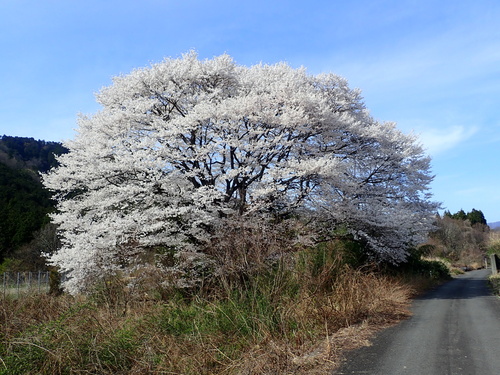
Global distribution
Prunus itosakura is native to central and southern Japan (Honshu, Shikoku and Kyushu) and the Korean Peninsula. It is widely cultivated elsewhere, notably in Europe and North America, where only its weeping and double-flowered cultivars are commonly planted.
Identity
Prunus itosakura (Siebold, 1830), also called Edo higan, is a deciduous tree in the Rosaceae family. Kew accepts this name for the wild species. Older horticultural works long placed it under Prunus subhirtella, a name now used chiefly for the hybrid with Prunus incisa. 1 2
Jindai-zakura in Yamanashi Prefecture is estimated at 1,800–2,000 years old, among the oldest cherry trees recorded worldwide. 8
Edo higan is also called itozakura (イトザクラ). Weeping forms are cultivars of this species. 6
Within Prunus, this tree belongs to the subgenus Cerasus. Edo higan is a relatively long-lived cherry. 7 6 9
Recognition
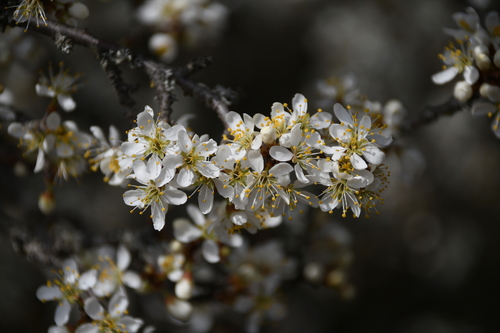
White to pale pink flowers with five petals open before the leaves. Fine hairs cover the young shoots. 6
Oval, toothed leaves measure 5–10 cm (2–4 in) long and emerge after flowering, never before it. In summer, the tree bears small, blackish, pea-sized fruits that are little sought for eating. 4
Tree shape varies greatly and creates the main identification trap. The wild species grows upright and can exceed 30 m (98 ft) in dense forest, whereas grafted weeping cultivars, the forms most often planted outside Japan, remain compact trees of 5–10 m (16–33 ft). Two trees labeled “Prunus itosakura” may therefore look quite different: they share a species, but not necessarily a silhouette. 3 4
Smooth, grayish bark on young trees becomes rougher and more visibly marked with horizontal lenticels over time. This change helps assess age, but cannot by itself separate Prunus itosakura from another ornamental Prunus, which often ages similarly. 4
Useful taxonomy
Accepted under Prunus itosakura Siebold, 1830, the species belongs to Rosaceae. Chloroplast genome analysis confirmed its closest relationship with Prunus subhirtella var. subhirtella, a Korean variety long treated as a neighboring taxon rather than a simple synonym. 1 7
Two derived hybrids need distinguishing from their parent species:
- Prunus × subhirtella (Miq.) Focke, a cross with Prunus incisa, which produced cultivars such as Autumnalis and Jugatsu-zakura;
- Prunus × yedoensis Matsum., a cross with Prunus speciosa, which produced the famous Yoshino cherry.
Trade labels often apply “itosakura” to Prunus × subhirtella and Prunus × yedoensis, although each has a binomial distinct from the parent species. The full scientific name remains the reliable reference; “weeping cherry” alone cannot establish identity. 1 2
Habitat and range
Central and southern Japan, including Honshu, Shikoku and Kyushu, together with the Korean Peninsula, form the native range. There the tree grows in mountain forests, woodland edges and along streams, often with other deciduous trees. 7 1
Beyond its native area, it is cultivated rather than naturalized. In Europe and North America it is planted as an ornamental, almost always as a weeping or double-flowered cultivar instead of the upright wild form. 3 4
Ancient solitary specimens near Japanese shrines and temples often receive protected-tree status because of their exceptional age. Jindai-zakura in Yamanashi Prefecture illustrates this: estimated at 1,800–2,000 years, it stands about 10 m (33 ft) tall, with props supporting its gnarled trunk against splitting under its own weight. 8
Life cycle and flowering
The FFPRI profile for its Kyushu arboretum records flowering in March, before the leaves develop. In the study published in 1990 at the Tama Forest Science Garden, the Edo higan tree observed flowered an average of three days before the Yoshino reference tree (one to four days, depending on the year). Its flowering lasted fourteen days on average, with an observed range of eleven to eighteen days. 6 10
Once flowering ends, leaves develop and small blackish fruits follow in summer. Growth remains slow to moderate, but each decade strengthens the trunk, helping explain the adult tree's resistance to snow and wind. 4
Propagation depends on the fidelity required. Seed of the wild species germinates slowly and irregularly. Weeping and double-flowered cultivars do not breed true from seed, so they are consistently grafted onto vigorous cherry rootstocks. 3
Uses and risks
Spring ornament is the principal role: a specimen tree, a park avenue or a planting near a religious building in Japan. The small fruits have little flesh and are not grown as a food crop. 3
Leaves, stems and stones contain cyanogenic glycosides, a familiar toxic principle in Prunus. Risk rises markedly when leaves wilt: enzymatic hydrolysis then releases more active compound than in a fresh leaf. 5 4
Dogs, cats and horses may develop brick-red mucous membranes, dilated pupils, breathing difficulties, panting and, in severe cases, shock after ingestion. Wilted or fallen material beneath the tree therefore calls for particular care, more than green leaves still on the branches. 5
Established trees develop strong wood that resists breakage under snow or wind. Young plants, with flexible stems but poorly anchored roots, and weeping forms, with more fragile slender shoots, remain most exposed to severe weather. 4
Cultivars and look-alikes
Shidare-zakura (Pendula), the historic reference for the weeping habit, arose through a natural mutation about a thousand years ago. Pendula Rosea and Pendula Plena Rosea, both listed by RHS under Prunus itosakura, carry the same drooping outline with single or double pink flowers. 2
Hybrids sold under similar names cause the most frequent confusion. Autumnalis Rosea and Jugatsu-zakura, often sold as autumn or winter cherries, actually belong to Prunus × subhirtella rather than the wild species itself. Their shifted flowering season comes from that other parentage, not a characteristic specific to itosakura. 3
Yoshino cherry (Prunus × yedoensis) presents a similar trap. It shares the early, leafless flowering of Prunus itosakura, but its other parent, Prunus speciosa, gives it faster growth and a broader crown. 7 2
Before buying, check the full scientific name, the hybrid symbol “×” where applicable, and the expected mature shape. A young weeping plant often remains upright in its first years: its branches may not yet have begun bending toward the ground, so appearance alone cannot confirm whether the label is correct. 3
Main sources
- Plants of the World Online / Kew, Prunus itosakura Siebold
- Royal Horticultural Society, Prunus itosakura
- Missouri Botanical Garden Plant Finder, Prunus subhirtella (Higan cherry)
- NC State Extension Gardener Plant Toolbox, Prunus x subhirtella
- ASPCA, Cherry (Prunus spp.) toxicity entry
- Forestry and Forest Products Research Institute, Kyushu Research Center — Edo higan (Cerasus itosakura)
- Complete chloroplast genome of Prunus itosakura (Rosaceae), PMC
- Yamanashi Official Travel Guide, Jindai-zakura
- USDA Agricultural Research Service, GRIN Taxonomy — Prunus itosakura Siebold
- Yukio Ishii (1990), Studies on the Flowering Duration of Various Japanese Cherry Species Planted in the Tama Forest Science Garden, FFPRI Bulletin 357:95–152
Frequently asked questions
Is Prunus itosakura the same as Prunus subhirtella?
The names concern a closely related lineage. Current taxonomic catalogs accept Prunus itosakura for the wild species, while Prunus × subhirtella is the hybrid with Prunus incisa that produced several cultivars sold under similar names.
Why does this cherry flower before its leaves appear?
Flower buds form in the previous year and open when spring temperatures allow, before leaf buds unfold. Hybrids such as Yoshino cherry inherit this trait, which creates the cloudlike display of early-flowering sakura.
Is Prunus itosakura toxic to dogs and cats?
Yes. Leaves, stems and stones contain cyanogenic glycosides, especially concentrated in wilted leaves. Ingestion can cause breathing difficulties, brick-red mucous membranes and dilated pupils in dogs, cats and horses.
How old can these cherries become?
Some wild trees exceed a thousand years. Jindai-zakura in Yamanashi Prefecture is estimated at 1,800–2,000 years old, making it one of the oldest known cherry trees in the world.
Is this cherry the Yoshino sakura?
No. Yoshino cherry (Prunus × yedoensis) is a hybrid of Prunus itosakura and Prunus speciosa. It grows faster and flowers just as early, but does not replace the parent species in a precise identification.
Can this cherry grow outside Japan?
Yes, in roughly USDA hardiness zones 4–8. It tolerates cold winters and hot summers, but needs drained soil and enough room to develop its upright or weeping crown.
Why do weeping cultivars have so many different names?
The weeping habit arose through a natural mutation about a thousand years ago, then was propagated by grafting under different names according to petal color and number. This accounts for selections such as Pendula, Pendula Rosea and Pendula Plena Rosea.
Similar plants
If you are unsure about a plant’s toxicity, ask a botanist or veterinarian for advice.