
Sessile oak (Quercus petraea, )
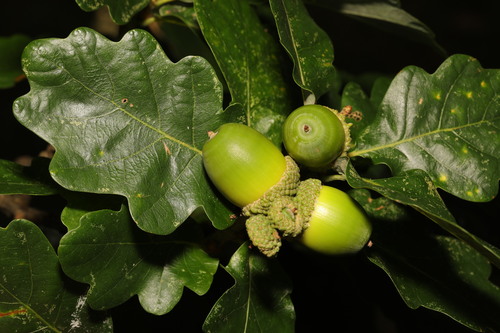
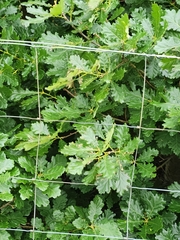
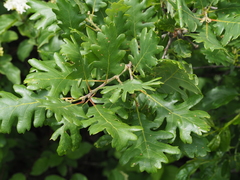
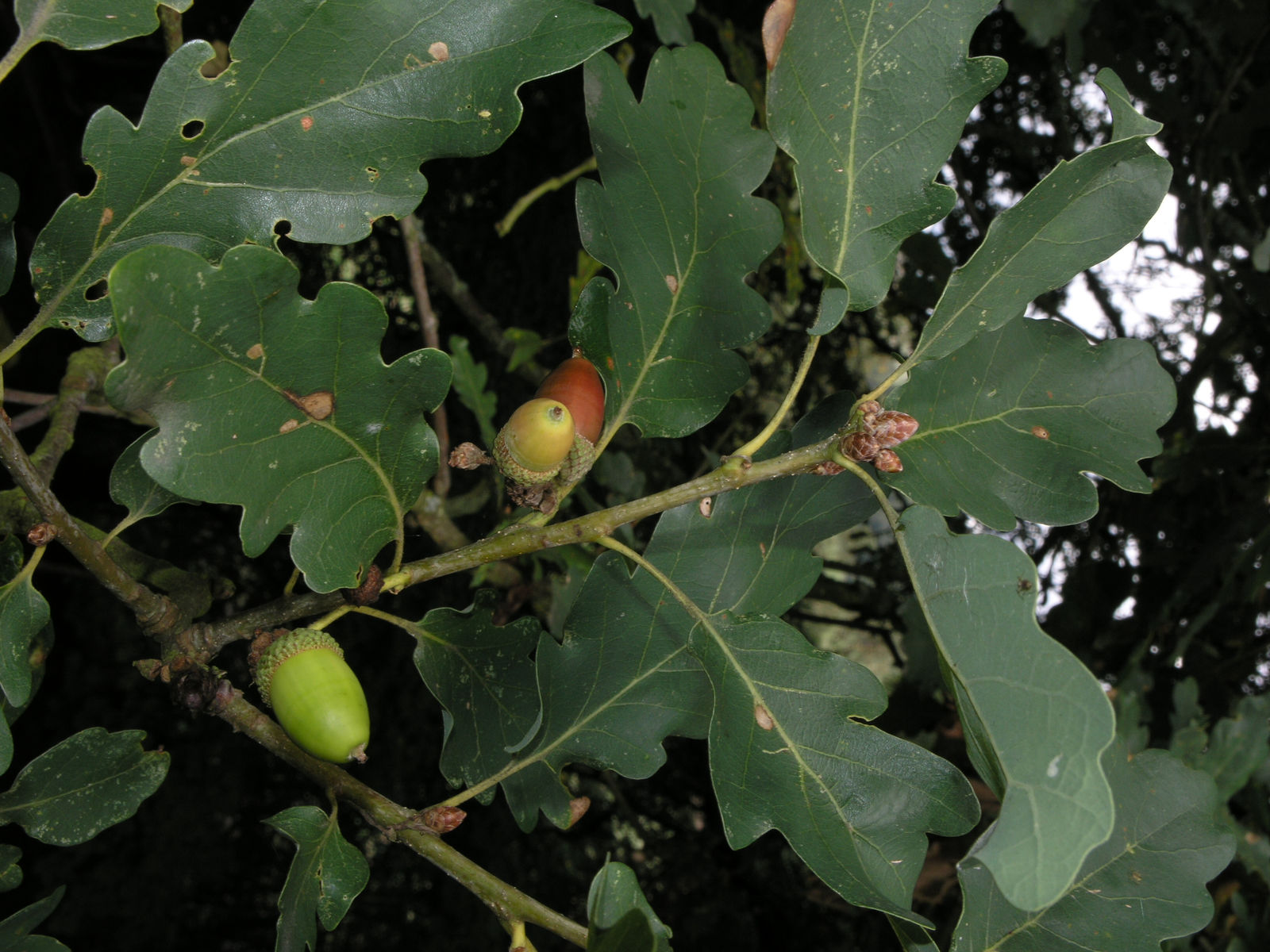
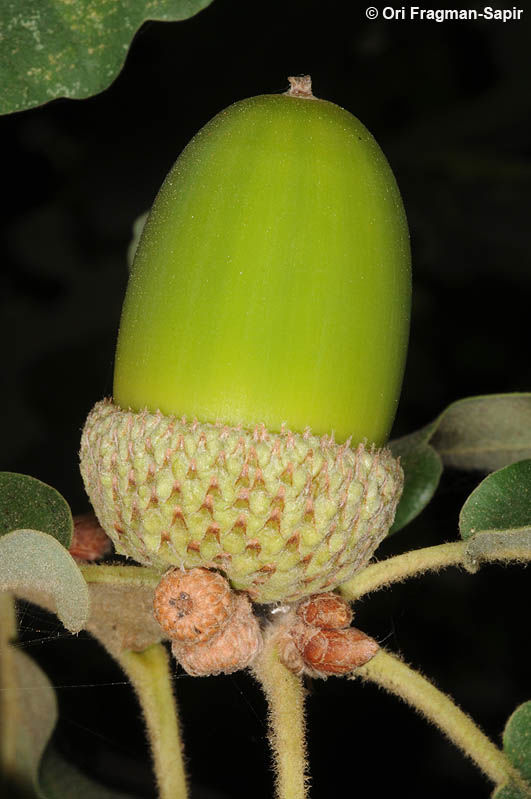
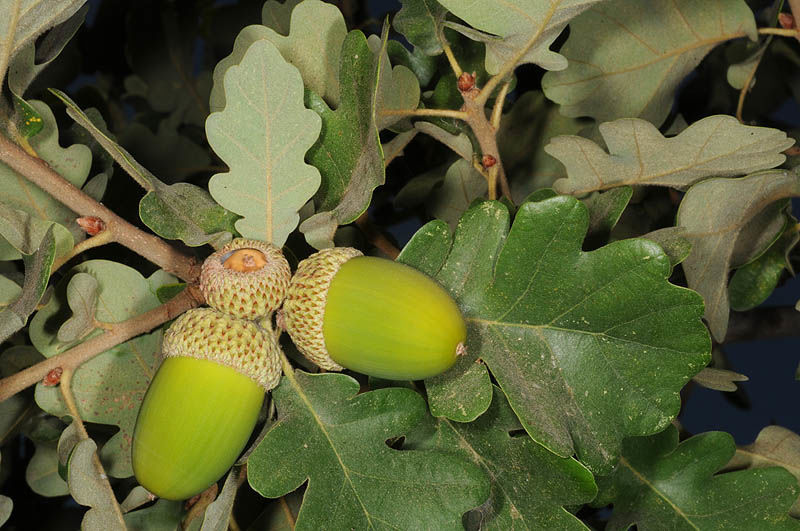
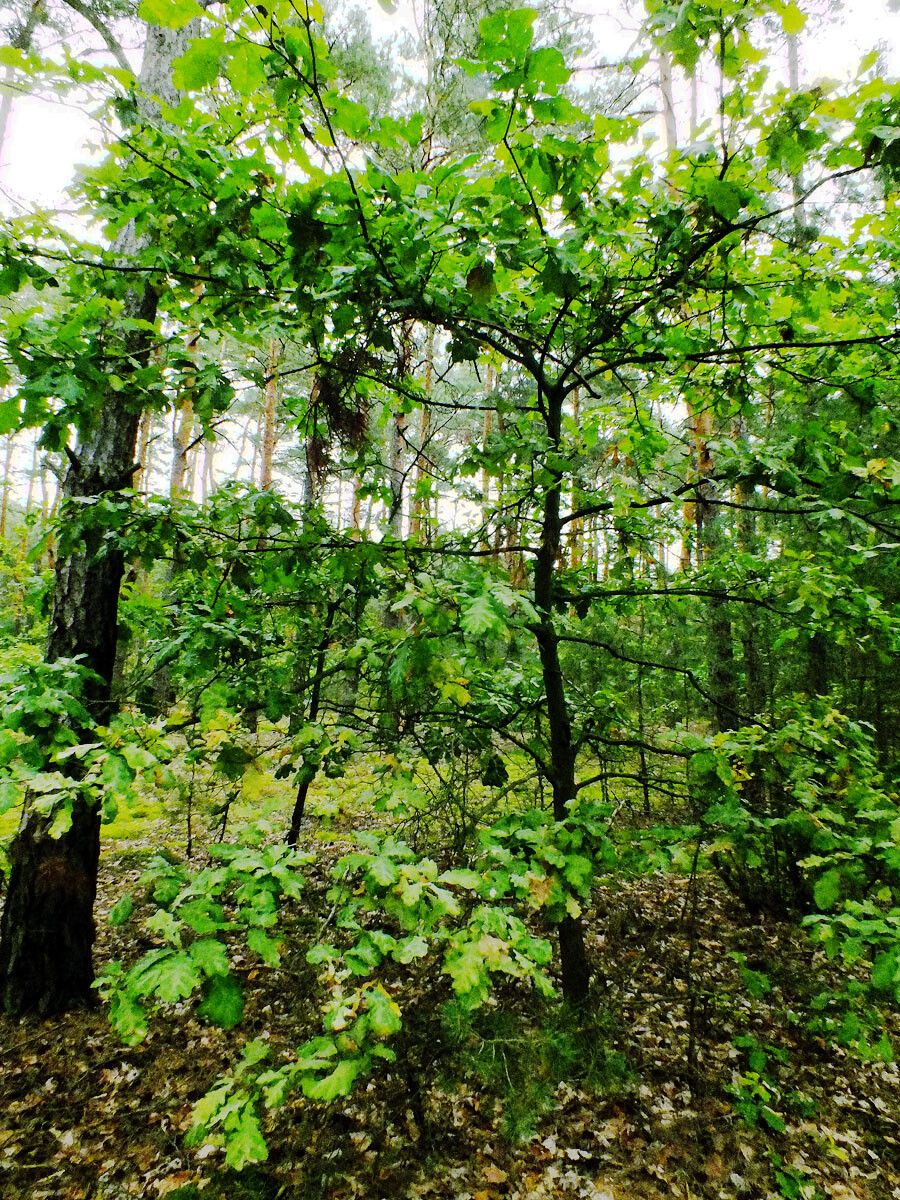
Sessile oak (Quercus petraea (Matt.) Liebl., 1784) is a large deciduous tree in the Fagaceae family, distributed from Europe to northern Iran and especially abundant in metropolitan France. Its leaves have distinct stalks, while its acorns sit directly against the twig without a stalk.
Read moreSessile oak, Durmast oak, Welsh oak, Cornish oak and Irish oak



© photo
no rights reserved, uploaded by Stephen James McWilliam · cc0
Jo Roberts · cc0
iNaturalist User · cc0
Taken Aug 15, 1994 by Photoflora - Jean-Luc TASSET (©)
Taken Aug 15, 2002 by Photoflora - Jean-Luc TASSET (©)
Taken Sep 15, 2018 by Photoflora - Jean-Luc TASSET (©)
Taken Apr 15, 2010 by Photoflora - Benoit BOCK (©)
Taken Jan 1, 1970 by Photoflora - L'Abbé COSTE (©)
© copyright of the Board of Trustees of the Royal Botanic Gardens, Kew.




Global distribution
POWO/WCVP gives a native range from Europe to northern Iran. Sessile oak is particularly abundant in metropolitan France, where it occupies the largest forest area of any tree species. Its northern limit extends just beyond 60° latitude in Norway.
- Native10
- Metropolitan France
- United Kingdom
- Germany
- Spain
- Italy
- Sicily
- Norway
- Balkans
- Turkey
- Iran
Hexagons: regions where the plant occurs. Green dots: native range.1
Identity
Sessile oak (Quercus petraea (Matt.) Liebl., 1784), also called Durmast oak, is an accepted species in the genus Quercus, family Fagaceae, according to POWO and IPNI. Its name is linked to Franz Kaspar Lieblein’s 1784 publication, and its native range extends from Europe to northern Iran. 1 2
In metropolitan France, sessile oak is native. It occupies a greater forest area there than any other tree species, exceeding English oak, with which it often shares the same woodlands. 1 7
English names also include Welsh oak, Cornish oak and Irish oak, while Quercus petraea remains the stable botanical reference. The name sessile oak highlights its most reliable identifying feature: acorns without stalks, seated directly against the twig, unlike those of English oak. 3 4
Recognition
Forest-grown Quercus petraea is a large deciduous tree, often 25–40 m (82–131 ft) tall, with a broad, regular crown and evenly distributed branches. Its gray bark remains less deeply fissured than English oak bark, even on old trees. 4 5
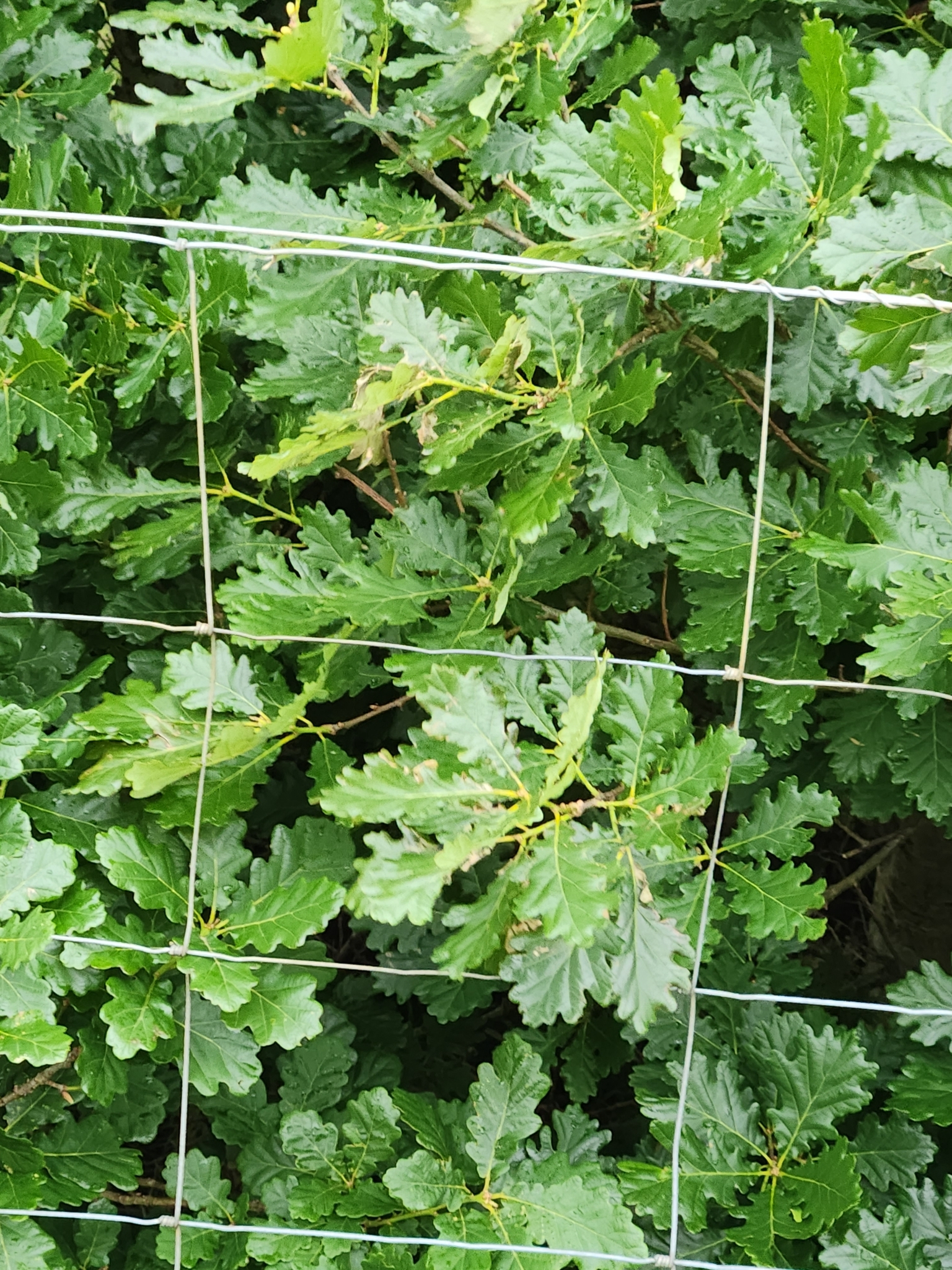
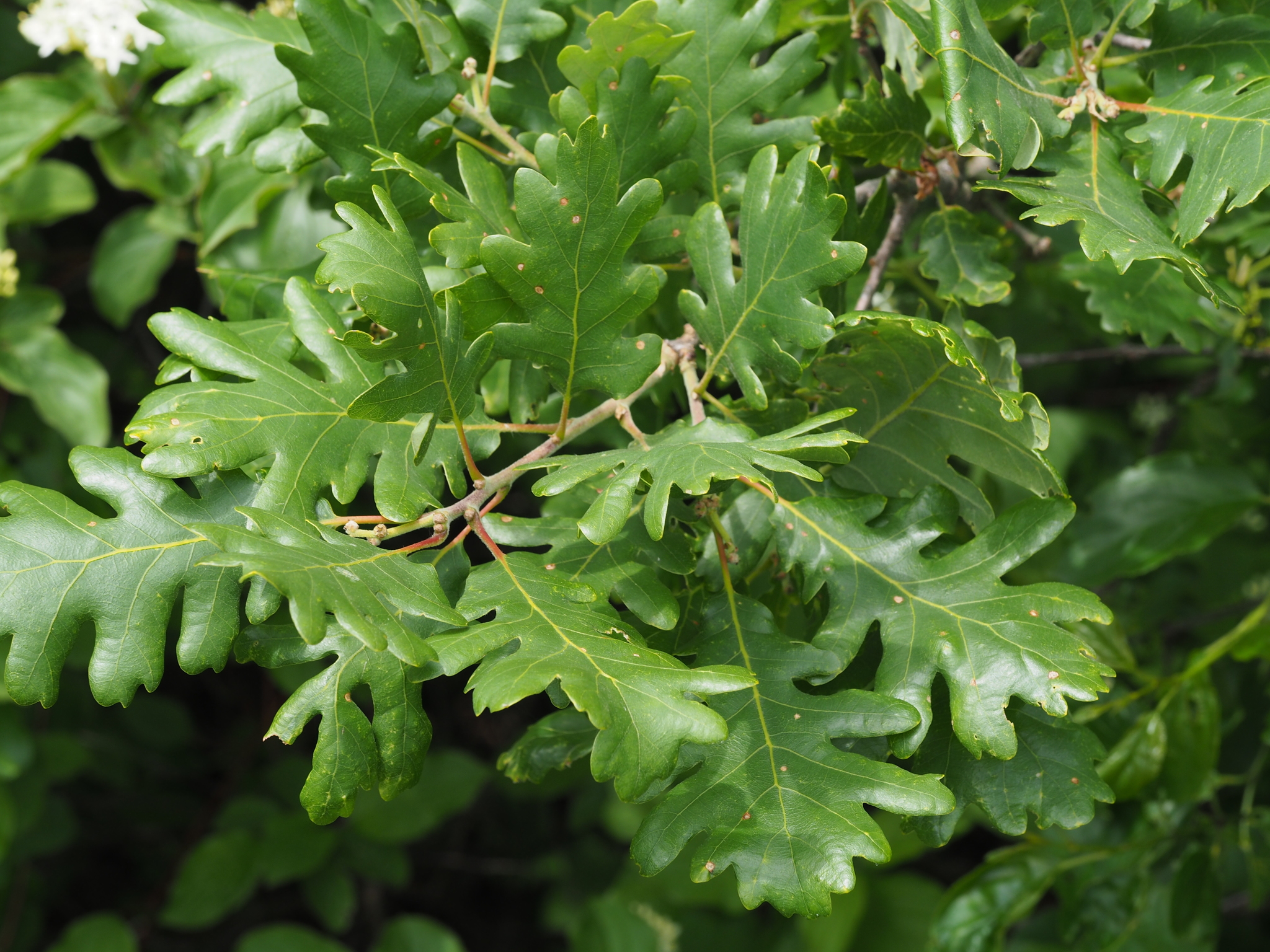
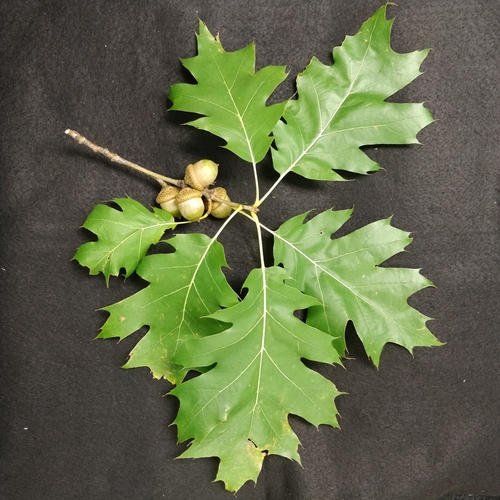
Alternate, hairless leaves have distinct stalks, a simple wedge-shaped base and regular, relatively shallow lobes. Their oval outline, broadest in the middle, contrasts with the more triangular English oak leaf clustered toward twig tips. 4
Long, drooping yellowish male catkins arise at the base of the current year’s shoots. Tiny female flowers develop into oval stalkless acorns, grouped in twos to fives directly against the twig. The absence of an acorn stalk is more reliable than leaf shape for distinguishing these two related species. 3 4
Taxonomy and names
Heinrich Gottfried von Mattuschka first described sessile oak in 1777 as a variety of English oak, Quercus robur var. petraea. Franz Kaspar Lieblein raised it to species rank in 1784, and POWO and IPNI still recognize that accepted name. 1 2
A substantial botanical synonymy includes regional subspecies described around the Mediterranean, in the Balkans and Anatolia, and eastward to Iran. Tela Botanica and INPN confirm its placement in Fagaceae and the use of Quercus petraea as a stable reference for the French flora. 8 7
Hybridization is common within Quercus. Crosses between Quercus petraea and Quercus robur produce Quercus ×rosacea Bechst., a fertile hybrid that complicates field identification where both parents coexist, as they often do in French forests. 7
Habitat and range
Western Europe to northern Iran defines the species’ native range, with a northern limit just beyond 60° latitude in Norway and a southern limit in central Spain and the Balkans. France holds Europe’s largest areas of sessile oak woodland. 1 7
Hill country and the lower mountain belt support sessile oak up to about 1600 m (5250 ft), depending on the mountain range. It favors free-draining, sandy to loamy, mildly acidic soils, unlike English oak, which is more closely associated with moist clay soils in valley bottoms. 5 4
Soil conditions explain their local distribution: sessile oak dominates well-drained hillsides, plateaus, slopes and rocky outcrops, while English oak more often occupies alluvial plains. The two nevertheless hybridize extensively where their habitats meet. 5
Life cycle, ecology and cultivation
Flowering coincides with spring leaf emergence. Acorns ripen in fall, feeding wildlife from wild boar to wood mice before germinating on the ground with the first rains. Trees begin bearing at about 60 years, depending on the stand, a slow pace that delays natural woodland renewal. 3 4
Established sessile oak tolerates summer drought better than English oak, an advantage documented in French ecological studies and cited as a source of resilience during drier summers. Depending on the site, it withstands temperature extremes from −25 to 35 °C (−13 to 95 °F), corresponding to USDA zones 4–8. Young trees also tolerate partial shade better, allowing them to persist beneath woodland cover before reaching the canopy. 5
Space is the first consideration when planting in a garden or park. A mature tree greatly exceeds the scale of an ordinary garden, with a crown 8–25 m (26–82 ft) across, deep roots, regular acorn fall and shade extending onto neighboring plots. The species is propagated from fresh acorns; the columnar cultivar Columna is propagated by grafting. 4 3
Uses, edibility and risks
Sessile oak timber is almost indistinguishable from English oak timber, and both are sold commercially under the general name oak. Dense high-forest cultivation produces narrow growth rings and timber valued for cabinetmaking and barrel staves, helping explain the economic importance of French lowland forests. 5
During historical food shortages, acorns supplied food after prolonged leaching to remove most bitter tannins. Cooked pulp could be eaten or dried into flour; roasted acorns also served as a coffee substitute. Raw acorns remain unsuitable as an everyday food. 5
Animals face the principal poisoning risk. The ASPCA classifies oak as toxic to horses, while North American horticultural profiles describe low-severity toxicity from tannins in acorns and young leaves. Heavy intake of acorns or young shoots can cause digestive disturbances and progress to kidney damage in horses. 6 4
Heavy acorn crops therefore call for caution around horses and ruminants. Dogs are also exposed, and children should not treat raw acorns as freely edible. No solid evidence, however, places cats among the species documented as sensitive in these sources. 6
Cultivars and look-alikes
North American nurseries chiefly list Columna, a columnar form propagated by grafting and suited to narrower spaces than a typical forest tree. Other horticultural names circulate, including Mespilifolia for narrow foliage, but their status varies by supplier. 4
English oak, Quercus robur, is the most frequent and useful comparison. Both often coexist in French forests and hybridize to form Quercus ×rosacea, sometimes blurring the identifying features of an individual tree. 7
Several characters together provide the best identification: sessile oak has much longer leaf stalks, stalkless acorns, oval leaves and a more regular crown than the more irregularly branched English oak. Relying on that combination is more useful than choosing a single feature. 3 4
Main sources
- Plants of the World Online / Kew, Quercus petraea (Matt.) Liebl.
- International Plant Names Index, Quercus petraea (Matt.) Liebl.
- Royal Horticultural Society, Quercus petraea - sessile oak
- NC State Extension Gardener Plant Toolbox, Quercus petraea
- Plants For A Future, Quercus petraea
- ASPCA, Oak toxicity entry
- INPN/MNHN, Quercus petraea species profile
- Tela Botanica, eFlore BDTFX: Quercus petraea, nomenclatural record
Frequently asked questions
How can I identify sessile oak?
The most reliable clue is the acorn, which sits directly against the twig without a visible stalk. Oval leaves with distinct stalks support identification when fruits are unavailable.
What is the difference between sessile oak and English oak?
Sessile oak has stalkless acorns and long-stalked leaves. English oak has acorns on long stalks and almost stalkless leaves, often with small ear-like lobes at the base.
Is sessile oak native to France?
Yes. The taxonomic sources used place Quercus petraea within the native European flora, and the species forms the largest forest areas in metropolitan France.
Does sessile oak tolerate drought?
Better than English oak. It is described as adapted to moderately dry soils and tolerates summer drought relatively well, although young plantings remain vulnerable to prolonged dry periods.
Are sessile oak acorns edible?
After prolonged tannin leaching, acorn flour was historically used as a substitute food, and roasted acorns as a coffee substitute. Raw acorns remain bitter and are not recommended as an everyday food.
Is sessile oak used for barrels?
Yes. When grown in dense high forest, it produces fine-grained timber prized for barrel staves and cabinetmaking, often sold under the same general oak name as English oak.
Similar plants
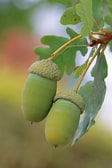
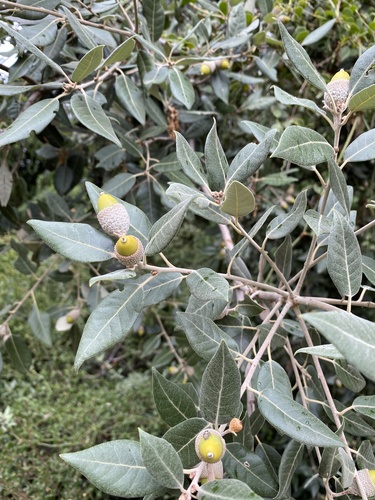
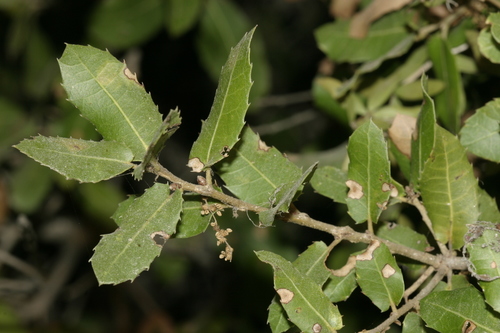
If you are unsure about a plant’s toxicity, ask a botanist or veterinarian for advice.