
Dwarf elder (Sambucus ebulus, )
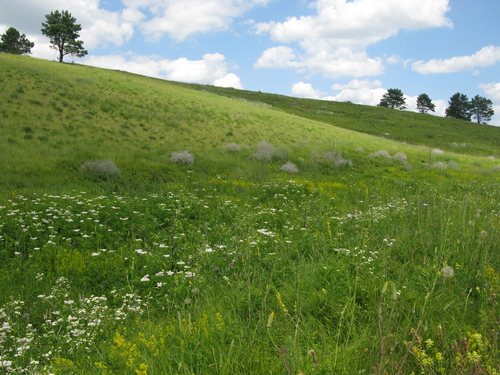
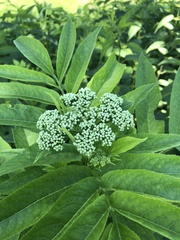
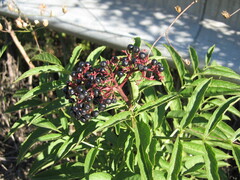
Dwarf elder (Sambucus ebulus L., 1753), also called danewort, is an herbaceous perennial in the genus Sambucus, native to Europe, the Mediterranean and northwestern Africa east to southern Turkmenistan. Unlike woody European elderberry, it dies back completely each winter and spreads vigorously through waste ground and roadsides by creeping rhizomes.
Read moreDwarf elder, Danewort, Dane weed, Danesblood, Walewort and Dwarf elderberry


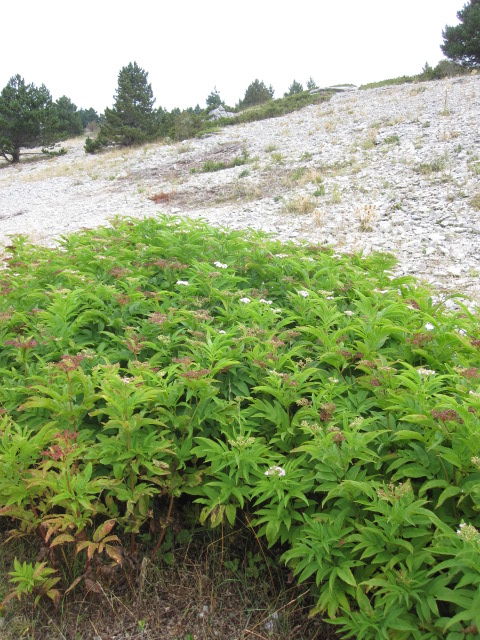
© photo
Igor Balashov · cc-by
Felix Seebauer · cc-by
zebedeugalinha · cc-by
Taken Jul 1, 2017 by María Pilar Martín (cc-by-sa)
Taken Sep 21, 2014 by Tela Botanica − gharry (cc-by-sa)
Taken Jun 10, 2021 by Emmanuel Debraize (cc-by-sa)
Taken Oct 8, 2019 by curritodelacroix (cc-by-sa)
Taken Aug 25, 2020 by Sylvain Piry (cc-by-sa)
© copyright of the Board of Trustees of the Royal Botanic Gardens, Kew.


Global distribution
Sambucus ebulus is native to Europe except the far north, the Mediterranean and northwestern Africa, east to southern Turkmenistan. It is also a well-established archaeophyte in the United Kingdom, introduced in ancient times, and a more recent introduction to North America.
- Native4
- Introduced3
- Metropolitan France
- Europe
- Mediterranean and northwestern Africa
- Southwest Asia to Turkmenistan
- United Kingdom
- United States
- Quebec
Hexagons: regions where the plant occurs. Green dots: native range.1
Identity
Dwarf elder (Sambucus ebulus L., 1753), also known as danewort, disappears completely each winter and returns from a creeping rhizome each spring. Unlike European elderberry, it never forms a woody framework. Plants of the World Online places this herbaceous Sambucus perennial in Viburnaceae, native from Europe through the Mediterranean and northwestern Africa to southern Turkmenistan. 1 3
Growth habit is the most reliable way to distinguish the two elders, more useful than the berry color often mentioned first. European elderberry (Sambucus nigra) develops a woody trunk that survives winter. Dwarf elder instead starts again from ground level every year, with its persistent structures hidden beneath the soil. 5 2
Recognition
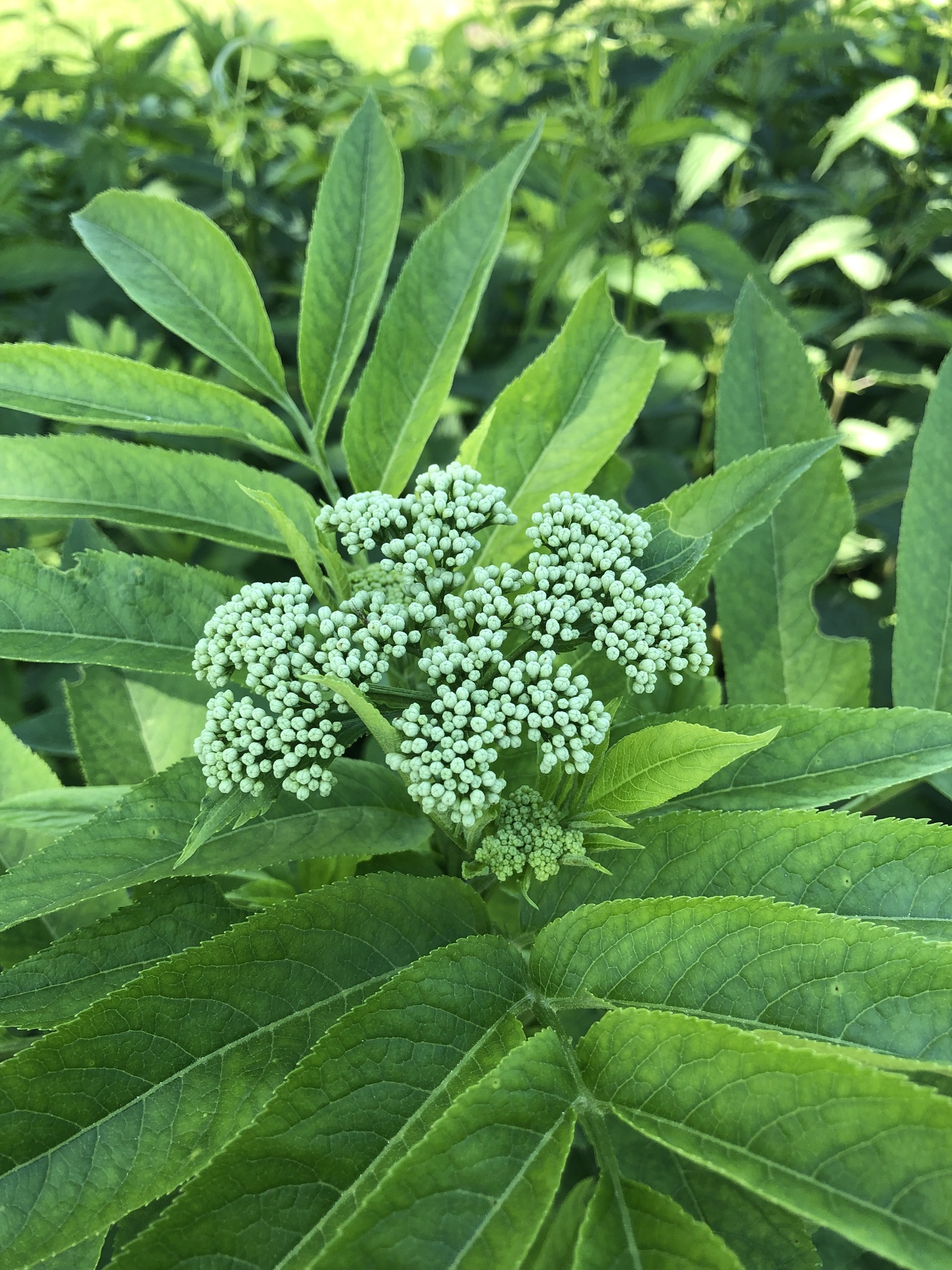
Dense colonies of angular, often purple-tinged stems characterize Sambucus ebulus. They commonly reach 60 cm–1.5 m (2–5 ft), rising to 2 m (6.5 ft) in rich, moist soil. Each unbranched stem emerges from a creeping rhizome, a direct contrast with the lasting woody framework of European elderberry. 2 5
Pinnate leaves have 5–9 toothed leaflets and release a fetid smell when crushed, sufficiently distinctive to inspire several European folk names. Large, persistent leaflike stipules occur at the petiole bases. This less obvious detail is absent or reduced in European elderberry and provides another useful feature to inspect. 6 2
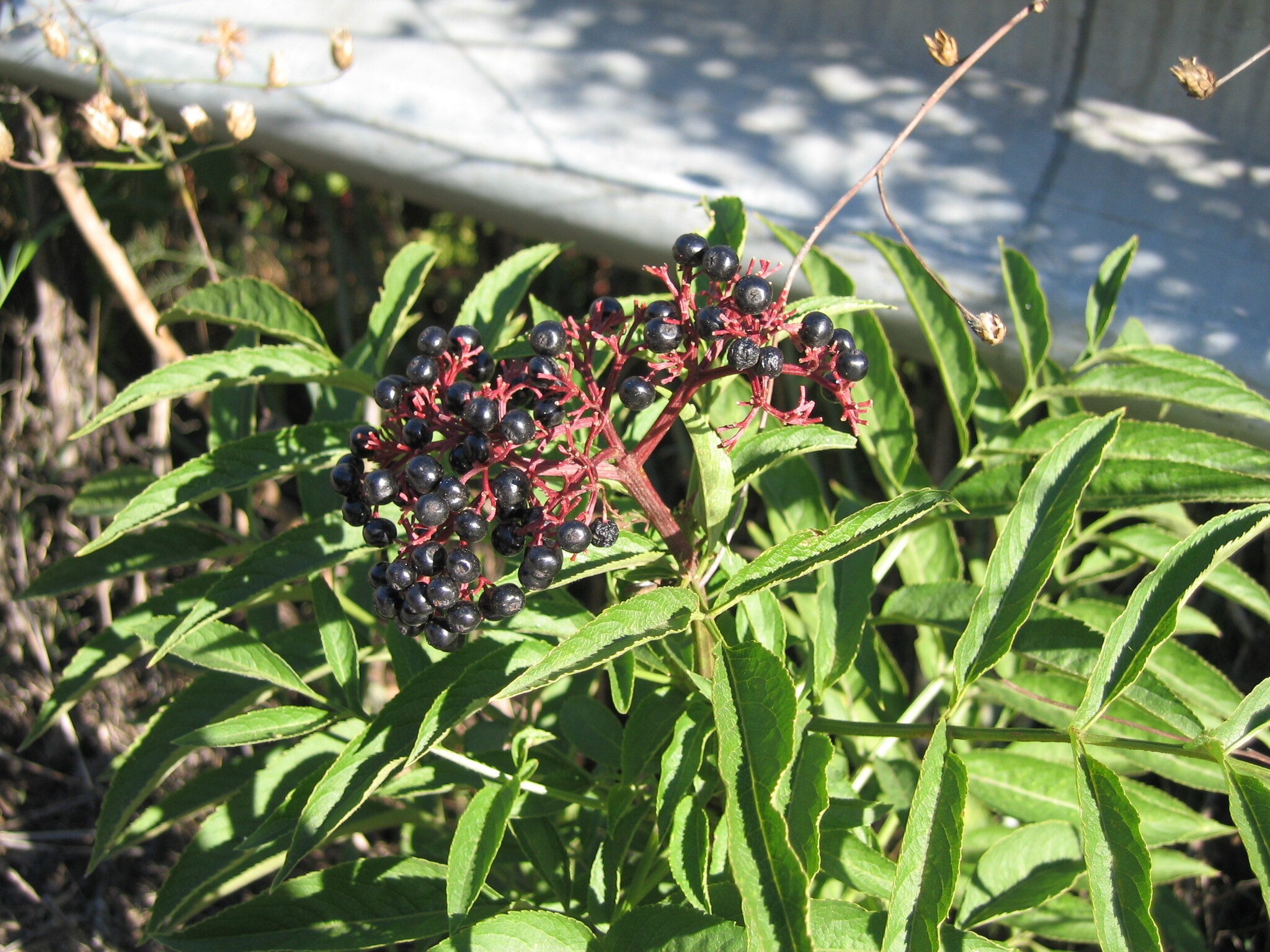
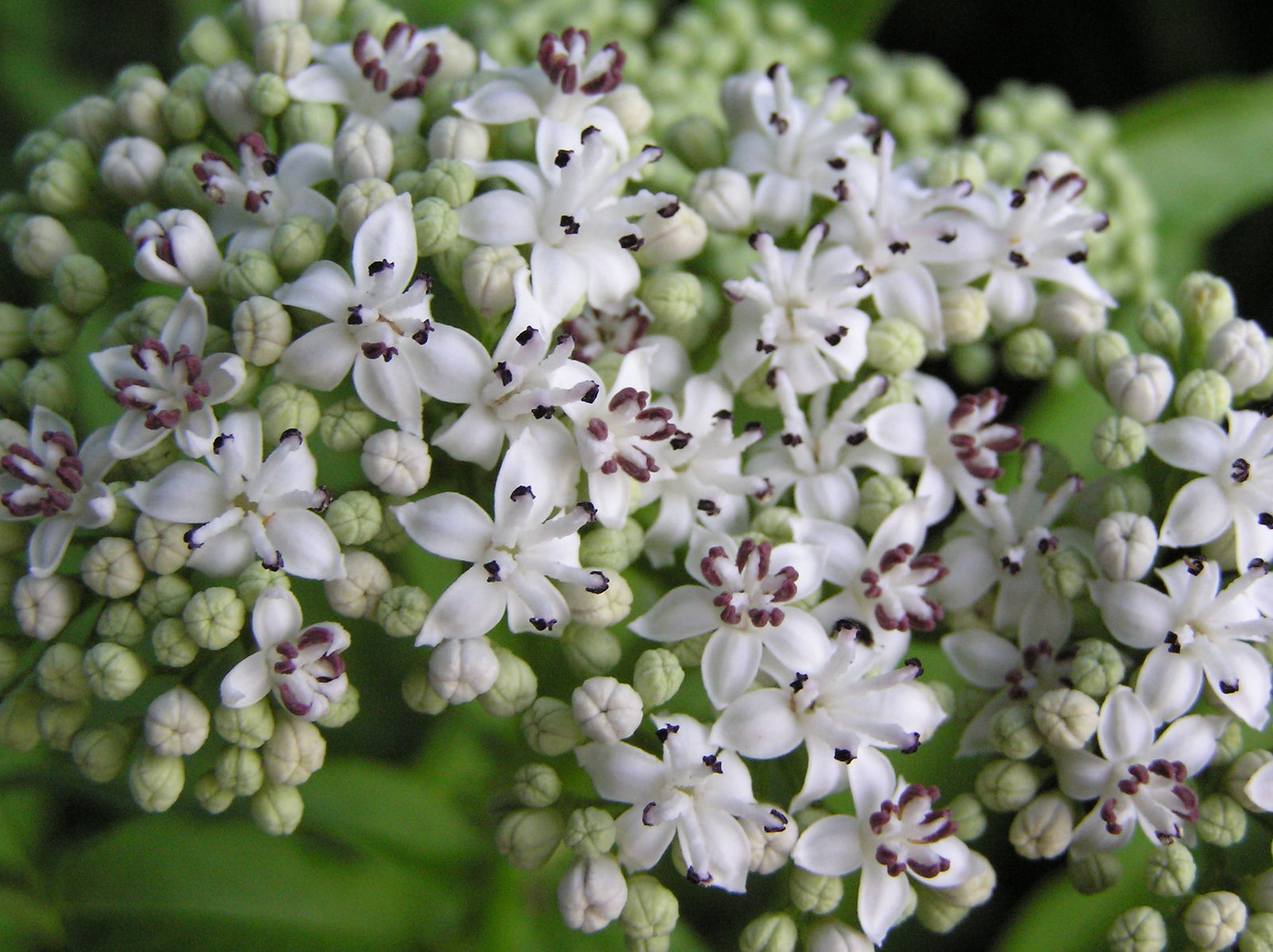
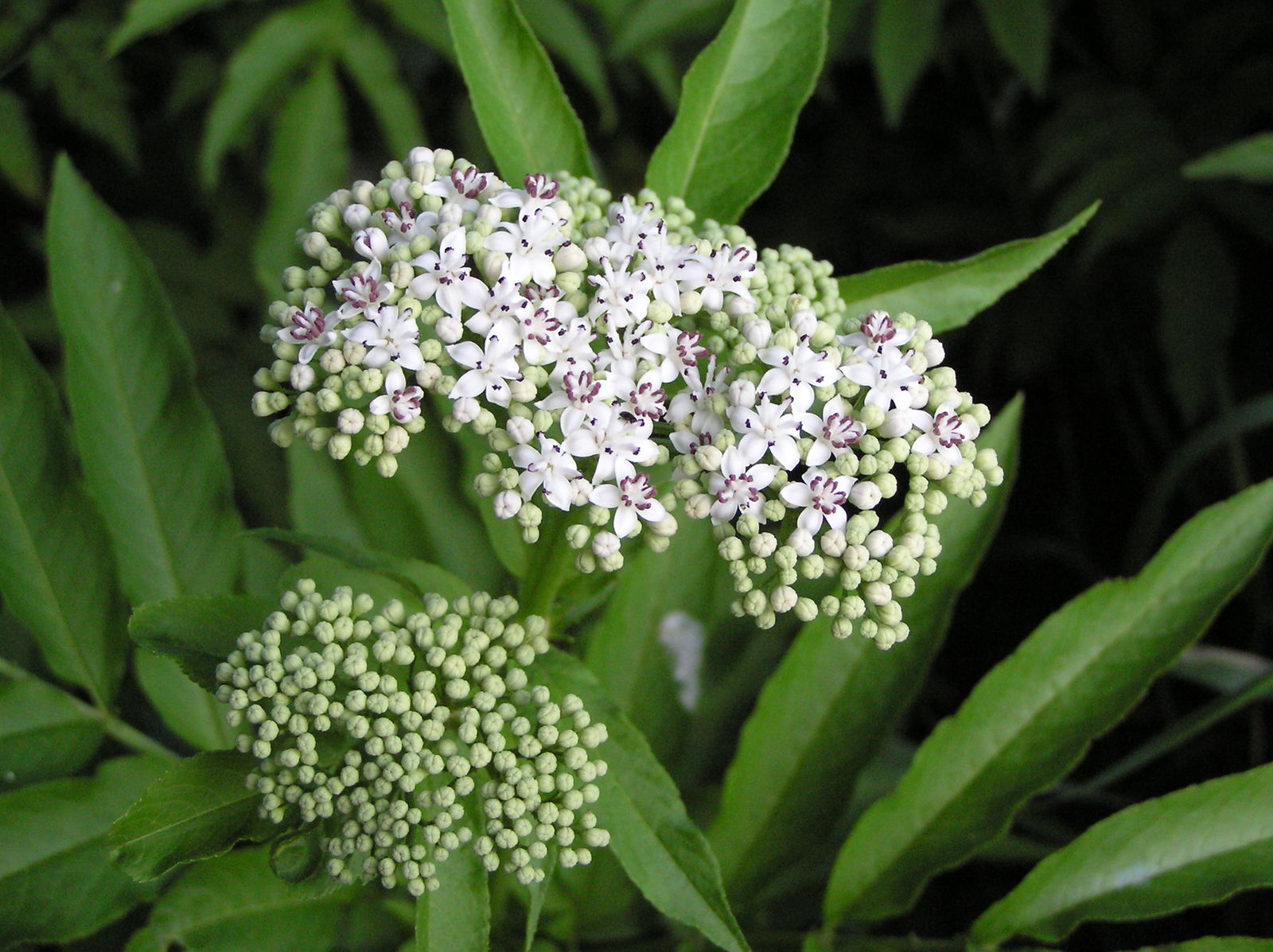
White, sometimes pinkish flowers form flat corymbs 10–15 cm (4–6 in) across, appearing from June to September in its native temperate range. Their purple anthers contrast clearly with the yellow anthers of European elderberry. The glossy black berries that follow remain upright, while ripe European elderberry clusters hang down. 2 6
Useful taxonomy
Kew's accepted name for dwarf elder is Sambucus ebulus L., published in 1753. Its placement in Viburnaceae, rather than Adoxaceae as still shown in many regional floras, reflects a recent revision of the circumscription of Sambucus. Older family names in a flora therefore need not imply a different species. 1
Herbarium records and older floras retain several synonyms and varieties, often described for more deeply divided leaves or a compact habit: Sambucus ebulus var. laciniata Ten., subspecies africana (Engl.) Bolli, and two names now rarely retained, Sambucus incarnata Cheshm. and Sambucus xerophila Priszter. These historical names help connect older records.
The genus Sambucus contains around thirty species of shrubs and herbaceous perennials. European members include Sambucus nigra and Sambucus racemosa. Corymbose or paniculate inflorescences and fleshy berries link these plants, despite the conspicuous difference between the woody growth of those relatives and the herbaceous stems of dwarf elder. 3 8
Habitat and range
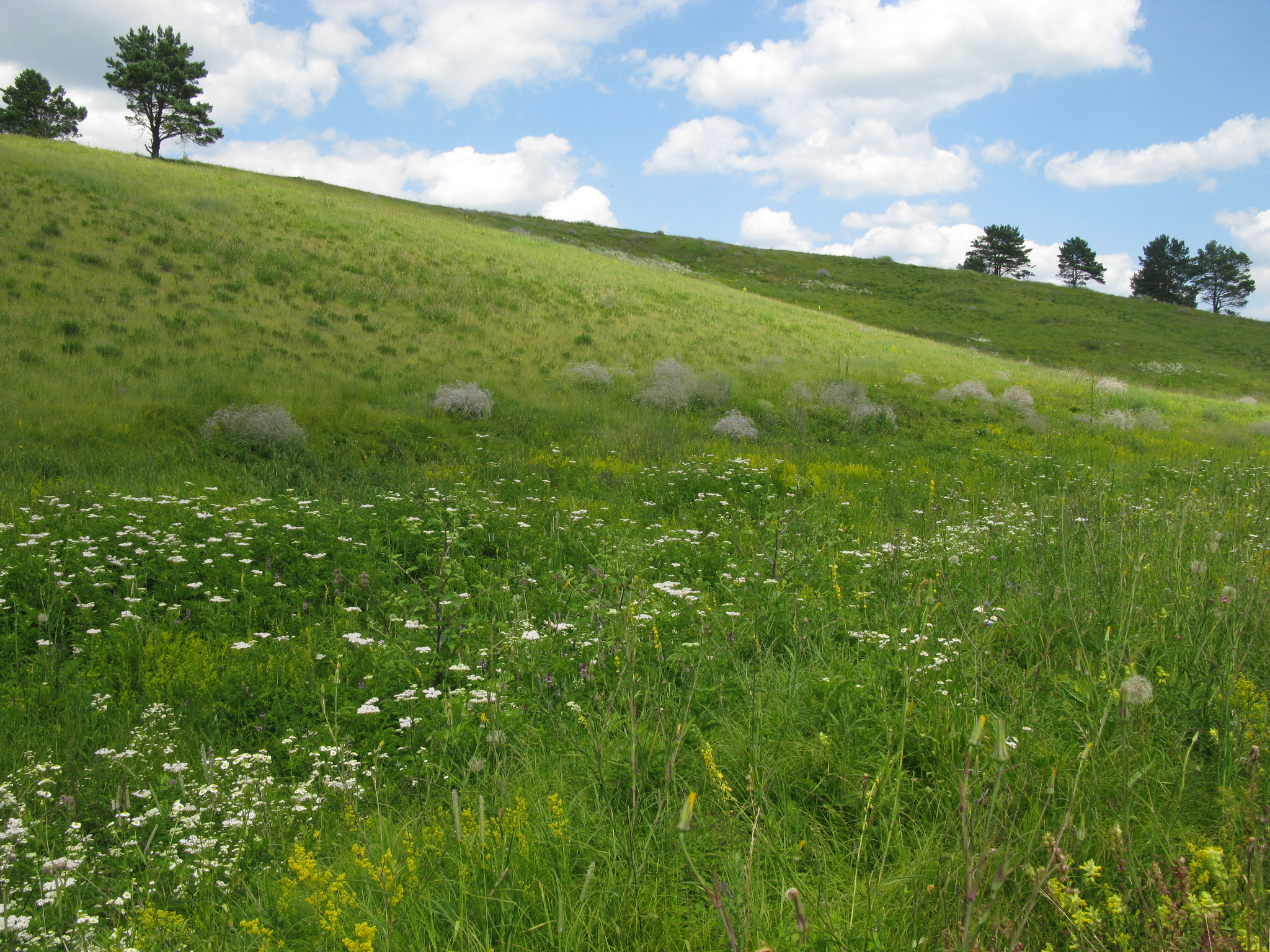
Disturbed land suits dwarf elder: waste ground, rubble, roadsides and hedges, usually on calcareous soil at pH 6–8, in lowlands and hills. It is a plant of repeatedly altered ground rather than established woodland, where it is uncommon. Soil conditions and disturbance together help explain the colonies encountered along paths. 2 5
Native populations occur across much of metropolitan France, as recorded by INPN. In the United Kingdom, Sambucus ebulus is a well-established archaeophyte, an ancient introduction rather than a truly native species. It is also locally naturalized in North America, including New York, New Jersey and Quebec; these occurrences belong to its introduced range. 7 3
Creeping rhizomes account for its speed of colonization. New shoots can emerge 1 m (3 ft) or more from the original plant, soon creating dense colonies where soil remains loose and fertile. The visible stems can therefore represent extensions of an established underground system rather than newly germinated seedlings. 2
Life cycle and reproduction
Self-fertile, hermaphroditic flowers open from June to September in its native temperate range and are pollinated by small insects. Berries ripen in late summer. Birds eating them tolerate the plant's toxins and disperse its seeds, providing another route of spread alongside the much more conspicuous local expansion by rhizomes. 2 5
All aboveground parts disappear in winter. Only the rhizome persists underground, tolerating frost down to about −25 °C (−13 °F). New unbranched stems emerge the following spring. This annual renewal sharply separates dwarf elder from European elderberry, whose woody trunk and branches remain visible throughout the winter months. 5
Cultivated plants are most readily propagated by rhizome division, which is faster and more reliable than seed. Seeds require cold stratification to overcome dormancy. Without containment, the same vigorous rhizomes that make division successful allow the plant to spread aggressively along garden margins and into adjacent suitable ground. 2
Uses and risks
Every part of dwarf elder is mildly toxic, with higher concentrations in the roots and seeds. Ingestion causes digestive upset, diarrhea and abdominal pain. Higher doses can also produce dizziness and dilated pupils. The distinction between “mildly toxic” and harmless matters here: the description does not make the plant suitable for eating. 4
Roots and seeds were formerly used as a powerful purgative and diuretic in folk medicine despite this toxicity. Such use required expert dosing to avoid harm and should remain a historical account. Berries also supplied blue dye and ink, while root juice was used to dye hair black. 4 2
Unlike European elderberry, whose cooked fruit is made into jams and syrups, dwarf elder berries are inedible. Their visual resemblance to European elderberry fruit creates the main practical risk, especially for children gathering berries without distinguishing the plants. Upright fruit clusters and herbaceous stems are therefore essential checks rather than minor botanical details. 2 5
Varieties, look-alikes and related plants
Horticultural selection has produced no recognized cultivar of Sambucus ebulus in this account. It remains a wild-growing plant rather than an ornamental selection, unlike the cultivated variegated forms of Sambucus nigra. Its vigorous spread and toxicity are more relevant to garden decisions than any named decorative form. 3
European elderberry, Sambucus nigra, is the principal look-alike. Its woody habit, hanging berries and yellow anthers contrast with dwarf elder's herbaceous stems, upright berries and purple anthers. Another possible confusion is Sambucus racemosa, red-berried elder, which bears red rather than black fruit and is distinguishable when berries develop. 2 6
Sambucus ebulus, Sambucus nigra and Sambucus racemosa share waste-ground and hedgerow habitats. A combination of features is therefore more useful than a single isolated clue: examine stem texture, anther color and fruit orientation together. These characters connect winter growth habit with the flowering and fruiting features visible during the growing season.
Main sources
- Plants of the World Online / Kew, Sambucus ebulus L.
- Plants For A Future, Sambucus ebulus
- USDA PLANTS Database, Sambucus ebulus - dwarf elderberry
- Toxiplante, dwarf elder monograph
- Conservation Nature, botanical profile Sambucus ebulus
- Zoom Nature, French folk names of dwarf elder
- INPN / MNHN, Sambucus ebulus L., 1753 - dwarf elder
- Tela Botanica / eFlore bdtfx, Sambucus ebulus L.
Frequently asked questions
Is Sambucus ebulus poisonous?
Yes. The whole plant is mildly toxic, especially roots and seeds. Ingestion causes digestive upset and, at higher doses, dizziness. Traditional medicinal use required expert dosing.
How do you tell dwarf elder from European elderberry?
Check the growth habit first. Sambucus ebulus is herbaceous and disappears in winter; Sambucus nigra is a woody shrub. Purple anthers and upward-facing berry clusters confirm dwarf elder.
Can you eat dwarf elder berries?
No. Unlike European elderberry berries cooked into jam or syrup, Sambucus ebulus berries are inedible and must be excluded from food preparations.
Where does the name danesblood come from?
Legend links the plant to former battlefields where Danes died. A more likely explanation is linguistic: an old word, “danes,” referred to diarrhea, recalling the purgative effect of the root.
Does dwarf elder spread aggressively?
Locally, yes. Creeping rhizomes rapidly colonize loose, fertile soil. It requires containment rather than unrestricted planting in a garden bed.
Why do crushed leaves smell unpleasant?
The fetid smell comes from volatile compounds characteristic of the species. It is distinctive enough to appear in several European folk names describing a foul-smelling elder.
What does the epithet ebulus mean?
The Latin term was already used by Pliny the Elder, but its origin is uncertain. The initial h in the French name hièble was added in medieval times to prevent a pronunciation resembling jèble.
Similar plants
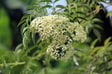
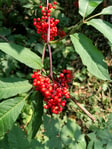

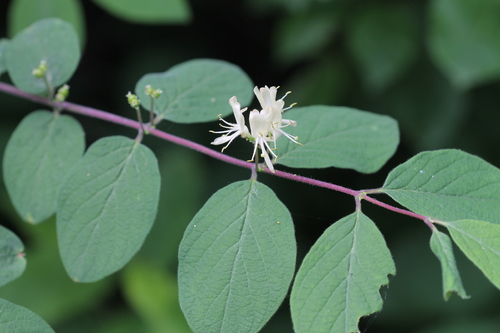
If you are unsure about a plant’s toxicity, ask a botanist or veterinarian for advice.