
Common chickweed (Stellaria media, )
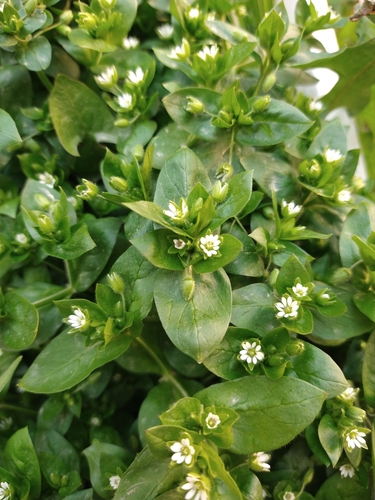
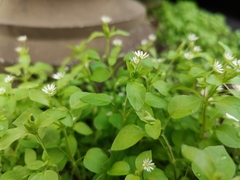
Common chickweed (Stellaria media (L.) Vill., 1789) is an annual herb in the Caryophyllaceae family, found almost throughout the temperate world. A single line of hairs switches sides at each stem node, distinguishing it from toxic scarlet pimpernel. Edible and rich in vitamins, it flowers almost year-round, including through winter in mild climates.
Read moreCommon chickweed and Chickweed
Give plenty of ambient light without direct sun on the leaves.
Full sun to cool partial shade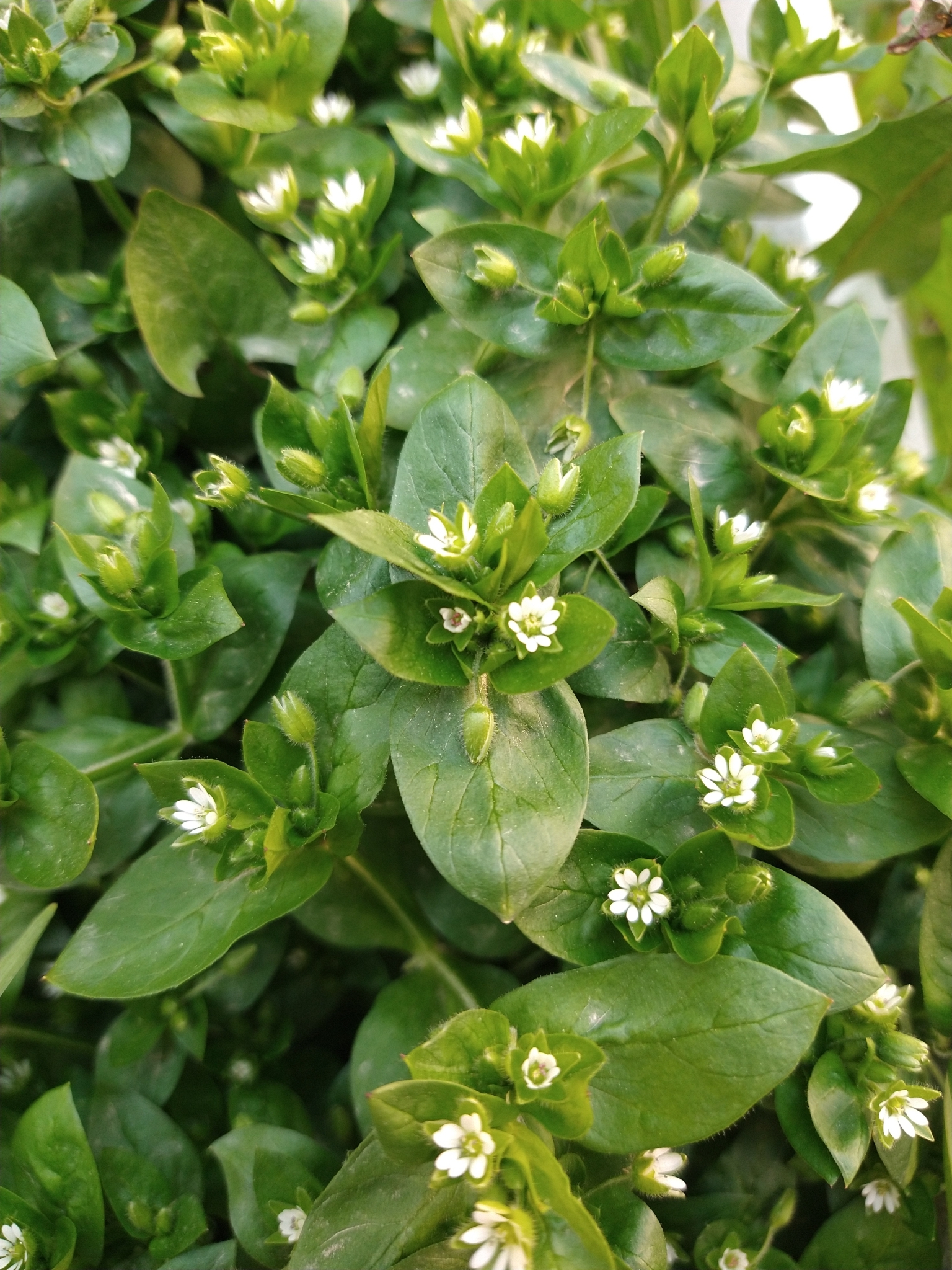
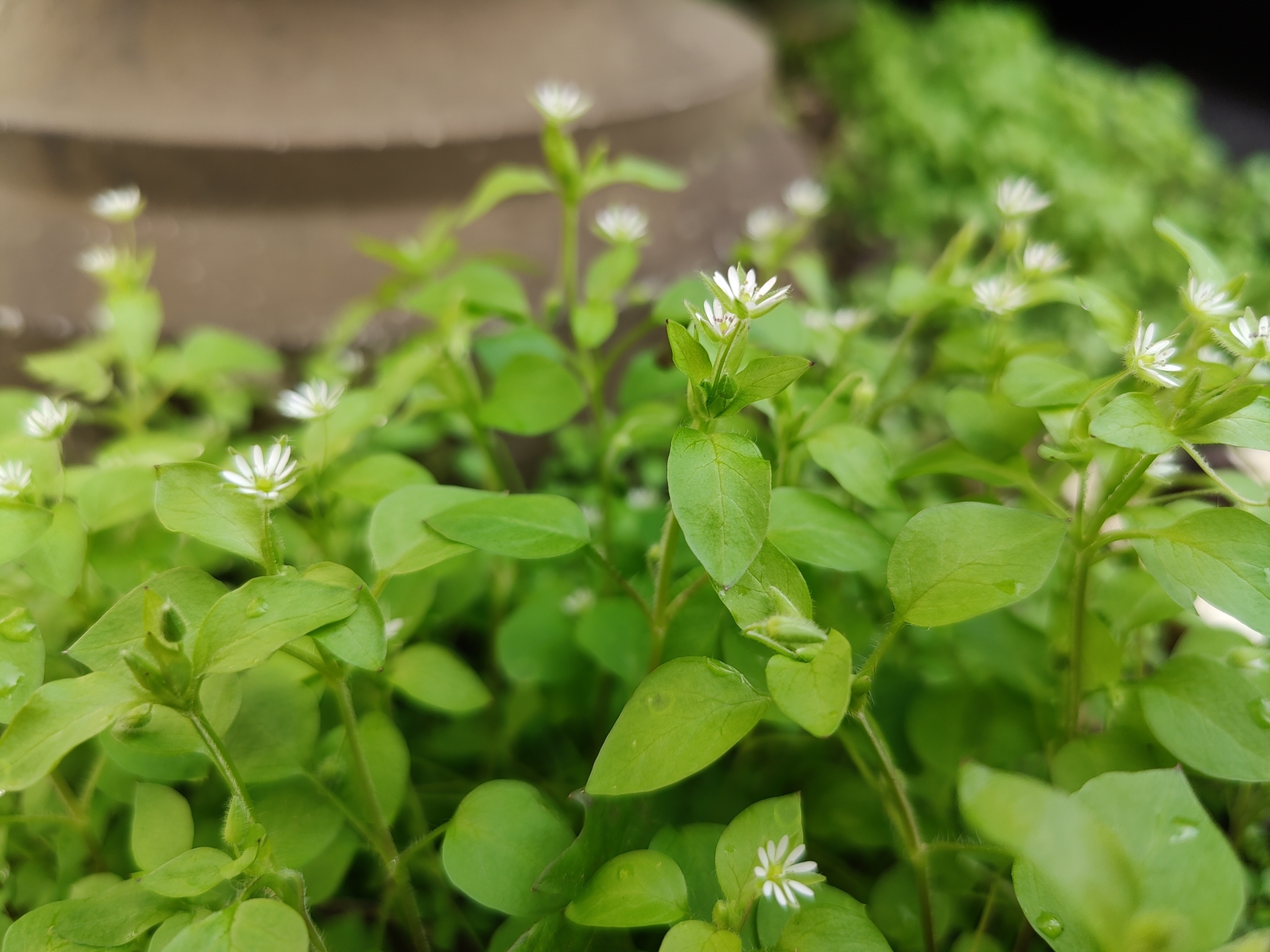
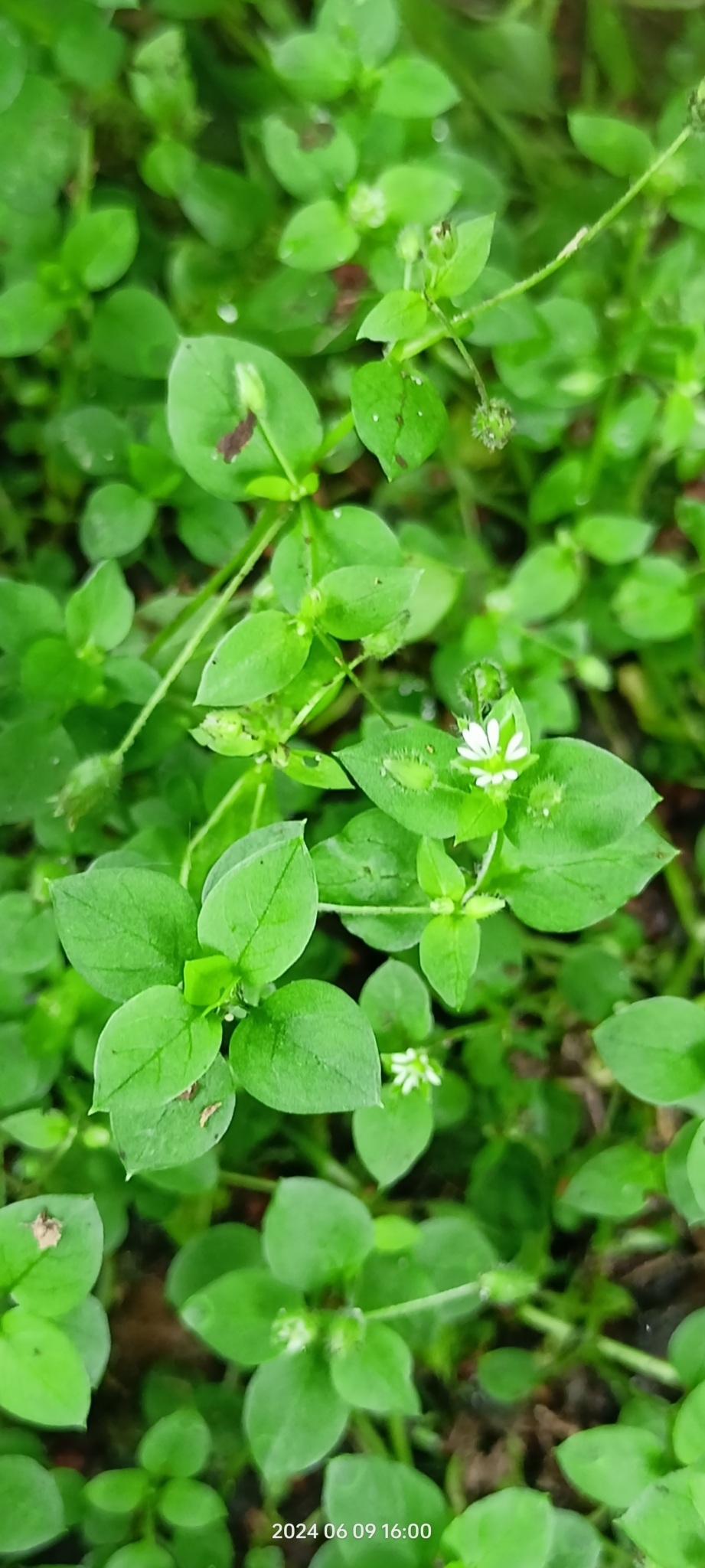
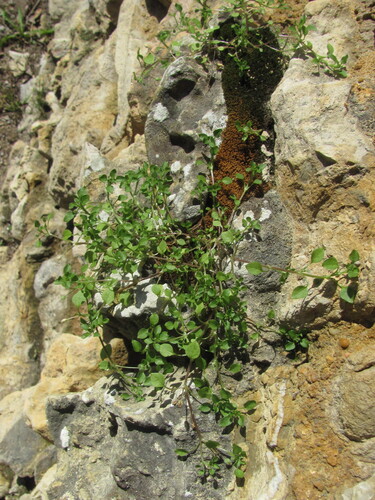
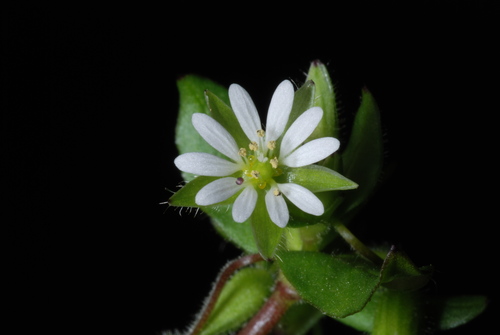
© photo
(c) Pablo, some rights reserved (CC BY), uploaded by Pablo · cc-by
Paul Braun · cc0
Евгения · cc0
(c) zebedeugalinha, some rights reserved (CC BY) · cc-by
(c) Douglas Goldman, some rights reserved (CC BY-SA) · cc-by-sa

Global distribution
POWO places the native range of Stellaria media in temperate Eurasia and northern and northeastern tropical Africa. It has since naturalized on almost every inhabited continent, spread through agricultural trade and its ability to colonize disturbed soil quickly.
- Native3
- Introduced4
- Metropolitan France
- Temperate Europe
- North Africa
- United States
- Australia
- New Zealand
- Japan
Hexagons: regions where the plant occurs. Green dots: native range.1
Identity
A single line of hairs switches sides at every node along the round stem of Common chickweed (Stellaria media (L.) Vill., 1789), an herb 5–20 cm (2–8 in) tall. That feature separates it at a glance from toxic scarlet pimpernel, whose stem is square and hairless; no common species of its genus shares this isolated character. This annual member of the Caryophyllaceae grows almost throughout the temperate world. Carl Linnaeus first described it as Alsine media. French botanist Dominique Villars transferred it to Stellaria in 1789, establishing the name still accepted today. 1 8
The shorter name chickweed reflects a long-standing use as poultry food. Chickens and other farmyard birds relish its seeds and tender foliage, and people readily gathered it to supplement domestic poultry feed. Its French name, meaning “birds’ pimpernel,” recalls the same practice. 2
Latin media means “medium-sized,” placing the plant between other species in the genus. Stellaria comes from stella, a star, and refers to the flower: its petals are so deeply split that they appear to double in number. 3
Recognition
Creeping mats or loose clumps stand 5–20 cm (2–8 in) high, while stems can spread 40 cm (16 in) or more along the ground. The fine line of hairs that switches sides at each node provides an identification feature visible without a hand lens or botanical key. 4 2
Opposite leaves are oval and pointed, less than 1.5 cm (0.6 in) long. Lower leaves have stalks; upper leaves are sessile, attached directly to the stem. Flowers measure 3–6 mm (0.12–0.24 in) across. Their five white petals are each cut into two deep lobes, making them look like ten, and remain shorter than the five pale green sepals surrounding them. 4
Almost year-round flowering is possible whenever temperatures remain above freezing for a few days, including midwinter in mild climates. When cold prevents cross-pollination, some flowers self-fertilize without fully opening, a process called cleistogamy. 7
Useful taxonomy
Within Caryophyllaceae, Stellaria media belongs to the subfamily Alsinoideae alongside other starworts and mouse-ear chickweeds. POWO recognizes the species under this accepted name, with the following principal homotypic synonym:
- Alsine media L.
Older field guides using Alsine media refer to exactly the same plant, rather than a separate species. Several regional populations, especially around the Mediterranean and North Africa, long circulated under separate subspecies or variety names. They are now grouped in an aggregate close to Stellaria media. The accepted POWO name provides the reference for field identification. 1
Habitat and range
Temperate Eurasia and northern Africa form the native range recorded by POWO. Common chickweed has since naturalized on almost every continent, helped by agricultural trade and an ability to colonize virtually any disturbed soil. 1 2
Rich, moist garden beds, vegetable plots, cultivated fields and waste ground provide its usual habitat. It grows on neutral to slightly acidic soils, in full sun as well as partial shade. Some gardeners read its presence as a sign of fertile soil; this is a field observation rather than a firmly established scientific indicator. 3 5
Seed-to-seed development takes just 5–7 weeks, explaining much of its success. Several generations can develop in one season, continually releasing fresh seed. Rapid reproduction also favors the selection of resistance to ALS-inhibiting herbicides in several European populations, with documented cases in Latvia. 6
Life cycle and reproduction
Slight warming of the soil allows seeds to germinate, often as early as late winter. The resulting plants flower almost continuously, produce capsules and shed seed within a few weeks, allowing another reproductive cycle to begin. 5
Broken stem fragments root easily at their nodes when they touch moist soil. Removing all plant remains after pulling reduces regrowth; leaving them behind can instead create new patches from the fragments. 4
Uses and risks
Young shoots, leaves and flowers are eaten raw in salads or cooked, with a flavor often compared with spinach or sweet corn. They are rich in flavonoids, vitamin C and carotenoids. More than 80 secondary metabolites have been isolated from the whole plant. 2 7
Poorly absorbed saponins occur in the plant even when eaten raw, and cooking destroys a large proportion. Traditional external uses also attribute soothing properties to it on irritated skin. At normal dietary quantities, common chickweed is not considered toxic to cats, dogs, horses or humans. 7 2
Varieties, look-alikes and related plants
Wild populations supply common chickweed without a recognized horticultural cultivar. It has not been selected as an ornamental plant and is simply gathered in its wild form.
Several plants can be mistaken for it:
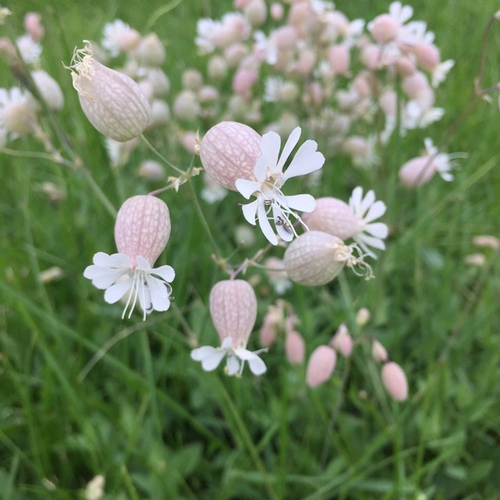
- Mouse-ear chickweeds (Cerastium glomeratum and Cerastium holosteoides) are hairy throughout, while Stellaria media has only one line of stem hairs;
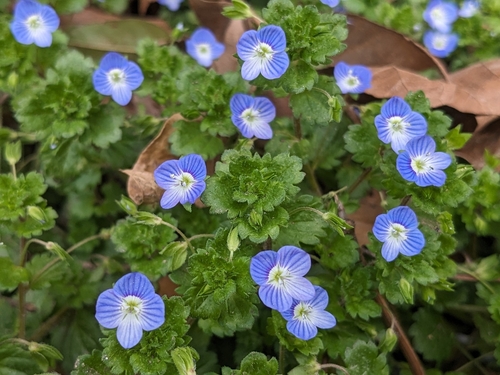
- Scarlet pimpernel (Lysimachia arvensis), in Primulaceae, has square, hairless stems and flowers often red, orange or blue rather than white; it is moderately toxic to livestock;
- Other Stellaria species differ mainly in the relative lengths of petals and sepals.
Scarlet pimpernel presents the greatest risk when gathering chickweed. Its seeds and foliage contain saponins, making it unsuitable for inclusion in a chickweed harvest. The stem remains the decisive comparison: round with one line of hairs in Stellaria media, square and hairless in Lysimachia arvensis. 2 9
Main sources
- Plants of the World Online / Kew, Stellaria media (L.) Vill.
- NC State Extension Gardener Plant Toolbox, Stellaria media
- Plants For A Future, Stellaria media - chickweed
- Cornell University Weed Identification, common chickweed
- Missouri Department of Conservation, Common Chickweed field guide
- International Herbicide-Resistant Weed Database / Ian Heap, Stellaria media, Latvia/Riga case 15068 (first year 2016); original record archived 13 July 2026
- PMC, phytochemistry and pharmacology of Stellaria media
- Tela Botanica, eFlore BDTFX: Stellaria media (L.) Vill., official nomenclatural record 75396
- Atlas of Florida Plants, Lysimachia arvensis - scarlet pimpernel
Frequently asked questions
Is common chickweed toxic?
No. In normal food quantities, it is not considered toxic to cats, dogs, horses or humans. Its saponins are poorly absorbed by the body and largely neutralized by cooking.
How can I tell common chickweed from scarlet pimpernel?
Check the stem first. Common chickweed has a round stem with one line of hairs that switches sides at each node; scarlet pimpernel (Lysimachia arvensis) has a square, hairless stem. Flowers confirm the distinction: white in chickweed, often red, orange or blue in pimpernel.
Can you eat common chickweed?
Yes. Young shoots, leaves and flowers can be eaten raw in salads or cooked. Their flavor is often compared with spinach or sweet corn.
Why is it called chickweed?
Chickens and other farmyard birds relish it. People traditionally gathered or grew the plant to supplement poultry feed.
Does common chickweed flower in winter?
Yes, when temperatures stay above freezing for a few days. Some flowers even fertilize themselves without fully opening, through cleistogamy, when cold prevents cross-pollination.
How can I control common chickweed in a vegetable garden?
Pull plants before seed capsules form and remove the remains, because stem fragments root readily on moist soil. Some European populations are now resistant to several herbicide groups.
Does common chickweed grow worldwide?
Its native range covers temperate Eurasia and northern Africa, but a very short reproductive cycle has helped it naturalize on almost every inhabited continent.
Similar plants
If you are unsure about a plant’s toxicity, ask a botanist or veterinarian for advice.